The crowd dynamics of the city safari

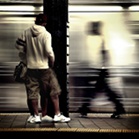
The Economist has a fascinating article about the weird way that pedestrians behave as they walk through cities and how this knowledge is being applied to make city-living easier and safer.

IMAGINE that you are French. You are walking along a busy pavement in Paris and another pedestrian is approaching from the opposite direction. A collision will occur unless you each move out of the other’s way. Which way do you step?

The answer is almost certainly to the right. Replay the same scene in many parts of Asia, however, and you would probably move to the left. It is not obvious why. There is no instruction to head in a specific direction (South Korea, where there is a campaign to get people to walk on the right, is an exception). There is no simple correlation with the side of the road on which people drive: Londoners funnel to the right on pavements, for example.

Although seemingly a trivial difference, the impact could be quite significant when, for example, trying to design emergency exit routes for international sporting events when people from many cultures mix.

The article is full of curious culture observations about how people move in crowds and the science of how and why people select their peoplescape navigating strategies.

Fascinating stuff.
 

Link to Economist article ‘The wisdom of crowds’ (via @mocost).

Transplanted corneas are a window to the soul

A fascinating note on the social meaning of eyes and why people are much more reluctant to donate the cornea after death than other bodily organs.

From a recent article in the journal Transplanatation:

At the time that a patient is diagnosed as brain dead, a substantial proportion of families who give consent to heart and kidney donation specifically refuse eye donation. This in part may relate to the failure of those involved in transplantation medicine and public education to fully appreciate the different meanings attached to the body of a recently deceased person.

Medicine and science have long understood the body as a “machine.” This view has fitted with medical notions of transplantation, with donors being a source of biologic “goods.” However, even a cursory glance at the rituals surrounding death makes it apparent that there is more to a dead body than simply its biologic parts; in death, bodies continue as the physical substrate of relationships. Of all the organs, it is the eyes that are identified as the site of sentience, and there is a long tradition of visual primacy and visual symbolism in virtually all aspects of culture.

It therefore seems likely that of all the body parts, it is the eyes that are most central to social relationships. A request to donate the eyes therefore is unlikely to be heard simply in medical terms as a request to donate a “superfluous” body part for the benefit of another. That the eyes are not simply biologic provides one explanation for both the lower rates of corneal donation, compared with that of other organs, and the lack of adequate corneal donation to meet demand.

What’s interesting is that the operation to remove the cornea does no visible damage to the donor. It’s just the idea of the thing that puts people off.
 

Link to locked article on eyes, meaning and cornea transplants.

An untranslatable mind

We tend to think of translation as a problem of grammar but a brilliant post on Notes from Two Scientific Psychologists demonstrates how even concepts about what the mind is can vary across languages.

In Korean, the concept “maum” replaces the concept “mind”. “Maum” has no English counterpart, but is sometimes translated as “heart”. Apparently, “maum” is the “seat of emotions, motivation, and “goodness” in a human being” (Wierzbicka, 2005; p. 271). Intellect and cognitive functions are captured by the Korean “meli” (head). But, “maum” is clearly the counterpart to “mind” in terms of the psychological part of the person. For example, there are tons of Korean books about “maum” and body in the same way that there are English texts on “mind” and body…

Interestingly, Russia, which kind of sits between East and West uses “dusa” as the counterpart to the psychological part of the person. “Dusa” is often translated as “soul”, but also sometimes as “heart” or “mind.” “Dusa” is associated with feelings, morality, and spirituality. The “dusa” is responsible for the ability to connect with other people. This meaning seems to lie somewhat more with the Eastern conception than with the highly cognitive concept of “mind.”

The Notes from Two Scientific Psychologists blog is generally excellent by the way.

I also recommend this great post on female attractiveness, wait-to-hip ratio and why evolutionary psychology needs spend more time working with other cultures before it can really talk about likely evolutionary explanations.
 

Link to ‘How Universal Is The Mind?’

Counting every phantom found

I’ve just found a sublime track by singer songwriter William Fitzsimmons riffing on the antiquated diagnosis of psychasthenia and its treatment with brain surgery. Unexpectedly, it’s quite beautiful.

The song is called Psychasthenia, a reference to old-fashioned diagnosis of the same name that was the first description of what we would now call OCD.

I suspect, however, that the song is actually a laconic commentary on a modern case of OCD as it mentions psychosurgery, recently a current treatment option once more, alongside an oblique reference to treatment with SSRI drugs.

These medications alter the serotonin system and are usually the first treatment option for the condition.

The song seems to put the listener in the place of someone looking for relief from severe OCD while referencing psychasthenia as a way of underlining how our treatments still reflect the early days of psychiatry.

With an alter robe
I have stumbled knife to lobe
In compulsion drown
Counting every phantom found

Cut me open please
Cut me open please

With a bridge I’ve killed
I will serotonin fill
To a fear resigned
Quiet room I hope I find

If this sounds like reading a great deal into what are actually quite abstract lyrics it’s worth noting that Fitzsimmons left his original career as a psychotherapist in an acute psychiatric ward to pursue music full time.
 

Link to audio of Psychasthenia on YouTube

Rainbows of mourning

This is a video of people dancing with a recently deceased baby and it tells us something profound about the psychology of grief and mourning.

Despite a common stereotype, death of a loved one can provoke some of the most culturally diverse forms of emotion and social ritual.

The video is rare footage of the Chigualo ceremony, a mourning ritual for children aged less than seven-years-old who have just passed away from the Afrocolombian community of the Pacific coast of Colombia.

Unfortunately, there is almost nothing written about the ceremony available online in English but the Spanish language Wikipedia has good page about it.

The belief behind the ceremony is that when young children die they become angels and go straight to heaven. Therefore, these deaths are not an occasion for sadness, as many might assume, but a cause for a goodbye celebration.

You can see in the video that the Chigualo involves upbeat rhythms, singing, games and dancing – including passing the dead baby between people at the ceremony.

This may seem shocking or disrespectful to people accustomed to sadness and distress-based mourning, but in its own community it is the single most respectful way of saying goodbye to a recently blessed angel.

Psychology has a stereotype problem with grief and mourning. Over and over again false assumptions are repeated, not even valid in Western cultures, that there are certain ‘stages’ to grief, that people will reliably react in certain ways with certain key emotions – sadness, anger, resignation and so on.

This leads to both a professional pathologising of grieving people including endless variations on ‘the person hasn’t accepted their loss’, ‘they haven’t elaborated their grief’ and ‘they’re in denial’ applied to anyone who doesn’t mourn within the expected boundaries.

Moreover, it leads to a cultural blindness about how other societies feel and understand the loss of others with the implicit assumption that the experience of grief is somehow universal.

Any other reaction except extended sadness is considered to be a way of ‘masking’ supposedly inevitable pain. ‘Underneath’, it is assumed, everyone must feel the same as ‘us’.

This is despite the fact that we have a huge array of anthropological work on the vast variation in grief and mourning throughout the world.

The Akan have elaborate rituals that punctuate the year to keep the memory of dead alive. The Achuar prohibit any attempts to remember or memoralise the deceased.

The Ganda prohibit sexual activity during mourning, the Cubeo have sexual activity as part of the mourning ceremony.

A Dogon funeral is designed to ensure that spirits of the dead leave the community, an Igbo funeral that they stay.

Although death is perhaps the only experience guaranteed to be universal, our reaction to it is one of the most diverse. Consequently, respect comes in many forms.
 

Link to video of Chigualo ceremony.

Two crucial minutes

If you’ve got just two minutes to spare you could learn first aid to help someone having a seizure thanks to a video from Epilepsy Action.

The acting is a little stiff, if you’ll excuse the pun, but it’s two minutes of your time very well spent.

You’ll notice in the video that the bystanders make a range of common but daft suggestions (‘hold them down’, ‘put something in the mouth to stop them biting their tongue’) that should be avoided as they could endanger the person having the seizure.

It has to be said that well-intentioned bystanders can sometimes be more of a danger than the seizure itself. Unless the person is likely to fall into a fire, fall off a bridge or get eaten by lions, the appropriate steps are just to protect the person, cushion their head, check their breathing and stay calm.

You only need to call an ambulance if the seizure continues for more than five minutes or you know this is the first seizure they’ve ever had.

The video just focuses on generalised seizures (‘having a fit’) but there’s info on other seizure types further down the page.

The organisation who’ve made the video, Epilepsy Action are fantastic, by the way, and they have a service where you can phone, email or tweet them any epilepsy question from anywhere in the world and they’ll answer it.

See the details on the top right of the page linked below.

Apparently though, no, they can’t get me a date with Lauren Pritchard.


Link to first aid for seizures video and info.

Reaction formation in New York City

My latest Beyond Boundaries column is about psychodynamic revolutionaries in New York and is in the December edition of The Psychologist.

Jonathan Shedler is recounting an anecdote. ‘So when the patient says “I’m frustrated”, you say “Tell me more about that” and then you shut up!’ We’ve just bustled in from a crisp Manhattan evening and the story gets an appreciative laugh. City University of New York is home to one of the most psychodynamically oriented clinical psychology courses in the US, and Shedler is here to fire up the audience. He’s presenting his research on the effectiveness of psychodynamic therapy, but the underlying message heralds a fight back. His data is mixed with tales of naive cognitive therapy trainees and disdain for ‘manualised CBT’ (there is, it seems, no other sort) and the audience are firmly behind him.

New York City was famous for its Freudian émigrés and became a leading centre for psychoanalysis during the 20th century, but the rising influence of drug treatment began to erode both the popularity of the couch and the therapeutic eminence of the Big Apple. Shorter therapies, validated using the techniques of academic research, have pressured both psychodynamic therapy, the younger relation of psychoanalysis, and its community of practice, who traditionally eschewed the systematic collection of data for the introspective gaze.

Psychoanalysis never gripped the UK’s psychology and psychiatry departments as it did in the US, and so the division between clinicians and researchers has traditionally been much less acute. In the New York lecture hall, this divide is reflected in the post-presentation discussion, driven by the split rhetoric of ‘practitioners’ and ‘researchers’ and how the latter don’t understand the former, despite the fact that we’re here to discuss research evidence. But most striking is the sense of revolt against the perceived oppression towards the psychodynamic approach, which, in the US, is additionally fuelled by the insurance companies desire for the most evidence-based bang for their buck.

The audience speak out. Person after person stands up, vociferously thanking the speaker, decrying the lack of respect afforded to psychodynamic treatment and promising to spread the word about this new evidence to colleagues, managers and patients. But beyond the fight back, there is a distinct culture change in the air. In an area famously divided by internecine feuding and bitter theoretical differences there is unity. And perhaps more significantly, the tools of clinical trials, systematic data collection and evidence-based practice are now being taken up as essential allies. New York City may yet be home to psychodynamic revolutionaries once more.

Many thanks to @Zleeoga for inviting me along to see the New York psychoanalytic scene in action. Greatly appreciated!

And many thanks to Jon Sutton, editor of The Psychologist, who has kindly agreed for me to publish my column on Mind Hacks as long as I include the following text:

The Psychologist is sent free to all members of the British Psychological Society (you can join here), or you can subscribe as a non-member by going here.
 

Link to December’s Beyond Boundaries column.

The Crux of PTSD under threat of terrorism

I’ve got a piece over at Discover Magazine’s new group blog, The Crux, which looks at whether post-traumatic stress disorder makes sense if it’s applied to people who remain at high risk of terrorist attack.

The Crux is a blog written by a crowd of science folks that aims to taker a deeper look at some of the ‘big ideas in science’ that are currently being thrown around and I’ll be writing some occasional pieces as mind and brain issues surface.

Researchers have noted that “PTSD is classified as an anxiety disorder. Within cognitive models, anxiety is a result of appraisals relating to impending threat. However, PTSD is a disorder in which the problem is a memory for an event that has already happened.” After all, if you feel threatened with good reason, almost by definition, this isn’t a mental illness.

So if someone remains in danger after a life-threatening incident, does the concept of “post-traumatic stress disorder” even make sense?

As the diagnosis relies largely on totalling up symptoms in a checklist-like fashion, it is possible to diagnose someone with the condition in almost any circumstance. But no one knew whether treating it in people who are still in grave danger would be any use.

Until now that is.

You can check out the full article at the link below and pieces by the other fine folks of The Crux here.
 

Link to ‘Life During Wartime: Can Mental Illness Be a Rational Response?’

The rise and fall of ‘space madness’

‘Space madness’ was a serious concern for psychiatrists involved in the early space programme. A new article in history of science journal Endeavour tracks the interest in this ‘dreaded disease that never was.’

Much to the surprise of NASA mental health professionals, those who volunteered to be astronauts were neither “suicidal deviants” nor troubled by their separation from the earth, but the media ran with the ‘space travel as psychic trauma’ idea anyway.

‘In answer to the question, “‘What kind of people volunteer to be fired into orbit?” one might expect strong intimations of psychopathology’. Or so thought two Air Force psychiatrists selected to examine America’s first would-be astronauts. Researchers of the 1950s who considered the problem of human spaceflight often speculated that such work would attract only suicidal deviants, and that merely participating in such a voyage would overwhelm the human psyche of otherwise healthy people. The popular culture record of the time seemed to confirm their suspicions, with science fiction films frequently offering up megalomaniacs, egotists, and religious fanatics terrorizing planets in their cinematic space cruisers.

It is not surprising, then, that the psychiatrists working with the National Aeronautics and Space Administration in 1959 feared the worst of the men selected to be America’s first astronauts: that they would be impulsive, suicidal, sexually aberrant thrill-seekers. The examiners, though, were surprised – and a little disappointed – when tests revealed the would-be spacemen to be sane, poised professionals able to absorb extraordinary stresses. Flying jet airplanes in Cold War America had conditioned the men to control their fear, and even the most spirited among them were effective in orbit.

The idea that humans could travel into space and not be traumatized by their experiences, though, was unpalatable to large numbers of journalists and screenwriters, who expected that such journeys would produce some form of psychic transformation. By the early-1970s, popular culture depicting unhinged astronauts became commonplace, even as NASA’s astronauts demonstrated a remarkable ability to absorb the stresses of long-duration spaceflight. A Space Age malady with no incidence among human populations, ‘space madness’ is the stuff of Hollywood: a cultural manifestation of popular fears of a lonely, dehumanizing, and claustrophobic future among the stars.

Unfortunately, the article is locked, because the likes of you and me would just make the place look scruffy, but we covered some of the early discussion on what might cause ‘space madness’ previously on Mind Hacks.

And if you’re interested in the modern astronaut psychology don’t miss a 2008 article from The Psychologist on how NASA select their space travelling colleagues.

I would also like to mention that if someone from NASA is reading that I am free at *any time* to start astronaut duties. I also already own a space pen and am fully competent in its use.
 

Link to locked article. Not very space age, is it?
Link to previous Mind Hacks piece on space madness.

Chasing the dragon across the world

A summary of a fascinating 1997 article on how the practice of consuming heroin by ‘chasing the dragon‘ – inhaling vapours after heating the drug on tin foil – spread across the world.

Heroin smoking by ‘chasing the dragon’: origins and history

Addiction. 1997 Jun;92(6):673-83;

Strang J, Griffiths P, Gossop M.

The history of heroin smoking and the subsequent development and spread of ‘chasing the dragon’ are examined. The first heroin smoking originated in Shanghai in the 1920s and involved use of porcelain bowls and bamboo tubes, thereafter spreading across much of Eastern Asia and to the United States over the next decade.

‘Chasing the dragon’ was a later refinement of this form of heroin smoking, originating in or near Hong Kong in the 1950s, and refers to the ingestion of heroin by inhaling the vapours which result when the drug is heated-typically on tin-foil above a flame. Subsequent spread of ‘chasing the dragon’ included spread to other parts of South East Asia during the 1960s and 1970s, to some parts of Europe during the late 1970s and early 1980s, and to much of the Indian sub-continent during the 1980s.

At the time of writing, ‘chasing the dragon’ has now been reliably reported from many parts of the world but not from others with an established heroin problem-such as the United States and Australia. The significance of this new form of heroin use is examined, including consideration of the role of the different effect with this new form of use, the different types of heroin, and changing public attitudes to injecting.

The article also notes that the popularity of particular drugs tends to rely equally on the methods of consumption as the effects of the substances themselves.

For example, the popularity of morphine in the late 19th century was equally dependent on the development of the needle and hypodermic syringe and the development of cigarettes massively increased the number of tobacco smokers.
 

Link to locked article on the history of ‘chasing the dragon’.

The secret life of the inner voice

Don’t miss the latest RadioLab short, a programme about a guy whose world has been unevenly slowed down.

Psychological fascinating but also a beautiful piece of storytelling.

When Andy first met Kohn, he saw a college freshman in a wheelchair who moved slow and talked slow. But it only took one conversation for Andy to realize that Kohn was also witty and observant. They clicked so effortlessly over lunch one day that Andy went ahead and asked an audacious question: why was Kohn so slow? Kohn told him that when he was 8-years-old, he was hit by a car. He was in a coma for five months, and when he finally woke up, he everything about him was slowed down … except for his mind.

Do not miss.
 

Link to RadioLab short ‘Slow’.

The personality of sperm donors

The biggest ever study on the personality of sperm donors has just been published.

Each was asked to fill out the Temperament and Character Inventory personality scale, also known as the TCI, and the results were compared to a similar group of men who hadn’t whacked off into a plastic tube for the benefit of society.

So who donates sperm?

With regard to personality, we found significant differences on the temperament dimension of harm avoidance between the sperm donors and the comparison group, with lower means for sperm donors. This indicates that the sperm donors described themselves as being less worried, uncertain, shy and less subject to fatigue

Furthermore, we also found significant differences on the character dimensions, where the sperm donors showed higher means on self-directedness. This indicates that they perceived themselves as more autonomous individuals, with a capacity for responsibility, as behaving in a more goal-directed manner, and to be more resourceful and self-acceptant than the comparison group.

The sperm donors also showed significantly higher means on cooperativeness. This means that they described themselves as being more integrated with society and having a greater capacity for identification with and acceptance of other people than the comparison group.

The personality dimensions from the Temperament and Character Inventory have been found to be among the most heavily influenced by genetics, so knowing that your average sperm donor is a generally nice chap is very useful information.

I suspect, however, that ‘not easily fatigued’ may be a selection bias due to the demands of the job.
 

Link to paywalled study. No chance of a donation then?

The psychiatry of vegetarianism

A fascinating but unfortunately locked review article on the psychology of vegetarianism has this paragraph on how avoiding the pleasures of cooked flesh has been seen as a mental illness in times past.

How vegetarians are seen has shifted radically over time. During the Inquisition, the Roman Catholic Church declared vegetarians to be heretics, and a similar line of persecutions occurred in 12th century China (Kellman, 2000). In the earlier half of the twentieth century, the sentiment toward vegetarians remained distinctly negative, with the decision not to eat meat being framed as deviant and worthy of suspicion.

Major Hyman S. Barahal (1946), then head of the Psychiatry Section of Mason General Hospital, Brentwood, wrote openly that he considered vegetarians to be domineering and secretly sadistic, and that they “display little regard for the suffering of their fellow human beings” (p. 12). In this same era, it was proposed that vegetarianism was an underlying cause of stammering, the cure for which was a steady diet of beefsteak.

In contrast, research shows the general attitude to vegetarianism has generally shifted to be, shall we say, somewhat more positive.
 

Link to locked article. Forbidden fruit and all that.

Glitches in The Technology of Orgasm

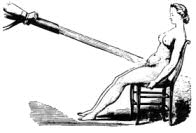
We’ve covered The Technology of Orgasm before, a hugely influential book arguing that 19th century doctors were using Victorian vibrators to cure ‘female hysteria’ through the induction of [serious look] ‘hysterical paroxysms’, but it seems that the main argument may not be as breathtaking as it first appears.

Cory Silverberg discusses how historians of sex have been less than impressed with the idea and the issue has now become a hot topic because the book, written by author Rachel Maines, has been made into a film starring Maggie Gyllenhaal.

The Technology of Orgasm is a somewhat controversial book. Controversial in that the thesis of the book has been almost universally accepted and embraced by the mainstream press and the sex toy industry, while at the same time being quite seriously critiqued by historians of sexuality. In her book Maines contends that the vibrator was regularly used by doctors to treat “hysteria” which they had previously been treating by manually stimulating women to orgasm. Included in this argument is the idea that the women didn’t know they were having orgasms and the doctors didn’t seem to worry about the professional boundaries involved in essentially masturbating their patients.

Silverberg also notes a comprehensive page by historian Lesley Hall who has detailed difficulties with the ‘Victorian vibrator cure’ idea.

The page also has loads of other fascinating information about 19th century sex.

Don’t be put off by the page’s dreadful green background – as the title suggests, it is full of wonderful ‘Victorian sex factoids’, including why it is unlikely that Queen Victoria ever used cannabis to help alleviate period pains.
 

Link to Cory Silverberg’s coverage of the new film (via @DrPetra).
Link to Lesley Hall’s page on ‘Victorian Sex Factoids’.

Preferences of the lady wooers

A study on female breast size attractiveness just published in the Archives of Sexual Behaviour highlights the remarkable gap between academic discourse and everyday language.

Female Breast Size Attractiveness for Men as a Function of Sociosexual Orientation (Restricted vs. Unrestricted)

Arch Sex Behav. 2011 Oct 6.

Zelazniewicz AM, Pawlowski B.

Mate preferences are context-dependent and may vary with different ecological conditions and raters. The present study investigated whether sociosexual orientation influenced men’s rating of attractiveness of female breast size. Participants (N = 128) rated female breast attractiveness as a function of size (five levels) and viewing angles (front view, oblique view, and side view). Men were divided into two groups (restricted and unrestricted), based on their responses to the Revised Sociosexual Orientation Inventory (SOI-R). As predicted, men with higher SOI-R scores (unrestricted) generally gave higher ratings than did men who scored lower on the SOI-R (restricted), but the difference was significant only at larger breast sizes. We also found that medium to large sizes were rated as the most attractive by both male groups and that viewing angle changed rating of female attractiveness and breast presented in oblique view were rated generally higher than in side view. The results of the study indicate that sociosexuality influences male perception of female breast attractiveness and confirm that accentuation of female-specific physical traits produces a stronger response in unrestricted than in restricted men.

Translation: Guys who want to shag around prefer bigger tits.

Obviously, you can’t use the word tits in a scientific article so you’d have to say ‘Gentleman who want to woo more ladies prefer larger hooters’.

And they say science isn’t relevant to the man in the street.
 

Link to full text of open-access study.

Epilepsy as a door between worlds

There’s a wonderful anthropology study on beliefs about epilepsy among the Guaraní people in Bolivia in the latest Epilepsy and Behavior.

The Guaraní believe that people with recurrent seizures are a gateway between the worlds of life and death.

Among the Guaraní, epilepsy is called mano-mano, which literally means “die-die” and refers to the concept of death with a notion of frequency (die several times) and also of being in a constant passage between life and death. In other terms, this word means always being on the border between life and death, reflecting the fact that mano-mano produces a constant interruption of life or a “partial death.”…

In fact, the expression mano-mano is meaningful. It refers to the idea of a round trip between life and death. This concept addresses the loss of consciousness and shows that epilepsy is recognized mostly in terms of generalized seizures. The uncertain state between life and death is seen as a kind of “third possible condition” for a human being, a state that generates hesitation over what attitude to hold. PWE [people with epilepsy] are omano-mano-vae, the “undeads,” different from the other members of the community and considered both as victims of this life–death relationship and as enablers of the meeting of these two worlds…

The representation of epilepsy as a state of human being and the perception of this in a vision that involves the entire community allow an interpretation of Guaraní attitudes toward PWE [people with epilepsy]. Guaraní PWE are rarely condemned, misjudged, or isolated as in other cultures. Apparently, PWE do not represent a threat to the Guaraní, who seem to hold the attitude of helping and protecting PWE. As noted, the restrictions and prohibitions cited by the Guaraní appear to derive from the need to take care of PWE, as heavy work, traveling alone, and being involved in problems are believed to worsen the condition or trigger seizures in PWE.

It’s worth noting that while their perception of people with epilepsy is generally positive, several of the people interview gave advice about avoiding contact between affected people and children or pregnant women.

As the researchers note this raises questions “that could be related to a belief that was not mentioned: possible transmission of the disease to those who are considered the weakest and most defenseless in the community.”

However, their general outlook is markedly positive in light of widespread beliefs about epilepsy being the results of evil spirits or a divine punishment.

In contrast, the Guaraní most frequently cited epilepsy as being caused by a “failure to observe the Yekuaku, a fasting period linked to special events”.
 

Link to locked anthropology study.