As addictive as cupcakes

If I read the phrase “as addictive as cocaine” one more time I’m going to hit the bottle.

Anything that is either overused, pleasurable or has become vaguely associated with the dopamine system is compared to cocaine.

In fact, here is a list of things claimed to be as addictive as the illegal nose powder in the popular press:

World of Warcraft
Power
Nicotine
Junk food
High-Fructose Corn Syrup
Ice cream
Cannabis
Love
Gambling
Fatty foods
Porn
Facebook
Sugar
Cupcakes
Running
Stories

And here is a scientifically verified list of things genuinely addictive as cocaine:

Cocaine

In fact, the concept of ‘addictive as cocaine’ really makes very little sense. Even among drugs, cocaine has a unique chemical profile and social context that are the main things that determine its ‘addictiveness’.

Even if you wanted to make the vague analogy that rates of problematic use are similar you’d need to do a decent epidemiological study.

The classic research from the US reports that about 5% of users become cocaine dependent two years after starting the drug.

We are still waiting for a similar epidemiological study on the use of World of Warcraft or the consumption of cupcakes.
 

Link to cocaine entry on Wikipedia

Is the brain the centre of your universe?

The Observer has a fantastic debate between neuroscientists David Eagleman and Raymond Tallis about how much brain science tells us about free will and the unconscious.

It’s a wonderful pairing as Eagleman is a broad-thinking wonderboy of neuroscience while Tallis is a veteran street-fighter of brain debates.

The main point of contention revlves around whether we can understand the brain as the source of human nature or whether we have to look beyond the individual to make sense of our experience and behaviour.

Eagleman: It is clear at this point that we are irrevocably tied to the 3lb of strange computational material found within our skulls. The brain is utterly alien to us, and yet our personalities, hopes, fears and aspirations all depend on the integrity of this biological tissue. How do we know this? Because when the brain changes, we change…

Tallis: Yes, of course, everything about us, from the simplest sensation to the most elaborately constructed sense of self, requires a brain in some kind of working order. Remove your brain and bang goes your IQ. It does not follow that our brains are pretty well the whole story of us, nor that the best way to understand ourselves is to stare at “the neural substrate of which we are composed”.

This is because we are not stand-alone brains. We are part of community of minds, a human world, that is remote in many respects from what can be observed in brains. Even if that community ultimately originated from brains, this was the work of trillions of brains over hundreds of thousands of years: individual, present-day brains are merely the entrance ticket to the drama of social life, not the drama itself.

As an accompaniment to the piece, I also wrote a ‘brief guide to neuroscience’ that you can also read online.
 

Link to debate ‘The brain… it makes you think. Doesn’t it?’
Link to ‘A brief guide to neuroscience’.

Mind Changers back for another series

BBC Radio 4’s brilliant psychology series Mind Changers has made a comeback and has a new season looking at some of the biggest ideas in cognitive science.

It has kicked off with programmes on South African psychologist Joseph Wolpe and the treatment of anxiety as well as an edition on Julian Rotter and the idea of locus of control or the extent to which we believe that we can control events that affect us.

As always, the series is fantastic, looking not only at the ideas but also the people behind these key theories in psychology.

Wait, you say, one of the BBC’s finest series on psychology, back for another series and available online, surely this too good to be true?

As it turns out, which is almost always the case with the Beeb’s digital offerings, it is too good to be true. The flaw this time is that there are no podcasts – only online streaming.

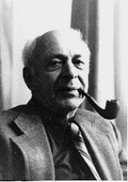
So in light of the BBC’s inability to keep up with the digital world, I’ve included a picture of Julian Rotter smoking a pipe. Especially pertinent as he looks like he’s thinking “torrent servers, my friends, torrent servers”.
 

Link to excellent Mind Changers series.

I predict a riot (based on a single study)

A group of black bloc researchers fed up with the lack of interest in replicating psychology studies has set up a strike force called the The Reproducibility Project that will recreate all 2008 studies from three major cognitive science journals.

That sound you can hear. That’s shit hitting the fan.

The Chronicle of Higher Education covers the project that’ll check-out the replicability of well-known studies.

So why not check? Well, for a lot of reasons. It’s time-consuming and doesn’t do much for your career to replicate other researchers’ findings. Journal editors aren’t exactly jazzed about publishing replications. And potentially undermining someone else’s research is not a good way to make friends.

Brian Nosek knows all that and he’s doing it anyway. Nosek, a professor of psychology at the University of Virginia, is one of the coordinators of the project. He’s careful not to make it sound as if he’s attacking his own field. “The project does not aim to single out anybody,” he says. He notes that being unable to replicate a finding is not the same as discovering that the finding is false. It’s not always possible to match research methods precisely, and researchers performing replications can make mistakes, too.

But still. If it turns out that a sizable percentage (a quarter? half?) of the results published in these three top psychology journals can’t be replicated, it’s not going to reflect well on the field or on the researchers whose papers didn’t pass the test. In the long run, coming to grips with the scope of the problem is almost certainly beneficial for everyone. In the short run, it might get ugly.

Unfortunately, psychology and science in general still see a non-replication as a failure (in fact, we even use the term ‘failed replication’).

This is clearly nonsense and checking the original finding is equally as valuable if the new data agree with, or disagree with, the original study.

Sadly, we’ll have to change the attitude of several generations of scientists to reset this rusty conceptual switch.

The Reproducibility Project have just got frustrated with the entrenched attitudes and have manned the barricades. And who cam blame them?
 

Link to Chronicle article on The Reproducibility Project.

A fitting tribute to Alan Turing

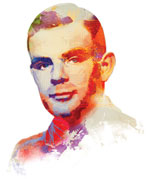
Nature has just published a fantastic Alan Turing special issue commemorating 100 years since the birth of the artificial intelligence pioneer, code-breaker and mathematician.

It’s a really wonderful edition, available to freely read online, and accompanied by a special podcast that talks to his biographer about Turing’s famous 1936 paper on computable numbers, his contribution to cracking the German Enigma ciphers, and his thoughts on machine intelligence.

The articles in the issue are no less exciting and cover everything from Turning’s impact on biology to a debate on whether the brain a good model for machine intelligence.

Essentially, stop whatever you’re doing right now, take the phone off the hook, poor yourself a drop of something thought-provoking and enjoy.

Great stuff.
 

Link to Nature special issue on Alan Turing.

Dinner table neuropsychology

Common sense or ‘folk psychology‘ is what your average person in the street uses to make sense of human behaviour. It says people have affairs because their relationship is unsatisfying, that people steal because they want money and that people give to charity because they want to help people.

Scientists tend to say ‘well, it’s a bit more complicated than that’ but talk of conditional risk factors for behaviour won’t get you very far in a dinner table discussion so ‘folk psychology’ is a culturally agreed form of psychology that is acceptable to use in everyday explanation.

I’ve just been alerted to a fascinating study in the journal Public Understanding of Science looks at how the enthusiasm for pop neuroscience has encroached on ‘folk psychology’ to create a form of ‘folk neuropsychology’ where brain-based explanations are now becoming acceptable in everyday explanation.

Talking brains: a cognitive semantic analysis of an emerging folk neuropsychology

Paul Rodriguez

Public Understanding of Science July 2006 vol. 15 no. 3 301-330

What is the influence of neuroscience on the common sense way we talk about behavior and mental experience? This article examines this influence and the diffusion of neuroscience terms as it appears in everyday language that reflects shared cultural knowledge. In an unsolicited collection of speech acts and metaphors I show that the word “brain” often substitutes for “mind” and brain states are often asserted as the cause of mental states. I also present several examples of visual depictions of the brain, including modern brain scans, which have become the basis for new cultural symbols that are identified with mental experience. Taken together, the linguistic and visual brain metaphors highlight the concrete nature of the brain in contrast to the abstract nature of the mind. This, in turn, provides a physical dimension to the way we conceptualize mental phenomena in ordinary language. Thus, a modern folk neuropsychology is emerging which provides an alternative, reductionist, and sometimes competing network of concepts for explaining the mind in comparison to conventional folk psychology.

The full study is available online as a pdf if you want the details.
 

Link to DOI entry for study (via @cfernyhough)
pdf of full text.

Ulric Neisser, psychology’s repentant revolutionary

The New York Times has an obituary for the founder of cognitive psychology, Ulric Neisser. As with most of his obituaries it glosses over the fact that Neisser later rejected cognitive psychology as a means to fully understand the human mind.

Ulric Neisser is widely regarded as having founded the field with his 1967 book Cognitive Psychology. Although the principles of the science existed before – experimental methods, information processing theories, artificial intelligence modelling – Neisser was the first to combine them into a coherent whole.

The book was hugely influential to the point where cognitive psychology has become the de facto scientific psychology and the has at least partially integrated into virtually every theory of the mind.

But less known is that Neisser wrote a 1976 book called Cognition and Reality that criticised cognitive science for being unable to capture the richness of human psychology through lab-based methods and reducing lived experience to what were essentially computer models of the mind.

The New York Times describes it like this:

His contrariness extended to his own work. In 1976, he wrote “Cognition and Reality,” a book that challenged much of the field of cognitive psychology, arguing that it ignored the real world in favor of the laboratory.

This was certainly no ‘contrariness’. The book is a cutting critique and insightfully captures many of the problems with cognitive psychology, most of which were only ‘rediscovered’ in the 90s and 2000s as embodied cognition and network analysis started to look beyond the ‘disembodied mind is made of computer modules’ idea.

Later Neisser began to believe that while cognitive psychology had developed some useful tools, we have to apply them to the real world to understand ourselves, and he began to argue for the necessity of ecological psychology that stresses the importance of understanding what our environment demands of us in terms of behaviour and perception.
 

Link to NYT obituary for Ulric Neisser.

Individual ecstasies: the revelatory experience conference

On March 23rd London will host a unique conference on the neuroscience, psychiatry and interpretation of revelatory visionary experiences.

It’s been put together by Quinton Deeley from our research group at the Institute of Psychiatry and brings together cognitive neuroscientists, anthropologists, religious studies scholars, psychologists and psychiatrists to discuss different ways of understanding ‘revelatory experiences’.

Mental health professionals frequently encounter people who report experiences of God or supernatural beings speaking or acting through them to reveal important truths. In some cases it is difficult to know to what extent such experiences are best explained as ‘illness’, or represent experiences which are accepted and valued within a person’s religious or cultural context. Indeed, revelatory experiences form a key part of the formation and development of major world religions through figures such as prophets, visionaries, and yogins, as well as in the religious practice of shamans and others in traditional smaller scale societies.

Why are revelatory experiences and related altered states of consciousness so common across cultures and history? What neural and other processes cause them? When should they be thought of as due to mental illness, as opposed to culturally accepted religious experience? And what value should or can be placed upon them? In this one day conference leading scholars from neuroscience, psychiatry, theology and religious studies, history and anthropology gather to present recent findings, and debate with each other and the audience about these fundamental aspects of human experience.

Rarely do we get the chance to look at visionary experiences from so many diverse angles so it should be a fascinating day.

Full details at the link below. See you there.
 

Link to details of Revelatory Experiences conference.

Inside Broadmoor

Broadmoor Hospital is one of the highest security psychiatric hospitals in the UK and it has made a series of videos that describe what goes on behind their very high walls.

Broadmoor is possibly one of the most famous or infamous hospitals in Britain – largely due to being featured in outraged media stories about ‘sick killers’.

Case in point – a typical article from the pun-obsessed UK tabloid The Sun: “Resident Wii-vil: Serial killers including the Yorkshire Ripper are enjoying £5,000 of Nintendo Wii gaming at taxpayers’ expense”).

What most of the papers miss (or ignore) is that Broadmoor is not a prison but a hospital that treats patients with severe mental disorders who became dangerous when ill.

This means it often receives patients from court cases where people with mental illness are tried for murder or violence. The verdict may be the equivalent of ‘not guilty by reason of insanity’ with the patient remitted to hospital, or ‘guilty’ (meaning that the person was mentally competent when they committed the crime) with high security hospital treatment still required because mental illness increases the chance of violence.

Due to popular stereotypes and, it has to be said, its somewhat Gothic architecture (it was founded in 1863), it lives with a sort of Arkham Asylum image that is a long way from its actual work.

The videos do a great job of communicating the reality of Broadmoor Hospital and the practice of forensic mental health.

Sometimes striking, sometimes mundane and consistently interesting.
 

Link to a video tour of Broadmoor Hospital (via @DrPetra).

The importance of penis panics to cultural psychiatry

The Boston Globe has an excellent article about supposedly culture specific mental illnesses and how they are an ongoing puzzle for psychiatry’s diagnostic manual.

These conditions are called culture-bound syndromes in the DSM but they’ve always had a bit of ‘looking at the natives’ feel about them as many syndromes that are unknown in many non-Western cultures (anorexia, for example) aren’t listed as ‘culture bound’ in any way.

The Boston Globe article reminded me of a paper just published in the Journal of the History of Medicine and Allied Sciences by historian Ivan Crozier where he explores how koro – the fear that the genitals are fatally shrinking into the body – has been central to the definition of the ‘culture-bound syndrome’.

The history of how this fear, usually presenting as a penis shrinking anxiety and initially reported in South East Asia, became a prime example of a supposedly culture-specific mental illness, highlighting a bias at the centre of psychiatric definitions.

Penis shrinking fears have been reported from all over the world, but only certain cases tend to get defined as a ‘culture-specific syndrome’, because of our assumptions about what counts as the ‘real’ disorder.

Koro is a particularly good syndrome with which to play up the tension between psychiatric universalism on the one hand, and ethnic bias on the other. This disruption is clear when one surveys the varieties of koro. Some people (SE Asians) have koro because they belong to the “right” culture. Others do not, because they are suffering from another primary disorder (occidental sufferers), or because there is little in the way of psychiatric provision in their country (e.g., in Africa), and because there are other working explanations for dealing with penis panics (such as witchcraft).

Likewise, sometimes the material artifacts of masculinity are of crucial importance for explaining koro as a part of a culture (the penis clamps and piercings in Asia), but not in others (the pills western men can take when they are concerned about the penis size). These differences in treatment are not trivial. They point to an ethnocentrism in psychiatric conceptions of illness that is embodied in the DSM IV in the very place that is meant to address culture: the CBSs [culture-bound syndromes section].

Sadly, the Crozier’s academic article is locked behind a paywall (demonstrating a strange culture bound syndrome endemic in Western academia) but The Boston Globe article in free to access.
 

Link to Boston Globe article (via @DebbieNathan2)
Link to locked article on koro and culture-bound syndromes.

A very brief guide to the DSM

The British Journal of Psychiatry’s ‘100 words’ series continues with a very brief guide to the DSM psychiatric manual and its ongoing revision.

DSM is an American classification system that has dominated since 1980. It is disliked by many for reducing diagnostic skills to a cold list of operational criteria, yet embraced by researchers believing that it represents the first whiff of sense in an area of primitive dogma. It has almost foundered by confusing reliability with validity but the authors seem to recognise its errors and are hoping for rebirth in its 5th revision due in May 2013. The initials do not stand for Diagnosis as a Source of Money or Diagnosis for Simple Minds but the possibility of confusion is present.

I was very pleased to see that the British Journal of Psychiatry made quite clear that the DSM is an American invention.

The original British plans, of course, were to have psychiatric diagnoses based on measuring the stiffness of one’s upper lip – an objective and reliable approach that was sadly neglected.
 

Link to British Journal of Psychiatry’s DSM in 100 words.

Clinical test copyright bullying legally dubious

James Grimmelmann, Associate Professor at New York Law School, has written on the takedown of an open-access cognitive screening test by the copyright holders of the Mini Mental State test.

He says “any copyright claim here is legally weak and morally indefensible”.

His piece is worth reading in full not only because he sets out clearly why the legal challenge to the open-access Sweet 16 test is highly dubious but why, at least in the US jurisdiction, copyrighting any test form is simply not possible.

What about the forms? You might object that PAR isn’t trying to stop doctors from using the MMSE, only to stop others from selling the forms that go with it. Well, it turns out the Supreme Court rejected that argument, too. In Baker v. Selden, the defendant was selling a book of blank forms to be used with the plaintiff’s accounting system. The Court held that this, too, was permissible. Yes, the Court said, the plaintiff could copyright his book explaining the system of accounting, but that copyright would not extend to the forms themselves…

The same goes for blank MMSE forms. Those are “necessary incidents” to administering the MMSE, at least if you want to write down the answers in a standardized way. Indeed, to the extent that the forms are designed to total up a patient’s score, a Copyright Office regulation says flatly that they’re uncopyrightable…

In other words, not only is the copyright bullying of other tests likely to be way out of bounds, but this also extends to any copyright claim on the original test form itself.
 

Link to Grimmelmann on MMSE copyright bullying (via @deevybee)

Ethics of the drone war

The Atlantic has a long but engrossing piece on the impact of military and intelligence robotics on the ethics of combat.

To be fair, it goes way beyond just robots and also discusses implants, digital enhancements and cybernetics. And if it sounds a bit science-fiction, it’s looking at already available or just-over-the-horizon technology and sticks with hard-nosed implications.

One more human weak-link is that robots may likely have better situational awareness, if they’re outfitted with sensors that can let them see in the dark, through walls, networked with other computers, and so on. This raises the following problem: Could a robot ever refuse a human order, if it knows better?

For instance, if a human orders a robot to shoot a target or destroy a safehouse, but it turns out that the robot identifies the target as a child or a safehouse full of noncombatants, could it refuse that order?

Does having the technical ability to collect better intelligence before we conduct a strike obligate us to do everything we can to collect that data? That is, would we be liable for not knowing things that we might have known by deploying intelligence-gathering robots?

It’s a long-read but well worth it as the piece looks at the impact of cutting-edge war technology on everything from humanitarian law to winning the hearts and minds of the local population.
 

Link to The Atlantic ‘Drone-Ethics Briefing’.

The crowd dynamics of the city safari

The Economist has a fascinating article about the weird way that pedestrians behave as they walk through cities and how this knowledge is being applied to make city-living easier and safer.

IMAGINE that you are French. You are walking along a busy pavement in Paris and another pedestrian is approaching from the opposite direction. A collision will occur unless you each move out of the other’s way. Which way do you step?

The answer is almost certainly to the right. Replay the same scene in many parts of Asia, however, and you would probably move to the left. It is not obvious why. There is no instruction to head in a specific direction (South Korea, where there is a campaign to get people to walk on the right, is an exception). There is no simple correlation with the side of the road on which people drive: Londoners funnel to the right on pavements, for example.

Although seemingly a trivial difference, the impact could be quite significant when, for example, trying to design emergency exit routes for international sporting events when people from many cultures mix.

The article is full of curious culture observations about how people move in crowds and the science of how and why people select their peoplescape navigating strategies.

Fascinating stuff.
 

Link to Economist article ‘The wisdom of crowds’ (via @mocost).

An untranslatable mind

We tend to think of translation as a problem of grammar but a brilliant post on Notes from Two Scientific Psychologists demonstrates how even concepts about what the mind is can vary across languages.

In Korean, the concept “maum” replaces the concept “mind”. “Maum” has no English counterpart, but is sometimes translated as “heart”. Apparently, “maum” is the “seat of emotions, motivation, and “goodness” in a human being” (Wierzbicka, 2005; p. 271). Intellect and cognitive functions are captured by the Korean “meli” (head). But, “maum” is clearly the counterpart to “mind” in terms of the psychological part of the person. For example, there are tons of Korean books about “maum” and body in the same way that there are English texts on “mind” and body…

Interestingly, Russia, which kind of sits between East and West uses “dusa” as the counterpart to the psychological part of the person. “Dusa” is often translated as “soul”, but also sometimes as “heart” or “mind.” “Dusa” is associated with feelings, morality, and spirituality. The “dusa” is responsible for the ability to connect with other people. This meaning seems to lie somewhat more with the Eastern conception than with the highly cognitive concept of “mind.”

The Notes from Two Scientific Psychologists blog is generally excellent by the way.

I also recommend this great post on female attractiveness, wait-to-hip ratio and why evolutionary psychology needs spend more time working with other cultures before it can really talk about likely evolutionary explanations.
 

Link to ‘How Universal Is The Mind?’

Reaction formation in New York City

My latest Beyond Boundaries column is about psychodynamic revolutionaries in New York and is in the December edition of The Psychologist.

Jonathan Shedler is recounting an anecdote. ‘So when the patient says “I’m frustrated”, you say “Tell me more about that” and then you shut up!’ We’ve just bustled in from a crisp Manhattan evening and the story gets an appreciative laugh. City University of New York is home to one of the most psychodynamically oriented clinical psychology courses in the US, and Shedler is here to fire up the audience. He’s presenting his research on the effectiveness of psychodynamic therapy, but the underlying message heralds a fight back. His data is mixed with tales of naive cognitive therapy trainees and disdain for ‘manualised CBT’ (there is, it seems, no other sort) and the audience are firmly behind him.

New York City was famous for its Freudian émigrés and became a leading centre for psychoanalysis during the 20th century, but the rising influence of drug treatment began to erode both the popularity of the couch and the therapeutic eminence of the Big Apple. Shorter therapies, validated using the techniques of academic research, have pressured both psychodynamic therapy, the younger relation of psychoanalysis, and its community of practice, who traditionally eschewed the systematic collection of data for the introspective gaze.

Psychoanalysis never gripped the UK’s psychology and psychiatry departments as it did in the US, and so the division between clinicians and researchers has traditionally been much less acute. In the New York lecture hall, this divide is reflected in the post-presentation discussion, driven by the split rhetoric of ‘practitioners’ and ‘researchers’ and how the latter don’t understand the former, despite the fact that we’re here to discuss research evidence. But most striking is the sense of revolt against the perceived oppression towards the psychodynamic approach, which, in the US, is additionally fuelled by the insurance companies desire for the most evidence-based bang for their buck.

The audience speak out. Person after person stands up, vociferously thanking the speaker, decrying the lack of respect afforded to psychodynamic treatment and promising to spread the word about this new evidence to colleagues, managers and patients. But beyond the fight back, there is a distinct culture change in the air. In an area famously divided by internecine feuding and bitter theoretical differences there is unity. And perhaps more significantly, the tools of clinical trials, systematic data collection and evidence-based practice are now being taken up as essential allies. New York City may yet be home to psychodynamic revolutionaries once more.

Many thanks to @Zleeoga for inviting me along to see the New York psychoanalytic scene in action. Greatly appreciated!

And many thanks to Jon Sutton, editor of The Psychologist, who has kindly agreed for me to publish my column on Mind Hacks as long as I include the following text:

The Psychologist is sent free to all members of the British Psychological Society (you can join here), or you can subscribe as a non-member by going here.
 

Link to December’s Beyond Boundaries column.