Photographing the brain, 1894

Legendary Polish neurologist Edward Flatau created one of the first photographic brain atlases way back in 1894. This photo shows how he carefully took 20-minute exposure photos of freshly sliced brains.

The photo is from a recent article published in European Neurology that discusses how Flatau created the atlas and the review it got from a young Sigmund Freud, then early in his career as a neurologist.

To be fair, Freud’s review was 200 words of benign praise and hardly worthy of note, but the article is worth checking out for the discussion and images from the pioneering atlas.

Lucky for us, the article has been made open-access so enjoy it while you can.

Flatau used whole and dissected human brains, unfixed and only rinsed in water. He applied small diaphragms to effect a better depth of field, and took longexposure photographs, with exposure times of 20–30 min for uneven surfaces (ventral, dorsal, lateral and medial facies, plates I, II, V and VII), and up to 10 min for flat sections (horizontal, coronal and sagittal, plates III/ IV, VI and VIII) A schematic color chromolithograph depicted central brain pathways and connections.


Link to article directly.
Link to DOI entry for article in European Neurology.

On the touchstone of consciousness

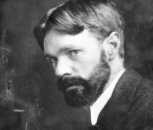
A wonderful poem simply titled ‘Thought’ by the English writer D. H. Lawrence.

Thought, I love thought.

But not the juggling and twisting of already existent ideas.

I despise that self-important game.

Thought is the welling up of unknown life into consciousness,

Thought is the testing of statements on the touchstone of consciousness,

Thought is gazing onto the face of life, and reading what can be read,

Thought is pondering over experience, and coming to conclusion.

Thought is not a trick, or an exercise, or a set of dodges,

Thought is a man in his wholeness, wholly attending.

Lawrence was hugely controversial in his day, not least due to writing Lady Chatterley’s Lover, but maintained a penetrating interest in the psychology of individuals which his stories so vividly illustrate.
 

Link to Wikipedia page on D.H. Lawrence.

Magic at the dawn of psychology

Some of the world’s best illusionists are now collaborating with cognitive scientists to better understand the mind and brain but this turns out to be old news. A brilliant article in The Psychologist charts the remarkably long history of magicians and psychologists working together to understand the human mind.

The piece is by psychologist and historian Peter Lamont, himself a stage magician of some repute, who looks back at how illusionists knowledge of mental engineering was in demand even in the earliest days of experimental psychology.

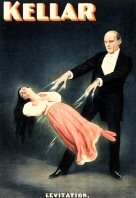
At the end of the 19th century, Hermann and Kellar were the two greatest conjurors in the world, though who was greatest depended upon whose publicity one believed. In the United States they competed over audiences and advertising space, and each considered the other his arch-rival. When Hermann died in 1896, Kellar was free to establish his reign and, aside from his notable achievements in the world of magic, he was almost certainly the inspiration for the Wizard of Oz. But before Kellar became the grand wizard, and shortly before Hermann’s death, the two great rivals agreed to compete in a quite different environment – the psychological laboratory.

In fact, December’s edition of The Psychologist is a special issue on the history of psychology with all the major articles open and available to all.
 

Link to article on magic and psychology.
Link to table of contents for December’s The Psychologist.
 

Full disclosure: I’m an unpaid associate editor and occasional columnist for The Psychologist. Sadly, I lost the magic years ago.

Soviet psychiatry, the poster series

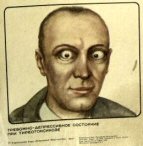
English Russia has a gallery of unsettling psychiatric hospital posters from Soviet Russia.

Sadly, my Russian is not quite as good as it should be but they seem to be a mix of flowchart style information telling staff how to deal with clinical situations and information about different sorts of disorders.

Needless to say, the bleak photos and unsettling graphics don’t make for the cheeriest combination but they are certainly an interesting insight into a small part of psychiatry from an earlier Russia.
 

Link to English Russia gallery of Soviet psychiatry posters.

An illusory tribute

Richard Gregory was a much loved and hugely influential perceptual psychologist who passed away earlier this year.

Tom just alerted me to a wonderfully appropriate visual palindrome on his page of remembrance where his name reads perfectly well when either the ‘right way up’ on when ‘turned on its head’.

If you can’t see it or don’t believe it, go to the site and click the corner to see the image rotate.

A small but charming tribute to a man who used visual illusions to demystify perception.
 

Link to Richard Gregory tribute site.

The Ancient Egyptian mummy as a drug

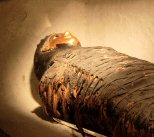
I’ve just found an amazing 1927 article from the Proceedings of the Royal Society of Medicine about the long history of using Egyptian mummies as drugs.

The fact that powdered embalmed corpse from Ancient Egypt has never been shown to have any curative or mind altering properties hasn’t prevented an enthusiasm for the substance which has lasted many thousands of years.

Avicenna (980-1037) describes mumia as useful for a variety of purposes, including abscesses, eruptions, fractures, concussions, paralysis, affections of the throat, lungs and heart, debility of the stomach, disorders of the liver and spleen, and as an antidote for poisons. As a drug, however, he never prescribes it alone, but always mixed with some herb, or in some convenient vehicle, such as wine, milk, butter, or oil.

The demand for mummies as drugs apparently reached such heights that it inspired mass grave robbing and eventually fraud as traders decided it was more profitable to kill slaves, stuff them with bitumen and dry their bodies in the sun. The flesh was fraudulently sold as genuine ancient mummy.

The medicine is mentioned everywhere from apothecary books to Shakespeare and seems to have been thought beneficial well into the 18th century.
 

Link to article ‘Mummy as a Drug’.

A hazy memory of the happiness disorder

The ex-chief executive of the British Medical Journal has an amusing blog post where he notes how a Phillip Roth novel Sabbath’s Theater brilliantly ‘mimics’ a BMJ Group article on how happiness is a disease, seemingly unaware that his journal genuinely published the article in question.

At one point in the book Mickey is visiting his alcoholic wife in a clinic and after betting on the blood pressure of various patients he encounters a young woman with “a scar on her wrist” who has been in the library of the clinic reading medical journals. She reports “word for word” on what she has read in the Journal of Medical Ethics.

I was stopped short when I read this—because the Journal of Medical Ethics is published by the BMJ Group, and I was responsible for it when I was the chief executive of the group. For a moment I wondered if the piece was really from the Journal of Medical Ethics

Roth mimics well the stilted prose of medical journals with their heavy emphasis on the passive voice. He also mimics the science that leads to problems becoming diseases. The “relevant literature” has been reviewed. This made me think immediately of Stephen Lock, my predecessor as editor of the BMJ, who always struck out “medical literature” and substituted “published reports.” “This stuff is not literature” he used to protest.

In fact, the article was genuinely published in the Journal of Medical Ethics and is titled ‘A proposal to classify happiness as a psychiatric disorder’.

It was written by British psychologist Richard Bentall who, although was clearly having some fun, was also making a serious point about the criteria we use to define mental illness.

Bentall is a long-time psychosis researcher and at the time it was not widely acknowledged that it was possible to have experiences common in diagnoses like schizophrenia, such as hearing voices, without any distress or impairment.

This is why he focuses on the statistical abnormality of the happiness state, its possible neurobiological underpinnings and it cognitive effects, often (over)used to justify why a condition is a ‘real disorder’, and then finishes with “One possible objection to this proposal remains – that happiness is not negatively valued. However, this objection is dismissed as scientifically irrelevant.”

At the time, the satire was widely missed by the British press who ran lots of ‘barmy boffin’ type stories with headlines lines like “Top Doc Talks Through Hat”.

Despite its history of being misunderstood and misremembered, it remains a cutting critique of psychiatric classification and is well worth a read.
 

Link to blog post on Roth’s novel.
Link to full text of article (click PDF link) on happiness as mental disorder.

Grief myths

Myths about grief are so widespread they frequently appear even as guidance for mental health professionals. A new study looked at textbooks given to trainee nurses and found that all had a least one unsupported claim about the grieving process and few had advice drawn from actual research.

Handily, the research paper, authored by nurse and psychologist E. Alison Holman and colleagues, has a fantastic table which lists the common myths about grief and compares them to what we actually know from studies on people who have experienced loss.

General Myths

  1. There are stages or a predictable course of grief that individuals should or typically will experience
  2. There is a specific timeline for when grieving processes will occur

    Emotional experience myths

  3. Negative emotions such as distress, depression, sadness, disorganization, loss of functioning,
    anger, guilt, fear or emotional pain ARE INEVITABLE following a loss

  4. Emotions need to be ‘‘processed’’: expressed, worked through, acknowledged, dealt with, experienced, attended to, focused on, made sense of
  5. Lack of experiencing or expression of emotions (e.g., denial, absent grief, delayed grief, inhibited grief) indicates pathology or negative consequences

    Resolution myths

  6. Recovery, acceptance, reorganization or resolution should be reached in ‘‘normal’’ grief
  7. Failure to find resolution indicates unhealthy, dysfunctional, pathological, or complicated grief

Evidence-based Findings

  1. Not all people experience grief in the same way
  2. Some grieving people do not report feeling distressed or depressed
  3. Some people experience high levels of distress for the rest of their lives without pathology
  4. Repressive coping may promote resilience in some people
  5. Resilience, growth, and/or positive emotions may be associated with loss


Link to PubMed entry for study.
Link to DOI entry for paywalled study.

A shrink among the shady in 1920s New York

Neurophilosophy has a wonderful profile the pioneering forensic psychiatrist and criminologist Carleton Simon who was working the street in prohibition-era New York in the 1920s and 30s.

Apparently, a minor celebrity in his day owing to a constant stream of headline-grabbing busts and scientific discoveries, he has since faded into obscurity but this excellent new piece covers his life, work and innovations.

At the forefront of the city’s efforts to keep crime under control was a man named Carleton Simon. Simon trained as a psychiatrist, but his reach extended far beyond the therapist’s couch. He became a ‘drug czar’ six decades before the term was first used, spearheading New York’s war against drug sellers and addicts. He was a socialite and a celebrity, who made a minor contribution to early forensic science by devising new methods to identify criminals. He also tried to apply his knowledge to gain insights into the workings of the criminal brain, becoming, effectively, the first neurocriminologist.

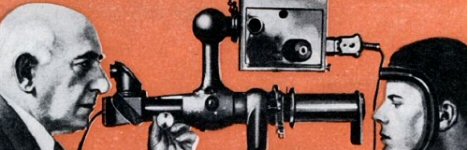
The image above is a photo of Simon with a machine he invented to photograph the blood supply network in the back of the eye, following his discovery that the network of veins is as unique as a fingerprint.
 

Link to excellent Neurophilosophy profile of Carleton Simon.

The 1911 Coca-Cola brain poison trial

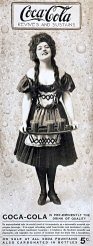
The Psychologist has a fascinating article on how the world’s favourite tooth rot, Coca-Cola, was the subject of a 1911 court case brought by the US government who believed it damaged the brain.

Although curious enough in itself, the incident also launched the career of Harry Hollingworth – later one of the founders of advertising psychology – who was paid to create laboratory tests to see whether the soft drink really caused cognitive problems.

Hollingworth was only a graduate student at the time but took the money after better known psychologists wanted to avoid getting their hands dirty with corporate cash. Apparently, Hollingworth later wrote that “he accepted the offer from the Coca-Cola Company because at his young age he ‘had as yet, no sanctity to preserve’.”

The impetus behind the lawsuit was Harvey Washington Wiley, head of the Bureau of Chemistry of the US Department of Agriculture. Wiley had long been a vocal opponent of caffeine and was especially critical of its role in the popular beverage. At the beginning of the 20th century, the Coca-Cola Company marketed the beverage as ‘the ideal brain tonic’, emphasising the stimulant properties of the drink, noting in its advertising that it ‘invigorated the fatigued body and quickened the tired brain’. Wiley had testified before Congress that caffeine was a poison and a habit-forming drug. He was not fond of coffee or tea but was less critical of those drinks because the caffeine was an indigenous ingredient. But he opposed the sale of Coca-Cola on two grounds: the caffeine was an added ingredient, and the beverage was marketed to children.

As might be expected from a caffienated, sugar-packed drink, the sophisticated double-blind studies showed that people experienced a small boost in mental ability shortly after drinking it, although the case was thrown out for technical reasons.

Although Hollingworth didn’t continue doing drug-testing research, his experience of applying psychology to the corporate world undoubtedly opened the door to his future career in advertising.
 

Link to ‘Coca-Cola – Brain tonic or poison?’

Lights, camera, action potential

The Loom has a wonderful photo essay taken from a new book called ‘Portraits of the Mind: Visualizing the Brain from Antiquity to the 21st Century’.

The photos range from the first ever known drawing of the nervous system, made by 11th century Arab scientist Ibn al-Haytham, to the beautiful pictures of the ‘brainbow‘ fluorescent neurons.

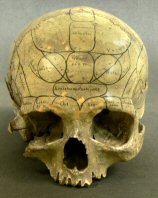
Don’t miss the caption below each picture that describes its origin and significance. The photo on the right is genuine human skull with phrenology markings.
 

Link to Loom photo essay.
Link to details of the book ‘Portraits of the Mind’.

Impaled by comparison

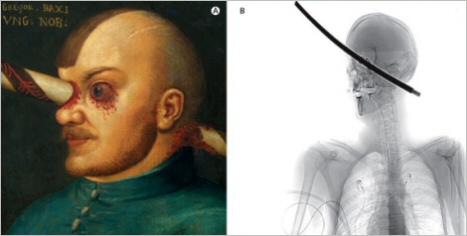
The picture on the left is a famous 1550 portrait of the Hungarian nobleman Gregor Baci who was impaled through the head by a lance.

It was never known whether the picture had been exaggerated. Recently, a medical team from Austria reported a remarkably similar case in The Lancet where the patient survived and recovered with no ill effects. The CT scan of this modern-day Gregor Baci is visible on the right.
 

Although case reports of trauma describe single events only, they can contain very useful scientific information for applied surgery. The portrait of Gregor Baci from the collection of Archduke Ferdinand II of Austria (figure A) provokes the question: is the legend that Baci survived a piercing injury with a lance only a myth, or does medical fact indicate that such severe impalement of the head and neck can be survived? We were able to provide the answer, when a similar case of impalement presented to us.

The patient, a craftsman, was injured when a metal bar fell from the ceiling of a church with an altitude of about 14 m, impaling his head in an anterior-posterior direction (figure B)…

The patient had to undergo surgical treatment twice, and had a year of episodes with headache and moderate diplopia, but now, about 5 years after the accident, the patient does not show any related clinical symptoms…


Link to DOI entry for brief Lancet case report.

The origin of the ‘nervous breakdown’

I often get asked what ‘nervous breakdown’ means, as if it was a technical term defined by psychology.

In fact, it’s really just an everyday term used to describe when someone can’t carry on because of psychological problems, although it turns out to have quite technological origin, as this brief article from the American Journal of Psychiatry describes.

The Cambridge academic German Berrios (personal communication) informed me that “breakdown” is a 19th century construction, initially used to refer to breakages and fractures in machinery and leading to the need for “breakdown gangs” (i.e., teams of navvies whose job involved addressing the mechanical disruptions to the functioning of railways). Metaphorical uses of the term followed, particularly in reference to failure in personal intentions and plans.

Berrios suggested that it was only in the second half of the 19th century that its metaphorical connotations were extended to the brain—and later to the mind. Its initial association was not to depression, anxiety, or psychosis but to symptoms associated with mental and physical exhaustion and relating to 19th century constructs such as “neurasthenia,” “the vapors,” “spinal irritation,” and “nervous prostration.” Because neurasthenia (in Greek meaning “lack of nerve strength”) imputes a physical basis (in the nerves) rather than psychological weakness, it was an intrinsically less stigmatizing phrase than “mental illness,”


Link to AJP piece on the ‘nervous breakdown’.

A history of the phantom penis

After amputation, many people feel ‘phantom limb‘ sensations that seem to come from the missing body part. Although typically associated with missing arms or legs, these phantom sensations can arise from almost anywhere and a new study in the Journal of the History of the Neurosciences looks at how the ‘phantom penis’ has enjoyed a surprisingly long history in the medical literature.

The first case of a phantom penis was mentioned in passing by the ‘father’ of phantom limbs, Silas Weir Mitchell, and there has been an assumption that these sensations are rare or unusual.

In fact, a 1999 case report of a phantom penis after amputation noted only a few previous mentions of the experience, some of which have become quite well-known.

Among the most cited publications is one by Boston surgeon A. Price Heusner (1950) containing two case studies. His first case was an elderly man whose penis was “accidently traumatized and amputated,” and who “was intermittently aware of a painless but always erect penile ghost whose appearances were neither provoked nor provokable by sexual phantasies” (Heusner, 1950, p. 129). This man had to look under his clothes to be sure that his penis was, in fact, absent. Heusner’s second case was a middle-aged, perineal cancer patient. Because his malignancy had spread and was causing intense burning pains in his groin, he opted to undergo penile amputation. Thereafter, he continued to have painful sensations “suggesting the continuing presence of the penis,” until he underwent spinal surgery

This new historical study shows that there were actually many reports of phantom penises in the 18th Century medical literature that have previously been overlooked.

These include reports from some of the most important doctors of the time, and indeed, some of the most important in history.

This included the Scottish surgeon and anatomist John Hunter who reported on what can only be described as phantom wanking:

A serjeant of marines who had lost the glans, and the greater body of the penis, upon being asked, if he ever felt those sensations which are peculiar to the glans, declared, that upon rubbing the end of the stump, it gave him exactly the sensation which friction upon the glans produced, and was followed by an emission of the semen.

Hunter’s case highlights an interesting aspect of the phantom penis sensation which seems to differentiate it from most other forms of phantom limb sensations – they tend to be pleasurable rather than painful.

Phantom limbs are often associated with the feeling that the missing body part is stuck in an awkward position, such as the ‘fingers digging into the palm’, something which the mirror box treatment attempts to correct.

Although some painful phantom penises have been reported they seem more likely to appear as pleasurable sensations and phantom erections.

This may have some interesting implications for neuroscience. Phantom limbs are thought to arise when activity in the brain maps that represent the limbs no longer have a constant flow of sensory feedback that keep them tied to their task.

The boundaries of the maps become blurry and information from other body areas starts to cause activity in the map for the missing limb, leading to the phantom sensations.

However, in contrast to the penis, arms and legs involve much more of a feedback loop, because fine action control signals are being sent and modified on the basis of the sensations from the limb.

As the penis has less need for such fine action control, it’s probably less likely that misfiring of the signals can make it seem as if it is in an awkward or painful position, possibly reducing the chance of an uncomfortable phantom pecker.
 

Link to DOI entry for the locked article (via AITHOP).

Pavlov steaks a claim

Yale University archives have a piece of steak signed by the famous Russian psychologist Ivan Pavlov. The story of how this meaty museum piece was created is told in a short article for Yale Magazine.

Pavlov was apparently visiting the renowned brain surgeon Harvey Cushing when a new piece of surgical equipment caught his eye.
 

Pavlov was captivated by the new electrosurgical knife Cushing used in the operation, and at the end of the procedure, Cushing got a piece of beef so that the elder scientist could try his hand. After making a few incisions, Pavlov inscribed his name into the meat. “I asked him whether he wanted me to eat the meat in the hope of improving my conditional reflexes,” Cushing wrote in his journal, “or whether we could keep it in the museum, the latter we will proceed to do—’Pavlov’s beef-steak.'” A collector of old medical books and of brain tumors, when he died in 1939 Cushing bequeathed both to Yale, where his rare books would become the cornerstone for creating the Medical Historical Library.

For all his work on salivation, it’s a little ironic that Pavlov’s first response on being handed a steak was to respond quite so unusually.

The article has more on the curious museum piece.
 

Link to article on the signed steak (via Wonderland).

The Arabic anaesthetic sponge

A 1997 letter to the British Medical Journal describes an innovative surgical anesthetic used by Arabs in the middle ages that involved placing a sponge soaked in opium, hashish and scopolamine over the patient’s face.

From the ingredients, the patient was probably aware of little, let alone any pain, and it appropriately features in the dreamy Middle Eastern classic, Arabian Nights.

Editor—Anthony John Carter’s review of sedative plants skipped several centuries and did not mention the “Arabic anaesthetic sponge.” Opium infusion was known to Arab clinicians throughout the middle ages and was used commonly to relieve pain associated with inflammation or procedures such as tooth extraction and reduction of fractures. Poppy seeds were used in oral perioperative analgesic syrups or paste; their boiled solution was often used for inhalation.

Anaesthesia by inhalation was mentioned in R Burton’s Arabian Nights, and Theodoric of Bologna (1206-98), whose name is associated with the soporific sponge, got his information from Arabic sources. The sponge was steeped in aromatics and soporifics and dried; when required it was moistened and applied to lips and nostrils. The Arabic innovation was to immerse the “anaesthetic sponge” in a boiled solution made of water with hashish (from Arabic hasheesh), opium (from Arabic afiun), c-hyoscine (from Arabic cit al huscin) [aka scopolamine], and zo’an (Arabic for wheat infusion) acting as a carrier for active ingredients after water evaporation.


Link to full text of BMJ letter.