Interview with Wade Davis: Part I – altered states

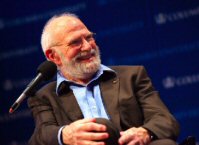
Anthropologist and explorer Wade Davis recently gave a talk at Medellín’s fantastic science museum Parque Explorer and myself and science journalist Ana María Jaramillo managed to grab some of his time to discuss altered states of consciousness and cultural diversity.

If you’re not familiar with Davis’ work, his TED talk on ‘Cultures at the far edge of the world’ is a great place to start.

It was a particular pleasure to talk to Davis in Medellín, because he has had a long connection with the city, previously holding a post at the Botanic Garden, and has extensive experience of Colombia.

His book, One River, discusses his time in Colombia as a student of the legendary botanist and explorer Richard Evans Schultes who was the first to scientifically describe numerous psychoactive plants and substances – including the famous psychedelic of the Amazon peoples – yagé or ayuhuasca.

Our interview is in two parts, and this first part will cover how mind-altering substances integrate with culture and Davis’ own experience with psychedelics. Tomorrow, we’ll discuss diversity of human cultures across the world.


Ana María: I’d like to know how cultural context transforms the effect of a mind-altering substance. For example, is there a difference in experience between someone who takes yagé in a traditional context and someone who takes it outside the ritual, for recreation.

I think it makes a profound difference. Just speaking of psychotropic plants and preparations, everybody who has seriously studied them has always looked at what’s called ‘set and setting’. The ‘set’ is the mental set that you bring to the experience and the setting is the physical ambience in which you experience the explosion of consciousness. Part of the ‘set’ is your own cultural predispositions to the experience

I remember noticing this very much so in Haiti when I studied voodoo. It was just astonishing to witness voodoo acolytes in a state of trance, possessed by the spirit as they saw themselves, handling burning embers with impunity. And when I say that I’m not indulging in some kind of New Age mysticism, I just saw people walking around with burning coals in their mouths, and I can assure you that I would have burnt my tongue terribly whatever the circumstance.

People often ask me, when you were studying voodoo did you become possessed? But the idea was ridiculous to me. If you listened to what I was saying about it, or anyone else was saying about the really unique richness of the cultural experience, it’s just not something you can just try on like a cloak. You can’t just go down to Haiti, put down your money, or put down your soul, and suddenly become a voodooist.

It just has to be something in the very fibre of your being when growing up. Similarly, I think that the set and the setting in which indigenous people in the Amazon experience these substances is probably very unique and it’s also not uniform in any one culture. I remember once when I was with the Cofán and we had taken yagé in a very traditional context and afterwards I turned to the people I had been up all night with and said “I don’t know about you guys but that stuff scares the hell out of me” and they said “scares us too!”

So I think the experiences are idiosyncratic but also culturally specific, that’s my sense of it. But I don’t pretend to be any kind of authority. It’s mainly just based on my own experience, other people might disagree.

It’s interesting how these things change though. I find it fascinating that there is this ayahuasca phenomenon, it’s literally sweeping Europe and sweeping the United States. I meet young people who take ayahuasca and they speak so positively about the experience whereas I remember the whole point of ayahuasca was facing down the jaguar, being ripped away from the tit of jaguar woman. That was sort of what its point was.

I think our reaction to these substances can change over time too, almost as age cohorts move though. I’m someone who’s very happy to say that not only did I used psychedelics and enjoyed them but that they changed my life. I don’t think I would speak the way I speak, write the way I write, synthesise information the way I do, understand those notions of cultural relativism as reflexively as I do, if I hadn’t taken psychedelics.

I often think it’s interesting that if we look at the social changes of the last 30 years – everything from new attitudes towards the environment, new sense of the holistic integration of the Earth, women going from the kitchen to the board room, people of colour from the woodshed to the Whitehouse, gay people from the closet to the alter, that we always leave out of the recipe of social change that millions of people all around the world lay prostrate before the gates of awe after having taken some psychedelic.

We came out of a place with profound alienation of our cultures, experimenting with psychedelics in a very fresh way – there was not a lot of expectation. We rediscovered lots of new drugs and just tried them on ourselves so there were a number of things we could say we were the first to take. Not that I want to dwell on that, but the idea that were trying to find some idea of what it means to be human.

And also cultural relativism and just the idea that other peoples of the world aren’t failed attempts at being you, that comes powerfully from the psychedelic experience. I one point I remember I took some big heroic dose of some drug, I can’t remember exactly, San Pedro I think, and I was stopped by my friend just before I could send a telegram to my professor at Harvard that was going to say ‘Eureka! We’re all ambulatory plants!’ I don’t think that would have really got me too far.

That said, I found that psychedelics were extremely useful to me when I was young, when I was trying to de-construct the world that I had been born into but didn’t necessarily want to live in. And then as I carefully constructed a world, became married, became a father, developed a career, created a world, I found psychedelics profoundly disorienting and not very helpful.

Vaughan: Do you think the kind of disorientation you mentioned also happens on a cultural level? I’m very struck by the fact that many Western cultures are officially hostile to a lot of psychedelic drugs and yet there are many traditional cultures which have used them for thousands of years. I’m interested in that process of integration.

I think that’s a key point. For whatever reason, people in the West define drugs by culturally routed moral and legalistic opinion and therefore the drugs we habitually use we dismiss with euphemisms. So we don’t use caffeine we have a ‘coffee break’, or we’ll have a ‘cocktail party’ or a ‘quick smoke’. The irony is, is that the drugs we do choose to use, by chance turn out to be pharmacologically some of the most powerful and arguably some of the dangerous. Obviously, tobacco being the first to come to mind.

What you see in indigenous cultures by contrast, and lots of people have written about this, is that they seem to recognise that the desire to periodically change consciousness is an acceptable desire and the ethnographic record says it’s so ubiquitous in the human record that you have to see it as a basic human appetite. But they also recognise that the pure effects of these substances can be profoundly disquieting and so they insulate that possibility in a protective cloak of ritual.

Of course, they use their drugs in natural forms – again, I’m not speaking with hippy ethnography – but it’s just a more benign way of taking any drug. And that doesn’t mean that they only use these drugs for ‘culturally useful purposes’ – that was a sort of wonderful puritanical rap laid on us by anthropologists in the 70s who wanted to say it was OK for Indians to take drugs but not us because they don’t really have fun when they use drugs. That’s just not true. The Yanomami love getting high – that’s what they do all day long.

But there obviously seems to be great lessons in that because we remain tormented by drug problems that don’t go away. Andy Wild wrote a long time ago that there’s no such thing as a good or bad drug just good and bad ways of using drugs.

The interesting thing about these substances is not the pharmacological effects but the question of whether they are helpful to you. Do they help you understand something about your life and destiny and your sense of being in the world? I think with psychedelics that they can be profoundly useful but there like a telephone call – once you get the call and get the message you can hang up as Ram Dass famously said.

Mental air

A poem by the great Irish writer William Butler Yeats on the difficulties of getting the balloon of the mind into its narrow shed.

No, I’m not really sure what it’s about either, but I wonder if that’s the point.

The Balloon Of The Mind
by William Butler Yeats

Hands, do what you’re bid:
Bring the balloon of the mind
That bellies and drags in the wind
Into its narrow shed.

I’ve got a certificate in armchair psychology

The Guardian’s Lay Scientist blog has an excellent piece on the misguided and intrusive habit of getting psychologists to comment on the mental state of people in the public eye.

Although the media must take some responsibility for encouraging such crass and unhelpful speculation the responsibility lies squarely on the shoulders of the psychologists and pseudo-psychologists who are happy to waffle for their fifteen minutes of fame.

There are two possibilities for a psychologist talking to the media about somebody’s mental health. Either they have treated the subject in a professional capacity, in which case the details should be confidential, or they haven’t, in which case they aren’t qualified to comment….

But forget about my opinions – if you’ll excuse me quoting myself, let’s go back to what the British Psychological Society told me about their guidance last year in the wake of Michael Jackson’s death:

“A guiding principle of the British Psychological Society (BPS), echoed by psychologists I have spoken to, is that professionals should not comment publicly on the mental health of celebrities….”

In spite of guidelines like these, we’re fed a diet of pop psych speculation based on second- or third-hand media reports, dressed up as meaningful analysis through the presence of a media-friendly expert.

It’s true to say that a lot of this opinion parading as professional insight comes from people who are self-appointed ‘body language analysts’ or have simply written a book about ‘relationships’ but it comes surprisingly often from legit psychologists.

But as Dr Petra has noted in the past, the guidelines are rarely enforced by professional associations and the immediate rewards in terms of further media work are a big encouraging factor.
 

Link to The Lay Scientist on celebrity pop psych waffle.

A shrink among the shady in 1920s New York

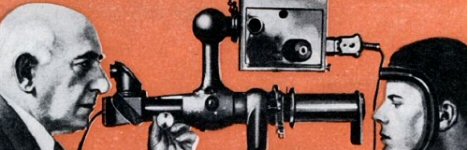
Neurophilosophy has a wonderful profile the pioneering forensic psychiatrist and criminologist Carleton Simon who was working the street in prohibition-era New York in the 1920s and 30s.

Apparently, a minor celebrity in his day owing to a constant stream of headline-grabbing busts and scientific discoveries, he has since faded into obscurity but this excellent new piece covers his life, work and innovations.

At the forefront of the city’s efforts to keep crime under control was a man named Carleton Simon. Simon trained as a psychiatrist, but his reach extended far beyond the therapist’s couch. He became a ‘drug czar’ six decades before the term was first used, spearheading New York’s war against drug sellers and addicts. He was a socialite and a celebrity, who made a minor contribution to early forensic science by devising new methods to identify criminals. He also tried to apply his knowledge to gain insights into the workings of the criminal brain, becoming, effectively, the first neurocriminologist.

The image above is a photo of Simon with a machine he invented to photograph the blood supply network in the back of the eye, following his discovery that the network of veins is as unique as a fingerprint.
 

Link to excellent Neurophilosophy profile of Carleton Simon.

Ted Hughes On Thinking

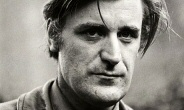
Editor of The Psychologist and man about town, Jon Sutton, just sent me a fantastic monologue by poet Ted Hughes on the experience of thinking.

I’ve uploaded the piece to YouTube where you can hear Hughes’ remarkable analysis in his own characteristic voice.

The piece is almost nine minutes long but in this part Hughes describes what psychologists would now call metacognition.

There is the inner life of thought which is our world of final reality. The world of memory, emotion, feeling, imagination, intelligence and natural common sense, and which goes on all the time consciously or unconsciously like the heartbeat.

There is also the thinking process by which we break into that inner life and capture answers and evidence to support the answers out of it.

And that process of raid, or persuasion, or ambush, or dogged hunting, or surrender, is the kind of thinking we have to learn, and if we don’t somehow learn it, then our minds line us like the fish in the pond of a man who can’t fish.

I have tried to find the origin of the piece but have come up with nothing and Jon says he originally recorded it from Jarvis Cocker’s BBC 6music show but has no more details.

If you know any more about the piece, do add a note in the comments.
 

Link to Ted Hughes ‘On Thinking’ (massive thanks @jonmsutton).

A previously unseen species of hallucinated moth

I’ve discovered H.G. Wells’ amazing short story The Moth about a scientific feud between two leading entymologists that ends with one’s premature death and the other being driven insane by an hallucinated moth.

It’s a deftly written piece because it captures the method of scientific grudge matches – devastating and savage critiques in scholarly journals – and is peppered with references to illusory scientific papers.

Pawkins, the target of the academic demolition job dies shortly after, only for Hapley, the scientific aggressor, to see a moth that is completely new to science but which seems strangely difficult to capture.

That night Hapley found the moth crawling over his counterpane. He sat on the edge of the bed in his shirt sleeves and reasoned with himself. Was it pure hallucination? He knew he was slipping, and he battled for his sanity with the same silent energy he had formerly displayed against Pawkins. So persistent is mental habit, that he felt as if it were still a struggle with Pawkins. He was well versed in psychology. He knew that such visual illusions do come as a result of mental strain. But the point was, he did not only _see_ the moth, he had heard it when it touched the edge of the lampshade, and afterwards when it hit against the wall, and he had felt it strike his face in the dark.


Link to full text of The Moth.

Campaign man

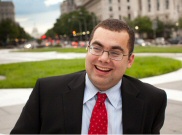
Wired Science has an exclusive interview with Ari Ne’eman, the first openly autistic White House appointee in history, who has been given a place on the National Council on Disability that advises the president on equality for disabled people.

Ne’eman is an advocate of neurodiversity, which rather than automatically seeing conditions like autism and Asperger’s syndrome as diseases to be cured, understands them as another form of human variation that should be accepted.

As a society, our approach to autism is still primarily “How do we make autistic people behave more normally? How do we get them to increase eye contact and make small talk while suppressing hand-flapping and other stims?” The inventor of a well-known form of behavioral intervention for autism, Dr. Ivar Lovaas, who passed away recently, said that his goal was to make autistic kids indistinguishable from their peers. That goal has more to do with increasing the comfort of non-autistic people than with what autistic people really need.

Lovaas also experimented with trying to make what he called effeminate boys normal. It was a silly idea around homosexuality, and it’s a silly idea around autism. What if we asked instead, “How can we increase the quality of life for autistic people?” We wouldn’t lose anything by that paradigm shift. We’d still be searching for ways to help autistic people communicate, stop dangerous and self-injurious behaviors, and make it easier for autistic people to have friends.

But the current bias in treatment — which measures progress by how non-autistic a person looks — would be taken away. Instead of trying to make autistic people normal, society should be asking us what we need to be happy.

This issue is a particularly heated one, not least because describing someone as ‘on the autism spectrum’, or even ‘autistic’ tell us little about the individual.

People with a diagnosis of autism can range from highly intelligent but socially atypical individuals, to people who are unable to attend to their most basic needs and are severely cognitively impaired.

This diversity means that anyone seeming to champion autistic people is assumed by one party or other to be an interloper who doesn’t fully represent the range of life experiences, either of individuals or families with autistic members.

Ne’eman is certainly a powerful and articulate speaker and as the first autistic person to be appointed to an official advisory position, he will be seen as the ‘voice of autism’ whether he likes it or not.
 

Link to Wired Science interview with Ari Ne’eman.

Edvard Munch in 100 words

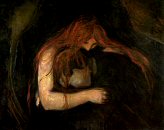
This month’s British Journal of Psychiatry has the latest in their ‘100 words’ series on the Norwegian artist Edvard Munch, famous for his iconic painting ‘The Scream’ and his own struggles with mental illness.

The Norwegian Expressionist Edvard Munch caused outrage when his paintings were first shown in Berlin but became one of the most prolific artists of his time. Often described as having had bipolar affective disorder, his low moods and sense of isolation are evident in works such as The Scream, Separation,and Evening on Karl Johan. Yet the evidence of his diaries and his many biographies suggest more plausible diagnoses of depressive disorder and comorbid alcohol dependence. Art historians acknowledge his ability to represent extreme emotional states, while debating the extent to which Munch exploited the market for his ‘flawed personality’.


Link to DOI entry for article.

Visual science in the art of Chuck Close

I’ve just found this amazing article on the work of artist Chuck Close from a 2008 edition of the Archives of Ophthalmology.

It examines the visual science behind his pixelated style and how a stroke left the artist paralysed – after which he has produced some of his finest work.

Chuck Close (1940- ) is one of the most famous American artists working today. His distinctive paintings are huge canvases that depict faces, often his own. He works in a nontraditional manner by combining many small geometric forms, usually squares or rectangles, to create a portrait. The individual elements he uses in making an image may be termed pixels. The word pixel is a neologism used in computer technology to mean the smallest form in a digitized image and is a combination of the words picture and element.

Chuck Close is a compelling individual who has endured a great physical misfortune. In 1988 he experienced an occlusion of a spinal artery in the neck, which left him quadriplegic. The occlusion has affected the way he paints, but not his style of painting. Many experts have found it difficult to differentiate work done before the onset of his quadriplegia from that done afterward.

The paintings lead to important questions concerning visual perception and the possibility of artificial vision. What determines our ability to combine many small geometric units into a coherent image? How many different elements are needed to create an image? What are the effects of changing colors within the elements?

Close has had a long interest in science, and even painted a cover for the journal Science.

For someone who paints such remarkable portraits, you might be surprised to learn that he recently revealed he has prosopagnosia, a life-long difficulty in recognising faces.

The Archives of Ophthalmology article looks at how we perceive coherent images from patterns that seem chaotic when viewed at close quarters and how Close takes advantage of these processes in his work.

You can click on the images in the article to see them much larger and really get an idea of how they’re constructed.
 

Link to Archives of Ophthalmology on Chuck Close and visual science.

An Opthamologist on Mars

Oliver Sacks is interviewed on NeuroTribes where he talks about his forthcoming book and his own experience of spectacular hallucinations that occurred after he developed a tumour behind his retina.

NeuroTribes is a new blog by ace science writer and Wired veteran Steve Silberman. It is part of the new PLoS science blog network and in the inaugural post Silberman has scooped a fascinating interview with the great neurologist and raconteur himself.

Here he discusses how his hallucinations, caused by the brain trying to ‘fill in’ or ‘guess’ what should be in the damaged part of the retina, are affected by smoking pot.

I also had — and still have — almost continuous hallucinations of a low order: geometric things, especially broken letters, some of them like English letters, some like Hebrew letters, some like Greek, some runes, and some a bit like numbers. They tend to have straight lines rather than curves, but they rarely form actual words. This is not something I said in the book, but if I smoke a little pot, they sometimes become words. And they tend to be in black and white — but when I smoke a little pot, they’re in color.

Silberman: That’s wonderful. What do the words say?

Sacks: Short English words of no particular significance like “may,” or pseudo-words, like “ont.” Also, since my back surgery last year, I’ve been on nortriptyline, which is supposed to block the gating mechanism for pain in the spinal cord. I only take a small dose, because it gives me an intensely dry mouth. But even the small dose has a striking effect of enhancing dreams and involuntary imagery, and upgrading my hallucinations from black-and-white to color, and from geometric patterns to faces and landscapes.

The interview is both playful and profound and makes a great teaser for his forthcoming book, which apparently, is due out in October.
 

Link to Oliver Sacks interview on NeuroTribes.

A series of famous cases

BBC Radio 4 have just started a new season of Case Study that looks at some of the most famous and important cases in the history of psychology.

The first is on HM, and although there’s nothing in the programme that’s particularly new about the science of memory, it does give a much fuller account of how the famous amnesic patient was as a person.

His recent death has allowed the shroud of anonymity to be lifted and the programme interviews his ex-carers and researchers who worked with him about his personality, personal history and general demeanour.

One of the most interesting parts is where HM’s alterations in emotion are discussed (likely owing to the removal of his amygdala along with most of his hippocampus) which is a topic largely ignored in the scientific studies on his memory.

The new series covers four cases but each is only available online for a week after it was broadcast (your license fee in action). The HM episode is only available until Wednesday so enjoy it while you can.
 

Link to HM episode of BBC Case Study series.

A neuroscientist’s psychosis

As well as publishing scientific papers about mental illness, Schizophrenia Bulletin also publishes personal accounts of psychosis and schizophrenia. I’ve just discovered this incredible 2006 article where a neuroscientist recounts her personal experience of becoming psychotic.

It’s not only vividly descriptive but wonderfully lyrical as well, written with both honesty and insight.

I was awash in a sea of irrationality. The Voices swirled around me, teaching me their Wisdom. Their Wisdom was of the Deep Meaning, and I struggled to understand. They told me their secrets and insights, piece by piece. Slowly, I was beginning to make sense of it all. It was no delusion, I knew—in contrast to what the doctors said.

“Erin, you are a scientist,” they’d begin. “You are intelligent, rational. Tell me, then, how can you believe that there are rats inside your brain? They’re just plain too big. Besides, how could they get in?”

They were right. About my being smart, I mean; I was, after all, a graduate student in the neuroscience program at the University of British Columbia. But how could they relate that rationality to the logic of the Deep Meaning? For it was due to the Deep Meaning that the rats had infiltrated my system and were inhabiting my brain. They gnawed relentlessly on my neurons, causing massive degeneration. This was particularly upsetting to me, as I depended on a sharp mind for my work in neuroscience.


Link to ‘Being Rational’ in Schizophrenia Bulletin.

The legend of Lester D

When searching for psychology research, I inevitably come across a study by ‘Lester D’, who is apparently a psychologist in an obscure college in New Jersey who seems to be interested in everything.

Mostly, the things you’ve never thought of, and probably never even thought of thinking of, and perhaps don’t even have the capacity to conceptualise.

To be fair, he has a clear interest in suicide research and does a great deal of important work in this, and other areas, but what consistently amazes me are the diverse topics he investigates.

For example, he has discovered that:

Mormons view the afterlife as less pleasant than Jews.

On average, there is no difference in the height from which men and women jump to their deaths.

Wives of coast guards and no more likely than wives of firemen to be depressed following a family move, but are more likely to be taking antidepressants.

There is no relation between religiosity and death anxiety in Kuwait.

Both anxiety about computers and internet skills affect how likely you are to buy a textbook online.

Among organ donors, homicide victims were more likely to have blood types O and B. Suicides showed no differences.

Macintosh users have significantly greater anxiety about computers than PC users.

By my reckoning, he has published close to 1,500 scientific articles in everything from the most prestigious journals to the most obscure printings.

‘Lester D’ you are a little-known legend. Like the Elvis Costello of the mind.
 

UPDATE: Thanks to @carlacasilli who managed to track down Lester D online. You can see a picture of David Lester half way down this page. He has two PhDs and looks like, well, a legend of course.


Link to ‘Lester D’ publication list on PubMed.

The experiment requires that you continue

Spanish daily El País recently published an article on psychologist Stanley Milgram which had this amazing photo of the young conformity researcher where he looks surprisingly beatnick.

Sadly the photo isn’t dated but it makes quite a contrast to the better known photos where he looks much more like the typical professor of the age.

He looks both wonderfully creative and slightly haunted, which seems to capture his contribution to psychology perfectly.

The article is also worth checking out but is only available in Spanish, so you may have to deploy a utilisation of the page of Google’s Translate which can make a translate of the text if you desire to read it in the English.

Link to El Pa√≠s article ‘El psic√≥logo’.
Link to big version of photo.

The blessed neuroscientist

Neurosurgery has an article on the 17th Century neuroanatomist Niels Stensen who not only made major contributions to our understanding of the brain but was beatified – the first step to becoming a saint – by Pope John Paul II in 1988.

His work was not restricted to the brain and was a founding figure in both geology and palaeontology, but his willingness to test received wisdom with regard to brain anatomy led him to overturn some key assumptions of the time:

Stensen contested the anatomic assumptions of Descartes’ description of the pineal gland. In L’Homme, Descartes depicted the human body as a machine controlled by the soul, the seat of which was the pineal gland. Descartes described the pineal gland as a mobile structure, surrounded by small arteries and suspended in the ventricles. Although Stensen admired Descartes’ philosophical method, his careful dissection neatly demonstrated the anatomic errors of Descartes on pineal gland, finally solving the ‚Äúmost famous anatomic dispute which this age has produced‚Äù.

Sadly, it was not his work on the pineal gland which earned his holy promotion but his decision to pack in science to become a bishop.

However, the final outcome was much the same as he died in poverty wandering from place to place trying to engage the public.

Link to Neurosurgery on Niels Stensen.

Aldous Huxley’s final trip

This month’s edition of the cancer medicine journal Lancet Oncology discusses some ongoing trials of psychedelic drug assisted psychotherapy for people dying of cancer but notes that author Aldous Huxley actually died while on LSD – by his own request.

Today, in a small handful of laboratories across the USA, an equally small handful of patients with terminal cancer are volunteering to take part in psychotherapeutic treatment for anxiety and depression brought on by their diagnosis. But this psychotherapy comes with a unique twist: it involves the controlled and supervised ingestion of a psychedelic drug. A radical approach, some might say, even shocking. But pioneering? Perhaps not.

Back in November, 1963, the author and intellectual Aldous Huxley finally succumbed to the laryngeal cancer he had been diagnosed with 3 years earlier. Huxley’s life had already been touched by cancer, with the death from breast cancer of his first wife Maria in 1955. It was the experience of his first wife’s death, which led Huxley to conclude that ‚Äúthe living can do a great deal to make the passage easier for the dying, to raise the most purely physiological act of human existence to the level of consciousness‚Äù.

This desire for consciousness and awareness at the point of death was almost certainly the motivation for his deathbed request—written, according to his second wife, Laura, because his disease had robbed him of his voice—for “LSD, 100 μg, intramuscular”. Laura later wrote that she granted his request, and he died peacefully hours later.

A week after his death, Huxley’s widow ended a letter to his older brother, Julian, with this question: ‚Äúis his way of dying to remain our, and only our relief and consolation, or should others also benefit from it? What do you feel?‚Äù Over 40 years later, the current mini-renaissance in the experimental study of psychedelic drugs such as LSD and psilocybin for anxiety and depression in patients with cancer looks set to answer Laura Huxley’s question.

To be fair, the comparison is perhaps a little rhetorical because the current trials do not involve giving psychedelic drugs to people in their final moments, but instead during psychotherapy sessions in the weeks and months before death to assist in coming to terms with existential issues around the end of life.

Link to PubMed entry for Lancet Oncology item.