‘Legal marijuana’ and a ban on brain function

The United States Congress has just passed a bill to ban ‘legal marijuana’ incense products and ‘bath salts’ stimulants – a legal move which, possibly for the first time, prohibits substances based on their action in the brain and not solely their chemical structure.

The bill is an amendment to the Controlled Substances Act which currently contains a list of prohibited drugs, defined entirely by their name.

Due to the varied nature of cannabinoids, and the fact that semi-legit labs seem to be producing new variations at a remarkable rate, the bill uses quite a wide definition.

The bill (pdf here) specifically prohibits “cannabimimetic agents”, defined as:

…any substance that is a cannabinoid receptor type 1 (CB1 receptor) agonist as demonstrated by binding studies and functional assays within any of the following structural classes…

and any preparation

…which contains any quantity of cannabimimetic agents, or which contains their salts, isomers, and salts of isomers…

In other words, the definition includes a general class of compounds and possible chemical variations that have a specific action in the brain – namely binding to the CB1 receptor.

This is, as far as I know, the first attempt to ban a specific brain function.

The safety is these drugs is still largely unknown, however. Although most were developed many years ago they’ve never been scientifically tested in humans and current research is limited to a few case reports or small studies.

There have certainly been deaths and bad reactions but as we have almost no information on how widespread the use of these drug is we really have no idea about the relative risks.
 

Link to news from the DrugMonkey blog.
pdf of passed bill.

On the perimeter of the synthetic cannabinoids

The synthetic weed story has just taken an interesting turn. Until now, all synthetic cannabinoids found in ‘herbal incense’ products have been taken from the scientific literature but a new previously unknown compound has just been discovered suggesting the underground labs are starting to innovate.

Cannabinoids are a type of compound related to the active chemicals in the cannabis plant. It turns out that a massive range of diverse compounds are cannabinoids and have a similar effect in the brain.

Synthetic cannabinoids have been researched for years. Both universities and pharmaceutical companies have churned out hundreds of variations both aiming to further our knowledge of the molecules and to look for potentially useful commercial compounds.

Since the mid-2000s, clandestine labs, thought to be based in China, have been synthesising cannabinoids that get you high, adding them to inert plant matter, and selling it as ‘herbal incense’ or ‘spice’ products for stoners.

Until now, almost all have been taken from scientific journals. The labs have been rifling through published research, picking out synthetic cannabinoids that look smokeable (and that haven’t been banned yet) and synthesising them.

Most are from the JWH series, named after John W Huffman, the chemist who first synthesised them in the 80s.

However, a new study in Forensic Science International reports on an analysis of a ‘herbal smoking mixture’ seized in Germany that contained both a banned known cannabinoid called JWH-073 alongside a completely new compound.

The chemical name is 1-butyl-3-(1-(4-methyl)naphthoyl)indole but it’s just called “compound 2” in the study.

Now it’s possible that this is just a by-product unknowing included in the mix, but I suspect this is unlikely.

In a new (excellent but locked) article on the chemistry of ‘designer street drugs’ the authors note that new molecule is a previously unknown hybrid of two existing high-potency synthetic cannabinoids. They also say the existence of this new molecule supports the idea that the clandestine labs are working on new compounds for street products.

What this means is that the labs are likely branching out from simply grabbing existing compounds from the literature to innovating new cannabis-like drugs, showing a surprising level of sophistication.

On a side note, it’s also interesting that this compound turned up in Germany, the same place that the original ‘herbal smoking mixtures’ appeared, perhaps suggesting that the country has the most direct links with the clandestine labs.
 

Link to locked report of novel cannabinoid.

Radio 4’s brilliant brain season now being scattered

BBC Radio 4’s Brain Season is in full swing, which, in typical BBC fashion, is both brilliantly conceived and chaotically scattered over their webpages like a drunken farmer chasing birds off his field with a seed planter.

A good place to start is the brain season blog post which lists all the programmes in the season and links to their programme page and separate podcast page (if one exists). It may or may not be being updated as new material comes online.

Probably the best of the season is the History of the Brain series of which five of the ten programmes have been broadcast at the time of writing and which are all available on a single permanent temporary podcast page.

You could go to the separate and unlinked programme information page that has a few more details and the streamed audio but I’d advise against it as it’ll only encourage them.

The one-off Mind Myths and Life Scientific programmes, the latter featuring neuroscientist Colin Blakemore, have to be downloaded from their respective podcast pages (here and here) but if you read try the page months after the broadcast date you’ll have to click ‘Show all episodes’ and scroll down to find the episode from the entire list.

The awesome looking programme The Lobotomists apparently won’t be released as a podcast at all, so unless you live in the UK and can catch it on the streaming service within the next two weeks, you’ll have to stick it up your arse.

We have no idea where the similarly awesome looking series Brain Culture: Neuroscience and Society will turn up after its first broadcast on November 15th. Probably the B-side of a rare 1973 James Brown recording that has only recently become available after copies were found in the basement of the original recording studio.

Radio 4 also has a page with interviews and profiles of some of the scientists featured in the series but you can’t find out which are specifically linked to the brain season so you’ll have to…

Hang on a minute. GET ORFF MOY LAAAND YOU BLEEDIN’ BURDS!
 

Link to brain season blog post page.

Steven Pinker: a life in brawls

There’s an excellent interview with Steven Pinker on the BBC Radio 4 programme The Life Scientific that takes a look back at his work and his involvement with a long list of enjoyable controversies.

For those over-saturated with discussion about his new book on the decline of violence, The Life Scientific interview is actually a refreshing retrospective that reviews his career as a whole.

It tackles everything from the cognitive science of word learning to brawls over the influence of genetics on human behaviour (bonus segment: Oliver James making a tit of himself in a live radio debate).

A thoroughly engrossing discussion although if you want the podcast you’ll have to download it from a separate page (linked below) because linking to the podcast is a bit too advanced for the BBC.
 

Link to BBC Pinker interview and streaming audio.
Link to podcasts of The Life Scientific interviews.

A case of simulated fragmentation

The New York Times has an excerpt of a book that claims to expose one of the most famous psychiatric cases in popular culture as a fraud.

Based on an analysis of previously locked archives the book suggests that the patient at the centre of the ‘Sybil’ case of ‘multiple personality disorder’ was, in fact, faking and admitted so to her psychiatrist.

The diagnosis, now named dissociative identity disorder, is controversial because the idea that someone can genuinely have several ‘personalities’ inside a single body has not been well verified and diagnoses seemed to boom after the concept became well-known.

This particular case became well known because it was written up as a best-selling 1973 book and was later turned into successful film of the same name.

The book and the film are though to have been key in the shaping the concept of the diagnosis and making it popular during the late 70s and 80s.

However, detective work by author Debbie Nathan has seemed to uncover medical notes that suggest the psychiatrist at the centre of the case, Cornelia Wilbur, may have known that his patient had admitted to faking for some time.

One may afternoon in 1958, Mason walked into Wilbur’s office carrying a typed letter that ran to four pages. It began with Mason admitting that she was “none of the things I have pretended to be.

“I am not going to tell you there isn’t anything wrong,” the letter continued. “But it is not what I have led you to believe. . . . I do not have any multiple personalities. . . . I do not even have a ‘double.’ . . . I am all of them. I have been essentially lying.”

Before coming to New York, she wrote, she never pretended to have multiple personalities. As for her tales about “fugue” trips to Philadelphia, they were lies, too. Mason knew she had a problem. She “very, very, very much” wanted Wilbur’s help. To identify her real trouble and deal with it honestly, Mason wrote, she and Wilbur needed to stop demonizing her mother. It was true that she had been anxious and overly protective. But the “extreme things” — the rapes with the flashlights and bottles — were as fictional as the soap operas that she and her mother listened to on the radio. Her descriptions of gothic tortures “just sort of rolled out from somewhere, and once I had started and found you were interested, I continued. . . . Under pentothal,” Mason added, “I am much more original.”


Link to excerpt of book in the New York Times.

The cutting edge of the easy high

Perhaps the most complete scientific review of what we know about synthetic cannabis or ‘spice’ products has just appeared in Frontiers in Behavioral Neuroscience.

These ‘legal highs’ are typically sold as nudge-nudge wink-wink ‘incense’ but contain synthetic cannabinoids which have a similar effect to smoking dope but are legal in many countries.

We covered the history of these compounds recently and we also discussed the market approach of the neuroscientist-packing ‘legal high industry’ back in 2009.

Essentially, the industry is based on the fact that their psychopharmacologists can churn out new substances faster than governments can regulate against them, with the web providing a distributed marketplace that opens up the customer base.

This new article takes a scientific look at what compounds are actually appearing in ‘synthetic marijuana’ (of which there are many and various) as well as examining the known effects, good and bad.

If you’re not into phrases like “well-characterized aminoalkylindole class of ligands” you may want to skip the neurochemistry and just focus on the availability and effects.

It’s probably the most complete review of these compounds available to date, so definitely worth a look if you’re tracking the ‘synthetic blow’ story.
 

Link to ‘Beyond THC’ on cannabinoid designer drugs (via @sarcastic_f)

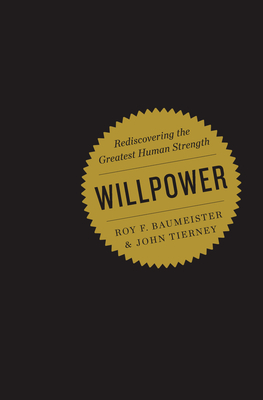
Book review: Willpower by Baumeister & Tierney

“Willpower: Rediscovering the greatest human strength”, Roy Baumeister & John Tierney, 2011


I’ve just finished this book, and yet I still couldn’t tell you what it was trying to claim. It’s a grab-bag of research on willpower, nearly all of it done by social psychologist Baumeister and colleagues, and including his celebrated experiments on ego-depletion. The ego-depletion experiments appear to show that willpower is a limited resource dependent on blood sugar. Using it to control your impulses diminishes it in the short-term, but can build it up – like a muscle – in the long term. Ultimately, however, this book presents this set of findings with little to offer in terms of coherent insight. The advice given for our daily lives is glib and unhelpful. The reader is told, for example, that to avoid smirking at an idiotic boss in a meeting, we should avoid strenuous mental work beforehand (p27). As if we all have the liberty of avoiding strenuous mental work whenever we want! Being told not to be tired sort of begs the question, in my opinion, and in self-help terms is about as useful as being told to “be clever” or “have great ideas”.

The case studies which pepper the book are brief and unsatisfying, obviously intended to give the ideas the appearances of flavour, rather than add any real depth whatever argument is being made. In general, the writing is adequate to poor, with an over reliance on a set of cheap journalistic tricks to sustain momentum. Journalistic tricks such as the one I use in the next paragraph…

…Annoying isn’t it? The references to events and celebrities who have temporarily floated to the surface of the toilet bowl of American popular culture will make this book date very badly in the next few years (and already meant that this, admittedly sheltered, British reader had to use wikipedia to work out who was being talked about in some chapters). I’m guessing that science journalist Tierney wrote this book, with advice from Baumeister (an impression fostered by the authors’ insistence on talking about themselves in the third person, which is disorienting). Even so, some of the psychological clangers are inexcusable and would shame an undergraduate (for example, squirrels burying nuts for later are dismissed as following “programmed behaviours, not conscious saving plans” (p15). To make this assertion gives the impression that we know both what a squirrel is thinking and what the nature of a conscious saving plan is (we don’t). To arbitrarily dismiss the highly flexible and foresightful behaviour of the squirrel as merely “programmed” prevents you, at one stroke, from understanding properly the role of automatic mental processes in our own future-orientated behaviour). The examples of sexism, on the other hand, are at least so blatant that they can be enjoyed for the full force of their anachronistic misogyny. (p56 tells us “most women cope quite well with PMS at work”, which has a lovely quality of being superficially positive, whilst implying that actually we should expect many women not to be able to cope, especially at work, and even those who do only manage to do it “quite well”.). The references to the literature are patchy, making it frustrating if you want to check the source for some of the authors’ most interesting claims.

Overall this book is a great disappointment. Roy Baumeister is one of the most exciting social psychologists, managing to do experimental work which addresses fundamental issues of what it means to be human. This book, on the other hand, is an example of how sterile experimental psychology can be when faced with the complexities of a core human dilemma, such as that of self-control. Although it is written in a breezy style, it never really grips the attention like the books of Malcolm Gladwell (which it obviously aspires to emulate). Because the treatment of the psychological evidence is superficial, and it never gives a full account of exactly what theoretical position they are trying to argue for or against, the book is scientifically unsatisfying. The other flaws I’ve discussed above make it, overall, an annoying book to read.

If you want a self-help book with an appreciation of the psychology of willpower, read Dave Allen’s Getting Things Done. If you want an entertaining and accessible account of the science of volition read Dan Wegner’s The Illusion of Conscious Will. If you want an account of self-control with a genuine appreciation of the nuances of the human condition try George Ainslie’s Breakdown of Will. This book will satisfy none of these needs.

Full disclosure: I’m reviewing this book because I was asked to by the publisher, who sent me a free copy. I’m glad I didn’t pay for it

UPDATE: So apparently quite means “very” in American English, while it means “fairly” in British English. This changes the sense of the PMS line I quote slightly, perhaps making it less insulting, but I would argue that the whole is still patronising and sexist (as are other lines in the book). Thanks Chris for the tip-off

Masters on the mind

Edge has just kicked off their 2011 Master Class with a fantastic course on ‘The Science of Human Nature’ delivered by an impressive line-up of leading cognitive scientists.

Princeton psychologist Daniel Kahneman on the marvels and the flaws of intuitive thinking; Harvard mathematical biologist Martin Nowak on the evolution of cooperation; UC-Santa Barbara evolutionary psychologist Leda Cosmides on the architecture of motivation; UC-Santa Barbara neuroscientist Michael Gazzaniga on neuroscience and the law; Harvard psychologist Steven Pinker on the history of violence; and Princeton religious historian Elaine Pagels on The Book of Revelations.

The first part is already online, where Daniel Kahneman gives a fantastic presentation on the counter-intuitive psychology of intuitive thinking, while the others will appear in the coming weeks.

And as always, I’m sure you’ll be pleased to hear the details of the expensive and exclusive location where the talks take place, lest you worry that the science was being toned down by sub-standard canopés, or God forbid, a pub.
 

Link to Edge Master Class 2011.

Bad riot neuroscience: cite the power

The Guardian Notes and Theories blog has a fantastic article on media science distortion by brain researchers whose study got falsely reported as showing a link between rioting and ‘low levels of a brain chemical’.

The actual study, which you can read online as a pdf, did not mention rioting and did not investigate it, but it got widely spun as giving an explanation for the recent looting in the UK based on the function of a neurotransmitter.

…we found that people who had lower levels of GABA in a part of their frontal lobe also reported higher “rash impulsivity”. People who score higher on rash impulsivity tend to act more rashly in response to strong emotions or urges. Our results tallied with recent genetic findings that linked GABA to alcoholism and drug abuse: disorders in which high rash impulsivity is a common feature. We wrote up our study for publication in a scientific journal and, as standard, we were encouraged by our university to issue a press release.

As the riots unfolded, news stories based on our research began appearing. On Tueday 9 August, a newswire story by the Press Association announced that “Brain chemical lack ‘spurs rioting'”, with ‘spurs rioting’ printed mischievously in quote marks, falsely implying these were our words. In a further creative leap, The Sun heralded a “Nose spray to stop drunks and brawls”, and that a “cure could be developed in the next ten years”.

The researchers reflect on how the media handles neuroscience and the hidden assumptions on the role of our brain in behaviour that pervade press reporting

In parts it’s a lament, in parts a media critique, and definitely worth reading in full.
 

Link to article ‘Riot control’.

A response to the Baroness

The Independent have just published a letter I wrote to them in response to their recent opinion piece by Susan Greenfield.

She claims that computers are at risk of causing ‘mind change’ while scientists are ignoring the issue. Needless to say, I was not impressed.

I was interested to read Professor Susan Greenfield’s opinion piece “Computers may be altering or brains – we must ask how” (12 August), where she laments that other scientists are refusing to debate the issue of how the internet and computer technology are affecting the mind and brain. She also claims that other scientists are dismissing her concerns by saying “there’s no evidence”.

This is clearly nonsense. There are over 3,000 scientific studies on the effect of technology on the mind and brain and a scientific community actively engaged in this debate, all of which Greenfield chooses to ignore in favour of her own alarmist conclusions. I am sure this is not simple unawareness, because Professor Greenfield specifically invited me to present the evidence to her at a debate on this topic at the House of Lords. The transcript is available on her own website. [You can download it as a pdf]

If Professor Greenfield wishes to engage in the debate about the impact of technology she is more than welcome to join the research community and discuss the evidence behind her concerns. So far, this evidence does not suggest that children’s or anyone else’s brains are being damaged by mobile phones, email, or Facebook. We know each has its own balance of effects, positive and negative, like all other media (newspapers included).

But instead of engaging with the evidence, Greenfield uses her media profile to communicate her ill-informed concerns to the public at large. This is neither helpful to science nor to concerned parents attempting to understand how they can best help their children use technology to their benefit.

The professor clearly has good intentions, but to become genuinely helpful she needs to be aware about what we actually know about the impact of technology. I would welcome her informed contribution to the debate.

Although I won’t be holding my breath.
 

Link to Independent letters page for 18th August.

Doubts about social contagion

Slate has an important article about how the studies behind last year’s headlines saying that things like divorce, obesity and loneliness spread through social networks like a ‘contagion’ may not be as sound as the stories suggested.

The headline grabbing study on ‘divorce contagion’ has still yet to be published as it hasn’t made it through the scientific peer-review process. The authors are criticised for talking to the media about the conclusions before the results have been confirmed.

Other studies were published in leading journals but the same publications have been much less keen to air criticisms of the work despite the fact that many leading names in the network analysis community have highlighted problems in the methods used in the research.

This is perhaps the real story here, as many conclusions turn out to be wrong in science, but the big name journals work much more like the popular media than they like to admit – heralding flashy new findings but being unwilling to take on the responsibility of continuing the debate after the glitz has faded.

It’s worth noting that the debate about the ‘social contagion’ studies is ongoing but the Slate article has some good coverage of where the growing doubts lie.
 

Link to Slate article ‘Disconnected?’

The malware of medical science

Just when you thought the pharmaceutical industry had used up every dirty trick in the book, it has been revealed that a ‘study’ of the epilepsy drug gabapentin (aka Neurontin) was never really intended to investigate the medication, but was primarily intended to get doctors to prescribe it more often.

A report published in the Archives of Internal Medicine examined documents uncovered in legal cases that show that a drug trial called ‘Study of Neurontin: Titrate to Effect, Profile of Safety’ (STEPS) was largely designed to involve doctors in a marketing programme that would appear like a scientific trial.

Actually, it was a scientific trial of a sort, but rather than studying the effect of the drug on patients, they were studying the effect of marketing on the doctors.

Parke-Davis sales representatives collected and recorded individual subject data. In a clear example of data tampering, they not only attended epilepsy patients’ office visits (under the guise of “shadowing” the clinician), but also actively promoted the use of Neurontin and blocked the use of competing medications, particularly lamotrigine (Lamictal), at those visits. They also rewarded participating investigators with free lunches and dinners.

Without informing either patients or physicians, the drug company’s marketing department monitored each investigator’s prescribing practices. It documented a 38% increase in prescriptions of Neurontin after investigators attended an introductory briefing, as well as a 10% increase in the average prescribed dose. It also compared prescribing patterns between study investigators and a control group of nonparticipating neurologists, and documented increased prescribing of Neurontin only among the study participants.

Big Pharma: the malware of medical science.
 

Link to good write-up in Internal Medicine News.
Link to locked study in the Archives of Internal Medicine.
Link to locked related editorial in the Archives of Internal Medicine.

A 30 second piece of our minds

A new book has been published called 30 Second Psychology. It’s been written by some familiar folks and aims to capture fifty of the most important theories of psychology in one punchy package.

It’s been edited by Christian Jarret of the BPS Research Digest and includes contributions from me, Mo Costandi, Dave Munger and Tom Stafford.

The book covers everything from psychotherapy to cognitive neuroscience and, as normal, the others have done a much better job than me. Thankfully, though, I have been edited into sense.

Here’s part of my entry on Abraham Maslow’s humanistic psychology and how it inspired client-centred counselling, nude psychotherapy and love-ins.

Abraham Maslow trained as a hard-nosed experimental psychologist who became disillusioned with defining human nature through lab experiments and was dissatisfied with the Freudian alternative. Instead of seeing humans as the passive recipients of experience or slaves to unconscious drives, Maslow saw us as motivated by an ultimate need to become fulfilled and ‘self-actualized’ where we are at peace with ourselves and others and have the psychological freedom “to become everything that one is capable of becoming.” Humanistic psychology grew from this inspiration and placed subjective lived experience, rather than the unconscious mind, at the centre of human nature.

These ideas were taken up by psychotherapists, most notably by Carl Rogers, who based ‘client-centred therapy’ on the principles of genuineness and acceptance of a person’s basic worth. Although Maslow was sometimes uncomfortable with how his approach was adopted by the 1960s counter-culture, leading to everything from love-ins to nude psychotherapy, his central themes of respect for individual autonomy and the encouragement of personal development are now at the core of all most modern psychological treatments and his ‘hierarchy of needs’ is still considered a important theory of human motivation.


Link to more details from the publishers.
Link to book on Amazon.

Where next for chronic fatigue after XMRV a bust

Nature News has an excellent piece reviewing the state of play after the first reports of the XMRV virus in people with chronic fatigue syndrome (CFS) have been put in doubt both by a string of failed replications and evidence of contamination in the original research samples.

Chronic fatigue syndrome or CFS is associated with diffuse body pain, persistent tiredness and loss of concentration and is controversial owing to the fact that some patient groups are determined to identify a ‘physical cause’ while many professionals understand and successfully treat it as having a significant ‘psychological’ component.

We covered the details of the intense debate last year, but the argument was heated further recently when first reports of a virus in some CFS patients have been shown to be extremely unlikely.

The hypothesis that the retrovirus has a role in chronic fatigue syndrome (CFS) has been dealt a serious blow by the publication of two damning papers in Science and an “expression of concern” from the journal’s editor over the original report that identified signs of XMRV infection in two-thirds of people with the condition but fewer than 4% of healthy people. The authors of that paper, led by Judy Mikovits at the Whittemore-Peterson Institute for Neuro-Immune Disease in Reno, Nevada, declined a request from Science to retract it, calling it “premature” in a statement.

“It’s a bust,” says Jonathan Stoye, a retrovirologist at the National Institute for Medical Research in London, part of the UK Medical Research Council (MRC), who was one of the fiercest critics of the association between XMRV and CFS. “People who are interested in this condition will have to move on.”

Yet scientists are not yet sure what the fallout will be for the future of research into CFS, also known as myalgic encephalomyelitis (ME)

The Nature News piece discusses where CFS research can go next now “XMRV’s 15 minutes of fame seem to be up” and whether this will reduce scientific interest in what is genuinely a debilitating condition.

Definitely worth a read.
 

Link to Nature news on ‘CFS: life after XMRV’ (via @edyong209).
Link to previous Mind Hacks post on roots of CFS controversy.

It came from the Amazon

The Guardian has a curious report about “the latest drug to emerge from South America” which is supposedly “twice as powerful as crack cocaine at just a fraction of the price”. What the journalist doesn’t know, I suspect, is that this is a common form of cocaine paste that is widely known around the region.

The article and video report tackle what is described as “a highly addictive mix of cocaine paste, gasoline, kerosene and quicklime called Oxi” that is supposedly highly hallucinogenic.

However, everything in the description of the drug and its appearance in the video seems to suggest it is just a new name for a widely used form of cheap cocaine paste known by the Spanish names basuco or paco.

For those not aware of how cocaine is produced from the coca leaf, a 1993 Forensic Science Review article (full-text mirrored here) outlined the usual stages of illegal manufacture.

Although ‘Oxi’ is described as including “gasoline, kerosene and quicklime” all of these are standard ingredients in the creation of cocaine paste itself, which itself is an intermediate stage in the production of powder or crack cocaine.

In fact, in the most common production process the subsequent stages just remove the unpleasant solvents, like gasoline and kerosene, from the cocaine paste to produce the purified product.

However, unrefined cocaine paste that still contains these chemicals is widely sold in South America as a cheap but nasty high. Refined cocaine is largely created for export but the paste mainly appears on the local market and is most prevalent in economically deprived areas.

It usually comes as a powder or as crack cocaine-like rocks that can be smoked for a short intense euphoria – which encourages frequent use – and a mid-brain dopamine boosting neurochemical profile that often induces paranoia and paranoid psychosis of exactly the sort described by users in the video.

My guess would be that ‘Oxi’ is just a new name being used to locally market this form of cocaine paste in the Brazilian area of the Amazon region whereas it is sold as basuco in the rest of the Spanish speaking areas.
 

Link to Guardian report about ‘Oxi’.
Link to mirror for paper on illegal cocaine production.
Link to search of scientific article on basuco (mainly in Spanish).

The return of BBC All in the Mind

I’ve just realised the latest series of BBC Radio 4’s excellent All in the Mind has started and has been running some fantastic shows.

So far, the programmes have covered everything from portable baby labs to psychopaths to mirror-touch synaesthesia where people feel the sensations that they see in other people.

If you want the podcasts you’ll have to go to a completely separate page called ‘Medical Matters’ (good ‘old BBC) which you can find here.

Enjoy.
 

Link to AITM homepage with streaming audio and programme details.
Link to podcast downloads.