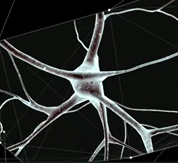
A neurobiological graphic novel

The Guardian has a video about the collaboration between neuroscientist Hana Ros and artist Matteo Farinella as they’ve been working on the neurocomic project to create a brain science graphic novel.

The finished project isn’t quite out yet but the artwork is looking amazing.

The film about the collaboration covers how they worked together and how each approach their work.

There’s a lovely bit where Hana Ros describes how she isolates neurons to work on and mentions she gives them all names.

Make sure you also check out the artwork on the project website.
 

Link to video on the collaboration.
Link to the neurocomic website.

What will the billion dollar brain projects do?

Two neuroscience projects have been earmarked for billion dollar funding by Europe and the US government but little has been said about what the projects will achieve. Here’s what we know.

The European Commision has just awarded half a billion euros to the Human Brain Project – a development of Henry Markram’s Blue Brain project which has made impressive biologically detailed computational models of cortical columns from the rat brain.

The Human Brain Project sells itself as aiming to “simulate a complete human brain in a supercomputer” but this is clearly bollocks.

It’s interesting that this claim makes the press kit and the flashy video but the actual report (pdf) has much more sober claims about ‘simulating brain dynamics’ and the like.

But it’s important to realise that while their big sell is nonsense, the project is likely to genuinely revolutionise neuroscience in a way that could push the field light years ahead.

What Markram has realised is that the single biggest barrier to progress in neuroscience is the co-ordination, sharing and integration of data.

Essentially, it’s a problem of information architecture but quite frankly, you can’t sell that to politicians and they can’t sell it to the public. Hence the ‘simulating a complete human brain’ fluff.

What the project aims to do is co-ordinate neuroscience teams looking at neurobiology, cognitive neuroscience and computational modelling and give them the tools to easily share data with each other.

One of the big pay-offs will genuinely be the creation of biologically feasible computer simulations of neural networks with the hope that these can be used for practical applications like virtual drug testing and computer-based experiments.

Markram has gained valuable experience of meshing heavy-duty computing with working lab teams and has recruited some of the world’s leading neuroscientists to the project.

Although the spin seems over-the-top scientifically this is an important project that, if successful, could be a scientific landmark.

In terms of the big bucks American counterpart here’s what we know – which, as it turns out, is not very much.

Obama has hinted at spending up to $3 billion on a neuroscience project. He made a vague reference to ‘brain mapping’ and the director of the National Institute of Neurological Disorders and Stroke eventually confirmed he was referring to the Brain Activity Map project – something outlined in a scientific article published in last June’s Neuron.

You can read the piece as a pdf but io9 has some good coverage if you want a summary.

But here’s the thing. The scientific article really just says the project would aim to ‘reconstruct a full record of activity across complete neural circuits’ and turn them into computer models and suggests some technologies that may be useful.

It’s along the same lines as the Human Brain Project but without committing to any details and admits we don’t currently have to the tools to achieve the aims. Even the NINDS director admitted that a ‘concrete plan’ has yet to be finalised.

In fact, considering the vagueness of both the science and the political response I suspect the sudden discussion of the Brain Activity Map project is as much a response to the European cash splash than a well-planned project that has been waiting to be funded.

Although the announcement is probably as much a political as a scientific move the implications are likely to be important.

If we assume that the US has committed to not being left behind by their European colleagues we are likely to see a decade of massive innovation in neuroscience.

We live in exciting times.
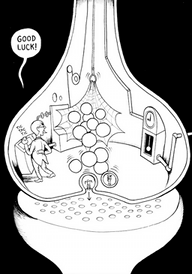
The blossoms are beautiful on their own

Listen. I totally respect your new neuroscience discovery. Really, my balls are jazzed. But quit with the ‘may lead to a cure for epilepsy, autism and schizophrenia’ thing you always put in your press releases.

Your new neuroscience discovery is genuinely cool, but, let’s face it, no more likely to lead to a cure for schizophrenia than my new garden equipment is likely to end world hunger.

My new garden equipment, by the way, is an equally ball-tingling innovation, but you can see how you’d never get away with the world hunger thing when announcing it to the press.

A lot of neuroscience discoveries are similar in a way. They’re the scientific equivalent of inventing a solar powered bird-scarer.

You read that right. A solar-powered bird scarer.

Kinda clicks into place, doesn’t it? You think to yourself ‘that’s cool’ and you silently nod your head to whoever came up with that agricultural gem.

But the UN aren’t busting their onions to integrate it into their agricultural policy. Monsanto aren’t scratching their nuts over how to cash in.

This doesn’t make it less cool. It still makes a genuine contribution and may even make things easier for the bird-troubled farmer. But it’s unlikely to herald the end of famine.

So, neuroscience press release writers of the world – no need to promise me the world.

The blossoms are really quite beautiful on their own.

Synthetic highs are mutating

A new study on the chemicals in the latest batch of legally sold ‘synthetic highs’ has found what looks like an unintended hybrid drug.

As regular Mind Hacks readers will know, I’m a keen watcher of the murky ‘legal high’ market.

We seem to be in the unprecedented position where sophisticated grey-market pharmacologists are rapidly inventing completely new-to-science drugs in underground labs for thrill-seeking punters.

These synthetic drugs have typically come in two types: ‘fake pot’ – made from synthetic cannabinoids and stimulants, usually derived from cathinone.

A study just published in Forensic Science International looked at the chemicals in a new wave of ‘fake pot’ herbal highs sold over the internet.

Firstly, the research identified 12 new synthetic cannabinoids. That’s twelve completely new untested cannabis-like drugs. The turnover in the market is both stunning and scary.

Curiously though, one ‘legal pot’ sample contained both a new synthetic cannabinoid (identified as URB-754) and a cathinone (4-Me-MABP) in it.

What was most surprising though, was that these substances had chemically reacted with one another to create a completely new combination drug. It has the chemical name (N,5-dimethyl-N-(1-oxo-1-(p-tolyl)butan-2-yl)-2-(N′-(p-tolyl)ureido)benzamide) if you want to sound sexy.

In other words, while the makers intended to put both a cannabinoid and a stimulant in the same product, they probably never knew that the substances had chemically combined to produce a hybrid compound with completely unknown properties.

The legal high market is becoming an informal opt-in drug-testing experiment with paying subjects.
 

Link to locked study.

Hallucinema Paradiso

The Barbican Centre in London has a Cinema and Psychosis event on the 17th March where we’ll discuss how the silver screen can represent the altered states of psychosis.

Rather than focus on ‘how films depict mad people’, which usually just involves appalling stereotypes, we’re interested in how cinema can depict delusions and hallucinations.

The event will include presentations by film folks, psychologists and people who have experienced psychosis – including the brilliant artist Dolly Sen.

I’ll be talking with psychologist and novelist Charles Fernyhough on how the psychology of psychosis is reflected on screen.

The full programme is here where you can also book a ticket. Otherwise, £5 on the door or free for the unwaged.

It’s part of The Barbican’s Wonder neuroscience season so if you don’t catch us there’s plenty of other great events in March and April.


Link to Cinema and Psychosis at The Barbican.
Link to more details of the Wonder neuroscience season.

Violating the prime directive

The Chronicle of Higher Education has an in-depth article that explores the controversy over social priming, which suggest that our behaviour can be changed by exposing us to certain concepts.

The most famous study in the genre was led by psychologist John Bargh, who is the focus of the story and who found that people walked more slowly down a corridor after reading words associated with being old.

A failed replication of this study and the subsequent online reporting led Bargh to get a bit hot under the collar which was the tipping point for growing skepticism concerning social priming.

The article is a very good account of that, although one drawback is that it doesn’t distinguish very well between ‘priming‘ – an extremely well replicated effect and one of the bedrocks of psychology, and ‘social priming’ – the subtype which is now in doubt.

The idea behind classic priming is that if you activate a meaning, perhaps just by experiencing it, related meanings will also become activated. This activation will be less strong for less related meanings.

Because we access meanings that are activated more quickly, you can test effect in reaction time tasks.

For example, if you see the word ‘apple’ you will subsequently identify the word ‘orange’ more quickly because they are related in meaning. The word ‘aeroplane’, however, will be unaffected. In other words ‘apple’ will prime ‘orange’ but not ‘aeroplane’.

There are various ways of testing this but it boils down to the fact that in terms of priming meaning, the effect is not at all controversial. It’s extremely reliable and can be seen in many sorts of tasks – verbal, visual, auditory and so on.

However, social priming suggests that concepts about people or identity (such as being old or being a professor) affect complex behaviours (such as walking speed or test performance).

Furthermore, several of these experiments have suggested that the meanings can be primed in ways that rely on analogy or metaphor – for example, that people who feel lonely will spend more time in a hot shower as they are primed to need ‘warmth’.

Many people find some of these effects implausible and, as the article makes clear, the skeptics are now attempting to replicate some of the most well-known experiments to very mixed results.

If you’ve not been following the wires, when a research team couldn’t replicate Bargh’s study everything kicked off and hangbags were flailed around by Bargh, a Belgian research group, Nature, a Nobel prize winner and the internet.

Bin your copies of Kuhn people, this is how science really works.
 

Link to Chronicle article on social priming.

Lives Scientific

The BBC Radio 4 programme The Life Scientific has just broadcast programmes on two of the most interesting cognitive scientists in the UK – developmental psychologist Annette Karmiloff-Smith and robotocist Noel Sharkey.


Karmiloff-Smith is a psychologist who has made an important contribution both to the deep theory of infant brain development and has been active in many down-to-earth debates about child development.

In the programme she makes a fascinating case for why banning TV for infants isn’t really helpful but how kids TV programmes could be made to be much more useful for their cognitive development.

The Noel Sharkey programme is also fantastic. Apparently before becoming a specialist in artificial intelligence and robotics, he was an electrician, gigging musician and psychiatric nurse.

In his interview he discusses how AI has evolved in its approach during his time as a researcher and where it falls down in terms of capturing the human mind.

Both definitely worth listening to.
 

Link to Annette Karmiloff-Smith programme page and audio stream.
Link to Noel Sharkey programme page and audio stream.
Link to podcast page for both.

A depressing financial justification

Image from Wikipedia user LuciusCommons. Click for source.One of the most controversial changes to the recently finalised DSM-5 diagnostic manual was the removal of the ‘bereavement exclusion’ from the diagnosis of depression – meaning that someone could be diagnosed as depressed even if they’ve just lost a loved on

The Washington Post has been investigating the financial ties of those on the committee and, yes, you guessed it:

Eight of 11 members of the APA committee that spearheaded the change reported financial connections to pharmaceutical companies — either receiving speaking fees, consultant pay, research grants or holding stock, according to the disclosures filed with the association. Six of the 11 panelists reported financial ties during the time that the committee met, and two more reported financial ties in the five years leading up to the committee assignment, according to APA records.

A key adviser to the committee — he wrote the scientific justification for the change — was the lead author of the 2001 study on Wellbutrin, sponsored by GlaxoWellcome, showing that its antidepressant Wellbutrin could be used to treat bereavement…

The association also appointed an oversight panel that declared that the recommendations had been free of bias, but most of the members of the “independent review panel” had previous financial ties to the industry.

Actually, it’s kind of sad that this isn’t a surprise, but perhaps more worrying is the fact that the chairman of the mood disorders panel that made the change, Jan Fawcett, doesn’t seem to understand bias.

“I don’t think these connections create any bias at all,” Fawcett said. “People can say we were biased. But it assumes we have no intelligence of our own.

Fawcett is assuming that bias means ‘dishonesty’ where people deliberately make choices for their own advantage against what they know to be a better course of action, or ‘sloppiness’ where people don’t fully think through the issue.

But bias, as you can find out from picking up any social psychology paper from the past century, is where incentives change our behaviour usually without us having insight into the presence or effect of the influencer.

This is exemplified in the work of Dan Ariely or the work that won Daniel Kahneman the Nobel Prize.

So when someone says, “I don’t think these connections create any bias” it means – ‘I’m not willing to think about the bias that these connections create’ which is a red flag that they won’t be recognised or addressed.

We’re all susceptible to them. The trick is to recognise they exist and put measures in place to account for them.

Sadly, it doesn’t look like this has happened with the DSM-5.
 

Link to WashPost article on the new depression diagnosis and industry ties.

A smoother flow

BBC Radio 1Xtra has just broadcast a fantastic programme about the rapper Scorzayzee who disappeared from the UK scene after, as it turned out, experiencing psychosis and being diagnosed with schizophrenia.

It’s a brilliant piece that not only tells the story of Scorzayzee but also cheekily tackles mental health in men – something which is rarely addressed in the media.

Virtually every documentary I’ve ever heard on psychosis is serious-voiced and worthy, while this is funny and engaging, with a fantastic sound-track.

One of Scorzayzee’s best known tracks is Great Britain – a brilliant angry push-back of a track that takes on everything from the economy to the Royal Family.

Apparently, Scorzayzee was paranoid when he wrote it but charmingly, in the programme, the BBC include a brief warning before playing it saying words to the effect of ‘please bear in mind that when Scorzayzee compared the Queen to Saddam Hussein, he was suffering the effects of psychosis’.

Thanks BBC.

You’ll be please to hear that Scorzayzee is now doing fine and makes a brilliant storyteller.

Oddly though, the piece is only online for seven days, so catch it while you can.

Recommended.
 

Link to ‘Scorzayzee and the S-Word’.

The DSM-5 has been finalised

It’s arcane, contradictory and talks about invisible entities which no-one can really prove. Yes folks, the new psychiatric bible has been finalised.
The American Psychiatric Association have just announced that the new diagnostic manual, to be officially published in May 2013, has been approved by the board of trustees.

You can read the official announcement and a summary of the major changes online as a pdf – and it seems a few big developments are due.

The various autism-related disorders have been replaced by a single ‘autism spectrum disorder’ – essentially removing Asperger’s from the manual.

A ‘disruptive mood dysregulation disorder’ has been added to “diagnose children who exhibit persistent irritability and frequent episodes of behavior outbursts three or more times a week for more than a year”.

As the APA admit, this is largely to address the rise of the ‘childhood bipolar disorder’ concept which has led to a huge number of children with challenging behaviour being medicated on rather ill-defined grounds. Whether this actually does anything to change this, is another matter.

Despite the expected revision of the overly complex and often indistinguishable subtypes of personality disorder – these have been kept as they were.

Posttraumatic stress disorder has been tinkered with – apparently to pay “more attention to the behavioral symptoms” and presumably to exclude ‘PTSD after seeing things on the TV’ – a change included in all the drafts.

Perhaps most controversially, the bereavement exclusion will be removed from the diagnosis of depression – meaning you could be diagnosed and treated for depression just two weeks after a loss if you fulfil the diagnostic criteria.

If you want to examine the changes yourself – tough luck – the APA have removed all the proposed criteria off the DSM-5 website. This is supposedly to “avoid confusion” but most likely because the manual is a big money-maker and the finished product will be on sale in May 2013.

But diagnostic developments aside, we can also expect some changes simply from the benefit of hindsight.

Most clinicians will learn enough of the new manual to ensure they look cutting-edge for a few months after publication and then ignore the new diagnoses and use the same ones they’ve always had vaguely stored in their heads.

Researchers will go through an extended period of academic willy waving where they attempt to outdo each other through their wide and extensive knowledge of dull and irrelevant details.

Drug companies will wet themselves in delight at the new opportunities for drug marketing (“Prozac – lighten the mood of losing your mother”).

The APA will keep underlining how we’re now in a new era of science thanks to the science behind the new manual of science that turns everything it touches into pure, definitely not insecure, science.

And finally, the chairman of the DSM-5 committee will begin the traditional process of becoming disillusioned and publicly denouncing each step in the development of the DSM-6.

It’ll be as if the past never happened.
 

pdf of APA announcement of finalised DSM-5 (via @sarcastic_f)
Link to APA announcement in Psychiatric News.

The road to ‘war on terror’ torture

An obscure paper called The Spokesman Review has an excellent article charting the role of psychologists in developing America’s ‘war on terror’ enhanced interrogation programme – widely condemned as torture.

The piece is fascinating because it outlines the competing tensions between those who championed the controversial physical interrogation techniques – created by reverse engineering the SERE resistance training – and those who preferred the rapport building methods.

It turns out that the division fell along inter-agency lines. The CIA used the harsh approach, the FBI relationship-based interrogation.

As is now well-known, the ‘enhanced interrogation techniques’ were developed by two formed Air Force psychologists James Mitchell and Bruce Jessen.

The article finishes with a curious snippet of information “Jessen remains [in Spokane] and was recently made the bishop of his ward in the Church of Jesus Christ of Latter-day Saints”.

That, my friend, is a novel in the making.
 

Link to Spokesman Review on ‘war on terror’ torture.

Letter from the mental states of America

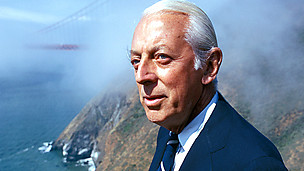
Alistair Cooke presented the longest running radio show in history. The BBC’s Letter from America was a weekly report, where Cooke reflected on life and news in the United States. It ran for just shy of 58 years.

Despite the massive ‘psychologisation’ of society during the years Cooke was broadcasting, from 1946 to 2004 no less, Cooke rarely addressed matters of the mind and brain directly.

However, he did occasionally touch on these issues and the shows are well worth listening to.

As the BBC has just put almost the complete Letter from America archives online so I’ve collected some of the highlights.

Link: George Gallup (1901-1984) – 9 November 1984
Link: TV Violence – 13 April 1986
Link: Narcotics, interdiction and Colombian drug lords – 08 September 1989
Link: American public schools – 03 January 1992
Link: Aphasia and studying the human brain – 15 October 1993
Link: Timothy Leary (1920 -1996) – 7 June 1996
Link: New York: How are you Doing? – 3 May 2002

I’ve linked to the transcripts, but listen to the linked audio if you have the chance. Cooke had a distinctive voice and a calm style that underscored his often insightful commentary.
 

Link to Letter from America archives.

A vision of Oliver Sacks

New York Magazine has a wonderful in-depth profile of Oliver Sacks illustrated with a simple but sublime photo portrait of the gracefully ageing neurologist.

Sacks has become much discussed in recent weeks due to the release of his new book Hallucinations.

There has been much coverage, but perhaps some of the best coverage has been Will Self’s review and an interview on NPR.

However, the profile in New York Magazine stands alone – both for its careful portraiture and brilliant writing. Highly recommended.
 

Link to Oliver Sacks profile.

Work for free!

South West London and St George’s Mental Health NHS Trust are taking the piss. They’re advertising for a full-time, one year assistant psychologist post that is completely unpaid.

These jobs usually pay about £20,000-24,000 in London but despite this offer being completely exploitative they could easily fill the post for free.

The reason is because assistant psychologist jobs are one of the key steps to get on to training as a clinical psychologist which is a massively popular career in the UK.

This is partly because psychology itself became a hot topic and universities realised about 15 years ago that the subject was a money spinner, meaning many undergraduate courses regularly have about 200 students a year on them.

This put additional pressure on clinical psychology training places, which for the last decade have had about 20 applications for each place on the course.

As the competition is intense, assistant psychologist jobs are like gold dust. The NHS Trust I work in regularly takes down adverts for these jobs after about 24 hours, at which point they may have received up to 500 applications.

So finding someone to do a £20,000 assistant psychology job for free should be fairly trivial.

You can also see an additional trend at work: while you need an approved doctorate to now qualify for the profession, many hope an MSc in the same subject area – which doesn’t actually do anything except extend your academic knowledge – will help their chances.

Universities are capitalising on this demand and lots of MSc courses have started popping up all over the country, all with ‘not quite clinical psychology’ names like “foundations of clinical psychology” and “clinical applications of psychology”.

I don’t doubt they’re excellent, but that’ll be another maybe 10 grand on top of your student debt.

The effect of all this is that the not-so-well-off are inadvertently filtered out of the profession and we increasingly lack diversity in an already overly-homogeneous profession.

Don’t get me wrong. I’m sure this unpaid assistant psychologist job is valuable work. But not exploiting young people should also be a priority.
 

Link to piss-taking job post (via @bengoldacre)

Technophobia: a talk at the Royal Institution

I’m going to be talking about technophobia, media panics and how technology really affects the mind and brain, next Tuesday at the Royal Institution in London.

The talk will be a trip through the history of technology scares – from Ancient Greece to Facebook, a look at how the modern media deals with concerns about new communications tools, and a round-up of what we actually know about the impact of technology on ourselves.

The evening will be MC’ed by Dallas Campbell and I am told there will be musical accompaniment.

Relax, I won’t be singing. No technology on earth can withstand my terrible voice.
 

Link to more information and tickets.

British Psy Ops in Afghanistan

BBC News has an extremely rare article on the UK military’s psychological operations group and their work in Afghanistan.

The piece reports how the 15 (UK) Psychological Operations Group have been given the Firmin Sword of Peace – an accolade recognising the building of community relations awarded by, well, the UK military.

Get your plaudits where you can, that’s what I say.

Psy Ops is a combination of marketing and public relations with more targeted psychology, sociology and anthropology to measure fast moving social changes and perceptions – largely used to inform strategy and military intelligence at the local level.

The 15 (UK) Psy Ops Group rarely ever features in the media and there’s not a great deal of information about them, although most of it has been collected on this PowerBase page.

In fact, the last time 15 (UK) Psy Ops hit the headlines was when one of their unit was killed in 2008, who was most notable in the media for being the first British female solider to die in Afghanistan.

Except for that, one of the last mentions was in 2003. And now they’re press-releasing an award given to them by their own organisation and talking to reporters.

So why the PR drive? Recruitment, it seems. Commander Steve Tatham notes that “at a time most of the Armed Forces are being cut back, his unit is being expanded”.

Despite the spin, it’s not a bad article actually. Although the Group do give the ‘we’re just telling the truth’ line it does discuss the sort of approaches they take and the problems they face.
 

Link to BBC News article on UK Psy Ops in Afghanistan.
Link to Ministry of Defence press release.