A neuroscientist’s grief

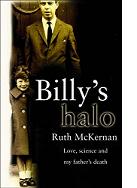
billy's halo.jpgNeuroscientist Ruth McKernan was a guest on Radio 4’s midweek this morning, talking about her father’s death from a mystery illness, and how her scientific background shaped her coping and grief, an experience she has described in her book Billy’s Halo. Here’s an excerpt from the book’s synopsis:

Now, she tells the story of her father’s last year as a collection of cutting-edge scientific themes – memory, consciousness, microbes, stem cells – like pearls strung together on the thread of her father’s life. The result is an inspired blending of personal emotion, love and grief, with a crystal-clear scientific explanation of the way our brains and bodies work in sickness and in health.

Midweek’s host Libby Purves commented that it was clear from McKernan’s book that as she wrote about the emotional turmoil of her father’s passing, she struggled not to take a scientific perspective. On the contrary, McKernan said she wanted to write an objective, factual account of what happened, but couldn’t help her emotions from spilling over into her words.

Link to replay of Midweek on Radio 4 (McKernan was the second guest).
Link to Billy’s Halo on Amazon.

Sleep drug causes ‘sleep driving’?

ambien_story_woman.jpgAADT have some intriguing coverage on recent concerns that popular sleep drug Ambien is linked to ‘sleep driving’ and ‘sleep eating’ in some people.

The issue has recently been covered by the New York Times owing to the increase in people who have had the drug detected in their body by toxicology tests after “bizarre” road traffic accidents.

A registered nurse who lives outside Denver took Ambien before going to sleep one night in January 2003. Sometime later — she says she remembers none of the episode — she got into her car wearing only a thin nightshirt in 20-degree weather, had a fender bender, urinated in the middle of an intersection, then became violent with police officers, according to her lawyer.

The woman, whose lawyer says she previously had a pristine traffic record, eventually pleaded guilty to a reduced charge of careless driving after the prosecutors partly accepted her version of events, said the lawyer, Lloyd L. Boyer.

A further article from the NYT examines a recent study which looked at Ambien users who seemed to compulsively eat while asleep.

Although sleep-walking and related behaviours and relatively common, some researchers suspect that the drug may make them more likely, although no clear explanation for why this might happen is available.

Link to ‘Dangers Begin to Surface for Sleep Drugs’ from AADT.
Link to NYT article ‘Some Sleeping Pill Users Range Far Beyond Bed’ (reg free link).
Link to NYT article ‘Study Links Ambien Use to Unconscious Food Forays’ (reg free link).

Amedeo Challenge now open to small donations

bsk_logo.gifAmedeo Challenge, the site aiming to fund the creation of high-quality open-access medical textbooks, is now taking small and private donations.

On the donations page you can give towards a ‘bounty’ for the completion of a textbook on a number of different topics.

Medical professionals and researchers can work towards creating books to claim the bounty. So far, online books on HIV and influenza have already been published and bounties are available for books on tuberculosis and viral hepatitis.

Of interest to readers here might be proposed books on Alzheimer’s disease, neurology and Parkinson’s disease (I’ve just donated 50 euros towards the creation of an open-access textbook on neurology and can’t wait to see it online).

When completed the books will be freely available for online viewing, to print, and will not have restrictions to prevent them from being translated into other languages.

Unfortunately, medical textbooks can be incredibly expensive (50 euros would be a cheap one) which make them inaccessible to many doctors and researchers in economically deprived countries, not to mention impoverished students the world over.

High-quality open-access textbooks would, therefore, be of great advantage to the advancement of medical science and training throughout the world.

Even the smallest donations will be of use.

Spread the word!

Link to Amedeo Challenge.
Link to Amedeo Challenge donations page.

What tangled webs we weave

Carl Zimmer has deleted his post on the controversy surrounding an upcoming TV programme about a Turkish family who walk on ‘all fours’ (see previously on Mind Hacks).

Presumably, he could do without the headache (and who can blame him?).

Nevertheless, there’s a good analysis over at Gene Expression, to which an interesting comment has been added by one of the TV company’s production team, explaining Nicholas Humphrey’s views more accurately.

Humphrey was widely cited (seemingly incorrectly) as the person suggesting that the inherited problem in the family caused an ‘evolutionary regression’. It seems his actual analysis is a lot more measured.

Start of brain awareness week

baw_logo_2006.jpgToday is the start of Brain Awareness Week with a number of events happening across the globe.

Your local college, university or science museum might be putting on public events about the mind and brain, and encouraging lively debate and participation.

The Brain Awareness Week website also has plenty of resources, including everything from in-depth educational materal to puzzles and quizzes for younger children.

Link to Brain Awareness Week website.

Churchill in a straitjacket

churchill-straitjacket.jpgAs part of an anti-stigma campaign, mental health charity Rethink has unveiled a statue of Winston Churchill in a strait-jacket, to highlight the great war-leader’s struggles with mental illness.

Churchill was subject to severe bouts of clinical depression throughout his life (which he called his “black dog”). Despite these, he managed to lead and inspire millions of people through the difficult years of World War Two.

Demonstrating that there’s still some way to go before stigma is eradicated, the headline in one UK national daily newspaper, the Daily Express, is “Insult to Britain’s Greatest Hero”.

This leads me to ask, what is so insulting about the image? Actually putting someone in a strait-jacket is insulting, but depicting them in one is something quite different.

Although an outdated clich√©, the strait-jacket symbolises mental illness to many people and the statue is just meant to emphasise Churchill’s experience of mental distress

I’ve personally used Churchill as an example of hope to many patients I’ve met in psychiatric hospital and it usually comes as a surprise that he was mentally ill.

Hopefully, the controversy has served its purpose and more people are now aware that great things can come from troubled minds.

Link to ‘Churchill sculpture sparks uproar’ from BBC News.

Some theories are more equal than others

all_fours_family.jpgThere’s a storm brewing on Carl Zimmer’s blog The Loom over an upcoming documentary about a family that walks on ‘all fours’ – which some have claimed is the result of a genetic mutation that causes evolutionary regression.

Those with their heads more firmly screwed on suggest that it could result from inherited abnormalities to the cerebellum which has a significant role in supporting movement and balance.

There are now accusations that the family involved were paid off, and that other scientists weren’t allowed access to the family members, and tempers are starting to fray.

The discussion is ongoing.

Link to post and discussion on Carl Zimmer’s The Loom (see point 3).
Link to coverage of the story on World Science.

Simple ways to make yourself cynical

piensa_statue.jpgWhy do I have a bad feeling about the upcoming BBC series Get Smarter in a Week? It’s discussed in this article in The Guardian.

Is it because it claims that ‘brain exercises’ can make someone ‘40% cleverer’ in a week (whatever that’s supposed to mean), or perhaps because this claim is based on a trial of 15 volunteers with no control group?

Control groups are essential because people can improve due to non-specific effects (such as the placebo effect or the Pygmalion effect) where simply being involved with people trying to help you can have a beneficial effect – regardless of how effective the actual treatment is.

Looking at the advice recounted in The Guardian article, it mostly seems quite sensible if continued in the long term, i.e. practising mental skills, eating well and staying fit (although I’m not sure there’s much evidence that having a shower with your eyes closed in likely to improve the mind in any significant way).

I suspect, however, that most people will come away from the programme with the idea that doing these activities for only a week will cause a permanent improvement in their intelligence.

One of the best ways of making yourself ‘cleverer’ is to understand how to evaluate scientific claims, particularly when they’re used as ideas for TV programmes.

Of course, this may all be hype before ‘Get Smarter in a Week’ hits the airwaves, but I’d question the use of misleading scientific claims to promote a popular science programme.

Anyway, I look forward to being pleasantly surprised (or not).

In the meantime, the best bets for sharpening your mental abilities are: eat healthily, exercise regularly, stay mentally active.

Oh, and consider watching less TV (see also this pdf). Strangely, that’s one they forgot to mention.

Link to uncritical Guardian article on ‘Get Smarter in a Week’.

Can science explain religion?

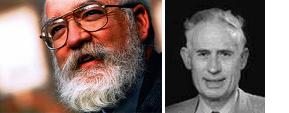
religion debate.JPG Daniel Dennett’s been at it again, this time in a juicy online Prospect debate with Richard Swinburne (pictured right), Emeritus Nolloth professor of the Philosophy of the Christian religion at the University of Oxford. In the debate Swinburne suggests science can’t begin to study religion without first acknowledging that God exists. Dennett argues that religions might well be a nice way of explaining what’s happened so far, but they’re not useful for furthering our understanding of the natural world because they don’t make any meaningful, testable predictions. But according to Swinburne that’s not what science is all about. Hmm…

A few excerpts:

Swinburne: ‚ÄúSo why are the most general laws of the multiverse as they are? Why do all particles behave in exactly the same way as each other, so as together ultimately to produce human life? This enormous coincidence in particle behaviour requires explaining. I’ve got a good theory which explains it [God]; you haven’t‚Äù.

Dennett: ‚ÄúFrom my perspective, your imaginative attempt at an inference to the best explanation is telling for the one thing it lacks: a single striking prediction. That’s why it can’t be taken seriously as a contender against a purely secular and materialist theory of cosmic and biological and cultural evolution‚Äù.

Swinburne: ‚ÄúI don’t think that it is in any way important that science should make predictions‚Äù.

Link to earlier post about science explaining religion.
Link to earlier post about Prospect debate on whether science can explain mental illness.
Link to event at At-Bristol Imax next Weds, where Dennett, Swinburne and others will be debating science and religion.
Make a real day of it and check out their Your Amazing Brain exhibition while you’re there.

Women in mind

women_statue.jpgToday is International Women’s Day, where the achievements of women are celebrated, which seems particularly appropriate in the cognitive sciences as there is a strong tradition of female participation.

In fact, the majority of cognitive scientists are women and most males will find themselves outnumbered on psychology and neuroscience courses.

This is, perhaps, because there are some strong female role models who have made a huge impact on the understanding of human thought and behaviour.

One of my many female heroes is neuropsychologist Professor Elizabeth Warrington, who published her first paper in 1962, and, although now officially retired, is still heavily involved in research and is publishing regularly.

Warrington was one of the most influential figures in the development of cognitive neuropsychology and helped define the field during its emergence in the 1970s and 1980s.

Many of the standard clinical assessments of cognitive function were created by her, which are now crucial components of clinical assessment after brain injury.

Link to Royal Society Fellowship Citation for Elizabeth Warrington.
Link to PubMed entries for Elizabeth Warrington.

A Darwinian tiff

This had me in stitches. Apparently Darwinian philosopher Daniel Dennett (who’s out and about promoting his new book) has fallen out with fellow Darwinian, British-Born philosopher Michael Ruse. Ruse warns against taking evolutionary theory too far, so that it becomes an argument for atheism. Anyway, during the tiff (see here for detail) Dennett emailed Ruse suggesting he was being enlisted by the dark side. So Ruse replied:

“I am a full professor with tenure at a university known chiefly for its prowess on the football field, living out my retirement years in the sunshine ‚Äì I have no reputation to preserve, and frankly can say and do whatever the fuck I want to without sinking further‚Äù.

‚ÄúI am a hardline Darwinian and always have been very publicly‚Ķ in fact I am more hardline than you are, because I don‚Äôt buy into this meme bullshit but put everything‚Ķin the language of genes”.

Reflecting on the fall out, Ruse apparently had this to say:

“I think he [Dan Dennett] finds it very difficult when people don’t say to him ‘you were fantastic. Can I warm the bog seat for you before you take a crap?’”.

Link to Guardian article where I read about this.
Link to William Dembski’s blog – he’s an Intelligent Design Creationist who first made the saga public.

Amedeo puts bounty on free medical textbooks

bsk_logo.gifOpen-access medicine promoter Bernd Sebastian Kamps, has launched Amedeo Challenge – a project that offers bounties for authors to write high-quality medical textbooks that will be freely distributed over the internet.

Amedeo has already released free medical textbooks books on HIV and influenza, and now 12,500 euros are being offered for the authors of a book on tuberculosis.

Kamps has put this money up himself, but he’s also asking for sponsors to donate bounties for textbooks on a range of other medical conditons and specialities.

Of interest to readers here will be proposed books on Alzheimer’s Disease, Anaesthesiology, Genetics, Multiple Sclerosis, Neurology, Pain Medicine, Parkinson’s Disease and Psychiatry.

Unfortunately, it seems like only large sponsors are being gathered, but I’ve emailed Kamps to suggest a small donations system for individuals to donate towards a ‘running bounty’ for any book of their choice.

I’d happily donate 50 euros knowing that it would contribute towards the development of a high-quality, open-access psychiatry, neurology or neuropsychology textbook.

If you’d like the opportunity to do something similar, contact the project and suggest the same. It seems like many small donations could create large bounties in a relatively small amount of time.

UPDATE: Good news! I just got the following back from Bernd Sebastian Kamps:

Thank you for your suggestion: Your idea is brilliant (I had never thought of asking for small contributions).

We’ll open the PayPal account next week and by the end of the month, everything should be in place. I’ll keep you informed.

My ideas are rarely described as brilliant (my mum will be proud at least), but more importantly, we’ll post here when the Amedeo Challenge small donations system is in place.

Link to Amedeo Challenge.
Neuroscience books reviewed by Washington Post

white_book.jpgThe Washington Post has a brief review of three recently released neuroscience books: ‘The Three Pound Enigma’ by Shannon Moffett, ‘The Creating Brain’ by Nancy Andreasen and ‘The Mature Mind’ by Gene Cohen.

Consider the issue of creativity, which is central to Andreasen’s book and rates a chapter in Cohen’s. No one would doubt that the brain processes the thoughts and actions that later will be called “creative.” But how do creative thoughts differ from ordinary ones? The coincidence between what we label “mental disease” and “creativity” that so puzzled the Italian criminologist Cesare Lombroso more than a century ago is still a rather embarrassing finding. How can mental processes that we hold to be among the highest achievements of humankind be so uncomfortably close to those we consider defective or aberrant? And how come Einstein had such poor grooming habits, as Andreasen notes?

Link to review from Washington Post (via BrainBlog).

The science of genius at Dana

One more Dana event we forgot to feature yesterday was ‘Creating Brains: the science of genius‘ (thanks Christian!).

How does exceptional creativity develop in the human brain? How does a person’s brain move through a creative process to produce a sonnet or a song or an equation? The answer lies in understanding how we human beings, beginning with our prehistoric ancestors, have managed to wrestle ourselves out of dark caves and into a world ablaze with the brilliant fire and light of creative genius.

It is being held on 6th March, is free to book, and for those not resident in London, is being webcast live.

Link to ‘Creating Brains: the science of genius’.

Mind, brain, Dana and dinner

dana_centre_image.jpgLondon’s public-access science mecca the Dana Centre has just released its March schedule and it includes a number of intriguing mind and brain events.

The 9th March hosts ‘Tricks of the Psych Trade‘ which promises to open up some of the skills and techniques used in contemporary psychology to a live audience. The event is hosted both by professional psychologists and artists. The tickets are free but must be booked in advance.

An evening on 15th March discusses ‘Deep Brain Stimulation‘ – the practice of implanting permanent electrodes into the brain to treat neurological disorders like Parkinson’s disease. The panel includes a consultant neurosurgeon, a neurologist and a patient who has had the operation. This event is also free to book, and will be broadcast live over the web.

Finally, for those wanting dinner with their neuroscience, this month’s Dinner@Dana event on 22nd March aims to combine fine food with a discussion on ‘Decoding the mind’.

Link to ‘Tricks of the Psych Trade’ on 9th March.
Link to ‘Deep Brain Stimulation’ on 15th March.
Link to ‘Dinner@Dana: Decoding the mind’ on 22nd March.