Surgery beyond your wildest dreams

I’ve just read a fascinating 2009 study on dreaming during anaesthesia that looks at how different drugs can alter our unconscious reveries during surgery.

One section was on ‘near-miss awareness’ where dreams incorporate the outside reality of the hospital because the patient is on the threshold of consciousness.

This is the wonderful list of these dreams from the study where the patients report strangley surgical fantasies.

“She dreamt that she wanted to argue but could not because there was something in her mouth stopping her talking.”

“A patient dreamed that he was at a fairground and someone was throwing darts at his stomach. The patient was undergoing a gastro-enterostomy and vagotomy.”

“A patient undergoing a uterovaginal prolapse repair dreamed of a dragging feeling around her perineum and of having a baby”.

“A patient had an unpleasant dream in which he was accused of being under the influence of narcotic drugs.”

“A patient dreamed of a party in a public house in which there was a generous supply of gin and the anaesthetist was the landlord.”

“(A patient) dreamt about a fish in a tank and seaweed surrounding her. Splashing around and the colour blue.” (The theatre staff were talking about fishing).

“One patient dreamt about aliens and thought aliens had taken over the operation” (Theatre staff had had a conversation about aliens during surgery).

“I dreamt that I heard your (the researcher’s) voice which made me feel very relaxed but I don’t remember what you said.” This patient was played an audiotape of a story during anaesthesia.


Link to DOI entry and summary for locked study.
Link to PubMed entry for same.

Scentsuality

I think I may have found the only psychological analysis ever written on the scent of semen. The discussion is from a book called The Smell Culture Reader and it starts with a memorable anecdote about Oscar Wilde whacking off in jail.

I realise none of you are actually reading any more, because you’ve all clicked on the above link and will never get to see the rest of this text.

La la la la la.

Hello?

I’m on the moon!
 

Link to analysis of the ‘Odor of Semen’.

Ted Hughes On Thinking

Editor of The Psychologist and man about town, Jon Sutton, just sent me a fantastic monologue by poet Ted Hughes on the experience of thinking.

I’ve uploaded the piece to YouTube where you can hear Hughes’ remarkable analysis in his own characteristic voice.

The piece is almost nine minutes long but in this part Hughes describes what psychologists would now call metacognition.

There is the inner life of thought which is our world of final reality. The world of memory, emotion, feeling, imagination, intelligence and natural common sense, and which goes on all the time consciously or unconsciously like the heartbeat.

There is also the thinking process by which we break into that inner life and capture answers and evidence to support the answers out of it.

And that process of raid, or persuasion, or ambush, or dogged hunting, or surrender, is the kind of thinking we have to learn, and if we don’t somehow learn it, then our minds line us like the fish in the pond of a man who can’t fish.

I have tried to find the origin of the piece but have come up with nothing and Jon says he originally recorded it from Jarvis Cocker’s BBC 6music show but has no more details.

If you know any more about the piece, do add a note in the comments.
 

Link to Ted Hughes ‘On Thinking’ (massive thanks @jonmsutton).

The outer limits of psychiatric genetics

The Wiring the Brain blog has a fantastic piece on the how whole genome sequencing is already showing us the limits of how we understand the genetics of mental illness.

Whole genome sequencing allows the entire length of someone’s DNA to be read and, when data from enough people has been collected, it’s possible to look for reliable links between genetic information and human traits.

The advantage of this technique is that it allows genetic links to be detected without needing a specific idea about what should link with what beforehand.

It’s often been cited as the ‘new hope’ for psychiatric genetics which attempts to understand the genetics of mental illness.

However, one difficulty with looking for genetic links with mental illness is that people diagnosed with conditions like schizophrenia or bipolar are unlikely to have exactly the same thing while the specific components are not perfectly measurable (there is no cut and dry way of classifying intrusive thoughts for example).

In addition, most genetic studies to date have found that changes in single genes can explain only a tiny fraction of the risk of developing a mental illness and are often present, although less frequently, in healthy people.

Owing to the fact that the heritability of mental illness can be quite high, the current thinking is that the risk is likely transmitted through lots of genes that, although individually have a small effect, can greatly increase the risk if transmitted together.

The Wiring the Brain post does a brilliant job of exploring why picking out these genes and genetic patterns may not just be a problem with not having enough data – but with the techniques themselves.

However, we will still likely be left with a situation where the statistical evidence we can get from considering the spectrum of mutations in single genes will run into mathematical limits. At some point it will be necessary to look for other types of evidence from outside the system. One type of evidence will come from analysing the biochemical pathways of the implicated genes – it is already becoming apparent that many such genes encode proteins that interact with each other…

The point about mathematical limits is an interesting one, as it may be that there are genes or genetic patterns which are important but have such a small effect that you would need a sample size so big (millions and millions of people perhaps) that your study would simply be impossible.

As the post indicates, this may kill the idea that the genetics of mental illness can be studied without any existing theories and just by looking at which links turn up.

It’s a bit like trying to work out how riots start by counting the different types of people in crowds and seeing which types of people are more likely to be present when a fight breaks out.

Without knowing about the roles of different people, you could easily conclude that the police are the ones responsible for the riot because they are always there in big numbers, while the firebrand orator demanding death to the government is irrelevant because there’s only one of him.

The Wiring the Brain piece covers this and several other issues and is one of the most interesting articles on psychiatric genetics I have read in a while. The blog, by the way, is consistently excellent, so definitely one to keep tabs on.
 

Link to Wiring the Brain on ‘Searching for a needle in a needle-stack’.

Sensory blending

The BBC’s science series Horizon just broadcast a fantastic edition on perception, illusions and how the senses combine with each other to the point of allowing us to integrate artificial new senses.

If you’ve got a healthy interest in psychology, the first half of the programme discusses several important but well-known effects like the rubber hand illusion, colour context changes and the McGurk effect, in light of what they reveal about the perceptual system.

Even if you’re familiar with these concepts, its worth watching as they’re so well presented, but its the second half of the programme which really stands out.

It has several brilliant examples of where people have begun to integrate new information into their sensory world: a blind mountain biker who has learnt to echolocate by making clicks with his mouth, helicopter pilots flying purely by spatial information conveyed to them by vibrations, a belt that allows the wearer to feel where magnetic north is at all times, and so on.

Some of the programme is clearly inspired by an excellent book on unusual sensory and perceptual integration that I’m reading at the moment called See What I’m Saying. It’s by psychologist Lawerence Rosenblum whose name you may recognise as we’ve featured some great pieces from his Sensory Superpowers blog before on Mind Hacks.

If you’re in the UK, you can use the BBC’s iPlayer website to watch the programme online, although rumour has it that there’s a working torrent over at the Pirate Bay.
 

Link to Horizon edition on BBC iPlayer.
Link to index page of programme on the Pirate Bay.

Video of the ‘Lazarus sign’

I’ve just found a video that has footage of the ‘Lazarus sign‘ – a complex reflex movement that can occur in brain dead patients where the arms are raised to the chest and often fall crossed onto the body.

We’ve covered this reflex before, noting that despite its complexity it is generated by the spine, which is why it can still appear after brain death.

However, I didn’t realise there a video of it was available online where you can see the unnerving post-mortem movement triggered by doctors as they move the head.

If you’re uncomfortable about seeing dead bodies this isn’t the video for you, particularly as it shows what seems to be quite a young lad who presumably just very recently passed away.

It’s titled and narrated in Portuguese by (I’m guessing) a Brazilian medical team to demonstrate the reflex.

I noticed there’s also a video with a sequence of stills of the Lazarus sign in English which also explains the concept of a spinal reflex arc, although you’ll need to login to YouTube to see it.
 

Link to video of Lazarus sign in Portuguese.
Link to short presentation on spinal reflex arc and Lazarus sign.

A history of the phantom penis

After amputation, many people feel ‘phantom limb‘ sensations that seem to come from the missing body part. Although typically associated with missing arms or legs, these phantom sensations can arise from almost anywhere and a new study in the Journal of the History of the Neurosciences looks at how the ‘phantom penis’ has enjoyed a surprisingly long history in the medical literature.

The first case of a phantom penis was mentioned in passing by the ‘father’ of phantom limbs, Silas Weir Mitchell, and there has been an assumption that these sensations are rare or unusual.

In fact, a 1999 case report of a phantom penis after amputation noted only a few previous mentions of the experience, some of which have become quite well-known.

Among the most cited publications is one by Boston surgeon A. Price Heusner (1950) containing two case studies. His first case was an elderly man whose penis was “accidently traumatized and amputated,” and who “was intermittently aware of a painless but always erect penile ghost whose appearances were neither provoked nor provokable by sexual phantasies” (Heusner, 1950, p. 129). This man had to look under his clothes to be sure that his penis was, in fact, absent. Heusner’s second case was a middle-aged, perineal cancer patient. Because his malignancy had spread and was causing intense burning pains in his groin, he opted to undergo penile amputation. Thereafter, he continued to have painful sensations “suggesting the continuing presence of the penis,” until he underwent spinal surgery

This new historical study shows that there were actually many reports of phantom penises in the 18th Century medical literature that have previously been overlooked.

These include reports from some of the most important doctors of the time, and indeed, some of the most important in history.

This included the Scottish surgeon and anatomist John Hunter who reported on what can only be described as phantom wanking:

A serjeant of marines who had lost the glans, and the greater body of the penis, upon being asked, if he ever felt those sensations which are peculiar to the glans, declared, that upon rubbing the end of the stump, it gave him exactly the sensation which friction upon the glans produced, and was followed by an emission of the semen.

Hunter’s case highlights an interesting aspect of the phantom penis sensation which seems to differentiate it from most other forms of phantom limb sensations – they tend to be pleasurable rather than painful.

Phantom limbs are often associated with the feeling that the missing body part is stuck in an awkward position, such as the ‘fingers digging into the palm’, something which the mirror box treatment attempts to correct.

Although some painful phantom penises have been reported they seem more likely to appear as pleasurable sensations and phantom erections.

This may have some interesting implications for neuroscience. Phantom limbs are thought to arise when activity in the brain maps that represent the limbs no longer have a constant flow of sensory feedback that keep them tied to their task.

The boundaries of the maps become blurry and information from other body areas starts to cause activity in the map for the missing limb, leading to the phantom sensations.

However, in contrast to the penis, arms and legs involve much more of a feedback loop, because fine action control signals are being sent and modified on the basis of the sensations from the limb.

As the penis has less need for such fine action control, it’s probably less likely that misfiring of the signals can make it seem as if it is in an awkward or painful position, possibly reducing the chance of an uncomfortable phantom pecker.
 

Link to DOI entry for the locked article (via AITHOP).

Ten minutes of consciousness

I have to admit, I’m a little bored with consciousness, and my heart slightly sinks when I see yet another piece that rehashes the same old arguments. However, I thoroughly enjoyed this refreshing Cristof Koch talk where he engagingly describes his own approach to the neural basis of conscious experience.

The talk is from a recent debate on consciousness that was covered by The Guardian and serves as a great introduction to some of the major issues in the field.

Despite a minor relapse of his Mac-affliction half way through (sufferers may note that there is now a maintenance treatment that can ease the path to full remission) the talk is ten well-spent minutes which might just re-ignite your interest in consciousness.
 

Link to video of consciousness talk at The Guardian.

Drone war psychology

As US military attacks by unmanned drone aircraft intensify, I was interested to find a podcast (mp3) on the psychology of combat drone piloting from Texas Tech University’s Psychology Podcast.

Unfortunately, their podcast series is not well indexed, but from what I can make out, the piece was from 2007 and interviews aviation psychologist Nancy Cooke and ex-fighter pilot and current drone interface designer Missy Cummings.

The discussion is notable for a couple of things. The first is the interesting point that although drones are aircraft, the designers are trying to stop engineers automatically designing control centres that look and work like aircraft cockpits.

Cockpits are designed to do the best job in the space allowed, and, although familiar, control systems for drones can be much better designed if the whole concept is divorced from the cockpit metaphor.

The second is that they don’t mention killing anyone.

I allowed myself a grim smile when Cummings is asked how the drones are used and she replies “search and rescue, for instance, downed hikers in remote areas, border patrols, we can use them to take pictures and that’s what happens a lot in Afghanistan and Iraq – they use predatory UAVs to really monitor a situation”.

The stress of being interviewed obviously caused ‘running an illegal air war in Pakistan’ to slip her mind.

Snarky comments aside, the psychology of killing remotely must play a huge role in how the drones are managed in combat, and it’s not as if the topic has never been broached.

‘On Killing’, a book on combat that analyses the role of psychological distance in kill decisions and their aftermath, is a classic in military psychology.

Nevertheless, the podcast is a brief but interesting interview on the psychology of drone flying and how the wider public feel about unmanned aircraft as they inevitably migrate from military weapons to civilian workhorses.
 

mp3 of interview on drone piloting psychology.
Link to Texas Tech podcast page.

Rehabilitating the most vilified

ABC Radio National’s 360documentaries has a confronting edition that interviews two child sex offenders currently in treatment along with their psychologist, examining their offending behaviour, what led up to it and what they hope to change in their lives.

It’s neither morbid sensationalism nor an apology for crimes committed but there are plenty of moments that don’t make for easy listening.

It does, however, challenge lots of stereotypes about the sort of person who undergoes treatment in such a programme as the two people involved are very different – one of which has never actually committed a personal offence against a child but who sought treatment after struggling with his desires.

The programme is a rare look at the sort of treatment programme that is often vilified by the press, despite strong evidence that such programmes reduce offending and keep the public safer as a result.

There are a few places in the piece that I thought could have been done better, but in general, it’s unlikely you’ll get a more stark insight into a difficult and controversial area.
 

Link to 360documentaries on sex offender treatment programme.

The taste of the past

The latest edition of The Psychologist has a fascinating article on ‘sensory history’ – the practice of investigating how people from the past differently interpreted and understood sensory experiences.

I was first alerted to the idea by a book review we covered back in 2009 which noted that the superstition of the ‘evil eye’ – where you can curse someone by looking at them – makes more sense when you realise people believed that the eyes actively emitted rays rather than passively receiving them.

This new article is by sensory historian Mark Smith, author of the book Sensing the Past, who examines how the meaning of the senses has changed over time.

This part particularly caught my eye (pun intended) as it describes how the print revolution made the sense of sight seem more ‘truthful’ and ‘objective’:

In part, at least, historians of the sensate attend to the nonvisual senses principally because we have, for so long, assumed the supremacy of the eye in the human sensorium. Historical interest in smell, sound, touch and taste has been animated often because of the assumed ascendancy of vision that emerged following the print revolution and the developments of the Enlightenment, many of which supposedly elevated the eye as the arbiter of truth, the producer of perspective and balance (courtesy of the invention and subsequent dissemination of visual technologies such as the telescope, microscope and camera) and, in the process, diluted the value placed on the nonvisual, often proximate senses of hearing, olfaction, tasting, and touching.

It seems – or, at least, some sensory historians now theorise – that this supposed revolution in the senses was so thoroughgoing that moderns –at least those of the Western 18th-, 19th- and 20th-century variety – increasingly dismissed the other senses as reliable indicators of reason and truth and, instead, came to associate them with emotionalism or, more often than not, hardly worthy of sustained scholarly investigation.


Link to ‘The explosion of sensory history’.
 

Full disclosure: I’m an unpaid associate editor and occasional columnist for The Psychologist who has trouble sensing breakfast, let alone history.

The book of reality distortions

I’m happy to announce that I’ve just finalised an agreement with Penguin to write a book on what hallucinations tell us about the mind, brain and human nature. From the proposal:

The mind and brain can generate fantastical visions and disembodied voices, illusory people and shifting landscapes, internal symphonies and sensed presences. These states happen at the extremes of human experience, in madness, terror and brain disturbance, but they are often an exaggeration of our natural tendency to hallucinate that we rely on for everyday perception – a tendency that has inspired great works of art and shaped history.

We all hallucinate, and our perception relies on it. We have blind spots in our vision that our brain fills with hallucinated experience. Occasionally we experience intense and vivid hallucinations, after taking certain drugs, during mental illness, with epilepsy or brain injury, during hypnosis, after being taken hostage, during deep-sea dives, while blacking out at high Gs, or at other extremes of human experience that tax the body and mind. But it is not just these situations that trigger hallucinations: one in ten healthy adjusted people hallucinate more than patients in hospital with psychosis. In other words, hallucinations are part of human nature.

The book explores different types of hallucinations and their historical and cultural significance, and explains how they arise and what they tell us about normal psychology and neuroscience. This is the central theme of the book: that hallucinations are not just mental junk; rather, they are windows into the workings of the mind and brain that can reveal the essence of our inner lives.

It won’t be out until 2012, but I’ll make sure Mind Hacks readers get to preview the adventure as it gets written.

Also, if you know of any fascinating research or interesting types of hallucinations – please let me know by posting in the comments or getting in touch.

I’m always pleased to receive tip offs and, as well of doing plenty of scientific investigation, I’m also planning to visit many interesting people and places.

The pleasure is all mine

Monitor on Psychology has a brief but interesting interview with psychologist Paul Bloom who has just written a book on the counter-intuitive psychology of pleasure.

Pleasure, it would seem, is a byproduct of essentialism, Bloom says. The value we assign consumer products is largely based on something deeper than just the way they look or fit or feel. We consider their potentials as status symbols, their individual histories, how much we assume other people think they are worth and so on — and from these hidden properties, we derive pleasure…

What’s surprised you the most about your studies of pleasure?

My research started off looking at artwork and the case of everyday celebrity objects. I argued that your beliefs about how something came into being and who it was in contact with affects your experience of it. At some level, it’s not so surprising. If you ask people, “What would you rather have, a Chagall or a copy of a Chagall?” people say the original. But working out the details of why this is struck me as really interesting. What really surprised me was that even for pleasures that seem incredibly simple and primitive — like the taste of meat or sexual arousal — that these are also affected by essentialist beliefs.


Link to interview with Paul Bloom on pleasure.

The strange-face-in-the-mirror illusion

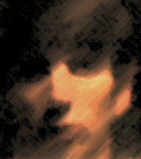
An intriguing article has just been published in the journal Perception about a never-before-described visual illusion where your own reflection in the mirror seems to become distorted and shifts identity.

To trigger the illusion you need to stare at your own reflection in a dimly lit room. The author, Italian psychologist Giovanni Caputo, describes his set up which seems to reliably trigger the illusion: you need a room lit only by a dim lamp (he suggests a 25W bulb) that is placed behind the sitter, while the participant stares into a large mirror placed about 40 cm in front.

The participant just has to gaze at his or her reflected face within the mirror and usually “after less than a minute, the observer began to perceive the strange-face illusion”.

The set-up was tried out on 50 people, and the effects they describe are quite striking:

At the end of a 10 min session of mirror gazing, the participant was asked to write what he or she saw in the mirror. The descriptions differed greatly across individuals and included: (a) huge deformations of one’s own face (reported by 66% of the fifty participants); (b) a parent’s face with traits changed (18%), of whom 8% were still alive and 10% were deceased; (c) an unknown person (28%); (d) an archetypal face, such as that of an old woman, a child, or a portrait of an ancestor (28%); (e) an animal face such as that of a cat, pig, or lion (18%); (f ) fantastical and monstrous beings (48%).

Caputo suggests that the dramatic effects might be caused by a combination of basic visual distortions affecting the face-specific interpretation system.

The visual system starts to adapt after we receive the same information over time (this is why you can experience visual changes by staring at anything for a long time) but we also have a system that interprets faces very easily.

This is why we can ‘see’ faces in clouds, trees, or even from just two dots and a line. The brain is always ‘looking for faces’ and it is likely that we have a specialised face detection system to allow us to recognise individuals whose faces actually only differ a small amount in statistical terms from other people’s.

According to Caputo’s suggestion, the illusion might be caused by low level fluctuations in the stability of edges, shading and outlines affecting the perceived definition of the face, which gets over-interpreted as ‘someone else’ by the face recognition system.

More mysterious, however, were the participants’ emotional reactions to the changes:

The participants reported that apparition of new faces in the mirror caused sensations of otherness when the new face appeared to be that of another, unknown person or strange `other’ looking at him/her from within or beyond the mirror. All fifty participants experienced some form of this dissociative identity effect, at least for some apparition of strange faces and often reported strong emotional responses in these instances. For example, some observers felt that the `other’ watched them with an enigmatic expression – situation that they found astonishing. Some participants saw a malign expression on the ‘other’ face and became anxious. Other participants felt that the `other’ was smiling or cheerful, and experienced positive emotions in response. The apparition of deceased parents or of archetypal portraits produced feelings of silent query. Apparition of monstrous beings produced fear or disturbance. Dynamic deformations of new faces (like pulsations or shrinking, smiling or grinding) produced an overall sense of inquietude for things out of control.

If any Mind Hacks readers try the illusion out for themselves, I’d be fascinated to hear about your experiences in the comments.
 

Link to full-text of article.
Link to PubMed entry for study.

How culture can invert genetic risk

Neuron Culture has a fantastic piece on how a long touted ‘depression gene’ turned out to reduce the risk of mood problems in people in East Asians and why we can’t always understand genetic effects on behaviour without understanding culture.

The piece riffs on the long-established finding that the short variant of the serotonin transporter or 5-HTTLPR gene is more common in people with depression, until psychologist Joan Chiao found that East Asians are more than twice as likely to have the gene but only have half the rate of mood problems.

Why is this the case? Probably because 5-HTTLPR isn’t so much a gene for depression, but more likely for social sensitivity, and East Asian culture is more likely to be collectivist, where social connections matter more in your psychological make-up:

So how does individualism-v-collectivism relate to depression and depression genes? Here Chiao and Blizinsky, as well as Way and Lieberman (these connections were apparently ripe) turned to another emerging idea: That the short SERT gene seems to sensitize people not just to bad experience, but to all experience, good or bad…

This starts to explain the purported interplay of the S/S allele and a collectivist culture: If short-SERT people get more out of social support, a more supportive culture could buffer them against depression, easing any selective pressure against the gene. Meanwhile the gene’s growing prevalence would make the culture increasingly supportive, since those who carry it might be more empathetic. Studies have shown, for instance, that short-SERT people more readily recognize and react to others’ emotional states.

For those who keep an eye on such things, Neuron Culture has just become part of the newly launched Wired Science blog network which is already full of great stuff.
 

Link to Neuron Culture on ‘The Depression Map’.

The death of ‘right brain thinking’

A new study published in Psychological Bulletin has just reviewed all the neuroscience research on creative thinking and found no good evidence for the pop-culture idea that the right side of the brain is more involved in ‘creative thinking’.

Sadly, the full text isn’t available online, but the abstract of the study contains all the punchlines:

A review of EEG, ERP, and neuroimaging studies of creativity and insight.

Psychol Bull. 2010 Sep;136(5):822-48.

Dietrich A, Kanso R.

Creativity is a cornerstone of what makes us human, yet the neural mechanisms underlying creative thinking are poorly understood. A recent surge of interest into the neural underpinnings of creative behavior has produced a banquet of data that is tantalizing but, considered as a whole, deeply self-contradictory. We review the emerging literature and take stock of several long-standing theories and widely held beliefs about creativity.

A total of 72 experiments, reported in 63 articles, make up the core of the review. They broadly fall into 3 categories: divergent thinking, artistic creativity, and insight. Electroencephalographic studies of divergent thinking yield highly variegated results. Neuroimaging studies of this paradigm also indicate no reliable changes above and beyond diffuse prefrontal activation. These findings call into question the usefulness of the divergent thinking construct in the search for the neural basis of creativity.

A similarly inconclusive picture emerges for studies of artistic performance, except that this paradigm also often yields activation of motor and temporoparietal regions. Neuroelectric and imaging studies of insight are more consistent, reflecting changes in anterior cingulate cortex and prefrontal areas.

Taken together, creative thinking does not appear to critically depend on any single mental process or brain region, and it is not especially associated with right brains, defocused attention, low arousal, or alpha synchronization, as sometimes hypothesized. To make creativity tractable in the brain, it must be further subdivided into different types that can be meaningfully associated with specific neurocognitive processes.


Link to PubMed entry for studies (via @sarcastic_f).