Sniffing out the unconscious

The illusion that a horse could do maths may be behind sniffer dogs falsely ‘detecting’ illicit substances according to an intriguing study covered by The Economist.

The horse in question was called Clever Hans and he was rumoured to be able to do complicated maths, work out the date, spell German words – all from questions called out by the audience.

The trainer would run his hand across possible responses on, for example, a piece of paper, and Hans would tap with his hoof to signal when the correct answer was being pointed to.

Psychologist Oskar Pfungst became suspicious and eventually worked out than the horse was doing no more than waiting until his trainer changed his body posture when he hit on the right answer.

His trainer was completely unaware that his expectancies were shaping the horse’s behaviour but this form of unintentional behavioural influence over animal behaviour has become known as the ‘Clever Hans effect‘.

The Economist reports on a new study of sniffer dogs that seems to show a similar effect in action.

Sniffer dogs and their handlers were told to search an area that that might have up to three target scents and that on two occasions the scents would be clearly marked with bits of red paper.

In reality, there were no target scents, so anything the dogs detected was a false alert.

When handlers could see a red piece of paper, allegedly marking a location of interest, they were much more likely to say that their dogs signalled an alert. Indeed, in the two rooms where red paper was present and sausages were not, 32 of a possible 36 alerts were raised. In the two where both red paper and sausages were present that figure was 30–not significantly different. In contrast, in search areas where a sausage was hidden but no red piece of paper was there for handlers to see, it was only 17.

The dogs, in other words, were distracted only about half the time by the stimulus aimed at them. The human handlers were not only distracted on almost every occasion by the stimulus aimed at them, but also transmitted that distraction to their animals–who responded accordingly. To mix metaphors, the dogs were crying “wolf” at the unconscious behest of their handlers.

In other words, when the human handlers become suspicious the dogs are more likely to seem to detect suspicious scents, making the process a lot more subjective than the search teams like to believe.
 

Link to The Economist article ‘Clever hounds’.
A strangely effective video

Australian science reporter Professor Funk has made a fantastic animated video about the science of the placebo effect that’s three minutes of sheer joy even without an active ingredient.

It takes you through the remarkable ways in which the placebo effect differs between different types of pills, perceptions and places and is highly recommended.
 

Link to ‘The Strange Powers of the Placebo Effect’ on YouTube.

Painful relief for a guilty act

The idea that physical pain can alleviate guilt has a long heritage but a new study just published in Psychological Science has produced evidence that helps confirm this long-held belief.

The experiment, led by psychologist Brock Bastian, asked people to recall a time when they had behaved unacceptably and then rate their current level of guilt as they thought back.

The participants were then asked to do a dexterity task with one hand while either keeping their other hand either in a painful bucket of cold water or in a bucket of lukewarm water.

Participants who wrote about an unethical behavior not only held their hands in ice water longer but also rated the experience as more painful than did participants who wrote about an everyday interaction. Critically, experiencing pain reduced people’s feelings of guilt, and the effect of the painful task on ratings of guilt was greater than the effect of a similar but nonpainful task.

Pain has traditionally been understood as purely physical in nature, but it is more accurate to describe it as the intersection of body, mind, and culture. People give meaning to pain, and we argue that people interpret pain within a judicial model of pain as punishment. Our results suggest that the experience of pain has psychological currency in rebalancing the scales of justice—an interpretation of pain that is analogous to notions of retributive justice. Interpreted in this way, pain has the capacity to resolve guilt.


Link to DOI entry for study.

The myth of the tongue map

I have just discovered Wikipedia’s page on a ‘List of common misconceptions’ that includes, among many other wonders, a great piece about the myth of the tongue taste map.

Different tastes can be detected on all parts of the tongue by taste buds, with slightly increased sensitivities in different locations depending on the person, contrary to the popular belief that specific tastes only correspond to specific mapped sites on the tongue.

The original tongue map was based on a mistranslation of a 1901 German thesis by Boring (an eminent psychologist at Harvard). In addition, there are not 4 but 5 primary tastes. In addition to bitter, sour, salty, and sweet, humans have taste receptors for umami, which is a savory or meaty taste.

You can see the referenced entry here and there’s much more joy on the complete page of misconceptions.
 

UPDATE: Thanks to commentors Steve and Vinnie for pointing me in the direction of the latest XKCD comic that mentions the ‘common misconceptions’ page. Not my source but a wonderful reference point!


Link to Wikipedia ‘List of common misconceptions’.

Words about The Scream

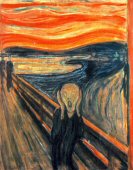
January’s British Journal of Psychiatry has another short article in its fantastic ‘100 words’ series, this time on Edvard Munch’s classic painting ‘The Scream‘.

The image is perhaps one of the most iconic artworks of the 20th century and has spurned as many parodies and light-hearted take offs as straight-up tributes.

However, the BJP piece manages to capture the emotional essence of the original:

Edvard Munch is best known for The Scream, 1893, an image endlessly reproduced in the media to depict mental anguish. Explanations of the meaning behind the image abound, mainly focusing on an outpouring of emotion in response to suffering. Munch’s own explanation is revealed in his diaries, which recall the melancholy of a walk along a bridge with friends. Trembling in fear at the fiery sunset, he sensed ‘how an infinite scream was going through the whole of nature’. This dehumanised figure, into which viewers project their own neuroses, is not screaming but blocking out the scream of its existence.


Link to BJP on ‘The Scream – 100 words’.

Road kill for hot lady drivers

In 1960, the American Journal of Psychiatry reported on “an unusual perversion”, in a case of a man with “the desire to be injured by an automobile operated by a woman.”

The patient, a man in his late twenties, reported a periodic desire to be injured by a woman operating an automobile. This wish, present since adolescence, he had by dint of great ingenuity and effort, gratified hundreds of times without serious injury or detection. Satisfaction could be obtained by inhaling exhaust fumes, having a limb run over on a yielding surface to avoid appreciable damage or by being pressed against a wall by the vehicle.

Gratification was enhanced if the woman were attractive by conventional standards. Injuries inflicted by men operating automobiles or other types of injury inflicted by women had no meaning. He experienced pleasure from the experience, thus establishing the symptom as a perversion rather than a compulsion.

Although psychiatry no longer uses the word perversion (problematic sexual compulsions are now called ‘paraphilias‘) the introduction to the case study says, in a rather understated way, that “some perversions, while representing formidable psychopathology, are also tributes to the complexity of the human mind.”

The article additionally notes that the patient “was ashamed of his symptom but somewhat proud of its unusual nature.”
 

Link to PubMed entry for case study.

Post-coma nail trauma

Being in coma could play havoc with your nail care routine.
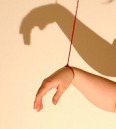
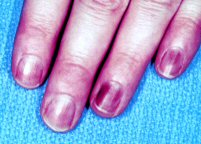
A 1997 report from the Journal of Neurology, Neurosurgery and Psychiatry notes how discoloured fingernails may be a secondary effect of coma owing to the side-effects of a common medical assessment for consciousness.

The test is nothing more high-tech than giving the finger a hard prod with a pencil to see if there is any reaction to pain, which is a common test on unconscious patients.

In fact, it forms part of the universally used Glasgow Coma Scale. You’ll often hear doctors saying “the patient was admitted with a GCS of…” followed by a number up to 15 which rates how conscious and alert the patient is, depending on their reaction to various prods, pokes and verbal requests.

The brief article reported an unintended side-effect of repeated Glasgow Coma Scale assessments after a patient woke up from coma to find her nails all black and blue.

A 30 year old woman was admitted to hospital with a rapidly progressive decline in level of consciousness and seizures. Neuroimaging studies disclosed thrombus in the superior sagittal sinus, bilateral cerebral venous infarctions, and oedema. She was treated with intravenous heparin and propofol for control of agitation and increased intracranial pressure. She made an excellent recovery.

Three weeks after admission she alerted us to a painless brownish discolouration of many of her fingernails. Bilateral subungual haematomas in different stages of resolution were noted. These lesions had been created by frequent nail bed compression with a pencil to monitor motor response, a common practice of applying noxious pain stimuli in comatose patients admitted to neurological intensive care units.

Obviously, if you’re a Goth, Glasgow Coma Scale evaluations are likely to have much less of an impact on your post-coma nail care routine.
 

Link to brief JNNP piece on ‘Coma Nails’.

The plant of human puppets

I’ve made a radio programme with ABC Radio National’s All in the Mind about burundanga, a mysterious street drug used in South America which is widely believed to remove free will.

The name ‘burundanga’ is a popular term and doesn’t refer to a single thing, but its most commonly associated with the brugmansia plants.

They can incapacitate people in high enough doses owing to them being rich in a psychoactive chemical called scopolomine. Criminals spike unsuspecting members of the public and then rob or attack them.

Since living in Colombia, I’ve constantly heard people tell me that the plant removes free will – the affected people just do whatever they’re told. They become, in effect, human puppets.

To me, this always sounded unlikely, and it struck me that, if this was genuinely the case, this might be a hugely important discovery in neuroscience, because free will and agency are two of the most complex and difficult to grasp areas.

But the plant also has hundreds, and probably thousands, of years of history as a psychoactive component of the religious rituals of the indigenous people of the continent, to the point where it holds a central place in some of their founding myths.

Needless to say, the chance to wander round Colombia making a documentary about a psychoactive plant at the intersection of neuroscience, myth and criminal science was too good to miss, so I hope you enjoy the journey.

It sounds wonderful, by the way, but almost entirely due to presenter and producer Natasha Mitchell’s magic at the mixing desk when making sense of my raw materal.

I’ve also written an article about the substance, including the first attempt to use it as a ‘truth drug’ after a gruesome murder, and there’s an image gallery available too.
 

Link to AITM on the plant that steals your free will with mp3 download.
Link to my article on the AITM blog.
Link to image gallery.

Air on a G thing

Seed Magazine has an absolutely wonderful article on the neuroscience of musical improvisation that looks at how skilled musicians from the jazz greats to the classical masters take us on unplanned melodic journeys.

It’s a brilliantly written piece, a compelling fusion of music and science journalism, that skilfully captures the emerging scientific interest in musical spontaneity.

Aaron Berkowitz, a cognitive ethnomusicologist, who took on the task of demystifying improvisation as the focus of his dissertation work at Harvard, has a theory. He likens the process of learning to improvise to that of learning a second language. Initially, he says, it’s all about memorizing vocabulary words, useful phrases and verb conjugation tables. Your first day, you might learn to say: How are you? I’m fine. “These are like the baby steps beginning improvisers take. They learn the structure of the blues. They learn basic chords and get the form down,” said Berkowitz. But they’re still very limited in what they can do…

The trajectory of acquiring a language, according to Berkowitz, where you begin with learned phrases, achieve fluency, and are eventually able to create poetry mirrors perfectly the process of learning to improvise. In the same way a language student learns words, phrases and grammatical structure so that later he can recombine them to best communicate his thoughts, a musician collects and commits to memory patterns of notes, chords and progressions, which he can later draw from to express his musical ideas.

After reading the piece I wondered if the brain handles musical improvisation in a similar way to how it manages freestyle rap, as they both require unplanned spontaneity but within the restrictions of ‘what works’.

Sadly, so far, science has completely neglected the neural basis of hip-hop, but we live in hope homey.
 

UPDATE: Mind Hacks posse in full effect. In the comments NT mentioned that neuroscientist Charles Limb has got a freestyle rap study in progress and neuromusic noted that DJ and neuroscientist @djenygma tweeted earlier today he was “Sitting in on #fMRI experiment using local rappers in a freestyle-vs-memorized processing task”.


Link to excellent article on musical improvisation.

The brain isn’t going to take it lying down

The brain may manage anger differently depending on whether we’re lying down or sitting up, according to a study published in Psychological Science that may also have worrying implications for how we are trying to understand brain function.

Anger experiments that have measured electrical signals from the brain (using EEG) or that have altered neural activity with magnetic pulses (using TMS) have found that the left frontal lobe is more active than the right, but studies using fMRI functional brain scans have found no differences.

Psychologists Eddie Harmon-Jones and Carly Peterson wondered whether the brain might be working differently in EEG and TMS experiments because the participant is usually sitting upright, while in fMRI, the person is usually lying flat on their back.

If this seems like a trivial distinction as far as emotion is concerned, it actually has some sound theory behind it. A field of study called ‘embodied cognition‘ has found lots of curious interactions between how the mind and brain manage our responses depending on the possibilities for action.

For example, we perceive distances as shorter when we have a tool in our hand and intend to use it, and wearing a heavy backpack causes hills to appear steeper.

Anger is a prime example where we feel motivated to ‘do something’. In the sitting position we’re much more ready to approach whatever’s annoying us than when we’re flat on our backs, and the researchers wondered whether these body positions were interacting with our motivations to change the brain’s response.

So Harmon-Jones and Peterson asked 46 participants to write a short essay before wiring them up to an EEG that measured the electrical activity across the brain.

The participants then put on headphones and listened as someone else read their essay and rated the author on personal characteristics, such as intelligence and competence. Some participants listened while lying down, others while in the sitting position.

What they didn’t know was that the ‘raters’ were actually pre-recorded audio, and while some heard a benign commentary on their work, other participants heard the other ‘person’ slagging-off them off and harshly rating the participant and their personality.

In line with the ‘ready to respond’ theory, when the participants were angry and sitting up, the left frontal lobe was much more active than the right – but when angry and lying down, there was no difference.

First off, the findings provide evidence that body position interacts with how the brain processes emotion, perhaps depending on which actions are immediately possible.

But more importantly, the experiment might also indicate that different neuroscience techniques may be throwing up varying results because of the differing body positions needed to take the tests.

Although this is only an initial study, it could be a major spanner in the works for cognitive science which often assumes that clumping together evidence from a whole range of techniques gives a better idea of what’s going on.
 

pdf of full-text of study.
Link to PubMed entry for study.
Link to DOI entry for study.

Rough sleeper

The guy fighting the nurses, in the photo on the right, is asleep. Although usually considered a restful state, sleep, for a minority of people with specific disorders, is a trigger for violence.
Neurology journal Brain has just published a review paper (sadly locked) that discusses how violence can be triggered in the somnolent, noting that there are numerous cases of murders that have been ‘committed’ while unconscious.

The first known case is from the middle ages and apparently “relates to a Silesian woodcutter, who after a few hours of sleep woke up abruptly, aimed his axe at an imaginary intruder and killed his wife instead”.

Other more recent cases include:

Reported image of wild animal rising from floor and attacking child. Tried to defend child from beast, grabbing child instead and smashing him against the wall, killing him.

Vivid image of soldiers attacking daughter. Left house, grabbed axe, entered daughter’s room and ‘defended her’ by hitting twice with axe, killing her.

Dreamed that burglars had entered home and were killing family. Grabbed two guns and fired 10 shots, killing father and brother, injuring mother.

Image of two Japanese soldiers chasing him and wife through jungle. In his dream, he strangled one soldier and kicked another, killing his wife by strangling her instead.

You might be thinking that ‘I did it in my sleep’ is a convenient defence for someone who wants to get away with murder, but there are convincing criteria for deciding whether it was a genuine sleep attack.

The person need to have a confirmed sleep disorder, usually previous violence in sleep confirmed by video recording, as the picture above shows. The brief act typically happens as the person falls asleep or is awoken. The act seems impulsive, senseless and without motivation.

The person reacts with horror when they awake, makes no attempt to escape and can’t remember what happened.

The main risk factor is the presence of a sleep disorder. For example, REM sleep behaviour disorder – where people cannot prevent themselves acting out their dreams, is known to be linked to violence in a minority of those affected. Other conditions know to trigger sleep violence in some include epilepsy, confusional arousal or dissociative disorder.

Although the article in Brain is locked, the same research team published an alternative review paper on sleep violence last year for the medical journal Schweizer Archivs für Neurologie und Psychiatrie.

If you’re not a German reader, don’t be put off by the name because the article is in English and is freely available online as a pdf.
 

Link to summary and DOI entry for Brain article.
pdf of open-access 2009 review article by the same team.

On the touchstone of consciousness

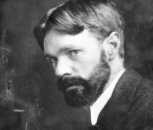
A wonderful poem simply titled ‘Thought’ by the English writer D. H. Lawrence.
Thought, I love thought.

But not the juggling and twisting of already existent ideas.

I despise that self-important game.

Thought is the welling up of unknown life into consciousness,

Thought is the testing of statements on the touchstone of consciousness,

Thought is gazing onto the face of life, and reading what can be read,

Thought is pondering over experience, and coming to conclusion.

Thought is not a trick, or an exercise, or a set of dodges,

Thought is a man in his wholeness, wholly attending.

Lawrence was hugely controversial in his day, not least due to writing Lady Chatterley’s Lover, but maintained a penetrating interest in the psychology of individuals which his stories so vividly illustrate.
 

Link to Wikipedia page on D.H. Lawrence.

Magic at the dawn of psychology

Some of the world’s best illusionists are now collaborating with cognitive scientists to better understand the mind and brain but this turns out to be old news. A brilliant article in The Psychologist charts the remarkably long history of magicians and psychologists working together to understand the human mind.
The piece is by psychologist and historian Peter Lamont, himself a stage magician of some repute, who looks back at how illusionists knowledge of mental engineering was in demand even in the earliest days of experimental psychology.

At the end of the 19th century, Hermann and Kellar were the two greatest conjurors in the world, though who was greatest depended upon whose publicity one believed. In the United States they competed over audiences and advertising space, and each considered the other his arch-rival. When Hermann died in 1896, Kellar was free to establish his reign and, aside from his notable achievements in the world of magic, he was almost certainly the inspiration for the Wizard of Oz. But before Kellar became the grand wizard, and shortly before Hermann’s death, the two great rivals agreed to compete in a quite different environment – the psychological laboratory.

In fact, December’s edition of The Psychologist is a special issue on the history of psychology with all the major articles open and available to all.
 

Link to article on magic and psychology.
Link to table of contents for December’s The Psychologist.
 

Full disclosure: I’m an unpaid associate editor and occasional columnist for The Psychologist. Sadly, I lost the magic years ago.

Walk this sway

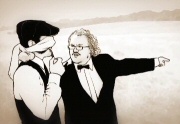
NPR has a fascinating segment about how humans can’t walk in a straight line unless we have an external guide. We just end up walking in circles.

It turns out, no one is really sure why this happens but experiments on walkers, drivers and swimmers have all found the tendency to circle back on ourselves despite us thinking that we’re maintaining a steady course ahead.

The NPR piece is both a short radio discussion and an animation so make you catch both as it’s a minor but utterly fascinating mystery.

So why, when blindfolded, can’t we walk straight? There is still no good answer. Jan Souman, a research scientist in Germany, co-wrote a paper last year about this human tendency to walk in circles…

In our radio broadcast, Jan and I explore possible explanations for this tendency to slip into turns. Maybe, I suggest, this is a form of left or right handedness where one side dominates the other? Or maybe this is a reflection of our left and right brains spitting out different levels of dopamine? Or maybe it’s stupidly simple: Most of us have slightly different sized legs or slightly stronger appendages on one side and this little difference, over enough steps, mounts up?

Wrong, wrong and wrong, Jan says. He’s tested all three propositions (the radio story describes the details) and didn’t get the predicted results.


Link to NPR on ‘Why Can’t We Walk Straight?’ (via @JadAbumrad).

I stopped talking when I was six years old

I’ve just revisited the indifferent indie classic Child Psychology by British band Black Box Recorder that has perhaps the only description of ‘selective mutism’ in pop music.
Selective mutism is a curious psychological disorder where children refuse to speak, or refuse to speak in certain situations (like school), despite having no speech problems.

The first verse of ‘Child Psychology’ describes the experience from the child’s perspective:

I stopped talking when I was six years old
I didn’t want anything more to do with the outside world
I was happy being quiet
But of course they wouldn’t leave me alone
My parents tried every trick in the book
From speech therapists to child psychologists
They even tried bribery
I could have anything, as long as I said it out loud

I’ve never been able to find out whether the singer is describing a real experience or it’s just poetic license for the sake of the song.

Rather ironically for a song about selective mutism, the song was banned from radio and MTV because of the chorus which goes “Life is unfair, kill yourself of get over it”.

UPDATE: Thanks to Kate for posting in the comments that the lyrics to “She’s Given Up Talking” by Paul McCartney also describe the condition. If you know of any other songs, do add them in the comments.


Link to Child Psychology song on YouTube.
Link to Wikipedia page on selective mutism.

I can’t hold it any longer

Sometimes, medical case studies tell as much of a story by what they omit as by what they include. This sentence, from a recent case study published in the Canadian Journal of Urology, is one such example:

To complete the therapeutic approach, we focused also on the possible psychiatric implications of the self insertion of a foreign body into the urethra, and the initial evaluation reached the diagnosis of depression.

You may not be aware, but there are hundreds of cases in the medical literature of people ending up in hospital after putting objects in their cock or mimsy.

Allen key? Done. Pencil? Yes ma’am. Telephone cable? Hold the line. Plastic cup? At your service.

As far as I can tell, the matter has not been systematically studied, although hospital admissions seem to be most commonly linked to sex games that, excuse the pun, have got out of hand, or, are the unfortunate results of mental illness.

One interesting case from last year was reported in a chimpanzee. Do mention that next time you bump into an evolutionary psychologist. It should keep them busy for a while.
 

Link to PubMed entry for case study.