Naomi Wolf, porn and the misuse of dopamine

‘Is pornography driving men crazy?’ asks campaigner Naomi Wolf in a CNN article that contains a spectacular misunderstanding of neuroscience applied to a shaky moral conclusion.

Wolf asks suggests that the widespread availability and consumption of pornography is “rewiring the male brain” and “causing them to have more difficulty controlling their impulses”.

According to her article, pornography causes “rapid densensitization” to sexual stimulation which is “desensitizing healthy young men to the erotic appeal of their own partners” and means “ordinary sexual images eventually lose their power, leading consumers to need images that break other taboos in other kinds of ways, in order to feel as good.”

Moreover, she says “some men (and women) have a “dopamine hole” – their brains’ reward systems are less efficient – making them more likely to become addicted to more extreme porn more easily.”

Wolf cites the function of dopamine to back up her argument and says this provides “an increasing body of scientific evidence” to support her ideas.

It does not, and unfortunately, Wolf clearly does not understand either the function or the relevance of the dopamine system to this process, but we’ll get onto that in the moment.

Purely on the premise of the article, I was troubled by the fact that “breaking taboos” is considered to be a form of pathology and it lumps any sort of progression in sexual interest as a move toward the “extreme”.

‘Taboo’ and ‘extreme’ are really not the issue here as both are a matter of perception and taste. What is important is ‘consensual’ and ‘non-consensual’ and when the evidence is examined as a whole there is no conclusive evidence that pornography increases sexual violence or the approval of it (cross-sectional studies tend to find a link, experimental and crime data studies do not).

To the contrary, wanting new and different sexual experiences is for the majority a healthy form of sexual exploration, whether that be through porn or other forms of sexual behaviour.

One part of the motivation for this is probably that people do indeed become densensitised to specific sexual images or activities, so seeing the same thing or doing the same thing over and over is likely to lead to boredom – as any women’s magazine will make abundantly clear on their advice pages.

But this is no different to densensitisation to any form of emotional experience. I contacted Jim Pfaus, the researcher mentioned in the article, who has conducted several unpublished studies showing that physiological arousal reduces on repeat viewing of sexual images, but he agrees that this is in line with standard habituation of arousal to most type of emotional images, not just sexual, that happens equally with men and with women.

It’s important to point out that this densensitisation research is almost always on the repetition of exactly the same images. We would clearly be in trouble if any sexual experience caused us to densensitise to sex as we’d likely lose all interest by our early twenties.

However, it is Wolf’s description of the dopamine system where things get really weird:

Since then, a great deal of data on the brain’s reward system has accumulated to explain this rewiring more concretely. We now know that porn delivers rewards to the male brain in the form of a short-term dopamine boost, which, for an hour or two afterwards, lifts men’s mood and makes them feel good in general. The neural circuitry is identical to that for other addictive triggers, such as gambling or cocaine.

The addictive potential is also identical: just as gamblers and cocaine users can become compulsive, needing to gamble or snort more and more to get the same dopamine boost, so can men consuming pornography become hooked. As with these other reward triggers, after the dopamine burst wears off, the consumer feels a letdown – irritable, anxious, and longing for the next fix.

Wolf is accidentally right when she says that porn ‘rewires the brain’ but as everything rewires the brain, this tells us nothing.

With regard to dopamine, it is indeed involved in sexual response, but this is not identical to the systems involved with gambling or cocaine as different rewards rely on different circuits in the brain – although doesn’t it sound great to lump those vices together?

Porn is portrayed as a dangerous addictive drug that hooks naive users and leads them into sexual depravity and dysfunction. The trouble is, if this is true (which by the way, it isn’t, research suggests both males and females find porn generally enhances their sex lives, it does not effect emotional closeness and it is not linked to risky sexual behaviours) it would also be true for sex itself which relies on, unsurprisingly, a remarkably similar dopamine reward system.

Furthermore, Wolf relies on a cartoon character version of the reward system where dopamine squirts are represented as the brain’s pleasurable pats on the back.

But the reward is not the dopamine. Dopamine is a neurochemical used for various types of signalling, none of which match the over-simplified version described in the article, that allow us to predict and detect rewards better in the future.

One of its most important functions is reward prediction where midbrain dopamine neurons fire when a big reward is expected even when it doesn’t occur – such as in a near-miss money-loss when gambling – a very unpleasant experience.

But what counts as a reward in Wolf’s dopamine system stereotype? Whatever makes the dopamine system fire. This is a hugely circular explanation and it doesn’t account for the huge variation in what we find rewarding and what turns us on.

This is especially important in sex because people are turned on by different things. Blondes, brunettes, men, women, transsexuals, feet, being spanked by women dressed as nuns (that list is just off the top of my head you understand).

Not all sex is rewarding to all people and people have their likes, dislikes and limits.

In other words, there is more to reward than the dopamine system and in many ways it is a slave to the rest of the brain which interprets and seeks out the things we most like. It is impossible to explain sexual motivation or sexual pathology purely or, indeed, mainly as a ‘dopamine problem’.

Wolf finishes by saying that “understanding how pornography affects the brain and wreaks havoc on male virility permits people to make better-informed choices” despite clearly not understanding how pornography could affect the brain and providing nothing but anecdotes about the effect on male sexual function.

This does not mean all porn is helpful or healthy, either to individuals or society, but we should be criticising it on established effects, not on misunderstood and poorly applied neuroscience deployed in the service of bolstering shaky conclusions about its personal impact.
 

Link to Naomi Wolf’s “Is pornography driving men crazy?”

The neurology of the undead

Wired has an excellent neurological guide to surviving the zombie holocaust that will keep you one shamble ahead when the undead attack.


The article and the wonderful accompanying infographics were inspired by the work of neuroscientist Bradley Voyek who, when he is not poking around in the decaying brains of zombies, looks at communication networks in the human brain.
 

Link to Wired piece on the neuroscience of the zombie apocalypse.

The Ginger Jake poisonings

A mysterious epidemic of paralysis was sweeping through 1920s America that had the medical community baffled. The cause was first identified not by physicians, but by blues singers.
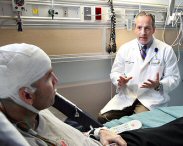
During the prohibition, alcohol was banned but people got buzzed the best way they could. One way was through a highly alcoholic liquid called Jamaica Ginger or ‘Jake’ that got round the ban by being sold as a medicine.

Eventually the feds caught on and even such poorly disguised medicines were blacklisted but Jamaica Ginger stayed popular, and alcoholic, due to the producers including an organophosphate additive called tricresyl phosphate that helped fool the government’s tests.

What they didn’t know was that tricresyl phosphate is a slow-acting neurotoxin that affected the neurons that control movement.

The toxin starts by causing lower leg muscular pain and tingling, followed by muscle weakness in the arms and legs. The effect on the legs caused a distinctive form of muscle paralysis that required affected people to lift the leg high during walking to allow the foot to clear the ground.

This epidemic of paralysis first made the pages of the New England Journal of Medicine in June 1930, but the cause remained a mystery.

What the puzzled doctors didn’t know was that the cause had been identified by two blues musicians earlier that year, in songs released on 78rpm records.

Ishman Bracey’s song Jake Liquor Blues and Tommy Johnson’s track Alcohol and Jake Blues had hit on the key epidemiological factor, the consumption of Jamaica Ginger, likely due to their being part of the poor southern communities where jake was most commonly drunk.

Slowly, the medical community caught on, noting that the additive damaged the spinal cord and peripheral nerves, and the adulterated jake was slowly tracked down and outlawed.

The story, however, has an interesting neurological twist. In 1978, two neurologists decided to track down some of the survivors of jake poisoning 47 years after the booze fuelled epidemic hit.

They found that the original neurological explanation for the ‘jake walk’ effect was wrong. The paralysis was actually due to damage to the movement control neurons in the brain (upper motor neurons) and not the peripheral nervous system.

Jake was much more dangerous than thought and the false lead was probably due to inadequate assessments when the epidemic hit, possibly because the stigma associated with the condition prevented a thorough investigation.

The study has a poignant description of the social effect of the condition:

The shame experienced by those with jake leg possibly led some with a minimal functional disorder to deny that they ever had the disease, and patient 4 stated that he knew some such people. We heard of other men with obvious impairment who claimed to have had a stroke.

If you want to read more on this curious piece of neurological there’s a great article on Providentia you can check out for free and a renowned 2003 article from The New Yorker which is locked behind a paywall due to digital prohibition.
 

Link to Providentia post on Ginger Jake.

Epilepsy, inside and out

The New York Times has an inspiring piece about neurologist and epilepsy specialist Brien Smith who has just become chairman of the Epilepsy Foundation. Unusually, his interest is more than just professional as he has epilepsy himself.

I was really struck by this part, as it shows how even trained medical professionals can unnecessarily freak out when they see someone having a seizure:

One day during medical school, my classmates and I learned that one of the most well-liked doctors-in-training in the hospital had had a seizure while leading morning work rounds.

The sight of him writhing had caused the other doctors and nurses on the ward to panic. Some stood mute, frozen with fear. An intern, believing that the seizure arose from low blood sugar levels, took his half-eaten jelly doughnut and held it against the mouth of his seizing colleague. Others yelled to the ward secretary to “call a code,” and continued to do so even after another dozen doctors and nurses had already arrived on the floor.

The young doctor eventually recovered. But for many of the medical students and doctors who heard about the episode or were on the wards that day, the dread of that morning would linger long beyond our years of training. Epilepsy was, and remains, a frightening and mysterious malady.

Time and again, I have seen this happen. People call ambulances unnecessarily. People risk the life of the person having a seizure by trying to put something in their mouth (to stop them ‘biting their tongue’). People risk injury to the person by trying to hold them down.

If you want to be one of the few people who don’t freak out when someone has a seizure and if you want to be genuinely helpful, read this brief page on first aid for epilepsy.

And if you have a couple more minutes, check out The New York Times piece on neurologist Brien Smith and his unique insight into the condition. Highly recommended.
 

Link to NYT piece on Brien Smith (via @mocost).

The malware of medical science

Just when you thought the pharmaceutical industry had used up every dirty trick in the book, it has been revealed that a ‘study’ of the epilepsy drug gabapentin (aka Neurontin) was never really intended to investigate the medication, but was primarily intended to get doctors to prescribe it more often.

A report published in the Archives of Internal Medicine examined documents uncovered in legal cases that show that a drug trial called ‘Study of Neurontin: Titrate to Effect, Profile of Safety’ (STEPS) was largely designed to involve doctors in a marketing programme that would appear like a scientific trial.

Actually, it was a scientific trial of a sort, but rather than studying the effect of the drug on patients, they were studying the effect of marketing on the doctors.

Parke-Davis sales representatives collected and recorded individual subject data. In a clear example of data tampering, they not only attended epilepsy patients’ office visits (under the guise of “shadowing” the clinician), but also actively promoted the use of Neurontin and blocked the use of competing medications, particularly lamotrigine (Lamictal), at those visits. They also rewarded participating investigators with free lunches and dinners.

Without informing either patients or physicians, the drug company’s marketing department monitored each investigator’s prescribing practices. It documented a 38% increase in prescriptions of Neurontin after investigators attended an introductory briefing, as well as a 10% increase in the average prescribed dose. It also compared prescribing patterns between study investigators and a control group of nonparticipating neurologists, and documented increased prescribing of Neurontin only among the study participants.

Big Pharma: the malware of medical science.
 

Link to good write-up in Internal Medicine News.
Link to locked study in the Archives of Internal Medicine.
Link to locked related editorial in the Archives of Internal Medicine.

Traumatic brain injuries in the Asterix comics

A team of neurosurgeons has completed an exhaustive study of the causes of traumatic brain injury in the Asterix comics.

Needless to say, it is a work of pure genius.

And if the conclusions at the end of the summary don’t make you beam with delight, you are dead inside.
 

Traumatic brain injuries in illustrated literature: experience from a series of over 700 head injuries in the Asterix comic books

Acta Neurochir (Wien). 2011 Jun;153(6):1351-5.

Kamp MA, Slotty P, Sarikaya-Seiwert S, Steiger HJ, Hänggi D.

Department for Neurosurgery
Heinrich-Heine-University Düsseldorf

Background: The goal of the present study was to analyze the epidemiology and specific risk factors of traumatic brain injury (TBI) in the Asterix illustrated comic books. Among the illustrated literature, TBI is a predominating injury pattern.

Methods: A retrospective analysis of TBI in all 34 Asterix comic books was performed by examining the initial neurological status and signs of TBI. Clinical data were correlated to information regarding the trauma mechanism, the sociocultural background of victims and offenders, and the circumstances of the traumata, to identify specific risk factors.

Results: Seven hundred and four TBIs were identified. The majority of persons involved were adult and male. The major cause of trauma was assault (98.8%). Traumata were classified to be severe in over 50% (GCS 3-8). Different neurological deficits and signs of basal skull fractures were identified. Although over half of head-injury victims had a severe initial impairment of consciousness, no case of death or permanent neurological deficit was found. The largest group of head-injured characters was constituted by Romans (63.9%), while Gauls caused nearly 90% of the TBIs. A helmet had been worn by 70.5% of victims but had been lost in the vast majority of cases (87.7%). In 83% of cases, TBIs were caused under the influence of a doping agent called “the magic potion”.

Conclusions: Although over half of patients had an initially severe impairment of consciousness after TBI, no permanent deficit could be found. Roman nationality, hypoglossal paresis, lost helmet, and ingestion of the magic potion were significantly correlated with severe initial impairment of consciousness (p ≤ 0.05).


Link to PubMed entry for study (via @velascop).
Link to DOI entry for study.

Searching for the Alzheimer’s key

BBC Radio 4’s Crossing Continents has an excellent programme on how an extended family in Colombia with an inherited form of dementia are providing clues that may help us understand Alzheimer’s disease.
The research is being led by a group from the University of Antioquia in Colombia’s second city, Medellín, and has caused waves of excitement among those hoping for a new treatment for the condition.

The project was featured in The New York Times last year and we also covered some of the background to the research at the time.

It’s generally a great programme but my attention was caught by the programme’s description which makes out that the ethical problems are related to possible exploitation of a poor family in the developing world – when economics is really not the issue at hand.

The families do not have a significant financial benefit from their involvement and the debate is more over whether cognitively impaired people can fully consent to their participation.

It also concerns whether families, affected by incurable conditions that appear in young and middle aged people, are motivated by desperation for a cure when they might not understand that this is years away.

This is exactly the same issue that would face any family, anywhere in the world, so I’m not sure why the issue of the family being in the ‘developing world’ is particularly relevant.

The programme also discusses the risk that American could exploit scientists in the developing world.

I’ve been to the neuroscience centre discussed in the programme and it would put many Western research institutes to shame – it’s a modern, multi-disciplinary, high-powered research institute doing cutting edge science.

Not everything outside of Europe and the USA needs to be seen through the lens of poverty and exploitation. Usually, the science speaks for itself.
 

Link to Crossing Continents on leading dementia research.
Link to earlier NYT piece on the same research.

Where next for chronic fatigue after XMRV a bust

Nature News has an excellent piece reviewing the state of play after the first reports of the XMRV virus in people with chronic fatigue syndrome (CFS) have been put in doubt both by a string of failed replications and evidence of contamination in the original research samples.

Chronic fatigue syndrome or CFS is associated with diffuse body pain, persistent tiredness and loss of concentration and is controversial owing to the fact that some patient groups are determined to identify a ‘physical cause’ while many professionals understand and successfully treat it as having a significant ‘psychological’ component.

We covered the details of the intense debate last year, but the argument was heated further recently when first reports of a virus in some CFS patients have been shown to be extremely unlikely.

The hypothesis that the retrovirus has a role in chronic fatigue syndrome (CFS) has been dealt a serious blow by the publication of two damning papers in Science and an “expression of concern” from the journal’s editor over the original report that identified signs of XMRV infection in two-thirds of people with the condition but fewer than 4% of healthy people. The authors of that paper, led by Judy Mikovits at the Whittemore-Peterson Institute for Neuro-Immune Disease in Reno, Nevada, declined a request from Science to retract it, calling it “premature” in a statement.

“It’s a bust,” says Jonathan Stoye, a retrovirologist at the National Institute for Medical Research in London, part of the UK Medical Research Council (MRC), who was one of the fiercest critics of the association between XMRV and CFS. “People who are interested in this condition will have to move on.”

Yet scientists are not yet sure what the fallout will be for the future of research into CFS, also known as myalgic encephalomyelitis (ME)

The Nature News piece discusses where CFS research can go next now “XMRV’s 15 minutes of fame seem to be up” and whether this will reduce scientific interest in what is genuinely a debilitating condition.

Definitely worth a read.
 

Link to Nature news on ‘CFS: life after XMRV’ (via @edyong209).
Link to previous Mind Hacks post on roots of CFS controversy.

A mind of our own

The New York Times has an amazing article on conjoined twins Tatiana and Krista Hogan who share part of their brains and seem to be aware of each others’ minds at work.

It’s a long read but worth it both for how the piece captures both the scientific interest in the possibility of shared consciousness and the personalities of the twins.

Twins joined at the head — the medical term is craniopagus — are one in 2.5 million, of which only a fraction survive. The way the girls’ brains formed beneath the surface of their fused skulls, however, makes them beyond rare: their neural anatomy is unique, at least in the annals of recorded scientific literature. Their brain images reveal what looks like an attenuated line stretching between the two organs, a piece of anatomy their neurosurgeon, Douglas Cochrane of British Columbia Children’s Hospital, has called a thalamic bridge, because he believes it links the thalamus of one girl to the thalamus of her sister.

The thalamus is a kind of switchboard, a two-lobed organ that filters most sensory input and has long been thought to be essential in the neural loops that create consciousness. Because the thalamus functions as a relay station, the girls’ doctors believe it is entirely possible that the sensory input that one girl receives could somehow cross that bridge into the brain of the other. One girl drinks, another girl feels it.

We covered an earlier article that touched on whether the two young children had access to each others’ experiences but the NYT piece explores the issue in far more depth.
 

Link to excellent NYT piece on the Hogan twins (via @mocost).

Empathy in shades of grey

Scientific American has an insightful and beautifully written article asking whether it is possible to make sense of empathy using brain scans.

Neuroscience studies are increasingly focusing on what science calls ‘high level’ concepts and what those outside the field might just call ‘vague’.

Empathy is probably not in the ‘vague’ category although it is true to say that there are several competing definitions and no standard way of measuring it.

It does have huge intuitive appeal, however, leading to a boom in brain scanning studies that are trying to pin down how we understand other people’s emotions.

The SciAm piece takes a trip to the Saxelab Social Cognitive Neuroscience Laboratory at MIT to take a look at how at how a study is attempting to understand the neuroscience of empathy, as well as asking some searching questions about whether we are over-simplifying the problem

A short but excellent piece of writing.
 

Link to SciAm article ‘Looking for Empathy’ (via @edyong209).

X-rated neuroanatomy

Slate has a curious article on how many of the anatomical names for parts of the brain are based on the nether-regions of the human body or bawdy allusions to sex.

Régis Olry, of the University of Quebec, and Duane Haines, of the University of Mississippi, brought the whole sordid tale to light in an intriguing pair of articles for the Journal of the History of the Neurosciences. These “historians of neuroanatomy” (yes, there is such a profession, and we should be grateful for it) reviewed a very old, circuitous medical literature and found that the human brain was once described as comprising its very own vulva, penis, testicles, buttocks, and even an anus. In fact, part of the cerebrum is still named in honor of long-forgotten whores.

A past professor of neuroanatomy told me that one of the old arguments for why women couldn’t be doctors is because the their delicate nature would be affected by all the rude Latin jokes in the anatomical names.

Following this line of argument, we might expect atheists to be scared away from neuroscience as well owing to the number of structures that are named after gods.

If you remain unshocked by the vulgarity of the brain, the Slate article may be for you.
 

Link to Slate article on bawdy neuroanatomy.

Is free will spent by a knock-out drug?

I’ve got a brief article in Wired UK about whether the knock-out drug burundanga could help us understand the neuroscience of free will.

The drug is actually an extract of plants from the brugmansia family with the active ingredient being scopolamine.

The urban legend goes that when you’ve been spiked with the drug you do whatever you’re told and can’t remember anything afterwards. The truth is probably less spectacular but surprisingly, its effect on conformity has never been tested.

You may remember I made a radio programme on the same topic with the lovely people from ABC All in the Mind and although the article has just come out, it was actually the inspiration for the documentary.
 

Link to Wired UK article on knock-out drugs and free will.
Link to ABC All in the Mind documentary on burundanga.

Ketamine – biography of a space agent

Ketamine is both a powerful hallucinogenic drug and an effective anaesthetic that can create striking out-of-body experiences.

The history of ‘Taming the Ketamine Tiger’ is recounted by the doctor who has been most involved in researching and understanding the curious compound in an open-access article published in Anesthesiology.

The author is the wonderfully named Edward Domino who was one of the first people to study both the pain killing and mind bending effects of ketamine.

His article recounts the history of the compound from its discovery, to its use in surgery, to its deployment in the Vietnam war and its championing by the consciousness exploring counter-culture.

The paper is written for fellow pharmacologists and so has some fairly technical parts (the section ‘Ketamine Pharmacology’ is probably best skipped if you’re not into the gritty details of how it affects the body and brain) but also has some wonderful personal recollections and anecdotes from the drug’s history.

About 1978, the prominent physician, researcher, and mystic John C. Lilly, M.D. (1915–2001), self-administered ketamine to induce an altered state of consciousness. He summarized his many unique experiences as “a peeping Tom at the keyhole of eternity.” These included sensory deprivation while submerged in a water tank, communication with dolphins, and seduction by repeated ketamine use.

In 1978, Moore and Alltounian reported on their personal ketamine use. Marcia Moore was a celebrated yoga teacher, Howard Alltounian, M.D., a respected clinical anesthesiologist. They reportedly got high on ketamine together and after two ketamine “trips” fell in love and became engaged after 1 week. They felt they were “pioneering a new path to consciousness.” Ms. Moore was called the priestess of the Goddess Ketamine. She took the drug daily and apparently developed tolerance.

For her, ketamine was a seductress, not a goddess. Her husband warned her of its dangers. She slept only a few hours each night. She agreed that she was wrong about a lot of things and was “going to stay with it until it is tamed.” However, Moore was unable to tame the ketamine tiger and in January 1979 disappeared. The assumption was that she injected herself with ketamine and froze to death in a forest.

You can read the full article here although it’s not clear to me that the link is stable enough to be archived, in which case the DOI entry points here although you may need to do some clicking through to find the full text.

Anyway, a fascinating look back at a complex compound from the man at the centre of its science.
 

Link to ‘Taming the Ketamine Tiger’ in Anesthesiology.
Link to DOI entry for same.

A neurologist, fighting to the last

The San Francisco Chronicle has a striking article about a neurologist who is dying from the disease he has researched all his professional career. He is writing his last paper as he slowly gives way.

The condition is called amyotrophic lateral sclerosis, also known as ALS or Lou Gehrig’s disease, which slowly destroys neurons in the spinal cord that control the muscles in the body, leading to a gradual loss of control, paralysis and death through breathing problems.

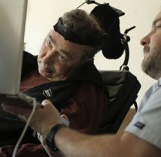
The doctor is Richard Olney an expert in the condition who is writing up his last study on the condition by using a device which lets him type with his eye movements.

Dr. Richard Olney is racing to finish what is almost certain to be his last research paper.

The 63-year-old UCSF neurologist is considered one of the country’s top clinical specialists for amyotrophic lateral sclerosis, or ALS, popularly known as Lou Gehrig’s disease. ALS is also the reason Olney is in a hurry to finish his paper: He was diagnosed with ALS in 2004, and after a long period of relative stability, the disease appears to be rapidly winning out over the doctor.

Olney has almost no muscle function left.

“He’s at the end stages now, certainly,” said Dr. Catherine Lomen-Hoerth, once Olney’s medical trainee, now his doctor. “I’m hopeful he may have at least a few months.”

Olney hopes the disease he is studying will spare him at least long enough to finish his research on it. His son, Nicholas, 33, is assisting with the final write-up.

The piece is tragic yet inspiring and a tribute to a life’s work lived to the full.

God speed good doctor.
 

Link to SF Chronicle article (via @stevesilberman).