Ten years of the language gene that wasn’t

It’s now ten years since mutations in the FOXP2 gene were linked to language problems, which led to lots of overblown headlines about a ‘language gene’, which it isn’t.

The actual science is no less interesting, however, and Discover Magazine has a fantastic article that looks back on the last decade since the gene’s discovery and what it tells us about the complex genetics that support lingustic development and expression.

There’s also a fascinating bit about the history of attempts to explain how humans developed language, which apparently got so ridiculous that speculation was banned by learned societies in the 19th century:

Lacking hard evidence, scholars of the past speculated broadly about the origin of language. Some claimed that it started out as cries of pain, which gradually crystallized into distinct words. Others traced it back to music, to the imitation of animal grunts, or to birdsong. In 1866 the Linguistic Society of Paris got so exasperated by these unmoored musings that it banned all communication on the origin of language. Its English counterpart felt the same way. In 1873 the president of the Philological Society of London declared that linguists “shall do more by tracing the historical growth of one single work-a-day tongue, than by filling wastepaper baskets with reams of paper covered with speculations on the origin of all tongues.”

Like a 19th century reverse scientific X-Factor where people voted to ban people from speculating further. I think I may have found a gap in the market.
 

Link to Discover article on ‘The Language Fossils’.

The secret life of the inner voice

Don’t miss the latest RadioLab short, a programme about a guy whose world has been unevenly slowed down.

Psychological fascinating but also a beautiful piece of storytelling.

When Andy first met Kohn, he saw a college freshman in a wheelchair who moved slow and talked slow. But it only took one conversation for Andy to realize that Kohn was also witty and observant. They clicked so effortlessly over lunch one day that Andy went ahead and asked an audacious question: why was Kohn so slow? Kohn told him that when he was 8-years-old, he was hit by a car. He was in a coma for five months, and when he finally woke up, he everything about him was slowed down … except for his mind.

Do not miss.
 

Link to RadioLab short ‘Slow’.

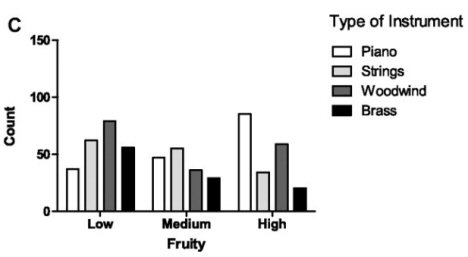
Strong piano at high fruitiness

A wonderful graph which shows how strongly the sounds of the piano, strings, woodwind and brass instruments are associated with fruity smells, across smells of low, medium and high fruitiness.

From a recent study entitled ‘A Fruity Note: Crossmodal associations between odors and musical notes’.

The study also tests how strongly these instruments are associated with acrid, floral and spicy scents, in case you needed to know.
 

Link to abstract / DOI entry of study.

Auditory brain trip

If you’ve got 15 minutes to spare, you could do far worse than spending it listening to an excellent edition of the Guardian Science Podcast on the neuropsychology of hearing and language.

Perceptual and linguistic neuroscience has a tendency to bit a little technical and difficult to engage with but the programme is both wonderfully produced and totally brought to life by neuropsychologist Sophie Scott’s insightful enthusiasm.

From the brain structure of professional accent connoisseurs to human echolocation, the programme is full of surprising insights into the auditory brain. Great stuff.
 

Link to Guardian Science Podcast on language and hearing.

Reaching for the high notes

Science writer Emily Anthes has a fascinating interview with a speech therapist who works with male-to-female transsexuals to help make their voice sound more feminine.

It gives both an insight into a little known area of speech therapy as well as highlighting some of the often overlooked differences between male and female voices.

EA: So, how does speech therapy work for someone who’s transitioning? What does it involve?

EG: They go once a week, sometimes twice a week if they’re really eager to speed things up, and they do different vocal exercises. Pitch is one of the most important markers. Men on average speak at 110-120 [Hertz], gender neutral is 145-165, and women are 210-220. In most cases the goal is to try to get to gender neutral, which basically means that if you called somebody on the phone, and they speak in what’s known as the gender neutral pitch, you probably wouldn’t be able to tell if they were a man or a woman.

So that’s the first piece, but along with that, they have to learn other things, like posture and speech intonation. Speech intonation is how much your voice goes up and down in a sentence. Men tend to speak in a very monotone, even tone. Women speak in many, many different pitches; as they speak they go up and down, they go high, they go low. So that’s really important–a person who’s transitioning needs to learn how to use that range in their voice.


Link to ‘Learning to Speak Like a Woman’.

It’s pronoun or never

Scientific American has a fascinating interview with psychologist James Pennebaker​ about how your use of pronouns can reveal a surprising amount about you.

Much to my surprise, I soon discovered that the ways people used pronouns in their essays predicted whose health would improve the most. Specifically, those people who benefited the most from writing changed in their pronoun use from one essay to another. Pronouns were reflecting people’’s abilities to change perspective.

As I pondered these findings, I started looking at how people used pronouns in other texts — blogs, emails, speeches, class writing assignments, and natural conversation. Remarkably, how people used pronouns was correlated with almost everything I studied. For example, use of first-person singular pronouns (I, me, my) was consistently related to gender, age, social class, honesty, status, personality, and much more. Although the findings were often robust, people in daily life were unable to pick them up when reading or listening to others. It was almost as if there was a secret world of pronouns that existed outside our awareness.


Link to Pennebaker interview in Scientific American (via @bmossop).

Diagnostic dilemma, innit bruv

I’ve just been directed to a wonderful 2007 case study from the British Medical Journal that reports how middle aged doctors can mistake street slang for symptoms of schizophrenia.

Detailed and repeated assessment of [the patient’s] mental state found a normal affect, no delusions, hallucinations, or catatonia, and no cognitive dysfunction. His speech, however, was peppered with what seemed (to his middle class and older psychiatrist) to be an unusual use of words, although he said they were street slang.

It was thus unclear whether he was displaying subtle signs of formal thought disorder (manifest as disorganised speech, including the use of unusual words or phrases, and neologisms) or using a “street” argot. This was a crucial diagnostic distinction as thought disorder is a feature of psychotic illnesses and can indicate a diagnosis of schizophrenia.

We sought to verify his explanations using an online dictionary of slang (urbandictionary.com). To our surprise, many of the words he used were listed and the definitions accorded with those he gave.

The article also contains a brief test where doctors can test themselves to see if they can distinguish between slang and thought disorder symptoms.

It’s probably worth noting that traditional British and, particularly London slang, could easily seem like thought disorder to the uninitiated as it is heavily based on word play and substitution.

For example, “I was having having a ruby when I caught Susan having a butchers at my missus’ new barnet” probably makes perfect sense to lots of British people, but if you’re not familiar with cockney rhyming slang, it could be mistaken for a language impairment.

I have noted that British sarcasm can cause similar difficulties during discussions with Americans.
 

Link to ‘Street slang and schizophrenia’ (via @Matthew Broome)

Hearing the voices of colours

A spectacular case of psychosis, rather oddly described as ‘Methamphetamine Induced Synesthesia’, in a case report just published in The American Journal on Addictions.

The report concerns a 30-year-old gentleman from the Iranian city of Shiraz with a long-standing history of drug use who recently started smoking crystal:

Six months PTA [prior to admission] (October 2009), he started smoking methamphetamine once a day, and gradually increased the frequency to three times a day.

Two months PTA (January 2010), he developed symptoms of auditory and visual hallucinations (seeing fairies around him that talked to him and forced him to conduct aggressive behavior), self-injury, and suicidal attempts.

He developed odd behaviors such as boiling animal statues. He was hearing the voices of colors, which were in the carpet. Colors moved around and talked to each other about the patient. He also saw the heads of different kinds of animals gathering on a board, and they talked to him.

Finally, his mother brought him to the emergency room of Ebnecina Psychiatric Hospital in Shiraz.

The authors are using the term ‘synaesthesia‘ very liberally as it usually refers to an experience in one sense automatically triggering sensations in another – such as numbers having specific colours or tastes.

I’m not sure that ‘hearing the voices of colours’ necessarily qualifies as this could as much a delusion (a distorted belief) or a hallucination (that isn’t specifically tied to seeing the colours) rather than a genuine synaesthetic experience.

As the authors didn’t investigate any further and only have the gentleman’s word for his experiences, it’s a little hard to say.

However, it’s also worth noting that our concept of synaesthesia is no longer tied to ‘crossing of the senses’ as synaesthesia for increasingly meaningful things is being discovered.

Only recently, two confirmed and tested cases of ‘swimming-style synesthesia’ were reported in the journal Cortex where different colours were reliably triggered by the sight of people doing different swimming strokes.
 

Link to locked case report of ‘meth-induced synaesthesia’.

Bollocks to it

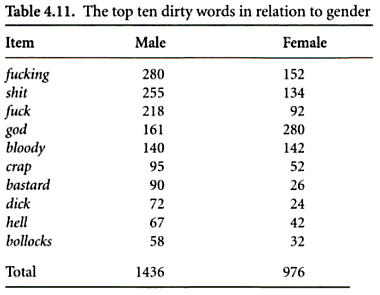
Teenagers love to swear. Says who? Says science you melon farmers. And what could be better than a top ten of teenage swearing compiled by science wielding psycholinguists? A US – UK show down. Let the cursing commence.

The book Trends in Teenage Talk: Corpus Compilation, Analysis and Findings was written to summarise the findings of research on the word use of teenagers in London.

In Chapter 4, on slang and swearing, the authors compare the frequency of swear words in London teens to the same from an earlier study in East Coast American adolescents.

First the Londoners:

And now on to the East Coast Americans:

I would first like to express my disappointment that the word bollocks is being neglected by UK teenagers.

Unfortunately, a decline in social standards and a lack of respect for tradition is leading to a generation of fucking obsessed adolescents.

Indeed, one of the great pleasures of this eminently British tradition is the low level of recognition among Americans, meaning bollocks can be used openly in the States without causing offence.

However, the small sample size of the American data means it may not be the most reliable guide to the true population ranking.

I note, for example, that there are only 27 bitches and 24 asses which may mean that the true bitch – ass prevalence is being obscured by random variation in the sample.
 

Link to Trends in Teenage Talk on Google Books.

A victim of metaphor

A gripping piece from Not Exactly Rocket Science describes how simply changing the metaphors used to describe crime can alter what we think is the best way of tackling it.

The article covers a new study on the power of metaphors and how they can influence our beliefs and understanding of what’s being discussed.

In a series of five experiments, Paul Thibodeau and Lera Boroditsky from Stanford University have shown how influential metaphors can be. They can change the way we try to solve big problems like crime. They can shift the sources that we turn to for information. They can polarise our opinions to a far greater extent than, say, our political leanings. And most of all, they do it under our noses. Writers know how powerful metaphors can be, but it seems that most of us fail to realise their influence in our everyday lives.

First, Thibodeau and Boroditsky asked 1,482 students to read one of two reports about crime in the City of Addison. Later, they had to suggest solutions for the problem. In the first report, crime was described as a “wild beast preying on the city” and “lurking in neighbourhoods”. After reading these words, 75% of the students put forward solutions that involved enforcement or punishment, such as calling in the National Guard or building more jails. Only 25% suggested social reforms such as fixing the economy, improving education or providing better health care.

The second report was exactly the same, except it described crime as a “virus infecting the city” and “plaguing” neighbourhoods. After reading this version, only 56% opted for more enforcement, while 44% suggested social reforms. The metaphors affected how the students saw the problem, and how they proposed to fix it.

The study is interesting because it touches on a central claim of the linguist George Lakoff who has argued that metaphors are central to how we reason and make sense of the world.

Lakoff’s arguments have had a massive influence in linguistics, where they have started more than one scientific skirmish, and were adopted by the US Democratic party in an attempt to reframe the debates over key issues.

Despite the fact that Lakoff was one of the pioneers of the idea that metaphor is central to reasoning, his political associations have made him somewhat unfashionable and it’s interesting that this new study makes only passing reference to his work.
 

Link to Not Exactly Rocket Science on new metaphor study.
Link to full text of scientific study.

Want to come up and see my sketchings?

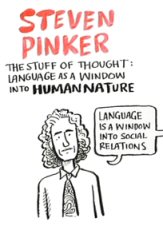
The Royal Society of Arts has an awesome video that animates one of Steven Pinker’s lectures on ‘Language as a Window into Human Nature’.

It covers how we use certain implicit properties of language to negotiate social relationships – discussing everything from the cult film Fargo to why we try and seduce people with indirect speech rather than coming out and saying “fancy a shag”.

Delightful to watch and definitely 10 minutes well spent.
 

Link to animated ”Language as a Window into Human Nature’.

Poetic sensitivities

Perceptual psychologists have long been interested in limen – the threshold at which a stimulus becomes detectable. The following limen for the different senses, expressed in everyday terms rather than in terms of physical quantities, have a certain poetry to them. I got this information via email as a scan of an (unknown to me) textbook. I reproduce them here for your enjoyment:

Approximate absolute sensitivities, expressed in everyday terms:

Vision – A candle flame seen at 30 miles on a dark, clear night
Hearing – The tick of a watch under quiet conditions at 20 feet
Taste – One teaspoon of sugar in two gallons of water
Smell – One drop of perfume diffused into the entire volume of a three-room apartment
Touch – The wing of a bee falling on your cheek from a distance of one centimeter

Exact values vary between individuals and even from moment to moment with the same individual. Source: Galanter, E. (1962). Contemporary psychophysics. Holt, Rinehart, Winston.

A poetry of muddlings and loss

Art critic Tom Lubbock developed a brain tumour which estranged him from language in subtle and unpredictable ways. The Guardian has a stunning article where the writer describes how his relationship with language was altered as the tumour encroached upon his brain.

It is one of the most powerfully nuanced accounts of language impairments I have yet read and you can feel the years of art-criticism experience poured into Luddock’s analysis as he charts the effects of the glioblastoma tumour on his temporal lobe.

For a period, suddenly, I cannot speak (or read aloud) any words except the most short, simple, basic. They are fine. And all the rest, the more complex ones, come out as a kind of garbled gobbledygook or jabberwocky. Yet the stress of all the words and sentences – sense or nonsense – is equally and perfectly accurate. I know what I mean to say and to a hearer what I say moves fluently, though in and out of meaningfulness. Simple and comprehensible words punctuate a sequence vocalised out of nonsense.

It is a permanent mystery how we summon up a word. Where are these connections located in the mind? How do we know how we do it and get it right? This mystery only becomes evident when our ability to summon up our words fails.

There are many vivid passages in the piece but I was particularly struck by the most recent October 2010 entry. It is genuinely poetry in the truest sense as it captures the state of the author’s fractured language in both its content and form while subtly communicating the emotional resonance of the changes.
 

Link to Tom Lubbock on when words slip away (thanks @bakadesuyo).

Sensory blending

The BBC’s science series Horizon just broadcast a fantastic edition on perception, illusions and how the senses combine with each other to the point of allowing us to integrate artificial new senses.

If you’ve got a healthy interest in psychology, the first half of the programme discusses several important but well-known effects like the rubber hand illusion, colour context changes and the McGurk effect, in light of what they reveal about the perceptual system.

Even if you’re familiar with these concepts, its worth watching as they’re so well presented, but its the second half of the programme which really stands out.

It has several brilliant examples of where people have begun to integrate new information into their sensory world: a blind mountain biker who has learnt to echolocate by making clicks with his mouth, helicopter pilots flying purely by spatial information conveyed to them by vibrations, a belt that allows the wearer to feel where magnetic north is at all times, and so on.

Some of the programme is clearly inspired by an excellent book on unusual sensory and perceptual integration that I’m reading at the moment called See What I’m Saying. It’s by psychologist Lawerence Rosenblum whose name you may recognise as we’ve featured some great pieces from his Sensory Superpowers blog before on Mind Hacks.

If you’re in the UK, you can use the BBC’s iPlayer website to watch the programme online, although rumour has it that there’s a working torrent over at the Pirate Bay.
 

Link to Horizon edition on BBC iPlayer.
Link to index page of programme on the Pirate Bay.

The social resonance of baby babble

The New York Times investigates how the goohs and gaahs of baby babble transform through the first year of life, becoming ever more language-like until they mutate into the first recognisable words.

But more than just tracking how the sounds change over time, the piece is a fascinating look at how they become enmeshed in social interaction and alter as they start to elicit specific responses from other people.

Some of the most exciting new research [pdf], according to D. Kimbrough Oller, a professor of audiology and speech-language pathology at the University of Memphis, analyzes the sounds that babies make in the first half-year of life, when they are “squealing and growling and producing gooing sounds.” These sounds are foundations of later language, he said, and they figure in all kinds of social interactions and play between parents and babies — but they do not involve formed syllables, or anything that yet sounds like words.

“By the time you get past 6 months of age, babies begin to produce canonical babbling, well-formed syllables,” Professor Oller said. “Parents don’t treat those earlier sounds as words; when canonical syllables begin to appear, parents recognize the syllables as negotiable.” That is, when the baby says something like “ba ba ba,” the parent may see it as an attempt to name something and may propose a word in response.


Link to NYT piece on understanding babble.
pdf of chapter on Evolution of Communicative Flexibility.

The ’68 comeback perceptual

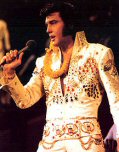
Elvis makes a fleeting comeback, accompanied by a milk drinking chimp and some well-dressed mice, in the hallucinations of a patient with Parkinson’s disease who is described in a case study published in the Southern Medical Journal.

He had compulsive gambling behavior and multiple hallucinations (visual and auditory). Visual hallucinations were simple (shapes of shadows, animal shapes like a raccoon, a cat, and a dog) and complex (a woman sitting next to him in car, two well-dressed little mice running around, a chimpanzee drinking his milk standing next to his lunch table in a restaurant, and Elvis Presley standing outside his door in his white coat and white trousers without a guitar). Once while fishing, he saw his dead uncle standing next to him and his uncle said, “It’s not going to work.” Auditory hallucinations were also both simple (incomprehensible sounds) and complex (like his uncle talking to him, nonspecific symphony, and constant melody of chimes). All hallucinations were associated with intact insight and were nonthreatening.

Although the patient was diagnosed with Parkinson’s, which is known to trigger hallucinations, it is likely they were caused as much by the dopamine-boosting medication than by the effects of the disease itself.

The patient was taking quite a selection, reportedly prescribed “a combined regimen including carbidopa/levodopa 25/100 mg four times a day (q.i.d.); carbidopa/levodopa 50/200 mg sustained release three times a day (t.i.d.) with a half tablet in the morning; entacapone 200 mg 5 times a day; pramipexole 1mg q.i.d. with 1.5 mg at bedtime (h.s.); amantadine 100 mg twice a day (b.i.d.); and clonazepam 1mg h.s.”

Despite the perceptual distortions encouraged by the meds, the patient is quoted as saying “It is the best control I have had of my motor functions in a long time” and refused to discontinue any of the treatments.
 

Link to PubMed entry for case study (via @anibalmastobiza).