2010-08-13 Spike activity

Quick links from the past week in mind and brain news:
NPR has an excellent short piece on when we became ‘mentally modern’ and began to use symbolic thought.

The awesome Neuroskeptic covers a mind-boggling new study that reported the use of anti-depressant and quit-smoking drug bupropion to treat Starcraft addiction in South Korean teens.

Seed Magazine discusses the psychology of isolation in space – in an excerpt from Mary Roach’s forthcoming book on space travel.

Dodgy headline but there’s a fascinating discussion of cultural differences in self-reflection and mood between the US and Russia over at The Frontal Cortex.

Wired Science covers new research that helps explain why some sleepers can successfully block out the external world and others awake at the slightest flutter.

Is it possible to believe that you’re dead? Philosopher Lisa Bortolotti discusses belief and delusion over at The Splintered Mind.

The Guardian on why autism can’t be diagnosed with brain scans, despite the week’s headlines. See the lead author’s response here.

That runner’s high may not be endorphins after all – but your brain’s cannabinoid system. Addiction Inbox covers research on the neuroscience of exercise and feeling good.

New Scientist reports on research finding that depression dulls your sense of smell.

There’s a guide to becoming a professional agony aunt or uncle, over at Dr Petra.

The New York Times covers a new study suggesting that human ancestors were using stone tools and sometimes consuming meat at least 800,000 years earlier than previously thought.

Ten psychology studies on Twitter and how people use it are reviewed over at PsyBlog.

Reuters covers a new systematic review finding little evidence that antidepressants are helpful for children with autism.

Somewhat mysteriously, a retracted paper on treating cluster headaches with an LSD-like compound is re-instated after four years. We’re still not sure why but Retraction Watch covers the story.

The Boston Globe covers the all-over-the-internet news that a 2002 paper on monkey cognition has been retracted and big name author Mark Hauser ‘on leave’ for a year from his Harvard lab.

There’s an interview with the creator of the excellent Psychiatric Tales graphic novel over at Frontier Psychiatrist.

RadioLab have a fantastic and playful visual essay on the flexibility of words.

Brainless slime mould makes decisions like humans in new research covered by Not Exactly Rocket Science. Don’t miss the mind-blowing video of the slime mould navigating a maze!

New Scientist covers a study finding that social rejection raises the risk of inflammation diseases that arthritis.

Are children from collectivist cultures more likely to say it’s okay to lie for the group? asks the BPS Research Digest. The answer, it turns out, is that there less likely to think so than kids from more individualist cultures.

CNN covers the much echoed research findings that women in China, the United States, England and Germany said they found men pictured wearing red, or surrounded by the color, more sexually attractive. The full text of the study is online as a pdf.

Help Language Log to get Barak Obama to sing Let It Be. Less crazy than it sounds.

The Independent covers the UK government’s continuing romance with behavioural economics.

Have ‘mirror neurons’ been misinterpreted? Talking Brains covers an interesting take on the pop science favourites.

Dilbert wrestles with placebo.

Machines, computation and metaphors for the mind are discussed over at Child’s Play

The New York Times discusses how large scale data sharing has led to some crucial advances in understanding Alzheimer’s disease. Also check the audio.

Disease epidemic kills without contact

The excellent Providentia blog covers a previously under-recognised psychological danger of disease epidemics: increased suicides in unaffected people.

A recently published study looked at how the suicide rate changed during the SARS epidemic in Hong Kong, which claimed almost 300 lives between November 2002 and August 2003, finding that it prompted greater levels of self-harm among those not directly affected by the outbreak.

The study also examined coroner’s reports to understand the situations surrounding the suicides and found deaths rose particularly among older people, likely because the epidemic caused worries about being a burden and fears of disconnection from other people – among other mental stresses.

In a paper published in a recent issue of Crisis: The Journal of Crisis Intervention and Suicide Prevention, the authors examined the mechanism of how the SARS outbreak resulted in a higher completed suicide rate, especially among older adults in Hong Kong. Using qualitative data analysis to uncover the association between the occurrence of SARS and older adult suicide, they evaluated Coroner Court reports to provide empirical evidence about the relationship between SARS and the excessive number of suicide deaths among the elderly.

Their results showed that SARS-related older adult suicide victims were more likely to be afraid of contracting the disease and had fears of disconnection. The suicide motives among SARS-related suicide deaths were more closely associated with stress over fears of being a burden to their families during the negative impact of the epidemic. Social disengagement, mental stress, and anxiety at the time of the SARS epidemic among a certain group of older adults resulted in an exceptionally high rate of suicide deaths.


Link to Providentia coverage.
Link to DOI entry and summary of study.

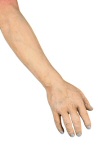
Phantom third arm appears on the chest

Phantom limbs are usually sensations that appear after an arm or leg has been amputated, but one case reports a phantom limb that appeared as an additional arm extending from the middle of the chest – despite all of the limbs being completely healthy.

The patient, reported in The Journal of Neuropsychiatry and Clinical Neurosciences, was a 31-year-old woman who didn’t have any limbs amputated but did have damage to her brain that altered how information was passed back and forth between her body and her ‘somatosensory maps’ – the areas of the brain that directly map on to and represent body parts.

During our observation period, she claimed to have the sensation of an extra arm arising from the middle of her upper chest. She explained that it was painless and of the same length as her real arms. She claimed that she was able to move the extra arm. She and her husband reported that the phenomenon occurred after the episode of tetraplegia [limb and torso paralysis]. This phenomenon continued for 14 months after her admission.

We have discussed a case of a ‘phantom third arm’ before, although this is somewhat different, as in the previous report the third arm seemed to ’emerge’ from the patient’s shoulder, just as one of the existing arms did. In this case, though, the phantom arm seems to have been relocated to the chest.

The researchers suggest that the brain damage caused the re-organisation of the somatosensory maps for body parts and a disruption to the flow of normal sensations into these areas. Notably, on the brain’s body map (which you can see drawn out as a cortical homunculus) the arm and chest lie next to each other.

The areas that previously represented the shoulder/arm but had become disconnected began to receive the information from the neurons that represented the upper chest, blending the sensations and leading to the strange sensation of feeling a chest and what seemed like an additional arm at the same time.

It must be said, that while this is a likely explanation from what we already know about the brain and phantom limbs, it is just the researchers’ best guess as they didn’t test out the ideas any further.
 

Link to full text of case report.

Why we go doolally

Someone who acts strangely or ‘goes mad’ is often described as having gone ‘doolally’. The military origin of this curious term is discussed in an aside in an academic article published in Twentieth Century British History.

The article discusses the changing concepts of how imprisonment during war impacts on soldiers’ mental health: POWs were originally thought to be immune to ‘war neurosis’ during World War I, but we now know that they are at high risk of developing mental illness.

However, there is a small but enlightening section that explains where the term ‘doolally’ comes from. Partly, it seems, from the experience of the troops in the British Empire and partly through bad spelling.

A link between captivity and mental illness in the armed forces had been established in the late Victorian period and was reflected in the term ‘doolally’, a popular term for madness. In 1861, the British Army had set up a base and sanatorium at Deolali, Maharashtra, about 100 miles north-east of Mumbai. It served as a transit camp for soldiers who had finished their tours of duty (‘time-expired’) and were waiting for a passage to Britain.

Troopships left Mumbai between November and March, so a soldier who completed his tour outside those dates often had a long wait for transport. Confined to a restricted life in camp during the hot summer months, some soldiers broke down and behaved bizarrely; they were described as having the ‘doolally tap’.

Sadly, the whole article is locked away (frustrated? ask a British taxpayer – they paid for it to be written and can’t read it either. Feel better? Me neither) but at least we’ve learnt to be condescending with a little more finesse.
 

Link to PubMed entry and summary of article.

I probably shouldn’t say this

I have become concerned about Miley Cyrus.

In her magnum opus, 7 Things, she discusses a recently ended relationship and highlights seven areas of dissatisfaction with her ex-partner.

From this description, I notice that her ex-beau fulfils the diagnostic criteria for ‘borderline personality disorder’ or BPD.

To quote Ms Cyrus’s concerns:

You’re vain, your games, you’re insecure
You love me, you like her
You make me laugh, you make me cry
I don’t know which side to buy
Your friends they’re jerks
And when you act like them, just know it hurts
I wanna be with the one I know
And the 7th thing I hate the most that you do
You make me love you

According to the DSM, five of nine listed features are needed for a diagnosis.

It seems this person would qualify by fulfilling the criteria for: frantic efforts to avoid real or imagined abandonment; a pattern of unstable and intense interpersonal relationships characterized by alternating between extremes of idealization and devaluation; identity disturbance: markedly and persistently unstable self-image or sense of self; impulsivity in at least two areas that are potentially self-damaging; and affective instability due to a marked reactivity of mood.

A similar diagnosis could be made using the World Health Organisation’s ICD-10 system where he or she would qualify for ’emotionally unstable personality disorder: borderline type’.

It’s probably worth noting that ‘borderline personality disorder’ is one of the more contested of the psychiatric disorders – with debates focusing on whether the diagnosis just pathologises people who are very hard to get along with.

Despite these difficulties, Ms Cyrus notes that there are seven things she likes about her ex-partner, which include “Your hair, your eyes, your old Levi’s”.

From her recent break-up I suspect these didn’t fully compensate for the pattern of relationship instability, although if she did wish to continue, both members of the couple could see a psychologist or therapist specialising in relationship difficulties.

However, research has shown that 75% of people diagnosed with BPD no longer qualify for the diagnosis after six years and so it could be worth waiting, or perhaps even thinking about dating someone slightly older to reduce the chances of repeating the same relationship pattern.

That’s very kind of you to offer Miley, but I’m waiting for Shakira.
 

Link to Miley Cyrus’s 7 Things.
Link to Wikipedia on Borderline Personality Disorder.

The mystery of hanging

Hanging is a frighteningly efficient way of ending a life, as executioners can attest and suicides cannot, but surprisingly, we’re still not sure how it causes death.

An intriguing study just published in the Journal of Forensic Sciences ponders current theories in light of historical research which has attempted to answer the question.

In fact, we know so little about the exact mechanism of death from hanging that studies from the 1800s are still some of our best sources of information.

To remedy this, a research group now been formed with the grim task of studying videos of hanging to try and see determine which of the traditional theories might be correct: death by asphyxiation, by stopping blood to the brain, or by the heart stopping after stimulation of the nerves running through the spinal cord.

From the article:

In cases of hanging, the exact mechanism leading to death has yet to be elucidated. Most of our contemporary knowledge is still based on writings from the end of the 19th and the beginning of the 20th century. This article reviews the historic experiments that shaped our current theories. Medico-legal textbooks written in English and French from 1870 to 1930 were reviewed. Various animals, such as rabbits, mice, and dogs, have been used to develop animal models of hanging.

Limited human studies on cadavers and judicial hangings have provided some additional insight into the pathophysiology of death by hanging. The main pathophysiological theories described were respiratory asphyxia, interruption to cerebral blood flow because of occlusion of vessels in the neck, and cardiac inhibition secondary to nerve stimulation. The relative contributions of each of these theories to death in cases of hanging is still debated today.

Recently, filmed hangings have been used as a powerful tool in understanding the pathophysiology of human asphyxia. The Working Group on Human Asphyxia (WGHA) was formed in 2006, and since its creation, 8 filmed hangings have been analyzed. Observing the videos reveals that loss of consciousness occurs quickly, followed by convulsions and a complex pattern of alternating phases of decerebrate and decorticate rigidity. The videos also demonstrate some auditory evidence of persistent air passage through the airways during the hanging process.

The study of the WGHA has provided interesting new insight into the pathophysiology of asphyxia by hanging. Before these new developments, most of our contemporary knowledge was based on writings from the end of the 19th and the beginning of the 20th century.

Tempted to join the Working Group on Human Asphyxia? Fear not, membership criteria are given in the scientific paper:

“It is known, however, that some hanging victims film their hangings, mainly in an autoerotic context…. Each scientist who has such a video or who has access to such a video is welcome to join this group and the video will be added to the ongoing study.”
 

Link to PubMed entry for study on history of hanging.
Link to PubMed entry for video study of hangings (via @sarcastic_f).

World without words

The latest edition of RadioLab is a fantastic exploration of how the world might be different if we experienced it without the benefit of words that shape our concepts.

As always, it sounds effortlessly beautiful, and this episode takes a diverse look at the different ways in which we might understand our lives wordlessly.

Essentially, the programme looks at how the lack of language tells us about language itself.

The idea that we can study problems, absences and disorders to get an insight into the normal mind and brain is the core idea in the sciences of cognitive neuropsychology and cognitive neuropsychiatry.

While both powerful scientific approaches, I’ve always been attracted to this way of understanding the mind and brain because it emphasises how everyone, no matter how different, is a window to our common humanity.

This edition of RadioLab captures that idea perfectly:

It’s almost impossible to imagine a world without words. But in this hour of Radiolab, we try to do just that. We speak to a woman who taught a 27-year-old man the first words of his life, and we hear a firsthand account of what it feels like to have the language center of your brain wiped out by a stroke. Plus: a group of children invent an entirely new language in Nicaragua in the 1970s.


Link to ‘Words’ edition of RadioLab.

A neuroscientist’s psychosis

As well as publishing scientific papers about mental illness, Schizophrenia Bulletin also publishes personal accounts of psychosis and schizophrenia. I’ve just discovered this incredible 2006 article where a neuroscientist recounts her personal experience of becoming psychotic.

It’s not only vividly descriptive but wonderfully lyrical as well, written with both honesty and insight.

I was awash in a sea of irrationality. The Voices swirled around me, teaching me their Wisdom. Their Wisdom was of the Deep Meaning, and I struggled to understand. They told me their secrets and insights, piece by piece. Slowly, I was beginning to make sense of it all. It was no delusion, I knew—in contrast to what the doctors said.

“Erin, you are a scientist,” they’d begin. “You are intelligent, rational. Tell me, then, how can you believe that there are rats inside your brain? They’re just plain too big. Besides, how could they get in?”

They were right. About my being smart, I mean; I was, after all, a graduate student in the neuroscience program at the University of British Columbia. But how could they relate that rationality to the logic of the Deep Meaning? For it was due to the Deep Meaning that the rats had infiltrated my system and were inhabiting my brain. They gnawed relentlessly on my neurons, causing massive degeneration. This was particularly upsetting to me, as I depended on a sharp mind for my work in neuroscience.


Link to ‘Being Rational’ in Schizophrenia Bulletin.

The legend of Lester D

When searching for psychology research, I inevitably come across a study by ‘Lester D’, who is apparently a psychologist in an obscure college in New Jersey who seems to be interested in everything.

Mostly, the things you’ve never thought of, and probably never even thought of thinking of, and perhaps don’t even have the capacity to conceptualise.

To be fair, he has a clear interest in suicide research and does a great deal of important work in this, and other areas, but what consistently amazes me are the diverse topics he investigates.

For example, he has discovered that:

Mormons view the afterlife as less pleasant than Jews.

On average, there is no difference in the height from which men and women jump to their deaths.

Wives of coast guards and no more likely than wives of firemen to be depressed following a family move, but are more likely to be taking antidepressants.

There is no relation between religiosity and death anxiety in Kuwait.

Both anxiety about computers and internet skills affect how likely you are to buy a textbook online.

Among organ donors, homicide victims were more likely to have blood types O and B. Suicides showed no differences.

Macintosh users have significantly greater anxiety about computers than PC users.

By my reckoning, he has published close to 1,500 scientific articles in everything from the most prestigious journals to the most obscure printings.

‘Lester D’ you are a little-known legend. Like the Elvis Costello of the mind.
 

UPDATE: Thanks to @carlacasilli who managed to track down Lester D online. You can see a picture of David Lester half way down this page. He has two PhDs and looks like, well, a legend of course.


Link to ‘Lester D’ publication list on PubMed.

Baby, Remember My Claim

If you want to make the findings of your scientific study seem more important, simply give the effect a catchy name to help people remember. A study just published online in Psychological Science found that naming research findings boosted their perceived importance, but only if people assume the name is to aid memory.

On the other hand, if people thought the name was to ease understanding, the results of the study were perceived as less important than un-named findings.

The research, led by marketing psychologist Aparna Labroo, showed through a number of experiments that the effect happens because a name makes us feel we’re mentally processing the information better – the data just seems easier to deal with.

When we assume this feeling of ease is because the results have stuck in our mind, we perceive them to be more important, but when we assume it’s because they’re easily understandable (too easy perhaps?), we unconsciously downgrade their importance.

Rather cannily, the researchers have labelled their findings the “name ease effect” and they finish their scientific paper with a short tongue-in-cheek commentary on their choice of name.

We call our finding the name-ease effect with some reservations. If you are now thinking about whether you understand our finding, our act of merely naming it will increase your perception of how well you understand the effect, making you feel you probably knew about it all along. Note that the name we used does not provide information about exactly what the effect is and when, why, or for whom it occurs. Nor does other research suggest that merely naming a finding should evoke feelings of ease or that, depending on the attributions made, it can increase or reduce perceptions of the importance of the research. Thus, we hope that as you recollect the effect we described, you find it memorable.


pdf of full text of scientific article.
Link to study summary and DOI entry.

Online exits

A darkly fascinating excerpt from a recent article on the cultural psychology of ‘internet suicide pacts’ in Japan, published in the academic journal Transcultural Psychiatry.
Several scholars and social commentators have drawn a connection between the rise in suicides and the negative influence of the Internet on Japanese youth. Part of the reason for a negative attitude towards Internet group suicide seems to be the fear of contagion. A historical precedent for this exists in the Edo period when a rise in shinjyū or lover’s double suicides resulted from a famous kabuki play by Chikamatsu Monzaemon. The Edo bakufu subsequently prohibited funerary services for individuals who died through shinjyū as a measure to curb the rising number of “copy-cat” suicides. In both the Edo case and the current case of Internet group suicide, there is the sense that the “form” of the suicide spreads like an infectious disease and must therefore be contained.

The expressions of the individuals who visit suicide websites and contemplate Internet group suicide suggest the possibility of alternative interpretations, however. Their comments exhibit what I consider to be a distinctive kind of loneliness and demonstrate a sense of “disconnectedness” from others and from society that signals an existential suffering that may not be reducible to a psychiatric disorder.

The article discusses the phenomenon in terms of the Japanese approach to social connectedness and how the self is seen much more in terms of relations to other people.

According to the author, anthropologist Chikako Ozawa-De Silva, the loneliness and sense of disconnectedness both prompt the suicidal act, and, likely, the seemingly counter-intuitive drive to not die alone.
 

Link to DOI entry and summary for paywalled article.

The early years

If you’re interested in the psychology of children and how they develop, two new blogs have recently appeared which are doing a fantastic job of covering an area that has previously neglected by online writers.

Child’s Play is a new blog on the Scientopia network that combines the talents of developmental psychologists Jason Goldman and Melody Dye – the latter who we recently featured owing to her writing a couple of great articles for Scientific American Mind.

Evidence Based Mummy is another excellent child psychology blog which focuses on how children develop and the effects of the family. It’s written by psychologist Rachel Robinson who became frustrated with official child care advice that didn’t seem to have much contact with actual studies on children.

Both are lively, engaging and not afraid to pull apart the science. Highly recommended.
 

Link to Child’s Play.
Link to Evidence Based Mummy .

The origins of Mexico’s drug war

I’ve just listened to NPR’s series reporting on the drug war in Mexico and I was left completely stunned by the final part which explains how the current upsurge in violence was triggered.

It turns out that it stems from a change in government, when the Institutional Revolutionary Party or the PRI were voted out after 71 years in power.

This was significant because, according to NPR, the previous government had set up a system where the cartels paid to smuggle drugs through the country but were bound to keep violence to a minimum.

When the elections changed the government, the agreements no longer held, and the cartels were essentially ‘unregulated’.

George Grayson, a professor at the College of William and Mary, says the PRI covertly cut deals with the criminals to allow a particular trafficker to operate in a particular part of Mexico.

“The capos would pay bribes to local, state and federal officials; in return, the government would turn a blind eye to their activities,” he says.

But Mexican drug gangs under the PRI had to follow strict rules. They were supposed to act discreetly, spurn kidnapping, avoid killing civilians and not encroach on another cartel’s turf.

“If in fact the cartels broke the rules of the game, the PRI had the capacity to come down on them like a ton of bricks,” Grayson says…

With so many people in government getting bribes, there was little incentive to crack down on the narcotics trade. The PRI’s kickback system even encouraged the cartels to expand, Poppa says.

The cartels ramped up their arms smuggling networks. They diversified into legitimate businesses to launder their profits. They recruited special forces soldiers to be their muscle.

Then the PRI lost the presidency in 2000 to Vicente Fox and his National Action Party, or PAN, and Mexico was left with a monster it couldn’t control.

The word ‘narcostate‘ tends to be thrown around rather too liberally, but assuming NPR have their story straight, the fact that the collapse of a government protection racquet can destabilise a country really speaks to the huge power of the cocaine industry.
 

Link to final part of NPR series (see left hand box for other parts).
Link to Wikipedia page on the Mexican Drug War.

2010-08-06 Spike activity

Quick links from the past week in mind and brain news:

Time magazine has an excellent piece that tackles the myth that the only child is psychologically worse off due to a lack of siblings during development.

The new blog Neurotic Physiology at the Scitopia network that has an excellent piece on Freud’s experiences with cocaine.

The New York Times discusses how unflattering psychological studies on ‘Generation Y’ are being contested in the scientific literature.

As always, much great stuff on Neuroskeptic, but this piece on how negative drug trials are being swept under the carpet is particularly good – with trials for antidepressants and antipsychotics being among some of the least likely to appear.

Scientific American Mind has some excellent coverage of a recent study finding a link between impulsivity and a reduction in dopamine receptors in deep-brain areas.

There’s a great analysis of why Alcoholics Anonymous is so popular despite limited evidence for its effectiveness over at the excellent Neuroanthropology.

You guys are reading Child’s Play right? A fantastic new blog on developmental psychology.

NPR has been running an excellent five-part series on the drug war in Mexico. See the left hand side bar down the page for the earlier parts.

How regular folks solve complex biology problems better than super-computers – when the problem is turned into a game. Not Exactly Rocket Science covers an innovative project.

The Kansas City Star notes the passing of Ivar Lovaas the founder of the behavioural therapy for autism the Lovaas technique.

There’s an update on synthetic cannabinoid ‘legal highs’ over at the newly located DrugMonkey blog.

Wired Science covers a fascinating study finding that REM sleep behaviour disorder, where people act out dreams, are more likely in people who later develop dementia.

The more women value intimacy and human connection, the less interest they have in a career in science, finds a study covered by We’re Only Human. Which interestingly, seems to ignore psychology, in which men are an endangered species.

The New York Times has an interview with neuroscientist John Donoghue who creates brain-machine interfaces to connect paralysed patients to the outside world. Maybe he could create a brain-caps lock interface to stop the NYT ASKING ALL THEIR QUESTIONS IN CAPITAL LETTERS.

A fantastic piece on jam and how over-thinking can re-configure our preferences is over at The Frontal Cortex, which, incidentally has been packed with great pieces recently.

Miller-McCune covers research finding that women who kill their cheating lovers receive shorter sentences than men who do the same.

There’s a fantastic infographic on ‘The CSI Effect’ over at In The News forensic psychology blog.

The Washington Post has a good antidote to the ‘digital drug’ and ‘i-dosing’ silliness.

The mighty BPS Research Digest covers a great study finding that smokers trying to quit who tried not to think of smoking ended up smoking more.

Policy Review magazine (sizzling sex tips, the hottest goss, free sparkly lipstick with every issue) has an excellent in-depth piece on how compassion became professionalised in the United States.

The UK media lose the news about adolescent girls, sexual activity and the pill. Dr Petra goes searching for the real story.

The Global Post has a short piece on stuff seized from drug lords. Money can buy many things, but taste, it cannot.

Why people think they are less influenced than others by adverts and persuasive messages. A great piece over at PsyBlog.

The Boston Globe covers a misconduct investigation in a trial of a drug aiming to treat brain damage in US troops.

Acrylic brain upside your head. The Neurocritic. Yes.

Seed Magazine asks ‘does coffee work?’ and examines the effects of caffeine. I’m more concerned with the question of why anyone would want to consume a drink that tastes like burnt toast.

An intriguing new study finding an interaction between actions and object recognition is covered by Neurophilosophy.

New Scientist has an article on amazing research that simulates walking through a population of virtual skeletons controlled by a network of virtual nerves. Cool video.

If you’ve not heard Baba Brinkman’s new album A Rap Guide to Human Nature try this track on wannabe teenage gangstas and the evolution of self-deception. Glorious.

Science News reports on a study finding that older people react more strongly to sad scenes than twentysomethings.

To the bunkers! New Scientist reports on a study of artificial life forms which seemed to have evolved basic intelligence.

Psychology narrowing its own mind

I’ve just discovered a stinging but insightful critique of modern scientific psychology from cognitive scientist Paul Rozin, who accuses the field of being blinded by fancy experimental methods while devaluing the importance of capturing new and interesting phenomena.

The article, available online as a pdf, was published in Perspectives on Psychological Science and takes a careful look at how psychology has become obsessed with its own methods.

Rozin makes a striking comparison to biology, where curiosity-driven studies that simply try and describe a new species, effect or behaviour are widely published, alongside experimental studies that aim to test a specific idea.

In contrast, psychology has become a largely lab-based science where your career is made by running countless variations on an established effect to the point where it is now virtually impossible to publish a descriptive account or case study in psychology or psychiatry.

Consequently, the most lauded studies are usually statistically robust, very well controlled, and largely removed from a context which makes them directly relevant to real world issues and problems.

Rosin outlines seven types of descriptive studies which he thinks are under-valued and notes their importance in the scientific understanding human thought and behaviour:

‘‘Here’s what happens in the world.’’ This paper consists of raw description, carefully documented, and motivated by what I will call ‘‘informed curiosity’’ (Rozin, 2001). Ethologists do a lot of this, as did Erving Goffman and Darwin. Much of molecular biology takes this form.

‘‘Here is a functional relation between two variables.’’ [Rozin argues that lots of interesting effects occur due to unusual relationships between two things – such as the U-shaped relationship between arousal and performance – and we wouldn’t always see by splitting things up into distinct groups. He argues that reporting these interesting but unexplained relationships is important but neglected]

‘‘Here’s something interesting that no one has noticed, and it is not easily susceptible to explanation by the principles available to us.’’ [Exceptions to established rules, even if described just to be highlighted as interesting]

‘‘Here’s something we haven’t studied, but it looks like it can be subsumed under something we already know.’’ [New things that are probably explained by existing theories – even when the theories were not intended to apply to this new domain. In other words, establishing an analogy between one problem and another]

‘‘Hey, someone did this really interesting study decades ago, and no one seems to have noticed it.’’ This paper would call readers’ attention to something already in the literature that is important and unknown or ignored.

‘‘Everyone assumes Effect X, but is X robust and generalizable?’’ [Taking an established effect and seeing how well it applies to other situations. If it doesn’t replicate very well outside the lab, this tell us something interesting about how fragile and context-sensitive the effect is]

‘‘This is a messy, criticizable experiment reporting something new and interesting.’’ This type of study usually involves an interesting idea, with some admittedly far from conclusive evidence for it. The famous Schachter and Singer (1962) attribution study is an example.

It’s worth reading the piece in full as Rozin gives lots of great examples where new phenomena clearly contribute to our understanding of the mind but are very difficult to publish in the psychology literature, despite similar examples (tool using crows, coconut carrying octopi, spear throwing chimpanzees) making headlines in top biology journals.

I also recommend a commentary on the piece from Cognition and Culture who nail some of the take-home points.
 

pdf of Rozin’s article.
Link to DOI entry and summary.
Link to coverage from Cognition and Culture.

Tone deaf to the music of language

Amusia is a condition in which people can’t distinguish musical notes or tunes. This has been investigated for the first time in Mandarin Chinese, a language that relies on tones to convey meaning, with the study finding that music perception problems also affect the ability to distinguish spoken words in tone language speakers.

One common finding is that people with amusia have a difficulty with hearing the difference between two musical notes or sounds that are close together in pitch and it is suggested that this is the basic problem that underlies the condition.

Amusia can appear after brain injury, but it is also know that some people seem to be ‘born with it’. However, as most studies have been done on adults, it has never been clear exactly what role early experience plays in the development of the condition.

Most amusics report never having an interest in music, and it could be that a low-ability mixed with a lack of experience led to a more serious impairment in later life.

On the other hand, such a person might be less likely to have adult amusia if they grew up having to distinguish tones all the time – perhaps in a very musical family – or perhaps because of their language.

This is exactly the case with Mandarin Chinese, a tone language where speakers need to begin to distinguish closely related tones from birth.

For example, in Mandarin there are four different ways of changing the tone of a syllable and each give it an entirely different meaning. The researchers give the example of the syllable ‘ma’. When pronounced with with a level tone it means ‘mother’, while the identical syllable pronounced with a dipping tone means ‘horse’.

With this in mind, the researchers, led by psychologist Yun Nan, set about testing how many Mandarin speakers were amusic, and whether they could reliably detect the difference between speech tones.

Interestingly, amusia was no less rare in Mandarin speakers and those people with music perception difficulties show similar patterns found in studies of amusic people from the West who spoke non-tonal languages like English and French.

The Chinese people with music problems also had difficulties in distinguishing between syllables in their own language that differed in tone, to the point where a small number some seemed completely unable to detect the difference between key syllables.

This suggests that the condition of ‘amusia’ may be misnamed. It might not be a music specific problem, but just seems that way, because, in the West, it is one of the few situations where pitch distinction problems cause a problem.

Instead, a general problem with pitch perception might exist which interferes with anything which requires this fine grained distinction. Speakers of tonal languages, of course, will be affected more strongly.

 
Link to study summary and DOI entry.