Spike activity 14-07-2015

Quick links from the past week in mind and brain news:

Trends and fashions in the science of neurotransmitters. Neuroskeptic looks at this seasons hottest brain chemicals.

MIT Tech Reviews has an interesting piece on the new wave of normal hearing enhancement hearing aids.

Sorry Paleo diet aficionados, carbs were probably essentially to our evolving brains in early human history. Good piece in The New York Times.

National Geographic has a piece on how some isolated tribes in the Amazon are initiating contact and how it’s causing a rethink of existing policies.

Brain imaging research is often wrong. This researcher wants to change that. Great interview with Russ Poldrack in Vox.

Neurocritic asks: Will machine learning create new diagnostic categories, or just refine the ones we already have?

The Obscure Neuroscience Problem That’s Plaguing VR. Interesting Wired piece on the physiological challenges of virtual reality.

The Atlantic has thought-provoking article on ‘Learning Empathy From the Dead’ – the effects of corpse dissection on medical students’ empathy.

The amygdala is NOT the brain’s fear center. Joseph LeDoux sings it from his new blog I Got a Mind to Tell You.

Good edition of ABC Radio’s Philosopher’s Zone on dreaming.

Postmortemgirl has a great guide to postmortem brain studies in mental health.

Digital tech, the BMJ, and The Baroness

CC Licensed Photo by Flickr user World Bank Photo Collection. Click for source.The British Medical Journal just published an editorial by me, Dorothy Bishop and Andrew Przybylski about the debate over digital technology and young people that focuses on Susan Greenfield’s mostly, it has to be said, unhelpful contributions.

Through appearances, interviews, and a recent book Susan Greenfield, a senior research fellow at Lincoln College, Oxford, has promoted the idea that internet use and computer games can have harmful effects on the brain, emotions, and behaviour, and she draws a parallel between the effects of digital technology and climate change. Despite repeated calls for her to publish these claims in the peer reviewed scientific literature, where clinical researchers can check how well they are supported by evidence, this has not happened, and the claims have largely been aired in the media. As scientists working in mental health, developmental neuropsychology, and the psychological impact of digital technology, we are concerned that Greenfield’s claims are not based on a fair scientific appraisal of the evidence, often confuse correlation for causation, give undue weight to anecdote and poor quality studies, and are misleading to parents and the public at large.

It continues from there.

I was also on Channel 4 News last night, debating The Baroness, and they seem to put some of their programme online as YouTube clips so if our section turns up online, I’ll post it here.

UPDATE: It disappeared on the Channel 4 site but it seems to be archived on Yahoo of all places. Either way you can now view it here.

Greenfield was lovely, as on the previous occasion we met. Actually, she didn’t remember meeting me before, despite the fact she specifically invited me to debate her on this topic at a All-Party Parliamentary Group in 2010, but I suspect what was a markedly atypical experience for me, was probably pretty humdrum for her.

Either way, she trotted out the same justifications. ‘I’ve written a book.’ ‘It contains 250 references.’ ‘The internet could trigger autistic-like traits.’

Dorothy Bishop has had a look at those 250 references and they’re not very convincing but actually our main message is shared by pretty much everyone who’s debated Greenfield over the years: describe your claims in a scientific paper and submitted them to a peer-reviewed journal so they can be examined through the rigour of the scientific process.

Oddly, Greenfield continues to publish peer-reviewed papers from her work on the neuroscience of Alzheimer’s disease but refuses to do so for her claims on digital technology and the brain.

It’s a remarkable case of scientific double standards and the public really deserves better.
 

Link to ‘The debate over digital technology and young people’ in the BMJ.


So the video of my debate with Greenfield is up online but it seems like you can’t embed it so you’ll have to follow this link to watch it.

Watching it back, one thing really stands out: Greenfield’s bizarre and continuing insistence that using the internet could ‘trigger’ autistic-like symptoms in young people, saying that most kids with autism are not diagnosed until age five and many use computers before.

This shows a fundamental misunderstanding of what autism is, and how diagnosis is done. Autism is diagnosed both on presentation (how you are at the time) and history (how you have been throughout your life) and to get a diagnosis of autism spectrum disorder you have to demonstrate both. So by definition, being ‘turned autistic’ at age 4 or 5 doesn’t even make sense diagnostically, let alone scientifically, as we know autism is a life-long neurodevelopmental condition.

Fifty psychological terms to just, well, be aware of

CC Licensed Photo by Flickr user greeblie. Click for source.Frontiers in Psychology has just published an article on ‘Fifty psychological and psychiatric terms to avoid’. These sorts of “here’s how to talk about” articles are popular but themselves can often be misleading, and the same applies to this one.

The article supposedly contains 50 “inaccurate, misleading, misused, ambiguous, and logically confused words and phrases”.

The first thing to say is that by recommending that people avoid certain words or phrases, the article is violating its own recommendations. That may seem like a trivial point but it isn’t when you’re giving advice about how to use language in scientific discussion.

It’s fine to use even plainly wrong terms to discuss how they’re used, the multiple meanings and misconceptions behind them. In fact, a lot of scientific writing does exactly this. When there are misconceptions that may cloud people’s understanding, it’s best to address them head on rather than avoid them.

Sometimes following the recommendations for ‘phrases to avoid’ would actually hinder this process.

For example, the piece recommends you avoid the term ‘autism epidemic’ as there is no good evidence that there is an actual epidemic. But this is not advice about language, it’s just an empirical point. According to this list, all the research that has used the term, to discuss the actual evidence in contrary to the popular idea, should have avoided the term and presumably referred to it as ‘the concept that shall not be named’.

The article also recommends against using ‘ambiguous’ words but this recommendation would basically kill the English language as many words have multiple meanings – like the word ‘meaning’ for example – but that doesn’t mean you should avoid them.

If you’re a fan of pedantry you may want to go through the article and highlight where the authors have used other ambiguous psychological phrases (starter for 10, “memory”) and post it to some obscure corner of the internet.

Many of the recommendations also rely on you agreeing with the narrow definition and limits of use that the authors premise their argument on. Do you agree that “antidepressant medication” means that the medication has a selective and specific effect on depression and no other conditions – as the authors suggest? Or do you think this just describes a property of the medication? This is exactly how medication description works throughout medicine. Aspirin is an analgesic medication and an anti-inflammatory medication, as well as having other properties. No banning needed here.

And in fact, this sort of naming is just a property of language. If you talk about an ‘off-road vehicle’, and someone pipes up to tell you “actually, off-road vehicles can also go on-road so I recommend you avoid that description” I recommend you ignore them.

The same applies to many of the definitions in this list. The ‘chemical imbalance’ theory of depression is not empirically supported, so don’t claim it is, but feel free to use the phrase if you want to discuss this misconception. Some conditions genuinely do involve a chemical imbalance though – like the accumulation of copper in Wilson’s disease, so you can use the phrase accurately in this case, being aware of how its misused in other contexts. Don’t avoid it, just use it clearly.

With ‘Lie detector test’ no accurate test has ever been devised to detect lies. But you may be writing about research which is trying to develop one or research that has tested the idea. ‘No difference between groups’ is fine if there is genuinely no difference in your measure between the groups (i.e. they both score exactly the same).

Some of the recommendations are essentially based on the premise that you ‘shouldn’t use the term except for how it was first defined or defined where we think is the authoritative source’. This is just daft advice. Terms evolve over time. Definitions shift and change. The article recommends against using ‘Fetish’ except for in its DSM-5 definition, despite the fact this is different to how it’s used commonly and how it’s widely used in other academic literature. ‘Splitting’ is widely used in a form to mean ‘team splitting’ which the article says is ‘wrong’. It isn’t wrong – the term has just evolved.

I think philosophers would be surprised to hear ‘reductionism’ is a term to be avoided – given the massive literature on reductionism. Similarly, sociologists might be a bit baffled by ‘medical model’ being a banned phrase, given the debates over it and, unsurprisingly, its meaning.

Some of the advice is just plain wrong. Don’t use “Prevalence of trait X” says the article because apparently prevalence only applies to things that are either present or absent and “not dimensionally distributed in the population, such as personality traits and intelligence”. Many traits are defined by cut-off scores along dimensionally defined constructs, making them categorical. If you couldn’t talk about the prevalence in this way, we’d be unable to talk about prevalence of intellectual disability (widely defined as involving an IQ of less than 70) or dementia – which is diagnosed by a cut-off score on dimensionally varying neuropsychological test performance.

Some of the recommended terms to avoid are probably best avoided in most contexts (“hard-wired”, “love molecule”) and some are inherently self-contradictory (“Observable symptom”, “Hierarchical stepwise regression”) but again, use them if you want to discuss how they’re used.

I have to say, the piece reminds me of Stephen Pinker’s criticism of ‘language mavens’ who have come up with rules for their particular version of English which they decide others must follow.

To be honest, I think the Frontiers in Psychology article is well-worth reading. It’s a great guide to how some concepts are used in different ways, but it’s not good advice for things to avoid.

The best advice is probably: communicate clearly, bearing in mind that terms and concepts can have multiple meanings and your audience may not be aware of which you want to communicate, so make an effort to clarify where needed.
 

Link to Frontiers in Psychology article.

Spike activity 24-07-2015

Quick links from the past week in mind and brain news:

Why does the concept of ‘schizophrenia’ still persist? Great post from Psychodiagnosticator.

Nature reviews two new movies on notorious psychology experiments: the Stanford Prison Experiment and Milgram’s conformity experiments.

Can the thought of money make people more conservative? Another social priming effect bites the dust Neuroskeptic with a great analysis.

The Psychologist has a transcript of a recent ‘teenagers debunked’ talk at the Latitude Festival.

Oliver Sack’s excellent biography On The Move serialised on BBC Radio 4. Streaming only, online for a month only, but definitely worth it.

Science reports a new study finding that the ‘rise in autism’ is likely due to diagnostic substitution as intellectual disability diagnoses have fallen by the same amount.

Great piece in the New England Journal of Medicine on placebo effects in medicine.

The New York Times has an op-ed on ‘Psychiatry’s Identity Crisis’.

Brain Crash is an innovative online documentary from the BBC where you have to piece together a car crash and brain injury for other people’s memories.

Gamasutra has an absolutely fascinating piece on innovative behavioural approaches to abusive gamers.

Spike activity 13-07-2015

A slightly belated Spike Activity to capture some of the responses to the APA report plus quick links from the past week in mind and brain news:

APA makes a non-apology on Twitter and gets panned in response.

“the organization’s long-standing ethics director, Stephen Behnke, had been removed from his position as a result of the report and signaled that other firings or sanctions could follow” according to the Washington Post.

Psychologist accused of enabling US torture backed by former FBI chief, reports The Guardian. The wrangling begins.

PsychCentral editor John Grohol resigns from the APA in protest at the ethical failings.

Remarkable comments from long-time anti-torture campaigners Stephen Soldz and Steven Reisner made to a board meeting of the APA: “I see that some of the people who need to go are in this room. That in itself tells me that you don’t really yet understand the seriousness of your situation.”

European Federation of Psychology Associations releases statement on APA revelations: “Interrogations are a NO-GO zone for psychologists” – which seems to confuse interrogations, which can be done ethically and benefit from psychological input, and torture, which cannot.

Jean Maria Arrigo, the psychologist who warned of torture collusion and was subjected to a smear campaign is vindicated by the report, reports The Guardian.

And now on to more pleasant, non-torture, non-complete institutional breakdown in ethical responsibility news…

What It’s Like to Be Profoundly ‘Face-Blind’. Interesting piece from the Science of Us.

Wired reports that Bitcoins can be ‘stolen from your brain’. A bit of an exaggeration but a fascinating story nonetheless.

Could Travelling Waves Upset Cognitive Neuroscience? asks Neuroskeptic.

The New Yorker has a great three-part series on sleep and sleeplessness.

Robotic shelves! MIT Tech Review has the video. To the bunkers!

APA facilitated CIA torture programme at highest levels

The long-awaited independent report, commissioned by the American Psychological Association, into the role of the organisation in the CIA’s torture programme has cited direct collusion at the highest levels of the APA to ensure psychologists could participate in abusive interrogation practices.

Reporter James Risen, who has been chasing the story for some time, revealed the damning report and its conclusions in an article for The New York Times but the text of the 524 page report more than speaks for itself. From page 9:

Our investigation determined that key APA officials, principally the APA Ethics Director joined and supported at times by other APA officials, colluded with important DoD [Department of Defense] officials to have APA issue loose, high-level ethical guidelines that did not constrain DoD in any greater fashion than existing DoD interrogation guidelines. We concluded that APA’s principal motive in doing so was to align APA and curry favor with DoD. There were two other important motives: to create a good public-relations response, and to keep the growth of psychology unrestrained in this area.

We also found that in the three years following the adoption of the 2005 PENS [Psychological Ethics and National Security] Task Force report as APA policy, APA officials engaged in a pattern of secret collaboration with DoD officials to defeat efforts by the APA Council of Representatives to introduce and pass resolutions that would have definitively prohibited psychologists from participating in interrogations at Guantanamo Bay and other U.S. detention centers abroad. The principal APA official involved in these efforts was once again the APA Ethics Director, who effectively formed an undisclosed joint venture with a small number of DoD officials to ensure that APA’s statements and actions fell squarely in line with DoD’s goals and preferences. In numerous confidential email exchanges and conversations, the APA Ethics Director regularly sought and received pre-clearance from an influential, senior psychology leader in the U.S. Army Special Operations Command before determining what APA’s position should be, what its public statements should say, and what strategy to pursue on this issue.

The report is vindication for the long-time critics of the APA who have accused the organisation of a deliberate cover-up in its role in the CIA’s torture programme.

Nevertheless, even critics might be surprised at the level of collusion which was more direct and explicit than many had suspected. Or perhaps, suspected would ever be revealed.

The APA have released a statement saying “Our internal checks and balances failed to detect the collusion, or properly acknowledge a significant conflict of interest, nor did they provide meaningful field guidance for psychologists” and pledges a number of significant reforms to prevent psychologists from being involved in abusive practices including the vetting of all changes to ethics guidance.

The repercussions are likely to be significant and long-lasting not least as the full contents of the reports 524 pages are fully digested.
 

Link to article in The New York Times.
Link to full text of report from the APA.

CBT is becoming less effective, like everything else

‘Researchers have found that Cognitive Behavioural Therapy is roughly half as effective in treating depression as it used to be’ writes Oliver Burkeman in The Guardian, arguing that this is why CBT is ‘falling out of favour’. It’s worth saying that CBT seems as popular as ever, but even if it was in decline, it probably wouldn’t be due to diminishing effectiveness – because this sort of reduction in effect is common across a range of treatments.

Burkeman is commenting on a new meta-analysis that reports that more recent trials of CBT for depression find it to be less effective than older trials but this pattern is common as treatments are more thoroughly tested. This has been reported in antipsychotics, antidepressants and treatments for OCD to name but a few.

Interestingly, one commonly cited reason treatments become less effective in trials is because response to placebo is increasing, meaning many treatments seem to lose their relative potency over time.

Counter-intuitively, for something considered to be ‘an inert control condition’ the placebo response is very sensitive to the design of the trial, so even comparing placebo against several rather than one active treatment can affect placebo response.

This has led people to suggest lots of ‘placebo’ hacks. “In clinical trials,” noted one 2013 paper in Drug Discovery, “the placebo effect should be minimized to optimize drug–placebo difference”.

It’s interesting that it is still not entirely clear whether this approach is ‘revealing’ the true effects of the treatment or just another way of ‘spinning’ trials for the increasingly worried pharmaceutical and therapy industries.

The reasons for the declining treatment effects over time are also likely to include different types of patients selected into trials, more methodologically sound research practices meaning less chance of optimistic measuring and reporting, the fact that if chance gives you a falsely inflated treatment effect first time round it is more likely to be re-tested than initially less impressive first trials, and the fact that older known treatments might bring a whole load of expectations with them that brand new treatments don’t.

The bottom line is that lots of our treatments, across medicine as a whole, have quite modest effects when compared to placebo. But if placebo represents an attempt to address the problem, it provides quite a boost to the moderate effects that the treatment itself brings.

So the reports of the death of CBT have been greatly exaggerated but this is mostly due to the fact that lots of treatments start to look less impressive when they’ve been around for a while. This is less due to them ‘losing’ their effect and more likely due to us more accurately measuring their true but more modest effect over time.

Computation is a lens

CC Licensed Photo from Flickr user Jared Tarbell. Click for source.“Face It,” says psychologist Gary Marcus in The New York Times, “Your Brain is a Computer”. The op-ed argues for understanding the brain in terms of computation which opens up to the interesting question – what does it mean for a brain to compute?

Marcus makes a clear distinction between thinking that the brain is built along the same lines as modern computer hardware, which is clearly false, while arguing that its purpose is to calculate and compute. “The sooner we can figure out what kind of computer the brain is,” he says, “the better.”

In this line of thinking, the mind is considered to be the brain’s computations at work and should be able to be described in terms of formal mathematics.

The idea that the mind and brain can be described in terms of information processing is the main contention of cognitive science but this raises a key but little asked question – is the brain a computer or is computation just a convenient way of describing its function?

Here’s an example if the distinction isn’t clear. If you throw a stone you can describe its trajectory using calculus. Here we could ask a similar question: is the stone ‘computing’ the answer to a calculus equation that describes its flight, or is calculus just a convenient way of describing its trajectory?

In one sense the stone is ‘computing’. The physical properties of the stone and its interaction with gravity produce the same outcome as the equation. But in another sense, it isn’t, because we don’t really see the stone as inherently ‘computing’ anything.

This may seem like a trivial example but there are in fact a whole series of analog computers that use the physical properties of one system to give the answer to an entirely different problem. If analog computers are ‘really’ computing, why not our stone?

If this is the case, what makes brains any more or less of a computer than flying rocks, chemical reactions, or the path of radio waves? Here the question just dissolves into dust. Brains may be computers but then so is everything, so asking the question doesn’t tell us anything specific about the nature of brains.

One counter-point to this is to say that brains need to algorithmically adjust to a changing environment to aid survival which is why neurons encode properties (such as patterns of light stimulation) in another form (such as neuronal firing) which perhaps makes them a computer in a way that flying stones aren’t.

But this definition would also include plants that also encode physical properties through chemical signalling to allow them to adapt to their environment.

It is worth noting that there are other philosophical objections to the idea that brains are computers, largely based on the the hard problem of consciousness (in brief – could maths ever feel?).

And then there are arguments based on the boundaries of computation. If the brain is a computer based on its physical properties and the blood is part of that system, does the blood also compute? Does the body compute? Does the ecosystem?

Psychologists drawing on the tradition of ecological psychology and JJ Gibson suggest that much of what is thought of as ‘information processing’ is actually done through the evolutionary adaptation of the body to the environment.

So are brains computers? They can be if you want them to be. The concept of computation is a tool. Probably the most useful one we have, but if you say the brain is a computer and nothing else, you may be limiting the way you can understand it.
 

Link to ‘Face It, Your Brain Is a Computer’ in The NYT.

Spike activity 03-07-2015

Quick links from the past week in mind and brain news:

It is Time to Temper Our Artificial Intelligence Hysteria says PSFK

Oxford academic warns humanity runs the risk of creating super intelligent computers that eventually destroy us all in The Telegraph.

Fusion reports on how artificial intelligence is evolving to recognise porn.

BBC Radio 4’s The Life Scientific featured neurosurgeon Henry Marsh.

Counterpunch has an extended, detailed piece on ‘The Rise and Fall of the Human Terrain System’ – the US Army’s group of ‘war on terror’ weaponised anthropologists.

What kind of a person volunteers for a free brain scan? asks BPS Research Digest.

Neurocritic has an interesting ethical angle on the BRAIN Initiative’s aim to develop brain implants. Do we have the funding or expertise to actually use the medical technology if it is developed?

BBC Radio 4’s The Report has a documentary on chemsex (extended shagging while high) in London’s gay scene.

Mosaic has an interesting piece on being homesick in the modern world.

Wrinkled brain mimics crumpled paper. I know the feeling. Science News with the story.

Pope returns to cocaine

Image from Wikipedia. Click for source,According to a report from BBC News the Pope ‘plans to chew coca leaves’ during his visit to Bolivia. Although portrayed as a radical encounter, this is really a return to cocaine use after a long period of abstinence in the papal office.

Although the leaves are a traditional, mild stimulant that have been used for thousands of years, they are controversial as they’re the raw material for synthesising powder cocaine.

The leaves themselves actually contain cocaine in its final form but only produce a mild stimulant effect because they have a low dose that is released relatively gently when chewed.

The lab process to produce the powder is largely concerned with concentrating and refining it which means it can be taken in a way to give the cocaine high.

The Pope is likely to be wanting to chew coca leaves to show support for the traditional uses of the plant, which, among other things, are used to help with altitude sickness but have become politicised due to the ‘war on drugs’.

Because of this, recent decades have seen pressure to outlaw or destroy coca plants, despite them being little more problematic than coffee when used in traditional ways, and consequently, a push back campaign from Latin Americans has been increasingly influential.

However, two previous Popes have been cocaine users. Pope Leo XIII and Pope Pius X were drinkers of Vin Mariani, which was essentially cocaine dissolved in alcohol for its, er, tonic effect.

Pope Leo XIII even went as far as appearing in an advert for Vin Mariani, which you can see in the image above.

The advert says that “His Holiness THE POPE writes that he has fully appreciated the beneficient effects of this Tonic Wine and has forwarded to Mr. Mariani as a token of his gratitude a gold medal bearing his august effigy.”

But being a Latin American, the new Pope seems to have a much more sensible view of the drug and values it in its traditional form, and so probably won’t be giving away some of the papal gold after having a blast on the liquid snow.

 
Link to BBC News story.
And thanks to @MikeJayNet for reminding me of the historical connection.

Never mind the neuromarketing

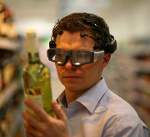
CC Licensed Photo by Flickr user SMI Eye Tracking. Click for source.I’ve got an article in The Observer about the state of neuromarketing – where companies pay millions of wasted dollars to apply brain science to marketing.

The piece looks at the three forms of neuromarketing – advertising fluff, serious research, and applied neuroscience. The first is clearly bollocks, the second a solid but currently abstract science, and the third a triumph of selling style over substance.

Finally, there is the murky but profitably grey area of applied neuromarketing, which is done by commercial companies for big-name clients. Here, the pop-culture hype that allows brain-based nonsense in consumer adverts meets the abstract and difficult-to-apply results from neuromarketing science. The result is an intoxicating but largely ineffective mix that makes sharp but non-specialist executives pay millions in the hope of maximising their return on branding and advertising.

The piece also looks at what turns out to be the most powerful innovation in marketing taken from cognitive science, but which doesn’t make the headlines like neuromarketing.

Full article at the link below.
 

Link to article in The Observer.

Spike activity 26-06-2015

Quick links from the past week in mind and brain news:

Picture This? Some Just Can’t. The New York Times covers a new study on people without visual imagery – that science writer Carl Zimmer helped discover.

New Republic on how the Romans understood hallucinations. “They did not have a single concept of ‘hallucination’ until very late on”.

Science of the pornocalypse. Aeon has an excellent piece that looks at the evidence for benefits and harms of pornography.

Pacific Stand has an important piece on copy number variant genetic mutations and intellectual disabilities.

Neuroscience and Politics: Do Not Hold Your Breath. Good critical piece in E-International Relations on how neuroscience is being used and abused to understand political views.

The Guardian has a reflective piece on inter-generational fathering and child psychology.

There’s a good piece over at Neurocritic about one of the many mouse studies spun by the media in folk psychology terms.

Hold infinity in the palms of your hand

CC Licensed image from Wikipedia. Click for imageA rare documentary about three people who have had hallucinatory and profound revelatory experiences is now available online.

Those Who Are Jesus examines the borders between revelation and psychosis and hears people recount their intense experiences while looking at how they can be understood in terms of sociology, neuropsychiatry, religion and radical mental health.

Julian believes he has been shown Jacob’s Ladder, how a universe is created and told his soul is Time itself.

Sadat says a vision of an angel said to him: “You were Jesus Christ before and you were raised to life again and you are Jesus Christ”

It’s a great non-judgemental documentary that looks at what happens when intense and idiosyncratic experience intrude on everyday life.
 

Link to Those Who Are Jesus on Vimeo.
Link to info about the documentary.

Compulsory well-being: An interview with Will Davies

The UK government’s use of psychology has suddenly become controversial. They have promised to put psychologists into job centres “to provide integrated employment and mental health support to claimants with common mental health conditions” but with the potential threat of having assistance removed if people do not attend treatment.

It has been criticised as ‘treating unemployment as a mental problem’ or an attempt to ‘psychologically reprogramme the unemployed’ and has triggered an upcoming march on a London job centre.

Will Davies is a political scientist and the author of the new book The Happiness Industry that looks at the history and practice of positive psychology as government and ‘well-being’ as a way of managing people.

We caught up with him to get some background on the recent controversy.

Is this use of psychology in social policy a quick fix or part of a broader trend?

There is a long history of using psychological techniques in order to encourage work or boost productivity. In my book, I trace this right back to the 1920s, when industrial psychologists first started to study the attitudes and emotions of people in the workplace, with a view to understanding how people could be more committed to work. Some of this was born out of a fear of socialism or trade union organising, i.e. that unhappy workers might rebel against business in some way.

But I also think something shifted fundamentally in the 1990s, as economists started to look at psychological survey data, and the field of ‘happiness economics’ took off. Economists were struggling to understand why unemployment sometimes remained high, even during times of economic growth. And one thing they began to realise was that unemployment causes types of psychological harm (namely depression) that can leave people unable to work, or unable to seek work. From an economist’s perspective, it stands to reason that the efficient course of action would therefore be to design a policy instrument that could alleviate this psychological problem. This is exactly what Richard Layard believed he had found, when he met the psychologist David Clark, who preached the virtues of Cognitive Behavioral Therapy (CBT) to him.

Layard studied the evidence on CBT in the mid-2000s, and quickly put together a ‘business case’ (of the sort the Treasury needs to see, if it is to endorse any new public spending) for why it was an efficient use of public money, given its apparent success in getting people off benefits of various kinds. Of course, this strongly economistic approach to psychology also has various risks attached to it, one of which is that everything becomes viewed in a highly instrumentalised way, which is precisely what there is now a backlash against.

A lot of the protests have centred on the idea that unemployed people might be coerced into psychological treatment with threats of having their benefits removed if they don’t attend but all over the world companies and individuals are voluntarily signing up to ‘happiness technologies’ that claim to be able to monitor and improve people’s contentment. Taking the coercive aspect away, isn’t this is a positive development in terms of also valuing people as emotional beings – rather than simply cogs in an economic system?

The problem here is that ‘happiness’ is becoming conceived in a heavily reductionist way. There tend to be two main types of reduction at play here.

Firstly, ‘happiness’ is viewed in roughly the way that neo-classical economists have viewed it, as the driver of consumer choices. Happiness economists may well be interested in broader notions of flourishing or life satisfaction than this, but the market research world has become fixated on positive emotions purely in the hope that they can be targeted by advertising or branding campaigns. Since the late 1990s, with the influence of neuroscientist Antonio Damasio, ’emotions’ have been the hottest research topic in the world of market research.

Secondly, ‘happiness’ is viewed in some biological, most often neurological, sense, as a physical occurence in the body. The claim that it’s now possible to see emotions via fMRI or physical symptoms (such as muscular reflexes or pulse rate) is no doubt grounded in credible scientific research, but before long, you reach the point where experts are speaking about emotions in ways that entirely bi-passes the voice of the person who is experiencing them. Philosophically, this is nonsense, for the simple reason that words like ‘happiness’ or ‘sadness’ can only make sense, to the extent that we can both witness them in others and describe them in ourselves. Behaviorist approaches to emotion ignore this.

Put these two agendas together, and you have an emerging industry of psychological surveillance, which purports to collect objective data about our feelings, and then commercialises it. The way in which digital health companies and technologies (such as wearables) are also offering consumer research or HR services is indicative of this new fusion between economic and physiological methods. All the while, our everyday articulations of ‘happiness’, ‘anger’, ‘joy’ or ‘despair’ are being ignored as ‘unscientific’. Businesses and policy-makers are so obsessed with tracking and measuring emotion, that they’re losing the capacity to listen to and understand it.

Of course, a lot of wellbeing data is collected in less clandestine, more analogue ways than this. Surveys are still the main basis for the field of happiness economics and ‘national wellbeing’ indicators. But this could change over time. One of the slightly perturbing trends amidst all of this is that a lot of this data collection is happening ostensibly for our own benefit, and yet it still happens without us necessarily granting permission. It’s not typically malicious or punitive surveillance (in an Orwellian sense), yet there’s still something creepy about it. Several of the companies above (including Affectiva) were founded to serve medical needs, but then subtly shifted towards more business-oriented applications, once they received venture capital. They start with the goal of increasing wellbeing… but gradually shift to the goal of maximising profit. This is a trend worth keeping an eye on.

An “emerging industry of psychological surveillance” sounds ominous. Can you give some examples?

Firstly there are those which focus on our physical bodies in various way. Companies such as Affectiva and Realeyes seek to monitor emotions through facial scanning, and offer services to market research companies amongst others. It is rare (though not unheard of) for these technologies to be used without the consent of those being monitored, and consumer groups are mobilising against intrusive uses of such technologies. Wearable technologies, such as Fitbit and Apple Watch, are marketed as devices which benefit the wearer, through greater self-knowledge.

But there are emerging cases of employers making it mandatory to wear them, or health insurers offering lower premiums to those that wear them, because of the data they can gather about behaviour, stress and wellbeing. Humanyze is a company that seeks to track employee activity (including emotions) using wearable technology, while Virgin Pulse is an HR service that includes various tools (including wearable technologies) to keep track of an employee’s state of mind and health.

Secondly, there are ways of calculating emotional variations through our use of language. The field of ‘sentiment analysis’ involves teaching computers to recognise the emotions conveyed in a sentence, and can be put to use to monitor the general happiness level of twitter users, for example, or the spread of emotions amongst facebook users. It is also integral to social media-based market research, or the ‘people analytics’ used by employers to look at employee performance via analysis of email traffic. One company, Beyond Verbal, offers indications of emotion based on tone of voice when on the phone. This has various commercial applications.

The sociologist Nikolas Rose has charted how governments increasingly see individual psychology as part of their governmental responsibility. What role do the psychologists, mental health workers and the like, have in affecting this trend?

We have to be wary of exaggerating the powers of governments and businesses in this area. A lot of my book – like the work of Nikolas Rose on this topic– implicitly looks at the goals, measurement tools and strategies that policy-makers and managers have at their disposal. However, these can seem more effective (and potentially more sinister) than how things work in practice. One thing that sociologists such as Rose have stressed is that the process of ‘translation’ between a public policy (such as tackling depression in job centres) and the actual front-line intervention is long and tortuous, and there are various individuals and institutions along the way that can divert and subvert it, for better or worse.

Professionals working in psychiatry, clinical psychology and psychotherapy retain some power to influence how things play out. Since the 1970s, more quantitative, positivist traditions have come to the fore, which grant less autonomy to professional judgement, and rely more on things like questionnaires and standardised metrics. Naturally, that means that expertise potentially becomes more amenable to governmental co-option. And yet, especially in an area like mental health, the success or failure of a policy is ultimately in the hands of someone providing the care or the listening. It’s not clear that something like IAPT can succeed, even by its own yardstick, if it becomes ever-more integrated into the pursuit of ‘efficiency’ and benefit cuts.

Speaking as an outsider, it seems to me that there is still further scope for the ‘psy’ disciplines to offer coordinated alternatives, which aren’t merely resistant, but offer new policies across society. At present, government policy is driven by an economic rationality, combined with a reductionist, behaviorist notion of mental health. This approach is guilty of both over-medicalising social problems and over-economising policy solutions. A critical bio-psycho-social alternative should have things to say, not only about mental health services or welfare, but about the damage wrought elsewhere in society.

Look at our schools, for example: there is a crisis of stress and anxiety amongst teachers while pupils are suffering the mental strains of constant examination, no doubt justified on the back of some nonsense about Britain being in a ‘global race’. If politicians are serious about the pursuit of happiness and wellbeing, and don’t want those phenomena to be simply manufactured in a mechanised fashion, then the psy disciplines and professions might want to develop some blueprints for how labour markets or companies should be governed on that basis. I remain sceptical as to whether policy-makers do conceive of psychology as anything other than an economistic route to ‘behavior change’, but lets find out.


You can follow Will Davies on Twitter as @davies_will. There are more details of his book The Happiness Industry here.

Wanted: political diversity in social psychology

A fascinating article on why social psychology needs more political diversity is due to be published in Behavioral and Brain Sciences. Sadly the full article is locked behind a paywall but the abstract gives an excellent summary of the article and the wider problem itself.

Political Diversity Will Improve Social Psychological Science.

Duarte JL, Crawford JT, Stern C, Haidt J, Jussim L, Tetlock PE.
Behav Brain Sci. 2014 Jul 18:1-54. [Epub ahead of print]

Psychologists have demonstrated the value of diversity-particularly diversity of viewpoints-for enhancing creativity, discovery, and problem solving. But one key type of viewpoint diversity is lacking in academic psychology in general and social psychology in particular: political diversity. This article reviews the available evidence and finds support for four claims:

1) Academic psychology once had considerable political diversity, but has lost nearly all of it in the last 50 years;

2) This lack of political diversity can undermine the validity of social psychological science via mechanisms such as the embedding of liberal values into research questions and methods, steering researchers away from important but politically unpalatable research topics, and producing conclusions that mischaracterize liberals and conservatives alike;

3) Increased political diversity would improve social psychological science by reducing the impact of bias mechanisms such as confirmation bias, and by empowering dissenting minorities to improve the quality of the majority’s thinking; and

4) The underrepresentation of non-liberals in social psychology is most likely due to a combination of self-selection, hostile climate, and discrimination.

We close with recommendations for increasing political diversity in social psychology.

As the article notes there is considerable evidence that social diversity is beneficial on many levels for numerous types of social groups.

This is widely believed in social science and community work except when it comes to political opinion where many believe that non-liberal views are incompatible with this type of work, when clearly they are not. This affects the field to the point where people are seemingly prepared to actively discriminate against non-liberals.

The defence of diversity matters most when you are defending the inclusion of people with whom you disagree or who make you uncomfortable. And we will all be better off as a result.
 

Link to PubMed entry for article.

Spike activity 12-06-2015

Quick links from the past week in mind and brain news:

The New York Times has a fascinating piece about the three waves of ancient peoples who arrived in Europe to found the modern population.

I am shocked, shocked I tell you, that the UK Government are deliberately side-lining their own scientific advisors to implement an unworkable ban on psychoactive substances. Reported by BBC News.

Narratively has a gallery from a photographer covering an innovative treatment program for violent offenders to reintegrate into society.

Injectable electronics holds promise for basic neuroscience, treatment of neuro-degenerative diseases. Coverage from PhysOrg.

Motherboard have had an excellent week of special articles on neuroscience.

The British police are deploying face recognition technology to scan festival crowds for matches to their mugshot database, according to the hacks at The Register.

Head quarters covers the dodgy popularity of online quizes to test if you’re a psychopath.

A short history of medicalising stress. Good piece in The FT.

Nature reports on The Pentagon’s focus on brain implants, bionic limbs and combat exoskeletons. Sounds sinister but they’re just tooling up humans for when the robot war comes. To the bunkers fellow cyborgs!

A new big budget fantasy video game has a hero who experiences psychosis. Motherboard has a piece on what could be a groundbreaking moment for mental health, or could be a soulbreaking moment for mental health stigma.

Aeon has an interesting piece on the work of a ‘metaphor designer‘ to use in PR campaigns.