Auditory brain trip

If you’ve got 15 minutes to spare, you could do far worse than spending it listening to an excellent edition of the Guardian Science Podcast on the neuropsychology of hearing and language.

Perceptual and linguistic neuroscience has a tendency to bit a little technical and difficult to engage with but the programme is both wonderfully produced and totally brought to life by neuropsychologist Sophie Scott’s insightful enthusiasm.

From the brain structure of professional accent connoisseurs to human echolocation, the programme is full of surprising insights into the auditory brain. Great stuff.
 

Link to Guardian Science Podcast on language and hearing.

Reaching for the high notes

Science writer Emily Anthes has a fascinating interview with a speech therapist who works with male-to-female transsexuals to help make their voice sound more feminine.

It gives both an insight into a little known area of speech therapy as well as highlighting some of the often overlooked differences between male and female voices.

EA: So, how does speech therapy work for someone who’s transitioning? What does it involve?

EG: They go once a week, sometimes twice a week if they’re really eager to speed things up, and they do different vocal exercises. Pitch is one of the most important markers. Men on average speak at 110-120 [Hertz], gender neutral is 145-165, and women are 210-220. In most cases the goal is to try to get to gender neutral, which basically means that if you called somebody on the phone, and they speak in what’s known as the gender neutral pitch, you probably wouldn’t be able to tell if they were a man or a woman.

So that’s the first piece, but along with that, they have to learn other things, like posture and speech intonation. Speech intonation is how much your voice goes up and down in a sentence. Men tend to speak in a very monotone, even tone. Women speak in many, many different pitches; as they speak they go up and down, they go high, they go low. So that’s really important–a person who’s transitioning needs to learn how to use that range in their voice.


Link to ‘Learning to Speak Like a Woman’.

A culture of sacrifice to the body beautiful

The New York Times has a excellent piece on the culture of plastic surgery in Brazil by anthropologist Alexander Edmonds.

Edmonds notes that surgery is not considered to be a correction or salve against the sagging of the years but a beauty treatment in its own right that is justified by a folk psychology of self-esteem.

Yet, such desires are not simply a matter of psychology. Brazil’s pop music and TV shows are filled with talk of a new kind of celebrity: the siliconada. These actresses and models pose in medical magazines, the mainstream women’s press, and Brazilian versions of Playboy, which are read (or viewed) by female consumers. Patients are on average younger than they were 20 years ago. They often request minor changes to become, as one surgeon said, “more perfect.”

The growth of plastic surgery thus reflects a new way of working not only on the suffering mind, but also on the erotic body. Unlike fashion’s embrace of playful dissimulation and seduction, this beauty practice instead insists on correcting precisely measured flaws. Plastic surgery may contribute to a biologized view of sex where pleasure and fantasy matter less than the anatomical “truth” of the bare body.


Link to NYT piece on A ‘Necessary Vanity’ (via @moximer).

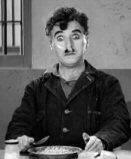
Got any Charlie?

A brief scene from the 1936 Charlie Chaplin classic Modern Times where he accidentally eats cocaine hidden in a salt shaker by a fellow jail inmate.

The smuggled “nose powder” makes Chaplin go a bit strange and causes him to accidentally prevent a jailbreak, making him a hero.

In fact, the episode is a central plot device in the film, presumably before such comical treatment of drug use became politically incorrect.
 

Link to cocaine scene from Modern Times (via Fluxo Do Pensamento).

It’s pronoun or never

Scientific American has a fascinating interview with psychologist James Pennebaker​ about how your use of pronouns can reveal a surprising amount about you.

Much to my surprise, I soon discovered that the ways people used pronouns in their essays predicted whose health would improve the most. Specifically, those people who benefited the most from writing changed in their pronoun use from one essay to another. Pronouns were reflecting people’’s abilities to change perspective.

As I pondered these findings, I started looking at how people used pronouns in other texts — blogs, emails, speeches, class writing assignments, and natural conversation. Remarkably, how people used pronouns was correlated with almost everything I studied. For example, use of first-person singular pronouns (I, me, my) was consistently related to gender, age, social class, honesty, status, personality, and much more. Although the findings were often robust, people in daily life were unable to pick them up when reading or listening to others. It was almost as if there was a secret world of pronouns that existed outside our awareness.


Link to Pennebaker interview in Scientific American (via @bmossop).

Your face in every flower

Billie Holiday sings about the phenomenon of seeing meaningful patterns in vague or non-connected visual information in her well-known track The Very Thought of You

Scientifically, these effects are known as pareidolia or apophenia.

However, the song notes that the perceptual biases are induced by love and, of course, ‘The Very Thought of You’.

I see your face in every flower
Your eyes in stars above
It’s just the thought of you,
The very thought of you, my love

For those tempted to connect these experience with Billie Holiday’s heavy drug use, which can cause these forms of misperception both through their immediate and long-term effects, it’s worth noting that the song was not written by her and was covered by a number of famous jazz artists, of which Holiday was perhaps the most famous.
 

Link to Holiday’s version of the song on YouTube.
Link to information on the song on Wikipedia.

Witch on a hallucinogenic flying broomstick

I’ve just found this fascinating discussion on the psychopharmacology of ‘witches ointments’, that supposedly allowed 16th century witches to ‘fly’.

It’s from a fantastic 1998 Anesthesiology article about atropine containing plants, like belladona, deadly nightshade and hemlock, and their effects.

De Laguna was not the sole commentator about the relationship of mind‐altering drugs and witchcraft in the 16th century. In De Praestigiis Daemonum, which Freud called one of the 10 most significant books of all time, Johann Weyer (1515–1588 CE) concluded henbane was a principal ingredient of witches’ brew, along with deadly nightshade and mandrake.

According to Weyer, there were other ointments, but the essential ingredients remained the same in all. The preparations, when applied to the upper thighs or genitals, were said to induce the sensation of rising into the air of flying.

Witches were thought to anoint a chair or broomstick with the devil’s ointment, and after self‐application, would fly through the air to meet for devil worship at the sabbat. Francis Bacon (1561–1626 CE) observed that “… the witches themselves are imaginative, and believe oftentimes they do that, which they do not … transforming themselves into other bodies … not by incantations or ceremonies, but by ointments, and annointing themselves all over.”

In an extensive review of psychotropic plant ointments of the Renaissance, Piomelli and Pollio examined transcripts of witchcraft trials, writings on demonology, and the botanical composition of ointments that alleged witches used on themselves during the 15th and 16th centuries.

Despite the difficulty with accurate identification of the plants, the documents reported consistent pharmacologic effects. Further, the biochemical logic of applying these plants in a fat‐based unguent was sound, as it would promote passage of the alkaloids through the intact skin and mucosa.

The use of soot (slightly alkaline) likely would enhance the passage of organic bases because a weakly alkaline environment would be sufficient to neutralize the positive ionic charge. That this is an effective ethnobotanical technique may be seen with Peruvian coca chewers, who mix in their mouths the cocaine‐containing leaves with alkaline cinders to enhance uptake.

There is even experimental evidence for believing that a fatty base was used in these ointments; an ointment from the 13th or 14th century, found accidentally, was subjected to chemical analysis and had an animal fat content of 40%.

The full article is well worth checking out as it tackles how the plants have been used in potions and preparations through history and were a early form of anaesthesia in ancient and medieval surgery.
 

Link to Anesthesiology article.

False confession fishing in the lab

We’ve covered false confessions and how surprisingly common they are several times before on Mind Hacks but a new article from The Economist updates us on the latest lab studies.

DNA crime investigators The Innocence Project have discovered that about 25% of DNA exonerations have involved the accused making a false confession at the time of conviction.

This has sparked a great deal of interest into why people admit to crimes they haven’t committed and, along with studying real-life cases, researchers have been trying to encourage false confessions in the lab to see what influences the behaviour.

The Economist has a brief round-up of some of the most interesting lab studies.

In an as-yet-unpublished study, members of Dr Horselenberg’s group told 83 people that they were taking part in a taste test for a supermarket chain. The top taster would win a prize such as an iPad or a set of DVDs. The volunteers were asked to try ten cans of fizzy drink and guess which was which. The labels were obscured by socks pulled up to the rim of each can, so to cheat a volunteer had only to lower the sock.

During the test, which was filmed by a hidden camera, ten participants actually did cheat. Bafflingly, though, another eight falsely confessed when accused by the experimenter, despite participants having been told cheats would be fined €50 ($72).


Link to The Economist ‘False confessions: Silence is golden’.

Riot psychology

In the coming weeks we can expect to see politicians and pundits lining up to give us their smash-and-grab clichés for the recent urban riots in the UK.

They’ll undoubtedly give a warm welcome to our old friends economic decay, disengaged youth and opportunistic crime, and those of a more psychological persuasion might name-drop ‘deindividuation’ – the process where we supposedly lose self-awareness and responsibility in large crowds.

This belies the fact that crowd behaviour is a complex area that is surprisingly poorly researched.

But what we do know about is the interaction between large crowds and the police and you could do much worse than check out the work of psychologist Clifford Stott who researches how crowds react to policing and what triggers violence.

In his 2009 report on the scientific evidence behind ‘Crowd Psychology and Public Order Policing,’ commissioned by the UK constabulary, he summarises what we know about public disorder and how the authorities can best manage it (you can download it as a pdf).

He notes that the old ideas about the ‘mob mentality’, deindividuation and the loss of individual responsibility are still popular, but completely unsupported by what we know about how crowds react.

People don’t become irrational and they do keep thinking for themselves, but that doesn’t mean that the influence of the crowd has no effect.

In terms of policing, one of the clearest effects to emerge from studies of riots and crowd control is that an indiscriminate kicking from riot police can massively increase the number of people in the crowd who become violent.

This is probably because the social identity of people in a group is fluid and changes according to the relationship with other groups.

For those into academic jargon, this is known as the Elaborated Social Identity Model of crowd behaviour – a well-supported theory with an overly complicated name but which is surprisingly easy to understand.

Imagine you’ve just got on a bus. It’s full of people and you have to jam into an uncomfortable seat at the back. There are people going to work, some vacant students heading home after a night on the beers, some annoying teenagers playing dance music through their tinny mobile phone speakers and some old folks heading off to buy their groceries.

You’re late and you missed your train. You feel nothing in common with anyone on the bus and, to be honest, those teenagers are really pissing you off.

Suddenly, two of the windows smash and you realise that a group of people are attacking the bus and trying to steal bags through the broken windows.

Equally as quickly, you begin to feel like one of a group. A make-shift social identity is formed (‘the passengers’) and you all begin to work together to fend off the thieves and keep each other safe.

You didn’t lose your identity, you gained a new one in reaction to a threat.

The problem police face is that in most large threatening crowds only a minority of people are engaging in anti-social acts. Lots of people ‘go along for the ride’ but aren’t the hardcore that kick-off without provocation.

If the police wade in with batons indiscriminately, lots of these riot wannabes suddenly start to feel like they’re part of the bigger group and feel justified in ripping the place apart, mostly to throw at the coppers.

Suddenly, it’s ‘them’ against ‘us’ and a small policing problem just got much much bigger – like attacking a beehive because you just got stung.

The trick for the police is to make sure they’re perceived as a legitimate force. When they have to charge in, they’re doing so for a reason – to target specific criminals. The ‘them and us’ feeling doesn’t kick in because most individuals don’t feel that the police are targeting them. It’s the other idiots the police are after.

And herein lies the problem. The psychology of crowd control is largely based on the policing of demonstrations and sports events where the majority of people will give the police the benefit of the doubt and assume their status as a legitimate force.

Clifford Stott’s report has lots of advice for forces who want to establish and maintain this impression. The cops should start out in standard uniforms, should be scattered around the crowd and should make an effort to interact. If trouble looks like it’s brewing, non-violent folks should be allowed to leave and the police ‘have a word’ with the specific people involved. Force is only ramped up in proportion to the threat.

I’m no expert and I’ve been watching the UK riots from 5,000 miles away from the safety of Colombia (a sentence I never thought I’d write) but it strikes me that most of the rioters probably never thought of the police as a legitimate force to begin with.

This goes beyond establishing police legitimacy on the day and means many of the standard assumptions of behind crowd control probably don’t work as well.

But the fact that thousands of young people across the country don’t have faith in police is a much deeper social problem that can’t be solved through street tactics.

I have no easy answers and I suspect they don’t exist. Politicians, start your clichés.
 

Link to homepage of psychologist Clifford Stott.
pdf of ‘Crowd Psychology and Public Order Policing’.

Psychology and its national styles

An interesting paragraph from a 2005 article on the history of psychological concepts.

It tracks how different styles of psychology emerged in different countries depending on the social and political problems active at the time.

In Britain, there was a noteworthy interest in individual differences, the distribution of these differences in the population and the significance of this data in social, educational and political questions. The result was a psychology intimately bound up with statistics.

In France, a clinical method and an interest in the exceptional, perhaps pathological, individual case (the hysteric, the prodigy of memory, the double personality) was characteristic of early work.

In Germany, the dominant academic interest, supported by an experimental methodology adapted from physiology, was in the conscious content of the rational adult mind. This interest interacted with philosophical questions about the foundations of knowledge.

In the United States, a pragmatic temper and the opportunity to obtain funding for a psychology aimed at the solution of social problems directed psychology towards a science of behaviour, with a methodology appropriate for the study of learning and adaptation.

In Russia, stark opposition between a conservative politics of the soul expressed in Orthodox belief and radical materialism led, in the Soviet period, to support for psychology as a theory of ‘higher nervous activity’, in Pavlov’s phrase, which threatened to make psychology part of physiology.

Such generalisations go only so far, but they do make clear the sheer variety and complexity of psychology just at the time when, as convention holds, the modern discipline emerged.


Link to locked article ‘The history of psychological categories’.

Inner visions of seven dimensional space

I’ve just found an amazing 2002 article [pdf] from the American Mathematical Society about blind mathematicians.

I was surprised to learn that the majority work in geometry, supposedly the most ‘visual’ discipline, and fascinated to learn that they generally believe the experience of sight puts people at a disadvantage because it locks us into a perception-led view of space.

This can be a problem in geometry because it regularly works in problems that involve more than three dimensions or requires an understanding of objects from all ‘angles’ simultaneously.

Alexei Sossinski points out that it is not so suprising that many blind mathematicians work in geometry. The spatial ability of a sighted person is based on the brain analyzing a two-dimensional image, projected onto the retina, of the three-dimensional world, while the spatial ability of a blind person is based on the brain analyzing information obtained through the senses of touch and hearing. In both cases, the brain creates flexible methods of spatial representation based on information from the senses. Sossinski points out that studies of blind people who have regained their sight show that the ability to perceive certain fundamental topological structures, like how many holes something has, are probably inborn…

Sossinski also noted that sighted people sometimes have misconceptions about three-dimensional space because of the inadequate and misleading twodimensional projection of space onto the retina. “The blind person (via his other senses) has an undeformed, directly 3-dimensional intuition of space,” he said.

There is not any maths in the article but it is written for mathematicians so it contains lots of mysterious sentences like “Morin first exhibited a homotopy that carries out an eversion of the sphere in 1967”.

However, the article is also a fantastic history of blind mathematicians and has lots of quotes from current leaders in the field who explain who their supposed disability lets them better understand the maths of three and more dimensions.

Even for those without a maths background it’s an amazing insight into some remarkable people.
 

pdf of ‘The World of Blind Mathematicians’ (via @tiempoasm).

Flatline movement

I’ve just found another video of the Lazarus sign, the spinal reflex that triggers an arm raising and crossing movement in recently brain dead patients.

We’ve covered the mechanism behind the somewhat disconcerting movement before, and have noted an earlier video, but this one seems to have been uploaded quite recently.

The movement is triggered by a reflex arc – a basic neural circuit that doesn’t go any further than the spinal cord which means that it can initiate movement even when the brain is non-functional.

When the doctor taps your knee and causes a knee jerk, he or she is triggering exactly this effect. In fact, these movements can be triggered all over the body.

If you’ve ever had a complete neurological examination the neurologist will tap on various points to trigger numerous reflex arcs to check that the nerves going to and from certain muscle groups are in good working order.

One of these arcs causes the movement in the Lazarus sign, which, needless to say, can be quite disconcerting for doctors and quite confusing for relatives if the patient has just passed way.

In fact, you can see from the video how ‘lifelike’ the movement seems.

Probably not recommended if you’re uncomfortable with the sight of recently dead people moving.
 

Link to video of Lazarus sign.

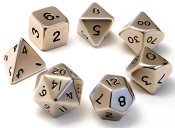
Personality profile of a magical being

A 1993 study on the personality of Dungeons and Dragons players finds kinda what you’d expect.

The personality of fantasy game players

British Journal of Psychology
Volume 84, Issue 4, pages 505–509, November 1993

Neil A. Douse, I. C. McManus

Players of a fantasy Play-By-Mail game were compared with matched controls on personality measures of decision-making style, sex-role, extraversion, neuroticism, empathy, leisure interests and personality type. Most players were male. On the Bem Sex-Role Inventory the players were less feminine and less androgynous than controls. They were more introverted, showed lower scores on the scale of empathic concern, and were more likely to describe themselves as ‘scientific’, and to include ‘playing with computers’ and ‘reading’ amongst their leisure interests than controls.

Obviously, times have changed since 1993 and now that RPGs are hip I’m sure that the personality profile of gamers is completely different. And anyone that says different will taste the cold steel of my vorpal sword. No saving throw.
 

Link to study abstract.

Slogans trigger resistance while logos slip through

Language Log covers a fascinating study that found that commercial logos unconsciously encourage brand-compliant behaviour but slogans do the reverse and seem to trigger automatic resistance.

It seems that while slogans are read as being deliberately persuasive, logos slip under our advertising radar and trigger a series of brain-friendly associations built up by the company.

…brand names and logos, argue Laran and colleagues, are different from other commercial messages in that they’re not necessarily perceived as inherently persuasive—despite the fact that they’re often designed with great care, we may normally take them to be primarily referential, much as any proper name might be. Slogans (or, as they say in the industry, taglines) are transparently persuasive according to the authors. Perhaps people react to these latter messages in knee-jerk reverse-psychology manner by blocking and even countering the typical brand associations.

Laran et al. found that when they had people look at cost-conscious brand names like Walmart in an alleged memory study and then later take part in an imaginary shopping task, they were able to replicate the implicit priming effect: people were willing to spend quite a bit less than if they’d seen luxury-brand logos. But when subjects saw slogans (e.g. Save money. Live better.) instead of the brand names, there was a reverse priming effect: now, the luxury-brand slogans triggered more penny-pinching behavior than the economy-brand slogans.

You can read the full study online as a pdf but Language Log has some fantastic coverage on the unconscious psychology of advertising.
 

Link to LanguageLog ‘Not so gullible after all’.

The science of hot

I’ve just listened to a fantastic edition of the BBC programme Am I Normal? on libido and sex drive that covers pretty much everything you might want to know about wanting sex.

Unfortunately, because the BBC isn’t normal, if you want to download the podcast you have to go to a different page or grab file from a direct link to the mp3.

Luckily, the programme is excellent. It covers everything from how often people have sex, to whether there is a difference between men and women, and the effect of ageing, lovers, marriage and medical treatments on sex drive.

A quality documentary that also starts with a wonderful poem.
 

Link to programme info and audio streaming.
mp3 of podcast.

The brain melting internet

Susan Greenfield has been wibbling to the media again about how the internet is melting the brains of young children.

Quite frankly, I’ve become fed up with discussing the evidence that refutes such outlandish claims but The Lay Scientist has a brilliant parody that manages to catch the main thrust behind her argument.

I thought I caught my brain melting when reading it but it turns out I had actually wet myself.

That’s why science is so hard you see.

Social media sites like Facebook and Twitter have left a generation of young adults vulnerable to degeneration of the brain, we can exclusively reveal for about the fifth time. Symptoms include self-obsession, short attention spans and a childlike desire for constant feedback, according to a ‘top scientist’ with no record of published research on the issue…

The scientist believes that use of the internet – and computer games – could ‘rewire’ the brain, causing neurons to establish new connections and pathways. “Rewiring itself is something that the brain does naturally all the time,” the professor said, “but the phrase ‘rewiring the brain’ sounds really dramatic and chilling, so I like to use it to make it seem like I’m talking about a profound and unnatural change, even though it isn’t.”…

“I think it’s really important that people aren’t frightened by scare stories about new technology, and I’ve been a big supporter of brain-training software in the past,” the scientist said, “but people’s brains are literally melting inside their heads from all the MyFace waves being absorbed.”

Joking aside, I honestly despair. I genuinely think that Greenfield is motivated by good intentions but it’s difficult to see how her unwillingness to engage with any of the evidence on the issue is anything other than wilful ignorance.

At the very least, the funny Lay Scientist piece will help you feel better about the whole disappointing situation.
 

Link to ‘Facebook will destroy your children’s brains’.