The hidden history of lobotomy’s non-inventor

A fascinating snippet on the notorious supposed inventor of the frontal lobotomy, Egas Moniz, from an article in the Polish Journal of Neurology and Neurosurgery:

Egas Moniz: a genius, unlucky looser or a Nobel Committee error?

Neurol Neurochir Pol. 2012;46(1):96-103.

Lass P, Sławek J, Sitek E.

Portuguese neurologist António Egas Moniz is one of the most intriguing figures in the history of medicine. While an invention of angiography in 1927 is his acknowledged merit, lobotomy, invented in 1935 became a black legend of psychiatry, although sporadically it is performed also today. There are even postulates to withdraw the Nobel Prize, which Moniz received in 1949 for inventing the lobotomy. Moniz in fact re-invented lobotomy, primarily introduced in 1888 by a Swiss psychiatrist Gottlieb Burckhardt and later forgotten. Its popularisation, including its abuses was chiefly done by American neurologists Walter Freeman and James Watts.

Aside the science, Moniz was an exceptionally colourful person, a merited politician, Portuguese minister of foreign affairs, the head of its delegation at Versailles in 1918, in 1951 he was even proposed a position of a Presidentof Portugal. He was a versatile humanist and a writer, even a gambling expert. His person is hard for black and white evaluation, definitely deserving a re-evaluation from today’s historical perspective.


Link to abstract of article on PubMed.

Wishful resilience

The New York Times has an extended article that uncritically dicusses a $125 million US Military programme currently designed to increase resilience against mental illness.

If you’re interested in the effects and treatment of psychological trauma, it’s always worth keeping tabs on what the military are doing. The concept of trauma has largely been driven by the military and they are usually pioneers in developing treatments and interventions.

The Comprehensive Soldier Fitness programme is a US Army programme based on positive psychology and was developed with the help of the field’s guru Martin Seligman.

Rather than aim to treat mental health problems, it aims to prevent them by improving the psychological strength of individual soldiers. Owing to the fact that the US Military has surprisingly high levels of PTSD, it is clearly designed with this in mind.

It involves completing a 110 item questionnaire called the ‘Global Assessment Tool’ that gives scores based on the four domains of programme: emotional fitness, social fitness, family fitness and spiritual fitness (it would be interesting to see how atheists score on this last part).

The idea is that the programme can then be tailored to the GAT profile of each soldier to strengthen vulnerabilities and build on existing strengths.

If you were going to base your programme on a psychometric assessment, most importantly, you would want to know that your assessment predicted problems or coping in particular soldiers.

For example, if a particular soldier had a low score on, let’s say, the emotional fitness part of the scale, it would be important to know that tells us about what sort of problems the soldier is likely to have in real life and during his or her service.

You would also want to know that the assessment told us about the likelihood of the solider getting mental illness. It makes sense, right? If you’ve designed a programme intended to prevent mental illness based on an assessment, the assessment should tell us which soldiers are at higher risk for psychiatric difficulties so we can help with skills and abilities that mitigate the risk.

In psychological jargon, this is known as predictive validity and it can be tested statistically.

It is not known whether the Global Assessment Tool does actually predicts anything useful about US soldiers’ problems because this was never tested.

We know this because the GAT and the other aspects of the Comprehensive Soldier Fitness Programme were the subject of the special issue of American Psychologist that had numerous articles on the development and evidence for the programme by the programme’s creators, including an article on the GAT.

As a whole, it seems the Army implemented the programme wholesale and has since been evaluating it in retrospect, which seems a little bit of an odd way of going about it.

By the way, the New York Times article is really focused on ‘posttraumatic growth’ – the psychological benefits that surviving trauma can bring. In places it seems to imply a sort of split view of the phenomenon where you either are traumatised or experience growth – when in reality, it’s possible to be both disabled in some aspects of life while growing in others.

One of the best things I read on this recently was Stephen Joseph’s book What Doesn’t Kill Us: The Psychology of Post-Traumatic Growth (note: I’m blurbed on the back but I don’t make any money from it) that, as a level-headed look at the concept, comes highly recommended.
 

Link to NYT article on post-traumatic growth.

Goodbye Colombia, for now

A few days ago I moved back to the UK after spending three years working in beautiful Colombia.

I had the pleasure of learning from some fantastic colleagues and managed to find myself working across the country from the Amazon to the Andes.

As a small and inevitably inadequate token of my appreciation I’d like to thank my colleagues in Médecins Sans Frontières from across Colombia, colleagues from the Hospital Universitario San Vicente de Paúl and the Universidad de Antioquia in Medellín, as well as the many other fantastic mental health professionals who helped me along the way and tolerated my enthusiastic but ‘freestyle’ Spanish.

I arrived in Bogotá to find Alonso, a particle physicist, had organised ‘neurobeers’ which were both enormously good fun and full of fantastic folks. Much appreciated.

And finally, thank you to Shakira (who can now contact me at my British address).

Neurotoxic e-waste recycling

The Lancet has an extensive news piece on how the recycling of old electronics in developing countries may be a serious neurological risk owing to the high levels of neurotoxic chemicals in modern electronics.

“The recycling of e-waste is big business in developing countries”, explains Javier Carod-Artal (Virgen de la Luz Hospital, Cuenca, Spain). “But many people are working without any kind of protection—most aren’t even aware of the potential risks. It’s a serious health threat.”

Carod-Artal explains that in its destination countries, e-waste is traded to individuals who recycle it in small workshops and sometimes even in their houses, locations in which ventilation is poor and little thought is given to the control of environmental contamination.

These individuals are exposed to many neurotoxicants during the extraction process. Lead, for example, has a low melting point, meaning that it evaporates quickly and can be inhaled quite easily when burning e-waste.

Many studies have shown that exposure to lead can adversely affect brain development, but electronic devices contain many more potential toxicants. For example, among as many as 40 different elements, a mobile phone can contain known neurotoxicants such as arsenic, cadmium, and chromium.

As many modern electronics also rely on conflict minerals, that is, essential elements minded from areas controlled by illegal armed groups, we can safely say that electronics manufacture is not the most person friendly practice in the world.

If you want more details you can read the entire Lancet article for free online although, annoyingly, you have to create an account with their website first.
 

Link to Lancet piece on neurotoxic e-waste.

Buried words

I’ve just found a fantastic video that explains the speech-impairing disorder aphasia to children of all ages.

Its called ‘The Treasure Hunt’ and was created by speech pathologist Shiree Heath and it went on to win first place in the Society for Neuroscience’s video competition.

The video combines a cartoon treasure hunt with recordings of a real-life aphasia patient who seems to be affected by a type of anomic aphasia where affected people have trouble with saying names of objects or items.

It’s worth noting that this is only one of many types of speech-affecting aphasias that are possible after brain damage, although this is perhaps the one that has been most delightfully described so far.
 

Link to The Treasure Hunt video (via @mocost)

A thread of hope from a shooting

No-one knows why Steven Kazmierczak snapped. When he kicked his way into a packed lecture hall in Northern Illinois University, shooting dead five students and injuring 21 more, those who knew him expressed surprise that he was capable of such brutal violence.

He killed himself at the end of the spree, meaning his motives remain unknown, but the legacy of this tragic event may be more than just the actions of a lone unfathomable killer.

Because when Kazmierczak attacked, a team of psychologists and neuroscientists had already assessed a large group of students who had been recruited as non-affected participants for a study on the effects of victimisation, giving the researchers an unwanted opportunity to better understand how sudden trauma affects the innocent.

Since the 1980s we have recognised a trauma-specific mental disorder. Its name, ‘post-traumatic stress disorder,’ seems to suggest that trauma alone causes the condition but we have known for years that genetics play a large part in determining who does and who doesn’t develop PTSD.

Not everyone who experiences a violent attack, disaster or sexual assault will develop PTSD. In fact, the single most common outcome after tragedy is not mental illness, but recovery. That’s not to say that we wouldn’t feel shaken up or distressed after such events but most people can return to their everyday lives, perhaps changed, but unimpaired.

What we still don’t know is how people who recover are different. Why is it that some individuals develop the disorder following trauma while others appear to be relatively resilient?

We’ve known since studies on Vietnam veterans that genetics accounts for up to 30% of the difference in PTSD symptoms but researchers have been keen to find to specific genes that confer the biggest vulnerability.

Normally these types of studies look at people with and without PTSD and compare the presence of specific genes known to be linked to brain function, to see if they appear more in one group than another. Although helpful, one problem with these sorts of studies is that it is difficult to say whether the genes might directly contribute to the condition or to a general difficulty with mood or behaviour.

In scientific terms, the reason this can be a problem is because people who are already, for example, low in mood or impulsive, are on average more likely to be victimised, attacked or abused. This means it’s difficult to know exactly which genes are most important for explaining the reaction to trauma, rather than the chance of being victimised.

Psychologist Kristina Mercer was leading a study on trauma before the shooting occurred. She had been interviewing female students about their life histories and experience of trauma at Northern Illinois University, originally planning to re-interview the students over time to see which characteristics made them more likely to experience sexual assault.

Clearly motivated to make sure that something more than grief and pain would come from the event, she switched focus to better understand what made some people more likely to develop PTSD after the shooting.

The team re-interviewed the participants in the weeks following the tragedy, assessing their exposure to the violence, any PTSD symptoms present and their level of support from friends and family. A similar interview was conducted 8 to 12 months later and at the end of the study, the researchers took saliva samples to look at the DNA of each participant.

As PTSD is largely a disorder of anxiety accompanied by an intrusive reexperiencing of the event that doesn’t fade with time, the team focused on genes for the serotonin transporter system or SERT.

Serotonin is one of the brain’s neurotransmitters that provide chemical signalling between brain cells. The serotonin transporter system is responsible for removing the used serotonin from the synaptic cleft, the signalling space between the neurons, and putting it back in place, ready to be used again.

This is important because if not removed from the synaptic cleft, the serotonin will keep on signalling. In other words, the efficiency of the serotonin transport system in cleaning-up stray neurotransmitter determines the strength of the signal as much as the original message.

We know that many of the key circuits involved in anxiety are reliant on the serotonin neurotransmitter, so the research team suspected that people with genes differing in how they control transport system could be differently susceptible to anxiety and, perhaps, trauma.

In line with their thinking, the results showed a similar picture. A transport gene called rs25531 was identified as directly linked to the chance of developing PTSD after the shooting. Interestingly, a commonly mentioned serotonin gene, 5-HTTLPR, was only linked to PTSD risk when it was also present with rs25531, suggesting the importance of looking at genetic interactions and not just single genes.

Because of nature of the shootings – a lone gunman who randomly attacked anyone in range – the results are more directly tied to reaction to trauma, rather than a possible vulnerability to being victimised, meaning this is one of the few studies that gives us an unambiguous insight into the post-trauma process.

Now it’s common at this point to say that a discovery of specific genes raising the risk of mental illness should lead to a better treatment for trauma, but this is usually nothing more than a hopeful twist on the scientific details, and this case is no different.

The results suggest no direct treatment and no immediate cure because mind, brain and trauma are too complex for simple solutions.

But the study is no less important. It’s still an essential part of our understanding and provides an essential thread in a tapestry of knowledge.

And fittingly, it shows that even from the shadow of tragedy, light emerges.
 

Link to locked scientific article.
pdf of full text.

Post-sex psychology

Slate has an article covering the growing research on post-sex behaviour – what we do after we’ve got it on and what it might mean.

To be honest, I had no idea that anyone was studying what people do after sex but it sounds like the science is well underway.

Counter to popular opinion, a dated study, and the great wisdom of many lady mags, researchers have not found that men fall asleep faster than women after sex. In fact, according to a recent study [pdf] of heterosexual pairings by Kruger and Hughes, a woman is just as likely as a man to be out first. But — and here’s the interesting part — regardless of gender, the partner who stayed awake longer reported that they weren’t getting enough post-sex hugging, kissing or talking – what evolutionary psychologists call “pair bonding” activities…

And what about the other activities people move on to after sex, like hanging out in bed, ordering Chinese food, or smoking a cigarette? Earlier in 2011 Kruger and Hughes published a report in the Journal of Sex Research, considering a wider range of after-sex impulses. In that case they found that our post-coital behaviors – again considering only heterosexual sex – tend to split along gender lines. Eating, fixing yourself a drink, smoking and asking your partner for favors – all activities that sound pretty good to me – were more likely to be taken on by the men. The women, in this case, placed greater importance on behaviors related to intimacy, like cuddling and “professing their love.”

From reading the article though it’s clearly a fascinating area, even if the research seems only to have looked at heterosexual sex so far.

Apparently though, my preferred behaviour, apologising, seems barely to feature at all.
 

Link to ‘After the Climax’ from Salon (via @QMUPsychology)

A mental space filled with flowers

An entire psychiatric hospital has been filled with flowers before demolition as part of a beautiful art installation to remember a place “rich with a history of both hope and sadness.”

Art website Colossal has amazing pictures of the sublime artwork.

In 2003 a building housing the Massachusetts Mental Health Center (MMHC) was slated for demolition to make way for updated facilities. The closure was a time for reflection and remembrance as the MMHC had been in operation for over 9 decades and had touched countless thousands of patients and employees alike, and the pending demolition presented a unique problem. How does one memorialize a building impossibly rich with a history of both hope and sadness, and do it in a way that reflects not only the past but also the future? And could this memorial be open to the public, not as a speech, or series of informational plaques, but as an experience worthy of they building’s unique story?

To answer that question artist Anna Schuleit was commissioned to do the impossible. After an initial tour of the facility she was struck not with what she saw but with what she didn’t see: the presence of life and color. While historically a place of healing, the drab interior, worn hallways, and dull paint needed a respectful infusion of hope. With a limited budget and only three months of planning Schuleit and an enormous team of volunteers executed a massive public art installation called Bloom. The concept was simple but absolutely immense in scale. Nearly 28,000 potted flowers would fill almost every square foot of the MMHC including corridors, stairwells, offices and even a swimming pool, all of it brought to life with a sea of blooms.

A beautiful and touching piece.
 

Link to photos from Colossal (via @sarcastic_f)
Link to artist’s pages on the project.

Reminder: revelatory experiences conference

A final reminder about the revelatory experience conference where the psychology, neuroscience and anthropology of visionary experiences will be discussed in London on March 23rd.

Rather than debating whether such experiences are ‘true’ or not, it’s more aimed at discussing how well our current tools of science, medicine and interpretation help us make sense of the wide variety of revelatory experiences in the world.
 

Link to conference details.

Attractive people less shallow

I’ve just found a disappointing study from the European Journal of Psychology that found that physically attractive people are more likely to be psychologically balanced and accepting than the rest of us.

The study asked 119 participants to complete the Personal Orientation Inventory, a measure of psychological characteristics such as self-acceptance, spontaneity and self-actualisation, while a photo of each was also rated on physical attractiveness by a six person panel.

The study revealed that participants in the high attractiveness group scored significantly higher on 7 of the 12 POI scales in comparison to the participants in the low attractiveness group: Inner-Directed, Self-Actualising Value, Feeling Reactivity, Spontaneity, Self-Regard, Self-Acceptance, and Capacity for Intimate Contact.

The researchers debate why more attractive people might, on average, end up being more psychologically accepting of themselves and others.

They suggest that it could be due to a self-fulfilling prophecy effect. Previous research has shown that good looking people are stereotyped as being more confident, warm, dominant, stable and socially skilled, among other things, and being treated this way could enourage exactly these sorts of behaviours and attitudes.

Personally, I have been trying to cultivate a shallow and empty persona in the hope that it would make me seem more physically attractive but I now realise I should have been saving to enhance my rack as a form of personal development.
 

Link to study.

Catching the krokodil

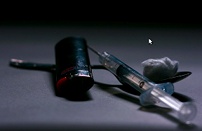
Over the last few months somewhat sensational media reports have appeared discussing a cheap Russian heroin-like drug nicknamed ‘krokodil’ due to it causing scaly lesions at the site of injection.

It has been variously headlined as a ‘designer drug’ or ‘the drug that eats junkies’ but until now it has not been discussed in the scientific literature.

For the first time, however, a short article has appeared with more details, and has just been published in Clinical Toxicology by three Russian resesarchers.

The main part of the article is reproduced below edited to remove the references.

“Crocodile” is a street name of drug containing mainly desomorphine (Dihydrodesoxymorphine-D), produced in home conditions by simple synthesis from codeine, most often on the basis of codeine-containing medicines, in Russia available over-the-counter so far. Desomorphine presents sedative and analgesic effects; it is 8–15 times more potent than morphine, and has weaker toxic, convulsant, emetic and respiratory depression action.

The drug is administered intravenously or intramuscularly. It has very fast onset of action (2–3 min) and a short duration of action (2 h). First symptoms of addiction usually appear after 5–10 days. From intake of the first dose, death comes maximally after 2–3 years, but even single dose may be lethal for predisposed person. High toxicity is caused by the presence of impurities. Skin in the places of injections becomes grey and green, scabrous, flakes off, so it resembles the skin of crocodile. Postproduction impurities (residues of acids and alkalis, petroleum derivatives, industrial oils, organic solvents, red phosphorus, iodine, heavy metals) act irritant on vessels which become damaged and afterwards obliterated.

It causes peripheral limb ischemia with following necrosis, often secondarily infected, which require surgical intervention and even limb amputations. So this drug “bites” the limbs, as a real crocodile. Addicted people may be recognized by the smell of iodine, used during drug production. “Crocodile” generally is similar to so-called “Polish heroin” (“compote”)— drug produced also in home conditions from poppy straw, popular in Poland till the late 1990s.

The “crocodile” is cheap (costs less than one can of bear), so it is very popular and is used mainly by poor opiate drug addicts in Russia. Its production developed at the time of restriction of heroin trafficking from Afghanistan. According to current estimates, in Russia there are 100—250 thousands of people addicted to “crocodile.” About 30 thousands of people die per year.

The presence of this drug was confirmed in Germany (among immigrants from Russia), Czech Republic, Ukraine, France, Belgium, Sweden and Norway. Unofficially, one fatal poisoning of 23-year-old man from Warsaw in Poland, in December 2011, is suspected, but we don’t know details yet, because of lasting investigation. With people migration, we should expect single cases of “crocodile” use in countries, where it is not present at this moment.

Oddly the article has translated the Russian ‘krokodil’ into ‘crocodile’ for the article, despite the fact it is more widely known by its original spelling.

Interestingly though, it seems that the drug is another in the line of nasty highs that can be synthesised by anyone with household ingredients and a single container (the other being the single bottle methamphetamine synthesis).
 

Link to locked short Clinical Toxicology article.
Link to Wikipedia on krokodil and desomorphine.

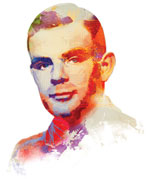
A fitting tribute to Alan Turing

Nature has just published a fantastic Alan Turing special issue commemorating 100 years since the birth of the artificial intelligence pioneer, code-breaker and mathematician.

It’s a really wonderful edition, available to freely read online, and accompanied by a special podcast that talks to his biographer about Turing’s famous 1936 paper on computable numbers, his contribution to cracking the German Enigma ciphers, and his thoughts on machine intelligence.

The articles in the issue are no less exciting and cover everything from Turning’s impact on biology to a debate on whether the brain a good model for machine intelligence.

Essentially, stop whatever you’re doing right now, take the phone off the hook, poor yourself a drop of something thought-provoking and enjoy.

Great stuff.
 

Link to Nature special issue on Alan Turing.

Did drug money keep the banks high and dry?

A little known but striking comment from the then executive director of the United Nations Office on Drugs and Crime on how illegal drug money was the only thing that kept the banks afloat during the 2008 crash.

Vienna-based UNODC [United Nations Office on Drugs and Crime] Executive Director Antonio Maria Costa said in an interview released by Austrian weekly Profil that drug money often became the only available capital when the crisis spiralled out of control last year.

“In many instances, drug money is currently the only liquid investment capital,” Costa was quoted as saying by Profil. “In the second half of 2008, liquidity was the banking system’s main problem and hence liquid capital became an important factor.”

The United Nations Office on Drugs and Crime had found evidence that “interbank loans were funded by money that originated from drug trade and other illegal activities,” Costa was quoted as saying. There were “signs that some banks were rescued in that way.”


Link to Reuters reporting of interview.

A non hysterical view of ‘cheerleader hysteria’

I’ve written an article for the Discover Magazine blog The Crux about mass hysteria and conversion disorder in light of the not-very-good-coverage given to the issue after a group of cheerleaders with unexplained neurological symptoms made the headlines.

The New York Times described the situation as a ‘nutty story’ and said hysteria is ‘not supposed to happen anymore’ which is insulting and wrong in equal measure.

Nature News described the situation as a ‘mystery US outbreak’ and managed to confusion conversion disorder with mass hysteria, generating a unfortunate mix of scaremongering and confusion.

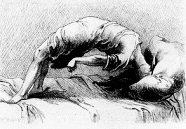
So the article for Discover Magazine tracks the history of conversion disorder (the condition that the girls have actually been diagnosed with), what it actually means (neurological symptoms without neurological damage) and the science of how we can experience unusual effects like blindness, paralysis or, in this case, tics, without actually having a neurological disorder.

As Freud fell out of fashion, many people assumed that the concept of hysteria had gone with him, but this is not the case. Although his theory about hysteria being caused by the “unconscious repression of trauma” isn’t very popular among scientists, it’s a simple fact that patients can develop what seem like neurological disorders—such as paralysis, blindness, seizures, and tics—despite having a perfectly functioning nervous system. And despite popular claims that the condition is rare or “doesn’t happen any more,” it still commonly presents in neurological clinics. Numerous studies have found that up to one-third of patients who consult with neurologists typically have symptoms that are not fully explained by neurological damage.


Link to Discover Crux piece on ‘Cheerleader hysteria’.

At least it’s not Twitter

Susan Greenfield, the neuroscientist who seems to have given up on science but constantly appears in the media telling people that ‘the internet can damage your brain,’ now has a website and a YouTube channel.

A sense of irony, however, seems still to be on pre-order from Amazon.
 

Link to susangreenfield.com but DON’T RISK IT (via @vinwalsh)

Dinner table neuropsychology

Common sense or ‘folk psychology‘ is what your average person in the street uses to make sense of human behaviour. It says people have affairs because their relationship is unsatisfying, that people steal because they want money and that people give to charity because they want to help people.

Scientists tend to say ‘well, it’s a bit more complicated than that’ but talk of conditional risk factors for behaviour won’t get you very far in a dinner table discussion so ‘folk psychology’ is a culturally agreed form of psychology that is acceptable to use in everyday explanation.

I’ve just been alerted to a fascinating study in the journal Public Understanding of Science looks at how the enthusiasm for pop neuroscience has encroached on ‘folk psychology’ to create a form of ‘folk neuropsychology’ where brain-based explanations are now becoming acceptable in everyday explanation.

Talking brains: a cognitive semantic analysis of an emerging folk neuropsychology

Paul Rodriguez

Public Understanding of Science July 2006 vol. 15 no. 3 301-330

What is the influence of neuroscience on the common sense way we talk about behavior and mental experience? This article examines this influence and the diffusion of neuroscience terms as it appears in everyday language that reflects shared cultural knowledge. In an unsolicited collection of speech acts and metaphors I show that the word “brain” often substitutes for “mind” and brain states are often asserted as the cause of mental states. I also present several examples of visual depictions of the brain, including modern brain scans, which have become the basis for new cultural symbols that are identified with mental experience. Taken together, the linguistic and visual brain metaphors highlight the concrete nature of the brain in contrast to the abstract nature of the mind. This, in turn, provides a physical dimension to the way we conceptualize mental phenomena in ordinary language. Thus, a modern folk neuropsychology is emerging which provides an alternative, reductionist, and sometimes competing network of concepts for explaining the mind in comparison to conventional folk psychology.

The full study is available online as a pdf if you want the details.
 

Link to DOI entry for study (via @cfernyhough)
pdf of full text.