How Ghostwatch haunted psychiatry

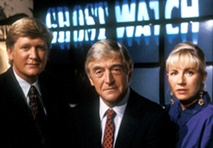
In 1992, the BBC broadcast Ghostwatch, one of the most controversial shows in television history and one that has had a curious and unexpected effect on the course of psychiatry.

The programme was introduced as a live report into a haunted house but in reality, it was fiction. This is now a common plot device, but the broadcast happened in 1992, years before even The Blair Witch Project used the documentary format to tell a fictional story and viewers were used to news-like programmes presenting news-like facts.

But despite some subtle nods to its fictional nature, the fact it was broadcast on Halloween and the ridiculous conclusion (the poltergeist eventually escapes from the house, takes control of the BBC and possesses presenter Michael Parkinson), many people believed the ‘documentary’ was real and that the programme was capturing these astounding events as they happened. You can watch it on YouTube and see how it was introduced.

Consequently, lots of people were genuinely frightened by the programme, including many children who were watching with their families. As a result, the BBC was flooded with calls and letters and were forced to start an investigation into the programme.

As the controversy raged on, an article appeared in the British Medical Journal, written by two doctors from Gulson Hospital in Coventry, reporting post-traumatic stress disorder (PTSD) in two children that was apparently caused by watching Ghostwatch.

Case 1

This boy had been frightened by Ghostwatch and had refused to watch the ending. He subsequently expressed fear of ghosts, witches, and the dark, constantly talking about them and seeking reassurance. He suffered panic attacks, refused to go upstairs alone, and slept with the bedroom light on. He had nightmares and daytime flashbacks and banged his head to remove thoughts of ghosts. He became increasingly clingy and was reluctant to go to school or to allow his mother to go out without him.

Although not without scepticism, several other cases were published as replies to these initial reports producing a small case series of PTSD caused by the TV show.

These minor cases drifted into the history of medicine until people started to debate what event should be considered a sufficiently traumatic event in order to diagnose PTSD.

At the moment, the current DSM-IV-TR diagnosis for PTSD says that “the person experienced, witnessed, or was confronted with an event or events that involved actual or threatened death or serious injury, or a threat to the physical integrity of self or others” and that the person’s response involved “intense fear, helplessness, or horror”.

It’s the “confronted with” part that allows people who have seen distressing things on TV and reacted with “intense fear, helplessness, or horror” to be diagnosed with PTSD.

At the time Ghostwatch was broadcast the criteria required that “the person has experienced an event that is outside the range usual human experience and that would be markedly distressing to almost anyone” which could similarly be interpreted to allow TV programmes to cause the disorder.

The new proposed criteria for the DSM-5 wouldn’t allow television-triggered PTSD. In fact it specifically says that exposure to traumatic events “does not apply to exposure through electronic media, television, movies, or pictures, unless this exposure is work related.”

Ghostwatch has played a part in changing how PTSD will be diagnosed. Although a major motivation was the wave of PTSD diagnoses after watching coverage of 9/11 on TV, the fictional ghost investigation is often cited in the medical literature as an example of how the existing criteria can lead to absurd consequences.

Although the programme is more famous for its effect on the history of media, it remains a minor but significant spectre in psychiatry’s past.
 

Link to GhostWatch entry on Wikipedia.

I predict a riot (based on a single study)

A group of black bloc researchers fed up with the lack of interest in replicating psychology studies has set up a strike force called the The Reproducibility Project that will recreate all 2008 studies from three major cognitive science journals.

That sound you can hear. That’s shit hitting the fan.

The Chronicle of Higher Education covers the project that’ll check-out the replicability of well-known studies.

So why not check? Well, for a lot of reasons. It’s time-consuming and doesn’t do much for your career to replicate other researchers’ findings. Journal editors aren’t exactly jazzed about publishing replications. And potentially undermining someone else’s research is not a good way to make friends.

Brian Nosek knows all that and he’s doing it anyway. Nosek, a professor of psychology at the University of Virginia, is one of the coordinators of the project. He’s careful not to make it sound as if he’s attacking his own field. “The project does not aim to single out anybody,” he says. He notes that being unable to replicate a finding is not the same as discovering that the finding is false. It’s not always possible to match research methods precisely, and researchers performing replications can make mistakes, too.

But still. If it turns out that a sizable percentage (a quarter? half?) of the results published in these three top psychology journals can’t be replicated, it’s not going to reflect well on the field or on the researchers whose papers didn’t pass the test. In the long run, coming to grips with the scope of the problem is almost certainly beneficial for everyone. In the short run, it might get ugly.

Unfortunately, psychology and science in general still see a non-replication as a failure (in fact, we even use the term ‘failed replication’).

This is clearly nonsense and checking the original finding is equally as valuable if the new data agree with, or disagree with, the original study.

Sadly, we’ll have to change the attitude of several generations of scientists to reset this rusty conceptual switch.

The Reproducibility Project have just got frustrated with the entrenched attitudes and have manned the barricades. And who cam blame them?
 

Link to Chronicle article on The Reproducibility Project.

An antidote to post-natal venom

Today’s Observer has a remarkably vicious article about post-natal depression in fathers that is quite breathtaking in both its ignorance and its venom:

“One notices more talk of postnatal depression in fathers. I use the word “talk” advisedly, scientific proof still being in short supply. Were hormonal levels tested? Was postpartum bruising measured? How about the emergence of a human head in what – in deference to what might be your leisurely Sunday breakfast – I will refer to as the front-bottom area? In fact, was there anything at all to suggest that the subject had, at any point, given birth, thus making sense of adding the term “postnatal” to depression?”

Firstly, journalist Barbara Ellen clearly doesn’t know the difference between postnatal (after a child has been born) and postpartum (after giving birth). It is equally as possible to describe postnatal depression in fathers as it is to describe men, or indeed, women, having a postnatal breakfast.

The statement about “scientific proof still being in short supply” is just odd considering she then goes on to cite a study of 8,431 fathers published in the Lancet on postnatal depresison.

However, this is by no means the only study, as there are plenty more where that came from.

Ellen is also convinced that postnatal depression is “directly related to the physical act of pregnancy and childbirth”.

It is surely the case that the act of being pregnant and giving birth does increase the risk of postpartum depression owing to hormonal changes, but we also know, for example, that disruption to sleep patterns is also a risk factor – something that could equally affect both partners.

This part, though, is just amazingly and needlessly cruel:

I would have been more concerned that the mothers in question were having to put up with such exhausting narcissists as partners – men incapable of hiding their sulky self-absorption, even while being watched by researchers for a period of, wait for it, three minutes. Even serial killer Ted Bundy managed to look “normal” for longer than that.

Sadly, that’s not the only insult thrown in to the mix and just to top it off, the piece finishes on a logical fallacy / insult combo – enter the false dichotomy applied to human suffering:

It was a long, hard road for womankind, getting postnatal depression recognised as a condition, and also to receive medical attention or even routine sympathy. It seems to me that saying men can also get it is just cheapening this achievement.

Mental health is important for all and we don’t cheapen anyone else’s suffering by recognising the pain of others.
 

Link to nasty opinion piece (via @mjrobbins)

City flow

Slate has a wonderful article on the science of city walking that examines how pedestrians behave when moving through the city and how our behaviour is being captured to model the flow of people through the urban landscape.

The piece is full of subtle observations of city psychology:

Block by block, they emerge: The way people drift toward the shady side of the street on hot days; the way women (in particular) avoid subway grating on the sidewalk; the way walking speeds are slower at midday than before or after work; the way people don’t like to maintain the same walking speed as a stranger next to them; the way tourists walk in inappropriately spread out groups (a phenomenon captured by this satirical call for “tourist lanes”); the way sidewalk planters, parking meters, and other obstacles reduce the “effective width” of sidewalks, which have been under slow and steady spatial assault since the early 20th century…

Since Zupan’s research, a few new behaviors have come on the scene. One behavior pointed out to me by traffic engineer Sam Schwartz is people pausing before they enter the stairs of a subway station to check their mobile device one last time. Who knows what this social hiccup does to the overall efficiency? Recent research by the New York City Department of Transportation has found that when walkers talk on the phone, they walk more slowly, and when they wear headphones, they actually walk faster. As Zupan told me, “There are a lot of really microscopic dynamics—as Yogi Berra said, ‘You can see a lot just by observing.’ ”

It also discusses how these behaviours are now being included in statistical models to help town planning and architecture.

It’s an interesting problem that has a parallel with thermodyanmics. While we need to understand the interaction of single particles it is the macro level and how it excerpts pressure on the system which allows us design better mechanisms.

By the way, the science of pedestrian dynamics is becoming increasingly important and if you want to read more, a recent Economist article comes highly recommended.
 

Link to Slate article ‘Sidewalk Science’.

Hallucinating fairy tales

Two cases of hallucinated fairy tales from the medical literature.

In this case [pdf] from The Bulletin of the Yamaguchi Medical School, a ballerina presents with magical hallucinations during an episode of psychosis:

…she felt as if she had become the heroine of “The Sleeping Beauty” and this feeling started manifesting itself in her daily behaviour.

She began to hear a voice coming from nowhere telling her that she was Cinderella. She had an experience in which upon seeing a pumpkin she ordered it to become a carriage and then saw a vivid image of a carriage like the one pictured in an illustration in the book.

She claimed that while practicing ballet, she did not feel that she was dancing by her own will, but instead felt as if she was a puppet controlled and manipulated by an unknown force.

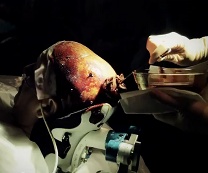
In this case from Epilepsy and Behavior a 33-year-old woman experiences a magical cat when her visual cortex is stimulated during brain surgery:

At one parieto-occipital electrode, stimulation with a current of 15 mA elicited the hallucination of a colored creature, spontaneously identified as the leading character of the fairy tale the patient was reading aloud at that moment—a cat (Puss in Boots, by Charles Perrault; the text did not include pictures)…

According to her description, the cat emerged from the script she was holding in front of her, and then moved to the right side of her bed, that is, to her lower right visual hemifield. The cat was 10–20 cm high and flat, two-dimensional like a sheet of paper. It then rotated itself 90° so that its feet pointed toward her and its head was toward the right. When she tried to look at it more closely, it quickly moved to the right and behind her back—the faster she turned her head, the quicker…

Reading picture books depicting different characters while being stimulated (e.g., a penguin, a miller), she again hallucinated a cat at her right forearm, similar to the one she had seen before. “It is only a feeling of what I see. For me it looks like Puss in Boots because of the large hat…, for me it is just a…. It is difficult to explain.”


pdf of Cinderella case.
Link to locked article of Puss in Boots case.

Works like magic

The New York Times has a short but thought-provoking piece on the benefits of supersition and magical thinking. This part particularly caught my eye:

For instance, in one study led by the psychologist Lysann Damisch of the University of Cologne, subjects were handed a golf ball, and half of them were told that the ball had been lucky so far. Those subjects with a “lucky” ball drained 35 percent more golf putts than those with a “regular” ball.

The results are from a 2010 study that looked at the effect of ‘lucky charms’ and good luck superstitions on performance, finding that they genuinely increase our ability to complete self-directed tasks through increased self-confidence.

It’s a fascinating result in light of the typical skeptical response that ‘lucky charms don’t work’ because in many cases they do. Importantly, however, they have their effect on tasks in which our own skill plays a significant part rather than those where random outcome is the prime factor.

In other words, they’d help you at poker but not at roulette.

And if you want to know more about how we acquire supersitions, Tom’s recent article for BBC Future breaks it down.
 

Link to NYT ‘In Defense of Superstition’.
Link to BBC Future article on supersitions acquisition.
Link to locked study.

Sound trip

A fascinating excerpt about a hallucinogenic drug called DiPT that only causes hearing distortions – from p310 of the book Hallucinations: Research and Practice:

A member of the tryptamine chemical family, diisopropyltryptamine (DiPT) is a fascinating substance because, unlike most hallucinogens, its effect are predominantly auditory. It is also probably less sensitive than other hallucinogens to the mindset of the user, the setting in which it is ingested, and other psychological considerations, perhaps because the auditory system has become less salient to the human organism as we have evolved into a vision based species.

In general, auditory pitch is perceived as lower than normal, and harmonious sounds lose their resonance with one another. This dissonance is even perceived by people with perfect pitch, which has some implications about where in the processing stream DiPT’s effects occur. Voices are also altered and disharmonious with each other.

DiPT has a few other known effects; it would seem to call for further investigation from those interested in the neurology of sound, music and verbal language processing. For example, it would be fascinating to know the effects of this substance on perceptions of tonal languages such as Chinese, Huichol, or Dogon; would it alter the words perceived as being spoken?


Link to book details.

The evolution of London street gangs

A fascinating article in the journal Crime and Delinquency tracks the evolution of London gangs from their ‘boys on the street’ beginnings to organised crime syndicates.

Sociologist James Densley has clearly spent a lot of time talking to gang members of the streets of London and has gained an intimate insight into how the organisations function and develop.

The article is full of quotes and is equally frightening and tragic. Not tragic, however, in the death and destruction sense, but sometimes just sad, as the bottom of the pile gang members struggle to live the high rolling life style they aspire to.

Gang members were eager to pull thick rolls of banknotes out of their trouser pockets to illustrate a typical “night’s work,” but amounts quoted often refer to revenue rather than income. They also struggled to transform cash into wealth. Only inner circle gang members had the human and social capital to launder profits through casinos, pawnbro- kers, money couriers, small bank deposits, and remittances transferred using money service businesses such as Western Union.

One interviewee resorted to depositing cash into the bank account of a wealthy private school girl he had known since primary school. In one high profile case, TerrorZone gang members used ticket machines at train stations to launder dye-stained banknotes obtained through cash-in- transit robberies. They purchased cheap fares, paid with high denomination stolen cash, and pocketed the “clean change.” In another example, gang members bought their own music on iTunes and Amazon websites using stolen credit cards in order to profit from the royalties.

It’s a brilliant study into the social organisation of London gangs that merits reading in full. Sadly, the full piece is locked behind a paywall but it seems a version has found its way online on this page.
 

Link to journal article online (via @crimepsychblog)
Link to page with pdf.

The future of fMRI

Nature has an article looking at the future of fMRI brain scanning in light of its long-lasting hype and recently discovered problems.

Brain scanning has become massively popular both in the scientific community and in the media, in great part because the pictures it produces seem quite intuitive: images of the brain with colours on it which apparently represent neural activity when we’re doing something.

However, the current situation with fMRI is nicely but inadvertantly captured in the article:

It has turned psychology “into a biological science”, says Richard Frackowiak…

[two sentences later]

Perhaps the biggest conundrum in fMRI is what, exactly, the technique is measuring.

fMRI has indeed turned much of psychology into a biological science but it hasn’t really given us a fundamentally deeper understanding of neuropsychology largely due to the measurement problem.

Recent revelations that fMRI studies are not as reliable as we thought and that some common ways of analysing data may be flawed have made many people question the utility of the technique – or at least, many of the past studies that may not have been well controlled.

The Nature article looks at where the science will go next, although I can’t help thinking that if it became less expensive the gloss would rub off – and then at least we could assess it a little more reasonably.

Sadly, scientists are no less attracted to bling.
 

Link to Nature article ‘Brain imaging: fMRI 2.0’

The complex motivations for self-harm

If you ask the average person in the street why some people cut themselves you’ll get the answer that they’re trying to ‘get attention’ which is a common but unhelpful stereotype.

The reality is that motivations for self-harming are complex. Some people find it helps control their intense moods by externalising the pain, other are punishing themselves, others are responding to psychosis, others self-harm for a combination of reasons.

A new study in the Journal of Adolescence looks at motivations in online accounts of self-harm and gives an insight into the various ways young people describe their actions.

The research aims to examine ‘magical thinking’ in explanations of self-harm but this doesn’t necesarilly mean magical thinking in the sense associated with psychosis (i.e. unknown forces and jumping to conclusions) but in terms of how metaphors and symbolism and woven into young people’s explanations.

Part of the article gives examples of various forms of symbolic ‘magical thinking’. It’s a bit wordy but it illustrates some of the psychological complexity of self-harm.

1. Magic substitutions. This term refers to the magic belief in the transformation of one category of phenomena into another, e.g. emotional pain into physical, bad self into blood. For example, “I can’t handle mental or emotional pain, so I turn it into something I can handle, which is physical pain.”

2. Transanimation of objects. Scored if an inanimate object, such as the blood, body or cutting instrument, is described as an active subject independent of the self. For example, “the blade is always so nice, like with every cut it lets the pain flow out; it lets it flood like a river of blood.” This example would also be scored as a magical substitution, where blood magically substitutes for emotional pain.

3. Transanimation of processes. Scored as present if a behaviour or phenomenon is seen as having autonomous agency. For example, “I still cut myself. Because to me that is my only true friend.”

4. Auto-relatedness. Scored if the narrator wrote about himself or herself as a separate person or a poorly integrated part. For example, “Don’t worry me, me will take care of you. It’s okay me, me is here now.”

5. Split between inside and outside. Scored if the narrator describes a metaphysical difference between the inside and outside of the body. For example, “I feel so ugly inside, so dark and cold, on the outside I’m not exactly warm, but I’m not as cold.”

6. Scars reminding and communicating. Scored if scars or cuts communicate with or remind the narrator or others. For example, “I feel better when I see the cuts on my arms, I don’t know why, I mean I hate them. But they seem to make me feel like I guess someone gets it, gets why I do this to myself.”

Unfortunately, the ‘doing it to get attention’ stereotype is also maintained by lots of health professionals as self-harm is also stigmatised by the people who treat these young people.

It’s a complex and frustrating behaviour and, therefore, one that needs some of the most careful consideration in psychiatry.
 

Link to locked study on magical thinking in self-harm.

Emperors, clothes, money

BBC Radio 4’s documentary series Analysis has a fascinating programme that explores the little-asked question ‘What is Money?’ – and the answer turns out to be scarily psychological.

In fact, the definition is very close to William Gibson’s description of cyberspace as a “mass consensual hallucination” because money relies on us to believe in it for it to work.

In other words, it’s largely a social concept we all sign up to and this episode of Analysis looks at the economics of how (or rather how not) money is tied to actual goods and services in the world and what this means in times of financial crisis.

It also turns out that the BBC are now linking to podcasts directly from the programme pages so even though we live our lives in the grip of a self-imposed imaginary power at least the Radio 4 website is now easier to use.
 

Link to Analysis episode ‘What is Money?’

On the challenges of studying suicide

Nature has an important article on why virtually no-one is trying to develop treatments to prevent suicide because research with such high-risk patients is almost impossible to get approved.

Most psychiatric drug trials today—the majority of which are industry sponsored—exclude anyone expressing thoughts of suicide. This is for ethical as well as practical reasons: physicians consider it taboo to give people on the brink of suicide an experimental drug, let alone a placebo, if other options are available, and many additional safety precautions are required to run trials in this vulnerable population. To complicate matters, few mental health experts are trained in how to conduct suicide research, and those who do are often afraid of lawsuits.

As a result, institutional review boards aren’t always so amenable to this kind of high-risk research. “It takes forever to get anything approved to do suicide prevention research, and it’s incredibly frustrating,” says Marjan Holloway, a clinical psychologist who is running clinical trials with suicidal military personnel at the Uniformed Services University of the Health Sciences in Bethesda, Maryland. Kate Comtois, a psychologist at the University of Washington in Seattle who has run psychotherapy trials in people with borderline personality disorder (BPD), expresses a similar concern. “I hear many stories from other institutions where people have basically given up recruiting high-risk patients because their institutional review boards are so cautious that they throw up roadblocks,” she says.

Suicide research also suffers from a practical problem related to the development of risk-assessments.

Normally, if I want to develop a way of predicting who will develop depression or not, I can assess a group of people and I can return later and see whether my predictions were right or not.

If I do the same with a suicide assessment and it suggests that several people are at high-risk of suicide, I have a moral duty to intervene and help them.

What complicates the issue is that this often applies regardless of the quality of my assessment. In other words, imagine that my suicide assessment is useless but I don’t know it – I will still intervene.

This means it’s often hard to get the assessment ‘off the ground’ in terms of its testing and development and this is why most scales are based on research looking at less serious outcomes, like having suicidal thoughts, that aren’t a very good predictor of whether someone will actually try to kill themselves or not.

This is also one reason why ethical review boards, and indeed researchers, are reluctant to get involved in this research.

Who wants to be known as someone who had several patients kill themselves during a trial to test an experimental form of suicide prediction? Despite the fact that, actually, virtually all the established scales are equally as ‘experimental’ due to lack of data.

The Nature article does a fantastic job of tackling these delicate issues and highlighting the need for better research on a crucial issue.
 

Link to Nature article ‘The Ultimate Endpoint’ (via @Neuro_Skeptic)

Inside The Ailing Brain

The Ailing Brain is a fantastic documentary series on the brain and its disorders that’s freely available online. It has been produced in Spanish but the first part is now on YouTube with English subtitles.

The series is among the best neuroscience documentary series I have even seen (along with Susan Greenfield’s Brain Story – made before she lost the plot) with the first part tackling the science and effects of neural implants.

If you see nothing else, go to 6:10 to watch what happens when a patient with an implanted deep brain stimulation device to treat Parkinson’s Disease switches off the machine. It’s an amazing sight.

But if you’ve got 20 minutes, you’d be very well advised to take some time to watch the whole episode as it’s both wonderfully produced and utterly compelling.

There are three programmes so far although the second and third haven’t been subtitled yet. But if you understandeas español, you can check out the whole series here. The second part is on memory disorders and the third is on mental illness.

I’ll post more on Mind Hacks when the other parts with English subtitles appear. Wonderful stuff.
 

Link to ‘Refurbished Brains’ episode with English subtitles.
Link to whole series in Spanish.

A bipolar expedition

In 2008, The Lancet published an amazing article on the ‘psychological effects of polar expeditions’ that contains a potted history of artic madness.

Unfortunately, the paper is locked, or shall we say, frozen, behind a paywall, although this snippet on the history of mental health problems on artic expeditions makes for quite surprising reading.

Accounts of expeditions throughout the 19th and early 20th centuries rarely mentioned episodes of psychiatric disturbance or interpersonal conflict, as such was not in keeping with the image of polar explorers, who were expected to have specific qualities and characteristics, such as strength and resilience. Nevertheless, equally rare was the polar expedition that did not have at least one member who was debilitated by depression, anxiety, paranoia, alcoholism, or sleep disorders. During Sir Douglas Mawson’s second Antarctic expedition (1910–14), that person was Sydney Jeffryes, the radio operator, whom Mawson believed “surely must be going off his base. During the day he sleeps badly, gets up for dinner looking bad, husky; mutters sitting on his bunk in the dark afterward.”

Frequently, the entire crew of a polar expedition would experience melancholy and depression, as was the case of the Belgica expedition to Antarctica in 1898–99. As described by the great polar explorer and expedition physician, Frederick A Cook, “The curtain of blackness which has fallen over the outer world of icy desolation has descended upon the inner world of our souls. Around the tables, in the laboratory, and in the forecastle, men are sitting about sad and dejected, lost in dreams of melancholy from which, now and then, one arouses with an empty attempt at enthusiasm.”

Cook tried to treat these symptoms by having crew members sit in front of large blazing fires. This baking treatment, as he called it, could be the first recorded attempt to use light therapy to treat symptoms of winter depression or seasonal affective disorder. Other expeditions, such as the Greely expedition of 1881–84, met a far worse fate than the Belgica exploration. In their attempt to establish a scientific base on Ellsmere Island in the Arctic, the crew of the Greely expedition was driven to mutiny, madness, suicide, and cannibalism, leaving six survivors of a crew of 25 men.


Link to frozen Lancet article.

Bring the love

The world of art, neuroscience and, er… competitive affection, collide in a delightful film about a love competition held in an fMRI scanner.

The piece is by film-maker Brent Hoff who seems to be making a series of films based on the idea of emotion competitions.

In this film, competitors are asked to ‘love someone as hard as they can’ while being brain scanned with the prize going to the person with the greatest amount of brain activity.

I was a bit thrown by the piece as I couldn’t work out whether it was a mis-representation of an actual study – the scanning is run by genuine Stanford researchers Melina Uncapher and Bob Dougherty – or an offbeat competition that brought some neuroscientists on board.

So I contacted Melina and got the back story to the unusual piece:

I should say at the outset that it was not intended to be a study, nor was it intended to discover anything new about the brain. It was intended to be a public outreach piece, to help raise awareness that science can be beautiful (in the hopes of advancing interest in science). The finding was simply this: when a group of participants were instructed to ruminate on the person or concept they associate with love, BOLD signal in the nucleus accumbens showed individual differences.

The filmmaker Brent has a thing for emotional competitions, beginning with a previous film entitled The Crying Competition. In that case, as in the Love Competition case, people were explicitly instructed that it was a competition among the other participants in the room, and the person with the highest/fastest respective metric wins.

Here, the person with the highest signal in nucleus accumbens was considered the winner. Contestants were instructed to this prior to entering in the scanner. They all met each other during the interviewing stage, so there was a bit of competitiveness in the air, but it was tempered by the fact that they were considering those they love.

Melina also explained that scans in the film not only show nucleus accumbens activity. They also included a functional connnectivity analysis – essentially seeing which other brain areas change their activity in unison with the nucleus accumbens, which is why you can also see activity across the brain.
 

Link to film The Love Competition (thanks Sally!)

The seers and oracles

An evocative passage from the 1976 book Hallucinogens and Shamanism about the use of the hallucinogenic Psilocybe mexicana mushroom by the Mazatec people of Mexico.

The Mazatecs say that the mushrooms speak. If you ask a shaman where his imagery comes from, he is likely to reply: I didn’t say it, the mushrooms did. The shamans who eat them; their function is to speak, they are the speakers who chant and sing the truth, they are the oral poets of their people, the doctors of the word, they who tell what is wrong and how to remedy it, the seers and oracles, the ones possessed by the voice.


Link to details of book.