Marketing anxiety

worry_image.jpgI recently went to a talk by Professor Nikolas Rose where he noted that for ¬£8,000 you can buy a report entitled ‘Anxiety Disorders: More Than Just a Comorbidity‘ from an online business intelligence company.

The report will apparently allow you to “assess the size of the drug-treated population”, “target physicians more effectively” and “identify commercial opportunities”.

An excerpt:

Anxiety disorders are considered the most prevalent of psychiatric disorders. However, poor diagnosis rates and treatment outcomes mean that there is still considerable scope for manufacturers to move into the anxiety market.

Yes, you read that right, it genuinely uses the phrase “anxiety market”.

It even promotes investment in ‘awareness campaigns’ (i.e. astroturfing) as a way of ‘maximising revenues’ in the drugs market.

Psychiatric drugs are a useful option for treating mental distress, although many professionals consider them over-used and over-promoted, particularly in light of the fact that the treatment with the longest duration of effect for anxiety disorders is cognitive behavioural therapy rather than medication (see pdf of NICE guidelines).

Unfortunately, the business intelligence report mentioned above reflects exactly the sort of approach to healthcare that makes people cynical of the mental health system.

Link to NICE review on treatment of anxiety disorders.
Link to report summary ‘Anxiety Disorders: More Than Just a Comorbidity’.

Neurology of headache

head_movement_blur.jpgBBC Radio 4’s medical programme Check Up just had a special on the most common neurological symptom – headache.

Neurologist Professor Peter Goadsby joins the programme to explain the current science and treatments. One particular focus is cluster headaches which are a particularly severe form that are notorious for beginning without warning.

As well as tackling the neuroscience of the various conditions, Professor Goadsby also passes on straightforward advice for managing and preventing headache in those who are susceptible.

Link to Check Up webpage on Headaches edition.
Realaudio of programme.

Thinking with a damaged brain

lost_brain.jpgJournalist Floyd Skoot has written an insightful article for Lost Magazine about his experiences of virus-induced brain damage and the curious effects it has had on his speech, movement and mathematical ability.

Skoot interlaces personal experience with his wide reading in the cognitive sciences to bring alive the generalities and clinical detachment typically found in neurological textbooks.

In their fascinating study, Brain Repair, an international trio of neuroscientists ‚Äî Donald G. Stein from America, Simon Brailowsky from Mexico, and Bruno Will from France ‚Äî report that after injury “both cortical and subcortical structures undergo dramatic changes in the pattern of blood flow and neural activity, even those structures that do not appear to be directly or primarily connected with the zone of injury.” From this observation, they conclude that “the entire brain ‚Äî not just the region around the area of damage ‚Äî reorganizes in response to brain injury.” The implications of this are staggering; my entire brain, the organ by which my very consciousness is controlled, was reorganized one day ten years ago. I went to sleep here and woke up there; the place looked the same but nothing in it worked the way it used to.

It’s rare to find such a carefully considered and well-informed account of brain damage from someone who has suffered the consequences.

One other source, however, is a book called Injured Brains of Medical Minds where medical people, including some neuroscientists and psychologists, discuss their own experience of brain injury. The book covers 120 years of accounts, with some only attributed to ‘anonymous’.

Link to article ‘Thinking with a damaged brain’.
Link to information on book ‘Injured Brains of Medical Minds’.

Excellent All in the Mind on epilepsy

blue_epilepsy.jpgLast week’s edition of ABC Radio National’s All in the Mind was an excellent programme on the science, experience and treatment of epilepsy.

The programme talks to several neurologists about what causes the curious condition and how it is being treated.

Also featured on the programmme is Gail Williams, a 16 year old girl who had epilepsy since the age of 4, an experience which included seeing unusual hallucinations before she lost consciousness.

Gail’s epilepsy was particularly serious, and was eventually given brain surgery which has since stopped her seizures. She describes the experience of the surgery and life before and after epilepsy.

This is one of the most comprehensive and engaging programmes I’ve yet heard on the condition. Half an hour well spent.

mp3 or realaudio of programme.
Link to transcript.
Link to Epilepsy Action information pages.

Amedeo puts bounty on free medical textbooks

bsk_logo.gifOpen-access medicine promoter Bernd Sebastian Kamps, has launched Amedeo Challenge – a project that offers bounties for authors to write high-quality medical textbooks that will be freely distributed over the internet.

Amedeo has already released free medical textbooks books on HIV and influenza, and now 12,500 euros are being offered for the authors of a book on tuberculosis.

Kamps has put this money up himself, but he’s also asking for sponsors to donate bounties for textbooks on a range of other medical conditons and specialities.

Of interest to readers here will be proposed books on Alzheimer’s Disease, Anaesthesiology, Genetics, Multiple Sclerosis, Neurology, Pain Medicine, Parkinson’s Disease and Psychiatry.

Unfortunately, it seems like only large sponsors are being gathered, but I’ve emailed Kamps to suggest a small donations system for individuals to donate towards a ‘running bounty’ for any book of their choice.

I’d happily donate 50 euros knowing that it would contribute towards the development of a high-quality, open-access psychiatry, neurology or neuropsychology textbook.

If you’d like the opportunity to do something similar, contact the project and suggest the same. It seems like many small donations could create large bounties in a relatively small amount of time.

UPDATE: Good news! I just got the following back from Bernd Sebastian Kamps:

Thank you for your suggestion: Your idea is brilliant (I had never thought of asking for small contributions).

We’ll open the PayPal account next week and by the end of the month, everything should be in place. I’ll keep you informed.

My ideas are rarely described as brilliant (my mum will be proud at least), but more importantly, we’ll post here when the Amedeo Challenge small donations system is in place.

Link to Amedeo Challenge.

2006-03-03 Spike activity

Quick links from the past week in mind and brain news:

spike.jpg

Measure of serotonin receptors in hippocampus found to be an early predictor of Alzheimer’s in some people.

Institute of Electrical and Electronics Engineers magazine Spectrum discusses the use of magnetic stimulation in the treatment of psychiatric disorder.

An explanation of a curious touch illusion called the “cutaneous rabbit” is offered after a recent brain-imaging study on the effect.

Electrical activity in the brain can predict which items will be remembered before they are encountered.

Babies as young as 18 months show willingness to help others, reports USA Today.

PsyBlog looks at the psychology of attributions in depressive thinking.

Cognitive Daily discusses an ingenious experiment that suggests that young babies have an understanding of others people’s goals.

Neuroscience books reviewed by Washington Post

white_book.jpgThe Washington Post has a brief review of three recently released neuroscience books: ‘The Three Pound Enigma’ by Shannon Moffett, ‘The Creating Brain’ by Nancy Andreasen and ‘The Mature Mind’ by Gene Cohen.

Consider the issue of creativity, which is central to Andreasen’s book and rates a chapter in Cohen’s. No one would doubt that the brain processes the thoughts and actions that later will be called “creative.” But how do creative thoughts differ from ordinary ones? The coincidence between what we label “mental disease” and “creativity” that so puzzled the Italian criminologist Cesare Lombroso more than a century ago is still a rather embarrassing finding. How can mental processes that we hold to be among the highest achievements of humankind be so uncomfortably close to those we consider defective or aberrant? And how come Einstein had such poor grooming habits, as Andreasen notes?

Link to review from Washington Post (via BrainBlog).

The science of genius at Dana

One more Dana event we forgot to feature yesterday was ‘Creating Brains: the science of genius‘ (thanks Christian!).

How does exceptional creativity develop in the human brain? How does a person’s brain move through a creative process to produce a sonnet or a song or an equation? The answer lies in understanding how we human beings, beginning with our prehistoric ancestors, have managed to wrestle ourselves out of dark caves and into a world ablaze with the brilliant fire and light of creative genius.

It is being held on 6th March, is free to book, and for those not resident in London, is being webcast live.

Link to ‘Creating Brains: the science of genius’.

Sex 400% better with partner?

couple_kiss.jpgAs recently noted by Christian, news broke last week of a study claiming that orgasm is “400% better” with a partner than with masturbation, based on measures of the neurohormone prolactin.

A couple of critiques have now appeared on the web that examine the experiment, its conclusions and the media handling of the story.

Petra Boyton tackles many of the unmentioned details of the study while Cory Silverberg notes that the study’s conclusions might be overgeneralised given the relatively limited activites that were recorded.

Just like in any other area of science, knowing the details of a sex study is crucially important for understanding its implications.

Unlike other areas of science, however, the details in these studies are, by their very nature, sexually explicit. This can mean that the popular media shys away from giving the crucial information and prefers to focus on the unqualified general conclusions, leaving the public misled both about sexual chemistry and sex research.

Perhaps with sex research, more than for other areas of science, tracking down the original research reports allows for a more critical insight into the researchers’ (or anyone else’s) conclusions.

Link to study abstract in the journal Biological Psychology.
Link to study summary from New Scientist.
Link to ‘Is sex with a partner truly 400% better?’ by Petra Boyton.
Link to ‘Orgasm Study Offers Status Quo and Universal Generalizations’ from Cory Silverberg.

Mind, brain, Dana and dinner

dana_centre_image.jpgLondon’s public-access science mecca the Dana Centre has just released its March schedule and it includes a number of intriguing mind and brain events.

The 9th March hosts ‘Tricks of the Psych Trade‘ which promises to open up some of the skills and techniques used in contemporary psychology to a live audience. The event is hosted both by professional psychologists and artists. The tickets are free but must be booked in advance.

An evening on 15th March discusses ‘Deep Brain Stimulation‘ – the practice of implanting permanent electrodes into the brain to treat neurological disorders like Parkinson’s disease. The panel includes a consultant neurosurgeon, a neurologist and a patient who has had the operation. This event is also free to book, and will be broadcast live over the web.

Finally, for those wanting dinner with their neuroscience, this month’s Dinner@Dana event on 22nd March aims to combine fine food with a discussion on ‘Decoding the mind’.

Link to ‘Tricks of the Psych Trade’ on 9th March.
Link to ‘Deep Brain Stimulation’ on 15th March.
Link to ‘Dinner@Dana: Decoding the mind’ on 22nd March.

Mind and brain portals launch on Wikipedia

Phrenology1.jpgWikipedia now has both a mind and brain portal and a psychology portal which promise not only to keep you up-to-date with the latest encyclopaedic happenings, but also to broadcast news and messages for the psychology and neuroscience community.

The mind and brain portal seems to have been kicked-off by Italian philosopher Francesco Franco (username Lacatosias) while the psychology portal was the brain-child of Zeligf.

Both have been launched in the last few weeks and like everything on Wikipedia, the quality improves as more people pitch in.

So if you’ve never thought of contributing to the world’s best and most dynamic online encyclopaedia, now’s your chance.

Link to Wikipedia Mind and Brain Portal.
Link to Wikipedia Psychology Portal.

Brain Tutor package available online

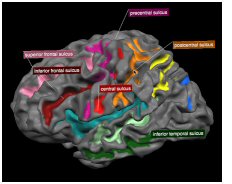
brain_tutor.jpgBrainTutor is a free-to-download neuroanatomy package from the same people that make the brain scan analysis software BrainVoyager.

It allows you to rotate and ‘slice through’ a brain scan in 2D and 3D, and click on specific areas to get their names. It’s straightforward to use, and is available for Linux, Mac OSX and Windows.

Some of the most important buttons are in the bottom right hand corner of the main window but are poorly labelled. They determine whether you are selecting the lobes, sulci (the ‘trenches’) or gyri (the ‘ridges’) when asking for on-screen labels.

If the surface of the brain looks slightly odd in the BrainTutor software, it’s because BrainVoyager tends to accentuate the sulci during visualisation. This is presumably to enable a better view of the brain activation when it occurs on the surface.

Link to Brain Tutor software (via Developing Intelligence).

Cognitive psychology of belief in the supernatural

american_scientist_2006-03.jpgThe current issue of American Scientist has an excellent feature article on ‘The Cognitive Psychology of Belief in the Supernatural’.

It argues that our ability to reason about other people’s intentions underlies many common supernatural beliefs. In other words, we have a tendency to see intentions and consciousness even in mechanical aspects of the world.

The author is psychologist Dr Jesse Bering who has been using cognitive psychology to try and understand areas that are traditionally tackled by philosophy, such as belief in souls, causation and existential meaning.

In one experiment, Bering used puppets to describe a story in which a mouse is eaten by an alligator. Children of different ages were then asked to describe the mouse’s ability to feel or know things after its death.

Younger children were more likely than older children to attribute thoughts, desires and even biological states to the mouse, suggesting that the idea of an afterlife is more likely to be intuitive and not one that is learned through ongoing cultural experience.

Jesse is interested in how some of the beliefs surrounding these issues might be influenced or related to common aspects of the mind that have evolved to solve other, more practical problems of life and survival.

The article is only available in the print edition, or online to subscribers, but Jesse has kindly offered to provide a copy of the article to anyone who contacts him by email.

Link to summary of article from American Scientist.
Link to homepage of Dr Jesse Bering.

Howl

who crashed through their minds in jail waiting for
   impossible criminals with golden heads and the
   charm of reality in their hearts who sang sweet
   blues to Alcatraz,
who retired to Mexico to cultivate a habit, or Rocky
   Mount to tender Buddha or Tangiers to boys
   or Southern Pacific to the black locomotive or
   Harvard to Narcissus to Woodlawn to the
   daisychain or grave,
who demanded sanity trials accusing the radio of hyp
   notism & were left with their insanity & their
   hands & a hung jury,
who threw potato salad at CCNY lecturers on Dadaism
   and subsequently presented themselves on the
   granite steps of the madhouse with shaven heads
   and harlequin speech of suicide, demanding in-
   stantaneous lobotomy,
and who were given instead the concrete void of insulin
   Metrazol electricity hydrotherapy psycho-
   therapy occupational therapy pingpong &
   amnesia,
who in humorless protest overturned only one symbolic
   pingpong table, resting briefly in catatonia,
   returning years later truly bald except for a wig of
   blood, and tears and fingers, to the visible mad
   man doom of the wards of the madtowns of the
   East,
Pilgrim State’s Rockland’s and Greystone’s foetid
   halls, bickering with the echoes of the soul, rock-
   ing and rolling in the midnight solitude-bench
   dolmen-realms of love, dream of life a night-
   mare, bodies turned to stone as heavy as the
   moon

Excerpt from ‘Howl‘ by poet Allen Ginsberg. The poem was dedicated to Ginsberg’s friend, Carl Solomon, whom he met while they were both patients at Rockland Psychiatric Hospital in New York.

Link to full text of ‘Howl’.

Chris McKinstry has left the building

ChirsMcKinstryJune2001.jpgControversial artificial intelligence researcher and maverick cognitive science visionary Chris McKinstry took his own life last month.

Chris founded Mindpixel, a collaborative AI project which aimed to collate a mass of machine-usable human knowledge online. He also ran the now offline Mindpixel blog, where he posted AI news and opinions.

His ideas were often highly speculative, but always demonstrated a keen passion for understanding the mind and brain. A recent story for kuro5hin.org was an example of this, where he discussed his entry for the AI chatbot competition the Loebner Prize in terms of a seven dimensional hyper-surface.

Chris posted his intentions to end his life online, and, cognitive scientist to the end, finished it thus:

Oh and BTW, the mind is a maximum hypersurface and thought a trajectory on it and the amygdala and hippocampus are Hopf maps of it. No one knew this before me, and it seems no one cares. So be it. My time will come in a hundred or a thousand years when the idea again returns.

Link to Wikipedia entry for Chris McKinstry.
Link to obituary from KBand.

Secret LSD tests now being compensated

lsd_soldier.jpgBritish secret intelligence service MI6 has agreed to compensate soldiers who were dosed with LSD without their consent during the 1950s, according to an article in The Guardian.

Similar experiments were carried out by a number of governments during the 1950s and 60s, in an attempt to create ‘mind control programmes’ and ‘truth drugs’.

One of the most notorius projects was a CIA run project known as MKULTRA that unethically tested a number of dangerous techniques on unwitting members of the public in an attempt to understand ‘mind control’.

In one particularly bizarre project, known as Operation Midnight Climax, the CIA created a brothel, spiked the drinks of punters with LSD, and secretly filmed the effects.

These experiments were largely initiated in reaction to concerns over ‘brain washing’, which American prisoners of war had been subjected to after being captured in Korea.

One LSD test on British Troops was recorded and is the subject of a well-known video, now widely circulated on the internet.

The compensation recently paid to ex-British troops echoes a similar payout to ex-patients of the Canadian psychiatric care who had similar unethical experiments conducted upon them, largely under the direction of the one-time head of the World Psychiatric Association Dr Ewan Cameron.

Link to ‘MI6 pays out over secret LSD mind control tests’ from The Guardian.
Link to ‘MI6 payouts over secret LSD tests’ from BBC News.
Link to Wikipedia page on MKULTRA.
Link to video of LSD testing on British troops.