Mechanical brain sculptures

Introspection2001_lewis_tardy.jpgNeurofuture is back with a bang after a late-summer sabbatical and has alerted me to some wonderful mechanical brain sculptures by artist Lewis Tardy.

Tardy has created a range of mechanical people and beasts all rendered as if they were powered by complex clockwork and hydraulics.

Some of these include cut-away heads, such as the one featured, with the thinking mechanisms exposed for the world to inspect.

Link to ‘Mechanical brains’ on Neurofuture.
Link to Lewis Tardy’s website.

Military applications of neuroscience

cammo_brain.jpgThis week’s Nature has a fascinating and freely-accessible review (pdf) of Jonathan Moreno’s new book Mind Wars (ISBN 1932594167) that tackles both the deployment of military neuroscience research on the battlefield and the ethical issues raised by these new technologies.

Welcome to the world of Mind Wars and the military application of neuroscience, which is the subject of this fascinating and sometimes unsettling book. As the author Jonathan Moreno reveals, the US military has a longstanding interest in brain research and, as scientific understanding continues to advance, so does its appeal to the national security establishment.

The Department of Defense conducts much of its research in secret, and some of it would probably fare poorly in open peer review – for example, the military continued to fund psychic research until 1995 – but with an annual research and development budget of at least $68 billion, it can presumably afford to leave no stone unturned.

Partly because its activities are more visible, Moreno focuses especially on the Defense Advanced Research Projects Agency (DARPA), which supports unclassified academic research with potential military applications. DARPA has a distinguished record of supporting innovation, including the Internet, so its involvement in brain research must be taken seriously.

Nature has put some relevant links online from the review, so you can follow up the topic if you’re interested.

There’s also more about the book, including some (very) brief excerpts and a Q&A with the author on the Dana website.

It’s also worth noting that Moreno will be discussing the topic and his new book on November 28th in New York, at an event hosted by The New York Academy of Sciences.

pdf of review of Mind Wars (thanks Tom!).
Link to info on book from Dana Press.
Link to details of Moreno ‘Mind Wars’ talk in New York.

The madness of King Eadbald

Eadbald_coin_image.jpg

“A Saxon king of the early seventh century, Eadbald, was described in the language of the early eighth century as troubled by frequent fits of insanity and ‘by the attack of a foul spirit’ after marrying his late father’s second wife.

But he had also rejected Christianity which his father Ethelbert had taken up, and the missionaries in Kent were going through a difficult period; so, apart from the meaninglessness of the description, some character assassination may be involved in the record.”

From p48 of Mental Disorder in Earlier Britain (ISBN 0708305628) by Basil Clarke.

Nature Neuroscience launches monthly podcast

NatureNeuroscienceOct2006.jpgI just discovered from The Neurophilosopher’s blog that Nature Neuroscience have launched a (presumably monthly) podcast where the latest in neuroscience research is discussed.

It seems that it will only discuss research published in Nature journals, however.

This may seem surprising to those unaware how science and scientific publishing works, but it makes good business sense for Nature.

Scientific journals make money on the basis of advertising (a large part) and readership (through charging for subscriptions, online access and single article reprints).

They vie to be the most prestigious journals by having the widest readership and attracting the best research for publication.

In turn, scientists’ careers are often based on getting their research published in the most prestigious journals because this should guaruntee it is widely read and has the greatest impact.

Having a journal-sponsored podcast that might discuss and, therefore, promote, any of the articles in the publication gives scientists an extra reason to submit their work to the journal.

Whereas discussing research from competitors’ journals would just be giving free advertising to commercial rivals.

That said, the Nature journals are among the most prestigious science publications, and a monthly discussion even of their articles alone is likely to keep you informed of some of the most important developments in neuroscience.

Link to Nature Neuroscience podcast.

2006-10-27 Spike activity

Quick links from the past week in mind and brain news:

spike.jpg

New Scientist reports that a new surveillance system can distinguish between violent and non-violent behaviour (with video).

Cognitive Daily asks ‘do deadlines help procrastinators?’

Review of ’23 Problems in Systems Neuroscience’ from American Scientist. What is systems neuroscience?

Damage to the brain could unleash artistic talent, reports ABC News, covering a new paper in medical journal Neurology.

Paper in Science on ‘stereotype threat’ (see previously on Mind Hacks) affecting women’s maths performance is covered by Seed Magazine.

Forbes magazine lists some of the physical and psychological benefits of sex.

More on inheriting facial expressions: The Economist has a well-written article on the recent ingenious study.

Review of ‘For Matthew and Others: Journeys with Schizophrenia’ art exhibition from The Australian.

People who read more fiction have higher levels of empathy, reports Frontal Cortex.

Developing Intelligence has a fantastic review of neuroscience-of-self book ‘I of the Vortex’.

UK has ‘lowest ever’ suicide rate, reports BBC News.

Anti-sleep drugs for UK troops

alert_eye.jpgSurely this isn’t news? BBC News is reporting that ‘stay-up-forever’ drug modafinil has been tested on UK troops.

The drug, which prevents sleep and increases cognitive performance but does not cause the same ‘wired’ effect as amphetamines, has been used by the US military for several years.

One of the problems with amphetamines, the previous military drug of choice, is that over time it vastly increases the risk of paranoia and psychosis (obviously not good for heavily armed soldiers), whereas the risk with modafinil seems, at least at this stage, to be minimal in comparison.

It has been previously reported that the UK Ministry of Defence bought thousands of doses of modafinil prior to 2004.

It’s hardly a shock that they’ve been given to troops in an attempt to give them a cognitive edge over the opposition.

Did anyone really think that they were bought in case there was a massive influx of soldiers with narcolepsy?

One bizarre aspect, however, is the BBC News story reports that modafinil pills are called ‘zombies’ on the “drug scene”.

Modafinil is noted as having virtually no pleasurable effects, making it a poor candidate for a recreational drug. Furthermore, there seems to be few references to the nickname on the net.

Brain warehouse

brain_warehouse_image.jpgThe UK government have launched a campaign to warn 11-15 year-olds about the dangers of cannabis, using an ironic and lighthearted website and advert.

They’re both based around the concept of a high-street retailer for new brains. Teenagers who have trouble with their brains due to cannabis use can trade theirs in for new models.

These include the ‘Freakout-Free X50’ (Free yourself from paranoid freakouts once and for all with this little beauty!) and the ‘Spewstopper’ (Whether smoking a spliff or a bong, say no to embarrassing puking sessions!).

The comical tone is obviously meant to connect with teenagers who are immune, on principal, to dire warnings about partaking in illegal drugs.

Two UK mental health charities have criticised the adverts for not warning about the more extreme and unlikely outcomes of cannabis use (such as schizophrenia) and even for potentially increasing the popularity of cannabis.

Actually, it seems that the adverts are focusing much more on the short-term unpleasant effects, perhaps, as these are the least socially acceptable among teenagers.

Maybe this is in the hope that this will reduce consumption and have a knock-on benefit for mental health.

Like many drug campaigns I remember from teenage years, my concern is that this campaign is still a little unbalanced.

I suspect not describing the positive as well as the negative aspects of drugs leads people to disbelieve most things they’ve heard from a particular source if they subsequently take something and thoroughly enjoy themselves, contrary to the ‘received wisdom’.

This is purely speculation on my part, however, as I’ve had little luck tracking down relevant research, so the results of any studies on the effectiveness of different types of drug education would be particularly interesting and gratefully received.

Link to Brain Warehouse website.

Painting through Alzheimer’s

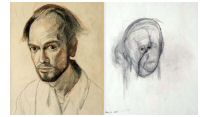
Utermohlen_Alzheimer's.jpgThere’s a short but fascinating piece in the New York Times on how the work of artist William Utermohlen was affected by the progression of Alzheimer’s disease.

Utermohlen produced some striking pieces during his career and continued to paint after being diagnosed with the degenerative brain disorder.

The impact of the disorder on his creativity can be seen in a web slide show created to accompany the article.

It’s particularly interesting that the impact of the paintings don’t always seem to diminish with his reduction in technical skill, with some of the later paintings (particularly the one from 1998) remaining both vivid and haunting.

Link to NYT article ‘Self-Portraits Chronicle a Descent Into Alzheimer‚Äôs’.
Link to William Utermohlen gallery.
Link to information on Alzheimer’s disease.

Travelling with…

oliversacks.jpg

“In the Revised Confessions de Quincey tell us how much he suffered from ‘the pressure on my heart from the incommunicable.’ This pressure, no doubt, is known to us all; but it may approach the most agonising level in patients whose sufferings are not only intense, but so strange as to seem, at first, beyond the possibilities of communication.

Such difficulties in communication, clearly, can arise from the very strangeness, the extraordinary quality, of patients’ problems, their experience; but an equal, if not greater difficulty may be created by physicians themselves who, in effect, decline to listen to their patients, to treat them as equals, and who are prone to adopt – from force of habit, or from a less excusable sense of professional apartness and superiority – an approach and language which effectively prevent any real communication between themselves and their patients.

Thus patients may be subjected to interrogation and examination which smack of the schoolroom and courtroom – questions of the form: ‘Do you have this… do you have that…? which by their categorical nature demand categorical answers (yes and no answers, answers in terms of this and that).

Such an approach forecloses the possibility of learning anything new, and prevents the possibility of forming a picture, or pictures, of what it is like to be as one is.

The fundamental questions – ‘How are you?’ and ‘What is it like? – can only be answered analogically, allusively, in terms of ‘as if’ and likeness, by images, similitudes, models, metaphors, that is, by evocations of one sort and another.

There can be no reaching out into the realm of the incommunicable (or scarcely communicable) unless the physician becomes a fellow traveller, a fellow explorer, continually moving with his patients, discovering with them a vivid, exact a figurative language which will reach out towards the incommunicable. Together they must create languages which bridge the gulf between physician and patient, the gulf which separates one man from another.

Such an approach is neither ‘subjective’ nor ‘objective’; it is (in Rosenstock-Hussey’s term) ‘trajective‘. Neither seeing the patient as an impersonal object nor subjecting him to identifications and projections of himself, the physician must proceed by sympathy or empathy, proceeding in company with the patient, sharing his experiences and feelings and thoughts, the inner conceptions which shape his behaviour.

He must feel (or imagine) how his patient is feeling, without ever losing the sense of himself; he must inhabit, simultaneously, two frames of reference and make it possible for the patient to do likewise.”

Oliver Sacks discusses the psychology of communicating with distressed or impaired people, in footnote 104 of Awakenings.

Neuropsychology of hypnosis

hypnosis_pocket_watch.jpgSeed Magazine discusses how researchers are exploring the neuropsychology of hypnosis to understand this curious state of mind.

Hypnosis fell out of favour in psychological circles as it got taken up by ‘stage hypnotists’, and researchers found out that, contrary to the movie stereotypes, hypnosis actually increases the number of false memories recalled, rather than making remembering more accurate.

Furthermore, ‘hypnotherapy’ seems not to be hugely effective on the current evidence. For example, trials of hypnosis for pain relief when giving birth and smoking cessation have shown mixed results, although it is known to be difficult to design effective trials because hypnotisable individuals are known to be psychologically different from others.

What is a reliable finding, however, is that in particularly susceptible individuals, hypnosis can be used to cause unusual experiences.

Particularly, it is being used as a model of what is alternatively called ‘conversion hysteria’ or ‘conversion disorder‘, where a person might show physical symptoms, such as paralysis, but where they arise from a psychological cause.

Recent experiments have used hypnosis as a way of causing a temporary and reversible paralysis. Participants are then put in a brain scanner to determine which parts of the brain are active, and compared to people with diagnosed conversion disorder.

It turns out that hysterical paralysis may involve similar brain areas to hypnotic paralysis, but shows different patterns of activation to people asked to ‘fake’ a paralysis.

These are interesting findings and may provide an insight into the operation of how the unconscious influences our conscious life.

Nevertheless, thorough investigations into the neuroscience of hypnotic states will still need to be conducted, and Seed Magazine tackles some of the latest research in this area.

Link to article ‘Science finally tackles hypnosis’.

Encephalon 9 arrives

red_bg_brain.jpgThe latest edition of the Encephalon psychology and neuroscience writing carnival has just arrived on the net with plenty of musings on the mind and brain to keep you occupied.

Favourites include an article on the balance of activation in the cortical hemispheres and the link to paranormal experiences, and a discussion of a recent critical article on the cognitive neuroscience of education.

SciAmMind on microexpressions and gestures

sciammind_oct2006.jpgA new issue of Scientific American Mind has arrived on the shelves with a couple of freely accessible articles on microexpressions and communication through gestures available online.

Microexpressions are like any other facial expression, but they are very subtle and occur incredibly quickly, coming and going in several hundred milliseconds.

Paul Ekman, largely known for his discovery that many facial expressions of emotion were universal, has been particularly keen on researching microexpressions in recent years.

It is thought that these fleeting expressions give away the inner emotional state (and maybe whether someone is lying), because they are under less conscious control than more obvious facial expressions.

The other freely available article is on the gestures we make when talking, that potentially give an insight into the hidden psychology that belies our words.

Our body movements always convey something about us to other people. The body “speaks” whether we are sitting or standing, talking or just listening. On a blind date, how the two individuals position themselves tells a great deal about how the evening will unfold: Is she leaning in to him or away? Is his smile genuine or forced?

The same is true of gestures. Almost always involuntary, they tip us off to love, hate, humility and deceit. Yet for years, scientists spent surprisingly little time studying them, because the researchers presumed that hand and arm movements were mere by-products of verbal communication. That view changed during the 1990s, in part because of the influential work of psycholinguist David McNeill at the University of Chicago.

Link to contents of October 2006 SciAmMind.
Link to article ‘A Look Tells All’.
Link to artice ‘Gestures Offer Insight’.

Art, psychology or empty room?

gallery_space_recall_image.jpgI arrived in Cardiff on Friday to give a talk with artist Simon Pope on our art / science collaboration Walking Here and There to find the exhibition made the front page of the South Wales Echo with the headline “It’s an empty room… So why on earth do they think it is art?”.

The exhibition, entitled ‘Gallery Space Recall‘, is indeed an empty gallery, with nothing but the words ‘You are invited to recall from memory a walk through a gallery space’ written on the wall.

The only other component is that we’ve trained the gallery assistants to use a few psychological techniques to encourage people to expand on the impact and significance of their memories while they take visitors around the gallery. Vistors are encouraged to recall a previous gallery space they’ve visited, as if their remembered exhibition were in the space of Chapter Arts Centre.

With all credit to Simon, while the work is part of Walking Here and There, the wonderful idea for this part was all his.

The exhibition aims to highlight the role of memory and location in how we understand and appreciate art, and relate to our environment.

Artists aim to convey meaning with their work, communicating concepts and invoking ideas in new and challenging ways. However, psychology and neuroscience has known for over a century that meaning is something which is constructed and reconstructed by the mind and brain (Bartlett’s ‘War of the Ghosts‘ experiment is a famous example).

baby_gallery_space_recall.jpgThe perception of everything from the simple visual world to complexity of visual art is directly dependent on our past experience. This is known as ‘top-down’ processing [pdf], and is obvious in the brain where the visual system is massively connected to memory areas.

Also, the personal significance of art depends on your memories. A piece might invoke strong emotions because it connects with past experiences, in turn making it more memorable, as emotionally arousing events are recalled better than others.

So where does the meaning in art actually lie? In the object itself, or in your interpretation of it?

Gallery Space Recall removes the object and relies entirely on your memory. So where does the art exist here? In the visitor’s mind? In a past gallery recalled by the visitor? In the mind of the gallery assistant who is listening to the visitor reminisce? In Simon’s idea? Or, perhaps, all of them?

This is exactly where Simon’s work and my work overlap, as we’re both interested in how memory and its distortions affect our understanding of the world.

It’s interesting that none of the artists interviewed for the outraged South Wales Echo article actually objected to the idea (in fact, they seemed to quite like it), but just to the fact that an empty gallery got funded.

gallery_space_recall_conversation.jpgI think we can confidently say that this is the cheapest exhibition that the gallery has ever put on, actually leaving more money for other artists. Consequently, it’s probably the cheapest publicity they’ve ever had too.

Further stages of the collaboration look at how the breakdown of memory, in delusions and psychosis, highlight the importance of remembering in our perception of reality.

The slides from the talk are online [powerpoint format] if you want more information, or keep tabs on the Walking Here and There website to see how the project progresses.

We’ll also be discussing the project at Goldsmith’s College, University of London, this Wednesday at 4pm (details here) and the exhibition is on until November 5th.

Link to Walking Here and There website.
Link to description of Gallery Space Recall.
Link to photos of opening.
Link to ‘Art? Or just an empty room?’ from the South Wales Echo.
ppt file of powerpoint slides from gallery talk.