 The New York Times has an important article on how Attention Deficit Disorder, often known as ADHD, has been ‘marketed’ alongside sales of stimulant medication to the point where leading ADHD researchers are becoming alarmed at the scale of diagnosis and drug treatment.
It’s worth noting that although the article focuses on ADHD, it is really a case study in how psychiatric drug marketing often works.
This is the typical pattern: a disorder is defined and a reliable diagnosis is created. A medication is tested and found to be effective – although studies which show negative effects might never be published.
It is worth highlighting that the ‘gold standard’ diagnosis usually describes a set of symptoms that are genuinely linked to significant distress or disability.
Then, marketing money aims to ‘raise awareness’ of the condition to both doctors and the public. This may be through explicit drug company adverts, by sponsoring medical training that promotes a particular drug, or by heavily funding select patient advocacy groups that campaign for wider diagnosis and drug treatment.
This implicitly encourages diagnosis to be made away from the ‘gold standard’ assessment – which often involves an expensive and time-consuming structured assessment by specialists.
This means that much of the diagnosis and prescribing happens by local doctors and is often prompted by patients turning up with newspaper articles, adverts, or the results of supposedly non-diagnostic diagnostic quizzes in their hands. There are many more marketing tricks of the trade which the article goes through in detail.
As the initial market begins to become saturated, drug companies will often aim to ‘expand’ into other areas by sponsoring studies into the same condition in another age group and treating the condition as an ‘add on’ to another disorder – each of which allows them to officially market the drug for these conditions.
However, fines for illegally marketing drugs for non-approved conditions are now commonplace are many think that these are just considered as calculated financial risks by pharmaceutical companies.
The New York Times is particularly important because it tracks the entire web of marketing activity – that aside from the traditional medical slant – also includes pop stars, material for kids, TV presenters, websites and bloggers.
It is a eye-opening guide to the burgeoning world of ADHD promotion but is really just a case study of how psychiatric drug marketing works. By the way, don’t miss the video that analyses the marketing material.
Essential stuff.
Link to NYT article ‘The Selling of Attention Deficit Disorder’
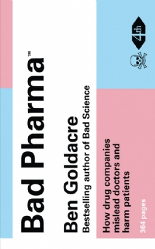 Ben Goldacre might be quite surprised to hear he’s written a sociology book, but for the second in our series on books about how the science of mind, brain and mental health meet society,

 AddictionBlog has an amazing
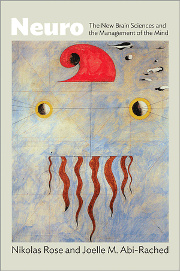 This is the first of three posts that will cover three important books about how the science of mind, brain and mental health, interfaces with society at large.
 If you only read one psychology article in the next few months, make it the startling and unsettling Atlantic
  A series of ‘bizarre delusions’ from patients diagnosed with schizophrenia described in a new
  I’ve got an
 Mind Hacks