Fantastic introduction to MRI brain scanning physics

Magnetic resonance imaging is the most popular method for scanning the brain both for research and for clinical investigations. I’ve just found a wonderfully written article that gives a great introduction to the physics of how MRI scanners work.

It is both clearly written for the non-specialist and fantastically complete. This is a rare and valuable combination.

There are some other guides to MRI physics which are also wonderfully written but most lack the sufficient detail that would bring you up to ‘entry level’ in the field.

For example, How Stuff Work’s guide to MRI is a great place to start, but it won’t tell you about why and how T1 and T2 imaging are different, or any of the other things you need to know to understand the fundamentals of MRI technology.

You don’t need to know maths to understand the article (the downfall of most ‘introductory’ guides to MRI) and the author uses wonderfully clear analogies throughout.

The article is written by radiologist Robert Pooley, who should give himself a pat on the back for such a great job. It was published as an open-access paper in the journal RadioGraphics. Perfection!

Link to article ‘Fundamental Physics of MR Imaging’.

2008-05-30 Spike activity

ABC Radio National’s The Philosopher’s Zone broadcasts part two of its series on the philosophy of suicide.

PsyBlog has been rocking the cognitive biases recently. This is a fascinating article on ‘Four Belief Biases That Can Reduce Pleasure‘.

Columbia University has an archive of video lectures by some of the ‘big names’ in psychology and neuroscience.

The BPS Research Digest covers a new study that finds that harsh discipline actually makes aggressive children worse.

Calm Zone. A fantastic UK initiative to encourage young inner city males to get help for mental health difficulties.

“Why we posted epilepsy film to YouTube”. The Guardian continues the debate over whether video of people having seizures is education or exploitation.

Time magazine wonder about the possibilities of prescribing our own antidepressants.

Pete Doherty says ‘a mind is a terrible thing to waste’. No it’s not the Pete Doherty you’re thinking of.

The All in the Mind blog finds some interesting commentary on movement, the mind, cognition and the car.

Psychologist David Rabiner asks does mindfulness meditation help adults and teens with ADHD? in an article for Sharp Brains.

The Situationist discusses whether we’re living in an age of increasing child anxiety?

Gratingly banal headline obscures an interesting article from The New York Times on the neurobiology of cigarette addiction.

Not Quite Rocket Science covers recent research on how perceived social hierarchy affects cognitive abilities. The Economist on the same.

A fantastic 2002 article from Wired on the curious and death of psychiatrist Elisabeth Targ, who completed the (in)famous prayer healing (not quite so) randomised controlled trials.

Brain Windows is a fantastic looking neuroscience blog that seems to have been dormant for a couple of months. Plenty of good articles there though.

Forgetting Is the New Normal according to an excellent brief article on memory and ageing from Time magazine.

Furious Seasons looks at some new broadsides in the debate over the effectiveness of antidepressants.

Can you teach happiness? ABC Radio National’s education programme EdPod examines whether it’s possible to teach positive psychology to school children.

Inspirational Kid’s Company founder and child therapist Camila Batmanghelidjh is interviewed in The Independent.

Time magazine looks at the psychology of Second Life.

The ‘seven challenges of psychotherapy‘ are discussed by PsychCentral.

Miracle fruit trips out flavours

The New York Times have an article on the truly miraculous miracle fruit, a plant that contains a unique protein that transforms even the most intensely acidic flavours into sweet taste sensations.

“You pop it in your mouth and scrape the pulp off the seed, swirl it around and hold it in your mouth for about a minute,” he said. “Then you’re ready to go.” He ushered his guests to a table piled with citrus wedges, cheeses, Brussels sprouts, mustard, vinegars, pickles, dark beers, strawberries and cheap tequila, which Mr. Aliquo promised would now taste like top-shelf Patrón.

The miracle fruit, Synsepalum dulcificum, is native to West Africa and has been known to Westerners since the 18th century. The cause of the reaction is a protein called miraculin, which binds with the taste buds and acts as a sweetness inducer when it comes in contact with acids, according to a scientist who has studied the fruit, Linda Bartoshuk at the University of Florida’s Center for Smell and Taste.

Apparently, some pioneering barmen have been experimenting with miracle fruit cocktails and the article has video of a ‘flavour tripping party’ where people get together to try the small red berry before sampling a while range of foods which take on a strange news flavour.

Link to NYT article ‘A Tiny Fruit That Tricks the Tongue’.

History of american psychiatry, in two obituaries

The last few months have seen the passing of Frank Ayd and Charles Brenner, two huge figures in American psychiatry. Their obituaries in The New York Times reflect the ideological divide between psychoanalysis and pharmacotherapy that defined stateside psychiatry during the 20th century.

Ayd, pictured top, was one of the pioneers of antipsychotic drug therapy in the states. Although it was already popular among European psychiatrists, Ayd was one of the first to try chlorpromazine (more commonly known as Thorazine) with some of his outpatients.

As well as noticing the huge potential for the drug, virtually the first ever effective treatment for severe psychosis, he was also persistent in publicising the disabling side-effects when many others were dismissing them as part of the illness or ‘hysterical’ in nature.

In contrast, Brenner was a mainstay of mainstream Freudian psychiatry for most of his life.

Interestingly, both Brenner and Ayd came from similar backgrounds. In their early years, both published on drug treatments and lobotomy (then at the height of its popularity), although Brenner later trained as a psychoanalyst and began to focus almost entirely on a Freudian approach.

Brenner is perhaps best known for his ‘conflict theory’, first presented in an influential paper entitled The Mind as Conflict and Compromise Formation.

This overturned the distinction between the Id, Ego and Superego and the Freud’s idea of the unconscious as being nothing more than metaphors, and proposed a model of the mind which we would now recognise as a constraint satisfaction approach – where the mind attempts the best compromise between the satisfaction of drives while accounting for emotions and defences.

While Anglo-European psychiatry tended to lean toward the biological approach, in the mid-20th century American psychiatry was largely Freudian. This is partly to do with the differing practice traditions, European psychiatry was largely hospital based and focused on psychosis while American psychiatry was largely concerned with office practice and neurosis.

The shift to a more scientific approach to psychiatry in the 1970s was led by several US psychiatry departments who were more Anglo-European influenced (Washington University, Johns Hopkins, Iowa Psychiatric Hospital, New York Psychiatric Institute).

This hit psychoanalytic psychiatry hard. One of the major blows was the 1980 publication of the DSM-III diagnostic manual that threw out almost all Freudian-influenced diagnoses after studies found them unreliable.

Link to NYT obituary of Frank Ayd.
Link to NYT obituary of Charles Brenner.

Encephalon 46 arrives

The latest edition of the Encephalon psychology and neuroscience writing carnival has just appeared online, ably hosted by The Neurocritic.

A couple of my favourites include an article on the psychology of superstition from PodBlack and one hot from the Association for Psychological Science convention, where Cognitive Daily report on cognitive influences on calculation.

It’s a bumper edition and it even has some video of an intriguing experiment on ‘distributive justice’. You’ll have to read more to find out.

Link to Encephalon 46.

Hash high in cannabidiol but varies widely

In light of research showing that an ingredient in cannabis, cannabidiol, seems to actually reduce the risk of psychosis, I speculated previously on Mind Hacks whether smokers might be attracted to high-cannabidiol dope.

A study of UK street cannabis published in the Journal of Forensic Sciences suggests that cannabis resin (hashish) has the average highest rates of cannabidiol, while ‘skunk’ and imported herbal cannabis (weed) have the lowest.

For people who take cannabis, it’s not the cannabidiol that makes you ‘high’, it’s mainly a substance called tetrahydrocannabinol or THC.

There’s accumulating evidence that THC increases the risk of psychosis, while cannabidiol reduces it – so the ratio of the two substances in the street drug might give a ‘risk profile’ in terms of mental health.

‘Might’ is the operative word here, as the research is still preliminary and the studies are still largely correlational with regard to cannabidiol-to-THC ratio and psychosis-like symptoms.

However, if this does turn out to be case, the new survey of UK street cannabis suggests that, on average, cannabis resin has higher levels of cannabidiol, with the implication that this might be less risky in terms of developing schizophrenia or other psychotic disorders.

This finding is an average over all the samples, however, and the study also found that resin had quite a bit of variability with regards to cannabidiol-to-THC ratio.

However, imported herbal cannabis and skunk was generally very low in cannabidiol. Additionally, skunk also had about 6 times the THC content of normal weed, making it especially potent.

The study concludes:

This study suggests that cannabis in England in 2005 remains a very variable drug with unpredictable pharmacological and psychological activity. The potency (THC content) of the cannabis varies widely, as does the content of other cannabinoids, especially in herbal cannabis and cannabis resin. The average potency within the country appears to be increasing, but large variations remain within and between different areas of the country.

CBD affects the pharmacological qualities of THC and reduces it psychoactive potential. The relative proportions of THC and CBD in resin are wide ranging, supporting the view that the potential effects of resin cannot be judged by measuring the THC content alone. The resin samples were all similar in appearance and gave the user no indication of their cannabinoid content.

Of the three principle forms of cannabis, sinsemilla [skunk] commonly had the highest THC content and almost totally lacked CBD. Had CBD been present it would have reduced the psychoactive potential of this material. In addition to having increased in potency, sinsemilla also appears to have become the most widely used form of cannabis. The current trends in cannabis use suggest that those susceptible to the harmful psychological effects associated with THC are at ever greater risk. This is due to the combined rise in potency and popularity of sinsemilla and the absence of CBD in this product.

The lead scientist in the study is called Professor Potter. Do with that fact as you will.

Link to abstract of Journal of Forensic Sciences study.

Placebo is not what you think

The New York Times covers an interesting development in the world of consumer medicine – a company selling placebos to consumers that they can use to ease their children’s ills.

For doctors, the use of placebos to treat medical conditions is explicitly banned by most medical associations but their use is widely debated.

Thousands of clinical trials have shown us that placebo is one of the most effective and safest of medicines (although it is not entirely without side-effects).

However, it is also one of the most misunderstood of treatments.

An article in this month’s Journal of the Royal Society of Medicine (which has been debating placebo over the past year or two) dispels some of the myths.

The placebo effect is usually equated with the average response of patients receiving placebo controls in randomized trials. However, it’s not quite that simple.

For example, not every improvement that happens after someone is given a placebo treatment is the ‘placebo effect’ (some symptoms will just get better by themselves) and not every improvement after medication is the active effect of the drug, some of that will be ‘placebo effect’ too.

Placebos are not ‘ineffective’. In fact, when three condition trials are run (no treatment vs placebo vs medical treatment), placebo consistently out performs ‘no treatment’ and of course, not uncommonly, the medical treatment condition as well.

Placebos are not a ‘non-specific’ treatment. A study on people who take the dopamine-boosting drug L-DOPA for Parkinson’s disease but who took a placebo L-DOPA pill, showed almost identical brain changes, as if they’d taken the real thing.

Furthermore, studies done in the 1970s showed that when heroin users inject water (sometimes done deliberately to alleviate cravings when drugs are in short supply), they can experience drug-like euphoria and have been observed to show opiate-like physiological signs such as pupil constriction.

This last point also demonstrates that placebo is not solely about expectancy, belief or ‘being fooled’, as the heroin users knew they were injecting themselves with water. Conditioned responses play a role.

This can also be seen from the fact that these specific effects of placebo tend to fade after a while, as the conditioning becomes extinguished.

The fact that placebo can be a relatively safe, effective, and sometimes selective treatment has led some to argue that doctors should be able to use it officially (although, of course, many use it unofficially).

Law professor Adam Kolber (who you may know from the excellent Neuroethics and Law blog) wrote a fascinating paper last year that reviewed the research and argued that in limited circumstances, placebos could be ethically used.

The article is available online and I really recommend reading the ‘Avoiding Deception’ section if nothing else – for series of recommendations on how placebo could be used without straight up deception.

Link to NYT on buy-your-own placebos for kids.
Link to JRSM article on placebo. Full text here (thanks Ines!).
Link to Adam Kolber’s article (scroll down for free full text download).

Spellbound by the box

A quote from the sardonic Alfred Hitcock where he notes the curious interaction between mind doctors and the moving image:

“Television has done much for psychiatry by spreading information about it, as well as contributing to the need for it.”

I suspect he was commenting on concerns about negative effects of television, although I wonder whether he still might say the same, in light of the enduring influence of pharmaceutical adverts and claims of disease mongering.

Hitchcock himself was famously fascinated by the psychiatry of the day, and his films are well known for containing Freudian themes.

The most obvious was Spellbound, which featured psychiatrists, a psychoanalytic plot, and a symbolic dream sequence designed by Salvador Dalí.

Free choice and the female science divide

The Boston Globe has a provocative article that sheds some new light on the old debate over why there are so few women in maths and physical science subjects. One important factor seems to be that they simply choose other professions, but if you think this answer is too simplistic, there may be more to it than meets the eye.

It no longer seems to be the case that women are being explicitly blocked from maths, physics and engineering jobs, although the number of women in these professions is still very small.

One strong argument for why women are in the minority is that they suffer from the effects of implicit sexism, a system designed to take advantage of male attributes and life choices.

Some argue that the lack of support and consideration for women’s lives puts them off, and so they decide against what seems like a bad option.

However, the article presents an interesting piece of evidence against this as being the major influence.

In her controversial new book, “The Sexual Paradox: Men, Women, and the Real Gender Gap,” [Susan] Pinker gathers data from the journal Science and a variety of sources that show that in countries where women have the most freedom to choose their careers, the gender divide is the most pronounced.

The United States, Norway, Switzerland, Canada, and the United Kingdom, which offer women the most financial stability and legal protections in job choice, have the greatest gender split in careers. In countries with less economic opportunity, like the Philippines, Thailand, and Russia, she writes, the number of women in physics is as high as 30 to 35 percent, versus 5 percent in Canada, Japan, and Germany.

“It’s the opposite of what we’d expect,” says Pinker. “You’d think the more family-friendly policies, and richer the economy, the more women should behave like men, but it’s the opposite. I think with economic opportunity comes choices, comes freedom.”

If the gender gap in many fields has its roots in women’s own preferences, that raises a new line of questions, including the most obvious: Why do women make these choices? Why do they prefer different kinds of work? And what does “freedom of choice” really mean in a world that is still structured very differently for men and women?

Of course, this doesn’t deny that there are still other reasons why women might be put off these careers (lack of female role models, perception / effect of a ‘boys club’ etc) but it’s interesting that support for female physical scientists seems not to correlate with their numbers.

The article also mentions an interesting point that women with high maths ability tend to have good verbal ability (meaning they have a much wider potential choice of careers) whereas this is less often the case with men. In essence, the article argues that women would rather select jobs with more human contact.

It’s probably worth saying that in the life sciences, females predominate. In fact, in psychology, men are typically outnumbered 10-1. Clinical psychology tends to be even more extreme.

Despite the vanishingly small number of male psychology undergraduates, I’ve never heard of any effort to recruit or attract more males to the subject.

I’m always curious as to why having few males in life sciences doesn’t seem to bother people but having few females in maths or physics does.

Can’t we have some equality in our equality?

Link to Boston Globe article on women in science and engineering.

Like a bullet in the head

Neurophilosophy has collected some of the most unusual cases of penetrating brain injury from the medical literature, with x-rays that illustrate how some of the most curious objects can end up on the wrong side of the bony brain protector.

You may recognise a couple that we’ve noted before on Mind Hacks, but this is a far more complete and frankly quite surprising collection.

The most amazing is the case of a “32-year-old Caucasian male with a history of repeated self-injury drilled a hole in his skull using a power tool and subsequently introduced intracerebrally a binding wire from a sketchpad”.

A striking, and, in some places, stomach churning collection of case studies.

Link to Neurophilosophy on unusual penetrating brain injuries.

Mental illness following The Exorcist

Horror movie The Exorcist remains one of cinema’s darkest and most frightening classics. So great was its power that rumours circulated about viewers running in fear, feinting, or even going mad after seeing the film. In fact, it caused such concern that it was discussed in the medical literature for its possible role in triggering mental illness.

In 1975 psychiatrist James Bozzuto wrote an article for the Journal of Nervous and Mental Disease entitled ‘Cinematic Neurosis Following The Exorcist’ that reported four cases of previously untroubled people who seemed to develop psychiatric difficulties after watching the film.

I’ll return to the case reports in a moment, but it’s probably worth mentioning that Bozzuto was not alone in discussing the possible ‘destabilising’ effect of the film. In fact, his commentary was remarkably reserved in comparison to some of his contemporaries.

A 1974 Time magazine article quoted some of his less inhibited colleagues:

After seeing the film, two young Chicagoans required hospitalization. “They’re way out in leftfield,” said Dr. Louis Schlan, psychiatrist and medical director of Riveredge Hospital in Forest Park, Ill. “They see themselves possessed by Satan.”

Many others who have seen the film experience nightmares, hysteria and an undefined, but nevertheless profound apprehension. “It is dangerous for people with weak ego control,” explains Dr. Vladimir Piskacek, a Manhattan sociologist and psychiatrist, “but it would not cause psychosis.” Small children may suffer from hallucinations after seeing The Exorcist, but Dr. Piskacek doubts that the film would permanently impair even an immature mind.

Predictably, there are widespread objections to the film’s R rating, which permits youths under 17 to see it if accompanied by a parent. Manhattan Child Psychiatrist Hilde Mosse warns that the film provides a “deadly mixture of sex, violence and evil. The idea that we can solve our problems by magic instead of by rational solutions is destructive. I lived through this before Hitler came to power. He said, ‘Listen to the language of your pure Germanic blood, your unconscious.’ The Jews in Germany then became the devil to be exorcised. The only thing The Exorcist can do,” Dr. Mosse concludes emphatically, “is to pull young people down to a primitive level.”

With Hitler, hallucinating children and Satanic possession being invoked in relation to the film, it’s no wonder that people had anxieties about its influence.

Bozzuto’s explanation for his four case studies is perhaps a little mundane in comparison, but the influence of the media hysteria is plain to see.

One case is particularly striking, owing to gentleman’s florid magical thinking about the Devil and his possible malign influence.

Case 4. Mr. Lyle H. was a 24-year-old black male who initially came to the emergency room for three visits approximately 1 month after seeing “The Exorcist”. At that time, he complained of flashbacks and of getting “nervous”, especially with his two children and his wife; he was frightened that his 5-year-old daughter was possessed, had insomnia, and felt that certain people “looked strange”. He was given Vallium and referred to the Psychiatric Clinic. After being contacted for his first interview, he was fearful of coming for he felt that the therapist may have been involved with the Devil.

The patient stated that he knew little about the movie but had seen it discussed on a TV talk show before. He went with his wife and another couple. He was so upset during the movie that he had to walk out, and afterward he was frightened, feeling that the Devil “would come”. He had immediate insomnia, 15-pound weight loss over the past month, and numerous nightmares of vampires chasing women with himself interfering. He could not look people directly in the eye for fear he might imagine them to be devils…

Also, since seeing the movie, he complained of a stiff neck which he related to an identification with the girl in the movie. He was afraid to use a razor that his brother-in-law had given him because it might be stolen and it would imply he had done something wrong and would therefore be like the Devil.

Bozzuto suggests that each of his patients was already under significant pressure and the film was the last stressful straw that broke the camel’s back.

He also suggests, invoking the spirit of Freud, that the movie’s theme of losing control to the love-hate figure of the Devil may have had special significance for the four, each of which was apparently struggling with an ambivalent relationship.

According to Bozzuto, the similarity triggered repressed feelings, leading to an emotional crisis and a subsequent breakdown.

While the cases remain entirely anecdotal, it’s interesting that they made it into print at all, considering that almost all films have the potential to trigger emotional crises in some.

The fact that the issue of ‘Exorcist madness’ was considered serious enough to appear in a medical journal is more likely testament to the fact that the film touched a raw nerve in the America of the 1970s, than the fact that it raised the hackles of some of its audience members.

Link to PubMed entry for ‘Cinematic neurosis following The Exorcist’.
Link to Time article ‘Exorcist fever’.

‘Miracle cure’ for dyslexia fails to make the grade

Today’s edition of Bad Science covers a so-called ‘miracle cure’ for dyslexia which has been persistently promoted in the UK media, despite numerous complaints upheld by media regulators, veiled threats of legal action against people who say it doesn’t work and five editors of a scientific journal resigning over the publication of a flawed study on the treatment.

Personally, I would have thought anyone promoting their ‘treatment’ under the name “miracle cure” is asking for trouble but apparently with enough celebrity endorsement you can get away with promoting your product without the need for irony (quite hard work in modern Britain, I can tell you).

The system was developed by paint millionaire Wynford Dore and involves various balancing and co-ordination exercises supposedly to strengthen the cerebellum, which Dore argues is functionally impaired in dyslexia.

There’s actually a fair amount of independent research on the role of the cerebellem in dyslexia but, sadly, the idea that exercises might help treat this has the sole drawback of not being supported by the scientific evidence.

Interestingly, it seems that the company went bankrupt yesterday and have just closed up shop. That might have been a result of charging £2,000 for the course.

Ben Goldacre has more on the whole sordid tale over at Bad Science.

Link to Bad Science on the Dore ‘miracle’ ‘cure’ for dyslexia.

Terry Pratchett, on the ropes

On the Ropes, BBC Radio 4’s programme about people in difficult situations, interviews author Terry Pratchett about his recent diagnosis of Alzheimer’s disease.

In the first half of the interview, Pratchett talks about his early years as a writer and how he came to write the Discworld series and other novels.

In the latter half, he talks through the realisation that he had Alzheimer’s, from being tested for his initial relatively minor stroke, to being more comprehensively assessed for his ongoing cognitive difficulties.

He gives a fascinating first-person account of how he experiences the difficulties and the effects of the medication on his mind.

After his diagnosis, Pratchett was surprised at how little Alzheimer’s disease research was going on and donated half a million points pounds to scientific research.

Pratchett fans have set up Match It For Pratchett, a drive to match the Discworld author’s donation and boost degenerative brain research.

Link to On the Ropes interview with Terry Pratchett.
Link to Match It For Pratchett.

The brains of dead Russian geniuses

What makes a man a genius? Russian neuroscientists were pondering this exactly this question in the early 1900s and did exactly what seemed sensible at the time – they collected and dissected the brains of some of the greatest cultural figures in a huge collection called ‘The Pantheon of Brains’.
It’s a fascinating story told in a recent article published in the medical journal Brain. Amazingly, the last brain was only added in 1989.

Rather fittingly, the collection contains the brains of some of the Russia’s greatest psychologists and neuroscientists and has many curious aspects to it, such as the mysterious death of its founder. After death, his brain was immediately added to the collection.

In 1927, Bekhterev came up with a plan to organize ‘The Pantheon of Brains’ in Leningrad in order to collect elite brains. It was a severe irony of fate that precisely when the question about creating the Pantheon had been positively solved, the very initiator of this creation, Bekhterev, suddenly passed away. The circumstances are still questionable.

On December 17, 1927, the First All-Union Congress of Neuropathologists and Psychiatrists was held in Moscow. Bekhterev, along with L. S. Minor and G. I. Rossolimo, was elected as honourable chairmen of the congress. On December 23rd, the last day of the congress, Bekhterev gave a presentation during the afternoon session. In the evening, symptoms of a gastrointestinal disorder started and 24 hs later, Bekhterev died of (as officially stated) acute heart failure. Without any further post-mortem pathoanatomical investigation, his brain was removed, in accordance with his will, and his body was cremated the next day. However, the idea did not fade away.

In 1928, the neuroanatomical laboratory of Vogt and his Russian colleagues were reorganized into the Moscow Brain Research Institute, where the structured collecting and mapping of the brains of famous Russians started. Bekhterev did not see his plan come to fruition, but his own brain enriched the collection of the Moscow Institute (the weight of his brain was 1720g). The collection acquired the brains of Soviet politicians, famous writers, poets, musicians, etc.

It is not surprising that these included the brains of prominent Russian neuroscientists, such as neurologist, G.I. Rossolimo (1860‚Äì1928) – 1543g; physiologist, I.P. Pavlov (1849‚Äì1936) – 1517g; neurologist, M. B. Kroll (1879‚Äì1939) – 1520g; psychiatrist, P. B. Gannushkin (1875‚Äì1933) – 1495g; psychologist, L.S. Vygotsky (1896‚Äì1934). During the Soviet period, the work of the Moscow Brain Research Institute continued behind closed doors.

The collection was still expanding as recently as 1989, when it acquired the brain of A.D. Sakharov [A. D. Sakharov (1921–89) was an eminent Soviet nuclear physicist, dissident and human rights activist. He was an advocate of civil liberties and reforms in the Soviet Union. He was awarded the Nobel Peace Prize in 1975] — 1440g.

You gotta love the fact that the authors have added exactly how much each person’s brain weighed.

Sadly, the full text isn’t available online, although Brain does fully release articles after a set amount of time (a year I think) so it should eventually see the light.

Link to PubMed entry for article.

2008-05-23 Spike activity

PLoS Medicine has an eye-opening study on how the local price of alcohol is related to the level of violence in the area.

To the bunkers! Robot removes brain tumour.

BBC News Magazine has an interesting piece on ‘celebrities we love to hate’ with comments on the phenomenon of celebrity from a number of sociologists.

ABC Radio National’s excellent All in the Mind had a great edition on the science of happiness.

Petra Boyton looks at a recent study on how alcohol and drug use among European young people is deliberately and strategically linked to sexual behaviour.

An US Iraq veteran who wrote about his PTSD, sadly, kills himself.

BPS Research Digest picks up on interesting new study that found that women’s memories are more speech-filled than men’s.

Am I part of the cure, or am I part of the disease? Scientific American looks at the psychological health benefits of blogging, and on the flip side, whether it’s driven by pathology.

Those concerned about their blogging habits may want to diagnose themselves with a couple of light-hearted lists of social media related psychopathologies.

PsyBlog reports on a new study that found that online daters site spend seven times longer looking at other people’s profiles and sending emails than they did going on real dates.

Frontal Cortex has found a interesting video of someone’s speech function being temporarily ‘switched off’ by TMS.

Getting doctors to routinely enquire about domestic violence may help detect and prevent this vastly under-recognised problem, according to The New York Times.

Psychological Science has an accurate (if not slightly formulaic) article on ‘mirror neurons‘.

Researcher mull possible use of oxytocin to treat social phobia, reports BBC News.

Computer World asks the somewhat ridiculous question “Asperger’s and IT: Dark secret or open secret?”. Secret? How about “Asperger’s and IT: blessing or gift?”

One of the original internet psychologists, John Suler, has a posse… sorry, blog.

The Wall Street Journal reports “Research shows that people often do get a high from shopping – the brain releases chemicals such as dopamine or serotonin”. Oh gag me, please. Release us from these tired, misleading clich√©s.

Sage Journals are giving away free access on registration to all their academic journals until the end of May (thanks Patricio!).

BBC News reports on unlikely suggestions to bring in testing for brain doping in school students.

Could an Acid Trip Cure Your OCD? The use of psychedelic drugs in the treatment of mental illness is considered by Discover Magazine.

The New York Times has some brief audio interviews of people talking about their experience with ADHD.

Older brains may be slower because they’ve just got more information to sift through. The advantages and disadvantages of wisdom are considered by The New York Times.

The ironies of peer pressure: smokers give up in groups, reports BBC News.

Drugs, anthropology and embodied cognition. A lost weekend, or a collection of interesting links from Neuroanthropology. You decide.

Ecstasy’s impact

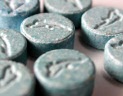
I’ve just noticed this review article that concisely reviews what we know about how the street drug ecstasy (MDMA) affects the function of the brain.

In terms of life-threatening physical damage, MDMA is a great deal safer than most other recreational drugs including alcohol and tobacco, but there is increasing evidence that it impacts on memory, and the effect seems to be related to dose.

In other words, the more ecstasy you take, the more likely memory problems will be worse.

The neuropsychology of ecstasy (MDMA) use: a quantitative review.

Hum Psychopharmacol. 2007 Oct;22(7):427-35.

Zakzanis KK, Campbell Z, Jovanovski D.

A growing number of empirical studies have found varying neuropsychological impairments associated with use of 3,4-methylenedioxymethamphetamine (MDMA) use. We set out to determine to what extent neuropsychological abilities are impaired in MDMA users. To do so, meta-analytical methods were used to determine the magnitude of neuropsychological impairment in MDMA users across pre-specified cognitive domains. We found that cognitive impairment secondary to recreational drug use may result in what might be described as small-to-medium effects across all cognitive domains with learning and memory being most impaired. We also found that total lifetime ingestion of MDMA appears to be negatively associated with performance on tasks ranging from attention and concentration to learning and memory. Implications and limitations of these findings are discussed.

Sadly, the full-text of the paper isn’t freely available online, but the main punchlines are in the summary.

Link to PubMed entry for paper.