The best is yet to come: reward prediction in the brain

Jonah Lehrer has written an excellent piece for the latest issue of Seed Magazine on the work of neuroscientist Read Montague who’s been discovering the essential function of dopamine in predicting rewards.

Reward prediction is the process where dopamine neurons fire when a reward is expected and also seem to code the amount of error between the prediction and what actually happens. Importantly, the process seems to be accurately described by an algorithm that was already used in computer science.

This has been an area of intense interest over the last decade as it ties together neurobiology, learning, motivation, mathematics and can be demonstrated in a variety of simple lab-based tasks. The fact that dopamine has been linked to numerous disorders in the past makes it a popular paradigm in which to understand psychiatric symptoms.

The Seed article looks at the work of Read Montague who has been studying the process and has been using ingenious methods to look at the role of this system in social reasoning.

In recent years Montague has shown how this basic computational mechanism is a fundamental feature of the human mind. Consider a paper on the neural foundations of trust, recently published in Science. The experiment was born out of Montague’s frustration with the limitations of conventional fMRI. “The most unrealistic element [of fMRI experiments] is that we could only study the brain by itself,” Montague says. “But when are brains ever by themselves?” And so Montague pioneered a technique known as hyper-scanning, allowing subjects in different fMRI machines to interact in real time. His experiment revolved around a simple economic game in which getting the maximum reward required the strangers to trust one another. However, if one of the players grew especially selfish, he or she could always steal from the pot and erase the tenuous bond of trust. By monitoring the players’ brains, Montague was able to predict whether or not someone would steal money several seconds before the theft actually occurred. The secret was a cortical area known as the caudate nucleus, which closely tracked the payouts from the other player. Montague noticed that whenever the caudate exhibited reduced activity, trust tended to break down.

One thing I notice a little of in the quotes from Montague, which is incredibly common in discussion of dopamine and reward, is a kind of ‘reward system dogma’.

Reward is usually linked to the function of the striatum and nucleus accumbens and the dogma goes something like this: “no matter what is happening when the nucleus accumbens or striatum is activated, something about the activity is rewarding”.

I was interesting to read a recent study comparing brain activation in people with ‘normal’ and ‘complicated’ (i.e. extreme) grief in response to viewing pictures of their deceased relative.

The study found additional nucleus accumbens activation in people with complicated grief and suggested that this reflects the fact they find the thoughts of them more rewarding. This is despite the fact that the nucleus accumbens has also been found to also represent salience – i.e. how likely something is to grab our attention.

It’s probably also worth mentioning that there may be some serious problems with the elegant reward prediction theory of dopamine which are were outline in a 2006 paper in Nature Reviews Neuroscience and summarised by the excellent Developing Intelligence.

The Seed is generally an excellent read though and covers an important finding and some innovative new ideas. I especially like the fMRI machines linked in parallel, like multi-player arcade machines.

Link to Seed article ‘A New State of Mind’.

Digital drugs emergency – paging Dr. Beat

USA Today has an unintentionally hilarious article on the dangers of ‘digital drugs’ that can supposedly mimic the effects of alcohol, marijuana, LSD, crack, heroin, sex, heaven and hell.

Woohoo! I hear you shout, before realising the article is actually a woefully misinformed piece about binaural beats, a fascinating but harmless phenomenon when two pure tones of close but differing frequencies are played, one in each ear.

This can produce a perception of a pulse or a ‘beat’ which isn’t actually present in the sound but is a result of our brain making sense of the tones.

You need headphones to get the effect properly and there’s a couple of examples on the Wikipedia page (ignore the ‘hypothetical effects on brain function’ section though, it’s currently full of drivel and miscited experiments).

The fact that it causes a ‘pulsing’ in the brain has led to lots of websites suggesting it can ‘synchronise your brain waves’ – and whenever ‘synchronising brain waves’ is mentioned you can be sure they’ll be lots of nonsense about ascending to higher states of consciousness, super mind power and legal LSD being mentioned.

Actually, there are a minority of people who can have their state of consciousness altered by flashes of light at certain frequencies.

In fact, it may trigger full blown seizures in some (photosensitive epilepsy) but also causes minor and subtle seizure activity in others and in some can stimulate memories or images, or perhaps just cause an ‘odd’ feeling.

This was the basis of the original ‘dream machine‘ and subsequent electronic versions which flash lights in your eyes. The history and neuroscience of this discovery was retold in the excellent book Chapel of Extreme Experience if you’re interested.

Some preliminary research has shown that binaural beat audio can decrease anxiety or boost mood, but the studies are small and inconclusive and some are published in what we might tactfully refer to as ‘non-mainstream’ journals.

In the vast majority of people though, flashing lights or auditory pulses of whatever type do bugger all on their own, despite what various New Age websites and YouTube videos try and convince you (infinite bliss anyone?).

The USA Today piece manages to swallow this hook, line and sinker to fantastic comic effect:

Different types of digital drugs

Some sites provide binaural beats that have innocuous effects. For example, some claim to help you develop extrasensory powers like telepathy and psychokinesis.

Other sites offer therapeutic binaural beats. They help you relax or meditate. Some allegedly help you overcome addiction or anxiety. Others purport to help you lose weight or eliminate gray hair.

However, most sites are more sinister. They sell audio files (“doses”) that supposedly mimic the effects of alcohol and marijuana.

But it doesn’t end there. You’ll find doses that purportedly mimic the effects of LSD, crack, heroin and other hard drugs. There are also doses of a sexual nature. I even found ones that supposedly simulate heaven and hell.

There’s plenty more great entertainment in the article. Life imitates Chris Morris, again.

Hey, I’m having a comedown from my infinite bliss.

I want my money back.

Link to ‘Web delivers new worry for parents: Digital drugs’ (via MeFi).

Preminiscence

Over the past year, I’ve had the pleasure of working with a fantastic theatre company and some amazingly talented composers to help develop a play called Reminiscence about a woman who hallucinates music after developing temporal lobe epilepsy.

The play premiers in London on September 9th and will be accompanied by talks discussing the neuroscience of hallucinations, music and the ethics of treating personally meaningful neurological symptoms.


It’s based on one of Oliver Sacks’ case studies (Mrs O’C) that he featured in both The Man Who Mistook His Wife for a Hat and Musicophilia but has been updated and expanded to explore how neuropsychology and medicine deal with the situation when pathology and personal meaning collide. The piece is wonderfully engaging and combines music, visual and theatre to powerful effect.

The idea originated from composers Effy and Litha Efthymiou who were inspired by the musical aspect of Sacks’ case and who began working with the theatre daCapo company to develop a production.

I was honoured to be asked to advise on the neuroscience, and have spent an immensely enjoyable year working with the company. Needless to say, I’m incredibly excited to see it in its final stages and can’t wait until in premiers in the Jacksons Lane theatre in Highgate.

I’ll be posting more on the production nearer the time, but all the when, where and hows are currently on the Theatre DaCapo website.

Link to details of Reminiscence play.

Recreational drug preference linked to medical speciality

Following our piece on several cases of drug addiction in anaesthetists, I just found some interesting studies on how recreational drug preference varies between medical specialities. It seems working in psychiatry and emergency medicine is linked to the highest rates of drug use, with surgeons having some of the lowest levels.

This study seems to be the most comprehensive on doctors of all levels of seniority:

Emergency medicine physicians used more illicit drugs. Psychiatrists used more benzodiazepines. Comparatively, pediatricians had overall low rates of use, as did surgeons, except for tobacco smoking. Anesthesiologists had higher use only for major opiates. Self-reported substance abuse and dependence were at highest levels among psychiatrists and emergency physicians, and lowest among surgeons. With evidence from studies such as this one, a specialty can organize prevention programs to address patterns of substance use specific to that specialty, the specialty characteristics of its members, and their unique practice environments that may contribute risk of substance abuse and dependence.

A 1992 study looked at exactly the same thing in junior doctors, and again found similar results – psychiatrists and emergency doctors tended to be more likely to use drugs, while surgeons were among the least likely:

Emergency medicine and psychiatry residents showed higher rates of substance use than residents in other specialties. Emergency medicine residents reported more current use of cocaine and marijuana, and psychiatry residents reported more current use of benzodiazepines and marijuana. Contrary to recent concerns, anesthesiology residents did not have high rates of substance use. Family/general practice, internal medicine, and obstetrics/gynecology were not among the higher or lower use groups for most substances. Surgeons had lower rates of substance use except for alcohol. Pediatric and pathology residents were least likely to be substance users.

A similar study on nurses was conducted by the same team a couple of years earlier and found similar results:

As hypothesized, rates varied greatly by speciality. Oncology nurses reported the highest past-year prevalence for all substances combined (42%), followed by psychiatry (40%) and emergency and adult critical care (both 38%).

Emergency and pediatric critical care nurses had the highest prevalence of marijuana / cocaine use (7%), followed by adult critical care nurses (6%). Prescription-type drug use was less varied across specialties: those with the highest prevalence of use were oncology, rehabilitation, and psychiatry. For cigarette smoking, psychiatry had the highest prevalence (23%), followed by emergency and gerontology (both 18%). Pediatric critical care nurses were least likely to smoke (8%). Binge drinking was high among oncology, emergency, and adult critical care nurses.

Link to abstract of recreational drug preference in doctors study.
Link to full text of drugs in junior doctors study.
Link to PubMed entry for same.
Link to full text of study on nurses.
Link to PubMed entry for same.

2008-08-08 Spike activity

Quick links from the past week in mind and brain news:

Language Log has an excellent piece on another reason why the amphetamine methylphenidate (Ritalin) may be popular as a study drug – apart from its boost to wakefulness it might actually improve some forms of learning.

Genes for schizophrenia uncovered. Again!

Scientific American reports on how our moral decision-making can be altered by distraction and additional cognitive effort.

Neurologist Robert Burton has a good piece in Salon on the placebo effect in conventional medicine.

Can cholesterol-lowering drugs reduce the risk of dementia? Newsweek examines evidence from a new study.

Furious Seasons on reports of people faking schizophrenia to get sleep-inducing antipsychotic drug quetiapine (Seroquel). God knows why.

US psychiatrists are deserting psychotherapy in favour of a sole focus on medication management, reports AP News. Original study here.

Edge presents A Short Course in Behavioural Economics. Scroll down past the chummy restaurant photos to get to the interesting bit.

Human brains have evolved a particularly strong capacity to detect what neuroscientists call ‚Äúerrors‚Äù. A sentence from a dreadful article on the ‘neuroscience’ ‘of’ ‘leadership’.

The New York Times discusses the benefits of boredom.

Researchers develop robots that learn to move themselves, reports BBC News. But the video shows they’re not just moving, they’re break dancing! Hey You The Robot Steady Crew, show em what you do, make a break, make a move.

Neuroanthropology has an excellent article on the sex differences and the ‘<a href="http://neuroanthropology.net/2008/08/07/girls-closing-math-gap-troubles-with-intelligence-1/
“>maths gap‘.

Daniel Dennett publishes an extract from his autobiography. No mention of inspiration for Santa-like beard yet.

Scientific American has an article on the neurological basis of genius.

The ‘torture debate‘ among US psychologists rumbles on and is covered by PsychCentral.

NPR Radio has an excellent piece on novelist Virginia Woolf and the psychology of the self, inspired by Jonah Lehrer’s recent book. Wonderfully produced in the unique RadioLab style.

Neuroscientist Shitij Kapur does the warm up for Gladys Knight with a lecture on dopamine and psychosis. No really. Channel N has the scoop.

Rolling thunder

Neurophilosophy covers the discovery of a new type of synaesthesia – where movement is experienced as sound. In fact, the researchers have put the test online so you can test yourself.

Synaesthesia is where the senses are ‘crossed’ so people might experience visual figures, such as letters, as tastes. This is one type, but letter to colour, sound to colour or number to space are most common.

This new study was initiated when the researchers were testing people with other forms who synaesthesia who happened to mention that they could ‘hear’ a moving pattern on a computer monitor.

Neurophilosophy picks up the story where the researchers sought to confirm this with an elegant experiment:

Saenz and Koch devised a task which could be used to objectively confirm the reports of the 4 participants, a task on which they would out-perform non-synaesthetes who do not experience the “extra” sensation. The task involved judging rhythmic patterns – in each trial, the participants were presented with pairs of sequences of either visual flashes or auditory beeps, and then asked if the two were the same.

Typically, non-synaesthetes are much better at judging auditory than visual sequences. But the hearing-motion synaesthetes should be at an advantage when presented with sequences of visual flashes, because they can hear, as well as see, the pattern. This is exactly what was found: the 4 synaesthetes and the 10 non-synaesthete controls performed equally well in the trials of sound sequences, with an accuracy of around 85%. But in the trials with sequences of visual flashes, the synaesthetes remained accurate, with a score of about 75%, whereas the performance of the controls fell to 50%, which is what would be expected by chance.

Link to Neurophilosophy on study.
Link to full text of study.

Attending van Gogh and his asylum art

This month’s British Journal of Psychiatry includes a letter that gives an interesting insight into the relationship between the legendary Dutch painter Vincent van Gogh, the three doctors that variously treated him for his epilepsy and insanity, and some of his most famous paintings.

Three medical doctors were involved with the treatment of van Gough: Dr Felix Rey (1867–1932), who diagnosed van Gogh’s epilepsy; Dr Théophile Zacharie Auguste Peyron (1827–95) of Saint-Remy asylum who also diagnosed ‘a type of epilepsy’ – he was a very understanding physician who arranged facilities within the asylum for van Gogh’s paintings and artwork; and Dr Paul Gachet (1828–1909) who treated van Gogh during his last 10 weeks of life.

van Gogh painted two portraits and an etching of Dr Gachet, one of which (Portrait of Doctor Gachet, June 1890) was auctioned in 1990 for an astounding sum of US$ 82.5 million. Young intern Dr Rey probably maintained distance because he saw van Gogh during his psychotic state, shortly after the ear mutilation episode. He failed to value the artist’s creativity and thus was not possessive of the gift presented to him, which he described afterwards:

“Vincent was above all a miserable, wretched man,… he would talk to me about complementary colours. But I really could not understand why red should not be red, and green not green!… When I saw that he outlined my head entirely in green (he had only two main colours, red and green), that he painted my hair and my mustache ‚Äì I really did not have red hair ‚Äì in a blazing red on a biting green background, I was simply horrified. What should I do with this present?”

Dr Gachet was very supportive of van Gogh and valued his creative instinct. Vincent had found a ‘true friend’ in him. It is a matter of pride for the medical fraternity that Dr Gachet was highly admired by van Gogh and that he tried his best to keep van Gogh’s tormented soul at peace and allow his creativity to flourish in the village atmosphere of Auvers. van Gogh created a series of paintings, at least 14, illustrating the Saint-Remy asylum. Any of them may be appropriate for the Journal to focus on with regard to his creativity of the use of colour and space to astonishing effect. Those paintings are carrying the historical value of mental health perspectives so far as the asylum culture of his time is concerned.

The picture on the left is The Starry Night, one of his most famous, which he draw looking out of his window while a resident in the Saint-Remy asylum.

Link to letter in BJP (closed access for some unknown reason).

Trapped: Mental Illness in America’s Prisons

Photographer Jenn Ackerman has created a stunning and extensive video essay on Kentucky’s correctional facility for prisoners with mental illness, interviewing the inmates, staff and clinicians who form part of America’s biggest provider of residential psychiatry – the prison system.
Of course, the prisons were never designed to be providers of mental health care, but as a recent Time article noted, they have become the default treatment facility for the many people who fall through the cracks.

Ackerman has created a introductory film and also has put several prisoner interviews online, where we meet people in various states of distress and recovery. There’s also a fantastic film on ‘inmate watchers’ who have the responsibility to checking on vulnerable, volatile or suicidal inmates.

The films are sometimes disturbing, bleak in places and occasionally sublime, but are immensely revealing and show remarkable sensitivity in their construction.

From Ackerman’s written essay that accompanies the piece, I suspect that we only get to see the least affected people as those who are most ill are unlikely to be able to consent to being interviewed, meaning that even this bleak portrayal is likely to be a relatively positive depiction.

A man has been singing songs at the top of his lungs for the last two days, while another, hunched on his bed, wails from under a blanket. In a cell across the hall, a man shakes as he yells to his wife he has not seen in five years and to the thug down the street. In reaction to the noise, another man bangs endlessly on his cell door until an officer comes by and asks him to stop. He smiles and says he just wanted someone to talk to.

“We are the surrogate mental hospitals now,” says Larry Chandler, warden at the Kentucky State Reformatory in La Grange, Ky. With the rising number of mentally ill, the reformatory was forced to rebuild a system that was designed for security. Never intended as mental health facility, treatment has quickly become one of their primary goals.

Unfortunately, this situation is not unique to Kentucky. The continuous withdrawal of mental health funding has turned jails and prisons across the US into the default mental health facilities.

A 2006 report by the U.S. Department of Justice shows that the number of Americans with mental illnesses incarcerated in the nation’s prisons and jails is disproportionately high. Almost 555,000 people with mental illness are incarcerated while fewer than 55,000 are being treated in designated mental health hospitals.

Ackerman also has a gallery of still photographs and says she intends to make a feature length film which, if it has the impact of her online work, is likely to be profoundly moving.

Link to Trapped: Mental Illness in America’s Prisons.

Imagining missing limbs helps pain, reorganises brain

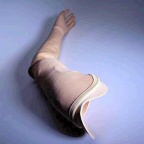
Neurology journal Brain has just published an elegant open-access study on how just six weeks of mental imagery training can help reduce phantom limb pain as well as reorganising the sensory and motor maps in the brain.

Phantom limbs are when amputees feel sensations that seem to be coming from the missing limb. Sometimes this can include pain which can either be constant or transitory.

Sensations from the nonexistent limb are thought to be due to the brain reorganising the areas which represent the body.

In the case of a phantom arm, for example, the area is no longer receiving sensations from the limb and so stops being so carefully defined. Areas serving other body areas (like the face) start to creep in and facial stimulation can be felt in the missing arm due to the fuzzy neurological boundaries.

This new study, led by neuroscientist Kate McIver, decided to test whether mental imagery can help keep these areas active and prevent the fuzziness creeping in, potentially reducing the phantom pain.

This is based on extensive research to show that imagining something activates similar brain areas to actually perceiving the sensation or executing the action. For example, imagining the sensation of a cool breeze across your arm actually increases activity in the brain areas responsible for arm sensations, while imaging picking something up activates arm-related motor areas.

The research team asked participants to rate their phantom limb pain and used fMRI to look at which brain areas were most active during some movement-related tasks. While in the scanner, the participants were asked to imagine actions with either the existing or phantom hand, to move the existing hand or were asked to purse (push together) their lips.

This last action tends to activate what was previously the hand area in the brain in people with phantom limbs, but doesn’t in people with intact limbs. Indeed, this is exactly what the initial brain scans reported, indicating that their brains had reorganised sensory boundaries.

The researchers then invited each participant for six weekly sessions that involved a mental ‘body scan’ technique that involved imagining free and comfortable movement in their phantom limb such as they could “stretch away the pain” and “allow the fingers, hand and arm to rest in a comfortable position”. Participants also practised in their own time.

After six weeks, pain ratings were taken again and the brain scanning was re-run. The painful sensations had significantly reduced and lip pursing no longer activated the hand area.

The mental imagery seemed to have ‘simulated’ arm actions and sensations well enough so that the neurological boundaries remained sharp and cross-area fuzziness didn’t encourage phantom pain.

Link to full text article in Brain.
Link to PubMed entry.

Don’t get high on your own supply

An article from Forensic Sciences International investigated evidence for addiction in anaesthetists by analysing hair samples.

The paper reports on four court cases where anaesthetists were suspended for suspected addiction to the drugs they use to put people to sleep or kill pain during operations.

Each case involved hair analysis to gather evidence, owing to the fact that many drugs will leave traces in the hair as it grows, leaving a timeline of drug use.

Chemical dependency is a disease that can affect all professions. Among the health care professionals, anesthesiologists represent a specific group. Numerous factors have been proposed to explain the high incidence of drug abuse among anesthesiologists. These include: easy access to potent drugs, particularly narcotics, highly addictive potential of agents with which they are in contact, and easy diversion of these agents since only small doses will initially provide an effect desired by the abuser.

Opioids are the drugs of choice for anesthesiologists, and among them fentanyl and sufentanil are the most commonly used. Alcohol is mostly abused by older anesthesiologists. Propofol, ketamine, thiopental and midazolam are also abused. In fact, all but quaternary ammonium drugs can be observed. Signs and symptoms of addiction in the hospital workplace include: unusual changes in behavior, desire to work alone, refusal of lunch relief or breaks, volunteer for extra cases, call, come in early and leave late, frequent restroom breaks, weight loss and pale skin, malpractice, behind on charts ….

Toxicological investigations are difficult, as the drugs of interest are difficult to test for. In most cases, half-lives of the compounds are short, and the circulating concentrations weak. It is, therefore, necessary to develop tandem mass spectrometry procedures to satisfy the criteria of identification and quantitation. In most cases, blood and/or urine analyses are not useful to document impairment, as these specimens are collected at inadequate moments. Hair analysis appears, therefore, as the unique choice to evidence chronic exposure.

Depending the length of the hair shaft, it is possible to establish an historical record, associated to the pattern of drug use, considering a growth rate of about 1cm/month. An original procedure was developed to test for fentanyl derivatives. After decontamination with methylene chloride, drugs are extracted from the hair by liquid/liquid extraction after incubation in pH 8.4 phosphate buffer. Fentanyl derivatives are analyzed by GC-MS/MS. The following cases are included in this paper:

Case 1: 50-year-old anesthetist, positive for fentanyl (644 pg/mg); Case 2: 42-year-old anesthetist, positive for fentanyl (101 pg/mg) and sufentanil (2 pg/mg); Case 3: 40-year-old anesthetist, positive for codeine (210 pg/mg), alfentanil (30 pg/mg) and midazolam (160 pg/mg); Case 4: 46-year-old nurse, found dead, positive for alfentanil (2 pg/mg) and fentanyl (8 pg/mg). In these cases, the combination of an alternative specimen (hair) and hyphenated analytical techniques (tandem mass spectrometry) appears to be a pre-requisite.

A recent review article noted that while doctors were generally healthier than the general popular, addiction remains a particular risk for physicians, stating “addiction impairs more physicians than any other disorder or disease. Though alcohol use, abuse, and dependence are no more prevalent among physicians than other professionals, physicians display higher rates of prescription drug abuse and dependence than the general population.”

Link to abstract of study on hair analysis.
Link to abstract of study on prescription drug abuse among physicians.

Magic in mind

Interest in the cognitive science of magic is really hotting up with Nature Neuroscience having just published a review article jointly authored by some leading cognitive scientists and stage illusionists. They argue that by studying magic, neuroscientists can learn powerful methods to manipulate attention and awareness in the laboratory which could give insights into the neural basis of consciousness itself.

The neuroscientists involved are Stephen Macknik and Susana Martinez-Conde, while the magicians are Mac King, James Randi, Apollo Robbins, Teller from Penn and Teller, and John Thompson.

If this collection of names sounds familiar, it’s because this time last year the same group presented a symposium at the Association for the Scientific Study of Consciousness on ‘The Magic of Consciousness’.

The new article rounds up the conference discussion and The Boston Globe has a piece looking at some of the highlights.

This is not the only cognitive science article that explores what neuroscience can learn from the mystic arts. In a forthcoming article [pdf] for Trends in Cognitive Sciences psychologist Gustav Kuhn.

Kuhn has done some fantastic experimental studies looking at eye movements and attention of people watching magic tricks.

It’s not only an academic interest as Kuhn is apparently an illusionist himself and he’s one of a number of psychologists who also happen to be stage magicians. Just off the top of my head psychologists Richard Wiseman and Robert Moverman are also ex-professional conjurers. I’ve come across several others and so its perhaps not so surprising that these new articles have been published, but more that they took so long.

Both articles look at some common and no so common magic tricks and explain the cognitive science behind how they work:

Persistence of vision is an effect in which an image seems to persist for longer than its presentation time12, 13, 14. Thus, an object that has been removed from the visual field will still seem to be visible for a short period of time. The Great Tomsoni’s (J.T.) Coloured Dress trick, in which the magician’s assistant’s white dress instantaneously changes to a red dress, illustrates an application of this illusion to magic. At first the colour change seems to be due (trivially) to the onset of red illumination of the woman. But after the red light is turned off and a white light is turned on, the woman is revealed to be actually wearing a red dress. Here is how it works: when the red light shuts off there is a short period of darkness in which the audience is left with a brief positive after-image of the red-dressed (actually white-dressed but red-lit) woman. This short after-image persists for enough time to allow the white dress to be rapidly removed while the room is still dark. When the white lights come back, the red dress that the assistant was always wearing below the white dress is now visible.

Link to Nature Neuroscience article (via BB).
pdf of Trends in Cognitive Science article.
Link to Boston Globe write-up.

Encephalon 51 arrives with a flourish

The rather poetic 51st edition of the Encephalon psychology and neuroscience writing carnival has just been published online and is graciously hosted by The Mouse Trap.

It has a distinctly poetic theme on this occasion, with a set of cognitive science haikus enlivening proceedings.

A couple of my favourite posts include one on the continuing mirror neuron hype and another on the cultural feedback loop between psychiatry and our expression of mental distress.

Link to Encephalon 51.

On the edge of truth

Discover Magazine has a brief but interesting interview with ex-NSA psychologist Eric Haseltine, who directed research into interrogation and lie detection.

He discusses the use of new technologies that measure body and brain function – i.e. the still not-yet-very-good ‘brain scan lie detectors’ – but also talks about the skills humans need to be able to pick up when someone is trying to deceive them.

Interestingly, he cites the development of human skills as where the biggest advances are likely to be made in the future:

What is the hottest area today in deception detection?

Human lie detectors. I think the low-tech training of humans to be better interpreters of information is where the most productive work is going to be. The reason being that you can either train a human to do it or train a computer to do it, and human brains are still much better computers than computers are.

Link to Discover Magazine interview with Haseltine.
Link to New Yorker article on the shortcomings of ‘brain scan lie detection’.
Link to past interview with Haseltine on US national security.

Interview with self-trepanner, Heather Perry

Neurophilosophy has a fantastic interview with Heather Perry, a 37-year old British woman who organised a modern-day trepanation to insert a hole in her skull in an attempt to alter her state of consciousness.

Perry gives a lucid insight into her motivations and describes the rather ad-hoc operation in rather gory detail:

How exactly did you perform the trepanation?

I used a hand trepan initially, but that wasn’t proving to be terribly successful. Then there was a problem with the people who owned the property we were staying in, so we decided we’d have to just leave it. I wrapped my head up in a towel and we got out of there. A couple of days later, we had another go. We abandoned the hand trepan and got an electric drill instead. I injected myself with a local anaesthetic and then slashed a big T-shaped incision in my scalp, right down to the bone. I was sat there in the bathroom feeling quite relaxed and they started with the drill. It didn’t take that long at all, probably about 20 minutes. Eventually I could feel a lot of fluid moving around. Apparently, there was a bit too much fluid shifting around, because they’d gone a little bit too far and I was leaking some through the hole, but this wasn’t especially dangerous as there are three layer of meninges before you get to the brain.

It’s an interesting read not least because Perry is rather circumspect when discussing the procedure.

You might expect that someone who had arranged for a hole to be drilled in her skull to be completely convinced about the rather far-out claims for trepanation.

While she does mention some claimed effects and findings, she seems quite measured in her assessment and largely seems to have tried the procedure as an exploration rather than a ‘cure’ in any specific sense.

Link to Neurophilosophy interview with Heather Perry.

On the brains of the assassins of Presidents

This is a wonderfully written summary that tells the story of how two father-and-son doctors were involved post-mortem brain examinations of the assassins of the US Presidents James Garfield and William McKinley.

The article is by neuroanatomist Duane Haines although unfortunately, I haven’t read or even got access to the full paper. Luckily, the abstract is just a joy to read in itself. A curious slice of neurological history in 300 words.

Spitzka and Spitzka on the brains of the assassins of presidents.

J Hist Neurosci. 1995 Sep-Dec;4(3-4):236-66.

Haines DE.

Although four American Presidents have been assassinated (Lincoln, Garfield, McKinley, Kennedy), only the assassins of Garfield (Charles Julius Guiteau) and McKinley (Leon Franz Czolgosz) were tried, convicted, and executed for their crime. In 1882 Edward Charles Spitzka, a young New York neurologist with a growing reputation as an alienist, testified at the trial of Guiteau.

He was the only expert witness who was asked, based on his personal examination of the prisoner, a direct question concerning the mental state of Guiteau. Spitzka maintained the unpopular view that Guiteau was insane. In spite of aggressive and spirited testimony on Spitzka’s part, Guiteau was convicted and hanged. However, even before the execution it was acknowledged, by some experts, that Spitzka was undoubtedly right.

About 20 years later, in 1901, Edward Anthony Spitzka, the son of Edward Charles Spitzka, was invited to conduct the autopsy on Czologsz, the assassin of McKinley. At the time Spitzka the younger, who had just published a detailed series of papers on the human brain, was in the fourth year of his medical training. It was an unusual series of fortuitous events that presumably led to Edward A. Spitzka conducting the autopsy on the assassin of the President of the United States while still a medical student. This, in light of the fact that other experts were available.

Each Spitzka went on to a career of note and each made a number of contributions in their respective fields. It is however, their participation in the ‘neurology’, as broadly defined, of the assassins of Presidents Garfield and McKinley that remains unique in neuroscience history. Not only were father and son participants in these important events, but these were the only times that assassins of US Presidents were tried and executed.

Edward Spitzka was also known as one of the main proponents of the idea that masturbation caused madness, and wrote an 1887 article outlining 12 cases of ‘masturbatic insanity’.

Link to PubMed entry.

Constraining the ancient mind

As part of Seed Magazine’s on innovative thinkers in science, they published a podcast interview with archaeologist Lambros Malafouris who is pioneering the study of ancient cultural artefacts as a way of constraining theories in evolutionary psychology.

One of the criticisms of some evolutionary psychology is that it too often involves over-interpretation and ‘just so’ stories – explanations of why we have certain psychological attributes that are stories rather than hypotheses that can be easily tested.

Malafouris has taken the novel approach of using the findings from archaeology to systematically generate and test theories of the evolution of the mind. He seems particularly interested in embodied cognition, the idea that the mind can only be understood in relation to how it interacts with the world through body and action.

The mainstream approach to cognition holds that it happens in the mind and that material culture is nothing more than an outgrowth of our mental capacities. Archaeologist Lambros Malafouris is challenging this deep-seated idea with a radical new notion: the hypothesis of extended mind, which posits that material culture is not a reflection of the human mind but an actual part of it. Take, for instance, a blind man’s stick. “Where does the blind man end and the rest of the world begin?” he says. “You might see the stick as something external, but it plays a very important role in the perceptual system of this person. It extends the boundaries of this human‚Äîthe stick becomes an integral part of the cognitive architecture.”

If material culture is an extension of human cognition, our engagement with it has actively shaped the evolution of human intelligence, Malafouris argues. For example, ancient clay tablets that allowed people to actually write down records were not mere objects, he says. Instead, they became integral adjuncts of the human memory system. The invention of such a technology “changes the structure of the human mind,” says Malafouris, a post-doctoral fellow at the University of Cambridge. Rather than happening wholly in the head, he argues, cognition develops and evolves through the interplay between intelligence and material culture.

In fact, there’s an increasing focus on related ideas. Some of my favourite studies have been done by psychologist Dennis Proffitt who has found numerous effects of tool use on thinking and perception.

One of my favourite studies is where he found that we perceive distances as shorter when we have a tool in our hand, but only when we intend to use it.

Malafouris is using these ideas and adds to the relatively new but exciting field of cognitive archaeology.

Link to Seed interview with Lambros Malafouris.