The neuroscience of an unwanted limb

ABC Catalyst has a completely astounding video on someone with ‘body integrity identity disorder’ who deliberately caused a leg amputation to feel satisfied with their body. It goes on to explore the neuroscience of body image and explores some of the best known body swap experiments.

The voice over is a bit cheesy in places but otherwise it’s brilliantly explained, linking an unusual condition with the experimental lab science.

People described as having BIID feel as if a perfectly healthy limb is not really part of them. Like Robert Vickers, the man featured in the documentary, they can sometimes take extreme measures to get it amputated.

Preliminary evidence suggests that it might arise from a distortion of our neurally mapped body image and recent studies using the rubber hand illusion or the body swap illusion have been thought to tap the same sort of body image distorting effects.

One of the most compelling parts of the documentary is when the gentleman with BIID actually takes part in all the experiments.

After he takes part in the rubber hand illusion the presenter asks a really interesting question: “Is this anything like you experienced with your leg?”, “No” he answers, giving her a look like she’s a bit crazy.

This is the sort of question that is almost never asked by cognitive scientists. We create what we think is something similar in the lab, and then study it to death, but rarely do we actually get people with similar distortions to try it out and ask them what they make of it.

Vickers also recently recorded a programme for ABC Radio National’s Ockham’s Razor where he talks incredibly eloquently about the experience of his body, the turmoil of having an unwanted healthy limb and gives a remarkably good review of the scientific literature.

Both are highly recommended.

Link to amazing Catalyst programme on BIID.
Link to Robert Vickers on Ockham’s Razor.
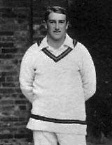
For whom the ball tolls

I was just re-reading the excellent Prospect magazine article on psychotherapy and cricket when I was struck by a bit about the high rate of suicides in professional cricket players that I’d not noticed before.

It mentions David Frith’s book Silence of the Heart which specifically focuses on the large numbers of ex-cricket pros who have taken their own lives. This from the New Statesman review:

Is this grim roll call of any significance? In 1998, 1.07 per cent of the 264,707 male deaths in the UK were attributable to suicide; according to David Frith’s research, of the 339 England Test cricketers who had died by July 2000, 1.77 per cent were suicides. The figures are even higher for Australia (well, they have to beat us at everything, don’t they?), South Africa (an astonishing 4.12 per cent) and New Zealand. In all, Frith has unearthed more than 100 examples from all levels of the game.

I looked in the medical literature and it seems it has also been discussed there. A paper in Australasian Psychiatry examined mental illness in professional Aussie cricketers and found high rates of mood disorders, suicide, and drug and alcohol issues, along similar lines to a recent study on professional jazz musicians.

During my search I came across the astounding and tragic life of South African cricketer Aubrey Faulkner (pictured), who came from a violent background to be a cricketing legend, war hero, sports mentor and finally a suicide statistic.

It’s not clear whether cricket is particularly associated with mental illness, or whether this just reflects a trend in all elite level sportsmen, but it’s an unusual connection that I’d never come across before.

Link to New Statesman review of ‘Silence of the Heart’.
Link to PubMed entry for paper on mental illness and cricket.

neuro culture

neuro culture is a beautiful and interesting website that tracks the interaction between neuroscience and visual art as it develops across the world.

It works as a cross between an online gallery and an art studies venture, looking at how artists are making sense of the increasing awareness and interest in the brain through all levels of society.

Visual and digital technologies of the brain, the widespread dissemination of psychotropic drugs, expanding programs in consciousness studies and other neurotechnologies are having a significant impact on individuals and society.

These ongoing transformations in science and society are deeply pervading popular culture and are appearing in a profusion of media and artistic expanse- from the visual arts to film, theatre, novels and advertisements.

With this website, we explore and document past and current manifestations of this phenomenon and introduce an online platform for the analysis and exchange of cultural projects intersecting neuroscience, the arts and the humanities.

There’s some truly beautiful artwork on the site which is worth a visit purely for the rich visual spectacle.

Link to neuro culture.

2009-07-10 Spike activity

Quick links from the past week in mind and brain news:

PsyBlog covers the numerous studies that have found your name influences your performance or preferences.

Professor Baroness Susan Greenfield thinks that her increasingly bizarre warnings about the ‘neurological dangers’ of Twitter are equivalent to when people first starting saying smoking caused cancer. Except they had evidence, and understood what they were talking about.

The New York Times has an interesting piece on why some of the counter-intuitive findings of behavioural economics don’t work when people have to use their own money.

There’s an awesome post on Developing Intelligence about how the famous 40hz ‘consciousness’ oscillations in the brain may have really been eye movements affecting the signal – the debate continues.

I do is apparently a blog written by someone describing their experience of locked-in syndrome.

Emotional robots: Will we love them or hate them? asks New Scientist. Depends if they know their place, I suggest.

If you don’t read Neurophilosophy (and if you don’t, why not?) you’ve missed two excellent articles recently on the evolutionary origins of the nervous system and the neuroscience of hypnotic paralysis.

BBC Radio 4 had an excellent programme on the criminal mind that will shortly be sucked into archiveless oblivion. Enjoy it while you can license paying suckers.

A recent study on how your self-view skews your mood is discussed by Neuronarrative.

Scientific American has an excellent piece on the evolutionary origins on left and right brain hemisphere differences.

There’s an excellent post on genius and madness on Frontier Psychiatrist.

Scientists create eerie ambient music using human brains, MRI machines, reports GizModo with video. I’m waiting for musicians to create eerie brain scans using drum machines though.

The New York Times has an excellent piece on the psychology of intrusive perverse thoughts. My favourite type, as it happens.

Employees are promoted until they reach their level of maximum incompetence, according to a new study on arXiv covered by Tech Review.

Psychiatric Times has created an online forum (i.e. mud slinging arena with ring-side seats – hotdog anyone?) to cover the development of the DSM-V.

ABC Radio National’s 360 programme has an excellent piece on how the public relations industry works. Eye opening stuff.

New Scientist has an excellent piece on the origins and anthropology of war.

Acid techo. The history of how LSD inspired scientists and tech pioneers is discussed by the HuffPost. Includes a letter from Albert Hoffman to Steve Jobs.

New Scientist has an awesome article on the memristor and the future of artificial intelligence. NewSci is totally on fire this week.

Sweet and salty. Frontal Cortex discuss why they taste so good together.

The Neuroskeptic covers on a study on the effect of affirming statement on people with low self-esteem that has been widely and incorrectly reported as ‘self help harms people’.

Keep on keepin’ on

The New York Times has a fantastic profile of ultramarathon runner Diane Van Deren who became a world class endurance athlete after having brain surgery to remove a large chunk of her right temporal lobe.

The surgery was to treat otherwise untreatable epilepsy and has left her with memory and organisation difficulties, neither of which stop her from running and winning races of several hundred miles.

Van Deren, 49, had a lobectomy in 1997. She has become one of the world‚Äôs great ultra-runners, competing in races of attrition measuring 100 miles or more. She won last year‚Äôs Yukon Arctic Ultra 300, a trek against frigid cold, deep snow and loneliness, and was the first woman to complete the 430-mile version this year…

[Neuropsychologist] Gerber, who works at Craig Hospital, a rehabilitation hospital in Englewood, Colo., for people with brain or spinal-cord injuries, said that Van Deren “can go hours and hours and have no idea how long it’s been.” Her mind carries little dread for how far she is from the finish. She does not track her pace, even in training. Her gauge is the sound of her feet on the trail.

“It’s a kinesthetic melody that she hits,” Gerber said. “And when she hits it, she knows she’s running well.”

Link to NYT on Van Deren.

Brand new second hand

Photo by Flickr user _StaR_DusT_. Click for sourceNewsweek has an interesting article about the reality of unconscious plagiarism – otherwise known as ‘cryptomnesia’.

The article describes apparently genuine cases in terms of source memory – the ability to not only to remember information but also where it came from. When you remember a great idea, was it one of yours, it did you read it in a book, or hear it from a friend?

In the lab this has usually been tested by relatively simple experiments where participants are asked to read out words, imagine themselves reading out words and hear words being read out.

They’re then shown another list, and they have to say whether they’ve encountered the word before and, if so, did they hear it, read it or imagine it.

There are many variations on this simple idea, but all of which show that we routinely mistake information from other people as something we generated ourselves.

Psychologist Marcia Johnson has done a huge amount of work on how we monitor the source of our memories and how distortions affect what she calls ‘reality monitoring’.

It turns out that memories don’t have a specific source tag, like a mental label. We infer where they came from based on their content. There are many things have been found to be important, but even something as simple as the sensory vividness of the memory is known to have a big effect.

For example, people who have very vivid mental images have been found to be more likely to misattribute the source of memories for this reason.

So the idea is that sometimes we present other people’s ideas as our own, not because we’re being deliberately dishonest, but because we genuinely think we came up with it in the first place because of source memory failure.

The Newsweek article covers how this applies to writers and journalists and some of the recent research which tackles exactly these sort of memory distortions.

However, it doesn’t mention perhaps the most famous of cryptomnesia – where a judged ruled that ex-Beatle George Harrison had unconsciously plagiarised the Chiffons’ He’s so Fine in his own track My Sweet Lord.

And this is exactly where it gets a bit murky, because it’s never clear whether someone has unconsciously plagiarised, or just plagiarised, because it relies on making a judgement about someone else’s intentions.

Link to Newsweek article on cryptomnesia.

Calcium rushes in – Vesicles go BOOM

Rarely does one see a tribute to both the Wu-Tang Clan and the biochemistry of neuronal signalling in the same place, but it has been done, and the results are nothing short of a musical spectacular.

It’s a hip hop guide to neurobiology, so just sit back, relax and go with the flow (of ions as they pass through the cell membrane).

One of best bits is seeing the names of all the rappers: Sarah Tonin, Dopa-a-Mean, Gift of GABA. You get the idea.

Link to Synaptic Cleft by the Glut-tang Clan (via Greg Laden).

Pain? What pain?

Photo by Flickr user bitzcelt. Click for sourcePain research often involves investigating the link between the subjective experience of what’s hurting compared to brain activation, mental state or situation. While past research has reported gender differences in pain thresholds, a new study casts a hazy light across the field by finding that men consistently report less pain when talking to female researchers.

The experiment included men and women as participants, as well as male and female experimenters, allowing the researchers to compare each combination of the sexes during their research.

Participants had a safe but painful heat applied to their arm and they were asked to report how painful and how unpleasant it was. They also had heart rate and skin conductance monitors to check how the body reacted.

Women reported the same things to male and female experimenters but men consistently said the pain was less when talking to female staff. Importantly though, their bodily responses were no different, suggesting that the physical sensation was probably the same, they just minimised it when talking to women.

The fact that men report less pain when talking to women has been found before, but the fact the body’s reaction was no different is new and tells us that the presence of women was unlikely to have actually reduced the amount of physical suffering.

In other words, pain research that has relied just on self-report may have been affected by men trying to look macho in the lab.

Link to DOI entry and summary of study (via @researchdigest).

NeuroPod on virtual lesions, vision bias and reply

The latest edition of the Nature NeuroPod podcast is now available. It has the usual collection of cutting edge brain stories but is particularly good for an introduction to transcranial magnetic stimulation or TMS, a technique that allows researchers to temporarily ‘switch off’ bits of the human brain during experiments.

TMS is really just a large electromagnetic coil that can switched on and off very quickly, allowing a focused high intensity magnetic field to be directed into the brain from a few centimetres outside the skull.

As you may remember from high school physics, when a magnetic field passes over a conductor it causes an electrical current. In this case, the conductor is the area of your brain just at the focus of the magnetic field and the current is enough to trigger all the neurons in that small area.

Because neurons are all busy doing their thing, suddenly electrifying them all at once effectively ‘resets’ them, and so switches them off for a brief moment before they resume.

If you suspect that a particular brain area is involved in a task, you can get someone to do the task and switch the brain area off for a few hundred milliseconds with TMS. If the area is genuinely involved, the person should do it slightly worse or slightly slower, whereas, if it isn’t, there should be no difference.

TMS can also be used before someone is doing a task to make the area more or less excitable in general terms, by applying repetitive pulses to the area a few minutes before. Think of it like changing the mood of a crowd before the main event. It’ll affect how they react later on.

It’s a versatile and interesting technique for exploring brain function, but the exact detail of how it affected the electrical circuitry of the brain has been a mystery.

NeuroPod interviews neuroscientist Sven Bestmann, who recently published a paper on what we know about TMS and the brain, where he discusses the latest discoveries and explains the technique in more detail.

Link to NeuroPod webpage.
mp3 of latest podcast.

The long dark nightie of the soul

It’s an age old story. Girl meets boy. We presume girl loses boy, because she goes mad in a shoe shop. Girl is taken to hospital for a CT scan, then to an art gallery, and then hospital again where she trashes a room with lots of unnecessary medical equipment in a fit of despair. Yes, it’s the video for The Hours ‘See the Light’ starring the beautiful Sienna Miller.

The video is by Hollywood director Tony Kaye, the art is by Damian Hirst, and the clichés by Charles Dickens.

To be fair, it’s an excellent track, and Miller is emotionally convincing, but I’m always baffled why mentally distressed women are always portrayed in their nighties.

It’s as if bed clothes and unbrushed hair are a unique sign of female psychiatric disorder.

Actually, that might be one to send to the DSM-V committee, although I suspect they’re already on the case.

Link to The Hours video ‘See the Light’ (via @sarcastic_f).

Psychiatry’s diagnostic manual feuding continues

The storm over the new version of the diagnostic manual for psychiatrists shows no signs of dying down as a committee member has publicly resigned over concerns that new diagnoses are being created without proper regard to the scientific evidence.

The 5th edition of the Diagnostic and Statistical Manual for Mental disorders, known as the DSM-V, is due out in 2012. It is hotly anticipated because it defines mental illness for the USA and much of the world.

The Carlat Psychiatry Blog reports that Dr. Jane Costello, a member of the Work Group on Disorders in Childhood and Adolescence, recently resigned in protest at what she suggests are unrealistic aims and a disregard of the research evidence. A copy of her resignation letter has already found its way online.

Carlat also reports that Allen Frances and Robert Spitzer, both chiefs of the committee for past versions of the manual, have amplified their recent criticisms in a leaked letter by writing to the American Psychiatric Association Board of Trustee to denounce the DSM-V leadership as having “lost contact with the field” and urging that “It is your responsibility to save DSM-V from itself before it is too late”.

As Frances’ last public criticism was greeted by a strongly worded and surprisingly personal response, this may be the beginning of a drawn out public battle.

Link to Carlat Psychiatry Blog on latest DSM feuding.

Without a brain

According to press reports Michael Jackson will be buried without his brain because it is still ‘hardening’. Although this may seem unusual, the ‘hardening’ process is actually a standard part of any post-mortem examination where the brain is thought to be important in the cause of death, such as in suspected overdose.

It involves removing the brain from the skull and leaving it to soak in a diluted mixture of formaldehyde and water called formalin. This soaking process usually takes four weeks and the brain genuinely does harden.

A ‘fresh’ brain is a pinkish colour and has the consistency of jelly, gello or soft tofu meaning it is difficult to examine and the various internal structures are often hard to make out.

After soaking the brain, it has the consistency and colour of canned mushrooms making it easier to slice, examine and photograph. However, because the brain is so soft to start with, it can’t just be dropped in a tank of fixing solution, because it will deform under its own weight.

To solve the problem it is usually suspended upside down in a large bucket of formalin by a piece of string which is tied to the basilar artery.

After it has ‘hardened’ or ‘fixed’ it is sliced to look for clear damage to either the tissue or the arteries. Small sections can also be kept to examine under the microscope.

Because this part of the post-mortem takes several weeks preparation it is usually only carried out with the family’s permission as the body may need to be buried without it, or the burial delayed until the procedure is finished.

This also means that this form of post-mortem brain examination is usually only carried out where there is a feeling that examining the brain can help clarify the cause of death – which is what pathologists are often most concerned with.

In cases such as Michael Jackson’s, where the effects of drugs are suspected to play a part, pathologists will be looking for evidence of both sudden-onset and long-term brain damage. If they find it, they’ll be trying to work out how much it could have been caused by drug use and how much it contributed to the death.

Link to surprisingly good article in The Mirror.

SciAmMind on music, kids, the perfect and the pumped

The latest edition of Scientific American Mind has just hit the shelves with a number of freely available online articles covering music and its emotional kick, the tyranny of perfectionism, the drama of developing child and the neural benefits of exercise.

One of the most interesting articles tackles a fascinating genetic effect called genomic imprinting where certain genes have different effects, depending on whether you inherited them from your mother or your father.

The classic examples are the Prader-Willi and Angelman syndromes, both of which are genetic disorders linked to learning disabilities and neurological problems.

Both are caused by a partial deletion of genes from chromosome 15. When this is inherited from the mother, it causes Angelman syndrome, when inherited from the father, it causes Prader-Willi syndrome.

Recently, two Canadian researchers suggested that this process could also contribute to a whole range of mental difficulties and disorders, including relatively common ones like autism and psychosis which they cite as being differently affected by opposite and competing genetic influences from each parent.

The theory is perhaps a little fanciful, in that it seems to ignore cases of people with both conditions and doesn’t account for more recent evidence finding that forms of a genetic mutation known as a ‘copy number variation’ seems to increase the risk of both.

However, there is good evidence for the more general effect, where some genes can have a different psychological effect depending on where they originate, and the article discusses what we know about the science of this quirk of inheritance.

Link to July’s Scientific American Mind.

The long game

Prospect Magazine has a gently philosophical article on legendary England cricket captain and now, psychoanalyst, Mike Brearley. It weaves the philosophies of cricket and psychotherapy into a wonderful article that muses on the similarities between the test match and psychoanalysis, the Twenty20 and CBT.

[Americans: skip this paragraph] Brearley captained England during the legendary 1981 Ashes series and is often cited as channelling Botham’s uneven temperament into a focused performance that won the seemingly doomed series.

After retiring from first class cricket, Brearley trained to become a psychoanalyst and is now president of the British Psychoanalytical Society.

The article is both delightful to read and remarkably balanced, giving many such gems on the links between therapy and cricket:

Cricket, particularly in its five-day form, requires intelligence, astuteness and an ability to withstand long periods where nothing much happens while keeping alert for the moment when action erupts — not unlike psychoanalysis itself.

Link to Prospect article ‘Freud in the slips’.

A kava panorama

ABC Radio National’s Bush Telegraph has a special programme on a psychoactive plant called kava that has been used ceremonially by Pacific Islanders for generations and has recently been researched as a treatment for depression and anxiety.

The effects of kava are usually compared to alcohol as it has a sedating and relaxing effect, although it produces far less thinking impairment than booze so the drinker has much more mental clarity.

The programme explores the history and traditional preparation of this tranquillising plant as well as discussing recent scientific research on its use as a psychiatric treatment.

This is particularly in light of a recent study by psychiatrist Jerome Sarris and colleagues where it performed remarkably well as both an anti-anxiety and anxidepressant drug.

In the interview, Sarris describes how kava affects the brain as well as suggesting that its ban in many countries, based on concerns about liver damage, may be due to low quality preparations of the compound which aren’t found in traditional methods.

Link to Bush Telegraph on ‘Kava, bliss and angst’.

Countering the fixated threat

Photo by Flickr user ashley.adcox. Click for sourceI’ve just found this interesting 2007 article on the Fixated Threat Assessment Centre, a combined unit of the British Police and health service that attempts to divert disturbed and potentially dangerous stalkers to mental health services before they attempt violence.

[Psychiatrist] David James – whose research helped to found the centre, and who now co-directs it – outlines its mission: ‘We have discovered that letters written to prominent individuals can be a powerful tool in detecting people suffering from untreated psychotic illness,’ he says.

But FTAC isn’t just about preventing murders that haven’t yet occurred, and is much less about protecting the powerful by using psychiatrists’ powers to detain patients under the Mental Health Act. Its real innovation is to marry crime prevention with a new way of finding and helping those with therapeutic needs:

‘This is an area where the interests of security and public health overlap,’ James says. ‘We’re not just providing protection: we’re helping to find care and treatment for those whose lives are being destroyed by untreated mental illness.’ Some of the patients first identified by FTAC, James says, are now leading ‘functional and relatively normal’ lives.

We’ve featured research from the Fixated Threat Assessment Centre before on Mind Hacks, when we discussed a recent study on ‘a classification of royal stalkers’.

As the article notes, the centre seems to have caused some controversy when it opened with news reports concerned that it would some sort of shadowy persecutor of oddballs and the obsessed.

For reasons that don’t seem entirely clear, it’s recently been the focus of interest from two British members of parliament who asked various written questions about the centre. You can read their questions and the answers provided by the government online which are another useful source of information about the service.

Link to Observer article on the Fixated Threat Assessment Centre.