 I’ve got an article in The Guardian online about how hypnosis is being increasingly used in the neuroscience lab to simulate unusual mental states and alter the normal flow of automatic psychological processes.
After years of neglect, it turns out hypnosis is a useful experimental tool that allows temporary changes to both the conscious and unconscious mind that are normally very difficult to achieve.
Whenever AR sees a face, her thoughts are bathed in colour and each identity triggers its own rich hue that shines across her mind’s eye. This experience is a type of synaesthesia which, for about one in every 100 people, automatically blends the senses. Some people taste words, others see sounds, but AR experiences colour with every face she sees. But on this occasion, perhaps for the first time in her life, a face is just a face. No colours, no rich hues, no internal lights.
If the experience is novel for AR, it is equally new to science because no one had suspected that synaesthesia could be reversed. Despite the originality of the discovery, the technique responsible for the switch is neither the hi-tech of brain stimulation nor the cutting-edge of neurosurgery, but the long-standing practice of hypnosis.
As it turns out, our scientific paper on the cognitive neuroscience of hypnosis and the ‘hysteria’ has also just been published in the Journal of Neurology, Neurosurgery and Psychiatry.
‘Hysteria’ is the traditional name for an interesting condition now often diagnosed as ‘conversion disorder‘ where people are paralysed, blind, have seizures or show other seemingly neurological problems without any evidence of nervous system damage that could explain the problem.
The 19th Century French neurologist Jean-Martin Charcot proposed that hypnosis and hysteria might work in a similar way – brain circuits outside of conscious control might be inhibiting or ‘shutting down’ other functions.
The idea was dismissed for many years, but we review neuroimaging and neuropsychology studies that suggest he might have been on the right track and something similar may explain why people can seem to lose conscious control over their body and senses during both hysteria and hypnosis.
The Guardian article explores the use of hypnosis in neuroscience more widely, how it is becoming an important experimental tool, and dispels some of the common myths about the effects.
One of the problems with researching or using hypnosis in the lab is its association in popular culture with quacks and stage hypnotists, which means many scientists give it a wide birth as they did with consciousness research a decade ago.
You’ll notice the piece has been given an odd title and a cheesy picture which I suspect is similar to how articles on consciousness are typically accompanied by a picture of a brain flying through space.
Link to Guardian piece on hypnosis in neuroscience.
Link to abstract of paper on neuroscience of hysteria and hypnosis.
 A brief piece on Charles Altamont Doyle, father of the famous Sherlock Holmes author, from an
  I’m a bit embarrassed to say that my latest Beyond Boundaries column for
 Ohio State University have created a fantastic interactive web
  The Independent has a revealing
 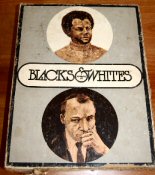 In 1970 Psychology Today published a
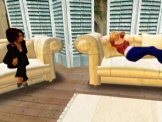 What’s it like doing psychotherapy in Second Life? New Scientist has a level-headed
 io9 has a fantastic
 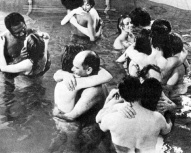 The first session of nude psychotherapy was held in 1967, at a nudist resort in California. It was the brainchild of radical therapist and ordained minister Paul Bindrim who made headlines around the world with events intended to enhance emotional connectedness and dismantle body-image hangups.
  The BBC World Service has an excellent
  Electronic devices that interface directly with the brain are now being produced by labs around the world but each new device tends to work in a completely different way. An
  I’ve just found a remarkable
  Mind Hacks