Spike activity 22-04-2016

Quick links from the past week in mind and brain news:

Nautilus has a fascinating piece on the science of practice and improving skills – not the same as just gaining experience.

The science behind the stoner lore of different strains of weed having distinctly different highs is taken apart by a great article in PrimeMind.

Science reports on recent findings from a cadaver study that casts doubts on whether tDCS can actually stimulate the brain at all.

Does mental illness enhance creativity? A good balanced look at the evidence from BBC Future.

Slate asks: Think Psychology’s Replication Crisis Is Bad? Welcome to the One in Medicine.

Should Therapists Write About Patients? Important personal piece published in The New York Times.

The Guardian has a brief first-person piece: The secret life of a trainee brain surgeon.

A data geek may have resurrected the much maligned field of serial killer profiling. Good piece in Boston Magazine.

A brief hallucinatory twilight

CC Licensed Photo by Flickr user Risto Kuulasmaa. Click for source.I’ve got an article in The Atlantic on the hypnagogic state – the brief hallucinatory period between wakefulness and sleep – and how it is being increasingly used as a tool to make sense of consciousness.

There is a brief time, between waking and sleep, when reality begins to warp. Rigid conscious thought starts to dissolve into the gently lapping waves of early stage dreaming and the world becomes a little more hallucinatory, your thoughts a little more untethered. Known as the hypnagogic state, it has received only erratic attention from researchers over the years, but a recent series of studies have renewed interest in this twilight period, with the hope it can reveal something fundamental about consciousness itself.

The hypnagogic state has been better dealt with by artists and writers over the years – Colderidge’s poem Kubla Khan apparently emerged out of hypnagogic reverie – albeit fuelled by opium

It has received only occasional attention from scientists, however. More recently, a spate of studies has come out showing some genuine mainstream interest in understanding hypnagogia as an interesting source of information about how consciousness is deconstructed as we enter sleep.


Link to article in The Atlantic on the hypnagogic state.

Irrational? Decisions and decision making in context

IMG_0034Nassim Nicholas Taleb, author of Fooled by Randomness:

Finally put my finger on what is wrong with the common belief in psychological findings that people “irrationally” overestimate tail probabilities, calling it a “bias”. Simply, these experimenters assume that people make a single decision in their lifetime! The entire field of psychology of decisions missed the point.

His argument seems to be that risks seem different if you view them from a lifetime perspective, where you might make choices about the same risk again and again, rather than consider as one-offs. What might be a mistake for a one-off risk could be a sensible strategy for the same risk repeated in a larger set.

He goes on to take a swipe at ‘Nudges’, the idea that you can base policies around various phenomena from the psychology of decision making. “Clearly”, he adds, “psychologists do not know how to use ‘probability'”.

This is maddeningly ignorant, but does have a grain of truth to it. The major part of the psychology of decision making is understanding why things that look like bias or error exist. If a phenomenon, such as overestimating low probability events, is pervasive, it must be for a reason. A choice that looks irrational when considered on its own might be the result of a sensible strategy when considered over a lifetime, or even over evolutionary time.

Some great research in decision making tries to go beyond simple bias phenomenon and ask what underlying choice is being optimised by our cognitive architecture. This approach gives us the Simple Heuristics Which Make Us Smart of Gerd Gigerenzer (which Taleb definitely knows about since he was a visiting fellow in Gigerenzer’s lab), as well as work which shows that people estimate risks differently if they experience the outcomes rather than being told about them, work which shows that our perceptual-motor system (which is often characterised as an optimal decision maker) has the same amount of bias as our more cognitive decisions; and work which shows that other animals, with less cognitive/representational capacity, make analogues of many classic decision making errors. This is where the interesting work in decision making is happening, and it all very much takes account of the wider context of individual decisions. So saying that the entire field missed the point seems…odd.

But the grain of truth the accusation is that the psychology of decision making has been popularised in a way that focusses on one-off decisions. The nudges of behavioural economics tend to be drammatic examples of small interventions which have large effects in one-off measures, such as giving people smaller plates makes them eat less. The problem with these interventions is that even if they work in the lab, they tend not to work long-term outside the lab. People are often doing what they do for a reason – and if you don’t affect the reasons you get the old behaviour reasserting itself as people simply adapt to any nudge you’ve introduced Although the British government is noted for introducing a ‘Nudge Unit‘ to apply behavioural science in government policies, less well known is a House of Lords Science and Technology Committee report ‘Behavioural Change’, which highlights the limitations of this approach (and is well worth reading to get an idea of the the importance of ideas beyond ‘nudging’ in behavioural change).

Taleb is right that we need to drop the idea that biases in decision making automatically attest to our irrationality. As often as not they reflect a deeper rationality in how our minds deal with risk, choice and reward. What’s sad is that he doesn’t recognise how much work on how to better understand bias already exists.

An echo of your former self

CC Licensed Image by Flickr user Karen Axelrad. Click for source.The journal Neurology has a brief case study reporting an intriguing form of auditory hallucination – hearing someone speaking in the voice of the last person you spoke to.

The phenomenon is called palinacousis and it usually takes the form of hallucinating an echo or repetition of the voice you’re listening to and it’s particularly associated with problems with the temporal lobes.

This case is a little different, however.

A 70-year-old right-handed white man was brought by his wife to the emergency room due to odd behavior for 2 days… According to the patient, he could not explain why people talking to him sounded strange, speaking in different voices which he heard before. For example, he would talk to a man and would hear him as talking with the voice of the woman he previously talked to. He thought it was funny and he could not concentrate on what the other person was saying because he would be laughing…

On occasion, he complained of hearing a very low-pitched intonation in people’s voices, including his own. At other times, he would hear a cyclical pattern of sounds that transitioned from noisy to silent. His most disturbing auditory symptoms persisted for several days and presented in 2 distinct forms. At first, he described hearing his deceased mother’s voice speaking to him through other people’s speech. Later on, he mentioned that after talking to one person, he would hear a second person speaking to him in the first person’s voice. He would also sometimes hear his voice as if it was the voice of the person he just spoke to. During physical therapy, the patient reported that therapist voices would suddenly change to those of people he had heard on television, which provoked uncontrollable fits of laughter.

In this case, the gentleman didn’t have damage to his temporal lobes, but a bleed that affected his right parietal lobe, which may have led to the atypical form of this hallucination.

In a recent paper, Sam Wilkinson and I noted that palinacousis is one example of an auditory hallucination that typically isn’t experienced as if you’re being communicated to by an external, illusory agent – which are perhaps the least common as most people hear hallucinated voices that appear as if they have some social characteristics.

However, it seems as if there’s even a social version of palinacousis where the echo is of someone’s voice form transposed on to the current speaker.
 

Link to PubMed entry for case study.

Spike activity 08-04-2016

Quick links from the past week in mind and brain news:

Why we’re living in an era of neuroscience hype. Excellent piece in The Daily Dot by well-known neuroscience blogger Neuroskeptic.

The Atlantic has a wonderful piece on teaching neuroscience in prison. No, not some dodgy course on ‘better living through neuroscience’ – genuine neuroscience. A great reflection on teaching science in an unlikely place.

How deep learning survived the AI winter and came to dominate cognitive computing. Great piece in re/code.

Nautilus has an interesting piece on the science of empathy in the caring professions.

My terrifying – and valuable – time in a psychiatric ward. Times Higher Educational Supplement has a piece by a US academic.

The Psychologist has an excellent piece by novelist Alex Pheby on Daniel Paul Schreber’s classic memoirs of psychosis.

The killer of Kitty Genovese dies in prison. The New York Times covers the case, the killer and the psychology myth.

Scientific American Mind asks why does the brain need so much energy?

Critical mental health has a brain problem

A common critical refrain in mental health is that explaining mental health problems in terms of a ‘brain disorder’ strips meaning from the experience, humanity from the individual, and is potentially demeaning.

But this only holds true if you actually believe that having a brain disorder is somehow dehumanising and this constant attempt to distance people with ‘mental health problems’ from those with ‘brain disorders’ reveals an implicit and disquieting prejudice.

It’s perhaps worth noting that there are soft and hard versions of this argument.

The soft version just highlights a correlation and says that neurobiological explanations of mental health problems are associated with seeing people in less humane ways. In fact, there is good evidence for this in that biomedical explanations of mental health problems have been reliably associated with slightly to moderately more stigmatising attitudes.

This doesn’t imply that neurobiological explanations are necessarily wrong, nor suggests that they should be avoided, because fighting stigma, regardless of the source, is central to mental health. This just means we have work to do.

This work is necessary because all experience, thought and behaviour must involve the biology of the body and brain, and mental health problems are no different. Contrary to how it is sometimes portrayed, this approach doesn’t exclude social, interpersonal, life history or behavioural explanations. In fact, we can think of every type of explanation as a tool for understanding ourselves, rather than a mutually exclusive explanation of which only one must be true.

On the other hand, the strong version of this critical argument says that there is ‘no evidence’ that mental health problems are biological and that saying that someone has ‘something wrong with their brain’ is demeaning or dehumanising in some way.

For example:

“such approaches, by introducing the language of ‘disorder’, undermine a humane response by implying that these experiences indicate an underlying defect.”

“The idea of schizophrenia as a brain disorder might offer further comfort by distancing ‘normal’ from disturbing people. It may do this by placing disturbing people in a separate category and by suggesting uncommon process to account for their behaviour…”

“The fifth category… consists people suffering from conditions of definitely physical origin… where psychiatric symptoms turn out to be indications of an underlying organic disease… medical science has very little to offer most victims of head injury or dementia, since there is no known cure…”

“To be sure, these brain diseases significantly affect mental status, causing depression, psychosis, and dementia, particularly in the latter stages of the illness. But Andreasen asks us to believe that these neurological disorders are “mental illnesses” in the same way that anxiety, depression, bipolar disorder, and schizophrenia­ are mental illnesses. This kind of thinking starts us sliding down a slippery slope, blurring distinctions that must be maintained if we are to learn more about why people are anxious, depressed, have severe mood swings, and lose contact with reality.”

There are many more examples but they almost all involve, as above, making a sharp distinction between mental health difficulties and ‘biological’ disorders, presumably based on the belief that being associated with the latter would be dehumanising in some way. But who is doing the dehumanising here?

These critical approaches suggest that common mental health problems are best understood in terms of life history and meaning but those that occur alongside neurological disorders are irrelevant to these concerns.

Ironically, this line of reasoning implies that people without clearly diagnosable neurological problems can’t be reduced to their biology, but people with these difficulties clearly can be, to the point where they are excluded from any arguments about the nature of mental health.

Another common critical claim is that there is ‘no evidence’ for the causal role of biology in mental health problems but this relies on a conceptual sleight of hand.

There is indeed no evidence for consistent causal factors – conceptualised in either social, psychological or biological terms – that would explain all mental health problems of a certain type, or more narrowly, all cases of people diagnosed with say, schizophrenia or bipolar disorder.

But this does not mean that if you take any particular change conceptualised at the neurobiological level that it won’t reliably lead to mental health problems, and this is true whether you have faith in the psychiatric diagnostic categories or not.

For example, Huntingdon’s disease, dementia, 22q11.2 deletion syndrome, Parkinson’s disease, brain injury, high and chronic doses of certain drugs, certain types of epilepsy, thyroid problems, stroke and many others will all either reliably lead to mental health problems or massively raise the risk of developing them.

Critical mental health advocates typically deal with these examples by excluding them from what they consider under their umbrella of relevant concerns.

The British Psychological Society’s report Understanding Psychosis simply doesn’t discuss anyone who might have psychosis associated with brain injury, epilepsy, dementia or any other alteration to the brain as if they don’t exist – despite the fact we know these neurological changes can be a clear causal factor in developing psychotic experiences. In fact, dementia is likely to be the single biggest cause of psychosis.

In a recent critical mental health manifesto, the first statement is “Mental health problems are fundamentally social and psychological issues”.

This must ring hollow to someone who has developed, for example, psychosis in the context of 22q11.2 deletion syndrome (25% of people affected) or depression after brain injury (40% of people affected).

It’s important to note that these problems are also clearly social and psychological, but to say mental health problems are ‘fundamentally’ social and psychological, immediately excludes people who either clearly have changes to the brain that even critical mental health advocates would accept as causal, or who feel that neurobiology is also a useful way of understanding their difficulties.

All mental health problems are important. Why segregate people on the basis of their brain state?

The ‘not interested in mental health problems associated with brain changes’ approach tells us who critical mental health advocates exclude from their zone of concern: people with acquired neurological problems, people with intellectual disabilities, older adults with dementia, children with neurodevelopmental problems, and people with genetic disorders, among many others.

I’ve spent a lot of time working with people with brain injury, epilepsy, degenerative brain disorders, and related conditions.

Humanity is not defined by a normal brain scan or EEG.

Mental health problems in people with neurological diagnoses are just as personally meaningful.

Social and psychological approaches can be just as valuable.

If your approach to ‘destigmatising’ mental health problems involves an attempt to distance one set of people from another, I want no part of it.

What a more inclusive approach shows, is that there are many causal pathways to mental health problems. In some people, the causal pathway may be more weighted to problems understood in social and emotional terms – trauma, disadvantage, unhelpful coping – in others, the best understanding may more strongly involve neurobiological changes – brain pathology, drug use, rare genetic changes. For many, both are important and intertwine.

Unfortunately, much of this debate has been sidetracked by years of pharmaceutical-funded attempts to convince people with mental health difficulties that they have a ‘brain disease’ – which often feels like adding insult to injury to people who may have suffered years of abuse and exclusion.

But what’s under-appreciated is the over-simplified ‘brain disease’ framework also rarely helps people with recognisable brain changes. Their mental health difficulties reflect and incorporate their life history, hopes and emotional response to the world – as it would with any of us.

So let’s work for a more inclusive approach to mental health that accepts and supports everyone regardless of their measurable brain state, and that aims for a scientific understanding that recognises there are many pathways to mental health difficulties, and many pathways to a better future.
Why you forget what you came for when you enter the room

Forgetting why you entered a room is called the “Doorway Effect”, and it may reveal as much about the strengths of human memory, as it does the weaknesses, says psychologist Tom Stafford.

We’ve all done it. Run upstairs to get your keys, but forget that it is them you’re looking for once you get to the bedroom. Open the fridge door and reach for the middle shelf only to realise that we can’t remember why we opened the fridge in the first place. Or wait for a moment to interrupt a friend to find that the burning issue that made us want to interrupt has now vanished from our minds just as we come to speak: “What did I want to say again?” we ask a confused audience, who all think “how should we know?!”

Although these errors can be embarrassing, they are also common. It’s known as the “Doorway Effect”, and it reveals some important features of how our minds are organised. Understanding this might help us appreciate those temporary moments of forgetfulness as more than just an annoyance (although they will still be annoying).

These features of our minds are perhaps best illustrated by a story about a woman who meets three builders on their lunch break. “What are you doing today?” she asks the first. “I’m putting brick after sodding brick on top of another,” sighs the first. “What are you doing today?” she asks the second. “I’m building a wall,” is the simple reply. But the third builder swells with pride when asked, and replies: “I’m building a cathedral!”

Maybe you heard that story as encouragement to think of the big picture, but to the psychologist in you the important moral is that any action has to be thought of at multiple levels if you are going to carry it out successfully. The third builder might have the most inspiring view of their day-job, but nobody can build a cathedral without figuring out how to successfully put one brick on top of another like the first builder.

As we move through our days our attention shifts between these levels – from our goals and ambitions, to plans and strategies, and to the lowest levels, our concrete actions. When things are going well, often in familiar situations, we keep our attention on what we want and how we do it seems to take care of itself. If you’re a skilled driver then you manage the gears, indicators and wheel automatically, and your attention is probably caught up in the less routine business of navigating the traffic or talking to your passengers. When things are less routine we have to shift our attention to the details of what we’re doing, taking our minds off the bigger picture for a moment. Hence the pause in conversation as the driver gets to a tricky junction, or the engine starts to make a funny sound.

The way our attention moves up and down the hierarchy of action is what allows us to carry out complex behaviours, stitching together a coherent plan over multiple moments, in multiple places or requiring multiple actions.

The Doorway Effect occurs when our attention moves between levels, and it reflects the reliance of our memories – even memories for what we were about to do – on the environment we’re in.

Imagine that we’re going upstairs to get our keys and forget that it is the keys we came for as soon as we enter the bedroom. Psychologically, what has happened is that the plan (“Keys!”) has been forgotten even in the middle of implementing a necessary part of the strategy (“Go to bedroom!”). Probably the plan itself is part of a larger plan (“Get ready to leave the house!”), which is part of plans on a wider and wider scale (“Go to work!”, “Keep my job!”, “Be a productive and responsible citizen”, or whatever). Each scale requires attention at some point. Somewhere in navigating this complex hierarchy the need for keys popped into mind, and like a circus performer setting plates spinning on poles, your attention focussed on it long enough to construct a plan, but then moved on to the next plate (this time, either walking to the bedroom, or wondering who left their clothes on the stairs again, or what you’re going to do when you get to work or one of a million other things that it takes to build a life).

And sometimes spinning plates fall. Our memories, even for our goals, are embedded in webs of associations. That can be the physical environment in which we form them, which is why revisiting our childhood home can bring back a flood of previously forgotten memories, or it can be the mental environment – the set of things we were just thinking about when that thing popped into mind.

The Doorway Effect occurs because we change both the physical and mental environments, moving to a different room and thinking about different things. That hastily thought up goal, which was probably only one plate among the many we’re trying to spin, gets forgotten when the context changes.

It’s a window into how we manage to coordinate complex actions, matching plans with actions in a way that – most of the time – allows us to put the right bricks in the right place to build the cathedral of our lives.

This is my BBC Future column from Tuesday. The original is here

Genetics is rarely just about genes

If you want a crystal clear introduction to the role genetics can play in human nature, you can’t do much better than an article in The Guardian’s Sifting the Evidence blog by epidemiologist Marcus Munafo.

It’s been giving a slightly distracting title – but ignore that – and just read the main text.

Are we shaped more by our genes or our environment – the age-old question of nature and nurture? This is really a false dichotomy; few, if any, scientists working in the area of human behaviour would adhere to either an extreme nature or extreme nurture position. But what do we mean when we say that our behaviours are influenced by genetic factors? And how do we know?

It will be one of the most useful 20 minutes you’ll spend this week.
 

Link to excellent introduction to genetics and human behaviour.

3 salvoes in the reproducibility crisis

cannonThe reproducibility crisis in Psychology rumbles on. For the uninitiated, this is the general brouhaha we’re having over how reliable published psychological research is. I wrote a piece on this in 2013, which now sounds a little complacent, and unnecessarily focussed on just one area of psychology, given the extent of the problems since uncovered in the way research is manufactured (or maybe not, see below). Anyway, in the last week or so there have been three interesting developments

Despair

Michael Inzlicht blogged his ruminations on the state of the field of social psychology, and they’re not rosy : “We erred, and we erred badly“, he writes. It is a profound testament to the depth of the current concerns about the reliability of psychology when such a senior scientist begins to doubt the reality of some of the phenomenon upon which he has built his career investigating.

As someone who has been doing research for nearly twenty years, I now can’t help but wonder if the topics I chose to study are in fact real and robust. Have I been chasing puffs of smoke for all these years?

Don’t panic!

But not everyone is worried. A team of Harvard A-listers, including Timothy Wilson and Daniel Gilbert, have released press release announcing a commentary on the “Reproducibility Project: Psychology”. This was an attempt to estimate the reliability of a large sample of phenomena from the psychology literature (Short introduction in Nature here). The paper from this project was picked as one of the most important of 2015 by the journal Science.

There project is a huge effort, which is open to multiple interpretations. The Harvard team’s press release is headlined “No evidence of a replicability crisis in psychological science” and claimed “reproducibility of psychological science is indistinguishable from 100%”, as well as calling from the project to put effort into repairing the damage done to the reputation of psychological research. I’d link to the press release, but it looks like between me learning of it yesterday and coming to write about it today this material has been pulled from the internet. The commentary announced was due to be released on March the 4th, so we wait with baited breath for the good news about why we don’t need to worry about the reliability of psychology research. Come on boys, we need some good news.

UPDATE 3rd March: The website is back! No Evidence for a Replicability Crisis in Psychological Science. Commentary here, and response

…But whatever you do, optimally weight evidence

Speaking of the Reproducibility Project, Alexander Etz produced a great Bayesian reanalysis of the data from that project (possible because it is all open access, via the Open Science Framework). This take on the project is a great example of how open science allows people to more easily build on your results, as well as being a vital complement to the original report – not least because it stops you naively accepting any simple statistical report of the what the reproducibility project ‘means’ (e.g. “30% of studies do not replicate” etc). Etz and Joachim Vandekerckhove have now upgraded the analysis to a paper, which is available (open access, natch) in PLoS One : “A Bayesian Perspective on the Reproducibility Project: Psychology“. And their interpretation of the reliability of psychology, as informed by the reproducibility project?

Overall, 75% of studies gave qualitatively similar results in terms of the amount of evidence provided. However, the evidence was often weak …The majority of the studies (64%) did not provide strong evidence for either the null or the alternative hypothesis in either the original or the replication…We conclude that the apparent failure of the Reproducibility Project to replicate many target effects can be adequately explained by overestimation of effect sizes (or overestimation of evidence against the null hypothesis) due to small sample sizes and publication bias in the psychological literature

The death of the soul has been greatly exaggerated

CC Licensed Image from Wikipedia. Click for source.I’ve got a piece in today’s Observer looking back on 20 years since novelist Tom Wolfe wrote a landmark article that threw open the doors on how the new science of cognitive neuroscience was challenging the notion of the self.

Exactly 20 years ago, Tom Wolfe wrote one of the most influential articles in neuroscience. Titled Sorry, But Your Soul Just Died, the 1996 article explores how ideas from brain science were beginning to transform our understanding of human nature and extend the horizons of our scientific imagination. It was published in a mainstream magazine, written by an outsider, and seemed to throw open the doors to an exhilarating revolution in science and self-understanding. Looking at the state of neuroscience and society two decades later, Wolfe turned out to be an insightful but uneven prophet to the brain’s future.

Wolfe’s article has been cited widely by both neuroscientists and the popular press.

It’s not entirely clear whether it shaped our popular understanding of brain science or whether it just predicted a future trend but it’s notable that before 1996 most press articles on fMRI were focused on technical details but subsequently they tended to be much more about ‘the brain reason for’ some aspect of human thought or behaviour.

Either way, it was clearly an important moment for neuroscience and my piece in The Observer looks back on Wolfe’s take on our changing view of human nature with the benefit of 20 years of brain science behind us.

And just to say, I occasionally have a bit of a grumble about the headlines written for my articles but hats off to however came up with “Neuroscience and the premature death of the soul” for this piece.
 

Link to ‘Neuroscience and the premature death of the soul’ in The Observer
Link to Tom Wolfe’s epic ‘Sorry, But Your Soul Just Died’.

Spike activity 12-02-2016

Quick links from the past week in mind and brain news:

Don’t tase me bro! Because it’ll cause short term cognitive impairment which may affect my ability to respond correctly under police interview. Important research from Drexel.

Mosaic has an interesting piece on hacking the placebo response and associative learning to improve medical treatments.

Your Next New Best Friend Might Be a Robot. Might be already for all I know. Nautilus on social robotics.

Science reports that sleep deprivation markedly increases false confessions.

The microcephaly brain changes apparently linked to the Zika virus are puzzling science. Good piece from NBC News.

The Atlantic covers the bitter fight over the benefits of bilingualism.

Good sceptical Gary Marcus talk on the current state of artificial intelligence and a useful tonic to those who think deep learning will lead to strong AI.

The Economist has an excellent in-depth article on the social effects of legalising cannabis.

There’s an excellent interview with pioneering neuroengineer Ed Boyden in Edge. Really, go read it.

Science News reports that the rise of human civilization was tied to belief in punitive gods. And also reality TV, you’ll notice.

A quartet of complementary brain books

Last night I taught a two hour class called ‘Navigating Neuroscience’ for the Guardian Masterclass series and I had the interesting challenge of coming up with a two hour course on some key concepts to help people make better sense of brain science, how it’s discussed, and its changing place in society.

As part of that, I recommended some books to give interested non-specialists a good critical introduction. I added a book after hearing some of the questions and I’ve included the list below.

I’ve mentioned some of them before on Mind Hacks in their own right, but I thought they’re worth mentioning as a set.

The books have been chosen to complement each other and the idea is that if you read all four, you should have a solid grounding in modern cognitive neuroscience and beyond. In no particular order:

Brainwashed: The Seductive Appeal of Mindless Neuroscience
by Sally Satel and Scott O. Lilienfeld

This is a great book for understanding common fallacies in conclusions drawn from cognitive neuroscience studies and what conclusions can reasonably be drawn from this evidence. It tackles several areas as examples of where these fallacies are having a significant effect: neuromarketing, neurolaw, lie detection, addiction and the brain-disease fallacy.

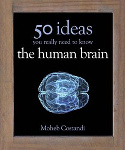
50 Ideas You Really Need to Know About the Human Brain
by Moheb Costandi

It’s a book of 50 small chapters each of which contains an essential idea on which the foundation of modern neuroscience rests. It’s very accessibly and accurately written and gets across some key subtleties that many academic textbooks miss. The great thing about this book is that it’s not just a ‘nuts and bolts’ guide to the brain and isn’t afraid to go into quite technical areas (‘Default Mode’, ‘Prediction Error’) while making sure they’re described in straight-forward language.

Great Myths of the Brain
by Christian Jarrett

This is especially good for listing and dispelling commonly cited but erroneous brain ‘facts’. It starts with some historical ones (‘Drilling a Hole in the Head Releases Evil Spirits’), move on to more obvious contemporary myths (‘We Only Use Ten Percent of Our Brains’) but then includes a range of common myths that may be well understood by neuroscientists but which pervade popular discourse and the media (‘Mirror Neurons Make Us Human’, ‘The Brain Receives Information from Five Senses’).

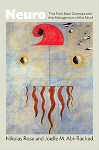
Neuro: The New Brain Sciences and the Management of the Mind
by Nikolas Rose and Joelle M. Abi-Rachedneuro

This is a great book for understanding how neuroscience is understood and used in society. It’s actually an academic book and Rose and Abi-Rached are sociologists but it’s technically accurate without being densely written. I genuinely think it’s one of the most important neuroscience books of the last decade. It is a brilliant analysis of how brain science and the practice of brain science have become associated with changing ideas of what it means to be human and their reciprocal relationship between politics and social influence in the world.

Spike activity 22-01-2016

Quick links from the past week in mind and brain news:

The New Yorker covers the shifting sands of autism in light of recent books that have rethought the history of the condition.

Brian Resnick at Vox asked twenty psych researchers: What do you hate about science journalism? Lots of good stuff.

Science reports big and welcome news: the Montreal Neurological Institute, one of the world’s leading brain research centres, is going entirely open science.

Why does the brain use so much energy? asks Wired UK.

The Independent has a piece on the history of the drug amyl nitrate, sold widely as ‘poppers’, and its place in gay culture, clubbing and sex.

I get interviewed by the Spanish-language blog Neuromexico – text in Spanish but audio largely in English.

The New York Times has a subtle first-person piece on prison psychotherapy.

A brief history of decapitation. Over at Inverse.

World’s stupidest drugs laws enacted by Britain

Yesterday, the UK Parliament approved the Psychoactive Drugs Bill which will become law in April. New Scientist pulls no punches in an uncharacteristically direct article and tells it like it is:

It’s official – the UK ban on legal highs that will begin in April is going to be one of the stupidest, most dangerous and unscientific pieces of drugs legislation ever conceived.

Watching MPs debate the Psychoactive Substances Bill yesterday, it was clear most of them hadn’t a clue. They misunderstood medical evidence, mispronounced drug names, and generally floundered as they debated the choices and lifestyles of people who are in most cases decades younger than themselves.

It would have been funny except the decisions made will harm people’s lives and liberty.

Parliament has just demonstrated you can invent nonsensical bullshit in place of science and get it passed as law as long as you claim it’s to ‘protect people’ from drugs.

Quite frankly, it’s an embarrassment.
 

Link to New Sci piece on “one of the worst laws ever passed”.

Spike activity 15-01-2016

Quick links from the past week in mind and brain news:

The New York Times has a brilliant piece on the non-scandal around sociologist Alice Goffman that’s also a reflection on sociology itself.

There’s a fascinating piece on ‘super forecasters‘ – people who seem to have an exceptional ability to judge the outcome of future events – in the Washington Post.

Knowing Neurons is a relatively new neuro blog that just keeps getting better.

Applying a knowledge of cognitive biases to add reality to virtual reality. Aeon covers an interesting area of applied psychology.

National Geographic has a fantastic piece on the evolution of the eye.

A mathematician is using computers to manufacture award-winning illusions. Fantastic piece in Nautilus.