Don’t fret the technique

My new favourite typo: if you’re fed up with the sound of electric rock n’ roll perhaps you’d prefer some autistic guitar.

This gentleman has an autistic guitar for sale, thankfully with an instruction book and tuner for novices.

For those of you who are a bit more advanced, this page tells you how to tune your autistic guitar using a Korg bass/guitar tuner.

If you want to see some pros in action, this guy plays “eclectic and autistic guitar”, while young Eliot has “an electric guitar and a autistic guitar and hoping to get an ovation autistic electric guitar”.

Rock on!

Is the behavioural economics bubble about to burst?

The BPS Research Digest has alerted me to a fantastic debate in this month’s Prospect magazine about whether behavioural economics is the savour of the dismal science or just fad in the boom and bust of economic theories.

It’s presented as a sarcastic exchange of letters between Pete Lunn (author of Basic Instincts: Human Nature and the New Economics) and Tim Harford (author of The Logic of Life: Uncovering the New Economics of Everything) and makes some powerful points on both sides of the discussion.

The main thrust of the criticism is that behavioural economics has some interesting lab findings but hasn’t really changed any of the large scale theories of how the economy actually works, while the main line of defence is that this is not a sign of scientific bankruptcy, just the result of it being a young science.

It’s a great complement to the recent Economist article that took a critical look at neuroeconomics.

Link to Prospect debate on behavioural economics.
Link to BPSRD commentary.

Playing doctors and nurses with sex

Psychologist Petra Boyton has written a fantastic piece about the increasing medicalisation of our sexual life as behaviours that were considered personal difficulties are now been re-packaged as disease to be treated by the medical establishment.

Petra focuses on ‘sex addiction’ and ‘female sexual dysfunction’, two concepts that get frequently discussed in the media despite them being seriously questioned as valid disorders by researchers in the field.

Because we‚Äôre used to hearing about sex addiction nowadays, criticising it can be difficult. After all doctors are telling us we have it, the media talks about it a lot, and it sounds very serious. To question it surely means denying people have problems or perhaps allowing dangerous health problems to run unchecked? Well, no. We do need to question the idea of medicalising sexual behaviour – particularly when ‚Äòtreatments‚Äô offered are frequently endorsed by people without adequate training, supervision, or awareness of the wider scientific literature on this issue.

Let’s be clear. Some people do behave in sexually risky ways. They don’t practice safer sex, they cheat on partners, they fail to control impulses or experience sex as a form of compulsive behaviour, or they use sex to make themselves feel better while inside they feel sad, lonely or angry. This is a problem and something that therapy can definitely tackle. But it doesn’t mean people who are acting in this way are ’sick’. Rather than slapping an addiction label on them we need to work with them to identify what is driving problems within their lives or relationships. And we need to get away from the idea that looking at porn, masturbating, enjoying (safer and consensual) sex with multiple partners, having pre marital sex, or being homosexual is a sign of sex addiction.

There’s also a link to an mp3 podcast of an interview with psychologist Leonore Tiefer who discusses problems with the concept of sex addiction, despite its place in popular culture.

I’ve been reading about addiction recently and I’m struck at how poorly the ‘behavioural addictions’ (i.e. non-drug compulsions) actually fit into the addiction model.

A review paper in the latest Behavioural and Brain Sciences aims to identify the core problems and breaks down each type of addiction into the various factors involved.

It includes addiction to cocaine and stimulants, opiates, nicotine, alcohol, caffeine and gambling.

What is most striking is that the authors relate gambling to one gambling-specific vulnerability that is not listed as a factor in any of the other addictions.

In other words, they had to create a mini gambling theory to account for it because it just didn’t fit in any of the other drug-based addiction evidence.

Link to Petra Boyton on medicalising sexual behaviour.
mp3 of interview with Prof Tiefer on the sex addiction con.
Link to BBS review paper on addiction.
Link to PubMed entry for same.

Lawrence of Arabia is dead, long live the crash helmet

I just found this fascinating article from a 2002 edition of Neurosurgery that tells how a brain surgeon who unsuccesfully operated on Lawrence of Arabia after his fatal motorcyle crash was inspired to research and design crash helmets that now save thousands of lives.

T.E. Lawrence, better known as Lawrence of Arabia, was a hero of the First World War who worked as a covert agent leading a revolt against the Ottoman Empire in the Middle East and was immortalised in the 1962 film.

Lawrence was also a fan of motorbikes. In fact, he’s pictured on one in the image on the left. Sadly, his interest eventually led to his death after a motorcycle crash in Dorset.

The Neurosurgery article tells the story of Hugh Cairns, a young neurosurgeon who attempted unsuccessfully to save Lawrence’s life as part of the surgical team who treated him.

His experience led him to research the benefits of early crash helmets on Army motorcycle riders during the Second World War, finding that they were one of the major life-saving factors.

He later went on to use his knowledge of how the brain becomes damaged during impact to design and test various types of crash helmet that could best protect against these forms of injury.

Cairns’ work was a major influence on both the legal system, that has mandated helmets in many countries, and the design of the headgear itself – preventing thousands of fatal brain injuries in the process.

Link to article on Lawrence, Cairns and the origin of crash helmets.
Link to PubMed entry for article.

The Gene Genie meddles with relationships

Not Exactly Rocket Science has a great <a href="http://scienceblogs.com/notrocketscience/2008/09/of_voles_and_men_exploring_the_genetics_of_commitment.php
“>article on the recent finding that the AVPR1A gene is linked to relationship problems in heterosexual men.

Unfortunately, it’s been widely reported in the mainstream media as being a ‘gene for relationship problems’ or a ‘gene for marital bliss’ but it’s really not.

In this case, the gene codes for the receptor of vasopressin, a hormone thought to play a role in bonding in some mammals, but it’s still a long way from the gene to the behaviour.

The media reporting of genetics studies often makes the common mistake of explaining these sorts of findings as ‘a gene for…’ – misdescribing the gene as being specifically for a high-level behaviour and implying a sort of mysterious Gene Genie that magically allows this tiny part of a molecule to influence our lives.

However, these studies only report a statistical association and usually do not tell us about how the gene is linked to behaviour.

This is nicely illustrated in a number of studies that have linked genes to some really quite surprising things.

One of my favourite studies has found that the gene hTAS2R16 is reliably associated with alcoholism. It would be easy to explain this as “a gene for alcoholism” but we know exactly what it codes for: a bitterness receptor on the tongue.

One hypothesis is that people with this version of the gene are less sensitive to bitter things, so they find drinks such as beer more enjoyable, so they tend to drink more, are exposed to more alcohol and so have a higher chance of becoming alcoholic.

From tongue to addiction through the fog of everyday life – maybe. We need to do further studies to test this out and you can see how complex it could get.

Even more counter-intuitive is evidence from a twin study that ‘life events’ are heritable. ‘Life events’ are what psychologists euphemistically called stressful or traumatic things that can happen to us – death of loved-ones, loss of employment, serious injuries. Essentially, they’re the shit in ‘shit happens’.

Unlike molecular genetic studies, twin studies can’t tell us which genes are involved, they just roughly estimate how much of a risk is to do with genetic vs environmental effects, and it turns out that life events are partly inherited.

In other words, we can inherit the chance of ‘shit happening’ from our parents. But in this case, it’s how we explain the ‘happens’ in ‘shit happens’ that matters.

A further study found the risk seems to be related to anxiety and depression so maybe that people with a higher chance of emotional stress might make worse choices in some instances, or maybe more likely to be fired, or keep a relationship going, or maybe have relatives with poorer health (both depression and anxiety are related to physical health problems).

Again, this is a clue, but actually working out a sound scientific explanation that covers the influence of genetics on life events is a massive task.

In other words, genetics studies don’t tell us how the link works, they just tell us it exists, and we need to be careful not to invoke the Gene Genie in our explanation before we’ve done further studies that actually explain the mechanism.

Link to NERS on exploring the genetics of commitment.
Link to study text.

Fraudian slip

Today’s BPS Research Digest has a wonderfully ironic and recursive Freudian slip in a post about the misdiagnosis of women with mental illness in Victorian Britain.

It highlights how misdiagnosis could get the doctor in hot water, and makes a link with Freud’s later ideas about hysteria – symptoms that appear to be neurological, such as paralysis, but aren’t accounted for by damage to the nervous system.

I hope Christian won’t mind me pointing out that the misspelling of Freud is brilliantly paradoxical:

Remember this is some decades before Fraud started applying the diagnosis of conversion disorder or hysteria to so many women, many of whom probably had organic illnesses.

Freud argued that the ‘Freudian slip‘, or parapraxis, is an example of the unconscious mind slipping past our conscious editing of speech and action, potentially revealing the true beliefs of desires of the person in question.

I wonder whether he’d feel vindicated over the sentence above, or would just despair that such talented psychologists think he was talking bunk on this occasion.

With regards to the question over the reliability of diagnosing hysteria, now reclassified as ‘conversion disorder‘, Slater completed a famous 1965 study where he followed up patients who had been diagnosed with hysteria to see if they later showed definite signs of neurological illness.

He found that over 60% later showed signs of genuine neurological illness and dryly stated that “The only thing that ‚Äòhysterical‚Äô patients have in common is that they are all patients”.

Although influential at the time, it has subsequently been discredited as lacking rigorous methods (taking family doctor notes as follow-up data, for example).

The most comprehensive study was published in 2005 and looked at patients diagnosed with hysteria over many decades and found that misdiagnosis rates were one third in the 1950s, but have been at 4% since the 1970s – probably due to the emergence of reliable brain imaging technologies.

Incidentally, the image on the left is a slightly edited panel from a six page comic called The New Adventures of Sigmund Freud where an Uzi toting Sigmund takes on Osama Bin Laden in his secret lair.

Link to BPSRD on ‘The Suspicions of Mr Whicher’.
Link to 2005 hysteria follow-up study with full text link.
Link to The New Adventures of Sigmund Freud.

Drug-fuelled shooting as a spectator sport

The Atlantic has a provocative article arguing that drug-fuelled shootings would make competitive sport more interesting, although probably not in the way you’re thinking.

The piece discusses beta blockers such as propranolol, drugs that have their major effect on the peripheral part of the autonomic nervous system.

They don’t actually make the user feel less psychologically anxious, but just reduce the normal ‘fight or flight’ pumped feeling, so the bodily effects of anxiety such as shaking, sweating, heart pounding and muscle tension are reduced.

These drugs are used widely by professional musicians to stop performance jitters and the Atlantic article argues that they should be allowed in sports like shooting and archery so competitors aren’t disadvantaged by performance anxiety.

From a competitive standpoint, this is what makes beta blockers so interesting : they seem to level the playing field for anxious and non-anxious performers, helping nervous performers much more than they help performers who are naturally relaxed. In the British study, for example, the musician who experienced the greatest benefit was the one with the worst nervous tremor. This player’s score increased by a whopping 73%, whereas the musicians who were not nervous saw hardly any effect at all.

One of the most compelling arguments against performance enhancing drugs is that they produce an arms race among competitors, who feel compelled to use the drugs even when they would prefer not to, simply to stay competitive. But this argument falls away if the effects of the drug are distributed so unequally. If it’s only the nervous performers who are helped by beta blockers, there’s no reason for anyone other than nervous performers to use them.

Link to ‘In Defense of the Beta Blocker’ (via 3QD).

NeuroPod on altruism, imprinting, eating and magic

The August edition of the Nature Neuroscience podcast, NeuroPod, arrived online after a summer break with some fascinating discussions on everything from altruism to magic.

Perhaps the most interesting bit is on genomic imprinting – a curious effect where the same gene may be expressed differently depending on whether you inherited it from your mother or your father.

The most widely known examples are the Prader-Willi and Angelman syndromes, both of which are genetic disorders linked to learning disabilities and neurological problems.

Both are caused by a partial deletion of genes from chromosome 15. When this is inherited from the mother, it causes Angelman syndrome, when inherited from the father, it causes Prader-Willi syndrome.

A recent opinion piece published in Nature, written by sociologist Christopher Badcock and biologist Bernard Crespi, argued that genetic imprinting may be key to a much wider range of conditions – including many of the more common psychiatric disorders such as depression or schizophrenia.

We believe that psychiatric illness may be less to do with the genes a mother and father pass down, and more to do with which genes they program for expression. By our hypothesis, a hidden battle of the sexes — where a mother’s egg and a father’s sperm engage in an evolutionary struggle to turn gene expression up or down — could play a crucial part in determining the balance or imbalance of an offspring’s brain. If this proves true, it would greatly clarify the diagnosis of mental disorders. It might even make it possible to reset the mind’s balance with targeted drugs.

The article then goes on to propose the idea (presumably related to a similar Chris Frith theory) that autism and psychosis might be ‘diametric opposites’, echoing an argument they expanded on more fully in a larger article earlier this year.

I’ve not read the bigger piece, but my first thought is how they manage to account for the fact that people with Asperger’s or autism can become psychotic. I shall look forward to seeing what they have to say in more detail.

Anyway, the podcast discusses the main points, as well as getting some comments from some more sceptical scientists.

Link to NeuroPod homepage (now with flash streaming).
mp3 of August Neuropod.
Link to piece on genetic imprinting and psychiatric disorder.
Link to PubMed entry for same.

Encephalon 53 hails from a big continent

The 53rd edition of the Encephalon psychology and neuroscience writing carnival comes to us from the beautiful continent of Africa and has all the latest from the last fortnight in mind and brain news.

A couple of my favourites include an article from the appropriately named Brain Stimulant on the experience of a person with Asperger’s who took part in a TMS experiment, and another from Neuronism on the expert perceptual judgements of players vs wannabees in basketball.

This fortnite’s Encephalon is hosted by Ionian Enchantment a blog which I’d not discovered before but looks very good and is updated remarkably frequently.

Link to Encephalon 53.

It’s all gone scare shaped

The Guardian is currently running a series of extracts from Ben Goldacre’s new book, Bad Science. The first two are witty, acerbic and address how implausible vaccine scare stories get picked up by a scandal hungry media, and how pharmaceutical companies attempt to persuade us that every discomfort is a medical disorder.

Actually, I’m still waiting for the copy I’ve ordered to arrive so haven’t seen the whole thing yet, but if you’re a fan of the Bad Science column then the extracts suggest that the book will be just as insightful.

Times have changed. The pharmaceutical industry is in trouble: the golden age of medicine has creaked to a halt, the low-hanging fruit of medical research has all been harvested, and the industry is rapidly running out of new drugs. Fifty “novel molecular entities” a year were registered in the 1990s, but now it’s down to 20, and many of those are just copies of other companies’ products, changed only enough to justify a new patent. So the story of “disease mongering” goes like this: because they cannot find new treatments for the diseases we already have, the pill companies have instead had to invent new diseases for the treatments they already have.

Recent favourites include social anxiety disorder (a new use for SSRI antidepressant drugs), female sexual dysfunction (a new use for Viagra in women), the widening diagnostic boundaries of “restless leg syndrome”, and of course “night eating syndrome” (another attempt to sell SSRI medication, bordering on self-parody) to name just a few: all problems, in a very real sense, but perhaps not necessarily the stuff of pills, and perhaps not all best viewed in reductionist biomedical terms. In fact, you might consider that reframing intelligence, loss of libido, shyness and tiredness as medical pill problems is a crass, exploitative, and frankly disempowering act.

Night eating syndrome? No wonder those Goths look so pale.

Link to ‘The media‚Äôs MMR hoax’.
Link to ‘The Medicalisation of Everyday Life’.
Link to book details.

A vision of a daydream, or a fragment of reality

The Boston Globe has an interesting piece on daydreaming, touching on the link between daydreaming and creativity and discussing the possibly brain networks that might support our pleasant mental wanderings.

The article discusses some of the recent work on the default brain network and how this might be related to daydreaming:

Every time we slip effortlessly into a daydream, a distinct pattern of brain areas is activated, which is known as the default network. Studies show that this network is most engaged when people are performing tasks that require little conscious attention, such as routine driving on the highway or reading a tedious text. Although such mental trances are often seen as a sign of lethargy – we are staring haplessly into space – the cortex is actually very active during this default state, as numerous brain regions interact. Instead of responding to the outside world, the brain starts to contemplate its internal landscape. This is when new and creative connections are made between seemingly unrelated ideas.

“When you don’t use a muscle, that muscle really isn’t doing much of anything,” says Dr. Marcus Raichle, a neurologist and radiologist at Washington University who was one of the first scientists to locate the default network in the brain. “But when your brain is supposedly doing nothing and daydreaming, it’s really doing a tremendous amount. We call it the ‘resting state,’ but the brain isn’t resting at all.”

It’s worth bearing in mind that the connection between this network and daydreaming is only one theory, and other researchers think of it quite differently.

The ‘default network’ was suggested owing to measurements of how the brain uses energy at rest, and when brain imaging researchers noted that certain parts of the brain (mainly midline areas) were more active when participants didn’t seem to be doing very much but showed reduced activity when we participants were most engaged in attention-demanding tasks.

Neurologist Marcus Raichle has been most vocal in proposing that the network is linked to what we might broadly call daydreaming, mostly notably on the basis of a study that found that default network activity was related to what they called ‘stimulus independent thought’.

They determined this by training people on a memory task until they could do it so easily their minds wandered. They then put people in a scanner, compared brain activation in this condition to brain activation with a similar memory task but where the material was new, so they had to concentrate and weren’t able to think about other stuff.

They found that the practised condition was associated with activity in a default network, and, therefore, they linked it to daydreaming.

The trouble is, is that they only confirmed that participants were doing more off topic thinking, not what they were thinking about.

We might think of daydreaming as having thoughts about being the lead singer of an all-girl skiffle band, fighting a dragon if it happened to burst through the lab door, or screwing the research assistant who took us through the consent form, but it could be that the participants were just focused on the other stuff that was happening around them at the time.

Like the horrendous noise of the fMRI scanner, as some commentators suggested. Or perhaps, they were just being more aware of their wider environment.

And in fact, one theory suggests that the default network is not concerned with daydreaming, but maintains a background level of watchful attention to detect potentially dangerous external events (real dragons, for example), or perhaps processes memories – essentially doing our mental filekeeping.

One big problem with this area, is that it attempts to study a network which is supposedly most active when when not doing deliberate mental tasks, by extrapolating from data that involves the participants doing deliberate mental tasks.

This makes it difficult to tie it specifically to daydreaming, which is a subjective mental state that has a tendency of dancing away whenever we try and catch it.

Link to Globe article ‘Daydream achiever’ (via Frontal Cortex).

Monty Python’s fluent aphasia

Thripshaw’s Disease was a fictional medical condition shown in a sketch from the classic comedy series Monty Python’s Flying Circus that bears a remarkably similarity to fluent aphasia, a speech impairment that can occur after brain injury.

Mind Hacks reader Patricio sent in this fascinating observation, and we can see from the sketch that the man can understand what is said to him (intact comprehension), but produces fluent but jumbled sentences.

Speech problems after (usually left-sided) brain injury are called aphasia and the concept reflects the various ways speech can be impaired.

Sometimes aphasia affects speech production, so people can hardly seem to get a word out, while other people can produce fluent speech although it can be full of misplaced words, odd word order or nonwords. Often in fluent aphasia, people can also have difficulties in understanding what is said, but it’s not always the case.

Of course, there can be a mix of all sorts of problems, but the type of speech disorder depicted in the Monty Python sketch is called paragrammaticism and was tackled by a classic study by Butterworth and Howard.

Most interestingly, the researchers found that these errors are identical to the grammatical errors people without brain injury tend to make on a day-to-day basis, but just happen much more frequently.

Here’s one of the examples from the study:

My father, he is the biggest envelope ever worked in Ipswich. He strikes every competition and constitution that’s going. He’s got everybody situated and they’ve got to talk to him.

And there’s also a lovely example from this book:

I’ll tell you, not like before, I must say that once the beginning happened in the beginning, as I arrived and naturally it was, of course, quite decisive.

The gentleman in Monty Python sketch also shows paraphasias (saying the wrong word where you intended to say another) and neologisms (creating instant nonsense words).

Interestingly, the interviewer on the TV chat show slightly later in the sketch shows a classic transcortical motor aphasia – a slow halting speech with inappropriate word stress – typically caused by damage to areas of the mid part of the left frontal lobe.

This character is played by Graham Chapman who studied medicine and qualified as a doctor although apparently never practiced owing to the success of Monty Python.

I wonder if he was inspired by some of the usual speech patterns of aphasia, or whether this was just an interesting coincidence.

Link to video of Monty Python sketch (thanks Patricio!).
Link to Butterworth and Howard study.
Link to PubMed entry for study.

Through a lab darkly

Cognitive scientists should be explorers of the mind, forging a path through the chaotic world of everyday life before even thinking of retreating to the lab, according to a critical article in the latest edition of the British Journal of Psychology.

Cognitive science often works like this: researchers notice something interesting in the world, they create a lab-based experiment in an attempt to control everything except what they think is the core mental process, they then test the data to see if it predicts real-world performance.

A new approach, proposed by psychologist Alan Kingstone and colleagues, suggests this is fundamentally wrong-headed and we need to completely rethink how we study the human mind to make it relevant to the real world.

The authors suggest that the standard approach relies on a flawed assumption – that mental processes are like off-the-shelf tools that do the same job, but are just assembled by the mind in different ways depending on the situation.

But imagine if this isn’t the case and mental processes are, in fact, much more fluid and adapt to fit the environment and situation. Not only would we have to change our psychological theories, we would have to change how we study the mind itself because the assumption that we can isolate and test the same mental process in different environments justifies the whole tradition of lab-based research.

The authors suggest an alternative they call ‘cognitive ethology’ and it focuses the efforts of cognitive scientists on a different part of the research process.

Let’s just revisit our potted example of what most cognitive scientists do: they notice something in the world, they create a lab-based experiment, they test to see if it predicts real-world performance.

The first part of this process (noticing -> lab-experiment) is often based on subjective judgements and rough descriptions and isn’t validated until the lab-based experiment is tested.

Kingston and his colleagues argue that scientists should be applying the techniques of science to the first stage – measuring and describing behaviour as it happens in the real world – and only then taking to the lab to see what happens when conditions change.

They give an example of this approach in an interesting driving study:

A Nature publication by Land and Lee (1994) provides a good illustration of a research approach that is grounded in the principle of first examining performance as it naturally occurs. These investigators were interested in understanding where people look when they are steering a car around a corner. This simple issue had obvious implications for human attention and action, as well as for matters as diverse as human performance modelling, vehicle engineering, and road design.

To study this issue, Land and Lee monitored eye, head, steering wheel position, and car speed, as drivers navigated a particularly tortuous section of road. Their study revealed the new and important finding that drivers rely on a ‘tangent point’ on the inside of each curve, seeking out this point 1–2 seconds before each bend and returning to it reliably.

Later, other researchers used a lab-based driving simulator study to systematically alter how much of this ‘tangent point’ was available to see what caused abnormal driving.

The authors also make the point that this approach is much better at helping us understand why something happens the way it does, because it ties it to the real world and helps us integrate it with the our knowledge of personal meaning.

It’s an interesting approach and meshes nicely with a recent article on cultural cognitive neuroscience in Nature Reviews Neuroscience. It looked at a number of fascinating studies on cultural influences on mind and brain function and discusses how we can go about understanding the interaction between culture and the brain.

If you want to skip the theoretical parts, Box 1 is worth looking at just for a brief summary of some intriguing cultural differences in the way we think.

The piece was also rather expertly covered by Neuroanthropology who cover the main punchlines and discuss some of the claims.

Link to ‘cognitive ethology’ article.
Link to PubMed entry for ‘cognitive ethology’ article.
Link to ‘cultural neuroscience’ article.
Link to PubMed entry for ‘cultural neuroscience’ article.

Computers cause abnormal brain growth – proof!

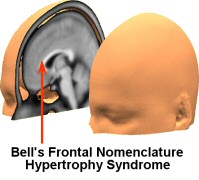
I have discovered shocking evidence that computers are affecting the brain. After extensive research, I have discovered the problem is remarkably specific and I have isolated it to an individual brain area affected by one particular application. Microsoft Word is causing abnormal growth in the frontal lobes.

The cingulate cortex is a part of the frontal lobe that is known to be involved with conflict monitoring, pain and emotion, while Microsoft Word is a clumsy but ubiquitous word processing package that has an annoying habit of auto-correcting things you don’t want to be auto-corrected.

For example, try typing the words ‘cingulate cortex’ into Word and see what happens. It changes it to ‘cingulated cortex’, adding an annoying ‘d’ onto the end of the first word.

Whenever I’m writing a neuropsychology article, I now have the habit of doing a search and replace before I finish to sweep up any of these auto-errors. So I was wondering whether anyone else had suffered the same problem and searched the scientific literature.

Now, it could be that people have just been making standard typos throughout history, as adding a rogue ‘d’ is not uncommon, even when we’re writing with a pen, but this doesn’t seem to be the case.

While the use of the term ‘cingulate cortex’ stretches back to at least the beginning of the 20th century, the term ‘cingulated cortex’ barely appears, until Microsoft Word’s autocorrection tool arrives on the scene.

There are 15 uses of the phrase “cingulated cortex” from 1900 to 2000. There are 1,740 uses from 2000 to now.

Microsoft Word, it seems, is slowly changing the brain.

Without further ado, I have named the disorder Bell’s Frontal Nomenclature Hypertrophy Syndrome and demand that it be included in the diagnostic manuals.

Thousands of disturbed people will not get the help they need without this essential recognition, although in the mean time I will be offering private treatment at special rates.

Of course, I strongly encourage further research and welcome offers of interviews from the press, radio or television.

I am also available for weddings, funerals and Bar Mitzvahs.

Minds and myths

The September issue of The Psychologist has two excellent and freely available articles that smash the popular myths of scientific psychology.

The first examines the widely mythologised story of hole-in-the head celebrity Phineas Gage, and the other tackles commonly repeated stories of famous studies that don’t stand up to scrutiny.

Gage, whose skull is pictured on the front cover, is legendary, but, as the article makes clear, there’s actually a great deal we don’t know about his life and the information that typically accompanies his story is based on only a very few sources.

The article on other myths in psychology focuses on some of the most widely incidents and studies in the field: the murder of Kitty Genovese, Asch’s conformity experiments, Little Albert and the Hawthorne Effect.

Particularly interesting is a discussion of the role of myths in science and what benefit they bring to the study of the human mind:

Other sciences certainly do have their own myths – just think of the story of Newton and the falling apple or Archimedes leaping out of the bath following his Eureka insight. Perhaps myths just seem more prominent in psychology because we tend to talk and write about our science in terms of studies rather than facts. Certainly the work of Mary Smyth at Lancaster University would appear to be consistent with this view – she has compared psychology and biology textbooks and found that psychology appears to have comparatively few taken-for-granted facts. Instead, numerous experiments are described in detail, lending scientific credence to any factual claims being made.

Related to this, there’s no doubt that the actual subject matter of psychology plays a part too – there’s that ever-present pressure to demonstrate that psychological findings are more than mere common sense. Benjamin Harris says that historians have described psychology as putting a scientific gloss on the accepted social wisdom of the day. ‘Psychology is always going to have a strong social component,’ he explains. ‘With psychological theories speaking to the human condition, there’s always going to be an appeal to myths that resonate more with experience than something coming out of the lab that’s sterile and ultra scientific.’

Another role that myths play is to reinforce the empirical legitimacy of psychology and to create a sense of a shared knowledge base. ‘In this way, tales such as of Kitty Genovese or Little Albert are rather like origin myths, pushing the creation of psychology, or a particular approach within psychology back in time, thus giving an air of greater authority,’ says Harris. Hobbs agrees: ‘It’s nice to have something that you can take for granted,’ he says. ‘In the case of the Hawthorne effect and other myths, you shouldn’t take it for granted, but it’s comforting to be able to say “Oh, this could be the Hawthorne effect” and for others to nod and say “Ah yes, that’s right”.’

Link to article ‘Phineas Gage ‚Äì Unravelling the myth’.
Link to article ‘Foundations of sand?’.

Full disclosure: I’m an unpaid associate editor for The Psychologist.

2008-08-29 Spike activity

Quick links from the past week in mind and brain news:

Choreography and Cognition is a project examining the cognitive science of dance. Try this for some experimental data. Get down.

The myth of undecided voters is tackled head on by Frontal Cortex.

Gin, Television and Cognitive Surplus. No, not a traditional English weekend, an Edge article by Clay Shirky on the internet and mental aggregators.

PsychCentral’s Sandra lists her Top 10 online psychology experiments.

ABC Radio National’s Life Matters explores out relationship to colour.

Corpus Callosum has an interesting role reversal art project where a psychiatrist has painted his emotional impression of patients.

Epigenetics or the ‘Ghost in Your Genes’ is a new TV programme and is linked to and discussed by Neuroanthropology.

The Smart Set review a book on loneliness.

The Guardian’s examination of the supposedly mandatory but widely ignored drug company gift registers for UK doctors, shows (can we guess) widespread soul selling.

Be sure to check ABC Radio National’s All in the Mind blog for extended comments and extra audio from the recent programme on the mind, markets and morality.

Wired Sciece on why early stone tools suggest Neanderthals were equally as intelligent as early humans, contrary to popular belief. Researchers now exploring lack of style, poor personal hygiene as reason for extinction.

The rubber hand illusion is accompanied by a drop in temperature of the ‘displaced’ hand. Another from Wired Science.

The BPS Research Digest reports a interesting study that finds we tend to overestimate the size of our own heads, but not those of others.

The three critical techniques for stage magic discussed in the recent paper on the cognitive science of magic are summarised by PsyBlog.

Harvard Magazine has an article on ‘A Work in Progress: The Teen Brain‘. Due to be completed shortly after Duke Nukem Forever.

July’s Neuropod appeared and we didn’t even notice. Still, the programme has been eerily quiet since then.

The Times reports that more sex by braver soldiers suggests an evolutionary explanation for rhubarb, hat stands, pink elephants, blah blah blah…

Why Are ‘Mama’ and ‘Dada’ a Baby’s First Words? Sounds obvious but it’s actually an interesting study into developmental phonetics.

BBC News reports that the drug rasagiline may may actually slow down Parkinson’s disease according to an early study.

Cool photo on Flickr appropriately called ‘applied radiology‘.

Cannabis use went down in the UK after it was reclassified as a ‘softer’ drug, reports of The Guardian. Buckets of urine at the ready to be flung into the wind when government shortly re-reclassifies it as a ‘harder’ drug.

Interesting experimental philosophy paper makes it into the top 10 philosophy papers of the year.

Furious Seasons catches two interesting antipsychotic news nuggets: Nature Neuroscience editorial says credibility lacking in child psychiatry after recent payments scandal / BMJ reports antipsychotics really, really bad in older folks.