Brain scanning unborn babies

I’ve just had pick my jaw up from the floor after reading an article on the brain scanning of unborn babies. I was idly wondering whether anyone had attempted to do an MRI scan of the fetal brain only to find that researchers are so advanced that they can do almost any sort of adult neuroimaging on the fetus – including psychological studies of brain activation.

One of the main difficulties with brain scanning unborn babies is that they move about a lot. You can asks adults and children to stay still, but fetuses are a little bit harder. One of the major advances in the field has been the development of algorithms to reconstruct high definition scans from blurred images.

Researchers have also completed diffusion scans that can create 3D maps of the white matter ‘cabling’ of the brain in the unborn baby, as with a recent study [pdf] on how brain connections develop during gestation. Recent studies have similarly been able to measure developing brain metabolism and examine how the size and shape of specific areas change during pregnancy.

But most amazingly, several studies have conducted functional MRI experiments on fetuses. In other words, they measured neural activity in specific brain areas in response to specific experiences.

The two scans on the right are from a 2008 study that looked at whether unborn babies at the 33rd week of development would show brain responses to sound in their auditory cortex, part of the temporal lobes. The researchers simply put headphones on the belly of the pregnant women and scanned while they played tones.

The top scan is from an adult, while the one from the bottom is from one of the fetuses, showing clear and selective activity the auditory cortex nearest the sound source.

I was completely blown away by that, and researchers are continuing to develop new and intriguing ways of presenting experiences to the fetus (such as shining lights through the belly to look for visual brain responses!).

Link to PubMed entry for paper on brain scanning fetuses.

Stunning brain scans of 500-year-old mummies

The Llullaillaco mummies are the spectacularly preserved bodies of three sacrificial children from a 500-year-old Inca civilisation found at more than 6,500m above sea level in the Peruvian Andes. I’ve just found a study that brain scanned the mummies and the results are nothing short of stunning.

I’ve tried to link each scan to the picture of the relevant mummy (although I have to say, the online photos of the mummies are a bit inconsistently labelled so I apologise for any mismatching) and you can see how remarkably well-preserved they are both inside and out.

The mummies are of a 15-year-old girl, a 7-year-old boy and a 6 year-old girl that are thought to have been left as part of a ritual Inca sacrifice. From the article:

The scientific excavation was carried out at an altitude of 6,739 m above sea level on the summit of Mount Llullaillaco in the northwestern Argentinean Andes at an average temperature of ‚Äì15¬∞C. These children had been sacrificed 500 years ago in times of the Inca Empire to appease the mountain deities and to ensure the emperor’s well-being. In addition, the mummies were buried with more than 100 objects, including textiles, gold and silver statues, pottery, and feathered headdresses.

The children had been buried in three pit tombs built by the Incas by enlarging natural niches in the bedrock at the summit shrine of Mount Llullaillaco, which is considered to be the highest archaeological site in the world. The mummies were individually buried 1.7 m deep with their associated offerings. The funerary sites were covered with a mixture of soil and stones, which was also used to fill in the platform that was later built to cover the burials.

According to a National Geographic news story, the older girl was found to have chewed coca leaves and drunk corn liquor, the latter possibly to put her asleep.

Link to study on brain scans of Llullaillaco mummies.
Link to NatGeo story on the mummy of the older girl.

Latah and the rules of rule breaking

Latah is a curious mental state seemingly localised to Malaysia and Indonesia where a person gets wound-up to such a degree that they show an exaggerated startle response, are highly suggestible, and may produce unintentional tic-like behaviour sequences when prompted by others.

It has been discussed as rare exotica in the medical literature but owing to the wonders of the internet, there are now many videos of it on YouTube (welcome to the age of armchair anthropology).

The name is also used to refer to people who have a tendency to get into latah states, and other people may deliberately trigger latah behaviours in the person as a sort of usually good natured social teasing.

For example, this video has some friends indulging in some good natured joshing by getting one of their latah companions to do a whole range of daft actions through demonstration or suggestion. The latah seems compelled to comply, occasionally snapping out of it to implore them to ‘stop it!’.

There are many other examples online. Although the specific triggered behaviours vary, almost all have the element of good-natured group teasing.

The condition is described by Western psychiatry as a culture-bound syndrome as it is typically thought only to occur in Malaysian and Indonesian people although the medical literature has had an ongoing debate about whether other cultures have the same phenomenon under a different name.

This is from an article on culture bound syndromes from The Psychiatric Times:

This same physiology has been elaborated in a variety of societies that are unrelated either historically or culturally. Among the Ainu in Japan, the syndrome is called imu, and in a French-Canadian population in Maine it is called jumping. Thus, these syndromes are similar, but not identical, from society to society. This, of course, is true of the diagnostic entities described in DSM-IV as well. Like hyperstartling, sleep paralysis (a feeling of paralysis when either just falling asleep or waking up, sometimes accompanied by visual or audio hallucinations) has been elaborated into a culture-bound syndrome in a number of unrelated geographic locations. It is known as uqamairineq among the Yupik Eskimos and as old hag in parts of Newfoundland, Canada.

Anthropologists, who are much better at dealing with cultural variation without trying to shoehorn it into their familiar categories, have often loudly scoffed at the psychiatric definition of latah as a syndrome, suggesting it is just a defined social role of the local culture that has its own limits and and ‘rules’.

The latah can break social convention by swearing or acting the fool, but violence or sexual indecency rarely occur and would be frowned upon.

In other words, it allows for socially sanctioned rule breaking while giving the person the justification of not being in control of their behaviour.

This is a common theme in society. Think about our ideas of a ‘wild night out’. Someone gets really drunk and flashes their arse at a passing bus – craaazy! Someone gets really drunk and flashes their cock at a bus – sex offender.

The ‘drunk’ reason doesn’t seem to excuse the latter quite so well, showing that there are limits to being ‘out of control’.

This doesn’t mean that we are fully in control either, it just means that all societies have established ways of allowing us to live on the boundaries (the liminal if you want the jargon).

From this perspective, Latah is a local example of a common human tendency.

Link to video of a latah (more here – thanks Ivan!)
Link to Psychiatric Times on culture-bound syndromes.

A flight simulator for brain surgery

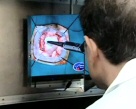
Gizmodo has picked up on an interesting new neurosurgery simulator that not only provides virtual reality skills training but also allows doctors to use data from MRI scans to practice on the brain of a specific patient.

The system also gives tactile feedback through the instruments, so you can feel the resistance in the brain tissue as you ‘cut’ through it.

According to a piece in TechReview, it’s the result of an ongoing project to create a neurosurgery simulator that started last year in Canada.

Check the Gizmodo page for a news clip where you can see the simulator in action.

Link to Gizmodo with video of NeuroTouch.
Link to TechReview write-up.

Instant reflex may reveal brain injury after knock out

I’ve just found a fascinating video clip reporting on newly discovered reflex action that occurs after a knockout blow. The researchers scoured YouTube for videos of nasty bangs the head and found many examples of the reflex appearing in people as they hit the deck.

The news clip is a a bit American (Americans, if you’re not sure what this means, to us, all your news seems like this) but includes some video clips which illustrate the response in sportsmen who have been knocked out.

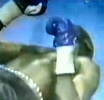
The researchers who have discovered the response have named it the ‘fencing response’ apparently because it looks like the en gard position in fencing – presumably though, only if you’ve never actually seen any fencing.

It actually looks more like the boxing stance with both hands out in front with elbows bent.

They suggest in their study that the response is a visible marker of moderate brain injury.

Link to news clip on the ‘fencing response’.
Link to abstract of study.

2009-09-04 Spike activity

Quick links from the past week in mind and brain news:

<img align="left" src="http://mindhacks-legacy.s3.amazonaws.com/2005/01/spike.jpg&quot; width="102" height="120"

The New York Times has an article on ‘speed shrinking‘ – like speed dating but with psychologists. Doesn’t mention whether it includes any drunken snogging in the bar afterwards.

Drug company Pfizer busted with $2.3 billion fine for illegal promotion of psych drugs, kickbacks and the general shadyness that everyone knows is common practice throughout the industry. Furious Seasons is on the case and is also having a fundraiser.

New Scientist has an article on the project to create artificial limbs controlled by implanted brain chips.

Healthy people with an intense desire to have a limb amputated may have differences in the function of brain areas that represent the body, according to research covered by the BPS Research Digest.

The Washington Post has a first person account of someone who experienced transient global amnesia – a dense amnesia that appears suddenly and typically resolves within a few hours.

When it comes to encouraging people to work together for the greater good, carrots work better than sticks, according to a great write-up of new research from Not Exactly Rocket Science. I suspect it is because carrots are tastier.

The Independent reports on the growing problem of mental health problems in British troops returning from combat missions in Afghanistan. Psychiatric casualties have apparently tripled in the last three years.

Artificial intelligence researcher Noel ‘John Connor’ Sharkey says AI is a dangerous dream in an <a href="http://www.newscientist.com/article/mg20327231.100-why-ai-is-a-dangerous-dream.html
“>interview for New Scientist.

Neuron Culture discusses two new military initiatives to counter PTSD in combat troops.

Wired covers a study finding that adolescent girls randomly assigned to three months of Tetris had thicker cortex in the frontal and temporal lobes. Full text of study here.

An elegant study that manipulated participants perception of free will is covered by the excellent Cognitive Daily.

neuro4kids has fan merchandise from the fantastic Neuroscience for Kids website

You are who you eat with. Time covers the social influences on obesity.

PsyBlog has an excellent article on ‘The Acceptance Prophecy: How You Control Who Likes You’. Sounds woolly, actually some fascinating social research.

We covered the news stories about rapper Roxanne Shant√© getting a PhD in psychology in 2007. Seems she’s been frontin’Slate investigates the smoke and mirrors.

The Today Programme, Radio 4’s flagship news show, has a good discussion on what recent research on brain differences in psychopaths really tell us.

Counter-intuitive research finding that teens with more mature brains are more likely to take <a href="http://www.time.com/time/health/article/0,8599,1919663,00.html?xid=rss-topstories
“>risks is discussed by Time magazine.

Scapegoats cause disease

The New York Times has a fascinating piece on the historical tendency for societies to find scapegoats for outbreaks of disease.

The article gives examples from modern epidemics of how specific groups have been singled out as responsible for a disease as a simple explanation for complex situations.

One of the most interesting parts is where it tackles why certain groups may have been targeted.

In some cases, the author hypothesises that certain cultural practices may have meant some subcultures were less affected by outbreaks, making it easier for more affected population to point the finger of suspicion:

It is not uncommon for ethnic groups to have religious or cultural customs that protect against disease — but whether it was originally intended to do that or not is often lost in time.

Manchurian nomads, Dr. McNeill said, avoided plague because they believed marmots harbored the souls of their ancestors, so it was taboo to trap them, although shooting them was permitted. Butin the early 20th century, trapping by immigrants from China contributed to plague outbreaks.

And Tamils from India working as plantation laborers in Malaysia may have had less malaria and dengue than their Malay and Chinese co-workers did because they never stored water near their houses, leaving mosquitoes no place to breed.

The article reminded me of Jared Diamond’s influential book Guns, Germs, and Steel. Diamond argues that it is impossible to separate the history of human culture from the influence of disease because disease has been one of the most powerful, if not unintentional, influences in competition between social groups.

Link to NYT ‘Finding a Scapegoat When Epidemics Strike’.

Hallucinating sanity in the middle ages

I’m just reading a thought-provoking book called Hallucinations and Their Impact on Art. Unfortunately, it’s a little dry so isn’t the most gripping of reads but it has this fascinating bit about how hallucinations weren’t considered to be part of madness in the middle ages.

While it is widely accepted in modern times that you can ‘hear voices’ without being mentally ill, the experience of hallucinations is thought to be part and parcel of most forms of madness, whereas this was apparently not the case in medieval times:

From p7:

What is more curious to the contemporary man is that the medieval description of insanity does not include hallucinations; and the experience of possession (passivity phenomena) is not described as occurring concurrently with or as part of a visionary state.

In Western Europe from AD 500-1500, people who heard voices or saw visions considered themselves, and were considered buy their contemporaries, to have had an actual perceptual experience of either divine or satanic inspiration. They were not considered mad and were not treated as such. Hallucinations (fantasmata) were only considered mad when combined with trickery (prestigiae).

Unfortunately, the book is out of print but it contains many such gems among the rather dull academic prose.

Why you’ll never see hypnosis on TV, hopefully

A TV watchdog has ticked off Australian company Channel Nine for breaching the broadcasters code of conduct and showing a hypnosis session.

You may not be aware, but in many countries any broadcast of a hypnosis session is banned. Here is the relevant rule from the regulations [pdf] from the British TV watchdog Ofcom:

Rule 2.9 Hypnosis

Elements of the hypnotist’s routine may be broadcast to set the scene. However, it is important not to broadcast the routine in its entirety, nor to broadcast elements that may cause a member of the audience to believe they are being influenced in some way.

This is because it is perfectly possible to be hypnotised through the TV, or indeed through the radio.

There is no ‘magic’ to hypnosis, it just requires that someone relax, focus, listen to suggestions and engage with the process, and some research suggests that even the relaxing and focusing is optional.

The most important thing to know about hypnosis is that people vary in their hypnotisability and this is the single most important thing that determines whether suggestions will have an effect.

As long as they are spoken clearly, it doesn’t seem to matter how they’re presented.

In fact, one of the most widely used measures of hypnotisability in the scientific literature takes participants through a number of hypnotic suggestions to see which they can experience and is usually just run from a pre-recorded tape.

Link to ABC news ‘Nine attempted to ‘hypnotise viewers’ (thanks David!).

Profile of quiet revolutionary Aaron Beck

Aaron Beck is the creator of one of the world’s most widely used and influential psychological treatments, cognitive behavioural therapy, and he’s profiled in an excellent article for The American Scholar.

While Beck is most associated with CBT, the article really nails why he is important in the development of psychological treatment, and its not just for the therapy he invented: from the very beginning he scientifically tested the effectiveness and principles his treatment meaning it has constantly changed and developed according to a solid research base.

If this seems obvious to you, you need to understand a little about the history of psychotherapy before Beck applied systematic testing to his own invention.

Previously, changes in psychotherapy were largely driven by the persuasiveness and personalities of the leading lights rather than systematic evidence for effectiveness.

In many forms of therapy, especially Freudian-inspired schools, the therapist’s own personality was considered to be intimately tied up with their methods, theories and techniques, meaning that rubbishing someone’s approach also meant you were rubbishing their skill as a therapist and, often, them personally.

In the early days of psychoanalysis, a common put-down used by Freud and his disciples was that a theory they didn’t like was bad because it was tainted by the unresolved conflicts of the author. The problem, in other words, was not with the idea, but with the author.

Beck approached psychological treatment with scientific tools and immediately distanced the practice from the personal. Ideas could be put forward, tested and it was expected that many of them would fail in the face of the data.

As a result, critical reviews of the evidence are considered the life blood of the treatment.

This research-led approach has not arrived without ruffling a few feathers. Recently, as health services have decided only to fund evidence-based treatments, CBT has become the treatment of choice and other therapies have been pushed out as they’ve traditionally not been interested in doing systematic studies.

As a result, critics have argued that CBT has been moulded to fit health economics rather than human nature. The debate continues and is likely to continue for some time.

The American Scholar article is an engaging piece looking at Beck himself, a famously reserved character in the flamboyant world of therapy, and the development of his treatment.

Incidentally, it’s written by Daniel Smith who wrote the wonderful book on hearing voices called Muses, Madmen and Prophets that I highly recommend.

Link to American Scholar article ‘The Doctor Is In’.

A kick in the guts for Parkinson’s disease

Your gut has its own neural network. Called the enteric nervous system, it controls digestion and has as many neurons as the spinal cord.

Parkinson’s disease is a brain disorder that has been long associated with stomach upsets. These were often explained away as due to poor diet or stress, but it seems increasingly likely that the disease may also be affecting the neurons in the digestive system.

It was originally thought just to destroy dopamine neurons in a deep brain structure called the nigrostriatal pathway, an effect which causes the distinctive movement problems, but it has become clear that the disorder causes damage throughout the nervous system via the formation of protein clumps called Lewy bodies.

A new article in European Journal of Neuroscience suggests that Parkinson disease affects the enteric nervous system, which might tie together some curious findings in the medical literature that have remained unexplained for many years.

Stomach upsets, swallowing and digestion problems have long been associated with Parkinson’s but it has never really been clear why.

While we commonly think of it purely in mechanical terms, digestion is remarkably complex process and the enteric nervous system is involved in the careful regulation of the muscle ripples of the gut, secretion of digestive fluids and blood flow to aid absorption.

Damage to this system would cause exactly the sorts of problems that have been reported in Parkinson’s disease patients and this fits with some previous findings that have been ignored for many years.

Until recently, only one study had investigated whether the enteric nervous system was damaged in Parkinson’s patients. It found that large numbers of the gut’s dopamine neurons seemed to be missing in patients with the disorder.

The next study appeared more than ten years later, this time looking for protein clumps in the gut of deceased patients, and found evidence that not only were these tell-tale signs present, but that the distribution suggested that neurons in the gut may be the first to be damaged.

The author of this study, neuroscientist Heiko Braak now proposes the radical idea that while we know part of the risk for Parkinson’s is genetic, maybe an environmental trigger – a virus – could get into the nervous system via the stomach, eventually triggering the brain changes that lead to the debilitating tremors and movement problems.

Link to Parkinson’s and gut nervous system article summary.

Seeing the results of surgery improves outcome

A newly published study has demonstrated the remarkable influence of beliefs on our experience of illness by showing that patients undergoing surgery to correct painful spinal tears report greater improvement if they’ve been shown the fragments of the removed disc.

The researchers, a surgical team from St George’s Hospital in London, were aware that anxiety and depression had a major influence on recovery after surgery for a type of spinal disc tear, commonly but inaccurately known as a ‘slipped disc’.

They decided to try a simple measure to help patients feel less anxious and bolster their belief that a good job had been done: the surgeons presented randomly selected patients with the removed fragments from their back.

This simple technique had a remarkable effect. Patients given a ‘souvenir’ of their operation reported greater improvement in sciatic nerve pain, lower back pain, less pins and needles sensations, less leg weakness and a reduced use of pain killers.

This study adds to the increasing evidence that beliefs have a marked impact on how the symptoms of an illness manifest themselves.

We know this is particularly the case for pain, and different beliefs about what is causing the pain and the effect it has, regardless of what the reality might be, can have a significant impact on the duration and the intensity of the pain itself.

Link to PubMed entry for surgery study (via @bengoldacre).

NeuroPod on updating ye olde brain map

The latest edition of Nature’s NeuroPod podcast has just hit the wires and has some great items on updating the Brodmann brain map, a challenge to the ‘use it or lose it’ theory of synapse formation, genetic copy and pasting in neurons and face perception in the monkey.

The first part is about a project to update the Brodmann areas, a map of the brain by different neuron structures that forms the basis of much modern neuroscience but is now 100 years old.

German neurologist Korbinian Brodmann started mapping the brain with his microscope and charting the different ways brain cells were organised and still today, if you read scientific papers on the brain, they often refer to places like Brodmann area 10 as a way of locating specific parts.

So you can see why the 100 year-old map needs an update.

Link to NeuroPod webpage.
mp3 of latest edition.

Drug smuggling innovations bulletin

I’ve just discovered the joys of the Microgram Bulletin, the newsletter of the US Drug Enforcement Administration that explains interesting new drug finds and novel methods for smuggling illicit substances.

It’s a curious mirror of the illicit drug trade and contains numerous mysterious finds, such as playground marbles systematically placed in cocaine bricks for an unknown purpose, or a find of cocaine smuggled as clear plastic-like coating for calendars, photos or magazines.

The bulletin also reports ‘mimic’ drugs, where manufacturers are passing off cheaper (and often nastier) substances as pill-based drugs such as ecstasy or amphetamine.

The publication has been going mostly monthly since 2003, and I recommend checking out some of the earlier editions as they contain some great essays and technical reports on the drug trade.

For example, there’s one edition with an analysis of cocaine trafficking derived from chemical analysis of seized drugs, and another on chemical dumps from illegal drug labs.

The picture on the left is from a report entitled “Cocaine concealed in religious plaques in Miami, Florida” from a report from May this year.

Link to DEA Microgram Bulletin online.

The automated phrenologist

I’ve just discovered the excellent This Week in the History of Psychology podcast series which has a particularly good episode on the ‘psycograph’, an automated phrenology device created in 1905.

The idea is that it would ‘read’ the bumps on your head by the use of mechanical plungers and it would then print a profile of your ‘character’ in a matter of seconds.

There’s a remarkable amount of information about this device on the web (and yes, “psycograph” is the correct spelling) including a fantastic page of original advertising.

You can download the relevant podcast as an mp3 and the others are also well worth checking out.

They are written and presented by mind and brain historian Christopher Green, who you may know from the Classics in the History of Psychology website, or his involvement with Advances in the History of Psychology blog.

Don’t be put off by the headache-inducing website, unlike many other special podcasts, is very well produced with high quality audio and an impressive line-up of researchers.

Link to This Week in the History of Psychology podcasts.

To the scent side

Photo by Flickr user SteffanyZphotgraphy. Click for sourceThe New York Times covers an interesting study finding that if you smell different odours in each nostril the brain doesn’t blend the scents, instead, your experience of smell alternates between the two.

This nostril rivalry, as the researchers describe it in a paper in Current Biology, is similar to what happens when the eyes are presented with different images, or the ears with different tones.

The researchers experimented with 12 people using two chemicals, one that has an odor like a marker pen, the other that smells like a rose. All 12 experienced switching between the two odors, with no pattern as to when and how often they switched.

And as with hearing and vision, smell sensitivity is related to the general tendency for left or right hemisphere activation in the brain.

Because this general tendency is also related to a bias for magical thinking and unusual perceptual experiences, we know that differences in nostril sensitivity can be found between people who have high numbers of paranormal-like experiences and those who don’t.

Link to NYT piece ‘How the Nose Copes With Nostril Rivalry’.
Link to PubMed entry for study.