A comment on Szasz

One of the most interesting commentaries I’ve ever read on Thomas Szasz, the long-time critic of psychiatry who recently passed away, has been left as a comment in the obituary we recently published.

The comment is by ‘Aporeticist’ and he or she is clearly a fierce critic of modern psychiatry (to the point of indulging in sweeping generalisations at times) but the analysis of Szasz is remarkably insightful and cuts to the core of both his triumphs and failings.

Many of Szasz’s early critics have over the years quietly come around to some of his basic views. (Karl Menninger was one of his colleagues who acknowledged his change of heart.) The notion that the great majority of people with mental illness should never be hospitalized against their will (even when they are troublesome to those around them) has become common sense. It remains one of the great injustices of history that the psychiatric establishment continues to refuse to credit Szasz with being the first member of his profession who, in the mid 1960s, stated on record — against the unanimous opinion of his colleagues — the revolutionary contention that homosexuality was not a disease, and that it didn’t warrant “treatment” of any kind.

The classical liberal notion of “live and let live” resonates closely with the “first, do no harm” of the Hippocratic Oath that Thomas Szasz took as a young medical doctor. For better or worse, Szasz remained consistently faithful to these principles of negative freedom his whole life. Those, however, who believe that, as individuals and as a society, we have a moral obligation to (somehow) assist the mentally ill even when they don’t reach out for support, would regard Szasz’s characterization of psychiatric paternalism as “cruel compassion” as equally descriptive of his own apparent lack of concern for the welfare of those labelled mentally ill. Szasz tirelessly defended the autonomy of even the most severely disturbed mental patients (so long as they didn’t violate the law), yet seemed to care little whether they live or die if no one infringed on their sacred negative rights.

Recommended. Thanks Aporeticist.
 

Link to commentary on Szasz’s legacy by Aporeticist.

Unwritten rules of the road

The latest edition of The Psychologist has a fantastic discussion on the psychology of how drivers, cyclists and pedestrians interact.

Rather appropriately, it’s with psychologist Ian Walker, who makes lots of interesting points about how different road users are perceived and how that affects behaviour.

…the lack of understanding of the cyclist outgroup seems to produce measurable changes in other road users’ behaviour. A few years ago I did a study which showed that changing the appearance of a cyclist led to notable changes in how much space drivers left when passing the bicycle. The specific changes seen make sense given the small body of research on non-cyclists’ stereotypes of cyclists. The two extant studies – the Lynn Basford et al. one, and research by Birgitta Gatersleben and Hebba Haddad, in 2010 – both found that non-cyclists view bicycle helmets as an indicator of an experienced rider, and in my data we saw riskier behaviour from drivers when they passed a cyclist who was wearing a helmet, which fits the idea they saw the rider as more capable.

The positive lesson from this, I feel, is that drivers do adjust their behaviour to the perceived needs of the non-drivers they are interacting with. The problem is that they do not always understand how to read these other people and judge their needs.

The whole issue of The Psychologist is a special and transport psychology and all of it is open-access this month.
 

Link to interview with Ian Walker.
Link to September issue of The Psychologist.
 

Declaration of interest: I’m an unpaid associate editor and occasional columnist for The Psychologist and a low-skilled pedestrian.

Hallucinations caused by lightning

A 23-year-old mountain climber was hit by a lightning bolt and awoke in hospital to find herself experiencing bizarre hallucinations.

The case, reported in BMJ Case Reports, describes how the healthy young woman was mountaineering with her climbing partner when they heard heard cracking thunder and were thrown to the ground by a massive shockwave.

The air rescue team took her to hospital and she was put in a drug induced coma for three days as she was disoriented and extremely agitated.

When she awoke, her world was somewhat different.

In the evening, still awake and 6 h after extubation, strange phenomena occurred. These exclusively visual sensations consisted of unknown people, animals and objects acting in different scenes, as if in a movie. None of the persons or scenes was familiar to her and she was severely frightened by their occurrence. For example, an old lady was sitting on a ribbed radiator, who then became thinner and thinner, finally vanishing through the slots of the radiator. Later, on her left side a cowboy riding on a horse came from the distance. As he approached her, he tried to shoot her, making her feel defenceless because she could not move or shout for help.

In another scene, two male doctors, one fair and one dark haired, and a woman, all with strange metal glasses and unnatural brownish-red faces, were tanning in front of a sunbed, then having sexual intercourse and afterwards trying to draw blood from her. These formed hallucinations, partially with delusional character, were in the whole visual field and constantly present for approximately 20 h. At the time of appearance, the patient was not sure whether they were real or unreal, but did not report them for fear that she might be considered insane. However, as she was still frightened after cessation of the hallucinations, she insisted on being transferred to her hometown hospital. Over the next few days, she had increasingly better insight and later forgot about this episode.

Her brain scan showed damage to the occipital lobes, the areas at the back of the brain that are largely taken up with the visual cortex that deal with the early stages of visual perception.

Luckily, the patient survived without sustaining any serious brain damage although the article mentions that because the occipital lobe has so many blood vessels “it could be particularly vulnerable to lightning damage”.
 

Link to case report on lightning-strike hallucinations.

Let there be light, finally

A documentary on the trauma of war, banned by the US government for more than 30 years, has found its way onto YouTube as a freely viewable video.

During World War Two, legendary director John Huston, then a fresh face in Hollywood, was commissioned to make three propaganda films for the US Army.

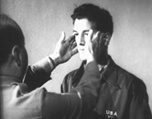
The third film, Let There Be Light, was made in 1946 – just as the war ended – and focussed on the psychiatric treatment of soldiers traumatised in combat.

This is a description from the fantastic book The Empire of Trauma:

With no political agenda, and anxious to keep scrupulously to the task he had been given, Huston applied to the letter the principle of objectivity he had followed in the two previous documentaries. For more than three months, he filmed the daily life of former combatants hospitalized at Mason General, a military hospital on Long Island. The courage and sense of sacrifice of these men was clearly portrayed, as the Pentagon had clearly requested. But equally apparent was the fact that some of them were utterly destroyed: their fear, their shame, and their tears showed clearly, as did their contempt for military authorities. The film also documented the arrogance and harshness of the psychiatrists and brutality of some of their therapeutic methods. Remarkably, when the film received its world premiere at the Cannes Film Festival in 1981, the emotional response of the viewers and critics was muted, for the film did not meet the expectations of an audience seeking revelations about the military and medical practices of the time.

What made the film so controversial in 1946, made it commonplace in 1981. But this was nothing to do with film-making, and instead concerned the way it portrayed the effects of trauma.

Let There Be Light portrays the “emotionally damaged” soldier as an everyday person “forced beyond the limit of human endurance”. “Every man”, it says, “has his breaking point”.

This is the modern view of trauma, widely accepted in psychiatry and in today’s media narratives, and is itself somewhat of a simplification of what we actually know about how people react to extreme events.

But in 1946, and especially in military psychiatry, the most widely accepted view was that soldiers who became mentally ill were psychologically weak or malingering.

The fact that film showed US Soldiers, not as the glorified heroes the public wanted, but as disabled veterans, meant that the film would be a huge propaganda disaster – likely compounded by the fact that most people saw these conditions as character flaws or shameful faking.

The idea that these were ordinary men who had been through extraordinary circumstances was just too far ahead of its time to seem realistic.

And this is why it was censored, for 35 years, until it had its first public showing in 1981, when it seemed nothing more than a passé propaganda film that just reflected what we all assumed was always the case, but actually, never was.
 

Link to film on YouTube
Link to downloadable version on Internet Archive.

Animals conscious say leading neuroscientists

A group of leading neuroscientists has used a conference at Cambridge University to make an official declaration recognising consciousness in animals.

The declaration was made at the Francis Crick Memorial Conference and signed by some of the leading lights in consciousness research, including Christof Koch and David Edelman.

You can read the full text as a pdf file, however, the main part of the declaration reads:

We declare the following: “The absence of a neocortex does not appear to preclude an organism from experiencing affective states. Convergent evidence indicates that non-human animals have the neuroanatomical, neurochemical, and neurophysiological substrates of conscious states along with the capacity to exhibit intentional behaviors. Consequently, the weight of evidence indicates that humans are not unique in possessing the neurological substrates that generate consciousness. Non- human animals, including all mammals and birds, and many other creatures, including octopuses, also possess these neurological substrates.”

You can also see all of the talks on the conference’s webpage. Curiously, physicist Stephen Hawking was there and the declaration was signed in his presence.
 

Link to conference website.
pdf of full declaration.
Link to coverage from Janet Kwasniak.

A country on the couch

The New York Times discusses Argentina’s love affair with psychoanalysis. A country that has more psychologists – the majority Freudian – than any other nation on Earth.

Argentina is genuinely unique with regard to psychology. Even in Latin America, where Freudian ideas remain relatively strong, Argentina remains a stronghold of the undiluted classic schools of psychoanalysis.

It is also unique in terms of the access people have to the practice. In the majority of the world, psychoanalysis is the reserve of the upper middle classes and aristocracy – both in terms of the analysts and the patients.

While the watered-down (some would say made sensible) psychodynamic psychotherapy is more widely available, psychoanalytic training and therapy is extremely expensive. You could easily spend a couple of thousand US dollars a month on therapy alone.

As trainees have to be taught, supervised and be in constant treatment themselves (although the latter usually at a discounted rate) it remains a practice by and for a very narrow group from society. If you want to see this for yourself, training institutes often have open evenings, which I highly recommend as an interesting anthropological field trip.

This elitism is much less the case in Argentina, however, meaning that people from all walks of life see psychoanalysts and Freudian-inspired commentary is an integral part of popular culture.

The NYT article is a little puzzled as to why psychoanalysis has gained such a foothold in the country. Of course, it received a great many psychoanalyst émigrés in the years surrounding the Second World War, as many were Jewish, but in covering similar ground myself, I wondered whether there are good psychological reasons for its continued popularity.
 

Link to NYT piece on psychoanalysis in Argentina.
Link to earlier piece by me on the same.

A very modern trauma

Posttraumatic stress disorder is one of the defining disorders of modern psychiatry. Although first officially accepted as a diagnosis in the early 1980s, many believe that it has always been with us, but two new studies suggest that this unlikely to be the case – it may be a genuinely modern reaction to trauma.

The diagnosis of PTSD involves having a traumatic experience and then being affected by a month of symptoms of three main groups: intrusive memories, hyper-arousal, and avoidance of reminders or emotional numbing.

It was originally called ‘post-Vietnam syndrome’ and was promoted by anti-war psychiatrists who felt that the Vietnam war was having a unique effect on the mental health of American soldiers, but the concept was demilitarised and turned into a civilian diagnosis concerning the chronic effects of trauma.

Since then there has been a popular belief that PTSD has been experienced throughout history but simply wasn’t properly recognised. Previous labels, it is claimed, like ‘shell shock’ or ‘combat fatigue’, were just early descriptions of the same universal reaction.

But until now, few studies have systematically looked for PTSD or post-trauma reactions in the older historical record. Two recent studies have done exactly this, however, and found no evidence for a historical syndrome equivalent to PTSD.

A study just published in the Journal of Anxiety Disorders looked at the extensive medical records for soldiers in the American Civil War, whose mortality rate was about 50-80 greater than modern soldiers fighting in Iraq and Afghanistan.

In other words, there would have been many more having terrifying experiences but despite the higher rates of trauma and mentions of other mental problems, there is virtually no mention of anything like the intrusive thoughts or flashbacks of PTSD.

In a commentary, psychologist Richard McNally makes the point that often these symptoms have to be asked about specifically to be detected, but even so, he too admits that the fact that PTSD-like symptoms virtually make no appearance in hundreds of thousands of medical records suggests that PTSD is unlikely to be a ‘universal timeless disorder’.

Taking an even longer view, a study published in Stress and Health looked at historical accounts of traumatic experiences from antiquity to the 16th century.

The researchers found that although psychological trauma has been recognised throughout history, with difficult events potentially leading to mental disorder in some, there were no consistent effects that resembled the classic PTSD syndrome.

Various symptoms would be mentioned at various times, some now associated with the modern diagnosis, some not, but it was simply not possible to find ‘historical accounts of PTSD’.

The concept of PTSD is clearly grounded in a particular time and culture, but even from a modern diagnostic perspective it is important to recognise that we tend to over-focus on PTSD as the outcome of horrendous events.

Perhaps the best scientific paper yet published on the diversity of trauma was an article authored by George Bonanno and colleagues in 2011. You can read the full-text online as a pdf.

It notes that the single most common outcome after a traumatic event is recovery without intervention, and for those who do remain affected, depression and substance abuse problems are equally, if not more likely, than a diagnosis of posttraumatic stress disorder.
 

Link to locked study on trauma in Civil War soldiers.
Link to locked study on trauma through history.

The science and politics of mind-altering drugs

The Guardian Science Podcast has an interview with neuroscientist David Nutt on the science and politics of mind-altering substances and it’s possibly one of the most sensible discussions of drugs and drug harms you are likely to hear in a long time.

Prof Nutt is quite well known in the UK – largely due to be fired by the Government from their drugs advisory panel for pointing out in a scientific paper that the health risks of taking ecstasy are about equivalent to going horse riding.

Rather than doing the usual dishonest apology required of government advisors where they ask forgiveness for ‘unintentionally misleading the public’ away from a convenient collective illusion, he decided to take the government to task about their disingenuous drug policy.

He is now a straight-talking, evidence-based, pain-in-the-arse to the government who doggedly stick to the ‘war on drugs’ rhetoric that not even they believe any more.

In the interview the discussion ranges from how psychedelic affect the brain to the scientific basis (or lack thereof) of drug policy. Essential listening.

 
Link to Science Podcast interview with David Nutt.

Sexism affects robots

The Journal of Applied Social Psychology has just pubished a study that is both bizarre and profound. It reports on two experiments that show gender stereotyping extends to robots.

(S)he’s Got the Look: Gender Stereotyping of Robots

F. Eyssel and F. Hegel

Journal of Applied Social Psychology

Previous research on gender effects in robots has largely ignored the role of facial cues. We fill this gap in the literature by experimentally investigating the effects of facial gender cues on stereotypical trait and application ascriptions to robots. As predicted, the short-haired male robot was perceived as more agentic than was the long-haired female robot, whereas the female robot was perceived as more communal than was the male counterpart. Analogously, stereotypically male tasks were perceived more suitable for the male robot, relative to the female robot, and vice versa. Taken together, our findings demonstrate that gender stereotypes, which typically bias social perceptions of humans, are even applied to robots. Implications for design-related decisions are discussed.

Sadly, the study is locked behind a paywall, which is a pity because the discussion about “implications for design-related decisions” is a sort of parallel-world look into android gender politics.

The authors discuss whether it is better to create gender free robots to fight social stereotypes or whether we should create robots that comply with society’s prejudices to make them more acceptable.

Personally, I’m all for genderqueer robots. That would really throw a spanner in the works. Or a works in the spanner.
 

Link to locked study (via @hysell)

Psychosis and the fog of reality

Last May The New Yorker had a beautiful but paywalled article on on psychosis and insight. Thankfully the full text has found its way online as a pdf.

Psychosis is the psychiatric term for delusions and hallucinations, with insight being the ability to recognise that what you believe or experience is not a fair representation of reality.

The concept of insight is more easily applied to hallucinations than delusions, after all you can hallucinate patterns on the walls but realise that the patterns are not really there, but you can’t really have a belief and not believe it.

With regard to delusions, it is tested by seeing how readily people can accept that there is a chance they might be wrong. In other words, it’s an estimate of certainty with absolute certainty in a false belief being considered abnormal.

In practice, and due to the difficulties on agreeing on or verifying reality, it often comes down to whether you agree with your psychiatrist (indeed, one definition of insight, includes accepting treating as a sign of good insight), sometimes leading to situations where people with genuine psychosis completely reject any form of treatment even where it would be of clear benefit.

Rachel Aviv’s article for The New Yorker is a brilliant exploration not only of the experience of slipping into psychosis but also the politics and practicalities of insight.

By the way, Aviv has written a series of excellent articles about mental health including one called ‘Which Way Madness Lies: Can psychosis be prevented?’ for Harper’s Magazine which is also online as a pdf.
 

pdf of article on insight in psychosis.
pdf of article on preventing psychosis.

Hallucinating body flowers

A curious and kaleidoscopic case of hallucinations reported in the latest journal Arquivos de Neuro-Psiquiatria:

A 95-year-old woman, with four years of schooling, had a seven-year history of DI [delusional infestation]. In the beginning, there were itching and prickling sensations on arms and head. Subsequently, she felt small worms, with different shapes and colors, crawling through her skin or swirling around her body.

After two years, she began to see small pumpkins and flowers coming out of her body and lettuce crawling on the table. She complained of water trickling out of walls and forming puddles on the ground. Occasionally, she saw small children walking on the walls and also worms on the floor and walls.

Sometimes, the parasites set fire to small objects. She became upset with her family and physicians who did not believe her.

The belief that you are infested with hallucinatory parasites is more typically called delusional parasitosis but it is usually not linked to the florid circus of hallucinations reported here, which are more typical of Charles Bonnet syndrome.
 

Link to case report in Arquivos de Neuro-Psiquiatria.

Is mental health a smoke screen for society’s ills?

Somatosphere has a fantastic account of the debates rocking the world of global mental health – the still nascent field that aims to make mental health a world priority.

The idea itself is sound in the general sense, but there is still a lot of argument about what it means to promote mental health and much discussion about whether ‘global mental health’ is just a means of exporting Western ideas and diagnoses in a sort of 21st century globalisation of the mind.

I am always a little struck by the fact that the ‘global mental health’ movement seems mainly to focus on Asia and Africa.

For example, the lack of participation of Latin American mental health professionals and advocates is striking in both the headline-making publications and the key conferences.

This is a pity as Latin America has developed a unique perspective on mental health that, by reading the debates covered by Somatosphere, would be very relevant.

If you want to get your head into the space of this particular Latin American approach, have a think about this analogy.

How would you react if instead of supporting the American civil rights movement in the 1960s, you were told the major problem was that people were being affected by a mental illness called ‘post-discrimination stress disorder’?

I’m sure it would be possible to come up with a valid and reliable ‘PDSD’ diagnosis that could be agreed upon and would genuinely predict behavioural and psychological distress and impairment – the experience of racism is known to predict mental health problems and the discrimination of the civil rights era was extreme.

Arguing for more resources to be put into treating ‘post-discrimination stress disorder’ when the civil rights movement was almost at breaking point in the 1940s and 50 would lay you open to accusations of ‘putting up a smoke screen’ and ‘making a distraction’ when what was needed was social change, not an attempt to pathologise black people.

The question that you may be asking, and many Latin American psychologists have asked, is whether we should be instead focussing on inequality and violence to improve mental health.

The Western focus on disorders, they argue, can distract and blind us to societal problems. Instead of preventing oppression, we pathologise its victims.

This approach was born out of a field called liberation psychology that made exactly this point.

One of the founders was a remarkable chap called Ignacio Martín-Baró who was a Spanish priest who trained as a psychologist and worked in El Salvador during the Salvadoran civil war.

He was eventually murdered by a government death squad because of his theories, which at least shows their power if not their popularity.

Unfortunately, liberation psychology has become heavily politicised and you often hear variations of “Martín-Baró’s work means you must support my left-wing views” from proponents.

This is a shame because Martín-Baró’s work was often making a more profound and over-arching point – that there is no such thing as an apolitical act in mental health, and, indeed, in health care in general.

For example, the West’s understanding of the victims of war, torture and displacement in terms of PTSD and other diagnostic labels is largely due to the experience of treating refugees who have fled these horrible situations.

In this context, PTSD makes sense in the West because it has the implicit assumption that the person is now safe (after all, it’s post-traumatic stress disorder) and that the experiences and reactions described in the diagnosis are, therefore, inappropriate.

However, if you live in a war zone, intrusive thoughts, feeling on edge and avoiding reminders of danger could be considered quite a reasonable reaction to the constant experience of death and violence.

When you meet people who do live in war zones, who would clearly meet the criteria for PTSD, they rarely complain about their mental state. They’re usually more concerned about the actual dangers.

They’re concerned about torture, not intrusive thoughts about being tortured – the threat of rape, not rape-related anxiety.

So, the hard question becomes: are we really helping by sending professionals and training locals to recognise and treat people with, for example, PTSD?

And this is where Martín-Baró drew his inspiration from. The way we understand and treat mental health problems, he argued, is always political. There is no absolute neutrality in how we understand distress and those that think so are usually just blind to their own biases.

And this is what the global mental health movement is wrestling with. And needless to say, there are plenty of biases to overcome.

Big Pharma pushes theories as adverts for its medication. Western mental health professionals can see themselves as healers of people who don’t necessarily need healing.

Researchers see an untapped gold mine of data and local scientists see a way out of what seems like a limiting and unglamorous academic life distant from the shining lights of Northern Hemisphere High Science.

So when we talk about ‘mental health literacy’ are we talking education or propaganda? It’s not an easy question to answer or, for many, to even think about.

The Somatosphere piece is one of the best guides to this debate I’ve yet read. Essential reading.
 

Link to Somatosphere on ‘Global Mental Health and its Discontents’

A Bigger Apple

The Open University’s blog has a fascinating piece on why New York City has seen an astonishing drop in crime, against the predictions of most social theories.

Twenty years ago most criminologists and sociologists would have doubted that a metropolis could reduce this kind of crime by so much. Although the scale of New York Citys success is now well known and documented, most people may not realize that the city’s experience showed many of modern America’s dominant assumptions concerning crime to be flat wrong, including that lowering crime requires first tackling poverty, unemployment and drug use and that it requires throwing many people in jail or moving minorities out of city centers.

Instead New York made giant strides toward solving its crime problem without major changes in its racial and ethnic profile; it did so without lowering poverty and unemployment more than other cities; and it did so without either winning its war on drugs or participating in the mass incarceration that has taken place throughout the rest of the nation.


Link to ‘How New York Beat Crime’ (via @mrianleslie)

Gene environment interaction of your neighbourhood

The amount genes and the environment contribute to our behaviour varies across the country and a new study has mapped exactly where the differences lie.

As well as an interesting finding in itself, the study also highlights an important but often misunderstood point about heritability.

The map on the right is from the study, and generated by the freely available software the research team have created. It shows the results of a large twin study that has been carried out with the help of families across the country.

Twin studies allow us to work out the amount of influence the environment and genetics has on particular trait by comparing the outcomes in identical twins, who are as close as you’ll get to being genetically identical, and non-identical twins, who share only 50% of their genes.

The map shows how much genetic contribution there is to the difference in ADHD symptoms across the UK. You’ll note that genetics makes much more of a contribution to the difference in ADHD symptoms in London than in other parts of the country.

In other words, it’s daft to give a definitive answer about ‘how genetic’ ADHD is, because the expression of genetic tendencies depends on the environment.

That’s not to say that ADHD or any other mental disorder are completely flexible with regard to their environmental and genetics bases, as there are limits and these are likely to be specific to the problem.

But it is also the case that with complex outcomes like mental illness it’s impossible to say that a particular one is solely a ‘genetic disorder’.

There’s a good write-up of the study on the King’s College London website and both the scientific paper and the software are freely available.

The software lets you map the genetic and environmental contributions to a wide number of outcomes that were measured by the study – everything from height to school performance to ADHD.
 

Link to write-up of study.

Behavioural profiling in casinos

Online culture magazine limn has an amazing article on the use of high-tech behavioural profiling in casinos that lets the house target its gaming to where it cashes in most.

Due to the fact that most games are now networked and most punters have been persuaded to play by a swipe card that can be tied to their personal details every last action can be recorded and analysed.

There is now dedicated behavioural analysis software that allows casinos owners to see how they can best target specific demographics.

The casino’s data cloud, when animated and queried, had rendered visible the fleeting, real-time contours of a behavioral group whose constituents, seated at individual play terminals and immersed in the solitary activity of play, were likely unaware of their kinship. Casino managers attempted to profit from the proclivities of this touch-point collective by carving out a physical space for its members and formally inviting them to gather there—not to socialize, but to continue to interact with their own game screens. Although the players were affiliated by age, gender, game preference, and ultimately a common gathering site, the collective they formed was “virtual” in the sense that it took shape and subsequently became meaningful through casino data analysis and visualization software rather than through self-selection, voluntary participation, or shared experience.

The article is a little jargon heavy but it gives an candid insight into how you appear to the data-hungry casino.

By the way, the whole issue of limn is on ‘Crowds and Clouds’ so there’s plenty of other great stuff for people interested in social psychology.
 

Link to article on ‘Crowd Contouring’ (via @somatosphere)
Link to latest issue of limn on ‘Crowds and Clouds’

A delusional life on film

A curiously recursive case of psychosis, reported in the latest issue of Cognitive Neuropsychiatry, about a person who worked on a reality TV show who had the delusion that they were on a reality TV show.

Mr D. was working on a reality television show when he was hospitalised after causing a public disturbance. While working on the production of the show, he came to believe that he was the one who was actually being broadcast: ‘‘I thought I was a secret contestant on a reality show. I thought I was being filmed. I was convinced I was a contestant and later the TV show would reveal me.’’ He believed his thoughts were being controlled by a film crew paid for by his family. During the 2 weeks prior to admission, he experienced decreased sleep, pressured speech, irritability, paranoia, and hyperreligiosity. The patient carried a diagnosis of bipolar disorder and had had two previous hospitalisations for manic episodes.

The case is from a paper that reports several cases of what the authors call the ‘Truman Show delusion’ where a person believes that they are being featured on a TV show about their life, as in the film of the same name.

Sadly, the article is locked behind a paywall, as it contains a fantastic discussion of how culture and psychosis interact.
 

Link to locked academic paper.