There probably isn’t an app for that

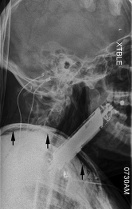
A man with drug-induced psychosis attempted to swallow his smartphone and the case was reported in the medical journal Internal and Emergency Medicine.

A 35 year-old man with no significant past medical history presented to the emergency department (ED) after abusing phencyclidine (PCP). Responding to command auditory hallucinations, he attempted to swallow his 4 cm × 8 cm smartphone. On arrival, he was agitated but alert, handling his secretions poorly and in moderate respiratory distress. An electronic device was clearly protruding from his oropharynx [throat]…

Emergency physicians immediately attempted to remove the device with Magill forceps, but were unsuccessful. A “trauma code” was announced bringing a surgical intensivist, an anesthesiologist, and appropriate nursing staff to the bedside, while simultaneously indicating that an operating room (OR) should be prepared… The device was successfully removed under procedural sedation without the need for surgical intervention.

Moral of the story: friends don’t let friends mix selfies and PCP.
 

Link to locked case study.

Parental advisory: teenage kicks in progress

New York Magazine has an excellent piece on whether adolescence is really a time of turmoil for young people or whether it is actually the parents that find their kids’ teenage years the most challenging.

The article is a brilliant alternative take on adolescence and looks into a range of studies on how teens develop and how it affects the changing parent-teen relationship.

Laurence Steinberg, a psychologist at Temple University and one of the country’s foremost authorities on puberty, thinks there’s a strong case to be made for this idea. “It doesn’t seem to me like adolescence is a difficult time for the kids,” he says. “Most adolescents seem to be going through life in a very pleasant haze.” Which isn’t to say that most adolescents don’t suffer occasionally, or that some don’t struggle terribly. They do. But they also go through other intense experiences: crushes, flirtations with risk, experiments with personal identity. It’s the parents who are left to absorb these changes and to adjust as their children pull away from them. “It’s when I talk to the parents that I notice something,” says Steinberg. “If you look at the narrative, it’s ‘My teenager who’s driving me crazy.’ ”

In the 2014 edition of his best-known textbook, Adolescence, Steinberg debunks the myth of the querulous teen with even more vigor. “The hormonal changes of puberty,” he writes, “have only a modest direct effect on adolescent behavior; rebellion during adolescence is atypical, not normal.”

A fascinating and very well-written piece.
 

Link to NYMag article ‘The Collateral Damage of a Teenager’

A sticking plaster for a shattered world

The last paragraph of this article from the American Journal of Psychiatry on people displaced by the Syrian conflict essentially sums up the entire practice of conflict-related mental health.

Looking at this endless list of horrible stories from a psychiatrist’s perspective, I see only patients suffering from what my profession calls posttraumatic stress disorder. It is a disorder with well-described symptoms and therapeutic options. Looking at this same list from a human being’s perspective, I only see in the looks and attitudes of those patients—as I empathically explain to them their disorder, prescribe a few pills, and orient them to psychotherapy—something that is beyond what contemporary evidence-based medicine can describe scientifically.

In every one of these patients, I see intense, irreversible mistrust and a lack of belief in every principle or rule that is supposed to control our relationships with each other. I see question marks regarding the meaning of their whole existence as well as the meanings behind the most important concepts that seemed unquestionable to them in the past, such as religion, politics, work, family, and finally, last but not least, health. These patients manifest symptoms that justify the wide array of treatment modalities I offer to them, but I am left with a terrible feeling that this management is somehow wanting. All that has been shattered in these patients’ lives cannot be mended by the small treatment that we can offer.

It’s written by Lebanese psychiatrist Rami Bou Khalil, who mentions this little told but often learnt lesson about the effects of war.
 

Link to ‘Where All and Nothing Is About Mental Health’

Is school performance less heritable in the USA?

CC licensed photo by flickr user Pollbarba. Click for source.A recent twin study looked at educational achievement in the UK and found that genetic factors contribute more than half to the difference in how students perform in their age 16 exams. But this may not apply to other countries.

Twin studies look at the balance between environmental and genetic factors for a given population and a given environment.

They are based on comparing identical and non-identical twins. Identical twins share 100% of their DNA, non-identical twins 50%. They also share a common environment (for example, the family home) and some unique experiences.

By knowing that differences in what you’re measuring in identical twins is likely to be ‘twice as genetic’ or ‘twice as heritable’ in non-identical twins you can work out the likely effect of environment using something called the ACE model.

This relies on various assumptions, for example, that identical twins and non-identical twins will not systematically attract different sorts of experiences, which are not watertight. But as a broad estimate, twin studies work out.

Here’s what the latest study concluded:

In a national twin sample of 11,117 16-year-olds, heritability was substantial for overall GCSE performance for compulsory core subjects (58%) as well as for each of them individually: English (52%), mathematics (55%) and science (58%). In contrast, the overall effects of shared environment, which includes all family and school influences shared by members of twin pairs growing up in the same family and attending the same school, accounts for about 36% of the variance of mean GCSE scores. The significance of these findings is that individual differences in educational achievement at the end of compulsory education are not primarily an index of the quality of teachers or schools: much more of the variance of GCSE scores can be attributed to genetics than to school or family environment.

In other words, the study concluded that over half of the difference in exam results was down to genetic factors.

The most important thing to consider, however, is how well the conclusions apply outside the population and environment being tested.

Because the results give an estimate of the balance between environment and genetic heritability that contribute to the final outcome, the more fixed the environment, the more any differences will be due to genetics and vice versa.

If that’s a bit difficult to get your head round try this example: ask yourself – is difference in height mostly due to genetics or the environment? Most people say genetics – tall parents tend to have tall offspring – but that only applies where everybody has adequate nutrition (i.e. the environmental contribution is fixed to maximum benefit).

In situations where malnutrition is a problem, difference in height is mostly explained by the environment. People who have adequate nutrition during childhood are taller than people who suffered malnutrition. In this situation, genetic factors are a minor player in terms of explaining height differences.

So let’s go back to our education example and think about how genetic and environmental factors balance out.

One of the interesting things about the UK is that it has a National Curriculum where schools have to teach set subjects in a set way.

In other words, the government has fixed part of the environment meaning that differences in exam performance in the UK are that bit more likely to be due to genetic heritability than places where there is no set education programme.

In fact, the same research group speculated in 2007 in a research monograph (pdf, p116) in a similar analysis, that school performance would be less genetically heritable in the USA, because the school environment is more variable.

The U.K. National Curriculum provides similar curricula to all students, thus diminishing a potentially important source of environmental variation across schools, to the extent that the curriculum actually provides a potent source of environmental variation.

In contrast, the educational system in the United States is one of the most decentralized national systems in the world. To the extent that these differences in educational policy affect children’s academic performance, we would expect greater heritability and lower shared environment in the United Kingdom than in the United States.

In other words, all other things being equal, greater equality in educational opportunity should lead to greater heritability.

School performance may be less influenced by genetic heritability in the USA because the educational environment is more variable and therefore accounts for more difference.

Whereas in the UK, the educational environment is more fixed so a greater proportion of the difference in performance is down to genetic heritability.

It’s worth noting that this hasn’t, to my knowledge, been confirmed yet, but it’s a reasonable assumption and demonstrates exactly the question we need to bear in mind when considering studies that estimate heritability – for whom and in what environment?
 

Link to twin study on school performance in PLOS One.
pdf of research monograph on learning and genetics.

Where data meets the people

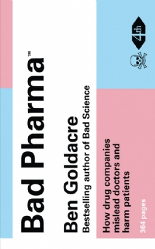
Ben Goldacre might be quite surprised to hear he’s written a sociology book, but for the second in our series on books about how the science of mind, brain and mental health meet society, Bad Pharma is an exemplary example.

The book could essentially be read as a compelling textbook on clinical trial methodology with better jokes, but the crux of the book is not really the methods of testing medical interventions, but how these methods are used and abused for financial ends and what impact this has on professional medicine and, ultimately, our health.

In other words, the book looks at how clinical science is used socially and how social influences affect clinical science.

For example, this is question I often give students: If a trial is badly designed, are the results more likely to suggest the treatment is effective or more likely to suggest the treatment is ineffective?

Most students, naive to the ways of the scientific world, tend to say that badly designed trials would be less likely to show the treatment works but in the real world, badly designed trials are much more likely to give positive results.

There is nothing in the science that makes this happen. This is an entirely social effect. It’s worth saying that that this is rarely due to outright fraud but it’s those little decisions that add up over time, each of which seems completely justifiable to the researcher, that sway the results.

It’s like if your dad was school football coach. You’d probably get picked for the team more often not because your father was making a conscious decision to include you no matter what, but because he would genuinely believe he had recognised talent where others probably wouldn’t.

For scientists, the treatment they are testing is often their ‘baby’, and the same sort of soft biases creep in between the cracks. And the more cracks there are, the more creep occurs.

On the other hand, pharmaceutical companies are often deliberately trying to promote their product by distorting the evidence for its effectiveness. This often happens within the accepted regulations – the unethical but legal realm – but happens surprisingly often outside the law.

Bad Pharma is not specifically about psychiatry but as one of the medical specialities which is most corrupted by the influence of large pharmaceutical companies, it turns up a lot.

It is both an essential guide to understanding how treatments for mental health conditions are tested and has plenty of examples of how psychiatric drugs have been the subject of spin, over-selling and fraud.

Perhaps the only part where I think Goldacre is being too strong is in his criticism of ‘me too drugs’ which are new drugs which are often molecularly similar but no more effective for the target symptoms than the old ones.

At least in psychiatry, one of the big problems is not so much the effectiveness of the drugs, but their side-effects. Having other compounds which although no more effective may be more agreeable or less risky is a genuine benefit.

Goldacre is clear about this being a benefit, but I think he under-values it at times, especially since a lot of mind and brain medicine involves iterating through medications until the patient is happy with the balance between effectiveness and side-effects.

But this is a small point in an excellent book. It is essential if you want to know how medicine works and doubly essential if you have an interest in the mind, brain and mental health where these issues are both a significant battle ground and often under-appreciated.

I suspect Goldacre would prefer to call the book political rather than sociological, but if you are studying psychology, neuroscience or mental health it is a must read to understand how clinical science meets society.

Next and finally in this three-part Mind Hacks series on science and society – Didier Fassin and Richard Rechtman’s The Empire of Trauma.
 

Link to more details of Bad Pharma.

Hallucinated voices and the community inside us

I’ve long been fascinated by the experience of ‘hearing voices’ and long been baffled by the typical scientific approach to the experience.

As a result, I’ve just had a paper published in PLOS Biology that focus on one of the most striking but ignored aspects of hallucinated voices.

Here’s how I describe the central paradox in the paper:

Auditory verbal hallucinations, the experience of “hearing voices”, present us with an interesting paradox: the experiences are generated from within a single individual but are typically experienced as a social phenomenon—that is, a form of communication from another speaker.

Current theories attempt to explain auditory verbal hallucinations as alterations to individualistic information processing—namely, misattributions of internal thoughts as external phenomena due to biases in cognitive monitoring.

The fact that voices stem from an internal source is, of course, clear, but the typical experience of “hearing voices” is not that thoughts seem to be “spoken aloud” but that hallucinated voices have a social identity with clear interpersonal relevance. In other words, voices are as much hallucinated social identities as they are hallucinated words or sounds.

The article discusses the psychology and neuroscience of social processing in the experience of hearing voices and suggests how we can begin to consider this as a central component of the experience in terms of scientific research.

It’s an academic article but should hopefully be fairly accessible to most people with an interest in the science of hallucinations.

Enjoy!
 

Link to article ‘A Community of One’ on social cognition and hearing voices.

A life in the day of a medical morphine addict

AddictionBlog has an amazing article by a doctor and recovering morphine addict that describes the experience of injection, rush and withdrawal.

It’s wonderfully written to the point of being painful and if you’re not good with needles, you’ll probably feel a bit queasy when reading it.

Heroin, by the way, is just the prodrug of morphine. In other words, the heroin molecule just gets broken down into morphine in the body and this is the form in which it arrives in the brain.

But because each heroin molecule gets transformed into two morphine molecules (hence the medical name for heroin – diamorphine) the feeling can be a little different because the increased concentration can apparently make the high more intense.

Neurochemically, however, the action in each opioid receptor is the same.

As morphine is used more widely in medicine than diamorphine, it is more likely to be abused by doctors and turn up in cases of addiction.

As we’ve discussed previously, addiction and abuse of medical drugs by doctors is linked to clinical speciality – likely due to both knowledge of and access to particular compounds.

The AddictionBlog article is a strikingly written, honest, detailed and psychologically insightful piece if you want a look into this curious corner of medical drug abuse.
 

Link to ‘What it’s like to take and withdraw from morphine’

Neuroscience and its place in the social world

This is the first of three posts that will cover three important books about how the science of mind, brain and mental health, interfaces with society at large.

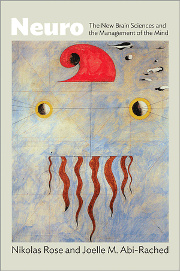
First off, I want to discuss an excellent book called Neuro: The New Brain Sciences and the Management of the Mind published this year by sociologists of neuroscience Nikolas Rose and Joelle M. Abi-Rached.

You may be wondering why we need a social study of neuroscience but it becomes clear when we think of how neuroscience has become important.

It is not just due to what has been discovered. Neuroscience research itself, is only driven in part by scientific discovery.

In the main part, it is driven by a complex mix of politics, business, health care needs and public popularity. That’s what provides the funds and makes the scientific discovery possible and this only moderately, some would say weakly, relates to how far we ‘advance’ in terms of learning.

There is also a common idea that discoveries from psychology and neuroscience form the basis of interventions or changes to society, but much of the time, discoveries from psychology and neuroscience are co-opted to justify changes based on social values.

Here’s a really good example from p196 from the chapter on ‘The Antisocial Brain’ that discusses how the neuroscience of plasticity, the adolescent brain and child psychopathology has been used to justify family interventions.

By way of the brain, then, we reach a conclusion that does not differ greatly from arguments reaching back to the late nineteenth century about the effects of the early years on later propensities to problematic conduct.

From Mary Carpenter’s campaigns for colonies for dangerous and perishing children, through the social problem group and “the submerged ten percent” in the early twentieth century, via the mental hygiene movement in the 1930s, and arguments for setting up child welfare services in the years after the Second World War, to the contentious concept of the “cycle of deprivation” in the 1970s, and the interventions of the Head Start program to the Sure Start program – we find repeated arguments that one should minimize a host of social ills, including criminal and antisocial conduct, by governing the child through the family.

In each generation, unsurprisingly, these arguments are made on the basis of whatever happens to be the current mode of objectivity about the development of children – habits, the will, instinct theory, psychoanalysis, and today the brain.

Each time, the scientific programme is received as if it is a new approach to the problem of child deprivation and delinquency, when the success of these programmes lies precisely in the fact that they are largely the same. In this case, based on the idea that the family is the primary point of responsibility and intervention for poor adolescent behaviour.

Similarly, the success of neuroscientific approaches to problems often depends on how acceptable the implications would seem to potential funders because the money has usually to be agreed before significant lines of inquiry can be started.

This is why non-medical behavioural genetics research gets such a hard time. It’s not that it’s necessarily worse science in terms of its empirical methods but it reminds people of unsavoury practices like eugenics that run counter to prevailing values.

Neuro tracks exactly these sorts of interactions through history and between prevailing current interests. It is also brilliant technically, however, and you will actually learn a great deal about neuroscience methods from the book.

From the history and development of brain scanning techniques, to psychiatric drugs, to the rhetorical role of animal models in understanding mental illness, to how our notion of ourselves is changing in light of advances in brain sciences – it’s remarkably wide in scope.

Sociology is famous for its gobbledebook jargon, and this book has none of this, but its only drawback is that it is, in the end, an academic book and is sometimes written without much thought for the general reader.

But if you can tolerate the academic language, it is essential reading. If you want to understand neuroscience – rather than just facts about neuroscience – Neuro is probably one of the most important books you could read.

And the same goes if you are a neuroscientist or just interested in how we, as a society, are integrating the study of the brain into how we live.

Next in this three-part Mind Hacks series on science and society – Ben Goldacre’s Bad Pharma.
 

Link to more details about Neuro.
You are a data series in a profit-making algorithm

If you only read one psychology article in the next few months, make it the startling and unsettling Atlantic piece on how ‘people analytics’ is being applied to managing, selecting, and promoting employees.

The idea behind people analytics is that job performance can be measured and predicted by analysing the huge amount of behavioural data generated by the digital tools we use or from specifically designed online tests.

The prediction part comes from analysing data across employees to find out, for example, what characteristics best predict a good team leader, or a poor performer, or someone who needs a specific sort of support or intervention to develop.

The potential power of this data-rich approach is obvious. What begins with an online screening test for entry-level workers ends with the transformation of nearly every aspect of hiring, performance assessment, and management. In theory, this approach enables companies to fast-track workers for promotion based on their statistical profiles; to assess managers more scientifically; even to match workers and supervisors who are likely to perform well together, based on the mix of their competencies and personalities. Transcom plans to do all these things, as its data set grows ever richer. This is the real promise—or perhaps the hubris—of the new people analytics. Making better hires turns out to be not an end but just a beginning. Once all the data are in place, new vistas open up.

In other words, the idea is to develop software that can identify predictors of specific behaviours and use them as the basis of management decisions.

Essentially, you have become a data series in a profit-making algorithm.

It is an important and fascinating article that is worth reading in full as it heralds a future of human resources that will be driven by ultra-personal data.
 

Link to Atlantic article ‘They’re Watching You at Work’.

A ray directly from “Delhi University”

A series of ‘bizarre delusions’ from patients diagnosed with schizophrenia described in a new paper just published in the Indian Journal of Psychological Medicine:
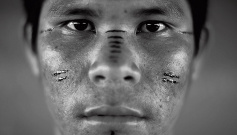
“Some rays are there in me, which create magnetic field and I have the power to affect TV signals. Body is producing charge; whenever I touch anything I get electric current. Some heavenly body comes and makes me powerful and communicates with me.”

“My hands are changed into cat’s paws.”

“I have some special power, if I call the Sun then it will come to me, whenever I look at the Sun, it smiles back at me.”

“My rib-cage is left behind in the bathroom; while I was bathing it got washed away.”

“The heart is moving round the clock in different areas of the trunk.”

“A ray directly from “Delhi University (DU)” used to teach me the engineering course.”

Delusions are one of the central symptoms of psychosis and despite the fact that they can be both distressing and disabling, are often quite amazing in their complexity and content.
 

Link to article from Indian Journal of Psychological Medicine.

A universal difference

The author of Crazy Like Us, Ethan Watters, has written an excellent article on whether there’s such a thing as ‘human nature’ for the latest edition of Adbusters.

The piece tackles how scientific assumptions about the ‘universals’ of the human mind are having to be revised and discusses research which has shown how people from across the world behave markedly differently in supposedly culturally neutral tasks.

The last generation or two of undergraduates have largely been taught by a cohort of social scientists busily doing penance for the racism and Eurocentrism of their predecessors, albeit in different ways. Many anthropologists took to the navel gazing of postmodernism and swore off attempts at rationality and science, which were disparaged as weapons of cultural imperialism.

Economists and psychologists skirted the issue with the convenient assumption that their job was to study the human mind stripped of culture. The human brain is genetically comparable around the globe, it was agreed, so human hardwiring for much behavior, perception, and cognition should be similarly universal. No need, in that case, to look beyond the convenient population of undergraduates for test subjects…

Henrich’s work with the ultimatum game emerged from a small but growing counter trend in the social sciences, one in which researchers look straight at the question of how deeply culture shapes human cognition.

The article is an engaging look at this new wave of research.
 

Link to Is There Such a Thing as “Human Nature”?

A man called Dad

An eye-opening 2005 paper estimated the number of children who are not the biological offspring of their presumed father.

Looking at studies from around the world, it concluded that the median number of kids who are not the children of the person they call ‘dad’ is 3.7% with studies typically finding a rate of between two and ten percent.

This is presumably due to children being conceived during clandestine affairs. Whether you think that 3.7% is a low or high figure depends on your view of how human relationships work in real life.

If you want more details there’s an excellent post on Gene Expression which discusses the evidence based and the ethical implications for these findings.

For example, if a child needs genetic testing for medical reasons what should the presenting parents get told about incidental discoveries of ‘paternity discrepancy’?
 

Link to 2005 study on ‘paternity discrepancy’.
Link to excellent Gene Expression post on the same.

Seeing synaesthetic stars during sex

A study in Frontiers in Psychology asked people who have emotional synaesthesia – they see colours when they have certain emotions – about what they experience during sex.

There is a particularly lovely table that illustrates these experiences through the different stages of the sexual response cycle:

Appentance phase
“This phase has an orange character”

Excitement phase
“it’s getting more intensive, starting with a few colours at the beginning and getting more and more intense”

Plateau phase
“The greater the excitement becomes the more thoughts are canalized” “The initial fog transforms into a wall”

Orgasmic phase
“In the moment of orgasm the wall bursts… ringlike structures… in bluish-violet tones”

Resolution phase
“The resolution phase varies between pink and yellow”

It’s worth bearing in mind that emotional synaesthesia isn’t the only thing that can turn sex into a slightly unreal experience.

Some people with epilepsy have seizures triggered by orgasm which can affect both males and females.

All cases reported in the medical literature are people who lose consciousness or have observable movements during the seizure, but this is probably because they are the ones most likely to go to the doctor.

People who have simple partial seizures during orgasm – where they just have unusual experiences but don’t lose consciousness – are probably more common than we think but are less likely to be aware they’re having seizures and so just assume it’s normal for them.
 

Link to study on synaesthesia and sexual experience (via @Neuro_Skeptic)

US Military PsyOps video appears online

A US Military PsyOps video has found its way onto the YouTubes and gives a interesting but clunky guide to ’90s psychological operations.

It’s called The Invisible Sword and it’s a bit like watching a cable TV infomercial for psychological warfare complete with cheesy easy listening background music and stilted dialogue.

“It all gets put together when the chips are down somewhere in the world and it gets put together from the top down”. Thanks General.

The video is also a curious bit of history as it discusses operations that bridge over the time when the US military was transitioning from intervention in the Balkans and proxy wars in Latin America to large scale campaigns in the middle east.

It’s a pre-Human Terrain System view of social intervention that was less focused on managing the relatively small-scale social networks that mediated allegiances between the complex militias intertwined in the ‘war on terror’ and more on larger-scale propaganda.
 

Link to The Invisible Sword on YouTubes (via @psywarorg)

A tour through isolation

Photo from Wikipedia. Click for source.The BBC World Service just broadcast an amazing radio documentary on the experience of isolation – talking to people who have experienced intense remoteness from other humans including polar base residents, astronauts, prisoners and people who completed the Mars-500 simulated mission.

Firstly, it’s just beautiful. If there’s such a thing as an ambient documentary, this comes sublimely close to achieving it at times.

But the programme is also a fascinating look at the subjective psychology of separation.

A doctor explains how it feels to see the last plane leaving an Antarctic research base for nine months of separation from the rest of the world.

A British drug smuggler explains what it was like to be sent to an Argentine prison when he spoke no Spanish – unable to communicate with anyone.

Astronaut Al Worden has been the most isolated human in history, during his time on a Apollo mission, and explains the experience of ultimate remoteness.

The programme reminded me of another form of modern isolation the 21st century hermits who hide themselves away due to fear of the effects of modern technology – like the mythical ‘health damaging effects of WiFi’.

An article in the Journal of the Royal Society of Medicine made the comparison between these modern day hermits with their ancient brethren.

The World Service documentary is wonderful, however. As is normal with the internet-impaired BBC Radio pages, you have to get the podcast from a completely different page but you’re probably better off downloading the mp3 directly.
 

Link to BBC World Service documentary Isolation.
mp3 of the same.

Jazz no longer corrupting young people

A study published in the journal Pediatrics looked at the link between music preferences at age 12 and adolescent delinquency – finding that an early liking for ‘rebellious’ music predicted small scale anti-social behaviour like shoplifting, petty theft and vandalism.

Rebellious music turns out to be defined as variations of rock, hip-hop and electronica. But one of the interesting findings was that kids who liked jazz music were slightly less likely to be antisocial:

Although some music preferences were positively associated with delinquency, liking jazz at age 12 correlated negatively with delinquency (r = –0.12), but did not relate to age 16 delinquency.

Historically, this is interesting because jazz, at the height of its popularity, was widely linked to delinquency, drug-taking, insanity and sexual promiscuity:

Dig this:

The human organism responds to musical vibrations. This fact is universally recognized. What instincts then are aroused by jazz? Certainly not deeds of valor or martial courage, for all marches and patriotic hymns are of regular rhythm and simple harmony; decidedly not contentment or serenity, for the songs of home and the love of native land are all of the simplest melody and harmony with noticeably regular rhythm. Jazz disorganizes all regular laws and order; it stimulates to extreme deeds, to a breaking away from all rules and conventions; it is harmful and dangerous, and its influence is wholly bad.

That’s from the August 1921 edition of the Ladies Home Journal, one of the most widely read magazines of the time.

You’ll notice a lot of racism around the ‘jazz is bad’ vibe. This was picked up at the time as it happens.

However, I would guess that 50’s jazz, like modern rebellious music, could have had a statistical link to minor delinquency, but like today, it was probably not causal. Rebellious people gravitate toward rebellious music.

Jazz, however, aint no longer rebellious. In the popular imagination, it’s a soundtrack for beard-strokers, and the days of banging up a quarter gram of snow and downing a couple of bennies before losing it in a sweaty jazz joint are long gone.

In fact, it’s so no-longer-rebellious that it was the only type of music to predict lower delinquency.

One thing hasn’t changed though. The slightly awkward tone that sounds like your dad lamenting the death of proper music. With a tune. And lyrics. You know, proper lyrics, that tell a story.

The opening sentence of the Pediatrics study:

During the 1980s and 1990s, the loudest and most rebellious forms of rock (eg, heavy metal, gothic), African American music (hip-hop, particularly gangstarap), and electronic dance music (house, techno, hardhouse) were labeled by adults as “problem” music and perceived as promoting violence, substance use, promiscuous sex, blasphemy, and depression

Can I get a nice cup of tea from the massive tonight?
 

Link to study ‘Early Adolescent Music Preferences and Minor Delinquency’.