Sliding into psychosis

This week’s edition of Nature is a special issue on schizophrenia and it includes an open-access feature article on the neuroscience of why the disorder only tends to appear in young-adulthood.

One of the themes to come out of the piece is how symptoms of schizophrenia, like delusions and hallucinations, lie on a continuum – the idea being that we all have reality distortions to varying degrees and that these distortions themselves may vary in intensity.

In about a third of people, these will intensify into florid psychosis and a diagnosis of schizophrenia, but for others, the experiences seem self-limiting.

One of the big questions in schizophrenia research is to understand what happens in the mind and brain during this transition and, of course, if possible, to prevent it by early treatment.

This has sparked a great deal of heated debate because up to two thirds of ‘at risk’ people will never develop schizophrenia anyway, and yet might be unnecessarily labeled and medicated.

It’s probably worth noting that the idea of a ‘continuum of psychotic symptoms’ is popular but also still not very well defined, as a locked editorial in the latest issue of Psychological Medicine makes clear.

It’s possible to see a sliding scale in the intensity of experiences, how often they occur, and the emotional impact they have, among many other things, but its not clear how you would go about disproving a continuum in many cases.

The Nature article is a remarkably broad look at the whirlwind of issues surrounding how schizophrenia develops and tackles the issue from the basic neuroscience to the ethics of early treatment.

There’s loads more great stuff on schizophrenia in the same issue, sadly most of it locked out of the internet, but if you want more neuroscience, there is another open-access article on the contentious issue of whether the brain’s glial cells communicate.
 

Link to article ‘Schizophrenia: The making of a troubled mind’.
Link to article ‘Neuroscience: Settling the great glia debate’.
Link to table of contents for this issue.

Best of both worlds

I’ve just read an incredible article on conjoined twins Tatiana and Krista Hogan who have parts of the brain in common and may be sharing thoughts and perceptions.

Adding to the conundrum, of course, are their linked brains, and the mysterious hints of what passes between them. The family regularly sees evidence of it. The way their heads are joined, they have markedly different fields of view. One child will look at a toy or a cup. The other can reach across and grab it, even though her own eyes couldn’t possibly see its location.

“They share thoughts, too,” says Louise. “Nobody will be saying anything,” adds Simms, “and Tati will just pipe up and say, ‘Stop that!’ And she’ll smack her sister.” While their verbal development is delayed, it continues to get better. Their sentences are two or three words at most so far, and their enunciation is at first difficult to understand. Both the family, and researchers, anxiously await the children’s explanation for what they are experiencing.

It’s probably worth noting that while rare, Tatiana and Krista are by no means the only conjoined twins who share a brain.

Perhaps most famous are Lori and George Schappell. If you’re not aware of the Schappells, click the link as they have led amazing lives and would be inspiring individuals even if they were they not conjoined.

This makes me wonder why the issue of shared perceptions has never been tested before.

From a scientific point of view, these studies would be important because parents often swear that their child has ‘special abilities’ which mysteriously seem to vanish when formally tested – as any child psychologist will tell you.

But perhaps it’s simply the case that none of the twins have ever been keen to take part in studies on the effect of having a shared brain.
 

Link to Macleans article ‘A piece of their mind’.

The confusing wisdom of crowds

Bad Science covers an interesting new replication of Asch’s famous conformity experiments – a classic study where participants stated that a line was longer or shorter than it really was simply because others in the room also gave the clearly erroneous answer.

In the original study (there’s some great video here), the other people in the room were stooges, asked by the experimenters to give the wrong answer, but this new study used technology to genuinely show different images to everyone except the conformity target and the results were strikingly different.

Instead of one real subject in a room full of stranger stooges, they used polarising glasses – the same technology used to present a different image to the left and right eye for 3D films – to show participants different images on the same screen, at the same time, in the same room. This meant that friends could disagree, legitimately, and so exert social pressure, but without faking it.

The results were problematic. Overall, sometimes the minority people did conform to peer pressure, giving incorrect answers. But when the results were broken down, women did conform, a third of the time, but men did not. This poses a problem. Why were the results of this study different to the original study?

The point of the piece is to highlight how science actually works, with conflicting results and context dependent changes in outcome, but there’s also a good discussion of possible reasons why the effect wasn’t replicated.
 

Link to Bad Science on conformity and .
Link to DOI and summary of new Asch replication study.
Link to original video from Asch on the conformity experiments.

Grief myths

Myths about grief are so widespread they frequently appear even as guidance for mental health professionals. A new study looked at textbooks given to trainee nurses and found that all had a least one unsupported claim about the grieving process and few had advice drawn from actual research.

Handily, the research paper, authored by nurse and psychologist E. Alison Holman and colleagues, has a fantastic table which lists the common myths about grief and compares them to what we actually know from studies on people who have experienced loss.

General Myths

  1. There are stages or a predictable course of grief that individuals should or typically will experience
  2. There is a specific timeline for when grieving processes will occur

    Emotional experience myths

  3. Negative emotions such as distress, depression, sadness, disorganization, loss of functioning,
    anger, guilt, fear or emotional pain ARE INEVITABLE following a loss

  4. Emotions need to be ‘‘processed’’: expressed, worked through, acknowledged, dealt with, experienced, attended to, focused on, made sense of
  5. Lack of experiencing or expression of emotions (e.g., denial, absent grief, delayed grief, inhibited grief) indicates pathology or negative consequences

    Resolution myths

  6. Recovery, acceptance, reorganization or resolution should be reached in ‘‘normal’’ grief
  7. Failure to find resolution indicates unhealthy, dysfunctional, pathological, or complicated grief

Evidence-based Findings

  1. Not all people experience grief in the same way
  2. Some grieving people do not report feeling distressed or depressed
  3. Some people experience high levels of distress for the rest of their lives without pathology
  4. Repressive coping may promote resilience in some people
  5. Resilience, growth, and/or positive emotions may be associated with loss


Link to PubMed entry for study.
Link to DOI entry for paywalled study.

Life in an elevator

Scientific American has a wonderful short article on the anthropology of elevators, tackling the psychology of travelling floor to floor and how they were eventually integrated into a resistant society.

The piece is full of gems about one of our most mundane of activities and I particularly liked this on a failed attempt at waylaying early fears about the technology’s safety:

Sociologist Joseph Gittler proposed that Americans initially resisted the elevator for personal use because they didn’t quite understand how it worked and this opacity contributed to fear for their personal safety. People were asked to put their trust in a system they could not see. In the confines of the car, visions of frayed cables came easily. Not even Elisha Otis and his “safety elevator” design were initially well received. Although, in truth, his unveiling at the 1853 New York World’s Fair was perhaps a bit dramatic and may have contributed to the elevator’s worrying reputation. Otis’ design included a mechanism that would stop a falling car – a version of which is still in use today. At the World’s Fair he essentially stood on a platform rigged with his device, had someone cut the rope holding the platform up, and dropped spectacularly before coming to a complete stop. While this did wonders for his business, and helped launch Otis Steam Elevator Works, it did not necessarily discourage public concern.

In contrast to the UK, I discovered it’s normal in Colombia to say hello and goodbye to people as you enter and exit the lift. This was so strange when I first encountered it that I just assumed that people must be recognising me and my memory was at fault.

The author of the piece turns out to write the Anthropology in Practice blog which I’ve just discovered and also is a great read.
 

Link to SciAm piece on the anthropology of elevators.
Link to Anthropology in Practice blog.

BBC All in the Mind new series: war and ethics

A new series of BBC Radio 4’s All in the Mind has just kicked off with the first programme looking at mental illness in war zones, the ethics of forcing psychiatric patients to take treatment in the community and whether antidepressants change our moral decision-making.

The discussion on military mental health is particularly good and goes some way to answering why UK troops show much lower rates of mental illness than US troops in the same war zones, as we discussed recently.

Also don’t miss the heated discussion on ‘community treatment orders’ or CTOs, which are a relatively recent innovation but become increasingly popular across the world.

They’re a change to the law that allows patients to told to take treatment in the community, otherwise they can be instantly taken back into hospital to be forcibly treated.

The UK introduced them in 2008 and they have been used ten times more than predicted, leading to a fierce debate about whether they are just being used to over-ride patient autonomy.

The antidepressant research, that has found the SSRIs alter how people respond to moral dillemas like the ‘trolley problem‘, is also an intriguing look into the neurochemistry of ethical choice, making for a strong start to the new series.
 

Link to BBC ‘All in the Mind’ page with streamed audio.
Link to ‘Medical Matters’ page where you can get the podcast.

Urban thrall

RadioLab has just released a fantastic edition on how we become behaviourally enmeshed in cities and how they operate almost like independent organisms.

As always, the programme is like being wrapped in a shimmering fabric of sound and this edition looks at our relationship with the urban sprawl, from the link between the size of the city and how fast we talk, to how the infrastructure reflects the society that relies on it.

There’s no scientific metric for measuring a city’s personality. But step out on the sidewalk, and you can see and feel it. Two physicists explain one tidy mathematical formula that they believe holds the key to what drives a city. Yet math can’t explain most of the human-scale details that make urban life unique. So we head out in search of what the numbers miss, and meet a reluctant city dweller, a man who’s walked 700 feet below Manhattan, and a once-thriving community that’s slipping away.


Link to RadioLab on cities.

What price sobriety (in vouchers)?

BBC Radio 4 recently ran a fascinating one-off programme called Sugaring the Pill on schemes that pay people to lose weight, get vaccinated or stay off drugs. Payment turns out to be particularly effective at keeping addicts clean and this caught my eye because it seems to go against some of the core scientific beliefs about persistent drug users.

The programme explores the ethics of payment programmes and the public’s discomfort, particularly when applied to drugs, with handing out rewards for something we should perhaps be doing anyway.

Payment as treatment is known in the medical literature as ‘contingency management’ and has been found to be most effective in keeping heroin and cocaine addicts clean.

As the programme, and the research summary linked above, describe, a typical payment scheme will give a ticket for every clean urine test – usually starting with a small value like £1, and increasing by 50p each time.

Only when the patient has completed a whole series of clean drug tests, maybe after a month or two, can they exchange their tickets for shopping vouchers which they can spend in the high street.

The fact that these schemes are so effective is surprising, because they rely on abilities thought to be lacking or impaired in addicts – mainly the capacity to delay rewards and gratification.

There is now a host of research showing that addicts have problems with temporal discounting. We all have the tendency to judge future benefits as significantly less important than immediate ones but this seems to be enhanced in drug users who greatly overly prioritise rewards that arrive sooner.

Also, persistent drug use is widely believed to alter the brain’s reward system so positive reinforcement (wanting benefits) becomes less persuasive than negative reinforcement (the desire to escape an unpleasant sensation).

Similarly, research suggests that in addiction, the desire to take drugs become less modifiable by our executive system and so less amenable to voluntary control.

So, for people who should be primarily motivated by immediate chemical rewards over long-term abstract benefits, a slowly accumulating shopping voucher scheme would be the last thing you would predict to have such a reliable effect on keeping people off the smack or blow.

I note this purely as a curious inconsistency and if you have any suggestions that might explain it, do add them in the comments.

The BBC programme is excellent, by the way, and is also available as a podcast.
 

Link to Sugaring the Pill info and streamed version.
Link to page with podcast (for four weeks).

Khat among the pigeons

All in the Mind kicks off a new three-part series on ‘Cultural Chemistry’ with a programme about the effects and politics of the stimulant khat which has an important place in several East African cultures.

The plant is used widely in Somalia, Ethiopia and Yemen and when chewed it causes a mild buzz owing to low levels of a naturally occurring amphetamine-like compound called cathinone.

Although originally rooted in Africa, the plant is available across the world although its legal status varies – from banned in the USA to completely legal in Britain.

It is used traditionally like coffee to perk people up and make them more chatty although it is often the subject of controversy because it has been linked with triggering psychosis and aggression in some people – although the scientific evidence is far from clear.

I managed to try khat once after I discovered it on sale at a grocery in Leicester. Although it did cause a slight buzz I was most struck by the taste as it is incredibly tannin-like, making the experience a little like chewing on a tea bag.

But as All in the Mind notes, as the plant is strongly linked to specific social settings, it’s difficult to understand its effects without considering the environment in which it’s taken and the programme does a fantastic job of exploring the complex mix.

Coffee is next up in the ‘Cultural Chemistry’ series which should be worth keeping an eye on as there might be something a little special later on. Also, there’s more on the All in the Mind blog and a call for you to contribute your own recordings.
 

Link to All in the Mind Cultural Chemistry series on khat.
Link to more details and additional audio on the AITM blog.

A handslide victory

If ever there was a scientific study destined for the Ig Nobel awards, this is it. The Economist reports on new research finding that searches for internet porn increased in US states that backed the winning party in an election.

The study was inspired by the ‘challenge hypothesis’ which states that competition and dominance raise testosterone levels in males with an increased interest in mating following soon after.

The hypothesis has largely been confirmed in animals, but psychologists Patrick and Charlotte Markey decided to see whether the effect could be seen in humans after elections:

To do this they first used a web service called WordTracker to identify the top ten search terms employed by people seeking pornography (“xvideos” was the politest among them). Then they asked a second service, Google Trends, to analyse how often those words were used in the week before and the week after an American election, broken down by state.

Their results, just published in Evolution and Human Behavior, were the same for all three of the elections they looked at—the 2004 and 2008 presidential contests, and the 2006 mid-terms (in which the Democrats made big gains in both houses of Congress). No matter which side won, searches for porn increased in states that had voted for the winners and decreased in those that had voted for the losers. The difference was not huge; it was a matter of one or two per cent. But it was consistent and statistically significant.

Less sophisticated people would make ‘hung like a donkey’ jokes at this point, but I’m far too refined as I’m sure regular readers are aware.

If you want to see the research without the fig leaf of the mainstream media, the full text of the scientific paper is available online as a pdf.
 

Link to Economist article ‘Rising to the occasion’.
Link to DOI entry and summary of paper.
pdf of full text of scientific paper.

An uneven distribution of traumatised soldiers

A brief insight into why US troops returning from the same war zones as UK troops show four times the rate of post-traumatic stress disorder – taken from a recent Military Medicine article on mental health treatment in the British armed forces.

The prevalence of PTSD among U.S. forces returning from Iraq has approached 20% of combat personnel. This is in contrast to U.K. forces, which have reported approximately 5% using the same screening tools. There are differences between the forces deployed, some of which may explain the differences in mental health outcomes: U.S. troops are younger, less experienced, deploy for longer tours, and are more likely to be reservists than U.K. forces, all of which are independent risk factors for the development of symptoms of PTSD. A further explanation is that the higher levels of reporting may reflect societal and cultural factors not necessarily associated with deployment.

‘Societal and cultural factors’, of course, could mean anything from the British ‘stiff upper lip’ approach to dealing with mental distress to the system of support and compensation for US troops which has been noted not to encourage improvement as well as it might.

However, it’s also worth bearing in mind that part of the difference may be due to the experiences of the troops, and as far as I know, there is no research that has looked at whether your average US soldier in Iraq simply deals with more potentially traumatising events – combat, injured civilians, bombings and so on.

The article is a fantastic discussion of how the UK armed forces manage mental health but unfortunately it’s locked behind a paywall, because discussions about British army psychiatry can explode if not handled by professionals.
 

UPDATE: The authors of the paper, the King’s Centre for Military Health Research, have kindly put the full text of the article online which you can read as a pdf.


Link to locked article in Military Medicine.
Link to PubMed entry for article.

Mexican waves across the currents of life

The New York Times has an excellent collection of essays by writers from four Mexican cities, each affected by the ongoing drug war.

The pieces give a fleeting but thoughtful impression of how life in each town has been changed by the upsurge in violence.

I was particularly struck by the piece on Sinaloa, the town forever associated with the cartel that shares its name, which reflects on a dark cultural history and the uncomfortable ambivalence it causes in the residents.

The Mexican drug industry was established in the 1940s by a group of Sinaloans and Americans trafficking in heroin. It is part of our culture: we know all the legends, folk songs and movies about the drug world, including its patron saint, Jesús Malverde, a Robin Hood-like bandit who was hanged in 1909.

There are days when we feel deeply ashamed that the trade is at the heart of Sinaloa’s identity, and wish our history were different. Our ancestors were fearless and proud people, and it is their memory that gives us the will to try to control our own fear and the sobs of the widows and mothers who have lost loved ones.

All four pieces quietly but powerfully portray how the currents of everyday life continue to move beneath the surface of the conflict.
 

Link to NYT collection ‘In Mexico, Scenes From Life in a Drug War’.

Searching for the off switch

The complex interplay between suicidal people in online chat rooms is discussed in an excellent edition of BBC Radio 4’s The Report which you can listen to online or download as a podcast.

Despite the programme being a carefully researched and nuanced exploration of the issues, let me just note that it is sold on a stupid premise, namely “Is the internet encouraging vulnerable people to kill themselves?”

People in passing cars have apparently been known to shout “jump!” to suicidal people on the Golden Gate Bridge but you would never see an article entitled “Is the transport system encouraging vulnerable people to kill themselves?”

Sadly, people’s anxieties about new technology means you can get away with such meaningless generalisation when talking about how people interact online.

Needless to say, I was expecting 30 minutes of badly-researched shock-horror radio but instead found a carefully constructed documentary that takes a comprehensive look at whether suicide chat rooms and online groups that provide self-harm instructions actually increase the risk of ending it all.

The documentary talks to families who have lost loved ones after they participated in online groups, police who have investigated such deaths and a suicide chat-room administrator.

It also covers the case of William Melchert-Dinkel who is accused of encouraging people to take their own lives by pretending to agree to online suicide pacts, and discusses recent studies on how participation in such groups affects suicidal thinking (with preliminary research suggesting a reduction).

The knee-jerk response to such groups is usually for government organisations to suggest they should be ‘banned’ (apparently unaware that this is neither possible nor effective) although the documentary covers some more interesting suggestions – including outreach workers who offer support when an at-risk individual seems to be seeking methods to self-harm.

The one line premise is the only bad thing about this documentary and it’s possibly one of the best discussions you’ll hear about the internet and mental health for a long time. It doesn’t look for, or rely on, easy answers and manages some insightful coverage of a delicate issue.
 

Link to streamed audio of The Report on suicide chat rooms.
Link to podcast of the same.

The social resonance of baby babble

The New York Times investigates how the goohs and gaahs of baby babble transform through the first year of life, becoming ever more language-like until they mutate into the first recognisable words.

But more than just tracking how the sounds change over time, the piece is a fascinating look at how they become enmeshed in social interaction and alter as they start to elicit specific responses from other people.

Some of the most exciting new research [pdf], according to D. Kimbrough Oller, a professor of audiology and speech-language pathology at the University of Memphis, analyzes the sounds that babies make in the first half-year of life, when they are “squealing and growling and producing gooing sounds.” These sounds are foundations of later language, he said, and they figure in all kinds of social interactions and play between parents and babies — but they do not involve formed syllables, or anything that yet sounds like words.

“By the time you get past 6 months of age, babies begin to produce canonical babbling, well-formed syllables,” Professor Oller said. “Parents don’t treat those earlier sounds as words; when canonical syllables begin to appear, parents recognize the syllables as negotiable.” That is, when the baby says something like “ba ba ba,” the parent may see it as an attempt to name something and may propose a word in response.


Link to NYT piece on understanding babble.
pdf of chapter on Evolution of Communicative Flexibility.

Susto: a soul wrenching fright

Neuroanthropologist Daniel Lende alerted me to this short video of an Ecuadorian healer or curandera treating a condition called ‘susto‘.

‘Susto’ literally means ‘fright’ in Spanish but the patient is not simply assumed to be suffering from shock or anxiety as the fright is thought to have caused the soul to leave the body which, in turn, causes a range of psychological and physical symptoms.

The anthropologist Arthur Rubel, who was one of the first to study the condition in detail, examined a range of cases and drew up a short list of its symptoms that included: “(1) during sleep the patient evidences restlessness; (2) during waking hours patients are characterized by listlessness, loss of appetite, disinterest in dress and personal hygiene, loss of strength, depression, and introversion”.

However, as an influential study by Michel Tousignant noted that other anthropologists have given remarkably different definitions, including fever, muscular pains, complexion changes, nausea, vertigo, and stomach or intestinal upsets; the inability to carry out your normal social role; an emotional crisis related to love or sexual problems, or, in the highlands of Ecuador, a problem that normally effects children that can lead to death if unchecked.

This last definition seems to be exactly what is being treated in the video as in the last few frames you can see a whole row of children being attended by curanderos and the video is labelled as taken in the highland Ecuadorian city of Cuenca.

The American Psychiatric Association’s DSM defines ‘susto’ as a culture-bound syndrome which is supposed to be a non-universal syndrome which only occurs in a specific culture but actually means a syndrome that only appears in foreign cultures as the category seems to automatically exclude a diagnosis if it appears in Americans.

Although its tempting to classify the condition as a form of mental illness, Tousignant’s work makes clear that this is misguided as the condition is defined as primarily spiritual in nature with what we would call ‘symptoms’ being knock-on effects.

It would like be a bit like trying to define poverty as a mental illness. While you can see that it causes mental stress, defining it as a psychiatric disorder doesn’t make much sense because it is best understood as an economic concept.

The same applies to ‘susto’. You cannot define it as a mental illness, as the DSM tries, without stripping it of its meaning from the cultures in which it appears.
 

Link to YouTube video of curandera treating ‘susto’.

Campaign man

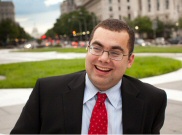
Wired Science has an exclusive interview with Ari Ne’eman, the first openly autistic White House appointee in history, who has been given a place on the National Council on Disability that advises the president on equality for disabled people.

Ne’eman is an advocate of neurodiversity, which rather than automatically seeing conditions like autism and Asperger’s syndrome as diseases to be cured, understands them as another form of human variation that should be accepted.

As a society, our approach to autism is still primarily “How do we make autistic people behave more normally? How do we get them to increase eye contact and make small talk while suppressing hand-flapping and other stims?” The inventor of a well-known form of behavioral intervention for autism, Dr. Ivar Lovaas, who passed away recently, said that his goal was to make autistic kids indistinguishable from their peers. That goal has more to do with increasing the comfort of non-autistic people than with what autistic people really need.

Lovaas also experimented with trying to make what he called effeminate boys normal. It was a silly idea around homosexuality, and it’s a silly idea around autism. What if we asked instead, “How can we increase the quality of life for autistic people?” We wouldn’t lose anything by that paradigm shift. We’d still be searching for ways to help autistic people communicate, stop dangerous and self-injurious behaviors, and make it easier for autistic people to have friends.

But the current bias in treatment — which measures progress by how non-autistic a person looks — would be taken away. Instead of trying to make autistic people normal, society should be asking us what we need to be happy.

This issue is a particularly heated one, not least because describing someone as ‘on the autism spectrum’, or even ‘autistic’ tell us little about the individual.

People with a diagnosis of autism can range from highly intelligent but socially atypical individuals, to people who are unable to attend to their most basic needs and are severely cognitively impaired.

This diversity means that anyone seeming to champion autistic people is assumed by one party or other to be an interloper who doesn’t fully represent the range of life experiences, either of individuals or families with autistic members.

Ne’eman is certainly a powerful and articulate speaker and as the first autistic person to be appointed to an official advisory position, he will be seen as the ‘voice of autism’ whether he likes it or not.
 

Link to Wired Science interview with Ari Ne’eman.