The psychiatry of vegetarianism

A fascinating but unfortunately locked review article on the psychology of vegetarianism has this paragraph on how avoiding the pleasures of cooked flesh has been seen as a mental illness in times past.

How vegetarians are seen has shifted radically over time. During the Inquisition, the Roman Catholic Church declared vegetarians to be heretics, and a similar line of persecutions occurred in 12th century China (Kellman, 2000). In the earlier half of the twentieth century, the sentiment toward vegetarians remained distinctly negative, with the decision not to eat meat being framed as deviant and worthy of suspicion.

Major Hyman S. Barahal (1946), then head of the Psychiatry Section of Mason General Hospital, Brentwood, wrote openly that he considered vegetarians to be domineering and secretly sadistic, and that they “display little regard for the suffering of their fellow human beings” (p. 12). In this same era, it was proposed that vegetarianism was an underlying cause of stammering, the cure for which was a steady diet of beefsteak.

In contrast, research shows the general attitude to vegetarianism has generally shifted to be, shall we say, somewhat more positive.
 

Link to locked article. Forbidden fruit and all that.

Glitches in The Technology of Orgasm

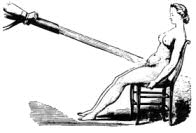
We’ve covered The Technology of Orgasm before, a hugely influential book arguing that 19th century doctors were using Victorian vibrators to cure ‘female hysteria’ through the induction of [serious look] ‘hysterical paroxysms’, but it seems that the main argument may not be as breathtaking as it first appears.

Cory Silverberg discusses how historians of sex have been less than impressed with the idea and the issue has now become a hot topic because the book, written by author Rachel Maines, has been made into a film starring Maggie Gyllenhaal.

The Technology of Orgasm is a somewhat controversial book. Controversial in that the thesis of the book has been almost universally accepted and embraced by the mainstream press and the sex toy industry, while at the same time being quite seriously critiqued by historians of sexuality. In her book Maines contends that the vibrator was regularly used by doctors to treat “hysteria” which they had previously been treating by manually stimulating women to orgasm. Included in this argument is the idea that the women didn’t know they were having orgasms and the doctors didn’t seem to worry about the professional boundaries involved in essentially masturbating their patients.

Silverberg also notes a comprehensive page by historian Lesley Hall who has detailed difficulties with the ‘Victorian vibrator cure’ idea.

The page also has loads of other fascinating information about 19th century sex.

Don’t be put off by the page’s dreadful green background – as the title suggests, it is full of wonderful ‘Victorian sex factoids’, including why it is unlikely that Queen Victoria ever used cannabis to help alleviate period pains.
 

Link to Cory Silverberg’s coverage of the new film (via @DrPetra).
Link to Lesley Hall’s page on ‘Victorian Sex Factoids’.

A history of the mid-life crisis

Scientific American’s Bering in Mind has a fantastic article on how the concept of the mid-life crisis was invented and whether it has any evidence behind it beyond the occasional inadvisable pair of cycling shorts and sudden interest in cheesy sports cars.

It turns out that the idea of the ‘mid-life crisis’ is surprisingly new – first touted in 1965 – but was invented to refer to a crisis of creativity in geniuses – rather than a sudden urge to dye one’s greying hair.

There isn’t actually any evidence that middle age is more of a time of crisis than any other period of life, but the concept has stuck.

In the decades since Jacques and Levinson posited their mostly psychoanalytic ideas of the midlife crisis, a number of more empirically minded psychologists have attempted to validate it with actual data. And with little success. Epidemiological studies reveal that midlife is no more or less likely to be associated with career disillusionment, divorce, anxiety, alcoholism, depression or suicide than any other life stage; in fact, the incidence rates of many of these problems peak at other periods of the lifespan.

Adolescence isn’t exactly a walk in the park either—as a teen, I’d worry so much about the uncertainties of my future that I vividly recall envying the elderly their age, since for them, no such uncertainties remained. Actually, old people—at least Swiss old people—aren’t fans of the “storm and stress” of adolescence, either. Freund and Ritter asked their elderly respondents which stage of their lives they’d prefer to return to, if they could. Most said middle age.

From another point of view, of course, the concept could also be a socially convenient way of helping to curtail certain behaviours in men when their actions are no longer thought to be age appropriate.

That’s my theory and I’m sticking to it.
 

Link to Bering in Mind on the mid-life not so crisis.

The chaos behind a legendary portrait

I just found this fascinating account of how Vincent Van Gogh cut off his own ear while seemingly severely mentally ill, the event that led him to paint one of his most famous pictures.

The account is apparently reconstructed from known events at the time but also has van Gogh’s own description of the event, taken from letters to his sister.

On Christmas Eve 1888, after Gauguin already had announced he would leave, van Gogh suddenly threw a glass of absinthe in Gauguin’s face, then was brought home and put to bed by his companion. A bizarre sequence of events ensued. When Gauguin left their house, van Gogh followed and approached him with an open razor, was repelled, went home, and cut off part of his left earlobe, which he then presented to Rachel, his favorite prostitute.

The police were alerted; he was found unconscious at his home and was hospitalized. There he lapsed into an acute psychotic state with agitation, hallucinations, and delusions that required 3 days of solitary confinement. He retained no memory of his attacks on Gauguin, the self-mutilation, or the early part of his stay at the hospital…

At the hospital, Felix Rey, the young physician attending van Gogh, diagnosed epilepsy and prescribed potassium bromide. Within days, van Gogh recovered from the psychotic state. About 3 weeks after admission, he was able to paint Self-Portrait With Bandaged Ear and Pipe, which shows him in serene composure. At the time of recovery and during the following weeks, he described his own mental state in letters to Theo and his sister Wilhelmina: “The intolerable hallucinations have ceased, in fact have diminished to a simple nightmare, as a result of taking potassium bromide, I believe.”

“I am rather well just now, except for a certain undercurrent of vague sadness difficult to explain.” “While I am absolutely calm at the present moment, I may easily relapse into a state of overexcitement on account of fresh mental emotion.” He also noted “three fainting fits without any plausible reason, and without retaining the slightest remembrance of what I felt”

Although absinthe is commonly associated with hallucinations and madness, and the author of the article wonders whether it might have helped cause his epilepsy, this is unlikely due to the fact that the effect of absinthe’s ‘special ingredient’ is largely a myth.

The distinctive aspect of the drink, the chemical thujone from the wordwood plant, is actually present in such small quantities that absinthe has virtually no psychoactive effects beyond the alcohol.

However, epilepsy does raise the risk of psychosis and it is suspected that he had temporal lobe epilepsy which is particularly associated with this reality-bending mental state.
 

Link to AJP article on ‘The Illness of Vincent van Gogh’.

The birth of ‘synthetic marijuana’

Addiction Inbox has an interview with pharmacologist David Kroll where he discusses the origin of the countless synthetic cannabinoids that have recently flooded the market as ‘legal highs’ and ‘incense’.

You may know Kroll better as the author of the long-running top-notch pharmacology blog Terra Sigillata where he has been tracking the ‘synthetic marijuana’ story since its early days.

In this recent interview he gives a fantastic brief description of how these compounds were born and became big business as ‘legal highs’.

Every area of CNS pharmacology has chemists who try to figure out the smallest possible chemical structure that can have a biological effect. In fact, this is a longstanding practice of any area of pharmacology. Huffman was an excellent chemist who in the 1990s was trying to figure out the most important part of the active component of marijuana that might have psychotropic effects. These compounds made by him and his students, surprisingly simple ones, I prefer to call cannabimimetics since they mimic the effect of the more complex cannabinoids in marijuana. These basic chemistry and pharmacology studies are what ultimately lead to new drugs in every field – a facet of chemistry called “structure-activity relationships” or SAR.

But since they are simple, they are relatively easy to make – some of Huffman’s work at Clemson was actually done by undergraduate chemistry majors. So, it was no surprise that they would be picked up by clandestine drug marketers, even though cannabis (UK) and marijuana (US) are freely available. The attraction to users was, until recently, that Huffman compounds (prefixed with “JWH-” for his initials) could not be detected in urine by routine drug testing. Hence, incense products containing these compounds have been called “probationer’s weed.”

In the interview he also discusses drug legality, drug development and prescription. Well worth checking out.
 

Link to David Kroll interview at Addiction Inbox.

Twelfth century orgasmic brain heat

Hildegard of Bingen was a twelfth century nun, possibly with repressed lesbian desires, who had visions, was a proto-scientist, advised the Pope, composed music, and, er, wrote about the role of the brain in the female orgasm.

BBC Radio 4’s Great Lives just had a fantastic programme about her where they read out her description of the female orgasm and how it is driven by a ‘sense of heat’ in the brain.

Remember, if you could possibly forget, that this was written by a nun in the 12th century.

When a woman is making love with a man, a sense of heat in her brain, which brings forth with it sensual delight, communicates the taste of that delight during the act and summons forth the emission of the man’s seed. And when the seed has fallen into its place, that vehement heat descending from her brain draws the seed to itself and holds it.

I for one, certainly feel closer to God after reading that.

Hildegard is most well known among neuroscientists for the descriptions of her visions which Oliver Sacks has interpreted as likely stemming from migraines as these can can cause an array of visual distortions and hallucinations.

Although from now on, I shall give equal consideration to her interest in erotic brain heat.
 

Link to programme info and streaming.
mp3 of the same in different location because the BBC are a bit slow.

Shifting between the worlds of Carl Jung

The New Atlantis has a wonderful article giving an in-depth biography of Carl Jung, perhaps one of the most interesting, infuriating and brilliant thinkers in the history of psychology.

Variously a pioneering experimental psychologist, a depth-analyst, an asylum psychiatrist and a man submerged in his own psychosis, he had a massive influence on both our understanding of the mind and 20th century culture.

…Jung never slackened in his pursuit of the ultimate — both ultimate good and ultimate evil, which he tended to find inseparable. He was frequently off in the empyrean or down in the bowels of hell, consorting with gods and demons as ordinary men do with family and friends. Few persons conducted such conversations, and most of them were inmates of lunatic asylums. For a time the thought that he might be insane terrified him.

The fear dissipated, however, as he became convinced that his visions were genuinely revelatory and belonged to the primordial psychic reality that all men have in common: the collective unconscious, he called it. Poets and such may get away with beliefs like these, for their madness is pretty well taken for granted, but it was a most unorthodox way for an esteemed psychiatrist to think.

Jung is also probably one of the most misunderstood figures in psychology, largely owing to his tendency to swing between science, poetic genius and outright flakery.

The New Atlantis article is a fantastic exploration of the man and his ideas and one of the best short introductions you could find. Well, as short as you could get with Carl Jung.
 

Link to ‘Psychology’s Magician’.

A whiff of madness

For a short time, the scientific community was excited about the smell of schizophrenia.

In 1960, a curious article appeared in the Archives of General Psychiatry suggesting not only that people with schizophrenia had a distinctive smell, but that the odour could be experimentally verified.

The paper by psychiatrists Kathleen Smith and Jacob Sines noted that “Many have commented upon the strange odour that pervades the back wards of mental hospitals” and went on to recount numerous anecdotes of the supposedly curious scent associated with the diagnosis.

Having worked on a fair few ‘back wards of mental hospitals’ in my time, my first reaction would be to point out that the ‘strange odour’ is more likely to be the staff than the patients but Smith and Sines were clearly committed to their observations.

They collected the sweat from 14 white male patients with schizophrenia and 14 comparable patients with ‘organic brain syndromes’ and found they could train rats to reliably distinguish the odours while a human panel of sweat sniffers seemed to be able to do the same.

Seemingly backed up by the nasal ninja skills of two different species, science attempted to determine the source of the ‘schizophrenic odour’.

Two years later researchers from Washington suggested the smell might be triggered by the bacteria Pseudomonas aeruginosa but an investigation found it was no more common in people with schizophrenia than those without the diagnosis.

But just before the end of the 60s, the original research team dropped a scientific bombshell. They claimed to have identified the schizophrenia specific scent and got their results published in glittery headline journal Science.

Using gas chromotography they identified the ‘odorous substance’ as trans-3-methyl-2-hexenoic acid, now known as TMHA.

At this point, you may be staring blankly at the screen, batting your eyelids in disinterest at the mention of a seemingly minor chemical associated with the mental illness, but to understand why it got splashed across the scientific equivalent of Vogue magazine you need to understand something about the history, hopes and dreams of psychiatry research.

For a great part of the early 20th century, psychiatry was on the hunt for what was called an ‘endogenous schizotoxin’ – a theorised internal toxin that supposedly triggered the disorder.

A great part of the early scientific interest in psychedelics drew on the same idea as psychiatrists wondered whether reality-bending drugs like LSD and mescaline were affecting the same chemicals, or, in some cases, might actually be the ‘schizotoxins’ themselves.

So a chemical uniquely identified in the sweat of people with schizophrenia was big news. Dreams of Nobel Prizes undoubtedly flashed through the minds of the investigators as they briefly allowed themselves to think about the possibility of finally cracking the ‘mystery of madness’.

As the wave of excitement hit, other scientists quickly hit the labs but just couldn’t confirm the link – the results kept coming in negative. In 1973 the original research team added their own study to the disappointment and concluded that the ‘schizophrenic odour’ was dead.

Looking back, we now know that TMHA is genuinely an important component in sweat odour. Curiously, it turns out it is largely restricted to Caucasian populations but no link to mental illness or psychiatric disorder has ever been confirmed.

The theory seems like an curious anomaly in the history of psychiatry but it occasionally makes a reappearance. In 2005 a study claimed that the odour exists but is “complex and cannot be limited to a single compound, but rather to a global variation of the body odor” but no replications or further investigations followed.

I, on the other hand, am still convinced it was the staff that were the source of the ‘strange odour’, but have yet to get research funding to confirm my pioneering theories.

Now available in Italian L’odore della schizofrenia
(thanks Giuliana!)
The spark of the cognitive revolution

Monitor on Psychology has a fascinating article on Otto Selz, a little known pioneer of the cognitive revolution who was decades ahead of the rest of psychology, before being captured and killed by the Nazis.

He was so little known, in fact, that the majority of people have never heard of him. In fact, this is the first time I’ve ever seen anything written about him, despite the fact he was a major influence on the key players who launched the concept of ‘mind as information processing metaphor’ in the 1950s.

Selz began to lay the foundation for cognitive research in a series of experiments he and his colleagues conducted from 1910 to 1915. They asked participants to explain their problem-solving thought processes out loud as they tried to complete a task, such as finding a word related to but more generic than “newspaper” or “farmer,” such as “publication” or “worker,” respectively. The participants would explain how they identified the features of those words, how the features fit into larger categories and how the categories led them to new words.

Based on these statements, Selz concluded that their minds were doing more than simply associating words and images they’d heard in conjunction before. To Selz, the participants were operating under what he called a “schema,” or an organizing mental principle, that guided their thoughts. Under this schema, the mind automatically orders relationships between ideas and can anticipate the connections among novel stimuli, serving as a basis for problem-solving. The existence of such an organized mental life would later become a cornerstone of the cognitive revolution.

Selz was actually captured twice by the Nazis. He was first sent to the Dachau concentration camp but was released after five weeks on the condition that he leave the country.

He went to Holland and continued working for two years but was captured again when the Nazi’s invaded. He died while been transported to Auschwitz.

The article has an incredibly poignant moment where it mentions “His last recorded correspondence was a postcard to his colleagues, telling them he planned to begin a lecture series for his fellow inmates.”
 

Link to APA Monitor article on Otto Selz.

Crushed snails as neurology treatment

From a curious paper just published in the The Neuroscientist entitled “Plastering the Head with Crushed Snails to Treat Pediatric Hydrocephalus: An Ancient Therapy with a Pharmacological Basis.”

In the Middle Ages, medical therapy for pediatric hydrocephalus [a condition caused by the accumulation of cerebrospinal fluid inside the brain that can lead to enlargement of the head] was characterized by the application of drying substances to decrease the size of the heads of affected children.

A poultice of crushed snails applied to the head was considered to be one of the most powerful therapies for reducing swelling caused by excessive humors. Incunabula (texts printed in Europe before 1501 CE) and Renaissance texts document the extended use of this therapy, which was considered by physicians to be effective and less dangerous than surgical treatment…

It has been demonstrated that snails and slugs possess high concentrations of glycosaminoglycans and mucopolysaccharides…

Therefore, we think that the ancient practice of plastering the head with crushed snails in pediatric hydrocephalus, although not based on science as we know it, may have had at least some basis.

Negatively charged glycosaminoglycans absorb and retain large amounts of water and are important components of connective tissue. Because of these properties, glycosaminoglycans are currently used under various conditions to rehydrate the skin.


Link to closed access paper in The Neuroscientist.

The Psychologist on Milgram and the shock of the old

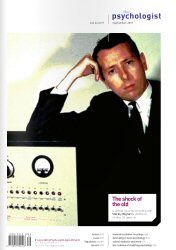
The August issue of The Psychologist is an open-access special edition on Stanley Milgram and his obedience studies that continue to cast a dark shadow over our understanding of human nature.

The issue has articles that look back on the legacy of his obedience studies, his treatment by historians and a personal view written by his widow, Alexandra Milgram, on the man himself.

But a particular highlight is a piece on his pioneering and almost cinematic use of film in his appropriately dramatic studies:

…in the popular imagination, Obedience and the ‘obedience to authority’ trials have become conflated and are now one and the same, despite the fact that the film only provides substantial documentation of one condition out of more than 20 that were investigated. Milgram’s documentaries and thoughtful writings on film, television and photography point to the value of narrative and audio-visual methods of research. The Obedience footage, however, does not support his claim that people ‘mindlessly follow authority’. On the contrary, it provides detailed audio-visual evidence that people experience considerable strain and anguish in following orders that conflict with their own consciences.

All the articles are free to read as is the rest of the issue. Enjoy.
 

Link to August edition of The Psychologist.
 

Declaration of interest: I’m an unpaid associate editor and occasional columnist for The Psychologist. The editor has not yet needed to use electric shocks on me.

A dark chapter in the history of combat trauma

Neurology has an article that looks back at the dark history of ‘treating’ war trauma with torture during World War I.

During the conflict, ‘war neurosis‘ became a serious problem as thousands of troops where disabled by psychological trauma that often expressed itself as extreme anxiety and seemingly neurological symptoms – something called ‘shell shock’ early on in the conflict

Contrary to appearances, symptoms such as paralysis, blindness and tremors were not due to physical damage to the nervous system but to psychological stress.

These were classic presentations of ‘hysteria’, now diagnosed as conversion disorder, although many in the forces just assumed the affected soldiers were faking and felt they were motivated by cowardice.

Most famously, psychiatrist W.H.R. Rivers pioneered a psychotherapeutic treatment for ‘shell shock’ for British troops, although as there was no standard treatment so different countries and even different hospitals used different methods.

One of the most desperate ‘treatments’ was popularised by neurologists Clovis Vincent and Gustave Roussy, who widely applied it to traumatised French troops during the Great War.

The method involved ordering the traumatised soldier to go back to the front and electrocuting them until they agreed.

Although officially called faradization “torpillage was the term chosen by soldiers receiving the treatment because they likened the electric part of the therapy to being hit by a shell (une torpille).”

At first, faradization was carried out using virtually pain-free currents so that the soldiers would relate the painless nature of the treatment to their comrades. However, Roussy recommended the use of more intense faradization in difficult cases. To begin with, electrodes were placed on the targeted areas and then, if necessary, on more sensitive areas such as the soles of the feet or the scrotum. It was sometimes necessary to incorporate certain complementary measures like disciplinary isolation or a milk diet. Soldiers in the recovery phase performed military exercises under the supervision of officers who had been cured using the same method.

Growing awareness of the cruelty of the ‘treatment’ and an outraged story in a French national newspaper stopped the torpillage technique by the end of the war but it remains a dark chapter in the history of combat trauma management.
 

Link to Neurology article ‘The “torpillage” neurologists of World War I’

Got any Charlie?

A brief scene from the 1936 Charlie Chaplin classic Modern Times where he accidentally eats cocaine hidden in a salt shaker by a fellow jail inmate.

The smuggled “nose powder” makes Chaplin go a bit strange and causes him to accidentally prevent a jailbreak, making him a hero.

In fact, the episode is a central plot device in the film, presumably before such comical treatment of drug use became politically incorrect.
 

Link to cocaine scene from Modern Times (via Fluxo Do Pensamento).

Your face in every flower

Billie Holiday sings about the phenomenon of seeing meaningful patterns in vague or non-connected visual information in her well-known track The Very Thought of You

Scientifically, these effects are known as pareidolia or apophenia.

However, the song notes that the perceptual biases are induced by love and, of course, ‘The Very Thought of You’.

I see your face in every flower
Your eyes in stars above
It’s just the thought of you,
The very thought of you, my love

For those tempted to connect these experience with Billie Holiday’s heavy drug use, which can cause these forms of misperception both through their immediate and long-term effects, it’s worth noting that the song was not written by her and was covered by a number of famous jazz artists, of which Holiday was perhaps the most famous.
 

Link to Holiday’s version of the song on YouTube.
Link to information on the song on Wikipedia.

Witch on a hallucinogenic flying broomstick

I’ve just found this fascinating discussion on the psychopharmacology of ‘witches ointments’, that supposedly allowed 16th century witches to ‘fly’.

It’s from a fantastic 1998 Anesthesiology article about atropine containing plants, like belladona, deadly nightshade and hemlock, and their effects.

De Laguna was not the sole commentator about the relationship of mind‐altering drugs and witchcraft in the 16th century. In De Praestigiis Daemonum, which Freud called one of the 10 most significant books of all time, Johann Weyer (1515–1588 CE) concluded henbane was a principal ingredient of witches’ brew, along with deadly nightshade and mandrake.

According to Weyer, there were other ointments, but the essential ingredients remained the same in all. The preparations, when applied to the upper thighs or genitals, were said to induce the sensation of rising into the air of flying.

Witches were thought to anoint a chair or broomstick with the devil’s ointment, and after self‐application, would fly through the air to meet for devil worship at the sabbat. Francis Bacon (1561–1626 CE) observed that “… the witches themselves are imaginative, and believe oftentimes they do that, which they do not … transforming themselves into other bodies … not by incantations or ceremonies, but by ointments, and annointing themselves all over.”

In an extensive review of psychotropic plant ointments of the Renaissance, Piomelli and Pollio examined transcripts of witchcraft trials, writings on demonology, and the botanical composition of ointments that alleged witches used on themselves during the 15th and 16th centuries.

Despite the difficulty with accurate identification of the plants, the documents reported consistent pharmacologic effects. Further, the biochemical logic of applying these plants in a fat‐based unguent was sound, as it would promote passage of the alkaloids through the intact skin and mucosa.

The use of soot (slightly alkaline) likely would enhance the passage of organic bases because a weakly alkaline environment would be sufficient to neutralize the positive ionic charge. That this is an effective ethnobotanical technique may be seen with Peruvian coca chewers, who mix in their mouths the cocaine‐containing leaves with alkaline cinders to enhance uptake.

There is even experimental evidence for believing that a fatty base was used in these ointments; an ointment from the 13th or 14th century, found accidentally, was subjected to chemical analysis and had an animal fat content of 40%.

The full article is well worth checking out as it tackles how the plants have been used in potions and preparations through history and were a early form of anaesthesia in ancient and medieval surgery.
 

Link to Anesthesiology article.

Psychology and its national styles

An interesting paragraph from a 2005 article on the history of psychological concepts.

It tracks how different styles of psychology emerged in different countries depending on the social and political problems active at the time.

In Britain, there was a noteworthy interest in individual differences, the distribution of these differences in the population and the significance of this data in social, educational and political questions. The result was a psychology intimately bound up with statistics.

In France, a clinical method and an interest in the exceptional, perhaps pathological, individual case (the hysteric, the prodigy of memory, the double personality) was characteristic of early work.

In Germany, the dominant academic interest, supported by an experimental methodology adapted from physiology, was in the conscious content of the rational adult mind. This interest interacted with philosophical questions about the foundations of knowledge.

In the United States, a pragmatic temper and the opportunity to obtain funding for a psychology aimed at the solution of social problems directed psychology towards a science of behaviour, with a methodology appropriate for the study of learning and adaptation.

In Russia, stark opposition between a conservative politics of the soul expressed in Orthodox belief and radical materialism led, in the Soviet period, to support for psychology as a theory of ‘higher nervous activity’, in Pavlov’s phrase, which threatened to make psychology part of physiology.

Such generalisations go only so far, but they do make clear the sheer variety and complexity of psychology just at the time when, as convention holds, the modern discipline emerged.


Link to locked article ‘The history of psychological categories’.