A comment on Szasz

One of the most interesting commentaries I’ve ever read on Thomas Szasz, the long-time critic of psychiatry who recently passed away, has been left as a comment in the obituary we recently published.

The comment is by ‘Aporeticist’ and he or she is clearly a fierce critic of modern psychiatry (to the point of indulging in sweeping generalisations at times) but the analysis of Szasz is remarkably insightful and cuts to the core of both his triumphs and failings.

Many of Szasz’s early critics have over the years quietly come around to some of his basic views. (Karl Menninger was one of his colleagues who acknowledged his change of heart.) The notion that the great majority of people with mental illness should never be hospitalized against their will (even when they are troublesome to those around them) has become common sense. It remains one of the great injustices of history that the psychiatric establishment continues to refuse to credit Szasz with being the first member of his profession who, in the mid 1960s, stated on record — against the unanimous opinion of his colleagues — the revolutionary contention that homosexuality was not a disease, and that it didn’t warrant “treatment” of any kind.

The classical liberal notion of “live and let live” resonates closely with the “first, do no harm” of the Hippocratic Oath that Thomas Szasz took as a young medical doctor. For better or worse, Szasz remained consistently faithful to these principles of negative freedom his whole life. Those, however, who believe that, as individuals and as a society, we have a moral obligation to (somehow) assist the mentally ill even when they don’t reach out for support, would regard Szasz’s characterization of psychiatric paternalism as “cruel compassion” as equally descriptive of his own apparent lack of concern for the welfare of those labelled mentally ill. Szasz tirelessly defended the autonomy of even the most severely disturbed mental patients (so long as they didn’t violate the law), yet seemed to care little whether they live or die if no one infringed on their sacred negative rights.

Recommended. Thanks Aporeticist.
 

Link to commentary on Szasz’s legacy by Aporeticist.

Thomas Szasz has left the building

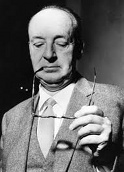
The brilliant, infuriating, persistent, renegade psychiatrist Thomas Szasz has died.
Szasz is usually associated with anti-psychiatry but he rejected the label and really had nothing in common with the likes of R.D Laing, David Cooper and the rest. You can see this in his work.

He had two main arguments. The first was that the concept of ‘mental illness’ was really just a metaphor, in the same way that saying someone’s movie preferences were ‘sick’.

Because neither can be defined objectively and are a subjective interpretation of conscious states or behaviour, he excluded them from what can acceptably be called an illness.

The second stemmed from a political position. Szasz strictly adhered to a libertarian or classical liberal view of freedom and believed the only legitimate restriction of freedom should be the result of crime.

He saw psychiatry as a structure fundamentally built around restricting the freedom of ‘patients’ – the only branch of medicine to do so – meaning he thought it lacked legitimacy in both its aims and justification.

Most critics of psychiatry suggest that it doesn’t sufficiently ‘help’ people with psychological problems. Szasz saw this as promoting the idea of privileged helpers and medically-dependent patients.

Suggestions that psychiatry should not use drugs, should reject diagnoses, or should recognise some experiences as normal were an anathema to Szasz. The problem, according to him, was not the practices but a paradigm that allowed any restriction of freedom.

He was one of the most important critics of psychiatry not because he said it was done badly, but because he said it was incompatible with human liberty. A powerful reminder to a powerful profession.

But so much of it relied on buying into Szasz’s politics – and this was his major failing.

Szasz saw individual liberty as a pure and unalienable right while most see it as as important principle that should be balanced with the good of the community.

Different people draw the line in different places while Szasz is clearly on the extreme end of the spectrum.

He became famous with his book The Myth of Mental Illness in the 1960s when the extremes of personal freedom were popular, but as time has moved on Szasz’s politics have seemed increasingly out-of-place.

His association with Scientology through the CCHR or the ‘Citizens Commission on Human Rights’ made him look increasingly suspect as the organization lost its 60s counter-culture associations and became an intimidating corporate nonsense shop.

Szasz will surely be missed, however. He was active and writing right until the end of his life – never giving up on his campaign for extreme liberty.
 

Link to death notice.

Let there be light, finally

A documentary on the trauma of war, banned by the US government for more than 30 years, has found its way onto YouTube as a freely viewable video.
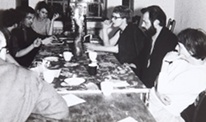
During World War Two, legendary director John Huston, then a fresh face in Hollywood, was commissioned to make three propaganda films for the US Army.

The third film, Let There Be Light, was made in 1946 – just as the war ended – and focussed on the psychiatric treatment of soldiers traumatised in combat.

This is a description from the fantastic book The Empire of Trauma:

With no political agenda, and anxious to keep scrupulously to the task he had been given, Huston applied to the letter the principle of objectivity he had followed in the two previous documentaries. For more than three months, he filmed the daily life of former combatants hospitalized at Mason General, a military hospital on Long Island. The courage and sense of sacrifice of these men was clearly portrayed, as the Pentagon had clearly requested. But equally apparent was the fact that some of them were utterly destroyed: their fear, their shame, and their tears showed clearly, as did their contempt for military authorities. The film also documented the arrogance and harshness of the psychiatrists and brutality of some of their therapeutic methods. Remarkably, when the film received its world premiere at the Cannes Film Festival in 1981, the emotional response of the viewers and critics was muted, for the film did not meet the expectations of an audience seeking revelations about the military and medical practices of the time.

What made the film so controversial in 1946, made it commonplace in 1981. But this was nothing to do with film-making, and instead concerned the way it portrayed the effects of trauma.

Let There Be Light portrays the “emotionally damaged” soldier as an everyday person “forced beyond the limit of human endurance”. “Every man”, it says, “has his breaking point”.

This is the modern view of trauma, widely accepted in psychiatry and in today’s media narratives, and is itself somewhat of a simplification of what we actually know about how people react to extreme events.

But in 1946, and especially in military psychiatry, the most widely accepted view was that soldiers who became mentally ill were psychologically weak or malingering.

The fact that film showed US Soldiers, not as the glorified heroes the public wanted, but as disabled veterans, meant that the film would be a huge propaganda disaster – likely compounded by the fact that most people saw these conditions as character flaws or shameful faking.

The idea that these were ordinary men who had been through extraordinary circumstances was just too far ahead of its time to seem realistic.

And this is why it was censored, for 35 years, until it had its first public showing in 1981, when it seemed nothing more than a passé propaganda film that just reflected what we all assumed was always the case, but actually, never was.
 

Link to film on YouTube
Link to downloadable version on Internet Archive.

The kings of Kingsley Hall

The Observer has an article on some of the residents of R.D. Laing’s chaos-as-therapy residential centre at Kingsley Hall, five decades on.

The idea was that people with psychosis and therapists would live together in a therapeutic environment and effect change without the use of medical drugs. Residents could ‘live out’ their delusions and come to terms with the early traumas which R.D. Laing saw as the root of their difficulties.

But as the documentary Asylum shows, the place was more chaos than freedom, and the residence became a stop-in for hippies, lost souls and acid dealers.

Most accounts of the place have focussed on Laing but photographer Dominic Harris decided to track down the residents for a portrait project.

The Observer article has some of their stories:

One patient had been in a mental hospital: John Woods, I think. His label in orthodox psychiatry was paranoid schizophrenic. He had some fantasy about some young woman and he couldn’t write letters to her himself so he dictated them to me. When it turned out this woman wasn’t interested, he assumed wrongly that I was preventing her from coming to visit him. He thought I was a black magician and was controlling her. Then living in there became quite scary. There was a chapel in the building, with a huge crucifix, and he burst into my room early one morning holding it. I thought he was going to attack me with it but he wanted to exorcise me. Eventually, I did something that was against the whole ideology of the place: I tried to have him sectioned.

There are many more fascinating, if not troubling, insights to the heart of the chaos.
 

Link to Observer article.
Link to project, book and exhibition on the residents by Dominic Harris

A traditional IRA welcome to the sociologist

An amazing description of how sociologists who wanted to do field studies in Belfast during the height of The Troubles were put through some seemingly routine but terrifying vetting by the IRA to check they were up to the job.
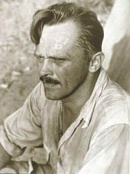
The piece is from an article by Lorraine Dowler, who starts by recounting a tale from legendary social scientist Frank Burton.

Burton worked extensively amid the violence of Belfast and woke up one morning to find someone was pointing a sub-machine gun in his face and suggesting he was a “Four Square Laundry job” an allusion to being an army spy.

Dowler continues:

Thanks to his dangerous and frightening experiences in West Belfast, Frank Burton’s ethnographic research on Northern Ireland is considered legendary. At first glance the incident Burton describes would seem mad to anyone who has not spent time living and working in the Catholic ghettos of Belfast. However, as alarming as this event may seem, it speaks more to the rapport Burton established with his respondents than to the perils of fieldwork. In actuality this was a prank brought about by one of his Irish Republican Army (IRA) informants.

The hazing of researchers is a common practice in Belfast, and anyone who conducts inquiries of this nature is bound to collect a few such “war stories”. The obvious reason for such a vetting is that the IRA feared that a British undercover operative disguised as an academic would infiltrate the organization. Having said that, I believe that researchers are not only checked out as potential spies but also tested to see whether they have the “salt” to stick it out when the political atmosphere makes day-to-day life difficult. In other words, the researcher has to prove that, when placed in a life-threatening situation, even for just a moment, she or he won’t simply pack up and go home.

How weird that amongst all of the violence and subterfuge, the IRA was actively managing its policy on collaborating with ethnography researchers.

Dowler herself also worked as a sociologist amid the The Troubles and has more than a few stories of her own to tell – not least having to flee an assassination attempt on one of her interviewees.

However, she wisely notes that the greatest risk was not to her, but to her participants, who were giving sensitive information to her in the name of impartial research.

Despite the fact that the hazing was extreme, you can understand why trust was considered important.
 

Link to locked version of article.
pdf of article, freely available.

A dark and complex past

In a story that could be the plot for a film, one of the world’s pioneering anthropologists has been found to have been a member of both the Nazi SS and the French resistance during the Second World War.

Gerardo Reichel-Dolmatoff retains legendary status in anthropology and particularly in Colombia, where he first lived with many of the country’s remote indigenous people during the 1950s and 60s and founded the first department of anthropology. He died in 1994 but his legend has only grown since his passing.

In many ways, the classic image of the anthropologist was shaped by Reichel-Dolmatoff. He lived with remote communities to learn the language and worldviews of previously unknown societies. He trekked through jungles and participated in the hallucinatory ceremonies of local religions. He pioneered the archaeology not of the giant civilization, but of the lost peoples of specific valleys and mountain ridges.

He was actually born in Austria but talked little about his past. This is not surprising in the light of new revelations.

Augusto Oyuela-Caycedo, an anthropologist at the University of Florida, has been researching the background of this legendary figure but found far more than the echo of myth.

If you speak Spanish you can watch his recent conference presentation. But even if you don’t, you can see it has a power absent from most academic talks.

Oyuela-Caycedo began his investigation as a tribute to his friend and mentor only to discover a grim past well documented in the Nazi archives. At one point in the presentation, he is brought to tears as he reads a description of how the yet-to-be Austrian anthropologist murders an old man with a pistol.

It turns out that Reichel-Dolmatoff was a member of both the Nazi Party and the SS, in the personal guard of Hitler himself and a participant in Gestapo death squads. He later trained guards in the Dachau Concentration Camp.

In light of his subsequent life in Colombia, it would be easy to chalk this up as another bitter tale of a Nazi who escaped justice to the anonymity of Latin America, but Reichel-Dolmatoff did not seem to make the typical Nazi exit from Europe. He had what is vaguely described as a ‘mental crisis’ in 1936 and was declared unfit for the SS and publicly expelled from the Nazi party.

Curiously, he turned up immediately afterwards working for the anti-Hitler resistance in France and continued to support the French resistance after he arrived in Colombia in 1939, to the point where he was eventually awarded the National Order of Merit by the French president.

Reichel-Dolmatof’s subsequent anthropological work is completely devoid of Nazi overtones – no hints of eugenics or ‘racial hygiene’ – and throughout his life he attempted to demonstrate the amazing diversity of the native peoples of Colombia, the Amazon and the Sierra Nevada mountains.

The case raises a number of difficult questions. The nature of Reichel-Dolmatof’s ‘mental crisis’ remains completely obscure. As the Spanish-language magazine Arcadia asks – how did a young Nazi end up working in Colombia for a Hitler resistance movement? Was it a crisis of conscious or something more opportunistic?

But perhaps more important is the question of whether Reichel-Dolmatof can ever redeem himself. Is his life and his work now forever tainted? Does his good work drown under the tide of his dark and vicious past?

It may have been a question he asked himself many times.
 

Link to English-language coverage of discovery.
Link to Oyuela-Caycedo’s Spanish-language presentation.
Link to Spanish-language coverage from Arcadia magazine.

Consciousness after decapitation

How long is a severed head conscious for? The question has troubled students of the human body for centuries and generated countless, possibly mythical stories. History of medicine blog The Chirurgeon’s Apprentice has finally looked through the records to find out which of the accounts are based in blood-curdling fact.
A common tale involves someone trying to test the idea during the French revolution by taking a severed head directly after it has fallen from the guillotine and asking questions, with the unfortunate victim communicating via blinks until it loses consciousness.

We’ve covered exactly such a story previously on Mind Hacks, but historian of medicine Lindsey Fitzharris thought it sounded a bit too much like a tall tale and decided to find out if anything like this had ever actually happened.

She ended up on a wonderfully macabre journey through the science of consciousness after decapitation, involving everything from electrocuting severed heads to grimacing dead people:

The first to reportedly do so was a Dr Séguret, who subjected a number of guillotined heads to a series of experiments during the French Revolution. In several instances, he exposed their eyes to the sun and observed that they ‘promptly closed, of their own accord, and with an aliveness that was both abrupt and startling’. He also pricked one of the severed head’s tongue with a lancet, noting that the tongue immediately retracted and ‘the facial features grimaced as if in pain’. Was this my urban legend?

Right century, wrong story.

Fitzharris eventually finds the source of the story, but I wouldn’t want to spoil the, er, fun for you.
 

Link to ‘Losing One’s Head’ (via @TheNeuroTimes)

A very modern trauma

Posttraumatic stress disorder is one of the defining disorders of modern psychiatry. Although first officially accepted as a diagnosis in the early 1980s, many believe that it has always been with us, but two new studies suggest that this unlikely to be the case – it may be a genuinely modern reaction to trauma.

The diagnosis of PTSD involves having a traumatic experience and then being affected by a month of symptoms of three main groups: intrusive memories, hyper-arousal, and avoidance of reminders or emotional numbing.

It was originally called ‘post-Vietnam syndrome’ and was promoted by anti-war psychiatrists who felt that the Vietnam war was having a unique effect on the mental health of American soldiers, but the concept was demilitarised and turned into a civilian diagnosis concerning the chronic effects of trauma.

Since then there has been a popular belief that PTSD has been experienced throughout history but simply wasn’t properly recognised. Previous labels, it is claimed, like ‘shell shock’ or ‘combat fatigue’, were just early descriptions of the same universal reaction.

But until now, few studies have systematically looked for PTSD or post-trauma reactions in the older historical record. Two recent studies have done exactly this, however, and found no evidence for a historical syndrome equivalent to PTSD.

A study just published in the Journal of Anxiety Disorders looked at the extensive medical records for soldiers in the American Civil War, whose mortality rate was about 50-80 greater than modern soldiers fighting in Iraq and Afghanistan.

In other words, there would have been many more having terrifying experiences but despite the higher rates of trauma and mentions of other mental problems, there is virtually no mention of anything like the intrusive thoughts or flashbacks of PTSD.

In a commentary, psychologist Richard McNally makes the point that often these symptoms have to be asked about specifically to be detected, but even so, he too admits that the fact that PTSD-like symptoms virtually make no appearance in hundreds of thousands of medical records suggests that PTSD is unlikely to be a ‘universal timeless disorder’.

Taking an even longer view, a study published in Stress and Health looked at historical accounts of traumatic experiences from antiquity to the 16th century.

The researchers found that although psychological trauma has been recognised throughout history, with difficult events potentially leading to mental disorder in some, there were no consistent effects that resembled the classic PTSD syndrome.

Various symptoms would be mentioned at various times, some now associated with the modern diagnosis, some not, but it was simply not possible to find ‘historical accounts of PTSD’.

The concept of PTSD is clearly grounded in a particular time and culture, but even from a modern diagnostic perspective it is important to recognise that we tend to over-focus on PTSD as the outcome of horrendous events.

Perhaps the best scientific paper yet published on the diversity of trauma was an article authored by George Bonanno and colleagues in 2011. You can read the full-text online as a pdf.

It notes that the single most common outcome after a traumatic event is recovery without intervention, and for those who do remain affected, depression and substance abuse problems are equally, if not more likely, than a diagnosis of posttraumatic stress disorder.
 

Link to locked study on trauma in Civil War soldiers.
Link to locked study on trauma through history.

Projecting Nabokov

American Scholar has an excellent article on the use of psychology in the novels of Vladimir Nabokov – most famous as the author of Lolita.

As is now standard for literary criticism the article includes lots of florid prose and a spurious reference to ‘mirror neurons‘, but get past the flouncing and it’s a brilliant look at perhaps the most psychologically engaged author of the 20th century.

It’s not just that Nabokov’s novels are beautifully observed, insightful and run through with references to psychological theory, but also that he was a fierce combatant in the ‘Freud wars’:

Famously, Nabokov could not resist deriding Freud. And for good reason: Freud’s ideas were enormously influential, especially in Nabokov’s American years, but his claims were hollow. Nobel laureate Peter Medawar, perhaps the greatest of science essayists, declared in his book Pluto’s Republic, in terms akin to Nabokov’s, that Freudianism was “the most stupendous intellectual confidence trick of the twentieth century.” Nabokov saw the intellectual vacuity of Freudian theory and its pervasiveness in the popular and the professional imagination. He thought it corrupted intellectual standards, infringed on personal freedom, undermined the ethics of personal responsibility, destroyed literary sensitivity, and distorted the real nature of childhood attachment to parents–the last of which has been amply confirmed by modern developmental psychology.

Cynics, and especially cynics of a Freudian persuasion, might suggest that if you’ve written a novel about paedophilia, the last thing you’d want is people probing your unconscious motivations and so Nabokov’s objections could be understood as a form of projection.

Others might suggest, and especially those of a non-Freudian persuasion, that orthodox psychoanalysis needs to inspire no other motivation in its critics as it is so patently ridiculous that it doesn’t even make good farce.

Actually, Freud wrote so widely, revised his ideas, contradicted himself, hit on genuine insights, and shamelessly embarrassed himself, all in equal measure, that to say you are ‘for’ or ‘against’ Freud is like saying you are ‘for’ or ‘against’ the Greek classics.
 

Link to article on Nabokov as psychologist (via @ferrisjabr)

One hundred years of gratitude

Tomorrow is the 100th birthday of Alan Turing – brilliant mathematician, philosopher, proto-cognitive scientist, secret war hero and unjustly persecuted gay man.

If you want some excellent coverage of his life, work and influence, Wired UK has a new collection of articles stemming from their Turing Week project.

Highly recommended.
 

Link to Turing Week on Wired UK.

The making of ‘War Neuroses’

The history of one of the most important and disturbing films in the history of psychiatry is covered by an excellent article in the latest edition of the Journal of the History of Medicine.

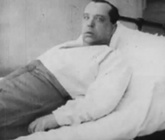
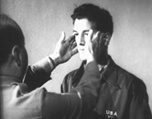
The piece concerns the 1917 film of soldiers affected by ‘shell shock’ during World War One. It was called ‘War Neuroses’ and was filmed at Netley and Seale Hayne hospitals. You can now watch the entire footage online

The full text of the article is locked behind a paywall but the pdf has found its way online.

The history of the film turns out to be very interesting. Although it has become iconic for images of ‘shell shocked’ soldiers it was also made with the promotion of producer and medic Arthur Hurst’s career in mind.

Hurst turns out to be a curious figure and not necessarily a good representative of what was happening with regard to the home treatment of traumatised soldiers – as he isolated himself physically and professionally from the wider community of professionals working on treatments.

Despite working at Netley, Hurst made no attempt to integrate himself within the wider community of shell shock doctors. By the end of 1916, Maghull and the Maudsley had become the main centers for experiment into treatment, run respectively by R. G. Rows and Frederick Mott, but Hurst worked independently of them and their staff. In part, this was because he saw himself as a general physician, rather than a medically qualified psychologist, bringing a knowledge derived from neurology and infectious disease to the question of neurasthenia, hysteria, and shell shock.

As a charismatic leader, Hurst was more comfortable running his own hospital than becoming part of a network of shell shock doctors—many of whom explored hypotheses borrowed from psychoanalysis, anthropology, and psychology. Significantly, no motion pictures were shot at either Maghull or the Maudsley, though both were recorded in still photographs.

Another curious detail is that Hurst made the film to demonstrate the effectiveness of his treatment, showing before and after treatment footage of the soldiers.

However, some of the ‘before treatment’ footage has clearly been re-enacted as the surroundings and personnel don’t change position. This was apparently common in documentaries of the time and was probably justified by Hurst as being an accurate depiction.

Nevertheless, apparently this was not only an attempt to make his treatments look more effective but the footage itself was also used to demonstrate to patients the extent of the change they’d experienced.

Anyway, the whole article is full of fascinating background, so well-worth checking out.

Also, if you’re interested in reading more about ‘shell shock’ and its effect on mental health treatment the June edition of APA Monitor has an article by the same historian, Edgar Jones, on how it was first taken seriously.
 

Link to article in journal site.
pdf of the same.
Link to film on YouTube.
Link to APA Monitor article on ‘shell shock’.

A geography of stigma

The picture below is of the main building to Princess Park Manor, a luxury housing development in North London, that used to be Colney Hatch Lunatic Asylum.

A recent newspaper article about the apartments notes how they have become an attraction for pop singers and reality TV stars.

The Princess Park Manor website lauds the historic buildings but has a history section that completely avoids the fact that the building was an asylum – Europe’s biggest no less.

But this attempt to distance the local area from associations with mental illness is not a new phenomenon. In fact, this area of London has been uniquely affected by trying to dissociate itself from the hospital.

The asylum was so named because it was located in a historic area called Colney Hatch.

As the hospital became infamous in London (it housed almost 3,500 patients at one stage so became well-known), the Colney Hatch name became irreversibly associated with madness. Being called a ‘Colney Hatch case’ was a standard insult.

As a result, simply being associated with the area was stigmatising and house prices began to be affected.

The solution was to rename the whole area to New Southgate. The train station was similarly renamed – originally called ‘Colney Hatch and Southgate’ and then ‘Southgate and Colney Hatch’ but finally the mention of the feared name was omitted entirely, settling with just ‘New Southgate’.

Eventually, the hospital itself was renamed to ‘Friern Hospital’

In fact, the only reference to Colney Hatch that remains in the area is the road Colney Hatch Lane which can also be called the B550 if you prefer.

Curiously though, the hospital had its own cemetery on site although I could find no trace of it on my explorations. Presumably it has been built over as the rest of the estate was sold off.
 

Link to piece on the history of the area.

The labels change, the game remains the same

Today’s New York Times has a huge feature on the illicit use of stimulant drugs like Ritalin and pharmaceutical amphetamines in colleges and schools by kids ‘seeking an academic edge’.

The piece is written like an exposé but if you know a little about the history of amphetamines, it is also incredibly ironic.

The ‘illicit stimulants for study’ situation is a complete replay of what happened with the branded amphetamine benzedrine in the 1930s, as recounted in Nicolas Rasmussen’s brilliant book On Speed: The Many Lives of Amphetamine.

Benzedrine had a legitimate medical use. It acts as a bronchodilater, opening up the airways to the lungs, so it was prescribed for people with asthma.

In the mid-1930s, it was also being tested as a way of increasing intelligence test scores with promising results, both in British adults and in American children.

But, unsurprisingly (it is speed after all) it became popular for party people wanting a recreational high, and students wanting increased focus and energy, who concluded through their own informal tests that it could help with study.

In 1937, none other than the The New York Times ran a story about benzedrine calling it a ‘high octane brain fuel’ and noting that without it the brain ‘does not run on all cylinders’. It was clearly pitched as a cognitive enhancer.

Shortly after Time magazine ran a story specifically on how it was being used by college students to cram for final exams.

Suddenly, there was a boom in students using benzedrine, leading the prestigious Journal of the American Medical Asociation to condemn the press coverage for promoting the widespread use of drug, as previously its use was a niche activity.

The warnings did little good, however, and speed has remained a massively popular study drug ever since.

Here’s an article from the 1948 Harvard Crimson, a full decade later, warning of ‘Benzedrine-Soaked Crammers’. And here’s another from a 1965 edition of same publication, almost two decades later warning of studying with benzedrine ‘pep pills’. Here’s the 2004 version: ‘Students Turn To Drugs To Study’.

So the story isn’t really new but it’s ironic that the New York Times has inadvertently promoted the activity. Again.
 

Link to NYT article Risky Rise of the Good-Grade Pill’

A history of human sacrifice

A video on the history of human sacrifice is available from Science magazine as part of their special issue on human conflict.

Sadly, all the articles are locked behind a paywall but the video is free to view and has science writer Ann Gibbons discussing how the practice evolved through the ages and how archaeologists have been uncovering the evidence.

If you can’t stump up the cash for what looks like a genuinely fascinating issue there’s more discussion from the latest edition on the podcast where the science of racism and prejudice is explored.
 

Link to locked special issue.
Link to video.
Link to podcast

How the British missed a trip

The first ever medical report on the effects of magic mushrooms is featured in an article in Current Biology. The excerpt is from a 1799 report entitled ‘On A Poisonous Species of Agaric’ from an issue of The London Medical and Physical Journal.

The psychological effects of hallucinogenic, or ‘magic’ mushrooms were first documented in the medical literature in 1799: a forty year-old father of four, JS, collected wild mushrooms in London’s Green Park and cooked them as a stew for breakfast for himself and his four young children. The apothecary Everard Brande described what happened then:

“Edward, one of the children (eight years old), who had eaten a large proportion of the mushrooms, as they thought them, was attacked with fits of immoderate laughter, nor could the threats of his father or mother refrain him. To this succeeded vertigo, and a great deal of stupor, from which he was roused by being called or shaken, but immediately relapsed. […] he sometimes pressed his hands on different parts of his abdomen, as if in pain, but when roused and interrogated as to it, he answered indifferently, yes, or no, as he did to every other question, evidently without any relation to what was asked. About the same time the father, aged forty, was attacked with vertigo, and complained that everything appeared black, then wholly disappeared”

The report is curious for two reasons. The first is that, contrary to the title, the mushroom wasn’t a ‘species of Agaric’.

Agaric here refers to fly agaric which is a red and white spotted toadstool that has long been known to have deliriant properties due to its effect on the acetylcholine receptors in the brain

But the report clearly discusses the classic ‘magic mushroom’ found in the UK, psilocybe semilanceata, which is a small brown fungus that has its hallucinogenic effects through the serotonin system – as do most recreational psychedelic drugs.

The other curious thing is that this hallucinogenic mushroom is common in the UK but seemingly lay undiscovered until 1799.

In contrast, mushrooms from the same species that are equally common in South America were first recorded some 2,000 years ago and became a central part of indigenous spirituality. The Aztecs called these mushrooms teonanacatl – the God mushroom – and were considered a way of accessing the divine.

The British, it seemed, either missed or ignored the fungus, and considered it nothing more than an inedible brown pest.
 

Link to 1799 report on the effects of magic mushrooms.

BBC Future column: earworms

From a couple of weeks ago, my column from BBC Future, about everyday brain quirks (as I’ve mentioned previously). Thanks to Maria Panagiotidi for help with this one.

“Earworms”, some people call them. Songs that get stuck in your head and go round and round, sometimes for days, sometimes for months. For no apparent reason you cannot help yourself from humming or singing a tune by Lady Gaga or Coldplay, or horror upon horrors, the latest American Idol reject.

To a psychologist – or at least to this psychologist – the most interesting thing about earworms is that they show a part of our mind that is clearly outside of our control. Earworms arrive without permission and refuse to leave when we tell them to. They are parasites, living in a part of our minds that rehearses sounds.

We all get these musical memories, and people appear to have different ones, according to a team at Goldsmiths University in London, who collected a database of over 5,000 earworms. True, the songs that we get stuck with tend to be simple and repetitive, but it seems we are not all singing the same number one song at the same time.

Lost in music

Neurologist Oliver Sacks wrote in his book Musicophilia that earworms are a clear sign of “the overwhelming, and at times, helpless, sensitivity of our brains to music”. Music is defined by repetition, just like earworms, and this might make earworms so hard to shake – they are musical memories that loop, say a particular verse or a hook, forever repeating rather than running to completion. Some people report that singing an earworm to the end can help get rid of it (others report in frustration that this does not work at all).

As well as containing repetition, music is also unusual among the things we regularly encounter for being so similar each time we hear it. Fences are visually repetitive, for example, but each time you see the same fence you will look at it from a different angle, or in different light. Put a song on your stereo and the sound comes out virtually identical each time. Remembering is powerfully affected by repetition, so maybe the similarity of music engraves deep grooves in our mind. Grooves in which earworms can thrive.

Another fact about earworms is that they often seem to have something interesting or usual about them. Although they will often be simple and repetitive bits of music, tunes that become earworms have a little twist or peculiarity, something that makes them “catchy”, and perhaps this is a clue as to why they can take hold in our memory system. If there was nothing unique about them they would be swamped by all the other memories that sound similar too.

Slave to the rhythm

If you have got a particularly persistent earworm you can suffer an attack of it merely by someone mentioning the tune, without having to hear it. This proves that earworms are a phenomenon of long-term memory, rather than merely being a temporary “after-image” in sound.

But this is not the whole story. Human memory researchers have identified so called “slave systems” in our short-term memory, components of the mind which capture sights and sounds, keeping them alive for a short time while we focus on them.

One slave system is the “mind’s eye”, capturing visual information, another is the “inner ear”, the part we use for remembering phone numbers, for instance. It is this second part that seems to get infected with earworms. Rather than rehearse our plans for the day, idle thoughts, or lists of things to remember, the inner ear gets stuck on a few short bars of music or a couple of phrases from a song. A part of us that we normally do not have to think about, that should just do what we ask, has been turned against us, tormenting us with a jukebox request that we never asked for.

That our minds are not a unity is one of the basic insights of modern psychology – it is the story Dr Freud was telling, and, although it differs on many of the details, modern cognitive neuroscience says a similar thing. The sense of our selves is not the only thing going on in our minds, psychology says. The mind is an inner world which we do not have complete knowledge of, or have control over.

Mind games

Fortunately psychology can provide some vital intelligence on how to deal with an unruly mind. Consider the famous “don’t think of a white bear” problem, which as it implies involves trying not to think about white bears. Try this yourself, or you can set it as a challenge for a loved one you would like to torment. This problem is a paradox: by trying not to think of a thing you constantly have to be checking if you are still thinking of it – re-invoking precisely the thing you are trying not to think of.

The general solution for the white bear problem is to do something else, to avoid both thinking of the white bear and not thinking of the white bear. For earworms, the solution may be the same. Our inner ear, a vital part of our cognitive machinery for remembering and rehearsing sounds, has become infected with an earworm. This is a part of ourselves which is not under our control, so just sending in instructions to “shut up” is unlikely to be of much help (and has been shown to make it worse). Much better is to employ the inner ear in another task, preferably something incompatible with rehearsing the earworm.

If earworms survive because of their peculiarity, the hook that makes them catch, then my prediction for ridding yourself of an earworm is to sing songs that are similar. If your mind is poisoned by Brittany Spears’ Toxic, for instance, then try singing Kylie Minogue’s appropriately titled Can’t Get You Out Of My Head. By my theory this will erode the uniqueness of the memory habitat that lets the earworm survive. Let me know if it works!

Link: My columns at BBC Future
Link: UK readers – you’ll have to try it via here