Glazed looks sharpen the mind

There’s an interesting news report on the Nature website suggesting that gazing into the middle distance improves concentration.

Researchers at the University of Stirling in Scotland took a group of 25 five-year-olds and trained them to look away when they were being asked a question. The effect was a significant increase in correct answers to mental arithmetic questions, says Gwyneth Doherty-Sneddon, who led the research. She declined to give details as the work is in press with the British Journal of Developmental Psychology.

It strikes me as a bit strange that someone would decline to give details because the paper is ‘in press’.

When a paper is ‘in press’ it means that it has been reviewed by independent scientists and declared to be worthy of publication.

It is standard practice for researchers give out ‘pre-prints’ of the research papers to anyone who asks at this stage and it is considered a little obstructive to refuse.

Despite this strangeness, it seems like an interesting study and I’ll look forward to reading it when it is finally published.

Link to news report from Nature.

Me voy a Espa√±a

SevilleBath.jpgI am off to deepest Seville for two weeks and I’m not sure how much internet access I will have. As a consequence, updates might be a little sporadic and I suspect will be without illustrations as I doubt I’ll have decent image editing software to hand.

In the mean time, here’s a few articles of interest for those curious about psychology and psychiatry in Spain.

* An article [pdf] about professional psychology in contemporary Spain.

* A piece from The Guardian about a bizarre chapter in the history of Spanish psychiatry where Franco’s psychiatrist tried to prove leftists were clinically mad.

* An abstract from a 1945 American Journal of Psychiatry paper on Spain as the ‘cradle of psychiatry’.

The Nature of Belief

sand_through_hands.jpgABC Radio’s All in the Mind recently hosted a debate for Australian National Science Week on the ‘nature of belief’ where a neuropsychologist, a minister and a science writer got together to discuss one of the most tricky problems in psychology.
Although we use the term belief in everyday life with little problems, it is actually incredibly hard to define with some schools of thought thinking it will eventually be discarded as useless, like other abandoned theories such the four humours theory of medicine.

This is an important issue, as researchers are now working on the neuropsychology of delusions, often described as pathological beliefs, that can occur as part of psychosis after mental illness or brain injury.

Professor Max Coltheart, one of the panel members in the debate, is trying to do exactly this as part of the Macquarie University belief formation research project.

The debate tackles what it means to believe something, as well as issue surrounding why we believe things, and what evidence justifies a belief.

When asked the now classic question “what do you believe is true even though you cannot prove it?” Coltheart gives the wry but accurate answer “everything”.

The show has a half hour edited version, but has also put the whole hour and 20 minutes debate online for those wanting the full story.

Link to All in the Mind webpage with audio downloads of debate.

New source of online psychology news

April cover.JPGThe latest news reports of The Psychologist magazine now appear online first, freely available for anyone to read.

Recent entries include a report on the Royal Institution debate: “What’s the worst ever idea on the mind?”; a discussion of whether increased rates of autism are all down to changes in diagnosis; and – is it the lack of psychologists that makes the Pacific island of Vanuatu the happiest place on earth?

Combined with all its full-length articles older than 6 months also being freely available to view, The Psychologist website now offers a veritable feast of material for anyone interested in psychology (BPS members have full access to all articles).

Link to The Psychologist magazine.

Disclaimer: I work for The Psychologist magazine.

Pursuing pleasure

happy_smile.jpgDr Lionel Tiger, an anthropologist who investigates the interaction between the biological basis of pleasure and how it is experienced in different cultures, is interviewed on ABC Radio’s In Conversation.

He talks about the numerous ways in which pleasure can be sought (including food, art and sex) and how it is regarded and experienced in animals and humans.

But as for the extended pleasure, I think here we see something that nature has given females as an opportunity to evaluate the care and thoughtfulness of a male, and it provides some sense of the decency of a mate, to be able to provide pleasure as well as to receive it. And I think we underestimate the skill with which, if we look at the Karma Sutra and all the Japanese stuff, the skill with which both men and women have been more than happy to spend as much time in the sack as they possibly could. It happens to be one of the exhilarating features of the species and we’re just better at a lot of things than other animals.

Link to webpage (with audio and transcript) of In Conversation.

APA release statement on interrogation guidelines

red_bg_handcuffs.jpgAs an update to a previous Mind Hacks story, the American Psychological Association has released a statement after considering the backlash against their guidelines that permit psychologists to participate in military interrogations.

The statement seems to reaffirm the previous position that permits participation in interrogations but additionally requires that psychologists intervene in abusive situations and report the incidents to the relevant authorities.

However, the statement still falls short of the policy adopted by American doctors’ and psychiatrists’ organisations that specifically warns against any participation in interrogations.

This has spurred pressure group Psychologists for Social Responsibility to urge the APA to adopt a similar policy.

The subtext of much of this debate is about ‘war on terror’ interrogations, and more specifically, whether psychologists should participate in the controversial interrogations of inmates in Guantanamo Bay and other secret facilities.

Link to APA statement on military interrogations.
Link to response of Psychologists for Social Responsibility.

Epileptic – the comic

epileptic_front_cover.jpgEpileptic is a comic book by David B that charts the impact of his brother’s epilepsy on the author’s life and family.

Originally written in French, when first published in English, Time Magazine described it as “a great work of art” and nominated it as the best graphic novel of the year.

It has subsequently won a number of prizes and is often mentioned alongside Art Spiegelman’s Pulitzer Prize-winning Maus for its narrative and insight.

I’ve only just begun reading it myself but it is immediately striking both for its honesty and its dream-like (post seizure-like?) approach, where ideas and experiences fill the panels as real as if they were concrete characters of the plot.

The portrayal of epilepsy is accurate and sensitive, and rivals Ray Robinson’s novel Electricity for its impact.

Epileptic was released in paperback earlier this year (ISBN 0224079204).

Link to information about Epileptic graphic novel.
Link to Time review.
Link to Time interview with author.

Get your brain scanned

ShinyMRIBrain.jpgLondon’s Hammersmith Hospital want to borrow your brain – for about an hour and a half. They are building a medical database of healthy MRI brain scans to allow more accurate comparisons when assessing people with psychiatric or neurological problems.

They have a had a number of volunteers already, but are still looking for volunteers in all age ranges except females under 30.

So if you’ve never experienced mental or neurological illness, and you’re a male aged between 18 and 90, or a female aged 30 to 90 and want to see what it’s like to get your brain scanned, now’s your chance.

According to the researchers, the MRI scan itself takes about 45 minutes to an hour, and involves no radiation, no injections and doesn’t require you to do any preparation before the scan. You’ll be asked to fill out brief medical and safety questionnaires, so the total visit usually takes about 90 minutes.

If you’re interested, contact the project co-ordinator Dulcie Rodrigues at The Robert Steiner MRI Unit at Hammersmith Hospital. Tel: 020 8383 3298, or email her on dulcie.rodrigues [at] csc.mrc.ac.uk

How to improve your memory

BBC_memory_screen_logo.jpgI watched prime time BBC show How to Improve Your Memory last night and was very impressed.

Some of the Beeb’s past efforts to do popular psychology programmes have been a bit dodgy to say the least. I am still haunted by the concept of ‘brain sex’ invented by the producers of Secrets of the Sexes to describe how ‘male or female’ your brain was. You had to be there.

In contrast, How to Improve Your Memory was a comprehensive journey through memory science and also gave plenty of effective techniques to improve attention and memory.

It also included try-it-yourself exercises and experiments, and almost all were taken from the scientific literature.

Probably because of this, it was a bit dry in places, but this would easily be fixed if you were in front of the TV with the family playing along.

The show also tried to get viewers to reconsider their negative beliefs about their memory. In particular, it tried to normalise forgetting rather than portraying it as the early signs of decline, and demonstrated how memory could be improved even during later-life.

The combination of teaching new mental skills while getting people to modify their self-defeating beliefs is a common technique used in cognitive behaviour therapy to improve performance, and if it works, can also reduce how often people consult doctors for noticeable but normal cognitive changes.

I suspect this may be the BBC doing their bit for the UK government’s appallingly branded but potentially promising ‘happiness campaign‘ (really an employment campaign).

Also doing their bit were the presenters, real-life clinical psychologist Tanya Byron and real-life er, embryologist, Robert Winston.

There are plenty of activities to check out and try on the website if you missed the programme.

Link to How to Improve Your Memory webpage.

Biological psychiatry pioneer dies

american journal of psychiatry2.GIFOne of the pioneers of biological psychiatry, Professor Joseph Schildkraut, died recently, aged 72.

“Thanks to Schildkraut, it was generally accepted that depression is a medical illness and that many mental disorders are related to imbalances in chemicals in the brain”, says his obituary that appeared in the Times.

Schildkraut laid out his ideas in the 1965 paper “The Catecholamine Hypothesis of Affective Disorders”, which became the most highly cited paper ever to appear in the American Journal of Psychiatry, and one of the most cited papers in all of psychiatry.

“He saw patients who had been unresponsive to talk therapy suddenly come alive when drugs were introduced, and he got very excited about that,” his wife, Betsy Schildkraut, told the Boston Globe.

Dr. Alan I. Green, chairman of Dartmouth Medical School’s psychiatry department told the Globe: ‚ÄúI think he was a giant in the field. I think that initial paper, perhaps more than any other, defined the psychopharmacological era.‚Äù

However, Professor Schildkraut’s death comes at a time of increasing scepticism towards the chemical imbalance model of mental illness. At a recent debate hosted by the Royal Institution, psychiatrist Joanna Moncrieff of UCL recently named the model as the worst ever idea on the mind.

In the last 15 years of his career, Professor Schildkraut studied the link between depression, spirituality and artistic creativity. He had also been committed to bringing the best medical care to people who ordinarily could not afford it.

Link to Times Obituary.
Link to abstract of The Catecholamine Hypothesis.

Institute of Psychiatry / Maudsley podcasts

earbud_headphones.jpgKing’s College London’s Institute of Psychiatry, the research wing of the Maudsley Hospital, has put a podcast archive of its talks, debates and symposiums online.

They include several of the Maudsley Debates where leading researchers debate some of the most controversial issues in mental health (“Schizophrenia – the ultimate delusion?”) and modern cognitive science (“this house believes that modern science has demonstrated the implausibility of an afterlife”).

Unfortunately, only one of the Aubrey Lewis Lectures is online. These are given in memory of the leading psychiatrist and invite an important researcher to give their own opinion on the state of psychiatry.

Apparently, future debates and talks will also appear online as they occur.

Link to IoP Podcast archive.

SciAmMind on neurosurgery, attention and DBS

SciAmMindAug2006.jpgScientific American Mind has just released a new issue with several articles freely available online.

The article on neurosurgery is by neurosurgeon Dr Katrina Firlik, who we interviewed back in May.

In an excerpt from her book, she discusses what influences the decision over whether to operate or not operate on a particular patient. This can include both social and person factors, as well as practical medical issues.

Another article tackles the cognitive neuroscience of attention.

Attention is one of the most widely used concepts in modern cognitive science but is remarkably difficult to pin down. The article does a great job of unpicking this technical yet intruiging area.

The print version of the magazine also contains articles on the neuroscience of fainting, diversity at work, the function of endocannabinoids (marijuana-like) neurochemicals, the teenage brain, neuroscience archaeology and the possible emotional motivations for violence.

There’s also a revealing profile of neurologist Dr Helen Mayberg’s work on deep brain stimulation (DBS) for depression by David Dobbs, who writes the Smooth Pebbles blog.

Although the article isn’t available on the SciAmMind website, a text-only version is available on Dobbs’ website.

Enjoy!

Link to article ‘Should We Operate?’.
Link to article ‘Coming to Attention’.
Link to profile of neurologist Dr Helen Mayberg.

Atomic force

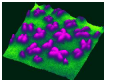
chrom.pngI like experiments that use lasers, radiation or magnets, because, goddamit, they feel like proper science. And if the study produces a 3D fly-through animation afterwards, so much the better.

The Neurophilosopher’s blog has just published a great article discussing a study that ticks several of these boxes.

Professors Vladimir Parpura and Umar Mohideen of the University of California, Riverside have used atomic force microscopy [Roaarrrr!] to investigate the mechanisms by which neurons release neurotransmitters.

Check out the bottom of the article for the fly-through animation.

Link to Neurophilospher’s article ‘Neurotransmitter release examined using atomic force microscopy’.

APA endorses participation in military interrogations

guantanamo_detainee.jpgWhen the American Medical Association directed its members to have no part in controversial US military interrogations, the military said they’d just use psychologists instead.

Subsequently, the American Psychological Society Association has endorsed a report [pdf] that sets out how psychologists can participate in the same interrogations that their medical colleagues have declared unacceptable.

Salon wrote an article about this decision, and the fact that the endorsement did not follow the standard route of approval and contained a majority of members with ties to the military.

The APA sent off an angry reply to Salon but has subsequently had to admit that some of the information in their reply was incorrect, as detailed in a further article.

The debate is likely to get heated during the APA’s summer conference where the controversy is due to be debated.

There is already an online petition of psychologists who are lobbying the APA to adopt a stricter policy which has gained 1,500 signature so far.

In response, the APA has posted their own analysis of the key similarities and differences between the medical position and their own on their website [pdf].

Link to Salon article ‘Psychological warfare’.
Link to Salon ‘Psychologists group still rocked by torture debate’.
pdf of APA ethics comparison.
pdf of Report of the APA Presidential Task Force on psychological ethics and national security.