Liking for sprouts may be partly genetic

tasty_broccoli.jpgNature is reporting that a gene which is involved in a receptor for bitter tastes can predict people’s liking for vegetables such as broccoli and sprouts.

It has been proposed that humans are particularly sensitive to bitterness as natural poisons often taste bitter.

Certain versions of this gene may make us especially sensitive, however. So sensitive, perhaps, that we dislike foods that are perfectly safe but have a bitter element.

There’s more information in a over at Eureka Alert and the original study is published in the journal Current Biology.

NYT on killing of Dr Wayne Fenton

wayne_fenton.jpgThe New York Times has an article on the recent tragic death of psychiatrist Dr Wayne Fenton, a respected and admired schizophrenia specialist who seems to have been killed by a patient.

The killing has highlighted the debate about violence and schizophrenia once again.

Violence is rare in people with schizophrenia. In fact, people with schizophrenia are much more likely to be victims of violence than violent themselves.

However, active psychosis is associated with a slightly increased chance of violence in some people, and some have argued that this is a reason for forcibly medicating people with schizophrenia if they refuse treatment.

In contrast, others argue that forcibly medicating anyone is an abuse of the person’s civil liberties.

In most jurisdictions, mental illness is the only type of illness is which a patient’s refusal of treatment can be overruled. For any other type of illness, this decision is typically respected and protected by law.

Interestingly, the risk of violence in schizophrenia is comparable to the risk of violence with alcohol use in adolescents.

Nevertheless, the media tends to focus on violence and schizophrenia, giving a skewed idea of the risks and ignoring more common and less newsworthy stories such as ‘drunk youth attacks man’.

Dr Fenton’s killing is a huge loss to the psychiatric community. A tribute published on the Schizophrenia Bulletin website notes his academic and scientific contributions to the understanding of the condition, and former patients have been remembering his compassionate approach to patient care.

Link to NYT article ‘A Psychiatrist Is Slain, and a Sad Debate Deepens’.
Link to Schizophrenia Bulletin tribute.

Cognitive behaviour therapy creator wins Lasker Award

AaronBeck.jpgAaron T. Beck, the creator of cognitive behaviour therapy (CBT), has been awarded the Lasker Award – a prestigious prize that is given to those who are deemed to have made a significant contribution to the understanding and treatment of medical disorders.

Randomised controlled trials have shown cognitive behaviour therapy to be one of the most effective treatments for depression and anxiety (typically as good as, or better than, drug therapy) and has also been shown to be effective in a wide range of other disorders, such as psychosis, eating disorders and chronic pain.

In serious cases, both CBT and drug treatment will be used at the same time, and this often gives the best results.

Instead of focusing on early experience and childhood trauma, CBT tends to focus on the here and now, and works with clients to develop more effective ways of thinking about situations which typically lead to disturbed thoughts and emotions.

This can be achieved by understanding the link between thoughts, emotions and behaviour, by testing out assumptions and ideas, and challenging negative thoughts as they occur in the mind.

Lasker Awards are often thought to be hints as to who might win a future Nobel Prize, as 71 Lasker winners have gone on to win a Nobel.

However, the Nobel Prize committee tends not to give awards for psychological discoveries. The nearest, perhaps, was when Daniel Kahneman won the ‘Nobel Prize for Economics’ for his contributions to understanding rationality in economic reasoning.

The New York Times also has some coverage of the story and looks at some of this year’s other Lasker Award winners.

Link to Lasker Award announcement.
Link to information on CBT from mental health charity Mind.
Link to New York Times on this year’s winners.

The DiNET project

marc_jorge.jpgWhile in Seville, I met up with Marcos Cobe√±a and Jorge Cant√≥n, two computational neuroscientists who are involved in a project to develop a model of brain function based on Jeff Hawkins’ Hierarchical Temporal Memory framework.

Their project, based at the University of Seville, is called DiNET and aims to develop free software to implement the simulation using the Mono framework to easily enable distributed processing.

Firstly, I must thank Marcos and Jorge for giving me the chance to have my first neuroscience discussion in Spanish, and secondly, for being patient with my dodgy grammar.

One of the things I noted was their enthusiasm for the project and their intention to get as much biological detail into the model as possible, as much of the time was spent discussing details of neural architecture and pathways.

They’re also looking for people willing to join the project. They have a mailing list to discuss the project (currently only in Spanish, but they tell me that will change shortly) and updates will be appearing on the DiNET website.

I look forward to hearing more about the project as it progresses.

Link to DiNET.
Link to website on Hawkin’s theories.

Jabberwacky wins Loebner prize again

medal_rollo.jpgBBC News is reporting that AI researcher Rollo Carpenter has won the Loebner Prize for the second year in a row with Joan, a development of his Jabberwacky chatbot.

The Loebner Prize is an annual event where various computer programs are subjected to the Turing Test – a test where judges have to work out if they are in a online chatroom with a human or a computer program.

The Turing Test is supposedly a way of testing for artificial intelligence. No software has ever passed the test except in very limited circumstances, but every year the software that comes closest is awarded the Loebner Prize.

We reported on Carpenter’s success last year, and this year’s success is a tribute to the technology behind Jabberwacky, currently being developed by his company icogno.

You can see video of Carpenter’s previous prize-winning chatbot ‘George’ at another recent BBC News page.

Link to BBC News story ‘AI prize award for British firm’.
Link to BBC News page with video of ‘George’.
Link to Jabberwacky online.

Classic Case Studies in Psychology

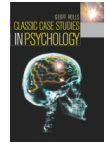
classic_case_studies_psychology.jpgI picked up a copy of Classic Case Studies in Psychology (ISBN 0340886927) yesterday and have been hooked ever since.

It looks at some of the most famous case studies in psychology, including those that have inspired important clinical methods as well as those that have just given us an insight into the more curious corners of human behaviour.

A good sign is that the coverage of the case of Phineas Gage, the railroad worker who had parts of his frontal lobes blown away in 1840, is up to date and avoids many of the myths that have recently been debunked by Macmillan’s brilliant biography An Odd Kind of Fame (ISBN 0262632594).

Also included are the well-known cases of murder victim Kitty Genovese and amnesic patient HM, among many others.

A few of the less well-known are also present, including a case reported by controversial psychologist Hans Eysenck of a man who was sexually aroused by handbags and prams, and the 19th century report on the ‘wild boy’ of Aveyron.

The book is written in a straightforward yet engaging way, so older teenagers will be able to pick it up and read it, but cynical professionals will find much of interest in its pages.

Link to information on Classic Case Studies in Psychology.

World Hearing Voices Day today

speakers_cabinet.jpgToday has been designated as World Hearing Voices Day to raise awareness of the experience of hearing voices.

Although the stereotype is that hearing voices is associated with mental illness, the majority of people who hear voices do not have mental illness and are never in need or help or assistance because of their experiences.

There is now a world-wide hearing voices movement that aims to provide an alternative to the medical model (which has traditionally seen ‘voices’ as symptoms) and reframe them as part of the rich tapestry of human existence.

The movement has a curious beginning. Dutch psychiatrist Marius Romme was challenged by one of his patients who had found that her own explanation of her voices gave her far more relief than the psychiatric explanation.

Romme discovered that many other voices hearers had this experience, and, consequently, he and a voice hearer discussed this experience on a Dutch television chat show.

The show was flooded with callers who also heard voices, the majority of whom had never needed medical help.

From this, the Hearing Voices Network was founded in the UK to support voice hearers, and Romme has written a number of books on the subject.

Accepting Voices (ISBN 9781874690139) was co-written with journalist and now psychiatric researcher Sandra Escher and provides advice and information for those who experience voices.

Many voice hearers who do find their voices distressing, will often use both psychiatric help, and the help of non-psychiatric support groups to manage their experiences.

ABC Radio’s All in the Mind recently had a special on the science and culture of hearing voices and the transcript of the show is available online.

Link to Wikipedia article on Hearing Voices Movememt.
Link to transcript of All in the Mind on hearing voices.
Link to recent research on hearing voices (via BB).

Fight to the death with AI robots

NERO_screenshot2_small.jpgNERO is an award-winning futuristic computer game where the player trains squadrons of android soldiers, to be released and pitted against soldiers trained by another player.

Crucially, the android soliders learn using a neural network that adapts via a genetic algorithm.

For the NERO project we are using a specific neuroevolutionary algorithm called NEAT, Neuro-Evolution of Augmenting Topologies. Unlike most neuroevolutionary algorithms, NEAT starts with an artificial neural network of minimal connectivity and adds complexity only when it helps solve a problem. This helps ensure that the algorithm does not produce unnecessarily complex solutions.

In NERO we are introducing a new real-time variant of NEAT, called rtNEAT, in which a small population evolves while you watch. (Most genetic algorithms use generation-based off-line processing, and only provide a result at the end of some pre-specified amount of training.)

The neural network is based on published research and the documentation page contains a raft of information on game play and the science behind the software.

There’s screenshots and video of the game in action, and it’s free to download.

Link to website for NERO.

Epilepsy Action on MySpace

EA_brain_idon.jpgUK epilepsy support charity Epilepsy Action has created a MySpace profile – the first neuro charity I know that has a page on the social networking site.

It’s part of an drive to increase the availability of epilepsy information to young people.

The page has updates on the latest news from the charity, as well as advice so you can educate yourself on what to do if you find someone having a seizure.

On a related note, the BBC has an interview with well-known UK author and speaker Rabbi Lionel Blue on his own epilepsy diagnosis.

Link to Epilepsy Action MySpace profile.
Link to interview with Rabbi Lionel Blue.

No psi please, we’re British

Lord_Winston.jpgThe Telegraph reports that Professor Robert Winston has criticised the recent British Association Festival of Science for allowing an ‘unbalanced’ discussion of parapsychology as “I know of no serious properly done studies which make me feel that this is anything other than nonsense.”

This is a little ironic, as Winston recently had adverts for ‘clever milk’ pulled from newspapers by the advertising standards authority for being misleading.

In the adverts, he claimed that a brand of Omega-3 fortified milk boosted children’s intelligence. The authority did not find evidence to support this claim.

Ben Goldacre’s Bad Science column in The Guardian summarises the evidence as follows:

Contrary to what the pill-peddlers would tell you, the evidence for omega 3 pills being beneficial in children is really rather thin: only a handful of small trials have been published in proper journals, and at last count 3 were positive, 2 were negative, and none were in mainstream children.

The conclusion of these studies is about as strong as that drawn from a recent review in Psychological Bulletin on psychokinesis.

The review concluded by saying that the evidence was weakly positive in support of this ‘psi-ability’, but they couldn’t be sure that the effect wasn’t due to a reporting bias.

In contrast to the Omega-3 studies, however, the authors of the review found that the psychokinesis studies were generally of a high standard.

One of the ironies of this debate is that parapsychology studies are often some of most rigorously conducted in science, largely to avoid accusations of ‘pseudoscience’.

The fact that they tend to find a weak effect at best (and most commonly no effect) doesn’t make them bad science.

Furthermore, as pointed out by a 2004 New Scientist article, (pdf) the studies are typically better conducted and can produce greater supporting evidence than the often notoriously-biased pharmaceutical drug trial reports.

To quote psychologist William James “A great many people think they are thinking when they are merely rearranging their prejudices”.

Link to Telegraph article “Festival attacked over paranormal ‘nonsense'”.
Link to Times article “‘Misleading’ Winston milk ads pulled”.
pdf of New Scientist article ‘Opposites Detract’.

Bizarre case of consent

A curious news report from what sounds like a difficult court case:

A man has been acquitted of raping a woman – because she had at least 14 personalities.

In a bizarre case, a jury was told that the 40-year-old man was accused of sexually assaulting the woman 11 times in her home in 2004 while some of her alter egos looked on and at times intervened.

During the District Court trial that finished last Tuesday, the court was told three of the 33-year-old woman’s personalities were present at one of the alleged incidents.

The complainant said two identities had been at other incidents.

Top WA criminal lawyer Judith Fordham, who watched the case, said it was the strangest she had seen.

“Although there have been many cases in our courts where the accused has a mental illness, and some where victims or alleged victims suffer from mental illness, in 20 years as a lawyer I have never seen anything quite like this,” she said.

Multiple personality disorder, now called dissociative identity disorder, is a controversial diagnosis that generally causes confusion whenever it appears in a legal case.

In one famous case, Kenneth Bianchi (the ‘Hillside Strangler’) claimed that he could not be held responsible for a series of murders as another ‘evil’ personality committed the crimes.

He was suspected to be faking and was caught out when a psychologist deliberately fed him the false information that MPD “always” involved more than two personalities.

Another personality ‘appeared’ shortly after and Bianchi was convicted of the murders.

Link to news report from News.com.au (via anomalist).
Link to BBC info on the Bianchi case.

Are beautiful people more intelligent?

There’s a curious article from The Guardian on the work of two researchers who are investigating the link between beauty and intelligence, and who argue that a genuine link exists.

Are beautiful people more intelligent than the rest of us? Satoshi Kanazawa and Jody Kovar think so. In a 17-page study called Why Beautiful People Are More Intelligent, they explain bluntly: “Individuals perceive physically attractive others to be more intelligent than physically unattractive others. While most researchers dismiss this perception as a ‘bias’ or ‘stereotype’, we contend that individuals have this perception because beautiful people indeed are more intelligent.”

The full paper is available online as a pdf and there’s a previous write-up from the Washington Post.

It seems the research is largely on the link between beauty and intelligence in females, however.

Link to Guardian article ‘Pretty smart’.
Link to Washington Post article.
pdf of research article.

Brain scan finds vegetative state patient conscious

A team led by neuropsychologist Dr Adrian Owen has reported on a patient who supposedly fulfilled all the criteria for a diagnosis of persistent vegetative state (PVS) but was found to have conscious awareness.

This seems a little confusing to me, as PVS is usually defined as where ‘higher’ cognitive abilities, such as awareness, are not present.

Unfortunately, I can’t read the article in full as I’m still away from home, but I suspect the diagnosis is usually based on observations of external signs of awareness, whereas Owen’s group used fMRI (a type of ‘brain scanning’) to look for changes in brain activation that would not necessarilly result in observable behaviour.

There’s a good write-up over at the BBC site with accompanying video, and for those with access to the full-text of the journal Science the original paper is available online.

This is similar to a recent study (covered previously on Mind Hacks) where researchers found evidence for similar sorts of ‘higher’ cognitive function in two patients in a ‘minimally conscious state‘.

It is likely, however, that all of these patients have suffered some problems with mental function, owing to extensive brain injury.

As psychology and neuroscience are able to measure brain function in more direct ways, rather than solely through observable behaviour, these sorts of coma-like states are likely to be found to be much more complex than previously thought.

However, neither of these conditions should be confused with ‘locked-in syndrome‘, where the cortex of the brain is largely undamaged, but selective damage to the brain stem means that the person cannot move his or her body and is often totally paralysed, despite being mentally intact.

One of the most powerful books I have ever read is the The Diving Bell and the Butterfly, written by the ex-editor of Elle magazine, who suffered a stroke and became ‘locked in’.

He wrote the book by indicating single letters with his only form of movement – an eye blink. The book is a transcendent description of his experience both before and after the onset of his condition.

Bauby died two days after the book was published but left the world with one of its most beautiful and unique literary works.

Link to BBC News story.
Link to abstract from Science.

Eye gaze and cognition in children

Thanks very much to Robbie Ben for alerting us to the fact that there´s a full article on eye gaze and cognition by Dr Gwyneth Doherty-Sneddon freely available online as a pdf file.

The article was published in The Psychologist in 2004 and discusses much of the background behind Doherty-Sneddon´s work which has led to the research mentioned in the previous post.

pdf of article ‘Don’t look now, I’m trying to think’.