Why there is no such thing as internet addiction

‘Internet addiction’ doesn’t exist. It can’t, because it’s a logical impossibility, a category error, and there’s no good evidence that heavy internet use, in itself, is a risk to mental health.

A paper of mine, just published in the Journal of Mental Health [pdf], describes why, but I’m going to summarise the arguments here because of an infuriating and self-contradictory press release about “Internet addiction disorder” that seems to be all over the internet.

Perhaps the most important point is the concept of ‘internet addiction’ relies on a fundamental misunderstanding of what the internet is.

‘Internet addiction’ researchers conceive of the internet as if it were a set of activities when, in fact, it’s a medium for communication.

People become addicted to substances or activities, but it’s impossible to become addicted to a medium. You can be no more addicted to the internet than you can to language or radio waves.

This is important because the proposed criteria for internet addiction or pathological internet use (there is no accepted classification, contrary to what the press release says) typically make reference to ‘using the internet’ or ‘spending time online’ without reference to any specific activity.

It’s important to specify specific activities, because, as noted above, the concept of a behavioural addiction logically requires one.

It’s also important to make the distinction between something being compulsive, something that you want to do again (commonly, but confusingly, called ‘addictive’ in everyday language), and a fully-fledged behavioural addiction – a mental disorder where you keep doing the activity even when it has serious damaging effects.

The cinema, reading books, going for walks, chatting to friends and any other enjoyable activity can be compulsive, but it doesn’t make it an addiction, even if it’s a daily time consuming activity and you get pissed off if you can’t do it.

Some online activities are almost universally accepted as being genuinely addictive (e.g. gambling) whereas others are subject to significant debate (e.g. gaming, chat).

This is not to say that some of the people who have been described as having ‘internet addiction’ don’t have any problems or aren’t suffering.

There are definitely people who are dysfunctional in day-to-day life, have significant problems with mood and motivation, and who spend a huge amount of time online.

However, there’s little evidence that heavy internet use actually causes these problems:

Although initial work suggested that time spent online was correlated with a small but significant increase in loneliness and depression (Kraut et al., 1998), subsequent replications and extensions found the reverse (Howard et al., 2001; Moody, 2001; Wastlund et al., 2001) and a follow-up to the original Kraut et al. study found the negative effects were no longer present and that, in contrast, internet use was generally associated with positive effects on communication, social involvement, and well-being (Kraut et al., 2002). A key finding from this latter study was that extroverts generally showed a positive relationship between internet use and social well-being measures, whereas introverts showed the reverse – reporting an increase in isolation and loneliness. It is still not clear why this might be the case, although it has been suggested that the internet might provide tools to ‘amplify’ predispositions (Joinson, 2003), so that extraverts can meet more people and socialise, while introverts can keep them at a distance.

Furthermore, it’s difficult to see why addiction is the best way of understanding these problems.

Addiction researcher Prof Mark Griffiths has outlined some elements that an activity needs to have to be considered addictive, notably salience, mood modification, tolerance, withdrawal, conflict and relapse.

He also notes that the proposed description of ‘internet addiction’ does not fulfil these criteria.

The core problem is not using repetitive, extended internet use, or even intrusive thoughts about keeping track of online events (otherwise 90% of the office workforce would be diagnosed), but low mood and social withdrawal.

In Japan, almost exactly the same problems have been named ‘hikkikomori‘. One of the key characteristics of hikkikomori individuals is that they isolate themselves and occupy their time with the internet and video games.

But the Japanese, rather sensibly, identify the core problem as social withdrawal, and the excessive solitary activities as symptoms – just ways in which isolated people try to fill the void.

In fact, this is exactly what a recent study of internet game users found: the driving force behind internet games was less the ‘fun’, the kick of the game if you will, but instead a sense of achievement, freedom and social connectedness.

There’s always a temptation to try and fit fuzzy human problems into comfortable pre-existing categories because it makes us feel useful and qualified to use our existing tools.

Psychiatrists and psychologists have clear and defined treatments for addiction but very little for social withdrawal, because social withdrawal isn’t a diagnosis in itself.

The press release is apparently based on a published paper in the Journal of Clinical Psychopharmacology, although it has yet to appear.

It may contain a revolutionary new argument, but I doubt it, as there is not a single study showing that heavy internet use causes the features of an addiction.

And certainly not the supposedly “extreme and menacing” condition that is described as affecting 10% of all internet users.

Link to press-release on Science Daily.
pdf of paper ‘Online Information, Extreme Communities and Internet Therapy: Is the Internet Good for Our Mental Health?’.

The psychology of behavior detection officers

Time magazine is reporting that ‘behaviour detection officers’ have been introduced to US airports who have been trained to pick out potential terrorists by analysing, at least in part, facial expressions. Despite the enthusiasm of the authorities for this new approach, there’s no clear evidence that it will be effective.

America’s Transport Security Administration describes the job as involving “voluntary encounters with the public under the SPOT Program, to determine whether elevated behaviors indicate that the individual may be involved in a terrorist or criminal act or activity”.

SPOT stands for “Screening Passengers by Observation Techniques” and, according to The New York Times, was created in consultation with psychologist Paul Ekman.

This means the SPOT system is likely to be based on one of Ekman’s two commercial systems for analysing facial expressions: the Facial Actions Coding System (FACS) or the Micro-Expression / Subtle Expression Training Tool (METT/SETT).

Ekman’s Facial Actions Coding System (FACS), a well-researched method for coding the individual muscle movements or component parts that make up a facial expression.

The idea is that its hard to fully hide emotions as they often quickly or partially emerge on the face before we suppress them, so by being able to detect ‘microexpressions’ we can get a better idea if someone might be trying to hide inner stress.

The FACS system is available commercially and the introductory chapters of the manual and investigator’s manual are available online.

It is designed by to be used by researchers, who have time to carefully examine video tape, but also by people who need to catch microexpressions as they happen – on the fly.

Research has shown that people who are better at detecting microexpressions are better as detecting lies [pdf], but so far, the (admittedly limited) evidence suggests that training people to detect microexpressions doesn’t make people better lie detectors.

There are only two small studies I know of that have tested this (I would be interested to hear of more), none of which inspire much hope. Both studies looked at whether FACS training improved clinicians ability to detect faked vs genuine pain.

A 1993 study found that it improved the ability to detect faked but not genuine pain. A 2004 study found it had no effect on accuracy.

The METT/SETT is even less well-researched. In fact, only one pilot study that I know of has used it at all.

Yet Ekman makes some grand claims for its effectiveness. In a recent article for the journal Behavioral Science and the Law he notes that:

This Micro Expression Training Tool (METT) (Ekman, 2002) includes feedback about the correct answers, morphed faces contrasting the most difficult to discriminate emotions, and a pre and post test. In two recent studies, Ekman & Frank (2005) provided training on detecting deception using METT. They obtained a very large
increase in accuracy with less than one hour of training with METT.

Rather than research published in a peer-reviewed journal the Ekman and Frank (2005) reference turns out to be to a document listed only as “Revealing concealed emotions. Retrieved from http://www.paulekman.com”, which, I’m damned if I can find. Anywhere.

However, it is likely these techniques are already being used in training law enforcement officers, security guards and the like. Ekman’s corporate website notes that he’s signed a three year contract with the UK Police’s Anti-Terrorist Unit at New Scotland Yard.

One possibility is that either Ekman’s company or the US authorities have done extensive unpublished research to show that training in these or similar methods are effective at helping staff detect potential terrorists or risky passengers.

One difficulty with all deception research is that participants told to lie in the lab are not necessarily good models for ‘real-life’ deception, with all its complex motivations and emotional force.

Lab-based lies are likely to be a poor substitute an actual covert terrorist situation.

Link to Time article ‘A New Tack for Airport Screening: Behave Yourself’.
Link to NYT article ‘Faces, Too, Are Searched at U.S. Airports’.

Addicted to neurobiology and politics

ABC Radio National’s All in the Mind has just had a special edition on the increasingly contentious debate over whether addiction is a brain disease, and does a fine job of highlighting the politics behind the interpretation of the science.

This much is agreed upon: some people inherit a greater propensity for becoming addicted to certain drugs, and taken in enough quantities, some drugs can cause long-term alterations the brain’s reward system to make non-drug pleasures less rewarding, thereby increasing future chances of drug-taking.

The controversial issue, which All the Mind tackles, is over how much this should be described as a ‘brain disease’ or a ‘psychological problem’, and this is usually where the politics kicks in.

Whenever you hear this sort of rhetoric in mental health, it’s often a reflection of a deeper argument beneath the surface – an argument over how much someone is personally responsible, or more worryingly, ‘to blame’, for their state of distress or impairment. The same often goes for the ‘genes vs environment’, ‘nature vs nurture’ debate.

There is a condition which is a great example of how thinking only in terms of ‘mind or brain’, ‘genes or environment’ is flawed for anything which involves an external trigger.

Phenylketonuria (PKU) is a single-gene disorder that results in a missing enzyme which is needed to break down phenylalanine into the building blocks of certain neurotransmitters. Without the enzyme, phenylalanine accumulates in the body, leading to problems with brain development, cognitive impairments, seizures and psychosis.

However, if people with PKU avoid phenylalanine in their diet, they have no problems at all (this is why certain foods are marked with “contains a source of phenylalanine”).

So, is PKU a genetic disorder or an environmental one? A brain disease or a psychological problem? There is no single answer. It depends how you look at it.

In a sense it’s 100% genetic, because a single gene determines whether you have the missing enzyme or not. But in another sense, it’s 100% environmental, because it’s not a problem unless you encounter phenylalanine in the environment.

Similarly, you could say it’s a brain disease, because people with PKU inherit a problem with the neurotransmitter pathway, but in another sense, it’s a psychological problem, because poor diet decision-making and vigilance can determine the likelihood of becoming sick.

What is striking is that this division into ‘brain’ and ‘mind’ is completely artificial and counter-productive. You need to understand both to see how PKU affects someone’s life.

Buy you’ll also notice how political views could favour one view or another.

If you believe in the primacy of personal responsibility, push the psychological model, because this emphasises the affected person’s actions in staying well. At one extreme, it allows us to blame people who get sick through PKU for not being vigilant enough, or wanting other people to pick up the pieces when they fail to control their diets.

If you believe in the primacy of social responsibility, push the disease model, because this emphasises the effects of factors outside an individual’s control. At the other extreme, it allows us to absolve the person of individual responsibility for the effects of their illness.

Addiction is far more complex than PKU, not least because addiction to different substances, or indeed to behaviours such as gambling, can be quite different psychologically, neurologically and socially.

However, you can see how the models used to explain each disorder are selective or can go beyond the evidence in certain instances, so preference for an explanation can be politically biased.

My advice is to be suspicious of anyone who tries to tell you a complex disorder is purely mind or purely brain, and think about what is motivating someone to explain it largely in one way.

Similarly, think of the psychological and neurobiological evidence as complementary, rather than in competition, and be prepared to accept more than one model of how something works. Each might be accurate, but just useful for different things.

This edition of AITM is an example of all of these forces at work.

Link to AITM ‘Addiction: Dis-ease over diseased brains’.

Time Magazine on decriminalising mental illness

Time magazine has an article on attempts to train law enforcement to prevent people with mental illness from needlessly ending up in behind bars. It includes some startling information, like the fact that more Americans receive mental health care in prisons than in hospitals.

“If you think health care in America is bad, you should look at mental health care,” says Steve Leifman, who works as a special advisor on criminal justice and mental health for the Florida Supreme Court. More Americans receive mental health treatment in prisons and jails than hospitals or treatment centers.

In fact, the country’s largest psychiatric facility isn’t even a hospital, it’s a prison ‚Äî New York City’s Rikers Island, which holds an estimated 3,000 mentally ill inmates at any given time. Fifty years ago, the U.S. had nearly 600,000 state hospital beds for people suffering from mental illness. Today, because of federal and state funding cuts, that number has dwindled to 40,000. When the government began closing state-run hospitals in the 1980s, people suffering from mental illness had nowhere to go. Without proper treatment and care, many ended up in the last place anyone wants to be.

The article starts with a telling correction of a journalistic slip, apologising for stating that one reform was inspired when a man with schizophrenia shot a policeman, when in fact, it was the policeman who shot the patient.

A 1999 US survey found that over 60% of people thought that someone with schizophrenia is ‘somewhat’ or ‘very likely’ to commit an act of interpersonal violence, when we know that people diagnosed with the condition are much more likely to be the victim of violence than the perpetrator.

It seems there are some positive developments, however, and the article describes the Miami Police’s innovative and successful methods of including people with experience of mental disorder in their training, and when dealing with distressed people they encounter.

Link to Time article ‘De-Criminalizing Mental Illness’ (via Spikol).

US psychologists to rebuke CIA, ban to be debated

Salon is reporting that the American Psychological Association is likely to issue a formal condemnation of many CIA interrogation tactics at its annual convention this weekend, although there may be loopholes meaning it falls short of an outright ban.

It has become clear that psychologists are playing a central role in developing and deploying CIA interrogations that a leaked report from International Committee of the Red Cross described as “tantamount to torture”.

Psychologists are important to the CIA partly because the American medical and psychiatric associations have banned their members from participation in such interrogations, citing the practices as abusive.

Views on a possible APA statement are mixed, however, with some concerned that a simple rebuke does not condemn the entire process of indefinite detention without due process and others worried that a ban will be counter-productive, as psychologists may be best placed to prevent abuse and develop humane procedures.

The APA conference has no less than eight sessions on the topic which will include military psychologists, human rights activists, psychologists who study conflict and multicultural issues, and a US Department of Defense interrogator.

However, this is only likely to be the tip-of-the-iceberg and the crucial decision will be on what gets put into the final resolution for members to vote on, with one group, led by Neil Altman, pushing for a complete moratorium on participation.

What remains unclear is whether the APA leadership, headed by APA president Sharon Stephens Brehm, will even allow a vote on Altman’s moratorium. That leadership is seen by some psychologists as too chummy with government interests and with the military in particular. Backers of the moratorium are set to meet with APA leadership before next weekend just to negotiate for the opportunity to bring their resolution up for a vote before the council.

Psychologists interviewed by Salon noted a series of potential loopholes embedded in the resolution condemning CIA tactics. A simple example is the ban on isolation and sleep deprivation, favorite tactics of the CIA. But the resolution from Brehm and the APA leadership only forbids the methods when “used in a manner that adversely affects an individual’s physical or mental health.” There will be efforts in San Francisco to plug those loopholes, and to force a vote on a moratorium.

Link to Salon article ‘Psychologists to CIA: We condemn torture’.
Link to APA Monitor on 2007 Convention Highlights.

Locked in with the bitter taste of lemon

This week’s New Scientist has a number of interesting mind and brain articles. The most striking is on locked-in syndrome, where people are completely paralysed despite having intact minds.

The article is by author Laura Spinney who wrote a novel based on locked-in syndrome called The Quick (ISBN 0007240503).

One of the challenges is to find a route for affected patients to communicate with the ‘outside world’. Sometimes eye movements are spared, which famously allowed Jean-Dominique Bauby to write the profoundly beautiful book The Diving Bell and the Butterfly (ISBN 0007139845).

She notes one case where all other routes had failed, so a rather unorthodox approach was tried with initial success, only to slip frustratingly away.

Despite the technology, communication is still a considerable challenge for these people. To operate the TTD [Thought Translation Device – converts movements into words] requires months of arduous training, and the failure rate is high. Last year, in the journal Neurology, Birbaumer and colleagues described a particularly tragic case of failure (vol 67, p 534). A 46-year-old German woman who had been diagnosed with the degenerative disease amyotrophic lateral sclerosis [ALS], also known as motor neuron disease, had made it clear that she desperately wanted to live. By the time she came to Birbaumer’s attention, she had already been locked in for a year. After trying in vain to train her to use the TTD, they decided her chances might improve if they implanted the electrodes in her brain rather than sticking them to her scalp. For this, they needed her consent, which she clearly couldn’t give. Impasse.

Then, walking past an electronics store one day, Birbaumer’s colleague Barbara Wilhelm spotted a medical device for measuring the pH of saliva, and had an idea. They trained the woman to change the acidity of her spit by imagining either the taste of lemon, or the taste of milk. She learned to push the pH one way to say “yes”, the other to say “no”. When they asked her if she agreed to them implanting the electrodes, she replied yes, repeatedly; three hours later, however, she lost control of her salivary pH. The electrodes were implanted, but she hasn’t achieved any control over her brain activity. Birbaumer is still trying to tap into other potential channels of communication, but he fears that after a certain time locked-in patients may lose the capacity to control anything voluntarily.

The issue also has a cover story on whether conscious beings could spontaneously arise from the universe, and another on the effect of breakfast on mental performance.

As New Scientist is still a little bit backward none of the articles have been made freely available (ever wondered why Scientific American gets more coverage on the net?), so you’ll need to find a copy at your local newsagent or library to have a look.

Link to table of contents.

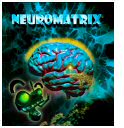
Neuromatrix: neuroscience video game for kids

Neuromatrix is a soon to be released action-adventure video game for kids that aims to effortlessly teach them about the function of the brain.

It’s aimed at 10-15 year olds and, from the impressive video trailer, it seems to have a bit of a Half-Life vibe about it – a sort of 3D science-based adventure – probably without all the killing though.

Apparently, the brains of scientists from a neuroscience research centre have been attacked by nanobots, and your job is to save them from certain destruction.

The video game takes you through some of the major brain areas and as you tackle each part, you learn about the scientific method, neurons, the motor cortex, the hippocampus and amygdala.

There’s even extensive teacher’s notes online, so adults can try and keep with the kids.

As for me, I’m still waiting for the sequel to Granny’s Garden.

Link to Neuromatrix website (via Brain Waves).
Link to video trailer.

Muses, Madmen and Prophets

I’m just reading a fantastic book called Muses, Madmen and Prophets: Rethinking the History, Science, and Meaning of Auditory Hallucination (ISBN 9781594201103) – a wonderfully written book on the complex science and history of ‘hearing voices’.

Annoyingly, the book is published under the name ‘Hearing Voices’ (ISBN 041377645X) in the UK. Annoying, because its the same title as many other books, many of which are on completely different topics.

The book looks at the history of the experience, from some of the most influential ‘voice hearers’ in history, such as Socrates and Joan of Arc, to its classification by psychiatry as a key diagnostic sign of schizophrenia, to its reconsideration as part of the normal diversity of mental phenomena.

We now know that there are many more people who hear voices and never become mentally ill compared to those who become acutely impaired or distressed by the experience.

The book looks at the recent research on the neuropsychology of hallucinated voices but also takes wonderful detours into the significance of the experience for understanding notions of free will and intentionality, creativity and inspiration, and madness and the divine.

The author, ex-editor of Atlantic Monthly, brings an interesting personal angle into the work, as both his father and grandfather heard voices to differing degrees.

So far, I’ve found it poetic, wide-ranging and difficult to put down.

If you’re interested in hearing more, Smith discusses his book and investigations on Boston WBUR Radio which you can listen online.

I also just discovered that Neurophilosophy has a great post on a recent case study of a person with brain injury that affected their speech areas who heard hallucinated voices that had a speech impediment.

Link to book info.
Link to discussion on Boston WBUR radio.
Link to Neurophilosophy on ‘Hearing speech impaired voices’.

Inside Intuition

Can you trust your gut instincts? A BBC Radio 4 documentary ‘Inside Intuition’ offers to address the issue. It’s on this friday – that’s the 17th August – at 11am. Those of you busy or outside of the UK, check the BBC’s fantastic Listen Again pages during the week after broadcast.

BBC Press release here and below the fold, for your convenience.

Continue reading “Inside Intuition”

Cerebrum – Dana’s online neuroscience magazine

Dana, the neuroscience education charity, have an online magazine called Cerebrum that has monthly articles on emerging ideas in brain science.

The latest article is on ‘cosmetic neurology‘, also known as ‘cosmetic pharmacology’, where medical advances are used not to treat diseases but to help with the more day-to-day problems of living or to actually optimise brain function.

Past articles have included, among others, one on cerebral malaria and another protecting the brain from the ‘glutamate storm‘ that can occur after brain injury or stroke.

The Dana Foundation are quite unique in that they specialise in communciating the scientific advances in neuroscience to the public, including special projects for kids, seniors and journalists.

They also publish books (so far, of an exceptionally high standard), run events, broadcast video and podcasts, and give grants to researchers especially aimed at scientists wanting to test out slightly more speculative or ‘blue sky’ ideas.

You could easily spend days on Dana’s website before getting bored. Needless to say, I’m a huge fan.

Link to Cerebrum online magazine.
Link to Dana Foundation website.

Win a prize! Awkward acronyms in cognitive science

BBC News is reporting that Scotland has launched a ¬£40 million neuroscience research project called SINAPSE, short for ‘Scottish Imaging Network: A Platform for Scientific Excellence’.

SINAPSE joins a long list of awkward acronyms in the world of psychology and neuroscience, and I’d like to launch a competition to find the most inventive.

These days, even research projects need a snappy title, and research teams are constantly coming up with ways of fitting the project description into a jazzy sounding acronym.

Some of my favourites include:

NEMESIS: Netherlands Mental Health Survey and Incidence Study
CUtLASS: Cost Utility of the Latest Antipsychotic Drugs in Schizophrenia Study
AESOP: Aetiology and Ethnicity of Schizophrenia and Other Psychoses
FACETS: Fast Analog Computing with Emergent Transient States
NeuroproMiSe: Neuroprotective strategies for multiple sclerosis

If you know of any awkward, contrived or borderline inappropriate acronyms (I work in a mental health service called SLAM!) for anything mind or brain related, send them in.

They could be for theories, services, departments, projects or events.

Add your suggestions to the comments, or email them to me at V dot Bell at iop dot kcl dot ac dot uk with ‘awkward acronym’ in the subject line.

Points will be given for the most awkward or spectacular, and I’ll send the winner a copy of David Lodge’s excellent book Thinks, a novel about cognitive scientists.

UPDATE: Get your submission in before Monday 20th August to enter!

Excellent BBC Brain Story series available online

I’ve just noticed that probably one of the best TV series on psychology and neuroscience ever produced, the BBC’s Brain Story, is available on public bittorrent servers for download.

It is a six part series covering virtually every area of contemporary neuropsychology, including the major researchers, discoveries, techniques and even many of the patients who have been the subjects of classic case studies that have helped us understand the curious effects of brain injury.

It is presented by neuroscientist Prof Susan Greenfield and sadly has never been made available by the Beeb, despite it being both a fine teaching aid and completely compelling viewing.

I was blown away by this series when it first appeared and since managed to get a bootlegged copy, but I’ve never seen it on public servers before.

It’s a landmark series in its accuracy and scope, and because it’s so engrossing for both the seasoned professional and the general viewer.

You can find all six episodes by searching torrentspy.com for “brain story”.

WARNING: TorrentSpy is not safe for work due to porn ads and it’s got an annoying amount of popups. However, you can click here to run the search.

I’ve also tried to capture the direct links to the torrent files below, so hopefully these should do the trick without opening any intermediate webpages.

Episode 1: All in the Mind
Episode 2: In the Heat of the Moment
Episode 3: The Mind’s Eye
Episode 4: First Among Equals
Episode 5: Growing the Mind
Episode 6: The Final Mystery

There’s an introductory guide to bittorrent here if you don’t know how to use it. Each episode is approximately 700Mb and lasts 50 minutes.

If you have trouble viewing the video, download VLC media player, free software which plays almost every video format.

Fine science. Fine television. Shouldn’t be missed.

Fresh psychologist torture role revelations

The last fortnight has been a grim period for psychology as a two major news sources have published additional revelations about the key role of psychologists in military interrogations that many deem tantamount to torture under international law.

As we’ve reported earlier, online news source Salon have been investigating the role of contracted psychologists in creating an abusive and likely-illegal CIA interrogation programme.

They’ve also been covering the unbelievably flaccid response of the American Psychological Association who have yet to explicitly ban their members from participating in these interrogations, in direct contrast to the clear non-participation policy adopted by their medical colleagues.

In fact, the APA seems even to allow participation in unethical practices when following orders from a “governing legal authority” – the so-called Nuremberg defence.

Mainly a professional matter until now, the story has become huge during the last fortnight as articles in The New Yorker and Vanity Fair have reported a raft of additional disturbing revelations.

The Vanity Fair article investigates the role of psychologists, named as James Mitchell and Bruce Jessen of Mitchell, Jessen & Associates, in developing practices that reportedly include ‘waterboarding‘ (simulated drowning), isolation, sleep deprivation, environmental extremes, ritual humiliation and severe psychological pressure.

It has been widely cited that this is derived from a ‘reverse engineering’ of the Survival, Evasion, Resistance, and Escape (SERE) programme, designed at the end Korean War, ironically, to protect US troops from the effects of torture.

Notably, the article quotes several senior military and civilian psychologists who are scathing about the lack effectiveness and scientific evidence for the technique.

Both Vanity Fair and The New Yorker report that the method was used on ‘Al-Qaeda lieutenant’ Abu Zubaydah. The New Yorker article has this interesting snippet:

Nevertheless, the SERE experts’ theories were apparently put into practice with Zubaydah’s interrogation. Zubaydah told the Red Cross that he was not only waterboarded, as has been previously reported; he was also kept for a prolonged period in a cage, known as a “dog box,” which was so small that he could not stand. According to an eyewitness, one psychologist advising on the treatment of Zubaydah, James Mitchell, argued that he needed to be reduced to a state of “learned helplessness.” (Mitchell disputes this characterization.)

The description of the cage as a “dog box” is interesting when put in context.

Learned helplessness‘ is a theory of clinical depression that was proposed by psychologist Martin Seligman. It was developed, to be blunt, by torturing dogs.

In a series of experiments Seligman found that if a dog was prevented from escaping an electric shock it eventually gave up trying, just remaining passive while being electrocuted.

The idea was that depression might be similar: a state of helpless, hopeless passivity caused by a series of unavoidable painful events.

Although ‘learned helplessness’ in animals is still used as a model of depression it has never been convincingly shown that it explains depression in humans.

There’s much more information in the full articles that can be summarised here, but needless to say it is a mixture of the disturbing and shameful.

The Vanity Fair and The New Yorker articles are complimented by an article in this month’s Psychologist that charts the history of psychologists assisting in developing and deploying abusive interrogations.

Unfortunately, the current situation may well be the most reprehensible episode so far.

Link to Vanity Fair article ‘Rorschach and Awe’ (via Corpus Callosum).
Link to New Yorker article on interrogation ‘black sites’.

Questioning Alzheimer’s

BBC Radio 4’s medical programme Check Up just broadcast a phone in on Alzheimer’s disease with neuroscientist Prof Clive Ballard.

The programme tackles issues of diagnosis, treatment and what actually happens in the brain.

I’m often surprised about how little people know about this relatively common neurological disorder.

One of the most common questions I have been asked is ‘what is the difference between dementia and Alzheimer’s disease?’

Dementia just describes any condition where the brain declines more quickly than would be expected due to normal ageing.

The MRI scan on the right shows the brain of a person affected by Alzheimer’s. Notice the ‘shrinkage’. Click for a comparison.

There are various different types of dementia and Alzheimer’s disease is one specific type where the brain is affected by amyloid plaques (abnormal clumps of protein) and neurofibrillary tangles (tangled bundles of protein fibres).

It’s possible to have these without suffering dementia, but it seems when the impairment reaches above a certain threshold, the brain quickly declines.

Although there are clear physical changes in the brain which indicate the disease, it’s actually impossible to diagnosis Alzheimer’s for sure until after the person has died and a brain autopsy can be completed.

So, to diagnose someone, a clinician might use a number of methods. In order of reliability they include history of memory and behavioural change, simple mental tests (commonly the MMSE), or a more comprehensive neuropsychological assessment that may be repeated over time to look for the exact pattern of change.

A truly comprehensive assessment will include all of the above, although it’s actually quite rare that this happens.

A full neuropsychological assessment for diagnosis has been an innovation of specialised ‘memory clinics‘ that might also provide a treatment service and family support.

Alzheimer’s seems to particularly affect key memory structures, and problems with memory are one of the most distinctive signs of the disorder.

However, less known are behavioural difficulties, personality change and psychotic symptoms (delusions and hallucinations) which occur in a significant proportion of suffers and are often more distressing for friends and family than the forgetfulness.

The programme tackles a wide range of issue including the role of medication, healthy living, the possible effectiveness of ‘brain training’ and how to deal with some of the challenges in living with someone with the condition.

The Alzheimer’s Association have created a fantastic tour that’s definitely worth a vist if you want a wonderful visual guide to the brain and how it breaks down during the progression of Alzheimer’s disease.

Link to Check Up on Alzheimer’s disease.
Link to Alzheimer’s information.
Link to fantastic tour of brain changes in Alzheimer’s.

Sage psychology journals free ’till September

The BPS Research Digest has discovered that all 36 psychology journals by academic publisher Sage have been made freely available until the September.

Some require a free registration to view, but some key journals are available right off the bat, including Personality and Social Psychology Review (the May edition is particularly good).

The BPSRD has a list of direct links to the other freely available journals.

Link to BPSRD on freely available Sage journals.

Wheat from the chaff in neuro-journalism

The Neuro-Journalism Mill is a blog run by science organisation the McDonnell Foundation that examines recent brain press stories and marks them as wheat – high quality accurate neuroscience stories, or chaff – exaggerated, inaccurate or oversimplified hack pieces.

Wouldn’t you know it, the ‘chaff‘ articles vastly outnumber the ‘wheat‘.

Actually, some of the ‘chaff’ headlines alone are pretty funny.

“Men’s Brains Have More Cells, Say Scientists Who Counted”

“Cockroaches Can Learn — Like Dogs and Humans”

“Learn More About the Cognitive Paparazzi!”

“Why Do Most 16-Year-Olds Drive Like They’re Missing a Part of Their Brain?”

Link to The Neuro-Journalism Mill (via BrainWaves).