A new level of chutzpah in psychiatric ghostwriting

The New York Times has a revealing article about how a popular textbook for family doctors on how to treat mental illness, apparently written by two big name psychiatrists, was almost entirely written by a ghostwriting service under the direction of a large drug company.

Two prominent authors of a 1999 book teaching family doctors how to treat psychiatric disorders provided acknowledgment in the preface for an “unrestricted educational grant” from a major pharmaceutical company.

But the drug maker, then known as SmithKline Beecham, actually had much more involvement than the book described, newly disclosed documents show. The grant paid for a writing company to develop the outline and text for the two named authors, the documents show, and then the writing company said it planned to show three drafts directly to the pharmaceutical company for comments and “sign-off” and page proofs for “final approval.”

“That doesn’t sound unrestricted to me,” Dr. Bernard Lo, a medical ethicist and chairman of an Institute of Medicine group…

David A. Kessler, former commissioner of the Food and Drug Administration, is memorably quoted as saying “To ghostwrite an entire textbook is a new level of chutzpah.” “I’ve never heard of that before. It takes your breath away.”

The book is reported to be Recognition and Treatment of Psychiatric Disorders: A Psychopharmacology Handbook for Primary Care by Charles B. Nemeroff and Alan F. Schatzberg.

Nemeroff. Now where have I heard that name before?
 

Link to NYT piece on ghostwritten psychiatry textbook.

Do robots dream of electric reaping?

If, like me, you’re worried about the coming robot war, The New York Times has an article that might make you hyperventilate. It’s about how the military is increasingly arming robots and creating artificial intelligence weapons systems.

The piece explores the rapidly advancing technology of warrior robots and also covers the ethical debate over the use of mechanised killers.

It turns out that some people are so concerned they’ve created a robot arms control lobby group.

For those still a little anxious about the whole affair, several people are quoted who try and put our minds at ease.

“A lot of people fear artificial intelligence,” said John Arquilla, executive director of the Information Operations Center at the Naval Postgraduate School. “I will stand my artificial intelligence against your human any day of the week and tell you that my A.I. will pay more attention to the rules of engagement and create fewer ethical lapses than a human force.”

Dude, you’re not helping.
 

Link to NYT on ‘War Machines: Recruiting Robots for Combat’.

The cutting edge of a splitting headache

ABC Radio National’s Life Matters has a programme that’s full of fascinating snippets about the cutting edge of headache science.

It’s hardly the sort of material you’ll be charming your next date with, but there are so many ‘I never knew that’ moments that it’s definitely worth catching if you have an interest in the research or treatment of a pounding head.

For example, the programme reviews how Botox is being used to treat migraine, the introduction of a completely new class of headache drugs – the CGRP receptor antagonists, and how drug companies are marketing special body part specific medications for increased profit – despite the fact they all contain identical active ingredients.

It also covers how the added codeine in standard headache pills probably does nothing and why psychological treatment can be an effective way of treating even long-term persistent headache when drugs can seem to do no further good.

Lots more eye-opening facts and a plenty of discussion tightly packed into a 20 minute show.
 

Link to Life Matters on ‘Headaches: what’s new?’

Voices amid the static

Dear Mind Hacks readers, I’m wondering if you can help me track down the source of stories I’ve heard about people hearing illusory voices amid the static in the early days of radio.

A 2004 BBC Radio 4 documentary on ghostly voices captured on recording equipment called ‘Speak Spirit Speak’ started with a story about Swedish radio operatives during World War II who diligently tracked Nazi radio transmissions – only to discover afterwards that the area they were monitoring never contained any enemy forces.

Despite my attempts to find out more I’ve not been able to discover any other account of this curious incident.

I’ve also heard lots of second-hand stories about people tuning in to what seemed to be feint transmissions in the early days of ham radio only to discover that they were misinterpreting the hiss and whistle of the interference as voices.

However, I’ve not found any other mention of this phenomenon either.

So, do any Mind Hacks readers know where either of these or similar incidents have been documented before?

There have been several similar stories of people hearing what they thought were voices of spirits on electronic equipment (a phenomenon as ‘electronic voice phenomena’ or EVP) and I’m wondering if there have been any documented examples that are less rooted in beliefs about the beyond.

An embedded journalist for neuroscience

I’ve just discovered a new blog called The Brain Detectives by the writer-in-residence at the Montreal Neurological Institute, who has the wonderful job of hanging around and writing-up the most interesting things she hears.

Although the writer, journalist Maria Schamis Turner, has just started, the project looks very promising.

I honestly think that more research institutes should have embedded journalists. Science writing would be greatly improved if the hacks had access to the scientific literature, while the lab rats would get an eloquent interface to the outside world.

If you want a feel for the dispatches coming from the Montreal Neurological Institute, the recent post on homicidal somnambulism (murder while sleepwalking) is great.
 

Link to The Brain Detectives.
Link to piece on homicidal somnambulism.

BBC All in the Mind new series: war and ethics

A new series of BBC Radio 4’s All in the Mind has just kicked off with the first programme looking at mental illness in war zones, the ethics of forcing psychiatric patients to take treatment in the community and whether antidepressants change our moral decision-making.

The discussion on military mental health is particularly good and goes some way to answering why UK troops show much lower rates of mental illness than US troops in the same war zones, as we discussed recently.

Also don’t miss the heated discussion on ‘community treatment orders’ or CTOs, which are a relatively recent innovation but become increasingly popular across the world.

They’re a change to the law that allows patients to told to take treatment in the community, otherwise they can be instantly taken back into hospital to be forcibly treated.

The UK introduced them in 2008 and they have been used ten times more than predicted, leading to a fierce debate about whether they are just being used to over-ride patient autonomy.

The antidepressant research, that has found the SSRIs alter how people respond to moral dillemas like the ‘trolley problem‘, is also an intriguing look into the neurochemistry of ethical choice, making for a strong start to the new series.
 

Link to BBC ‘All in the Mind’ page with streamed audio.
Link to ‘Medical Matters’ page where you can get the podcast.

Drug classification is out of order

Mark Easton’s BBC News blog tackles a recent study that has ranked the dangers of numerous recreational drugs – citing alcohol as the most hazardous to health ahead of even heroin and cocaine.

The study, just published in The Lancet, is interesting not just because it is yet another that shows the disconnect between official policy and the actual evidence on drug harm, but because the authors are some of the people who were sacked or resigned after the UK government got upset that they kept highlighting inconvenient evidence to this effect.

Its worth noting that ranking drug harms is an inexact science. For example, injecting any drug regularly massively increases the health risks, so opinion varies on whether you should count this is as a danger attached to a specific substance – when some drugs – like heroin, can be taken with or without injecting.

Regardless of the exact ranking, the general pattern found in this any many other studies highlights the ongoing reluctance to deal with drugs as they actually affect society.

Mark Easton’s BBC News blog is consistently excellent by the way, and a genuinely incisive attempt to get at the real evidence behind many pressing social issues.
 

Link to Mark Easton on ‘Drug Debate Hots Up’.
Link to paywalled Lancet study.

NeuroPod on ‘bionic ears’ and training neurons

The latest edition of the excellent Nature NeuroPod podcast has just hit the wires with discussions of cochlear implants, conscious control of individual neurons, the neuroscience of Parkinson’s disease and the function of the blood-brain barrier.

The highlight for me was the section on ‘bionic ears’ or cochlear implants – the first mass produced neural implant that can help some forms of hearing loss.

As well as tackling the neuroscience of the devices, the programme also plays what it sounds like to have one, which is quite distinct from normal hearing.

There’s lots more great pieces in this month’s edition, so definitely worth catching.
 

Link to NeuroPod page.
mp3 of latest podcast.

An uneven distribution of traumatised soldiers

A brief insight into why US troops returning from the same war zones as UK troops show four times the rate of post-traumatic stress disorder – taken from a recent Military Medicine article on mental health treatment in the British armed forces.

The prevalence of PTSD among U.S. forces returning from Iraq has approached 20% of combat personnel. This is in contrast to U.K. forces, which have reported approximately 5% using the same screening tools. There are differences between the forces deployed, some of which may explain the differences in mental health outcomes: U.S. troops are younger, less experienced, deploy for longer tours, and are more likely to be reservists than U.K. forces, all of which are independent risk factors for the development of symptoms of PTSD. A further explanation is that the higher levels of reporting may reflect societal and cultural factors not necessarily associated with deployment.

‘Societal and cultural factors’, of course, could mean anything from the British ‘stiff upper lip’ approach to dealing with mental distress to the system of support and compensation for US troops which has been noted not to encourage improvement as well as it might.

However, it’s also worth bearing in mind that part of the difference may be due to the experiences of the troops, and as far as I know, there is no research that has looked at whether your average US soldier in Iraq simply deals with more potentially traumatising events – combat, injured civilians, bombings and so on.

The article is a fantastic discussion of how the UK armed forces manage mental health but unfortunately it’s locked behind a paywall, because discussions about British army psychiatry can explode if not handled by professionals.
 

UPDATE: The authors of the paper, the King’s Centre for Military Health Research, have kindly put the full text of the article online which you can read as a pdf.


Link to locked article in Military Medicine.
Link to PubMed entry for article.

The vision thing

The ever-interesting Oliver Sacks is interviewed on NPR’s Fresh Air where he discusses cases from his new book on the extremes of visual perception.

If you’re a fan of Sacks’ work, like me, this programme is an absolute treat as the conversation ranges from the science of misrecognition to his own quite recent experiences of visual distortion caused by a type of tumour, a melanoma, which developed in his eye.

Needless to say, there are plenty of interesting diversions on the way and some quite personal moments interwoven with discussion on themes from The Mind’s Eye – which is apparently out today.

The NPR website has an excerpt from the book if you want a taster and Sacks is also about to start a brief book tour hitting a few cities in the US.
 

Link to NPR interview with Oliver Sacks.

Wikileaks: Psychological warfare in Iraq

The Wikileaks Iraq war documents give an insight into the use of ‘psychological warfare‘ by the United States military, illustrating how the PSYOP response evolved through the conflict.

If you want to pull out the raw reports, you can search the Wikileaks Iraq war archive by using the term ‘PSYOP’ or by clicking here.

Although it’s not clear how comprehensively the logs cover the day-to-day operation of US Psychological Operations, they do give a snapshot of the sort of challenges the units faced.

Out of the leaked reports, 84 mention PSYOP, although not all are directly about the unit (for example, in one, a mention is purely because some of their leaflets were found in a car).

However, out of the reports that are directly about the units themselves, perhaps most striking is how many reports of attacks there are.

I counted at least nine reports of attacks by improvised explosive devices (eg), two by rocket propelled grenades (eg) and units were also on the receiving end of shootings while handing out toys to children, conducting a billboard assessment and carrying out ‘atmospheric sampling’.

‘Atmospheric sampling’ is a phrase that turns up a lot in the reports, and I’m not entirely clear what it means, but this essay [pdf] from the Small Wars Journal seems to suggest its a sort of military market research:

The atmospheric report is filed in a database along with reports from a multitude of other organizations and planners must pull the information if (and it’s a big if) the report is ever referenced. PSYOP units glean atmospherics for two primary reasons; first to drive an understanding of the target audience and second to assess whether or not proposed or previously disseminated product has any effect.

This is one of the seemingly ongoing activities, along with delivering leaflets (eg), preparing statements for the media (eg), making radio broadcasts to the local people (eg), and accompanying general forces on everything from raids of mosques to investigating explosions.

However, it’s clear that when the logs start, in 2004, the units were used as more as a general purpose communication service to allow the military to communicate with the local populace, often after things got heated.

For example, they might be warning people to stay out of the streets for their own safety, or attempting to calm a crowd after they were angered when a car crash killed two civilians, or broadcasting radio messages in support of voting.

As the conflict develops, the reports start to discuss more detailed PSYOP responses that have specific points of information that the military wants to get across and the strategies they apply for doing so.

For example, this report from 26th January 2009 describes the PSYOP response to an explosion from a Vehicle Borne Improvised Explosive Device in Mosul (the blank spaces are where identifying information was removed):

IO [Information Operations] Recommendations and talking points:

___.To allow these criminals to conduct such attacks ___ to hurt the innocent people of Mosul and increase the likelihood of more attacks.

___.IP [Iraqi police] and IA [Iraqi army] are valiant guardians of your ___ security. These cowardly acts are to hurt you, you must protect them. (Protect the Protector Theme)

___.Prevent attacks like these by informing officials if you have any information of knowledge of these types of activities. Your information can prevent the death of those that protect you and your family.

___.Your efforts to secure your country must continue; you have chosen the right path. (Choose Campaign)

PSYOP: Should the /___ commander approve, ___ has products supporting the above campaigns for dissemination.

KEY Leader Engagements: Recommended /___ Commander to follow up with the Police Chief
___: Monitor for Media Feedback

Recommend sending ___-approved radio message (___-VBIED [Vehicle Borne Improvised Explosive Device] and Protect Your Security Forces) to ___ and ___

I was particularly interested by the fact that some of the later reports mention specific themes or templates for messages (in this case the ‘Protect the Protector Theme’) that have presumably been developed to be deployed widely and ensure certain ideas are reinforced consistently.

It may be that the reports just contain more comprehensive descriptions of information operations that the earlier reports lacked, but the leaked logs do give the impression that the PSYOP response matures as the conflict develops, to convey more information in more complex and targeted ways .
 

Link to PSYOP records on Wikileaks Iraq war archive.
Link to excellent Wikipedia page on US PSYOP.

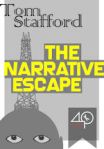
The Narrative Escape

Please excuse me if I interrupt Vaughan’s normal programming to blow my own trumpet: My ebook “The Narrative Escape” was published yesterday by 40k books. ‘The Narrative Escape’ is a long essay about morality, psychology and stories and is availble in Kindle format. From the ebook blurb:

We instinctively tell stories about our experiences, and get lost in stories told by other people. This is an essay about our story-telling minds. It is about the psychological power of stories, and about what the ability to enjoy stories tells us about the fundamental nature of mind.

My argument in ‘The Narrative Escape’ begins by exploring Stanley Milgram’s famous experiments on obedience, looking at them as an example of moral decision making – particularly for that minority that choose to disobey in the experiment. A fascinating thing about these experiments is that although they tell us a lot about what makes people obey authority, they leave mysterious that quality that makes people resist tyrannical authority. I then go on to contrast this moral disobedience, with conventional psychological investigations of morality (for example the work of Lawrence Kohlberg). In using descriptions of moral dilemmas to ask people about their moral reasoning this research, I argue, misses something essential about real-world moral choices. This element is the ability to realise that you are acting according to someone else’s version of what is right and wrong, and to step outside of their definition of the situation. This is the “narrative escape” of the title. The essay also talks about dreams, stories and story-telling and other topics which I hope will be of interest to Mind Hacks readers.

The essay is also available in Italian as “La Fuga Narrativa
Amazon.com Link for the English edition.
…And coming soon in Portuguese, I’m told!

Mexican waves across the currents of life

The New York Times has an excellent collection of essays by writers from four Mexican cities, each affected by the ongoing drug war.

The pieces give a fleeting but thoughtful impression of how life in each town has been changed by the upsurge in violence.

I was particularly struck by the piece on Sinaloa, the town forever associated with the cartel that shares its name, which reflects on a dark cultural history and the uncomfortable ambivalence it causes in the residents.

The Mexican drug industry was established in the 1940s by a group of Sinaloans and Americans trafficking in heroin. It is part of our culture: we know all the legends, folk songs and movies about the drug world, including its patron saint, Jesús Malverde, a Robin Hood-like bandit who was hanged in 1909.

There are days when we feel deeply ashamed that the trade is at the heart of Sinaloa’s identity, and wish our history were different. Our ancestors were fearless and proud people, and it is their memory that gives us the will to try to control our own fear and the sobs of the widows and mothers who have lost loved ones.

All four pieces quietly but powerfully portray how the currents of everyday life continue to move beneath the surface of the conflict.
 

Link to NYT collection ‘In Mexico, Scenes From Life in a Drug War’.

Coastal bound

Apologies if posts are a little irregular over the next few days as I shall be in the beautiful Colombian coastal cities of Santa Marta and Barranquilla to attend the Congreso Colombiano de Psiquiatría.

Both cities are known for their stunning coastline, but Barranquilla has probably become more famous for being the home town of Shakira.

Although I shall be briefly presenting at the conference, I would just like to mention that I have no plans for dinner in case any musically inclined barranquilleras happen to be reading.

The book of reality distortions

I’m happy to announce that I’ve just finalised an agreement with Penguin to write a book on what hallucinations tell us about the mind, brain and human nature. From the proposal:

The mind and brain can generate fantastical visions and disembodied voices, illusory people and shifting landscapes, internal symphonies and sensed presences. These states happen at the extremes of human experience, in madness, terror and brain disturbance, but they are often an exaggeration of our natural tendency to hallucinate that we rely on for everyday perception – a tendency that has inspired great works of art and shaped history.

We all hallucinate, and our perception relies on it. We have blind spots in our vision that our brain fills with hallucinated experience. Occasionally we experience intense and vivid hallucinations, after taking certain drugs, during mental illness, with epilepsy or brain injury, during hypnosis, after being taken hostage, during deep-sea dives, while blacking out at high Gs, or at other extremes of human experience that tax the body and mind. But it is not just these situations that trigger hallucinations: one in ten healthy adjusted people hallucinate more than patients in hospital with psychosis. In other words, hallucinations are part of human nature.

The book explores different types of hallucinations and their historical and cultural significance, and explains how they arise and what they tell us about normal psychology and neuroscience. This is the central theme of the book: that hallucinations are not just mental junk; rather, they are windows into the workings of the mind and brain that can reveal the essence of our inner lives.

It won’t be out until 2012, but I’ll make sure Mind Hacks readers get to preview the adventure as it gets written.

Also, if you know of any fascinating research or interesting types of hallucinations – please let me know by posting in the comments or getting in touch.

I’m always pleased to receive tip offs and, as well of doing plenty of scientific investigation, I’m also planning to visit many interesting people and places.

Beyond paddling: children and technology

One of the most sensible articles yet published on children, technology and the brain has just appeared in the scientific journal Neuron. It’s titled “Children, Wired: For Better and for Worse” and has been made open-access so you can read it in full online.

You’ll notice a few things that are different from your usual article about the impact of technology: it is written by cognitive scientists who are actually involved in the research; it is published in a peer-reviewed scientific journal; it discusses the whole range of evidence; and it hasn’t made any headlines.

Although it’s an academic article, it’s surprisingly readable and if you’re interested in the area, I highly recommend it.

This is not least because it points out lots of counter-intuitive findings in the scientific literature that are never covered by the people who usually spin the ‘I think it’s trash culture so it must be doing harm’ line.

For example, educational or ‘brain boosting’ applications may actually slow learning while ‘mindless’ video games can have sustained benefits:

Technology specifically developed for the purpose of enhancing cognitive abilities, such as infant-directed media including the ‘‘Baby Einstein’’ collection or various ‘‘brain games’’ designed for adults, may lead to no effects or, worse, may lead to unanticipated negative effects (Owen et al., 2010; Zimmerman et al., 2007). Meanwhile, technological applications that on the surface seem rather mindless (such as action video games) can result in improvements in a number of basic attentional, motor, and visual skills (Green and Bavelier, 2008; Greenfield, 2009).

It’s worth noting that there is good evidence that some educational TV programmes and software have a beneficial effect, but the point remains that you can’t guess the effect from the label.

The article is great at picking up on these complexities and noting the importance of fully considering content and context as well as the way technology delivers it.

My only quibble is a throwaway line where the authors consider addiction to video games and note we need to consider neurological evidence because: “The fronto-striatal pathway, which has been strongly implicated in both drug addiction and behavioral disorders such as pathological gambling is also activated by interaction with certain types of media technology, video games in particular”

As the ‘reward system’, of course, it’s strongly activated in lots of things we find pleasurable or useful – like listening to music, consuming soft drinks, co-operating with others and receiving a compliment.

There is nothing inherently pathological about the activity of this system so we need to be careful that we are guided by what actually impacts on people’s lives and not get too dazzled by the bright lights of brain scanners. But this is a minor point in a overwhelmingly excellent piece.

The take home point is that the ‘technology is damaging the brain / eating our children / harming our culture’ stories are over-simplified to the point of absurdity. No-one could get away with a scare story about the whole of ‘transport’ but you can with ‘technology’ because it plays to our anxious stereotypes.

This is not to say that there aren’t some genuine areas of concern but these are little different from every other media that has come before: violence has a small but significant effect on aggression and doing anything to the detriment of a balanced education and active life will affect school progress and health.
 

Link to Neuron article with full text pdf link (via @bradleyvoytek).
Link to DOI entry.