Not in your wildest dreams

Scientific American has just started a new series where scientists describe questions which fascinate them but which they don’t think can be answered by science.

The first article is by sleep and dream neuroscientist Robert Stickgold who wonders whether we could ever understand the significance of dreams.

The idea: Dreams often feel profoundly meaningful, bizarre experiences often interpreted over the centuries as messages from the gods or as windows into the unconscious. However, maybe our brains are just randomly stringing experiences together during sleep and investing the result with a feeling of profundity…

The problem: The difficulty in exploring this idea is that how meaningful something is might be too hard to measure. “It’s a bit like beauty — it’s in the mind of the beholder,” Stickgold says. “It’s not like heart rate or the level of electrical conductivity of the skin, which you have outside evidence of. If a person says something is meaningful, you’re not sure how to measure that, and you’re not sure how, if at all, that applies to others. One has to come up with a meaningful definition of meaningful.”


Link to SciAm ‘Too Hard for Science?: The sense of meaning in dreams’.

Hungry judges less likely to grant parole

Not Exactly Rocket Science covers a study that is in equal parts delightful and terrifying: it found that judges are much less likely to grant parole when they’re hungry.

It’s the work of Shai Denzeger from Ben Gurion University of the Negev, and summarises the results of 1,112 parole board hearings in Israeli prisons, over a ten month period…

It shows that the odds that prisoners will be successfully paroled start off fairly high at around 65% and quickly plummet to nothing over a few hours… After the judges have returned from their breaks, the odds abruptly climb back up to 65%, before resuming their downward slide. A prisoner’s fate could hinge upon the point in the day when their case is heard.

Twinkie your honour?
 

Link to Not Exactly Rocket Science with the full story.

The Oscar for best neuroscience research goes to…

Both of this year’s lead Oscar winners have published scientific papers on neuroscience. We’ve covered Natalie Portman’s work on frontal lobe development in children before, but it turns out Colin Firth has also just co-authored a study on structural brain differences in people with differing political views.

An excellent post on The Neurocritic tells the intriguing story of how the study came about.

It turns out Firth was a guest editor on the daily BBC Radio 4 news programme Today and commissioned neuroscientist Geraint Rees to scan the brains of two prominent UK politicians – one staunchly liberal and the other a confirmed conservative – to look for differences.

The piece was clearly a piece of news fluff – as you can tell very little from scanning just two people – but it was motivated by a genuine interest in whether political opinions correlate with brain differences.

Rees decided to develop the idea into a more comprehensive study, using scans from 90 people, to see whether the density of the brain’s grey matter differed in line with differences in political views.

The study didn’t look at differences across the whole brain, just the anterior cingulate, a part of the frontal lobes, and the deep brain structure the amygdala.

The areas were chosen because previous studies have found that conservatives are more sensitive to fear-inducing prompts – a response linked to the amygdala, whereas liberals show more brain activity in the anterior cingulate when they have to hold back an automatic response.

It must be said that the link between these functions and brain areas is still quite preliminary, so the study is more of an exploration than a cast-iron test of a well-defined idea.

This new study, published in Current Biology and co-authored by Colin Firth, Geraint Rees along with neuroscientist Ryota Kanai and the producer of the Radio 4 programme, found distinct differences in these areas.

We found that greater liberalism was associated with increased gray matter volume in the anterior cingulate cortex, whereas greater conservatism was associated with increased volume of the right amygdala

This doesn’t tell us anything about whether conservatives or liberals are “born or made”. Despite the fact that the whole question is daft and over-simplified, a simple association between beliefs and brain areas doesn’t help us understand anything about cause and effect.

It could be that the brain areas differ because conservatives and liberals differ in how much they ‘practice’ alternative ways of thinking about the world, rather than brain structure ‘determining’ political orientation.

I really recommend the Neurocritic piece for more background, but the fact that the 2011 winners of the best actor and actress Oscar both have their name on neuroscience studies shows how fashionable the science has become.

And if, by chance, a certain Grammy award winning She Wolf would like to join the trend I would be more than willing to help out with the statistical analysis.

Yes, I realise my chat-up lines could do with a bit of work.
 

Link to The Neurocritic on Colin Firth’s neuroscience study.

Reflecting on a psychopath

A psychologist’s personality may affect whether someone is diagnosed as a psychopath or not.

Forensic psychology blog In the News covers a preliminary study on how evaluators with different personality traits systematically differed in their ratings when using the ‘industry standard’ Hare Psychopathy Checklist.

The checklist is often referred to by the abbreviation PCL-R. It is designed to assess and measure psychopathy, a condition where people lack empathy, are impulsive, manipulative and anti-social.

Needless to say, it now features heavily in many legal cases.

The PCL-R is the most widely used measure of psychopathy in the world. But in real-world forensic settings, scores vary widely depending upon which side [of the legal case] retained the evaluator. This finding is called the “partisan allegiance” effect.

In a new twist, these same researchers that brought you partisan allegiance have found that an evaluator’s personality may impact her judgments of psychopathy. Evaluators low on compassion and thrill-seeking as measured by a widely used personality test, the NEO Personality Inventory-Revised, are more likely than others to rate criminals as psychopathic.

That’s ironic, because according to the theory of psychopathy, it’s supposed to be the psychopath — not the psychologist — who has a deficit in empathy.


Link to In the News on psychopathy tests and personality.
Link to DOI entry and summary of study.

Kids on speed and the birth of misbehaviour

Dr Charles Bradley first reported the effects of amphetamine on children with behavioural problems in 1937. An article in The Yale Journal of Biology and Medicine takes a look at how this early study opened the door to treating ADHD with Ritalin and how it tied in with changing ideas about child misbehaviour.

Bradley was a psychiatrist and director of the Emma Pendleton Bradley Home for children with behavioural problems. In the days where ad-hoc experimentation was not considered out-of-the-ordinary, he decided to try administering Benzedrine sulfate, a type of amphetamine, to his young patients.

After only a week, he observed that “The most striking change in behavior occurred in the school activities of many of these patients. There appeared a definite ‘drive’ to accomplish as much as possible. Fifteen of the 30 children responded to Benzedrine by becoming distinctly subdued in their emotional responses. Clinically in all cases, this was an improvement from the social viewpoint.”

The paper appeared in a top psychiatry journal and echoes the now common idea that amphetamine, which includes Ritalin (known generically as methylphenidate), has the seemingly paradoxical effect of calming over-active or out-of-control children.

It turns out that Bradley’s experiment was carried out as the social significance of childhood was changing, as was the concept of what was considered to be ‘child misbehaviour’:

During the 19th and 20th centuries, a new conceptualization of childhood and how children ought to behave emerged in both popular culture and the medical world. A model child embodied the ideals necessary for the new industrial economy: self-regulated behavior and orderly social relations.

Childhood became the critical period for learning restraint and developing a proper social identity in order to grow up to be a successful adult. This prevailing characterization of a good child generated its opposite: the troublesome child. A broad range of social problems fell into this category of misbehavior and could include difficulty in schoolwork, fighting, and failure to obey authority.

That’s not to say that there wasn’t a concept of a misbehaving child before, but just that a lack of social self-regulation and focus was not considered to be as important in defining ‘doing wrong’.

The article describes how Bradley’s work was forgotten for 25 years, owing to the fact that the drug company who made Benzedrine felt they couldn’t market the drug, because it would be difficult to ‘sell’ the seemingly contradictory effects of a stimulant having a calming effect.

However, it opened the door for the first studies of treating hyperactive kids with Ritalin in the mid-1950s which exploded in the 1980s when the diagnosis of ADHD first emerged.

The article is a fascinating look at how social changes, drug tests and scientific understanding interact to influence our modern-day understanding of psychiatric disorder and even childhood.
 

Link to article on Bradley’s Benzedrine studies.

Slumber therapy

A delightful moment from a New York Magazine article where a guy who had four psychoanalysts in a row fall asleep on him goes back to each to find out why:

I ask him about falling asleep, and he says, cheerfully, “I have no memory of that whatsoever.” This is surprising, considering he passed out cold, I exited quietly, and we later spoke about it intensively. “What did I say?” he asks. That I had been locking him out with emotionally evasive speech. “What did you say?” he asks. That that was a bullshit answer. He pauses. He smiles. “Good for you.”

The piece is a little heavy on therapy talk but has some great observations of psychoanalytic culture. Oh, and the ending is wonderful.
 

Link to New York Magazine ‘The Sleeping Cure’.

Regrets, I’ve had a few (but not too few to mention)

The ‘Regrets of the Typical American’ have been analysed in a new study that not only looks at what US citizens regret most, but provides some clues for those wanting to know whether it is better to regret something you haven’t done, or regret something you have.

The research has just been published in the journal Social Psychological and Personality Science and was carried out by psychologists Mike Morrison and Neal Roese who used random dialling to call people and survey them about a troubling regret.

As blues singers have suggested for years, love tops the list (click for larger version):

Previous studies on regret have talked to college students who are probably not ideal for this sort of research as they tend to be quite young and, quite frankly, really haven’t fucked up enough to give a good idea of what the average person laments about their life.

This was the first study to survey a representative sample of all ages, incomes and education levels and although love topped the list, there were some interesting differences in the details.

Women, who tend to value social relationships more than men, have more regrets of love (romance, family) compared to men. Conversely, men were more likely to have work-related (career, education) regrets. Those who lack either higher education or a romantic relationship hold the most regrets in precisely these areas.

Americans with high levels of education had the most career-related regrets. Apparently, the more education obtained, the more acute may be the sensitivity to aspiration and fulfillment. Moreover, the youngest and least-educated people in our sample, who most likely possess the greatest capability of fixing their regrets, were indeed the most likely to provide fixable regrets.

The study also found that regrets about things you haven’t done were equally as common as regrets about things you have, no matter how old the person.

The difference between the two is often a psychological one, because we can frame the same regret either way – as regret about an action: ‘If only I had not dropped out of school’; or as a regret about an inaction: ‘If only I had stayed in school’.

Despite the fact that they are practically equivalent, regrets framed as laments about actions were more common and more intense than regrets about inactions, although inaction regrets tended to be longer lasting.

So the question of whether it is better to regret something you haven’t done than regret something you have, might actually be answerable for some people, but we still don’t know how much choice we have over adopting the different views of regrets or whether this is largely determined by the situation.
 

Link to summary of study ‘Regrets of the Typical American’.
Link to write-up on PhysOrg.

Suggesting altered states

The neuroscience of suggestion and hypnosis are helping us to understand mysterious disorders where people are blind or paralysed with no apparent medical explanation, and may be useful in investigating altered states from diverse cultures – according to an engaging discussion in the monthly JNNP podcast.

The JNNP is the slightly catchier name for The Journal of Neurology, Neurosurgery, and Psychiatry and let me ‘fess up and say the interview is with a colleague of mine, psychiatrist Quinton Deeley, who discusses our recent article on how cognitive neuroscience is providing tantalising evidence for an old theory on how hypnosis and hysteria might be linked.

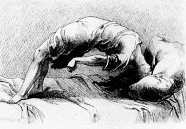
Neurologist Jean-Martin Charcot believed that there may be a connection because he could simulate almost any aspect of hysteria through suggestion in susceptible individuals. Hysteria is now typically diagnosed as conversion disorder and its a condition where people appear to have neurological problems despite their nervous system seeming to be in perfect working order.

It turns out that the idea of hypnosis is a bit of a smokescreen because it depends much more on the person listening to the suggestions, than the person making the suggestions.

We now know that we all have a certain capacity to allow other people to suggest changes to our mental state. This differs between people and the ability is normally distributed, like many psychological traits, and we know its partly genetic and there’s evidence its linked to differences in brain structure.

Contrary to the popular myth, if you are experiences the effects of suggestion, your mind isn’t ‘under control’ and it’s much like watching a film. You can choose to turn away at any point but you don’t decide to be scared or amused by the movie – it just happens. Highly suggestible people can allow suggestions of paralysis, amnesia or even hallucinations.

I wrote more about the neuroscience of suggestion in an article for The Guardian but as happens with almost any piece about this area, it got given a daft headline and a ridiculous picture of someone swinging a watch. However, it remains a good place to start if you want an introduction to the science, rather than the myths.

Our recent research looked at neuroscience studies on both ‘hysteria’ and hypnosis and found there is intriguing evidence that both may involve the frontal cortex inhibiting other brain functions. For example, in cases of both ‘hysterical paralysis’ and suggested paralysis you can often see the motor areas of the brain being deactivated as the frontal cortex ramps up its activity when the person tries to move.

Quinton has a long-standing interest in anthropology and another line of this work is to look at whether this has links with ritual trance states or altered states of consciousness that happen in cultures across the world where people feel that they are making involuntary movements or feel they are not in control of their actions – even when drugs are not being used.

The discussion on the podcast touches on all these areas, and you can download the whole thing with the other half on multiple sclerosis and Vitamin D, or grab the mp3 with just the bit on suggestion, hysteria and altered states.
 

Link to March JNNP podcast page.
mp3 of just the suggestion, hysteria and altered states discussion.
Link to full scientific paper.
Link to Guardian article on the neuroscience of suggestion and hypnosis.

Court in the cross-fire

There are not enough quality forensic psychology blogs in the world, which I suspect is not a thought that passes through the mind of anyone except Mind Hacks readers.

However, if you’re after a punchy fast paced look at the world of criminal and legal psychology you’d do far worse than checking out the website of psyDoctor8.

It dips into everything from the neuroscience of murder to the science of false confessions with an eye on both the media and the academic literature.

And if you do Twitter @PsyDoctor8 is also a great source of links in the same vein.

It makes a wonderful complement to the more in-depth In the News blog, which has consistently been one of the best forensic psychology sources on the net.

And that’s about it. Criminal really.

Yes your honour, I’ll stop with the puns.
 

Link to psyDoctor8 blog.
Link to In the News blog.

The brain behind the lion heart

I’ve just read a completely fascinating New York Times article on the neuropsychology of courage – a core human attribute that curiously seems to be largely ignored by cognitive science.

The piece looks at how we define courage, it’s relation to fear and the sometimes wonderfully innovative research that has tackled the area.

In pioneering work from 1970s and beyond, Stanley J. Rachman of the University of British Columbia and others studied the physiology and behavior of paratroopers as they prepared for their first parachute jump.

The work revealed three basic groups: the preternaturally fearless, who displayed scant signs of the racing heart, sweaty palms, spike in blood pressure and other fight-or-flight responses associated with ordinary fear, and who jumped without hesitation; the handwringers, whose powerful fear response at the critical moment kept them from jumping; and finally, the ones who reacted physiologically like the handwringers but who acted like the fearless leapers, and, down the hatch.

These last Dr. Rachman deemed courageous, defining courage as “behavioral approach in spite of the experience of fear.” By that expansive definition, courage becomes democratized and demilitarized, the property of any wallflower who manages to give the convention speech, or the math phobe who decides to take calculus.

It is also a wonderfully written article, by the way, so well worth making the leap for.
 

Link to NYT article ‘Searching for the Source of a Fountain of Courage’.

To catch a thief and fool a scientist

If you only listen to one radio programme this month, make it this one. The BBC Radio 4 programme Fingerprints on Trial explores how identifying people at crime scenes by their prints is subject to serious psychological biases and is not the exact science that we, and ironically, the forensic fingerprint community, like to believe.

It covers some spectacular high-profile cases, the science behind how prior knowledge can bias the supposedly objective identification of prints, and the baffling fingers-in-the-ears lalalala response of some fingerprint experts who just completely deny it’s a problem.

The programme riffs on the work of psychologist Itel Dror who has shown that changing the ‘backstory’ to a case can alter what fingerprint matches experts find.

So here’s how these biases could work in practice. Fingerprint examiners in this country [the UK] generally know the type of crime their working on. Any murder is high profile, so the chances are they’d know quite a bit about the case. They might see crime scene photographs and might even have heard snippets from detectives working on the case. And then when they start to check the fingerprints from the murder scene, evidence from cognitive psychology shows that what they know, or think they know, can influence what they then see in the prints.

Combines gripping sad-but-true whodunits, cutting edge cognitive science and a pressing issues for forensic science.

Excellent stuff.
 

Link to BBC streamed version and programme info.
mp3 of podcast from BBC.

A mental map of city street drugs

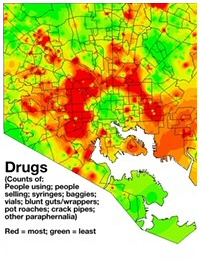
Urbanite has a fascinating article on researchers who are attempting to map drug users’ minds onto the city streets.

They are giving addicts GPS-enabled PDAs that ask the participants to rate their psychological state as they move around Baltimore.

By using pre-existing maps of the city that chart things like neighbourhood poverty and local drug availability it’s possible to see how the mental state of users changes as they move through the different physical and social environments of the city.

To make the patterns of movement meaningful, the researchers have to understand the various city “environments” that the drug users move through. This job fell to Craig, the biostatistician and a Baltimore native. To create maps of the urban landscape, Craig started with Census indices, which include race, income, and other socioeconomic metrics. To those he added a system developed by Dr. Debra Furr-Holden at the Johns Hopkins School of Public Health, who sent teams out to score city blocks based on physical characteristics (broken windows, shell casings, street memorials for recent killings) and on people’s behavior (clearly intoxicated adults, unsupervised children, and so on). “Her data are like nothing else I’ve ever seen,” says Epstein.

On these maps, Craig plots the paths of drug users as they move through the city, weaving in the information they’ve plugged into their PDAs. The result is a detailed rendering of how addiction is lived in space and time, opening a new window on the experience of tens of thousands of city residents. “Their work is novel,” says Yale University’s Rajita Sinha, professor of psychiatry and child study and director of the Yale Stress Center. This research “allows us to understand the social context in which drug use takes place and to evaluate that context,” says Sinha, who is internationally known for her pioneering research on the mechanisms linking stress to addiction.

The technique is called ‘ecological momentary assessment’ – although it is similar to a closely related method called ‘experience sampling’ that also involves giving participants an electronic device that requires they record their mental state at various points in their daily life.

These techniques have been around since the early 90s but the new aspect is the incorporation of GPS to map these responses into physical space.

One of the pioneers of this technique has been, not a scientist, but the artist Christian Nold, who has been making emotion maps of cities for many years to beautiful effect.

The Urbanite article covers how a team from the US National Institute on Drug Abuse are attempting perhaps the most ambitious and data-rich version of this approach to date which truly attempts to blend both inner and outer worlds.
 

Link to article ‘On the Trail of Addiction’.

Infested by the Wizard of Oz

Jay Traver had begun to notice an uncomfortable crawling sensation under her skin. Scalp spots had bothered her for years but despite her best efforts – she was, after all, a renowned professor of zoology – she couldn’t identify the parasites.

Over the seasons the bugs had spread across her body and eventually invaded her eyes, ears and nostrils, raising her discomfort to fever pitch. Doctors seemed mystified but by the summer of 1950 she had made a breakthrough.

Strong caustic soaps seemed to help control the infestation and she had dug some of the bugs out of her skin with her nails to identify them as dermatophagoides – a mite never previously known to infect humans.

Although lacking a cure she wrote of her discovery and experiences as an article for the scientific journal Proceedings of the Entomological Society of Washington which later appeared in their February 1951 issue.

It is perhaps one of the most remarkable scientific papers ever published, not, as it turns out, because of the startling new discovery, but because the Professor had never been infected by parasites.

The bugs were hallucinated, the infestation a delusion and Travers was suffering from a mental illness.

Known as delusional parasitosis the condition consists of the usually focused delusion that the person is infected by parasites that crawl under the skin and which remain present in the surrounding environment.

Patients often turn up to doctors with small bugs in plastic bags which later turn out to be dust, irrelevant bugs or even just flakes of human skin.

Extensive damage is common as patients apply stronger and stronger solutions to the skin or use sharps objects to dig out what they assume are parasites below the surface of their body.

Professor Traver’s article reports these experiences in detail and even has photos of the supposed ‘dermatophagoides’ mites – which were identified by others as common house dust mites that only live on dry skin that has flaked off the body.

Tellingly, the article described how, after an admission to hospital where no parasites were found, Traver was referred to a neurologist for what was apparently labelled a “psychoneurotic condition”. Dismissing the diagnosis she quickly ducked the appointment.

The scientific paper has become a little-known classic for students of obscure psychiatric conditions. In a recent article on the condition, entomologist Nancy Hinkle hailed it as “one of the most astounding first-person accounts of Ekbom’s syndrome” available but the paper has a more profound point.

Hinkle notes that “her experience illustrates that even highly educated scientists accustomed to dealing with facts and evidence are not immune to delusions”.

We like to think that our convictions are based on reasoned conclusions and that all of our beliefs are subject to the searchlights of self-inquiry, but we are only experts as far as we are allowed by our own minds.

Like a Wizard of Oz that never got found out, we cannot see the man behind the curtains and even knowing he is there doesn’t let us detect him at work.

Professor Jay Traver lived with her delusions for 31 years, right up until her death.
 

pdf of Traver’s 1951 paper.
Link to annoyingly pay-gated Hinkle paper on delusional parasitosis.

Emotional fluctuations in the lyrics of Bob Dylan

A 2008 study looked at the fluctuation in the use of emotional words in the lyrics of Bob Dylan in relation to the events in his life.

Emotional fluctuations in Bob Dylan’s lyrics measured by the dictionary of affect accompany events and phases in his life

Psychol Rep. 2008 Apr;102(2):469-83.

Whissell C

Lyrics for Bob Dylan’s songs between 1962 and 2001 (close to 100,000 words) were scored with the help of the Dictionary of Affect in Language (Whissell, 2006). Means for Pleasantness, Activation, and Imagery are reported for 22 Blocks characterizing this time span. Significant but weak differences across Blocks were found for all three measures at the level of individual words.

Emotional fluctuations in words included in Bob Dylan’s lyrics accompanied events and phases in his life, although they were not entirely dictated by these events. Dylan used more highly Imaged and more Active words at times when his work was critically acclaimed. More Passive word choices characterized times of prolonged stress, and more Pleasant choices times of experimentation. Dylan’s three popularity peaks were used to divide the singer’s career into three stages (rhetor, poet, sage) which differed in terms of pronouns used.

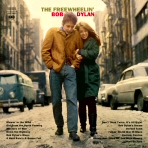
It turns out that Suze Rotolo, Dylan’s girlfriend and the girl on the front of his famous album The Freewheelin’ Bob Dylan has just passed away, which made me think of this curious piece of research.
 

Link to PubMed entry for study.

Faking tragedy and the pull of online sympathy

The Guardian has a fascinating article about the motivations of people who have faked terminal illnesses as their online companions have offered support and sympathy right until the supposed end.

Several cases have become notorious online where illnesses, and even deaths, have been faked much to the betrayal of community members.

Mandy is one of a growing number of people who pretend to suffer illness and trauma to get sympathy from online support groups. Think of Tyler Durden and Marla Singer in Fight Club, only these support groups are virtual, and the people deceived are real. From cancer forums to anorexia websites, LiveJournal to Mumsnet, trusting communities are falling victim to a new kind of online fraud, one in which people are scammed out of their time and emotion instead of their money. The fakers have nothing to gain from their lies – except attention.

These aren’t just people with a sick sense of humour. Jokers want a quicker payoff than this kind of hoax could ever provide. It requires months of sophisticated research to develop and sustain a convincing story, as well as a team of fictitious personas to back up the web of deceit. Psychiatrists say the lengths to which people like Mandy are prepared to go mean their behaviour is pathological, a disorder rather than simply an act of spite. The irony is these people might actually be classed as ill – just not in the way they claim to be.

This type of behaviour can be diagnosed as facticious disorder in the DSM with the idea that the motivation is to gain the psychological benefits of the ‘sick role’ – i.e. a caring response from other people.

It is considered a mental illness and is sometimes labelled Munchausen syndrome after the German Baron who was famous for his tall tales.

However, faking illness to get material benefits or to avoid responsibilities is classified as malingering is not considered a mental illness, although no justification is usually given for why one is considered an illness and the other just ‘bad behaviour’.

To complicate matters further, it seems some people can experience serious medical problems (e.g. paralysis, blindness) with nothing seeming to be wrong with them – but crucially – they are not doing so consciously.

In other words, they are not ‘faking’ in the normal sense of the word and these conditions are typically diagnosed as conversion disorder.

If they sound exotic, about 10-20% of all neurology examinations turn up no damage that could explain the symptoms.

Considering we have all faked or exaggerated illness to some degree, and the fact that our unconscious mind has a powerful effect on the experience of symptoms – regardless of their physical basis, we can consider terminal illness fakers as one end of a behaviour spectrum on which we all live.

The Guardian article looks at the increasingly recognised online expression of this behaviour (with the inevitable unnecessary suggestion of an online specific diagnosis) and some fascinating individual cases.

 
Link to article ‘Faking illness online’.

A victim of metaphor

A gripping piece from Not Exactly Rocket Science describes how simply changing the metaphors used to describe crime can alter what we think is the best way of tackling it.

The article covers a new study on the power of metaphors and how they can influence our beliefs and understanding of what’s being discussed.

In a series of five experiments, Paul Thibodeau and Lera Boroditsky from Stanford University have shown how influential metaphors can be. They can change the way we try to solve big problems like crime. They can shift the sources that we turn to for information. They can polarise our opinions to a far greater extent than, say, our political leanings. And most of all, they do it under our noses. Writers know how powerful metaphors can be, but it seems that most of us fail to realise their influence in our everyday lives.

First, Thibodeau and Boroditsky asked 1,482 students to read one of two reports about crime in the City of Addison. Later, they had to suggest solutions for the problem. In the first report, crime was described as a “wild beast preying on the city” and “lurking in neighbourhoods”. After reading these words, 75% of the students put forward solutions that involved enforcement or punishment, such as calling in the National Guard or building more jails. Only 25% suggested social reforms such as fixing the economy, improving education or providing better health care.

The second report was exactly the same, except it described crime as a “virus infecting the city” and “plaguing” neighbourhoods. After reading this version, only 56% opted for more enforcement, while 44% suggested social reforms. The metaphors affected how the students saw the problem, and how they proposed to fix it.

The study is interesting because it touches on a central claim of the linguist George Lakoff who has argued that metaphors are central to how we reason and make sense of the world.

Lakoff’s arguments have had a massive influence in linguistics, where they have started more than one scientific skirmish, and were adopted by the US Democratic party in an attempt to reframe the debates over key issues.

Despite the fact that Lakoff was one of the pioneers of the idea that metaphor is central to reasoning, his political associations have made him somewhat unfashionable and it’s interesting that this new study makes only passing reference to his work.
 

Link to Not Exactly Rocket Science on new metaphor study.
Link to full text of scientific study.