The spark of the cognitive revolution

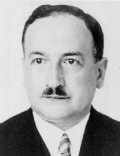
Monitor on Psychology has a fascinating article on Otto Selz, a little known pioneer of the cognitive revolution who was decades ahead of the rest of psychology, before being captured and killed by the Nazis.

He was so little known, in fact, that the majority of people have never heard of him. In fact, this is the first time I’ve ever seen anything written about him, despite the fact he was a major influence on the key players who launched the concept of ‘mind as information processing metaphor’ in the 1950s.

Selz began to lay the foundation for cognitive research in a series of experiments he and his colleagues conducted from 1910 to 1915. They asked participants to explain their problem-solving thought processes out loud as they tried to complete a task, such as finding a word related to but more generic than “newspaper” or “farmer,” such as “publication” or “worker,” respectively. The participants would explain how they identified the features of those words, how the features fit into larger categories and how the categories led them to new words.

Based on these statements, Selz concluded that their minds were doing more than simply associating words and images they’d heard in conjunction before. To Selz, the participants were operating under what he called a “schema,” or an organizing mental principle, that guided their thoughts. Under this schema, the mind automatically orders relationships between ideas and can anticipate the connections among novel stimuli, serving as a basis for problem-solving. The existence of such an organized mental life would later become a cornerstone of the cognitive revolution.

Selz was actually captured twice by the Nazis. He was first sent to the Dachau concentration camp but was released after five weeks on the condition that he leave the country.

He went to Holland and continued working for two years but was captured again when the Nazi’s invaded. He died while been transported to Auschwitz.

The article has an incredibly poignant moment where it mentions “His last recorded correspondence was a postcard to his colleagues, telling them he planned to begin a lecture series for his fellow inmates.”
 

Link to APA Monitor article on Otto Selz.

Minding your own business

I’m just reading a review copy of Steven Pinker’s (excellent) new book The Better Angels of Our Nature: Why Violence Has Declined.

This section, on how moral motivation is over-rated as a control on violence, just made me laugh out loud.

The human moral sense can excuse any atrocity in the minds of those who commit them, and it furnishes them with motives for acts of violence that bring them no tangible benefit. The torture of heretics and conversos, the burning of witches, the imprisonment of homosexuals, and the honor killing of unchaste sisters and daughters are just a few examples. The incalculable suffering that has been visited on the world by people motivated by a moral cause is enough to make one sympathize with the comedian George Carlin when he said “I think motivation is overrated. You show me some lazy prick who’s lying around all day watching game shows and stroking his penis and I’ll show you someone who’s not causing any fucking trouble!


Link to more information on the book.

God, death, cannabis

An amazing picture that takes pride of place on the cover of this month’s British Journal of Psychiatry by artist George Harding.

The piece has the wonderful name of Everything is Real Except God and Death.

From the description in the BJP:

The artist writes: `I used to get art lessons when I was a small boy from a next-door neighbour who inspired me, and art has been my passion ever since. `I did my foundation at Camberwell and graduated from Chelsea College of Art and Design in fine art in 2007. I now have a studio in Southwark, London, where I work and live.

`Art to me is emotive and is a way of coping with life and my mental illness. It is also something that guides me, something that I can rely upon and excel in. `The painting is explained by its title. The image speaks of the delusions, paranoia and imaginary beliefs that envelop a person when smoking cannabis. The image came together by making a collage of specific symbols and signs, which was then altered through painting. The figure featured in the work is after Henry Wallis’s painting in 1856 called The Death of Chatterton, a poet.

You can see more of artist George Harding’s amazing work as his website.

Crushed snails as neurology treatment

From a curious paper just published in the The Neuroscientist entitled “Plastering the Head with Crushed Snails to Treat Pediatric Hydrocephalus: An Ancient Therapy with a Pharmacological Basis.”

In the Middle Ages, medical therapy for pediatric hydrocephalus [a condition caused by the accumulation of cerebrospinal fluid inside the brain that can lead to enlargement of the head] was characterized by the application of drying substances to decrease the size of the heads of affected children.

A poultice of crushed snails applied to the head was considered to be one of the most powerful therapies for reducing swelling caused by excessive humors. Incunabula (texts printed in Europe before 1501 CE) and Renaissance texts document the extended use of this therapy, which was considered by physicians to be effective and less dangerous than surgical treatment…

It has been demonstrated that snails and slugs possess high concentrations of glycosaminoglycans and mucopolysaccharides…

Therefore, we think that the ancient practice of plastering the head with crushed snails in pediatric hydrocephalus, although not based on science as we know it, may have had at least some basis.

Negatively charged glycosaminoglycans absorb and retain large amounts of water and are important components of connective tissue. Because of these properties, glycosaminoglycans are currently used under various conditions to rehydrate the skin.


Link to closed access paper in The Neuroscientist.

Casting out the epilepsy ignorance demons

The New York Times has a surprising article about stigma surrounding epilepsy in Sierra Leone that describes some quite astounding beliefs about the condition.

Stigma here is based on two myths: that epilepsy is contagious and that it is caused by demonic possession. Dr. Lisk is quick to point out that beliefs about possession traverse societal boundaries. “You think it relates to level of education, of literacy, but somehow it doesn’t,” he said. “Sometimes it’s the most educated people who will tell you that it’s demonic. They say it’s in the Bible.” (Some biblical references to possession have long been thought to describe people with epilepsy.)

As a result, discrimination against people with epilepsy here is blatant and unabashed, and it begins in elementary school. “The school authorities often ask the students with epilepsy to leave,” Mr. Bangura said. “There is the notion that epilepsy is contagious; so when somebody has an attack during school, the perception is that if somebody happens to step on the spittle of an affected student, that would be one way of contracting the disease.”…

“Wherever the kid fell, they circle it and tell people to stay away from it, because that spot is a bad spot,”…

While these beliefs seem outlandish, the idea that epilepsy is caused by demonic possession is still common among many Western churches.

Here’s a video of a pastor of a revival church casting out epilepsy demons in Germany. This is an account of how TDS Ministries cured a young mother of a ‘spirit of epilepsy’ that was attacking her.

And if you’re still not convinced, this page has a testimony from the Bethel Church of how a blind man with epilepsy was not only cured of his seizures but also had his eyeballs grow back (suck on that Big Pharma!)

Needless to say, there’s plenty more where that came from, so we still have a way to go before even the most bizarre forms of stigma are defeated in the supposedly educated West.
 

Link to NYT piece on epilepsy beliefs in Sierra Leone.

Year two documentary on the Blue Brain project

The year two film of director Noah Hutton’s 10-year documentary-in-the-making on the progress of the ambitious Blue Brain Project is now online and well-worth watching.

The Blue Brain Project is often touted as aiming to ‘simulate the human brain’ but a more accurate description would probably be that it aims to create a simulation of cortical column circuits from the neuromolecular level up to the point where it’s as equally as complex as the human brain.

If the distinction isn’t clear imagine that you’re interested in how London works, so you decide to build a detailed computer simulation of suburban streets, but instead of aiming to replicate the geography of the genuine British city, you just make sure that it has as many roads as the capital itself.

Clearly, this is not an exact simulation of London, not least because the city is more than just suburban streets, but the complexity of the model would be incredibly useful in understanding the interaction between street level and city level activity at massive levels of complexity.

The same goes for neural simulation and the link between micro and macro levels of complexity is a major challenge for neuroscience. This is exactly what the Blue Brain Project aims to tackle.

However, as you can see in the film, project leader Henry Markham has the tendency to say that the project is about ‘understanding the brain’, which makes for good headlines, and takes nothing away from the impressiveness of the project, but is so broad that it doesn’t reflect the somewhat more neurobiological focus.

The project is, nonetheless, wonderful neuroscience and Noah Hutton’s film captures its progress during its second year.
 

Link to Noah Hutton’s ‘Blue Brain, Year Two’ film.

Bad riot neuroscience: cite the power

The Guardian Notes and Theories blog has a fantastic article on media science distortion by brain researchers whose study got falsely reported as showing a link between rioting and ‘low levels of a brain chemical’.

The actual study, which you can read online as a pdf, did not mention rioting and did not investigate it, but it got widely spun as giving an explanation for the recent looting in the UK based on the function of a neurotransmitter.

…we found that people who had lower levels of GABA in a part of their frontal lobe also reported higher “rash impulsivity”. People who score higher on rash impulsivity tend to act more rashly in response to strong emotions or urges. Our results tallied with recent genetic findings that linked GABA to alcoholism and drug abuse: disorders in which high rash impulsivity is a common feature. We wrote up our study for publication in a scientific journal and, as standard, we were encouraged by our university to issue a press release.

As the riots unfolded, news stories based on our research began appearing. On Tueday 9 August, a newswire story by the Press Association announced that “Brain chemical lack ‘spurs rioting'”, with ‘spurs rioting’ printed mischievously in quote marks, falsely implying these were our words. In a further creative leap, The Sun heralded a “Nose spray to stop drunks and brawls”, and that a “cure could be developed in the next ten years”.

The researchers reflect on how the media handles neuroscience and the hidden assumptions on the role of our brain in behaviour that pervade press reporting

In parts it’s a lament, in parts a media critique, and definitely worth reading in full.
 

Link to article ‘Riot control’.

The Psychologist on Milgram and the shock of the old

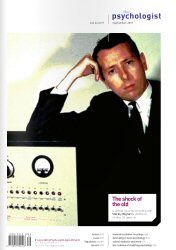
The August issue of The Psychologist is an open-access special edition on Stanley Milgram and his obedience studies that continue to cast a dark shadow over our understanding of human nature.

The issue has articles that look back on the legacy of his obedience studies, his treatment by historians and a personal view written by his widow, Alexandra Milgram, on the man himself.

But a particular highlight is a piece on his pioneering and almost cinematic use of film in his appropriately dramatic studies:

…in the popular imagination, Obedience and the ‘obedience to authority’ trials have become conflated and are now one and the same, despite the fact that the film only provides substantial documentation of one condition out of more than 20 that were investigated. Milgram’s documentaries and thoughtful writings on film, television and photography point to the value of narrative and audio-visual methods of research. The Obedience footage, however, does not support his claim that people ‘mindlessly follow authority’. On the contrary, it provides detailed audio-visual evidence that people experience considerable strain and anguish in following orders that conflict with their own consciences.

All the articles are free to read as is the rest of the issue. Enjoy.
 

Link to August edition of The Psychologist.
 

Declaration of interest: I’m an unpaid associate editor and occasional columnist for The Psychologist. The editor has not yet needed to use electric shocks on me.

Zombie brain-eating sex kitten

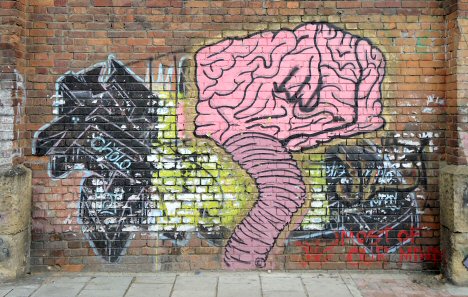
Bogotá comes up with a smackdown in the Colombia brain graffiti stakes with a zombie brain-eating sex kitten found on a car park wall near Avenida Calle 63 con Carrera 17 this morning.


Medellín, represent!

UPDATE: A bit of Google Fu turns up the blog of the graffiti artist Saint Cat with some amazing pieces scattered around Bogotá and the occasional featured zombie brain.

Strong piano at high fruitiness

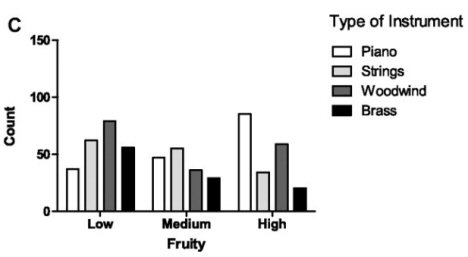
A wonderful graph which shows how strongly the sounds of the piano, strings, woodwind and brass instruments are associated with fruity smells, across smells of low, medium and high fruitiness.

From a recent study entitled ‘A Fruity Note: Crossmodal associations between odors and musical notes’.

The study also tests how strongly these instruments are associated with acrid, floral and spicy scents, in case you needed to know.
 

Link to abstract / DOI entry of study.

Out of Mind online

Paul Broks is a British neuropsychologist who wrote a brilliant and insightful column on the brain and its disorders for Prospect magazine in the early 2000s, all of which are now freely available online.

The ‘Out of Mind’ column ran for the best part of five years. Alternately whimsical, profound and poetic, it recounted ephemeral scenes from meetings with brain altered individuals and spun them into reflections on the science and philosophy of human nature.

From July, 2004:

The bespectacled skeleton speaks. “Yes, I’m fine,” she says. Her jaw drops and rises squarely like a ventriloquist’s dummy. But where are the words coming from? All I can see are bones and electrodes. The view shifts and there’s the smoky shape of the heart. The tip of the catheter now appears at the bottom of the screen. This was inserted at the groin and is nudging upward, through an invisible artery, into the rib cage. The radiologist is deft and reaches the carotid in no time: base camp for the brain. He is ready now to squirt the drug into the cerebral blood vessels. Next scene: the inside of Julie’s head. There is nothing much to see.

You may recognise Broks from Into the Silent Land: Travels in Neuropsychology, quite possibly one of the most beautiful books ever written on the brain. His Prospect columns swim in the same deep blue waters.
 

Link to ‘Out of Mind’ column archive from Prospect Magazine.

Human pheromones: wishful thinking

Slate has a fantastic article about the science of scents and why ‘attraction-boosting’ human pheromone products are selling nothing but myths.

The article takes a curious look at the history of misapplied pheromone research and how it’s been used to sell everything from aftershave to soap.

“The whole pheromone thing got picked up by the mass media,” says Richard Doty, director of the University of Pennsylvania’s Smell and Taste Research Center and author of The Great Pheromone Myth. It feeds into our need to believe, he said, that there “is all this subliminal stuff going on that is affecting us—who we mate with, who we want to be with. It’s this mythical perspective.” And marketers, like women’s magazines, are only too happy to exploit that myth. That’s how a whole junk-science industry of pheromone-perfumes, pheromone-soaps, and pheromone-cosmetics managed to spring up from a strange menagerie of misconstrued mammal studies.

Personally, I’ve always believed in the power of the scent of raw man, which, I have discovered, is surprisingly under-appreciated.
 

Link to Slate article on the pheromone hype.

A response to the Baroness

The Independent have just published a letter I wrote to them in response to their recent opinion piece by Susan Greenfield.

She claims that computers are at risk of causing ‘mind change’ while scientists are ignoring the issue. Needless to say, I was not impressed.

I was interested to read Professor Susan Greenfield’s opinion piece “Computers may be altering or brains – we must ask how” (12 August), where she laments that other scientists are refusing to debate the issue of how the internet and computer technology are affecting the mind and brain. She also claims that other scientists are dismissing her concerns by saying “there’s no evidence”.

This is clearly nonsense. There are over 3,000 scientific studies on the effect of technology on the mind and brain and a scientific community actively engaged in this debate, all of which Greenfield chooses to ignore in favour of her own alarmist conclusions. I am sure this is not simple unawareness, because Professor Greenfield specifically invited me to present the evidence to her at a debate on this topic at the House of Lords. The transcript is available on her own website. [You can download it as a pdf]

If Professor Greenfield wishes to engage in the debate about the impact of technology she is more than welcome to join the research community and discuss the evidence behind her concerns. So far, this evidence does not suggest that children’s or anyone else’s brains are being damaged by mobile phones, email, or Facebook. We know each has its own balance of effects, positive and negative, like all other media (newspapers included).

But instead of engaging with the evidence, Greenfield uses her media profile to communicate her ill-informed concerns to the public at large. This is neither helpful to science nor to concerned parents attempting to understand how they can best help their children use technology to their benefit.

The professor clearly has good intentions, but to become genuinely helpful she needs to be aware about what we actually know about the impact of technology. I would welcome her informed contribution to the debate.

Although I won’t be holding my breath.
 

Link to Independent letters page for 18th August.

Ecstasy for war trauma: a flashback to earlier treatments

Mother Board has a completely fascinating article on the current ongoing trial testing whether MDMA or ‘ecstasy’ could be useful in treatment combat trauma.
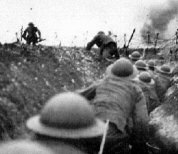
The piece is interesting as much for what it doesn’t say, as for what it does, and for how it ties into the history of psychological treatments for posttraumatic stress disorder or PTSD.

The trial is testing whether MDMA can assist in psychological treatment for the condition, in which a traumatic event leads to a sense of current threat and intrusive sensory impressions that are maintained by a pattern of avoiding reminders.

The most effective tried-and-tested treatments for the condition are types of therapy that are ‘trauma-focused’ that involve, among other things, a mental revisiting of the traumatic memories to ‘take the sting out of their tail’.

But this is exactly what most people who arrive in psychologists’ offices don’t want to do. This makes sense from the perspective of someone who is troubled by these memories and wants to stop thinking about them, but the avoidance actually helps maintain the problem.

This is, in part, because the person never learns to adjust to the anxiety (they don’t habituate in technical terms) and the memories remain as fragmented impressions that don’t fit into a coherent narrative, making them more likely to intrude into the conscious mind.

In other words, most people with PTSD initially arrive for treatment wanting a better form of avoidance because their current methods simply aren’t working. The mental health professional has the unenviable task of explaining that treatment involves exactly the opposite and reliving the event and experiencing the anxiety will be key.

It is so key, in fact, that anti-anxiety drugs like benzodiazapines (e.g. vallium) may reduce the effectiveness of treatment because they dull the experience of stress that the person needs to adjust to.

The MDMA trial is interesting in this regard, because ecstasy is, for many, a remarkably effective anti-anxiety drug.

So how does the drug facilitate the psychotherapy? Here’s the description from the article:

MDMA’s effects typically manifest themselves 30-45 minutes after ingestion, so it doesn’t take long for rhythms to develop in Charleston. Sessions at the clinic oscillate between stretches of silent, inward focus, where the patient is left alone to process his trauma, and unfiltered dialogue with the co-therapists. “It’s a very non-directed approach,” Michael Mithoefer told me. This allows subjects to help steer the flow of their trip. They are as much the pilots of this therapy as their overseers. “Once they get the hang of it,” Mithoefer explained, “sometimes people will talk to us for a while and then say, ‘OK, time to go back inside. I’ll come report when I’m ready.’”

That said, patients understand that if no traumas emerge, the Mithoefer’s must coax them out. But they’ve never had to. The traumas always emerge, and by now there have been over 60 sessions between an initial, smaller Phase 2 study and the present trials. Horrors are bubbling up naturally, patient after patient.

This harks back to a more psychoanalytic or Freudian-inspired idea of trauma and treatment. The goal of the therapy is to understand the inner self while the drug is intended to help us overcome psychological defences that prevent us from seeing things as they really are. In fact, this is a central assumption of the therapy.

This approach is not new. ‘Narcoanalysis’ was used widely in mid-20th Century where a range of drugs, from ether to sodium pentathal, were applied to patients with ‘war neurosis’ for exactly this purpose. Unfortunately, it was unsuccessful and abandoned.

So this is why the MDMA treatment is a gamble. All known effective psychological treatments for PTSD involve not only confronting the memories of what happened to make sense of them, but also re-experiencing the associated anxiety. A treatment with a drug that removes anxiety will, by current predictions, have limited effectiveness.

But this is also why the approach is interesting, because if it is shown to be genuinely effective, we might have to rethink our ideas about PTSD and its treatment.
 

Link to Mother Board article on the MDMA PTSD trial.

A dark chapter in the history of combat trauma

Neurology has an article that looks back at the dark history of ‘treating’ war trauma with torture during World War I.

During the conflict, ‘war neurosis‘ became a serious problem as thousands of troops where disabled by psychological trauma that often expressed itself as extreme anxiety and seemingly neurological symptoms – something called ‘shell shock’ early on in the conflict

Contrary to appearances, symptoms such as paralysis, blindness and tremors were not due to physical damage to the nervous system but to psychological stress.

These were classic presentations of ‘hysteria’, now diagnosed as conversion disorder, although many in the forces just assumed the affected soldiers were faking and felt they were motivated by cowardice.

Most famously, psychiatrist W.H.R. Rivers pioneered a psychotherapeutic treatment for ‘shell shock’ for British troops, although as there was no standard treatment so different countries and even different hospitals used different methods.

One of the most desperate ‘treatments’ was popularised by neurologists Clovis Vincent and Gustave Roussy, who widely applied it to traumatised French troops during the Great War.

The method involved ordering the traumatised soldier to go back to the front and electrocuting them until they agreed.

Although officially called faradization “torpillage was the term chosen by soldiers receiving the treatment because they likened the electric part of the therapy to being hit by a shell (une torpille).”

At first, faradization was carried out using virtually pain-free currents so that the soldiers would relate the painless nature of the treatment to their comrades. However, Roussy recommended the use of more intense faradization in difficult cases. To begin with, electrodes were placed on the targeted areas and then, if necessary, on more sensitive areas such as the soles of the feet or the scrotum. It was sometimes necessary to incorporate certain complementary measures like disciplinary isolation or a milk diet. Soldiers in the recovery phase performed military exercises under the supervision of officers who had been cured using the same method.

Growing awareness of the cruelty of the ‘treatment’ and an outraged story in a French national newspaper stopped the torpillage technique by the end of the war but it remains a dark chapter in the history of combat trauma management.
 

Link to Neurology article ‘The “torpillage” neurologists of World War I’