A medical study of the Haitian zombie

We hear a lot about zombies these days – in films, in music and even in philosophy – but many are unaware that in 1997 The Lancet published a medical study of three genuine Haitian zombies.

The cases studies were reported by British anthropologist Roland Littlewood and Haitian doctor Chavannes Douyon and concerned three individuals identified as zombies after they had apparently passed away.

The Haitian explanation for how zombies are created involves the distinction between different elements of the human being – including the body, the gwobon anj (the animating principle) and the ti-bon anj, which represents something akin to agency, awareness, and memory.

In line with these beliefs is the fact that awareness and agency can be split off from the human being – and can be captured and stored in a bottle by a bòkò, a type of magician and spirit worker who can be paid to send curses or help individuals achieve their aims.

This purportedly leaves a passive easily-controlled animated body – the zombie – believed to be created to provide free labour on plantations.

Anthropologist Wade Davis claimed to have identified the ingredients of the bòkò’s zombification powder which supposedly included tetrodotoxin – a naturally occurring neurotoxin found in some animals, like the pufferfish, which can cause temporary coma-like states.

I won’t say much more about the ‘neurotoxin’ theory of zombification, not least because it was brilliantly covered by science writer Mo Costandi and I couldn’t improve on his fantastic article which will tell you everything you need to know.

But on the cultural level, zombies are identified by specific characteristics – they cannot lift up their heads, have a nasal intonation, a fixed staring expression, they carry repeated purposeless actions and have limited and repetitive speech.

This means that they are easily identified by the community and Littlewood and Douyon’s study was a medical investigation into three ‘returned zombies’ – each of which was identified as a member of the family who had died and who had returned with the characteristic features.

FI was a 30-year-old woman who had died after a short illness and was buried next to the house, only for her to be recognised in a zombified state three years later by her family, wandering near to her village.

WD died at the age of 18 shortly after his “eyes turned yellow” and his body “swelled up” and was buried in a family tomb. He was identified as a zombie at a cockfight eight years after he had been buried.

MM was a young woman who also died at 18 after a short illness, but who was identified 13 years later in the town market, walking around in the characteristic detached shambling way.

While the families put their fate down to sorcery, a full medical examination was carried out by the two doctors, including the use of EEG and CT brain scans.

FI showed no neurological damage but was diagnosed with catatonic schizophrenia, a very withdrawn form of psychosis. WD was found to have brain damage, probably from lack of oxygen, and epilepsy, which could be treated with drugs. MM was found to a developmental learning disability, probably caused by her alcoholism when her mother was pregnant with her.

The fact that doctors gave medical explanations for people identified as zombies is, perhaps, no big surprise, but most interesting was that DNA and fingerprinting tests that showed that two of the zombies were cases of mistaken identity. They weren’t the dead relatives that the families thought they were.

The authors of the study noted that it is unlikely that there is a single explanation for all people identified as zombies and there was a hint that the ‘neurotoxin’ theory could explain some cases. Two types of ‘zombification’ powder from local bòkòs were tested, and, in line with Wade Davis’s ideas, tetrodotoxin was found.

But more probable is that most cases are mistaken identification of wandering mentally ill or neurologically impaired strangers by bereaved relatives.

They noted “People with a chronic schizophrenic illness, brain damage, or learning disability are not uncommonly met with wandering in Haiti, and they would be particularly likely to be identified as lacking volition and memory which are characteristics of a zombi.”

Interestingly, the first known photograph of a zombie, shown above, was taken by anthropologist Zora Neale Hurston and reproduced in her 1938 book Voodoo Gods where it notes that the subject was photographed in a psychiatric hospital, which makes more sense in light of this more recent medical examination.

It’s worth making a final point that while zombies are a particularly well-known aspect of Haitian culture, thanks to the stereotypes and Hollywood hijacking, traditional Haitian psychology and related concepts of illness are hugely fascinating topics in themselves.

If you want to lose yourself in another understanding of ourselves and the world, you could do much worse than reading the World Health Organisation’s short report ‘Culture and Mental Health in Haiti’ which is available online as a pdf. The whole report is fascinating but start at the section on ‘Religion’ from page 6 if you want to get straight to the psychology.
 

Link to locked case study in The Lancet.
Link to Mo Costandi’s “The ethnobiology of voodoo zombification”.
pdf of WHO report on ‘Culture and Mental Health in Haiti’.
A relationship through brain injury

The New York Times has an excellent article on the challenges faced by couples after one member survives brain injury.

Carers sometimes say that, after brain injury, their partner is emotionally unresponsive, emotionally unstable or that their ‘personality has changed’.

This can lead to a strain on the relationship that far outlasts the ‘obvious’ effects of the injury and, unfortunately, the problem is not widely recognised.

Mrs. Curtis, 60, was once drawn to her husband’s “sparkle,” she said. After the injury, he “flat-lined” emotionally, and he suffers from depression, anxiety and a lack of motivation.

Her husband sometimes makes erratic decisions, she added, like the time he decided to take a do-it-yourself approach to the plumbing at their home in Coralville, Iowa. “Not a good picture when I got home,” Mrs. Curtis said. “And you can yell at him like a little kid, but he didn’t know any better.”

Once a software programming analyst, Mr. Curtis, 57, has “a lot fewer interests” than he did before the injury, and he estimates he has lost 90 percent of his friends.

“It’s a new you,” he said, “and they just can’t cope with that.”

The NYT piece looks at some of these difficulties but also the work of rehabilitation psychologists Jeffrey Kreutzer and Emilie Godwin who are developing ways of helping couples in this situation.
 

Link to NYT piece on relationships after brain injury.

The importance of penis panics to cultural psychiatry

The Boston Globe has an excellent article about supposedly culture specific mental illnesses and how they are an ongoing puzzle for psychiatry’s diagnostic manual.

These conditions are called culture-bound syndromes in the DSM but they’ve always had a bit of ‘looking at the natives’ feel about them as many syndromes that are unknown in many non-Western cultures (anorexia, for example) aren’t listed as ‘culture bound’ in any way.

The Boston Globe article reminded me of a paper just published in the Journal of the History of Medicine and Allied Sciences by historian Ivan Crozier where he explores how koro – the fear that the genitals are fatally shrinking into the body – has been central to the definition of the ‘culture-bound syndrome’.

The history of how this fear, usually presenting as a penis shrinking anxiety and initially reported in South East Asia, became a prime example of a supposedly culture-specific mental illness, highlighting a bias at the centre of psychiatric definitions.

Penis shrinking fears have been reported from all over the world, but only certain cases tend to get defined as a ‘culture-specific syndrome’, because of our assumptions about what counts as the ‘real’ disorder.

Koro is a particularly good syndrome with which to play up the tension between psychiatric universalism on the one hand, and ethnic bias on the other. This disruption is clear when one surveys the varieties of koro. Some people (SE Asians) have koro because they belong to the “right” culture. Others do not, because they are suffering from another primary disorder (occidental sufferers), or because there is little in the way of psychiatric provision in their country (e.g., in Africa), and because there are other working explanations for dealing with penis panics (such as witchcraft).

Likewise, sometimes the material artifacts of masculinity are of crucial importance for explaining koro as a part of a culture (the penis clamps and piercings in Asia), but not in others (the pills western men can take when they are concerned about the penis size). These differences in treatment are not trivial. They point to an ethnocentrism in psychiatric conceptions of illness that is embodied in the DSM IV in the very place that is meant to address culture: the CBSs [culture-bound syndromes section].

Sadly, the Crozier’s academic article is locked behind a paywall (demonstrating a strange culture bound syndrome endemic in Western academia) but The Boston Globe article in free to access.
 

Link to Boston Globe article (via @DebbieNathan2)
Link to locked article on koro and culture-bound syndromes.

Christmas brain lectures available worldwide

This year’s Royal Institution Christmas Lectures were a fantastic trip through neuroscience and the brain – and you can now watch them online from anywhere in the world.
The Christmas Lectures are a traditional event where a leading scientist is chosen to present the latest developments in a fun and engaging way to a lecture theatre full of slightly posh kids.

They’re televised in the UK but they’ve now been made available online and you can watch all three streamed over the net.

And I really recommend you do as they’re fantastic.

They’re presented by psychologist Bruce Hood and they’re packed with excellent demonstrations that use everything from cutting edge neuroscience technology to stuff you could find in your house.

Enormously enjoyable whether your a fan or a profesional (or both).
 

Link to excellent online Christmas lectures.

The manual that must not be named

The American Psychiatric Association have used legal threats to force a critical blog to change its title because they didn’t like it being called ‘DSM Watch’.
The ‘DSM Watch’ website, now called ‘Dx Revision Watch‘, is one of the better websites keeping track and critiquing the upcoming changes to psychiatry’s diagnostic manual, the DSM-5.

On January 3rd the website owner reported receiving two cease and desist letters from the APA ordering the removal of all reference to the ‘DSM5 trademark’ from the site’s domain dsm5watch.wordpress.com

You might be wandering why the APA registered DSM-5 as trademark – which is a legal device to protect against other people making profit from your good name – and why they are using it to bully critics.

Firstly, DSM Watch was a non-commercial site and so was in no danger of profiting from referencing DSM-5 in its domain name, and secondly no-one for a moment would look at the site and think it was an official APA site – in part, because despite the great content, it does not have, shall we say, the most corporate of looks.

If the APA still didn’t think the distinction was clear enough a simple request to add a message saying ‘not an official DSM5 website’ (or maybe they’d prefer ‘product’, who knows?) would suffice.

Apparently though, we can now distinguish between official and non-official DSM websites because the non-official ones are those engaged in healthy and appropriate criticism of the manual that must not be named.

However, I do hope they’re going to clamp down on the punk band DSM-5 so no-one mistakenly buys a copy of the diagnostic manual when they actually wanted a ticket to a sweaty hardcore gig.

Imagine the disappointment.
 

Link to post on APA legal threats.

Anesthesia as a consciousness scalpel

I’ve just written a piece for the Discover Magazine blog The Crux about a new study that used anaesthetics to “put people under” and test the limits of their conscious mind even after they’d stopped responding to the outside world.

Doing psychology experiments on people undergoing anaesthesia is not a new idea but it has always been done on people who volunteered due to undergoing genuine surgery. But this was the first study to put volunteers under anaesthesia solely as part of an experiment.

In this case, the experiment tested whether people had conscious experiences despite being unable to respond to outside stimuli – the medical definition of being unconscious.

It turns out the conscious mind keeps working way past the point where people are medically defined as unconscious.

In addition to the standard surgical way of checking unconsciousness, participants were also regularly asked to open their eyes to check when they stopped and started responding. Afterwards, each participant was questioned about their memories of the anesthesia session to see if they had conscious experiences even when seeming to be comatose. These included simple thoughts or perceptual experiences like flashes of light, to more complex experiences such as seeing or hearing the researchers, or having dream-like, out-of-body hallucinations.

It turns out that despite being rated as unresponsive and, therefore, by the current medical definition, unconscious, participants reported conscious experiences in about 60% of the sessions. This does not mean that everyone was “awake” as we normally understand it, as the extent to which the experiences reflected the reality of what was going on around the person varied, but the volunteers were clearly having conscious experiences.

Excitingly, the researchers suggest that experimental anaesthesia could be used as a ‘dimmer switch’ for the mind to find the point where no further conscious experience takes place.

Doing these studies while studying brain activity could help us understand which brain circuits are needed for the cross-over into consciousness.

More at the link below.
 

Link to ‘Anesthesia May Leave Patients Conscious—and Finally Show Consciousness in the Brain’.

Advertising through avatar-manipulation

The Psychologist has an article on the surprising effect of seeing a digital avatar of yourself – as if looking at your body from the outside.

The piece covers a range of effects found in psychology studies, from increasing healthy behaviour to encouraging false memories, but the bit on deliberate avatar-manipulation for advertising caught my attention.

One such consequence is depicted in Steven Spielberg’s adaptation of the Philip K. Dick short story Minority Report. Specifically, there was a scene in which Tom Cruise’s character looked up at a billboard and encountered an advertisement using his own name. That marketing feat can certainly be recreated in virtual reality. We’ve demonstrated that if a participant sees his avatar wearing a certain brand of clothing, he is more likely to recall and prefer that brand.

In other words, if one observes his avatar as a product endorser (the ultimate form of targeted advertising), he is more likely to embrace the product. There is a fairly large literature in psychology on the ‘self-referencing’ effect, which demonstrates that messages that connect with the receiver’s identity tend to be more effective than generic messages (e.g. Rogers et al., 1977)

To explore the consequences of viewing one’s virtual doppelgänger, we ran a simple experiment using digitally manipulated photographs (Ahn & Bailenson, 2011). We used imaging software to place participants’ heads on people depicted in billboards using fictitious brands, for example holding up a soft drink with a brand label on it.

After the study, participants expressed better memory as well as a preference for the brand, even though it was obvious their faces had been placed in the advertisement. In other words, even though it was clearly a gimmick, using the digital self to promote a product is effective.

The article also notes that “Based on the findings from this study, the Silicon Valley company LinkedIn is featuring job advertisements that pull the photograph of the job applicant and place it in the job advertisement.”

Needless to say, I can’t wait for the next wave of ‘penis enlargement pill’ adverts.
 

Link to Psychologist article on doppelgänger psychology.
 

Declaration of interest: I’m an unpaid associate editor and occasional columnist for The Psychologist. My new year’s resolution is to stop buying promising-looking capsules from the internet.

A very brief guide to the DSM

The British Journal of Psychiatry’s ‘100 words’ series continues with a very brief guide to the DSM psychiatric manual and its ongoing revision.

DSM is an American classification system that has dominated since 1980. It is disliked by many for reducing diagnostic skills to a cold list of operational criteria, yet embraced by researchers believing that it represents the first whiff of sense in an area of primitive dogma. It has almost foundered by confusing reliability with validity but the authors seem to recognise its errors and are hoping for rebirth in its 5th revision due in May 2013. The initials do not stand for Diagnosis as a Source of Money or Diagnosis for Simple Minds but the possibility of confusion is present.

I was very pleased to see that the British Journal of Psychiatry made quite clear that the DSM is an American invention.

The original British plans, of course, were to have psychiatric diagnoses based on measuring the stiffness of one’s upper lip – an objective and reliable approach that was sadly neglected.
 

Link to British Journal of Psychiatry’s DSM in 100 words.

The cowboy cure

The APA Monitor has an article on how ‘nervousness’ in 1800s America was treated by sending male intellectuals ‘out West’ for prolonged periods of cattle roping, hunting, roughriding and male bonding.

This, I suspect, sounded a great deal more innocent in the 1800s.

But nevertheless, this sort of intense deliberately masculine physical exercise was thought to be a genuine antidote to brain-exhausting intellectual life.

Among the men treated with the so-called “West Cure” were poet Walt Whitman, painter Thomas Eakins, novelist Owen Wister and future U.S. President Theodore Roosevelt.

Although the Rest and West cures involved wildly different therapeutic strategies, both were designed to treat the same medical condition: neurasthenia. First described by American neurologist George Beard in 1869, neurasthenia’s symptoms included depression, insomnia, anxiety and migraines, among other complaints. The malady was not just an illness, he said, but also a mark of American cultural superiority.

According to Beard, excessive nervousness was a byproduct of a highly evolved brain and nervous system. A “brain-worker” who excelled in business or the professions might experience nervous breakdowns if he overtaxed his intellect. His highly evolved wife and children could easily succumb to the same malady, particularly if they engaged in excessive study or “brain work.”

The famous neurologist Silas Weir Mitchell wrote of neuroaesthenia that, under great nervous stress, “The strong man becomes like the average woman.”

As a male psychologist who is regularly outclassed by his female colleagues I have learnt this, sadly, to be true, but not, I suspect, in the way Weir Mitchell meant.
 

Link to APA Monitor article on the cowboy cure.

Clinical test copyright bullying legally dubious

James Grimmelmann, Associate Professor at New York Law School, has written on the takedown of an open-access cognitive screening test by the copyright holders of the Mini Mental State test.

He says “any copyright claim here is legally weak and morally indefensible”.

His piece is worth reading in full not only because he sets out clearly why the legal challenge to the open-access Sweet 16 test is highly dubious but why, at least in the US jurisdiction, copyrighting any test form is simply not possible.

What about the forms? You might object that PAR isn’t trying to stop doctors from using the MMSE, only to stop others from selling the forms that go with it. Well, it turns out the Supreme Court rejected that argument, too. In Baker v. Selden, the defendant was selling a book of blank forms to be used with the plaintiff’s accounting system. The Court held that this, too, was permissible. Yes, the Court said, the plaintiff could copyright his book explaining the system of accounting, but that copyright would not extend to the forms themselves…

The same goes for blank MMSE forms. Those are “necessary incidents” to administering the MMSE, at least if you want to write down the answers in a standardized way. Indeed, to the extent that the forms are designed to total up a patient’s score, a Copyright Office regulation says flatly that they’re uncopyrightable…

In other words, not only is the copyright bullying of other tests likely to be way out of bounds, but this also extends to any copyright claim on the original test form itself.
 

Link to Grimmelmann on MMSE copyright bullying (via @deevybee)

Diagnostic test takedown by copyright bullies

The New England Journal of Medicine report on how the authors of key screening test, the Mini–mental state examination, have initiated a take-down of an open, validated and freely-available equivalent due to it also asking test-takers to recall three words, a string of numbers and some basic questions about the date and location.

The Mini–mental state examination, commonly known as the MMSE, is most widely used to screen for cognitive impairment and requires little specialist knowledge in neuropsychology, so it has become the evaluation of choice for most general doctors.

As most people with dementia are managed by general practitioners, the majority of people with dementia are likely to rely on the MMSE for their diagnosis.

The copyright is genuinely owned by the creators but after more than 30 years of it being freely copied without complaint the authors have initiated a copyright clampdown, now charging $1.23 per copy through a company called PAR Inc.

Disappointed by the cash-in, Harvard neurologist Tamara Fong created and validated an open-access 16-item test to do the same job which she named the Sweet 16 (word to the wise: don’t name your test something which could get you in trouble for Googling).

Among other things, the Sweet 16 contains a part where you are asked to remember three words, a part where you are asked to remember a string of numbers and a part where you are asked to say the time, date and location.

As with many cognitive tests, these short tasks are also part of the MMSE.

The Sweet 16 is now no longer available online due to a presumed copyright action by the MMSE authors and publishing company.

The New England Journal of Medicine notes:

For clinicians, the risk of infringement is real. Photocopying or downloading the MMSE probably constitutes infringement; those who publish the MMSE on a Web site or pocket card could incur more severe penalties for distribution.

Even more chilling is the “takedown” of the Sweet 16, apparently under threat of legal action from PAR (although PAR has not commented publicly). Are the creators of any new cognitive test that includes orientation questions or requires a patient to recall three items subject to action by PAR? However disputable the legal niceties, few physicians or institutions would want to have to argue their case in court.

Cashing-in on a simple and now, clinically essential, bedside test that you’ve ignored for three decades makes you seem, at best, greedy.

Taking down open-access equivalents because they also ask people the location and date and to remember a handful of words and numbers makes you a seem like a cock and a danger to clinical progress.

The NEJM again:

…there is a clear clinical benefit to using well-tested, well-validated, continually improved clinical tools in complex patient care — as demonstrated by the MMSE’s use before 2000.

In a sense, copyleft is how academic medicine has always been assumed to work. Restrictive licensing of such basic tools wastes resources, prevents standardization, and detracts from efforts to improve patient care.

This is really disgraceful behaviour and the MMSE authors and PAR Inc. should reconsider their attempts at stopping independently developed diagnostic evaluations because they include simple memory tests, but hopefully the event will lead to wider understanding for the need to have open tests for clinical assessment.
 

Link to NEJM on takedown of essential clinical tests (via @deevybee)

The mysterious nodding syndrome

New Scientist reports that Uganda has been hit by a new outbreak of the mysterious ‘nodding syndrome’ or ‘nodding disease’ that seems to be an unknown neurological condition that only affects children.

There is not much known about it but it seems to be a genuine neurological condition (and not an outbreak of ‘mass hysteria‘) that has devastated the lives of children in the region.

Affected children show a distinctive head nodding (although I would describe it more as lolling than nodding) and show delayed development neurologically and stunted growth physically. This apparently leads to malnutrition, injuries and reportedly, death.

The ‘head nodding’ is also reported to be prompted by food and eating, and by feeling cold, although these triggers are not as well verified.

If you want to see video of the symptoms the best is a seven minute piece from Global Health Frontline News although there’s also a good shorter report from Al Jazeera TV.

This brief Nature News article summarises what we know about it although from the neurological perspective there is good evidence from a preliminary studies that epilepsy and brain abnormalities are common in those with the condition.

There is some suspicion that it might be linked to infection with Onchocerca volvulus, the nematode parasite that causes river blindness, but early studies don’t show consistent results and ‘nodding syndrome’ isn’t prevalent in some other areas where the parasite is common.

One of the most mysterious aspects is why it only seems to affect children and currently there are no theories as to why.
 

Link to Nature News article on ‘nodding syndrome’.
Link to Global Health News TV report.
Link to open-access neurological study.

Unlikely causes of dementia

An article on the history of dementia lists the somewhat odd causes for the degenerative brain condition as given by the pioneering French psychiatrist Jean Etienne Esquirol in 1838:

Menstrual disorders, Sequelae [consequences] of delivery, Head injuries, Progression of age, Ataxic fever, Hemorrhoids surgery, Mania and monomania, Paralysis, Apoplexy, Syphilis, Mercury abuse, Dietary excesses, Wine abuse, Masturbation, Unhappy love, Fears, Political upheavals, Unfulfilled ambitions, Poverty, Domestic problems

Although there are clearly some rather bizarre causes in the list, it’s worth noting that 19th century physicians didn’t always make a clear distinction between different forms of perceived ‘madness’ and had little grasp of what contributed to mental instability.

However, the list was clearly a big advance from the causes put forward by the Ancient Greek writer Solon who said dementia was caused by “physical pain, violence, drugs, old age or the persuasion of a woman”!

Dementia is actually a decline in mental function that happens more quickly than would be expected from normal ageing and is usually accompanied by clearly detectable neurological degeneration – such as in Alzheimer’s disease or vascular dementia.
 

Link to locked academic article on the history of dementia.

Diagnosing Tolstoy with non-existent madness

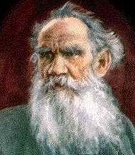
A new article on the founder of criminology, Cesare Lombroso, recounts the curious tale of how he met War and Peace author Leo Tolstoy to confirm his theory on how genius and madness were linked.

Among other things, Lombroso was convinced that mental ‘degeneration’ was reflected in the face and so could be seen externally.

The meeting, it seems, didn’t go well.

…he intended to meet Tolstoy, whom he regarded as the greatest living writer, in order to test his theory on the relationship between genius and madness… Indeed, Lombroso imagined Tolstoy as being of “aspetto cretinoso o degenerato” [“cretinous or degenerate appearance”] (like Socrates, Ibsen, Darwin and Dostoyevsky among others), as illustrated by one of his portraits published in the 6th edition of The Man of Genius…

…Once there, the Italian criminologist began his naturalistic observation with a view to verifying his theory first-hand. Indeed, he managed fully to confirm his hypothesis of the relationship between genius and degeneration, in that, in his view, Tolstoy proved to be affected by an “epileptoid psychosis”, a sign of a hereditary mental illness that was detectable both in his forebears and in some of his children. It was not a happy meeting.

On his part, Tolstoy reacted to Lombroso’s visit by confiding to his diary his contempt for Lombrosian theories (August 27, 1897: “…Lombroso came. He is an ingenuous and limited old man”: cf. Mazzarello, 2001: 983). Mazzarello (2005), who chronicles the visit extraordinarily well, makes an important connection when he notes that, in the days following Lombroso’s visit, Tolstoy would write the pages of his novel Resurrection, in which he depicts a public prosecutor’s harangue that is imbued with Lombrosian ideas; the President of the Court rebukes the official for “going too far”, while another colleague concludes that he is “a very stupid fellow”.

The great writer described his struggles with depression later in life but despite Lombroso’s instant diagnosis of “epileptoid psychosis” he was never known to have experienced psychotic episodes.
 

Link to locked academic article on Lombroso.

Ethics of the drone war

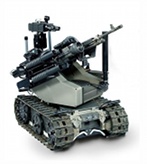
The Atlantic has a long but engrossing piece on the impact of military and intelligence robotics on the ethics of combat.

To be fair, it goes way beyond just robots and also discusses implants, digital enhancements and cybernetics. And if it sounds a bit science-fiction, it’s looking at already available or just-over-the-horizon technology and sticks with hard-nosed implications.

One more human weak-link is that robots may likely have better situational awareness, if they’re outfitted with sensors that can let them see in the dark, through walls, networked with other computers, and so on. This raises the following problem: Could a robot ever refuse a human order, if it knows better?

For instance, if a human orders a robot to shoot a target or destroy a safehouse, but it turns out that the robot identifies the target as a child or a safehouse full of noncombatants, could it refuse that order?

Does having the technical ability to collect better intelligence before we conduct a strike obligate us to do everything we can to collect that data? That is, would we be liable for not knowing things that we might have known by deploying intelligence-gathering robots?

It’s a long-read but well worth it as the piece looks at the impact of cutting-edge war technology on everything from humanitarian law to winning the hearts and minds of the local population.
 

Link to The Atlantic ‘Drone-Ethics Briefing’.