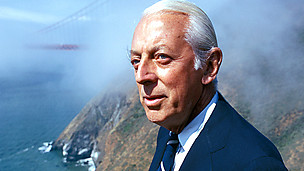
The stem cell scammers

Image from Wikipedia. Click fo source.Ukraine has become a world centre for untested stem cell treatments where patients can fly in and have embryonic stem cells implanted in their brain to supposedly treat everything from Alzheimer’s disease to autism.

These treatments are entirely unproven and are illegal in most of the world but are available for anyone wanting to pay the price.

Embryonic stem cells are a type of cell that can turn into any type of tissue in the body and can keep on dividing, in principle, endlessly.

They are named ’embryonic’ because these cells are particularly important, as you can imagine, in the development of the human embryo which needs to grow and differentiate into a rapidly developing complex organism.

A lot of the cutting-edge science is now focussing on ‘reprogrammed stem cells’ – which are adult cells genetically altered to revert to stem cells.

But stem cells used in experimental treatments are often taken from genuine human embryos, usually sourced from IVF fertility treatments.

Here, the egg is fertilised with the sperm in the lab (hence ‘test tube baby’) and the nascent embryo is implanted into the woman’s body after a few days – typically, when it has between 10 and 100 cells and is invisible to the human eye.

However, only the most viable embryos are implanted so there are often some left over. Most mainstream stem cell treatment research uses these as a source of stem cells (although science is increasingly turning to ‘reprogrammed stem cells’ as they’re potentially easier to produce and less controversial).

It’s worth saying that stem cell treatments in themselves are not necessarily bad thing but they are currently at the research stage and so are only usually given as part of scientific programmes to test their safety and usefulness.

The commercial treatments available in the Ukraine are notable for two reasons.

The first is that they typically use stem cells from aborted fetuses “of 5–8 weeks of gestation”.

The second is that they are either entirely untested or have never been confirmed as either safe not effective.

After a brief search it seems there are many commercial companies who offer stem cell therapies that would be illegal in most other countries.

This is quite shocking in itself, but perhaps the most disturbing practice is implanting fetal stem cells into the brains of children with autism.

Brain surgery is dangerous, implanting biological material from other sources even more so, and bear in mind we are talking about treatments that have never been scientifically tested.

This is from the website of one of the biggest Ukrainian stem cell clinics that advertises this ‘service’ and justifies it with lot of scientific bunk:

Fetal stem cells (FSC) that we use in autism treatment positively affect all body organs and systems, and, first of all, this treatment targets the brain. In autism, areas of brain regulating memory, concentration, attention, speech etc. are damaged. Stem cell treatment improves blood and oxygen flow to the brain (improved perfusion), replaces damaged neurons and stimulates formation of the new arteries. After some time, FSC acquire properties of cells surrounding them and multiply into these cells, which results in white and gray matter restoration and, consequently, in subsidence of neurologic symptoms and improved intellectual capacity.

The shady ‘stem cell therapy’ industry is expanding across the world and is increasingly targeting behavioural and psychological disorders.

Companies are advertising ‘treatments’ for, among other things, schizophrenia, depression, addiction and suicidal thinking.

In one particularly worrying testimony video and advert a father apparently describes how ‘stem cell therapy’ treated his son’s “childhood depressive disorder” although the symptoms and outcomes seem to be more about him being a well behaved kid.

Stem cells for neurological conditions are still an experimental treatment. They may yet be one of the greatest medical advances of the 21st century but they don’t work by being added to the brain like some sort of neurological band aid.

Unfortunately, these unproven treatments are already a massive industry and their promise is being hijacked by quacks to exploit the desperate.


Darwin’s asylum

Shrewsbury School is one of the oldest public schools in England and it makes much of being the institution that schooled Charles Darwin and introduced him to science.

While the famous naturalist was certainly a pupil there he probably never set foot inside the building that the famous school now occupies because during Darwin’s time the building was Kingsland Lunatic Asylum.


As the historian L.D. Smith noted, the Kingsland Asylum was quite unique in its day. Rather than create a separate institution for ‘pauper lunatics’ – as was common at the time – the authorities in the county of Shropshire had decided to license the Shrewsbury ‘House of Industry’ as a private asylum at the same time.

The workhouse and asylum was opened in 1784 to accommodate paupers and cases of “lunacy”, “sickness” and “single women in a state of pregnancy”.

By 1844 the Kingsland Asylum contained nearly 90 residents who lived under a tough regime:

Payment of one-sixth part of their week’s work is made to all except in cases of misconduct, and punishments are given to all who profanely curse or swear, who appear to be in liquor, who are refractory or disobedient to the reasonable orders of the steward or matrons, who pretend sickness, make excuse to avoid working, destroy or spoil material or implements, or are guilty of lewd, immoral or disorderly behaviour.

But it’s not wholly inappropriate that Darwin has become posthumously linked to an asylum building as he had a powerful, if not fraught, relationship with psychiatry and mental illness.

Darwin reportedly showed ‘a personal interest in the plight of the mentally ill and an astute empathy for psychiatric patients’ but founded a view of madness as a form of degeneration that was enthusiastically adopted by eugenicists.

Thankfully, this strain of Darwinian influence has long since died, but both evolution and genetics remain important foundations of modern cognitive science although the role of evolutionary psychology in explaining mental illness remains controversial.

Curiously, Darwin himself also suffered from poor health for most of his life that has never been fully explained but clearly had many aspects that would be diagnosed as psychiatric disorders today.

So I quite like the fact that Darwin’s picture is proudly displayed inside an old asylum. It’s an ambiguous tribute and reminds us of his own ambivalent relationship with the unsettled mind.

A very psychological chocolate

A familiar sight amid the Christmas supermarket shelves is the box of Black Magic chocolates. It’s a classic product that’s been familiar to British shoppers since the 1930s but less well known is the fact that it was entirely designed by psychologists.

The chocolates were produced by Rowntree’s who were a pioneer in using empirical psychology to design products (rather than a Freudian approached preferred by American marketers like Edward Bernays).

The idea was to design an assortment of chocolates that would be tailored to be the ideal off-the-shelf romantic gift. This is from an article (pdf) on the history of Rowntree’s marketing:

The National Institute of Industrial Psychology interviewed 7,000 people over six months on their conception of the perfect chocolate assortment. In another survey, 3,000 preferences for hard, soft, and nut centres exactly determined the proportions of chocolate types in the assortment.

Retailers were consulted and their recommendations on margins and price maintenance were followed carefully. Shopkeepers, moreover, supplied information on buying behavior, and it was discovered that most assortments were purchased by men for women and that they were influenced entirely by value rather than fancy boxes. The now familiar, simple black-and-white box was distinctive and chosen from fifty similar designs.

The marketing was then focussed not on the qualities of the product, but on its potential use in developing relationships.

While this is common practice now, it was quite revolutionary at the time, although you can see from the archive of Black Magic adverts that the approach seems painfully clunky from a modern perspective.

The use of psychologists was part of Rowntree’s pioneering use of psychology throughout its whole business, both including product design and human resources and was also one of the most important moments in the launch of professional psychology in the UK – something covered by a 2001 article (pdf) from The Psychologist.

So while Black Magic chocolates now seem just like a common supermarket item, they’re actually an important part of psychology history.

A smoother flow

BBC Radio 1Xtra has just broadcast a fantastic programme about the rapper Scorzayzee who disappeared from the UK scene after, as it turned out, experiencing psychosis and being diagnosed with schizophrenia.

It’s a brilliant piece that not only tells the story of Scorzayzee but also cheekily tackles mental health in men – something which is rarely addressed in the media.

Virtually every documentary I’ve ever heard on psychosis is serious-voiced and worthy, while this is funny and engaging, with a fantastic sound-track.

One of Scorzayzee’s best known tracks is Great Britain – a brilliant angry push-back of a track that takes on everything from the economy to the Royal Family.

Apparently, Scorzayzee was paranoid when he wrote it but charmingly, in the programme, the BBC include a brief warning before playing it saying words to the effect of ‘please bear in mind that when Scorzayzee compared the Queen to Saddam Hussein, he was suffering the effects of psychosis’.

Thanks BBC.

You’ll be please to hear that Scorzayzee is now doing fine and makes a brilliant storyteller.

Oddly though, the piece is only online for seven days, so catch it while you can.

Recommended.
 

Link to ‘Scorzayzee and the S-Word’.

Fashions fade, style is eternal

A fascinating study has just mapped which brain areas are most popular among scientists and which are most likely to get you published in the highest impact journals.

The image below looks like the result of an fMRI scan but instead of showing brain activity from a single experiment, it shows the average brain activity from almost every brain imaging study from 1985 to 2008.

In other words, it shows the popularity of different brain areas as reported in cognitive neuroscience publications.

Behrens_et_al_Figure

Actually, if you think about it, this map shows a mix of how often the brain area is active (some areas – like the insula – are active in about a third of imaging experiments so will be more likely to be ‘popular’), how likely the results are to be published, and how motivated scientists are in targeting the area – all of which contribute to their ‘popularity’.

However, the researchers went one stage further and looked at how brain areas are linked to publication in a top tier journal:

…researchers who find activity in a prescribed part of the fusiform gyrus should be confident of having their article selected for publication in a high-impact journal, perhaps due to the role of the region in face processing. Other regions with proposed roles in emotional processing returned similarly stellar performances, including both the ventral and dorsal portions of the rostral medial prefrontal cortex, the anterior insular cortex, the anterior cingulate gyrus, and the amygdala.

The recent interest in reward prediction errors might explain impactful peaks in the mid-brain and ventral striatum, areas that exhibited independent significant effects of impact factor, publication date, and their interaction: studies reporting activation in these regions are published in high-impact journals, and are increasing in number (as a proportion of all studies) over time.

Activity in a contrasting set of regions was negatively predicted by impact factor. Leading the way in ignominy was the secondary somatosensory area, but the supplementary motor area was almost equally disgraced.

The researchers also mapped this onto the brain and although the article is locked, the diagrams are free, and if you look at the second diagram on this page you can see what amounts to a career progression map of the brain.

Studying the red areas are what’ll get you published in the best journals.

So when someone tells you that science is the ‘march of progress’ just remember that it’s actually more like that time when flairs were cool again.
 

Link to locked study with open diagrams (via @hugospiers)

Relax ladies, I’m a scientist

Photo by Flickr user stuartpilbrow. Click for source.A while ago I wrote a column in The Psychologist on why psychologists don’t do participant observation research – a type of data gathering where you immerse yourself in the activities of those you want to study.

In response, psychologist James Hartley wrote in and mentioned a remarkable study from 1938 where researchers hid under the beds of students to record their conversations.

The study was published in the Journal of Social Psychology and was titled “Egocentricity in Adult Conversation” and aimed to record natural conversations untainted by researcher-induced self-consciousness.

In order not to introduce artifacts into the conversations, the investigators took special precautions to keep the subjects ignorant of the fact that their remarks were being recorded. To this end they concealed themselves under beds in students’ rooms where tea parties were being held, eavesdropped in dormitory smoking-rooms and dormitory wash-rooms, and listened to telephone conversations.

Remarks were collected in waiting-rooms and hotel lobbies, street-cars, theatres and restaurants. Unwitting subjects were pursued in the streets, in department stores, and in the home. In each case a verbatim record of the remarks was made on the spot. Since the study is concerned with conversations, other sorts of talk, such as games and sales talk, were excluded.

The point of the study was to critique earlier research that had suggested that children tend to engage in lots of ‘ego-related’ self-referencing or self-centred talk which they later grow out of.

The researchers in this study found that college students seem to do so at about an equal level, suggesting that this style of communication may not change as we get older.

The researchers mention they did most of their data collection in a women’s college.

This was presumably in the day where “relax ladies, I’m a scientist” was sufficient to keep you out of jail.
 

Link to locked 1938 study.

The grief problem

Photo by Flickr user Derek Bridges. Click for source.I’ve got an article in The Observer about the sad history of how psychologists have misunderstood grief and why it turns out to be much more individual than traditional theories have suggested.

As well as the individual variations, it also riffs on the massive diversity of cultural grief and mourning practices.

At the beginning of Nicole Kidman’s 2008 film Australia, the audience is shown a warning. “Exercise caution when watching this film,” it says, “as it may contain images or voices of deceased persons.” The notice, perplexing for most viewers, was for the benefit of Aboriginal Australians, who may have a taboo against naming or encountering representations of the dead.

The taboo has spiritual roots relating to not disturbing spirits of the departed but anthropologist Katie Glaskin describes how the naming taboo “serves to make people ‘acutely aware’ of the person whose name is being avoided”. As a form of remembering through non-remembrance, it is a psychological mirror image of more familiar traditions where creating and cherishing a representation of the deceased is considered necessary for healthy mourning. This underlines the fact that mourning can take place in a radically different way, based on a thoroughly different understanding of death, highlighting how any claims to a universal “psychology of grief” pale in the face of human diversity.

The article has many more examples and we’re now at a stage where the idea that we go through specific ‘stages’ of grief is untenable scientifically – but lives on due to its powerful grip on society.

This is most worrying because it has been used to pathologise people who don’t seem to be grieving ‘appropriately’, branding them as ‘in denial’ when really they’re just dealing with things in their own way.
 

Link to article in The Observer.

The DSM-5 has been finalised

It’s arcane, contradictory and talks about invisible entities which no-one can really prove. Yes folks, the new psychiatric bible has been finalised.
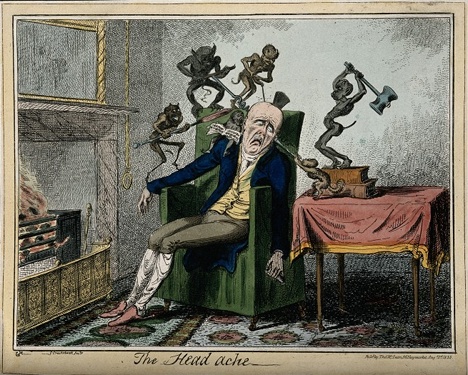

The American Psychiatric Association have just announced that the new diagnostic manual, to be officially published in May 2013, has been approved by the board of trustees.

You can read the official announcement and a summary of the major changes online as a pdf – and it seems a few big developments are due.

The various autism-related disorders have been replaced by a single ‘autism spectrum disorder’ – essentially removing Asperger’s from the manual.

A ‘disruptive mood dysregulation disorder’ has been added to “diagnose children who exhibit persistent irritability and frequent episodes of behavior outbursts three or more times a week for more than a year”.

As the APA admit, this is largely to address the rise of the ‘childhood bipolar disorder’ concept which has led to a huge number of children with challenging behaviour being medicated on rather ill-defined grounds. Whether this actually does anything to change this, is another matter.

Despite the expected revision of the overly complex and often indistinguishable subtypes of personality disorder – these have been kept as they were.

Posttraumatic stress disorder has been tinkered with – apparently to pay “more attention to the behavioral symptoms” and presumably to exclude ‘PTSD after seeing things on the TV’ – a change included in all the drafts.

Perhaps most controversially, the bereavement exclusion will be removed from the diagnosis of depression – meaning you could be diagnosed and treated for depression just two weeks after a loss if you fulfil the diagnostic criteria.

If you want to examine the changes yourself – tough luck – the APA have removed all the proposed criteria off the DSM-5 website. This is supposedly to “avoid confusion” but most likely because the manual is a big money-maker and the finished product will be on sale in May 2013.

But diagnostic developments aside, we can also expect some changes simply from the benefit of hindsight.

Most clinicians will learn enough of the new manual to ensure they look cutting-edge for a few months after publication and then ignore the new diagnoses and use the same ones they’ve always had vaguely stored in their heads.

Researchers will go through an extended period of academic willy waving where they attempt to outdo each other through their wide and extensive knowledge of dull and irrelevant details.

Drug companies will wet themselves in delight at the new opportunities for drug marketing (“Prozac – lighten the mood of losing your mother”).

The APA will keep underlining how we’re now in a new era of science thanks to the science behind the new manual of science that turns everything it touches into pure, definitely not insecure, science.

And finally, the chairman of the DSM-5 committee will begin the traditional process of becoming disillusioned and publicly denouncing each step in the development of the DSM-6.

It’ll be as if the past never happened.
 

pdf of APA announcement of finalised DSM-5 (via @sarcastic_f)
Link to APA announcement in Psychiatric News.

Advances in artificial intelligence: deep learning

If you want to keep up with advances in artificial intelligence, the New York Times has an essential article on a recent step forward called deep learning.

There is a rule of thumb for following how AI is progressing: keep track of what Geoffrey Hinton is doing.

Much of the current science of artificial neural networks and machine learning stems from his work or work he has done with collaborators.

The New York Times piece riffs on the fact that Hinton and his team just won a competition to design software to help find molecules that are most likely to be good candidates for new drugs.

Hinton’s team entered late, their software didn’t include a big detailed database of prior knowledge, and they easily won by applying deep learning methods.

To understand the advance you need to know a little about how modern AI works.

Most uses abstract statistical representations. For example, a face recognition system will not use human-familiar concepts like ‘mouth’, ‘nose’ and ‘eyes’ but statistical properties derived from the image that may bear no relation to how we talk about faces.

The innovation of deep learning is that it not only arranges these properties into hierarchies – with properties and sub-properties – but it works out how many levels of hierarchy best fit the data.

If you’re a machine learning aficionado Hinton described how they won the competition in a recent interview but he also puts all his scientific papers online if you want the bare metal of the science.

Either way, while the NYT piece doesn’t go into how the new approach works, it nicely captures it’s implications for how AI is being applied.

And as many net applications now rely on communication with the cloud – think Siri or Google Maps – advances in artificial intelligence very quickly have an impact on our day-to-day tools.
 

Link to NYT on deep learning AI (via @hpashler)

The relative consuming disease

The Global Mail has an amazing story about how the last treks to find cases of kuru – a cannabalism-related brain disease – have been completed.

Kuru was passed on by eating the brains of dead relatives – a long finished tradition of the Fore people in Papua New Guinea – and it infected new people through contact with prions.

Prions are misfolded proteins that cause other proteins to take on the infectious misfolding. In the case of kuru it lead to shaking, paralysis, outbursts of laughing and a host of other neurological symptoms as the brain slowly degenerated.

No-one knew prions existed or could exist before kuru. But as the article makes clear, this ‘obscure disease’ of a remote tribe revolutionised our understanding of proteins and how infections could take place.

But the story is how it was discovered is more than just lab tests and the article is a brilliant retelling of the research.

Michael Alpers has been working on the research project since the 60s and recalls some of the episodes:

After each death, he says, “I would go and talk to the family again, and say, ‘Okay?’. They had participated in cutting up bodies in the past — so that was not an unusual activity for them. We had to clear a few people — particularly the women who were wailing. But some of the women stayed. The ones involved put on masks to protect the tissue and I had gloves.

“The father, or a close relative, would hold the head, and I would take the top of the skull off with a bone handsaw. It would take maybe 20 minutes… like cutting an avocado. I would go to particular parts of the brain… take out small cubes. My assistant would hold out the bottle that was relevant, take the lid off, and I’d pop it in.

“Then I’d take the whole brain out and put it in a bucket full of formalin and cotton wool so it wouldn’t be deformed, and put the lid on. All our samples would go into an insulated box. Then I put the skull cap back on, and sewed up. Then we said goodbye… gave everyone a hug, and took off. I did this five times. It was enough.”

It’s a wonderfully written, informative piece. A long and compelling read.
 

Link to article ‘The Last Laughing Death’ (via @mslopatto)

Sex taboos: a brief and incomplete tour

Cultures around the world have restrictions or prohibitions on when sex is allowed which turn out to be quite amazing in their diversity.

This is a fascinating section on the wide world of sex taboos from the Encyclopedia of Sex and Gender:

In some societies, sexual activity is prohibited during certain times of day. The Cuna of Panama approve of sexual relations only at night in accordance with the laws of God. The Semang of Malaysia believe that sex during the day will cause thunderstorms and deadly lightening, leading to drowning of not only the offending couple but also of other innocent people. And the West African Bambara believe that a couple who engage in sex during the day will have an albino child.

Sometimes, sex is prohibited in certain places. The Mende of West Africa forbid sexual intercourse in the bush, while the Semang condemn sex with camp boundaries for fear that the supernatural will become angry. Among the Bambara, engaging in sexual relations out of doors will lead to the failure of crops.

Sex taboos can also apply to certain activities. Often, sex prohibitions are associated with war or economic pursuit. The Ganda of Uganda forbid sexual intercourse the night before battle if the fighting is likely to be protracted. The Lepcha prohibit sex for three months after a bear trap has been set. If the taboo is broken, no animals will be caught. The Cuna of Panama outlaw sexual intercourse during a turtle hunt, the Yapese of Oceania prohibit sex during a fishing excursion, and among the Ganda of Uganda sex is forbidden while the wood for making canoes is being processed.

Ganda women may not engage in sexual intercourse while they are mourning the dead and Kwoma men are prohibited from engaging in sexual activity after a cult ceremony has been held. The Jivaro of Ecuador refrain from engaging in sex after someone has died, after planting narcotics, when preparing a feast or after an enemy has been killed.

Of course, while these may seem exotic, our own social practices regarding sex probably seem equally as unusual to outsiders.

Imagine Jivaro anthropologists, watching Nicki Minaj videos, slapping themselves, shouting “you won’t believe what the people of North America have to do to have sex!”


Link to section from the Encyclopedia of Sex and Gender.

The road to ‘war on terror’ torture

An obscure paper called The Spokesman Review has an excellent article charting the role of psychologists in developing America’s ‘war on terror’ enhanced interrogation programme – widely condemned as torture.

The piece is fascinating because it outlines the competing tensions between those who championed the controversial physical interrogation techniques – created by reverse engineering the SERE resistance training – and those who preferred the rapport building methods.

It turns out that the division fell along inter-agency lines. The CIA used the harsh approach, the FBI relationship-based interrogation.

As is now well-known, the ‘enhanced interrogation techniques’ were developed by two formed Air Force psychologists James Mitchell and Bruce Jessen.

The article finishes with a curious snippet of information “Jessen remains [in Spokane] and was recently made the bishop of his ward in the Church of Jesus Christ of Latter-day Saints”.

That, my friend, is a novel in the making.
 

Link to Spokesman Review on ‘war on terror’ torture.

Letter from the mental states of America

Alistair Cooke presented the longest running radio show in history. The BBC’s Letter from America was a weekly report, where Cooke reflected on life and news in the United States. It ran for just shy of 58 years.
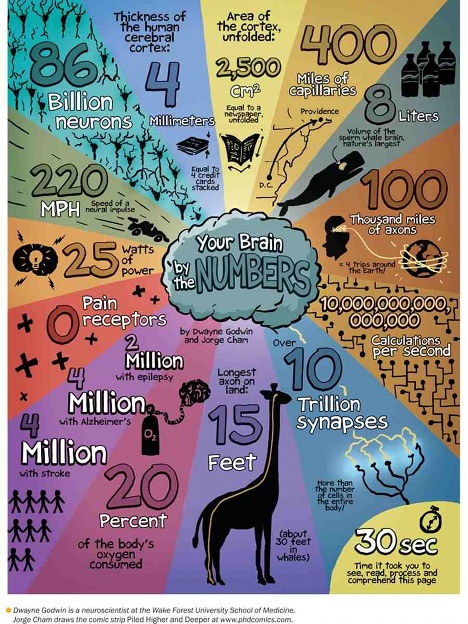
Despite the massive ‘psychologisation’ of society during the years Cooke was broadcasting, from 1946 to 2004 no less, Cooke rarely addressed matters of the mind and brain directly.

However, he did occasionally touch on these issues and the shows are well worth listening to.

As the BBC has just put almost the complete Letter from America archives online so I’ve collected some of the highlights.

Link: George Gallup (1901-1984) – 9 November 1984
Link: TV Violence – 13 April 1986
Link: Narcotics, interdiction and Colombian drug lords – 08 September 1989
Link: American public schools – 03 January 1992
Link: Aphasia and studying the human brain – 15 October 1993
Link: Timothy Leary (1920 -1996) – 7 June 1996
Link: New York: How are you Doing? – 3 May 2002

I’ve linked to the transcripts, but listen to the linked audio if you have the chance. Cooke had a distinctive voice and a calm style that underscored his often insightful commentary.
 

Link to Letter from America archives.

A vision of Oliver Sacks

New York Magazine has a wonderful in-depth profile of Oliver Sacks illustrated with a simple but sublime photo portrait of the gracefully ageing neurologist.

Sacks has become much discussed in recent weeks due to the release of his new book Hallucinations.

There has been much coverage, but perhaps some of the best coverage has been Will Self’s review and an interview on NPR.

However, the profile in New York Magazine stands alone – both for its careful portraiture and brilliant writing. Highly recommended.
 

Link to Oliver Sacks profile.