Super-recogniser officers policing Europe’s biggest party

The Guardian are reporting that the London Metropolitan Police have deployed ‘super recogniser’ officers to Notting Hill Carnival to pick out known criminals from the crowd.

This is curious because this is a verified ability that has only recently been reported in the scientific literature.

It has been long known that some people have severe difficulties recognising faces – something called prosopagnosia and sometimes inaccurately labelled ‘face blindness’.

But more recently, it was discovered that a tiny minority of people are ‘super recognisers’ – with exceptional face recognition abilities – meaning they can pick out a previously identified face from huge numbers of possibilities.

A more recent fMRI study found that super recognisers tend to show a greater level of activity in the fusiform gyrus.

This area is heavily associated with face recognition, although debates are ongoing whether it is face-dedicated or just specialised for learned fine-grained visual recognition of various sorts.

It’s not clear how the Met Police identified their ‘super recogniser’ officers but it seems it might be an interesting exercise in screening for key neuropsychological characteristics and deploying those officers to the appropriate task.

Needless to say, picking out a few dodgy faces from a street party that welcomes a million people every year would be exactly this sort of job.

More details from the The Guardian report:

…17 specialist officers will be holed up in a central control room several miles away in Earls Court monitoring live footage in an attempt to identify known offenders.

Chief superintendent Mick Johnson from the Metropolitan police said it was the first time the “recognisers” – who have been selected for their ability to remember hundreds of offenders’ faces – have been used to monitor a live event.

“This type of proactive operation is the first one we have done in earnest in real time so we are going to be looking at it very closely to see how effective it is and what we get out of it,” he said.

The Met has 180 so-called super recognisers – most of whom came to the fore in the aftermath of the London riots when they managed to identify more than a quarter of the suspects who were caught on CCTV footage…

One of the super recognisers on duty will be Patrick O’Riordan, who says he has had an ability to pick people out in a crowd and recall faces since he joined the Met 11 years ago.

“It is with me all the time. Often when I am on a day off or out with my girlfriend I will see someone and know straight away who they are and where they fit in,” said 45-year-old. “It could be their eyes or the shape of their forehead or their gait, but something usually sticks with me. It something that started from day one as a police officer – really it is just something that I took too naturally.”

 
Link to Guardian article on super recogniser officers at the Carnival.
Link to summary of study that identified ‘super recognisers’.
pdf of full-text of the same paper.

Period architecture, majestic views, history of madness

Regular readers will know of my ongoing fascination with the fate of the old psychiatric asylums and how they’re often turned into luxury apartments with not a whisper of their previous life.
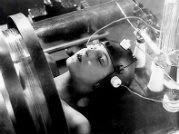
It turns out, a 2003 article in The Psychiatrist looked at exactly this in 71 former asylum care hospitals.

It’s cheekily called ‘The Executives Have Taken Over the Asylum’ and notes how almost all have been turned into luxury developments. Have a look at Table 1 for a summary.

The authors also had a look at the marketing material for these new developments and wrote a cutting commentary on how the glossy brochures deal with the institutions’ mixed legacies.

The estate agents want to play on the often genuinely beautiful architecture and, more oddly, the security of the sites, while papering over the fact the buildings had anything to do with mental illness.

Examples of the language employed by property developers in sales brochures advertising old hospital buildings included ‘sanctuary’ and ‘seclusion’ in ‘grade II listed buildings’, ‘tastefully converted period buildings’ and ‘luxury penthouses’. There was a strong emphasis on security, with ‘a secure and private environment’, ‘24 hour security guards’, ‘security gates’ and ‘CCTV surveillance’. Original asylum architecture is even imitated in modern buildings: ‘the classic facades that emulate the original architecture’, and the clock tower of one former hospital was used as a symbol to represent the whole development.

Residents at the redeveloped site of Nethern Hospital will be greeted by ‘the gentle bounce of tennis balls on private courts’ and ‘the distant voices of children’. They will, however, remain unaware of the 1976 inquiry into high levels of suicides that found serious understaffing and unsatisfactory conditions on the wards.

At St George’s Park in Oxfordshire [previously Littlemore Hospital], prospective buyers were informed of the ‘original 19th century elegance’ and ‘original features including high ceilings’. They are not informed that the original psychiatric hospital has been newly built over the road.

In total, reference was made to the former psychiatric hospitals in only four of the 12 promotional brochures and web sites. This was in the general reference to a former hospital or by euphemistic language, such as ‘society’s less able’, referring to people with learning disability at Earlswood Hospital.

Since the article was written in 2003, many more have gone the same way.
 

Link to ‘The Executives Have Taken Over the Asylum’.

A technoculture of psychosis

Aeon Magazine has an amazing article on the history of technology in paranoid delusions and how cultural developments are starting to mirror the accidental inventions of psychosis.

It’s by the fantastic Mike Jay, who wrote The Air Loom Gang, an essential book that looks at one of the most famous cases of ‘influencing machine’ psychosis.

In his article, Jay applies the same keen eye for history and culture and explores how the delusions of psychosis are carefully intertwined with culture.

Persecutory delusions, for example, can be found throughout history and across cultures; but within this category a desert nomad is more likely to believe that he is being buried alive in sand by a djinn, and an urban American that he has been implanted with a microchip and is being monitored by the CIA. ‘For an illness that is often characterised as a break with reality,’ they observe, ‘psychosis keeps remarkably up to date.’ Rather than being estranged from the culture around them, psychotic subjects can be seen as consumed by it: unable to establish the boundaries of the self, they are at the mercy of their often heightened sensitivity to social threats.

The article covers everything from Victorian delusions of electrical control, to the breakdown of novelist Evelyn Waugh, to the fiction of Philip K Dick.

It’s an excellent piece, and even those who have a special interest in the history of psychosis will find it full of fascinating gems.

By the way, it looks like Jay’s book The Air Loom Gang is about to be re-released in a newly updated version, under a new title The Influencing Machine.
 

Link to ‘The Reality Show’ in Aeon Magazine.

Don’t panic but psychology isn’t always a science

Every so often, the ‘is psychology a science?’ debate sparks up again, at which point, I start to weep. It’s one of the most misplaced, misfiring scientific discussions you can have and probably not for the reasons you think.

To understand why it keeps coming around you need to understand something about the politics of studying things.

Science has higher status in academia and industry than the humanities so suggesting to a practitioner that “they’re not a scientist” can be the equivalent of suggesting “you’re not as valuable as you make out”.

This plays in out in two ways: less scientific disciplines get less funding and people start being knobs at parties. The second is clearly more serious.

Probably every psychologist has had the experience of someone coming up to them and drunkenly suggesting that psychology is ‘all made up’. Psychiatrists get the same sort of crap but in the ‘you’re not a real doctor’ vein from other medics.

This makes people who work in psychological disciplines a bit insecure, so they’ll swear blind that ‘psychology is a science’.

Psychology, however, is not a science. It’s a subject area. And you can either study it scientifically or non-scientifically.

I’m going to leave aside the debate of what defines science, which has been better covered elsewhere. No, there isn’t a strict definition of science, but the “you know it when you see it” approach is sufficient if we want to see if something can be widely considered scientific.

I’m also going to leave aside the debate about whether you can study mind and behaviour scientifically. It’s clear that you can, even if some areas are harder to measure than others. This is what is usually meant by the “is psychology a science?” debate. I consider this to be a settled issue but it is also where the debate usually misfires.

In other words, psychology can be a science, but it isn’t only a science.

There are many folks who do legitimate psychology research who are not doing science. It’s not that they think they are but really aren’t (pseudoscience) or that they’re doing it so poorly it barely merits the name (bad science). It’s that they don’t want to do science in the first place.

Instead, they are doing qualitative research, where they intend to uncover patterns in people’s subjective impressions without imposing their own structure onto it.

Let me give you an example.

Perhaps I want to find out what leads victims of serious domestic violence to drop a prosecution despite the abuser already being safely in jail, pending trial.

I could come up with a list of motivations I think might be plausible and then find a way of testing whether they are present, but essentially, no matter how rigorous my methods, the study still depends on what I think is plausible to begin with.

This could be a problem because I may not know a whole lot about the area. Or worse, I may think I do, but might largely be basing my assumptions on prejudice and what passes for ‘common sense’.

Qualitative methods get at how people understand the situation from their own perspective and it looks at common themes across what they say.

In this case, the study by Amy Bonomi and colleagues applied a kind of qualitative analysis called grounded theory to transcripts of jailhouse phone calls between victims of domestic violence and the abusers.

Here’s what they found:

…a victim’s recantation intention was foremost influenced by the perpetrator’s appeals to the victim’s sympathy through descriptions of his suffering from mental and physical problems, intolerable jail conditions, and life without her. The intention was solidified by the perpetrator’s minimization of the abuse, and the couple invoking images of life without each other.

Once the victim arrived at her decision to recant, the couple constructed the recantation plan by redefining the abuse event to protect the perpetrator, blaming the State for the couple’s separation, and exchanging specific instructions on what should be said or done.

There is no pretence that this study has discovered what happens in all cases, or even if these are common factors, but what it has done is shown how this works for the people being studied.

This is massively useful information. If you’re a scientist, suddenly you have a whole bunch of hypotheses to test that are drawn from real-life situations. If you’re not, you understand one instance of this situation in a lot more detail.

The reason that human psychology can be studied both scientifically and non-scientifically is that the object of study can be objectively observed and can describe their own subjective experience.

This doesn’t happen with electrical impulses, enzymes or subatomic particles.

I’m a neuropsychologist by trade, perhaps the most clearly scientific of the psychological disciplines, but I’m not going to pretend that qualitative research psychologists aren’t doing important work that makes psychology more valuable, not less.

So psychology is not just a science, and is better off for it.

Oh yeah, and the drunk guy at the party? He’s like someone who thinks a screaming orgasm is only a drink. I’m laughing at you chump, not with you.

Car crash attraction

A curious case report from a 1960 edition of American Journal of Psychiatry describing a man who gets turned on by being injured by ‘an automobile operated by a woman’.

The patient, a man in his late twenties, reported a periodic desire to be injured by a woman operating an automobile. This wish, present since adolescence, he had by dint of great ingenuity and effort, gratified hundreds and times without serious injury or detection. Satisfaction could be obtained by inhaling exhaust fumes, having a limb run over on a yielding surface to avoid appreciable damage or by being pressed against a wall by the vehicle. Gratification was enhanced if the woman were attractive by conventional standards. Injuries afflicted by men operating autombiles or other types of injury inflicted by woman had no meaning. He experienced pleasure from the experience, thus establishing the symptom as a perversion rather than a compulsion.

The patient’s sexual, social, and occupational adjustment was good and his intelligence superior. He intellectualized to a considerable extent but could experience and manage strong positive and negative feelings. He was ashamed of his symptom but somewhat proud of its unusual nature. A Minnesota Multiphasic Personality Index did not demonstrate significant psychopathology and did not indicate the probable presence of perversion or impulse neurosis.

The case could be classified as a type of symphorophilia – sexual arousal associated with disasters or accidents.
 

Link to locked AJP case study.

#DearMentalHealthProfessionals

Photo by Flickr user William Arthur Fine Stationery's. Click for source.Just a quick post to say that the #DearMentalHealthProfessionals hashtag on Twitter is one of the most interesting and helpful things I’ve read online in a long time.

It contains heartfelt feedback, gratitude, anger, and useful insights and makes for essential reading.

If you don’t use Twitter you can read it live here and some of the responses have been archived here.

How Lariam can trigger psychosis

The New York Times has an article on how the anti-malaria drug mefloquine, better known as Lariam, can send you spiralling into madness.

Coincidentally, the link between mefloquine and madness was the subject of a recent review article in the Journal of the American Academy of Psychiatry and the Law which reads like a cross between an H.P Lovecraft short story and a neuroscience paper.

Case reports suggest that mefloquine intoxication may begin with a variable prodrome which may present with personality change, unease, anxiety, phobias, and a sense of impending doom and restlessness. These prodromal symptoms may progress to outright paranoia, delusions, magical thinking, persecutory mania, restlessness, aggression, and panic attacks…

Mefloquine psychosis frequently includes auditory or true visual hallucinations, frequently involving religious or morbid themes. Auditory hallucinations typically feature voices that may be incoherent or mumbling. Some individuals report a sense of the presence of a nearby nondescript figure. Olfactory hallucinations have also been reported. The often vivid and terrifying nature of the hallucinations produced by mefloquine are illustrated by an early unindexed case report, similar to at least one other published report, describing a man who jumped from his hotel room in the false belief that his room was on fire.

Of note, vivid dreams or horrific, terrifying nightmares, also frequently reported by users of mefloquine, are characterized as having “Technicolor clarity” and being “vividly remembered days later,” suggesting that these may also be prodromal to or inform later symptoms of psychosis.

The most likely explanation for why this happens is that mefloquine can trigger an encephalitis or inflammation of the limbic system – a deep brain area heavily involved in both memory and emotion.

Disturbance in this region is known to greatly raise the risk of psychosis. For example, people with temporal lobe epilepsy (which some of the limbic system is part of) have a greatly raised risk of psychosis.
 

Link to New York Times article Crazy Pills.
Link to open-access scientific article on mefloquine side-effects.

A half hour of hallucinations

I’m on the latest PLOS Mind the Brain podcast discussing the science of hallucinations with the inimitable Ruchir Shah.

We cover everything from the experience of ‘hearing voices’ and its relation to mental illness to how chemists are pioneering new variations of psychoactive substances to get around drugs laws.

In this podcast, we discuss one of Vaughan’s clinical research interests, which is hallucinations. What are they, and how are they diagnosed? We start by discussing some examples of hallucinations, and why auditory and visual hallucinations might be more common than other types, like taste or smell hallucinations. We then discuss the role that culture might play, and the interesting phenomenon that certain types of hallucinations are actually more common in specific countries.

When then move on to another of Vaughan’s academic interests, that of psychoactive drugs, and their potential relationship to hallucinations and psychosis. Finally, we end with a discussion about designer drugs, and how labs all over the world are synthesizing new psychoactive compounds much faster than governments could possibly ban then, effectively making the “war on drugs” irrelevant.

A thoroughly enjoyable discussion which you can download from the link below.
 

Link to hallucinations in Mind the Brain podcast Episode 3.

A concise, solid grounding in neuroscience

50IdeasHumanBrainI often get asked ‘how can I avoid common misunderstandings in neuroscience’ which I always think is a bit of an odd question because the answer is ‘learn a lot about neuroscience’.
This is easier than it sounds, of course, but if you want a solid introduction, a book by Mo Costandi called 50 Human Brain Ideas You Really Need to Know is an excellent starting point.

If you recognise the name Mo Costandi its because he has been writing the brilliant Neurophilosophy blog for the best part of the last decade as he’s moved from being a neurobiologist to a science journalist.

The book consists of 50 four page chapters each of which condenses a key area of neuroscience in a remarkably lucid way.

There is no pandering to the feint of heart in the selected topics (from free will to neural stem cells) but neither is there a glossing over of conflicting evidence or controversy.

You won’t get poorly researched hype here about ‘mirror neurons’ being ‘responsible for empathy’ or brain scans showing how the brain ‘lights up’ but you will get a concise, balanced and entertaining introduction to key concepts in neuroscience.

It’s worth noting that the book does not hand-hold you. It’s not a complete beginners guide. It’s aimed at a ‘smart high-school kid and up’ level but if that’s you, and you want to get to grips with the brain, this book is ideal.
 

Link to more details on 50 Human Brain Ideas You Really Need to Know.

The curious relationship between truth and madness

I’ve got an article in The Observer on the misunderstood relationship between truth and madness.

The definition of a ‘delusion’ has just been changed so it no longer has to be considered a ‘false belief’.

It turns out that this issue turns up regularly in world events, owing to the sad tendency for whistle-blowers to be ‘accused’ of being ‘mentally ill’ when others don’t like what they’re saying.

It’s not clear who forcibly sedated her in 1972. It’s not certain that she was admitted to a psychiatric ward in the following year. What’s definite though is that many people thought she was mad as she ranted about conspiracies in the White House during eccentric phone calls to the press. Questions about Martha Beall Mitchell’s sanity were encouraged by the Nixon administration, who consistently briefed against her and probably had her medicated against her will. But ultimately her claims were proven correct when the Watergate scandal broke.

It’s worth bearing in mind that we’re not talking about the everyday use of the term ‘delusion’ (typically meaning mistaken) but the psychiatric definition which describes intensely held beliefs that are impervious to reality.

They are fascinating in many ways but, as the article discusses, they do not necessarily mean that the person is wrong.
 

Link to Observer article on truth and delusion.

Shuffle Festival

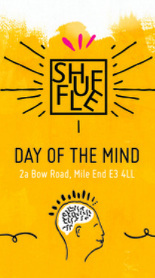
A festival of music, film and neuroscience is about to kick off in an abandoned psychiatric hospital in East London. Called Shuffle Festival, it runs from the 8th – 18th August.

It is happening in the old St Clement’s Hospital on Mile End Road and is being curated by Oscar winning film director Danny Boyle.

If you check the programme, August 11th is the ‘Day of the Mind’ where during the day you can enter for free and experience a host of neuroscience events, stalls and experiments.

Later in the evening there is an event with Ruby Wax, following by an extract of Luke Fowler’s R.D Laing documentary All Divided Selves.

After I’ll be taking part in a discussion about the legacy of R.D. Laing, neuroscience and mental health and later in the evening there’s the inevitable showing of One Flew Over the Cuckoo’s Nest.

The story of how I got involved in the event is a little curious. One Saturday, I decide to walk from Kingsley Hall, the location of R.D. Laing chaotic 60s experiment in mental health care, to Liverpool Street Station, the location of the original ‘Bedlam’ hospitals.

As I was passing St Clement’s Hospital I noticed some folks on the inside, shouted until I get their attention and asked if they could let me in. It turns out it was the organiser and friends scoping the place out.

I got to take some great photos, gave them my email address and despite starting the day by yelling excitedly at them, they’ve asked me to speak.

By the way, I’ve had a morbid interest in charting how some of London’s biggest Victoria asylums have been converted into luxury apartments but after the festival St Clement’s is going to be turned into affordable housing for East London which makes a nice change.

If you’re interested in the Shuffle Festival, a lot of the events are selling out quickly so grab tickets while you can.
 

Link to Shuffle Festival.

A notorious song

A song banned was banned by the BBC until 2002 because worries that it may cause a suicide epidemic. The piece is titled Gloomy Sunday and was written by the Hungarian composer Rezső Seress.

The following abstract tip-toes around the point that there is no evidence it ever caused suicides but the history and hand-wringing about the song are interesting in themselves.

Gloomy Sunday: did the “Hungarian suicide song” really create a suicide epidemic?

Omega (Westport). 2007-2008;56(4):349-58.

Stack S, Krysinska K, Lester D.

The effect of art on suicide risk has been a neglected topic in suicidology. The present article focuses on what is probably the best known song concerning suicide, Gloomy Sunday, the “Hungarian suicide song.” An analysis of historical sources suggests that the song was believed to trigger suicides. It was, for example, banned by the BBC in England until 2002. The alleged increase in suicides in the 1930s associated with the playing of the song may be attributed to audience mood, especially the presence of a large number of depressed persons as a result of the Great Depression.

The influence of music on suicide may be contingent on societal, social, and individual conditions, such as economic recessions, membership in musical subcultures, and psychiatric disturbance. Further research is needed on art forms, such as feature films, paintings, novels, and music that portray suicides in order to identify the conditions under which the triggering of suicides occurs.

There are lots of versions of the song, including the original, available on YouTube. As you might expect, the best is a version by Billie Holliday.

It is indeed kinda gloomy, but it’s hardly like to spark a wave of suicidal thinking.

There is, however, a minor history concerning how works of art affect real-world suicide practices.

Most famously, the Aokigahara forest in Japan at the base of Mount Fuji has become a common suicide destination after the characters in Seichō Matsumoto’s 1961 novel Kuroi Jukai end their lives there.
 

Link to abstract of article about ‘Gloomy Sunday’ on PubMed.

Love is a cognitive enhancer

Aeon magazine has an excellent article about how a study on the adoption of Romanian orphans has helped us understand the importance of early-life affection for brain development.

It tracks the story of the Bucharest Early Intervention Project (BEIP), a US-based study that was inspired by seeing the appalling living conditions of orphans from the Ceausescu regime era.

Many were left with virtually no human interaction, were often poorly fed, in poor health and sometimes seemed to be cognitively impaired.

The Bucharest Early Intervention Project completed a randomised controlled trial to show that adoption not only improved physical health but also improved brain function – demonstrating the importance of human contact for healthy brain development.

It’s a moving article that really gets into the importance of early development but it gives an curious impression of what inspired the studies.

It suggests that in 1999, when the study was first launched, previous studies on the negative neurodevelopmental effects of depriving young animals of maternal affection provided the basis for thinking that this is what might be happening in the Romanian orphans.

This is certainly one line of thinking. The experiments of serial monkey abuser Harry Harlow often pop up in these discussions, despite the fact that the effect of early care and affection on healthy emotional development has been known since antiquity and was demonstrated by John Bowlby’s studies on World War II evacuee children years before.

But in the case of Romanian orphans, one of the most important sources of information was not animal studies, but studies already done on the effects of adoption on brain development in Romanian Orphans – of which the first study was published a year earlier, in 1998.

These studies were led by child psychiatrist Michael Rutter who had revisited Bowlby’s ideas and thought that while broadly accurate they were probably too strong in their predictions and that development could be improved for many.

When the Ceausescu regime fell and the plight of the orphanages became clear, many families from across Europe adopted orphans. Rutter compared children who had been taken up by UK families and compared them on what age they were adopted.

The studies found that the length of emotional deprivation was associated with smaller head size (reflecting brain development), lowered IQ, and increased mental heath problems, even when the effects of poor nutrition were controlled for.

One of the difficulties is that the results may not have been comparable to the effects of adoption by Romanian families – which, for example, remains a country with a more limited healthcare system.

The Bucharest Early Intervention Project were the first to run a randomised controlled trial of adoption – literally, an experiment to compare adopting children versus institutional care – to conclusively demonstrate the benefits.

Needless to say, it was an ethically charged project, and the Aeon article discusses the challenges that it raised.
 

Link to Aeon article ‘Detachment’.

A literary review of the DSM-5

Philosopher Ian Hacking, famous for analysing the effects of psychological and neuroscientific knowledge on how we understand ourselves, has reviewed the DSM-5 for the London Review of Books.

It’s both an excellent look at what the whole DSM project has been designed to do and a cutting take on the checklist approach to diagnosis.

It’s not often that a review gives you a feeling of both a wholesome read and a guilty pleasure, but Hacking does both with this piece.

The DSM is not a representation of the nature or reality of the varieties of mental illness, and this is a far more radical criticism of it than [NIMH Director Thomas] Insel’s claim that the book lacks ‘validity’.

I am saying it is founded on a wrong appreciation of the nature of things. It remains a very useful book for other purposes. It is essential to have something like this for the bureaucratic needs of paying for treatment and assessing prevalence.

But for those purposes the changes effected from DSM-IV to DSM-5 were not worth the prodigious labour, committee meetings, fierce and sometimes acrimonious debate involved. I have no idea how much the revision cost, but it is not that much help to clinicians, and the changes do not matter much to the bureaucracies.

And trying to get it right, in revision after revision, perpetuates the long-standing idea that, in our present state of knowledge, the recognised varieties of mental illness should neatly sort themselves into tidy blocks, in the way that plants and animals do.

The old joke about a dictionary review goes “the plot wasn’t up to much but at least it explained everything as it went along”.

For the DSM it might well be “the plot wasn’t up to much and neither did it explain everything as it went along”.
 

Link to ‘Lost in the Forest’ in The LRB (via @HuwTube)

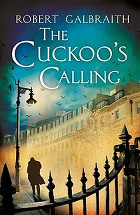
The Mystery of The Cuckoo’s Calling

One of the computational linguists who applied forensic text analysis to JK Rowling’s books to uncover her as the author of The Cuckoo’s Calling describes the science behind his investigation in a post for Language Log.

It seems Rowling’s authorship was originally leaked by her law firm and a UK newspaper turned to two academics who specialise forensic text analysis to back up their suspicions.

On of those academics, computer scientist Patrick Juola, wrote a piece for Language Log to describe how this sort of text analysis works.

Of the 11 sections of Cuckoo, six were closest (in distribution of word lengths) to Rowling, five to James. No one else got a mention.

Another feature I used were the 100 most common words. What percentage of the document were “the,” what were “of,” and so on. Again, a rich data set that is easy to extract by computer. Using an otherwise similar analysis (including cosine distance again), four of the sections were Rowling-like, four were McDermid-like, and the other three split between James and Rendell.

I ran two tests based on authorial vocabulary. The first was on the distribution of character 4-grams, groups of four adjacent characters. These could be words, parts of words (like four letters “nsid” that would be inside the word “inside”) or even parts of two words (like the four letters “n th” as part of the phrase “in the”)… I also ran on word bigrams, pairs of adjacent words, again a feature with a good track record.

The character 4-grams showed a preference for McDermid, with 8 sections close to her. Three were Rowling-like, and no one else was mentioned. The word pairs, on the other hand, were clearly Rowling-like (9 sections, against 2 by McDermid, no one else mentioned).

If you want to play around with some of the technology behind both Juola’s authorship attribution work, or that of Peter Millican – the other academic contacted by the press to do an analysis – you can actually download them both from the net.

Juola’s JGAAP programme is available here while you can get Millican’s at this page.

Rumours that Mind Hacks is actually written by Natalie Portman will be strictly denied.
 

Link to Juola’s post on Language Log.

A proto-anthropology of the rock n’ roll groupie scene

The Groupies is a remarkable record. The 1969 LP features nothing but interviews with ‘super groupies’ who discuss the culture of sleeping around the 60’s rock n’ roll scene.

It was made by, and featured, an 18 year-old version of the future Dr Cleo Odzer who shows her early interest in both sex and culture – both of which she’d study in her career as an anthropologist.

The girls talk about taking drugs, hanging out with bands, getting the clap and ‘making piggies’ – which is quite possibly both the cutest and oddest euphemism I’ve ever heard for having sex.

By the time she made The Groupies she had already been featured in Time magazine and broken off an engagement to Keith Emerson – of Emerson, Lake & Palmer fame. That’s them together on the left, by the way.

Odzer went on to become a journalist, then a drug runner, then an addict, then an ex-addict, and then, an anthropologist – eventually completing her PhD in the subject at the New School for Social Research in New York by studying prostitution in Thailand.

This was the first of Odzer’s areas of interest as an anthropologist. The second was the hippy scene in Goa, India, and the third was on sexual activity on the internet – then rather boldly called ‘cybersex’.

It’s worth saying that Odzer was never the most objective of investigators, tending to get overly involved in most things she researched. Or at least, that’s how it seemed. It’s just as possible she decided to research the things that she was already overly-involved with.

You can see this in her work. While her academic work included a more cutting analysis, her published books tended to be as much about her as the culture.

Her 1997 ‘cybersex’ book Virtual Spaces: Sex and the Cyber Citizen was largely thought a curiosity but, looking back, it was quite revolutionary.

While the academic world had just discovered this weird new phenomenon, and mostly viewed it with eyes-over-spectacles disproving glances, Odzer wrote what amounted to a cross between a Lonely Planet travel guide and the Joy of Sex – but for the newly connected internet user.

Odzer died at the age of 50, in Goa, after returning there from New York. Accounts vary. Possibly she died peacefully in her adopted home, possibly she finally succumbed to a lonely death with AIDS.

But when you listen to The Groupies LP, and the full audio is online, you can see the beginnings of a common thread that ran through her work.

It touches on a genuinely interesting social area which most people would have dismissed as seedy but which has a clear culture emerging from it. The analysis is slightly chaotic but genuinely insightful in places. It captures the excitement but in retrospect, it took something from her.
 

Link to page with audio of The Groupies.
Link to Wikipedia page on Cleo Odzer.