 This Saturday marks the 40th anniversary of the first major decriminalisation of male-male sexual acts in the UK. Dr Petra Boynton looks back at how the change came about and has dug up some fascinating articles on the experience of <a href="http://www.bmj.com/cgi/content/full/328/7437/427
“>patients and professionals who took part in ‘gay conversion therapy’ in the 60s and 70s.
At one time, homosexuality was considered both a criminal act and a mental disorder.
It was decriminalised in both the US and the UK before it was removed from the diagnostic manuals, and treatments to change homosexuals into heterosexuals peaked in the 1960s and early 1970s.
Two articles were published in the British Medical Journal in 2004 that highlighted the experiences of patients and professionals who were involved in ‘conversion therapy’ either voluntarily or because of a court order.
One paper describes some of the methods:
In electric shock aversion therapy, electrodes were attached to the wrist or lower leg and shocks were administered while the patient watched photographs of men and women in various stages of undress. The aim was to encourage avoidance of the shock by moving to photographs of the opposite sex. It was hoped that arousal to same sex photographs would reduce, while relief arising from shock avoidance would increase, interest in opposite sex images. Some patients reported undergoing detailed examination before treatment, while others were assessed more perfunctorily.
Patients would recline on a bed or sit in a chair in a darkened room, either alone or with the professional behind a screen. Each treatment lasted about 30 minutes, with some participants given portable electric shock boxes to use at home while they induced sexual fantasies. Patients receiving apomorphine were often admitted to hospital due to side effects of nausea and dehydration and the need for repeated doses, while those receiving electric shock aversion therapy attended as outpatients for weeks or in some cases up to two years.
Oestrogen treatment to reduce libido (two participants in the 1950s), psychoanalysis (three private participants and one NHS participant in the 1970s), and religious counselling (two participants in the 1990s) were also reported. Other forms of treatment were electroconvulsive therapy [ECT], discussion of the evils of homosexuality, desensitisation of an assumed phobia of the opposite sex, hypnosis, psychodrama, and abreaction. Dating skills were sometimes taught, and occasionally men were encouraged to find a prostitute or female friend with whom to try sexual intercourse.
The professionals interviewed in the study present mixed views, but “most doubted the treatment’s efficacy, however, and came to question whether they were acting in patients’ best interests. They began to think that treatment was underpinning questionable social values and that patients might say anything to convince them that it had worked to avoid yet more treatment or further legal repercussions.”
As we reported earlier this month, this is currently a hot topic for the American Psychological Association, who are currently re-assessing their guidelines on whether they should explicitly denounce ‘conversion therapy’.
If you want to know more about how homosexuality was de-listed as a mental illness, there’s a fantastic radio programme online which looks at how the campaign was intricately tied up with one woman’s remarkable family history.
Link to Dr Petra on 40 years of decriminalisation.
Link to BMJ article on patients’ experience of ‘conversion therapy’.
Link to BMJ article on professionals’ experience of ‘conversion therapy’.
Link to radio programme ’81 words’.
 Albert Ellis, one of the co-founders of cognitive therapy, died yesterday at his home in New York. The Boston Herald has an
  BBC News
  SharpBrains has a great
  A couple of quotes from the 16th and 17th centuries that still hold true today. The first from Leonardo da Vinci’s Notebooks, dated 1508:
 Psychologists have often wondered whether
  Online magazine InCharacter has an
  I’m currently reading
  Technology Review has an
  I’ve just found this ‘
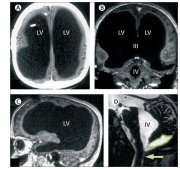 This week’s edition of medical journal The Lancet has a brief
  There’s an interesting exchange in this month’s American Journal of Psychiatry where two researchers note that there is
  The Times has an interesting
 A £10 million donation to the UK Conservative party, the biggest in its history, is being
  The Royal Society of Chemistry
  Mind Hacks
