Malcolm Gladwell profiled

gladwell.jpgSunday’s Observer featured an in-depth profile by Rachel Donadio of Malcolm Gladwell, author of The Tipping Point and Blink.

“With a writerly verve and strong narrative powers, he leavens serious social science research with zany characters and pithy, easily digestible anecdotes.”

Gladwell’s publishing success – Tipping Point has sold 1.7 million copies in N. America and Blink has sold 1.3 million – has led to a lucrative career as a public speaker for which he is apparently now paid about $40,000 per lecture. On top of that he’s also a columnist at the New Yorker.

“Gladwell’s dazzling arguments ultimately offer reassurance. Indeed he seems a contemporary incarnation of a recurring figure in the American experience, one who comes with encouraging news: you can make a difference, you have the capacity to change.”

Update: Malcolm Gladwell has a blog; via Marginal Revolution.

Link to book tickets to see Malcolm Gladwell in conversation with Robert McCrum, The Observer’s literary editor, on Weds 15 March at the South Bank Centre in London.
Link to profile as it appeared in the NY Times before the Observer.
Link to first audio clip from the interview.
Link to 2nd audio clip.
Link to 3rd audio.

Changing people’s behaviour

the scientist.jpgIf you were designing an advert to encourage university students to drink less alcohol, which wording do you think would work better?

“Most university students drink too much, with dire consequences for their future health”.

OR

“University students are healthier than you think, most have fewer than four drinks when they go out”.

A growing body of research on the misperception of norms suggests the second type of statement may work better. University students consistently overestimate how much their peers drink, and importantly, it’s this misperception that correlates with how much they choose to drink themselves.

“In point of fact, the norm among college students is to drink moderately if at all. And promoting this good news is an essential element of the health promotion strategy known as the social norms approach”.

From an article in The Scientist magazine on the science of encouraging healthy behaviour. (Note, to celebrate their relaunch, all 20 years of content is currently accessible for free at The Scientist website).

Preventing nuclear war

jervis.gifNow here’s an achievement that definitely deserves recognition, I’d say. Robert Jervis, the Adlai E. Stevenson Professor of International Affairs at Columbia University, is set to be awarded $20,000 by the National Academy of Sciences in America for carrying out psychological research that has helped prevent nuclear war.

There must be a few people working towards such ends because apparently this award is made every three years! A press release says Jervis earned this year’s prize “for showing, scientifically and in policy terms, how cognitive psychology, politically contextualized, can illuminate strategies for the avoidance of nuclear war”. He’ll receive the award at a ceremony in Washington on April 23rd.

Link to the National Academy of Sciences.
Link to interview with Jervis.

Beautiful madness

her story.gifThis month’s Prospect magazine features a touching story about Nia – “..too beautiful to be in a psychiatric ward“. The true tale conveys elegantly the dilemma that often faces psychiatrists as they weigh up the benefits of antipsychotic medication against the side effects that can sometimes be worse than a patient’s original symptoms. In this story Nia’s beauty is ruined by the only drug that alleviates her psychosis – Olanzapine. What unnerves the psychiatrists is that she doesn’t seem to care, whereas they do. “The treatment had reversed a Faustian pact in which Nia had been beautiful and mad, and replaced it with another‚Äîin which she was fat and sane. But was it really a blessing that Nia seemed to have no conception of what she had lost?
Link to story by deputy editor of Prospect Alexander Linklater and psychiatrist Robert Drummond (access to this item is free).

Henry Perowne on the neural code

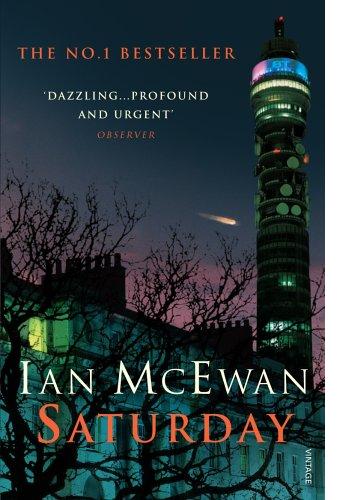
saturday.jpg

“Just like the digital codes of replicating life held within DNA, the brain’s fundamental secret will be laid open one day. But even when it has, the wonder will remain, that mere wet stuff can make this bright inward cinema of thought, of sight and sound and touch bound into a vivid illusion of an instantaneous present, with a self, another brightly wrought illusion, hovering like a ghost at its centre”.(p.254)

Henry Perowne is the neurosurgeon at the centre of Ian McEwan’s novel Saturday from which this quote is taken (ISBN 978-0-099-46968-1).

Link to previous post on the neural code.

A man walks into a bar…

heart.gifAs Tom said, Valentine’s is fast approaching. Just in time, Christopher Bale and colleagues have published a study in Personality and Individual Differences on what 142 female and 63 male undergraduates thought of 40 different chat up lines as featured in mini stories about a man attempting to woo a woman.

It was thumbs down to jokes, empty compliments and sexual references (“Well hey there, I may not be Fred Flintstone, but I bet I can make your Bed Rock!”) and thumbs up to lines revealing helpfulness, generosity, athleticism, culture (“It’s a fine instrument wouldn’t you say? A Steinway concert grand if I’m not mistaken”, he said pointing to a nearby piano) and wealth (“Hi, my name’s William, I’m one of the owners here, would you like to dance?”).

The student participants gave their verdicts by saying how likely the woman was to continue the conversation.

Surprisingly perhaps, the male and female participants tended to agree on which lines were likely to be successful.

The poor ratings for jokey chat up lines were unexpected but the researchers said that could be due to their failing to give different categories to wit – “spontaneous jokes that fit the context exactly, are genuinely funny, and require intelligence” and humour – “the pre-planned jokes and one-liners which were ineffective and do not demonstrate intelligence”.

Link to abstract.
Link to Christopher Bale talking about the work (last five minutes or so of the recording).

Mind Hacking at the gym

weights.jpgMost of the time it feels as though our perception of the world is based on what’s out there, what psychologists call ‘stimulus-driven’ or ‘bottom up’ processing. But in reality, our perceptual experience is a seamless mixture of both what really is out in the world and what we expect to be out there (so-called ‘top down’ or ‘concept-driven’ processing). Tom gave an elegant example of this in a recent post, describing how so many people hadn’t noticed the erroneous use of the word ‘conservations’ in the Mind Hacks book, when it should have said ‘conversations’ – in this case readers saw what they expected, not what was written.

I was struck by a couple of similar examples in recent visits to the gym. On the first occasion I’d just finished on the running machine where I have to really crank up my MP3 player volume to drown out the loud music played over the public speakers. When I sat down in the far quieter weights section, the volume on my headphones suddenly felt painfully loud in this quieter environment, and so I quickly jabbed the volume down a few notches. I felt such a relief as the music gradually softened and my eardrums were saved. It was only much later that I realised my MP3 player’s controls were in the lock position – I hadn’t turned the volume down at all. My expectations had overridden the true information arriving at my senses.

On my next visit I proudly grabbed two 14kg (don’t laugh!) dumbbells for some bicep curls. I’d worked up to this weight over recent months and considered it my limit. I was pumping away but my left arm was really struggling, which I put down to it being my weaker arm. Still, I persevered and did my usual number of reps. It was only when I went to replace the dumbbells that I saw the weight in my left arm was 18kg! – someone had put the weights in the wrong places… Well, I thought, maybe I’ve not been pushing myself enough, but no, later on when I went to try out some curls with 18kg weights, it was hopeless: when I ‘knew’ what the weight was it ‘felt’ too heavy!

Anyone got some other examples?

Explaining religion

religion.jpgLast Saturday’s Guardian featured an essay by Andrew Brown on science’s attempt to explain why so many people the world over are religious.

Brown says that many religions have existed without a belief in eternal life, thus undermining the argument that by promising an afterlife, religion evolved as a way for humans to cope with their mortality.

A more plausible explanation, he says, is that religion is a by-product of an aspect of our minds and behaviour that evolved for some other purpose. According to biologist David Sloan Wilson, one such purpose could be coherent and successful group behaviour. Consider how lust inspires us to mate, which has the evolutionarily advantageous knock-on effect of producing babies. Similarly, the pursuit of the sacred inspires us to religion, which has the evolutionary advantageous knock-on effects of causing us to form coherent groups and to follow rules.

Link to Guardian essay.

Depression and heart disease

psychosomatic.gif The journal Psychosomatic Medicine has a new free online supplement all about the link between depression and heart disease. There’s evidence that even mild depression can put people at increased risk of heart disease, and depression is three to four times more prevalent among cardiac patients than among the general population.

Link to free online supplement.

Sport psychology

supplement_sport.jpgThe Lancet medical journal has published a special sports supplement that for one month is available to view free as an e-magazine.

The 76 page publication includes features on aggression in sport (p.35); depression in sport (p.41), including comment on double Olympic gold medallist Dame Kelly Holmes’ admission earlier this year that she deliberately cut her arms with scissors during a frustrating period in her career when she was unable to train because of injury; and risk taking in sport (p.38) – with discussion of the idea that extreme sports enthusiasts may use danger to kick-start their lower-than-average dopamine levels.

The risk inherent in climbing such mountains carries its own reward, deep and abiding, because it provides as profound a sense of self-knowledge as anything else on earth. A mountain is perilous, true; but it is also redemptive“. David Breashears, mountaineer and creator of IMAX film Everest, speaking about mountain climbing. From the article by Matt Pain and Matthew A Pain on risk taking.

Link to the supplement.
Link to high wire walker Philippe Petit talking to Sue Lawley on Desert Island Discs.
Link to editor Pia Pini talking about her favourite highlights from the supplement.

Diabolical cunning in the brain

A&G-Cape-200.jpgThere’s no credible motive but in 1903 that doesn’t matter, the prosecuting barrister can always blind the jury with a little bit of brain:

Like you, members of the jury, I have at different moments of the trial, convinced as I am and as you will be of the prisoner’s guilt, I have found myself asking, but why, but why? And this is what I would say to that question. It really does seem to point to a person who did these outrages from some diabolical cunning in the corner of his brain.

From Arthur and George by Julian Barnes. Jonathan Cape: London, 2005.

A problem with placebo-controlled trials?

Following advice from the Committee on Safety of Medicines, the only SSRI-type anti-depressant that UK clinicians can prescribe to children and teenagers is fluoxetine. The risk of suicide and self-harm associated with the use of the other drugs in the SSRI family has been judged to outweigh their benefit.

But speaking at a conference at the Institute of Psychiatry recently, Dr. Paramala Santosh, Consultant in Developmental Neuropsychiatry and Neuropharmacology at Great Ormond Street Hospital, said that the absolute size of the benefit of the banned drugs was often no less, and sometimes more than the effect size found for fluoxetine – it’s just that in the trials for the banned drugs, the size of the placebo effect had been so much larger.

Could this be a fundamental flaw in placebo-controlled trials? The effectiveness of drugs is measured against a placebo effect, but the size of that placebo effect isn’t constant and varies from one trial to another. So potentially, an inferior drug could be deemed effective in a trial where the placebo effect was weak.

Of course NICE guidelines state psychotherapy should be the first line treatment for depressed children, but with too few therapists available, it’s vital that effective drugs aren’t banned unnecessarily.

Continue reading “A problem with placebo-controlled trials?”

Smell

smell.jpgResearch on smell – what scientists call olfaction – is discussed in the December issue of the Reader’s Digest magazine in an article by Paula Dranov. She explains how smells are composed of molecules that bind to our smell receptors located at the top of the nasal cavity. According to Nobel Prize-winner Linda Buck “A slight change in the chemistry of an orange scent and you get something that smells like sweaty socks”.

Linda Buck and Richard Axel won the 2004 Nobel Prize for medicine for identifying the approximately 1000 genes (3 per cent of the human genome) that code for the hundreds of smell receptors.

The article also mentions research looking at how smells could be used to help obese people eat less, based on the idea that satiety has less to do with feeling full and more to do with our senses of smell and taste feeling satisfied.

Brain damage can affect our sense of smell with unwelcome consequences. Dranov describes the case of Melissa Wittenborn who lost her sense of smell after an ice skating accident. A hit on her head caused her brain to shudder inside the skull, severing a nerve in the olfactory area. Wittenborn said “I’m missing out on so much, such as smelling my kids and husband when they get out of the shower”.

Losing one’s sense of smell can also be a sign of neurological illnesses like Alzheimer’s, Parkinson’s or Multiple Sclerosis.

Of course, smell is intimately related to memory. There’s a wealth of research showing that smell can aid recall, but there’s also more recent research showing that irrelevant smells can hinder memory.

Link to research on smell and dieting (and lots of other smell research)
Link to research on human pheromones
Link to research on irrelevant smells
Link to research suggesting smelling nice could help in interviews
Link to research on whether humans can sense the direction of smell
Link (item 2) to the vibration theory of smell