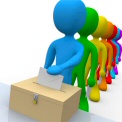
Why are people reluctant to exchange lottery tickets?

I’ve just found this wonderful study that investigated why people are reluctant to exchange lottery tickets before the draw – when each is equally as likely to win the jackpot.

It seems that swapping the ticket sparks images of it winning the lottery. This tends to make us think it’s more likely to occur because the possibility becomes more vivid and hence holds more weight in our minds when we’re trying to judge likelihood – a cognitive bias known as the availability heuristic.

I found the paper on psychologist Jane Risen’s website, whose work on ‘one shot illusory correlations’ and minority stereotyping we featured the other day.

Another look at why people are reluctant to exchange lottery tickets.

J Pers Soc Psychol. 2007 Jul;93(1):12-22.

Risen JL, Gilovich T.

People are reluctant to exchange lottery tickets, a result that previous investigators have attributed to anticipated regret. The authors suggest that people’s subjective likelihood judgments also make them disinclined to switch. Four studies examined likelihood judgments with respect to exchanged and retained lottery tickets and found that (a) exchanged tickets are judged more likely to win a lottery than are retained tickets and (b) exchanged tickets are judged more likely to win the more aversive it would be if the ticket did win. The authors provide evidence that this effect occurs because the act of imagining an exchanged ticket winning the lottery increases the belief that such an event is likely to occur.

I love studies on the quirks of human psychology. While they often have wider implications and help us understand more general principals of our thought and behaviour, in this case – the role of imagination in fuelling cognitive biases, they are also wonderful windows into the curiosities everyday reasoning.

By the way, psychologist Thomas Gilovich is a co-author on both of these studies. He’s also the author of one of the best books on cognitive biases, called How We Know What Isn’t So: The Fallibility of Human Reason in Everyday Life (ISBN 0029117062) which I highly recommend.

Link to paper.
Link to PubMed entry for same.

Dreaming of demons

The Boston Globe has a brief interview with dream researcher Kelly Bulkeley who has just written a book on the history of dreaming in the world’s religions.

Bulkeley notes in the interview that his book attempts to look at common themes from various dreams described in the religious literature, and draws out how they might reflect common aspects of human experience.

It sounds like an historical anthropology of dreaming with a view to understanding the significance of dreams for some of the most influential movements in our culture.

You argue that modern science can learn about dreaming from religion. Do you have a favorite example that you use when talking to scientists?

BULKELEY: Well, consider this particular kind of nightmare dream that recurs again and again in religious texts. In the Christian tradition they talk about the incubus, or the demons of the night. In Newfoundland, it’s the old hag and so on. But what all these various religions agree on is that there’s a type of nightmare that’s very intense and involves the constriction of breathing or paralysis. Now we know, thanks to modern science, that this is a real class of dream called night terrors and they’re very different from ordinary nightmares. So all these texts that talk about night terrors, they’re actually describing a real element of human experience.

One of my favourite books on dream themes is somewhat less serious. I Dream of Madonna is a beautifully illustrated book that collects women’s dream about the Material Girl.

Link to Kelly Bulkeley interview (via Frontal Cortex).
Link to more info about the book.

Doubting lie detectors and blushing beauties

Today’s New Scientist has an interesting follow-up letter to a recent article on whether brain scan lie-detection could ever be reliable court evidence. The article noted that the traditional and flawed lie polygraph lie-detector test had been questioned in the past, and the letter notes an earlier example of the test being criticised in an insightful short story:
Doubts about the use of polygraphs have been around for much longer than you report (4 October, p 8). In G. K. Chesterton’s Father Brown story The Mistake of the Machine, published in 1914, a polygraph detects stress in a prisoner accused of murdering Lord Falconroy. The reason isn’t guilt: the prisoner is in fact Lord Falconroy, in disguise and anxious to stay undiscovered.

Chesterton wrote that polygraph scientists “must be as sentimental as a man who thinks a woman is in love with him if she blushes. That’s a test from the circulation of the blood, discovered by the immortal Harvey; and a jolly rotten test, too.”

If you’re not sure quite how unreliable polygraph lie-detector tests are, I recommend an earlier article on Mind Hacks that is worth reading solely for the story of the falsely convicted Floyd ‘Buzz’ Fay, who trained 20 fellow inmates to fool the lie detector test to help prove his innocence. All while behind bars.

You gotta respect that.

Link to letter.
Link to Mind Hacks on polygraph hacking.

Through the eyes of the psychopath

The New Yorker has an engaging article about psychopaths and what psychologists are starting to learn about the psychology and neuroscience of people who are thought to lack empathy.

Psychopathy doesn’t necessarily imply violence. The most commonly used modern definition, based on the work of psychologist Robert Hare, suggests that psychopathy includes things like a lack of conscience, manipulative behaviour, impulsiveness and an anti-social lifestyle.

The condition was first described clinically in 1801, by the French surgeon Philippe Pinel. He called it ‘mania without delirium.’ In the early nineteenth century, the American surgeon Benjamin Rush wrote about a type of ‘moral derangement’ in which the sufferer was neither delusional nor psychotic but nevertheless engaged in profoundly antisocial behavior, including horrifying acts of violence. Rush noted that the condition appeared early in life. The term ‘moral insanity‘ became popular in the mid-nineteenth century, and was widely used in the U.S. and in England to describe incorrigible criminals. The word ‘psychopath’ (literally, ‘suffering soul’) was coined in Germany in the eighteen-eighties. By the nineteen-twenties, ‘constitutional psychopathic inferiority,’ had become the catchall phrase psychiatrists used for a general mixture of violent and antisocial characteristics found in irredeemable criminals, who appeared to lack a conscience.

In the late nineteen-thirties, an American psychiatrist named Hervey Cleckley began collecting data on a certain kind of patient he encountered in the course of his work in a psychiatric hospital in Augusta, Georgia. These people were from varied social and family backgrounds. Some were poor, but others were sons of Augusta‚Äôs most prosperous and respected families. Cleckley set about sharpening the vague construct of constitutional psychopathic inferiority, and distinguishing it from other forms of mental illness. He eventually isolated sixteen traits exhibited by patients he called ‘primary’ psychopaths; these included being charming and intelligent, unreliable, dishonest, irresponsible, self-centered, emotionally shallow, and lacking in empathy and insight.

However, the article focuses on the work of psychologist Kent Kiehl who has completed a great deal of recent brain imaging research on criminal psychopaths, and argues that the core problem is a dysfunction of the paralimbic system.

This includes areas such as the orbital frontal cortex, anterior cingulate and amygdala, that are known to be involved in emotional reactions and often thought to be involved particularly in social interaction and empathy.

However, as the article recounts, getting inmates at maximum security prisons involved in cognitive science research has its own special challenges. Although this seem to have been somewhat mitigated by Kiehl’s use of a portable fMRI machine.

To be honest, the article focuses a little too much on the personalities, particularly when the science is so interesting, but it does cover the bases well and does make for an engaging read.

Link to New Yorker article ‘Suffering Souls’.

What’s driving voter decison-making

The Association for Psychological Science magazine Observer has an interesting article that tackles what cognitive science has told us about how voters choose their candidate.

It reiterates the common finding that emotional feelings toward a particular candidate or party has more sway that more factual information.

In 2005, Emory University political psychologist Drew Westen and his colleagues published a study in which they correctly predicted people’s views on political issues based solely on their emotions. When the Bill Clinton-Monica Lewinsky scandal broke in March 1998, the psychologists quizzed participants to gauge their knowledge of Clinton and the details of the scandal. Then they asked emotion-based questions about how participants felt about Clinton as a person, how they felt about the Democratic and Republican parties, and how they felt about infidelity in general. Months later, before the Congressional impeachment trial began in December, they called the participants back and asked them a series of questions along the lines of “Do you think what the president has been accused of doing meets the standard set forth in the Constitution for an impeachable offense?”

Using only what they knew about the respondents’ emotions, the researchers were able to correctly predict their views on impeachment 85 percent of the time. Knowledge meant little: When they factored in what the respondents actually knew about the situation and the Constitutional requirements for impeachment, they only improved the accuracy of their predictions by three percent.

Interestingly, the article suggests that economic issues – probably the most important concern in the current US election – are the ones that are least likely to be affected by emotion.

Emotion still plays a big part even in economic reasoning though, and I’ve always been curious to know more about how fact-based versus emotion-based reasoning interacts. For example, how much are emotions just a summary ‘opinion’ formed by individuals after considering the facts.

Unfortunately, unlike the one mentioned above, most studies in this area are of cross-sections and so don’t say much about how these two forms of reasons interact over time.

However, one source of reasoning not mention in this piece is superstition. Luckily, Psychology Today has a short piece that has picked out some sources of magical thinking from the current presidential race.

Link to article ‘This is Your Brain on Politics’ (via BPSRD).
Link to piece on ‘Election Superstitions’.

Sine-wave speech

Tom and Matt wrote about the remarkable phenomenon of ‘sine-wave speech’ in the Mind Hacks book (Hack #49) but I was just reminded of it recently (thanks Alex!) and I am always struck about what a great effect it is.

If you’re not familiar with it, I recommend psychologist Matt Davis’ webpage that explains the effect and has some fantastic examples.

Essentially, what initially sounds like random whistling sounds comes together as coherent speech when you know what you’re listening out for.

It’s a striking effect and is a wonderful demonstration of how prior knowledge and expectations can affect perception.

Link to Matt Davis’ sine-wave speech page.

Trans children – trapped in a body, mind or society?

The Atlantic magazine has an excellent article about the heated issues raised by children who want to be the opposite sex. It’s an excellent piece that captures both the dilemmas of parents and mental health professionals sparked by potentially transgendered children.

I sometimes jokingly suggest that clinical child psychology would be better described as clinical parent psychology, owing to the fact that it almost always involves working as much with the parents’ anxieties as the child’s.

This is particularly important when it comes to behaviours which are not considered, in themselves, to be physically or mentally damaging, but which are socially unacceptable or stigmatised, because the pressure often takes the form of others wishing the child would conform to social norms.

The Atlantic article gives some vivid examples of some of the pressures, as the child, mother, father, professionals, peers and campaigning groups each have different opinions on how to manage a young child that dresses and acts like a child of the opposite sex.

As we discussed in a post about an NPR programme that covered the same territory, one of the big controversies is whether to try and treat the child to identify with their birth sex, or whether to help them cope with the stresses of adjusting to life as a transgendered child.

This is complicated by the fact that follow-up studies have shown that not all children who have cross-gender desires when young maintain them through puberty. However, hormone treatment exists which can delay puberty so it makes it easier for a child to pass as the opposite sex if this is thought the best course of action.

The Atlantic piece is a remarkably well-researched piece that covers a great deal of the mental health debate about the practice and ethics of treating what are known as ‘gender dysphoric’ children, but also gives us a revealing insight into some of the family and social dynamics that affect the individuals.

A compelling and thought-provoking insight into this contested area.

Link to Atlantic article ‘A Boy’s Life’.
Link to previous Mind Hacks piece on ‘gender identity disorder’.

Lesbians – unicyle and be counted

A single instance of unusual behaviour by a minority group may be enough for us to stereotype the whole group according to recent research published in the Personality and Social Psychology Bulletin.

Led by psychologist Jane Risen, the researchers ran four experiments that suggest that the reason we tend to think a single notable behaviour is typical of a minority group but not a majority group is because of our inbuilt cognitive biases in how we process anomalous information.

During the study participants were shown a series of sentences that described a group and a behaviour. The researchers found that just one report of a seemingly odd behaviour by a minority group member was focused on for longer and was more memorable.

Furthermore, participants were more likely to think that group membership was more like to be an explanation for the odd behaviour for minorities than in more representative groups.

In a final experiment, participants watched a video interview of either a white or Asian student where, rather unusually, they persistently asked to use the camera in a pushy manner.

Afterwards, the participants were shown a picture of another person, again either white or Asian. In one part the person was holding up words with missing letters than the participants had to fill in to complete the word.

For example, the prompt could have been “D E _ _ N D”, which can equally well be completed as “DEPEND” or “DEMAND”.

This sort of technique is often used in psychology because things that are already active in the mind, such as emotions, concepts or stereotypes, will unconsciously influence the participant to complete the word in one of the two ways.

DEPEND is a positive word, whereas DEMAND is related to pushiness, so if a video of a pushy Asian student only affects word completion presented by another unrelated Asian person and not when presented by a white person, you can see the behaviour has activated a race specific bias.

This is exactly what happened. The researchers confirmed the effect by a follow-up task where participants were asked to select interview questions for an unrelated white or Asian person, where they tended to select questions that enquired about how brazen the interviewee might be for the minority group.

This study was published in 2007 and I’ve only just discovered it. I’m surprised I’ve not heard of it before as it strikes me as an incredibly important study on the psychology of stereotype formation.

The researchers call it ‘one shot illusory correlation’ and I wonder if it also explains the ‘my bad holiday’ effect where people say they “don’t like the British [or whoever], because I went on holiday there once and someone was rude to me”.

Obviously, the person was not a minority in their country, but was in the context of the visitor’s life.

By the way, the paper is also very well written and the introduction is well worth reading solely for it’s engaging introduction to the area.

Link to study article.
Link to PubMed entry for same.

Brain scans and buyer beware

Jonah Lehrer reviews new popular neuromarketing book Buy-ology in the Washington Post and notes that the book itself is a shining example of marketing but without a good grasp of what the neuroscience studies actually show.

If one of the greatest ironies of public relations is that it has an image problem, one of the greatest achievements of neuromarketing has been the self-promotion without having demonstrating any material benefit to the approach.

That’s not to say there’s some respectable science being undertaken to understand the neural basis of commercial reasoning and buyer decision-making, but so far, no-one has demonstrated that any of these approaches actually provide a more effective way of marketing.

In other words, we’re still waiting for a single study that shows that any measure of neural activity predicts actual purchases or sales better than existing methods.

It’s quite amazing to think that there are now numerous multi-million dollar ‘neuromarketing’ companies that are providing services without having any evidence for their effectiveness.

Their success is likely because, as we know from recent studies, attaching bogus references to the brain or irrelevant images of brain scans, make explanation of behaviour seem more credible to non-neuroscientists.

One irony is that commercial neuromarketing has been a marketing success story, but not on the basis of the neuroscience which is largely just used as another form of traditional branding.

In fact, it’s just a form of marketing first developed by Edward Bernays, the nephew of Freud, back in the 1920s. The secret, Bernays said, was not to appeal to what people need, but to what they desire – in this case, to seem cutting edge.

UPDATE: I really recommend reading the two comments below in full, but this snippet from Neuroskeptic is a particular gem:

“One irony is that commercial neuromarketing has been a marketing success story, but not on the basis of the neuroscience which is largely just used as another form of traditional branding.”

It’s not just ironic, it’s fascinating. It shows that marketing people – who you might expect to be “immune to their poison” – are vulnerable to marketing gimmicks too.

Link to WashPost review of ‘Buy-ology’.

2008-10-31 Spike activity

Quick links from the past week in mind and brain news:

Mind Apples is a site that aims to share and develop ways of maintaining mental health in innovative ways. A community-based knowledge sharing community focused on mental well-being. Yay!

To the bunkers! Scientific America has a piece on how one research team are trying to personify evil in an AI programme.

Technology Review has some beautiful diffusion spectrum imaging pictures of the brain that illustrates the white matter tracts in glorious technicolor.

Men were better than women at judging infidelity, but are more likely to guess at cheating when there is none, according to research reported by New Scientist. The old high sensitivity, low specificity problem.

The New York Times follows up with an interesting piece asking whether these sorts of studies that rely on people honestly reporting their infidelities are reliable and looking at the changing rates of infidelity.

Guest blogger Becca Trabin writes an interesting piece about body dysmorphic disorder on The Trouble With Spikol.

The BPS Research Digest has a thought-provoking piece questioning whether brain-injured patients who confabulate, who seemingly produce false memories without intending to deliberately lie, are actually attempting to remember at all.

A brief tour through the comedic history of the US military’s attempts to create an ‘amnesia beam‘ is provided by Wired.

Neuroanthropology has an interesting piece on the influence of psychologists on the political messages of the belligerents in the US presidential election.

The recent study on the cognitive neuroscience of hate is dryly dissected by The Neurocritic.

The Boston Globe has an interesting piece on the neuroscience of self-control and describes the cool 4-year-olds and marshmallows experiment.

“Eunoia is the shortest word in English containing all five vowels – and it means “beautiful thinking”. It is also the title of Canadian poet Christian Bok’s book of fiction in which each chapter uses only one vowel.” BBC Radio 4 has a sample of each chapter. Reminds me of Gadsby, a whole novel written without the letter e.

Psychology Today bloggers are asked which psychological tests they’d give the US presidential candidates. Strangely, no one mentioned the Stanford Prison Experiment.

Another good BPS Research Digest piece on research showing older people are less optimistic but more realistic.

Neuropod focuses on the autistic spectrum

I’m not sure if Nature’s Neuroscience podcast Neuropod is slightly irregularly timed or I am, but either way the October edition is available online and covers cyber-monkeys, steroids, Alzheimer’s disease and autism.

The stand-out feature is the piece on autism where researchers, including the well-known Temple Grandin, are interviewed.

One of the most interesting bits is where Neuropod talks to clinical psychologist Kathrin Hippler about her research where she followed up some of the children who Hans Asperger observed during the development of the syndrome diagnosis.

Asperger’s Syndrome wasn’t so named until some time later, and at the time, the children were diagnosed as ‘autistic psychopaths’. Psychopath didn’t mean violent or dangerous in this context, it just implied emotionally disconnected.

Hippler’s study analysed the case records of ‘autistic psychopaths’ diagnosed by Hans Asperger and his team at the University Children’s Hospital, Vienna.

In a more recent study (which doesn’t seem to have been published yet) she followed up the children to see how they’re doing not, and it turns out that they’re actually doing pretty well.

She mentions about half are in relationships and many are in jobs that matched the ‘special interests’ they had as children.

If you’re interesting in reading more about contemporary kids with on the spectrum The New York Times had an excellent piece on the experiences of autistic teenagers.

Link to Neuropod homepage with streamed audio.
mp3 of October edition.

A slight return, again

I’ve just found another curious case report of complex movements in a brain dead patient, following on from our recent piece on the Lazurus Sign.

These reports are fascinating and bizarre in equal measure, not least when you try and imagine what was happening in the room at the time.

Uncommon reflex automatisms after brain death

Rev Neurol (Paris). 1995 Oct;151(10):586-8.

Awada A.

Two cases of unusual complex movements observed in brain dead patients are described. Rapid and sustained flexion of the neck induced slow abduction of the arms with flexion of the elbows, wrists and fingers over 5 to 10 seconds. These movements have been rarely described and although they have similar clinical patterns, they are pathophysiologically different from the Lazarus sign which is observed few minutes after respiratory support cessation. While Lazarus sign is supposed to be due to an agonal discharge of anoxic spinal neurons, the movements described in this article result probably from complex reflexes generated in a disinhibited spinal cord. It is however surprising that they have never been described in patients with high cervical spinal injuries.

For those of you not familiar with the medical terms for movement, I shall briefly translate. When the doctors rocked the dead person’s head side to side forward in a ‘rapid and sustained’ fashion, the body extended its arms to the side and waved them about.

I have two thoughts.

Firstly, isn’t it fascinating that such complex movements can be triggered solely by the spinal cord?

Secondly, what the bloody hell were they doing with that dead body?

Normally, these reports are of spontaneous movements in isolated brain dead patients, but on this occasion the medical team seem to have been rather more involved.

Unfortunately, the full text of the article is in French, so the exact turn of events (e.g. “hey looks what happens when I do this!”) shall have to remain a mystery.

UPDATE: Neuroshrink has added a fantastic correction and comment to this post that suggests what might have been happening and recounts his own experience of observing the Lazurus sign.

Link to PubMed entry for article.
Link to Mind Hacks on the Lazurus Sign.
Link to another Mind Hacks article on the moving dead.

Drug addiction and factory pharming

Scientific American has a slide show of classic photos from converted prison in 1950s Kentucky which was used as a massive addiction rehabilitation and research centre.

The pictures have a slightly surreal B-movie quality to them and I can’t help thinking of Philip K. Dick’s book A Scanner Darkly.

If that reference makes no sense to you, check out the book, or see the film, and you can see the sort of institution pictured by SciAm could have inspired the… well, you’ll just have to see.

According to the blurb the building “was a temporary home for thousands, including Sonny Rollins, Peter Lorre and William S. Burroughs as well as a lab for addiction treatments such as LSD”. The set even includes a picture of a jazz band consisting of patients.

Owing to the popularity of heroin in the 1950s jazz scene, it was probably a fairly impressive line-up.

Link to SciAm 1950s narcotics farm slide show.

In the age of paranoia, my MTV wants me

Psychotic delusions change with the times and a new study looking back over almost 120 years of hospital records has found that it’s possible to track how cultural upheavals are reflected in the themes of madness. Changes in politics, technology and psychiatry all seem to colour the preoccupations of the deluded as reported in the patient records.

A Slovenian research team, led by psychiatrist Borut Skodlar, discovered that the Ljubljana psychiatric hospital had patient records going as far back as 1881. They randomly selected 10 records from every 10 year period to see how delusions matched up to the society of the time.

One key finding was that paranoid and persecutory delusions seem much more common now, with a big jump after the 1960s, in line with other studies that have found that paranoia is much more common in the modern age.

Another interesting finding concerned the widespread availability of radio and television:

A very interesting finding was a significant increase in outside influence and control delusions with technical themes following the spread of radio and television in Slovenia. To the best of our knowledge, no such studies exist with which to compare our results.

Both of these new technical devices, which served as a means to powerfully and quickly disseminate information, apparently became appropriate for ‘serving’ as a means of influence and control in the eyes of schizophrenia patients.

We found this change much more expressed in the case of television, where the increase of delusions of outside influence and control was dramatic. Perhaps an accumulation of both television together stimulated the increase. Or perhaps the two-dimensional auditory and visual nature of television opened up more opportunities to perceive it as a possible source of influence.

One aspect of the study looked not at how wider cultural changes altered the theme of delusions, but how changes in the culture of psychiatry did the same.

Psychiatrist Kurt Schneider listed a number of symptoms which he argued were characteristic of schizophrenia and still form the basis of modern schizophrenia diagnoses.

They include audible thoughts, hearing voices arguing, voices commenting on your actions, feeling that your body, mind or emotions are being controlled by outside forces, thought insertion and withdrawal, thought broadcasting, or delusional interpretations of everyday perceptions.

Interestingly, these ‘first rank symptoms’ were reported much more commonly after they had become widely known in the psychiatric community.

This is one of the key issues in the epidemiology of psychiatry: when the rate of reported symptoms changes over time, is it because they’re just being noticed more, because psychiatrists have moved the goalposts, because patients are learning to report symptoms in the language that doctors use, or that the experiences are more common in the population with all things being equal.

Of course, it can be a mixture of all or some of the above, as culture is one of the key influences on how we experience and express our distress – both physical and psychological.

Link to paper on cultural influences on delusions.
Link to PubMed entry for same.

Money on the brain

Tim Harford, who blogs as the Undercover Economist, presents a rollercoaster ride through the field of neuroeconomics, <a href="http://www.bbc.co.uk/radio4/science/pip/plke4/"'Money on the Brain' for Radio 4. The documentary is available via Radio 4’s Listen Again site for the next week, and reportedly via a podcast (which I unfortunately can’t find). This whistle-stop tour covers neuromarketing, behavioural economics and the possible effects of hormone levels on risk tasking among stockmarket brokers. The programme features great interviews with some top researchers, such as Paul Glimcher and, Glimcher aside, many of these researchers have an almost relgious optimism about the potential for fMRI-scanning, believing it will eventually tell us how economic decisions are made, why we follow crowds, what we’re thinking at any point in time, what age we should be able to vote and how much we value things like clean air. Admist this heady atmosphere the psychologist Gerd Gigerenzer brings us back to earth again: “You can’t read the mind. We understand quite little about the brain.” he begins. And then,


A former chairman of the Harvard Psychology deptartment once asked me “Gerd, do you know why they love those pictures [the fMRI activity maps]? It is because they are like women: they are beautiful, they are expensive and you don’t understand them”

If you read a classical article on neuroeconomics what you will find is mostly results which have been already known and recycled, and very little new insight.

Boom!

Link to Radio 4 documentary ‘Money on the Brain’
Also on Mindhacks.com The fMRI smackdown cometh
Also on Mindhacks.com Don’t believe the neurohype
Also on Mindhacks.com Is Banking on Neuroscience a false economy?

Online opium museum

The Opium Museum is a fascinating website by the author of a book called The Art of Opium Antiques that tracks the forgotten history of a hugely popular recreational drug of the early 1900s.

It has images of some remarkably intricate opium smoking paraphenalia, but probably the most interesting part is the sections with photos of opium smokers from the late 1800s to early 1900s.

It was a habit largely associated with the Orient and also prevalent among immigrant communities around the world.

The collection illustrates that opium smoking was common in all classes of society and until the crackdowns in the 1930s onwards, it was not considered to be necessarily seedy or degenerate.

It’s an interesting contrast to a photo collection on the current Afghan Drug War, also over opium, although the Afghan crops are largely destined for the heroin trade. Opium wars have been a traditional pastime of the British, and this is the most recent in one of many.

The Afghan photo collection is by photographer Aaron Huey, but are hidden behind some god awful Flash wrapping meaning you can’t link to it directly. So you’ll need to go to the website, click on ‘Features 1’ and then on ‘Afghanistan Drug War’.

Link to the Opium Museum.
Link to photographer website (via BoingBoing).