Patients and power struggles

Medical History has a brief but good article on the political wranglings and scientific battles between psychiatry, psychoanalysis and clinical psychology in 20th Century America.

It’s by history of psychiatry ninja (not his official title) Andrew Scull, who tracks the events behind the waxing and waning of mental health fashions and how they have played out among professionals of different camps.

Psychoanalysis had managed initially to contain the potential threat posed by the drugs revolution, but by the mid-1970s, that resolution was threatening to break down. Antipsychotic drugs had proved to be an enormously lucrative market, and questions were beginning to be raised in many quarters about precisely what therapeutic advantages accrued from adding seemingly interminable and expensive psychoanalytic treatments to the mix.

A decade earlier, virtually every academic department of psychiatry was led by a psychoanalyst or a psychoanalytic fellow-traveller, but increasingly, the sums on offer to conduct laboratory research on potentially therapeutic compounds were exercising a powerful appeal, one bolstered by the critical importance of funded research in establishing pecking orders in large research universities.

It’s worth noting that quite a different story played out in Europe, where the fashion for psychoanalysis never really caught on and the success of mental health treatment were much less determined by the whims of insurance companies.
 

Link to ‘Mental Health Fight Club, 1940–2010’ (not the official title).

Musket to a brain surgeon

Phineas Gage is famous for having an iron bar being blown through his frontal lobes. Although his case is usually described as the first of its kind, this month’s edition of The Psychologist has a surprising article on many lesser known cases from the 1800s, usually due to mishaps with early firearms.

The piece is packed with amazing case vignettes of people who have suffered serious frontal lobe injury but were described as relatively unaffected.

This is one of the many striking examples:

In 1827 came a report by a Dr Rogers in the Medico-Chirurgical Transactions, where a young man received a frontal impact, again from a breech explosion. It was not until another three weeks, when the soldier, ‘discovered a piece of iron lodged within the head in the bottom of the wound from which a considerable quantity of bone had come away… it proved to be the breech pin of the gun three inches in length and three ounces in weight’. Four months later he was ‘perfectly cured’. Another case, here, was of an exploding breech pin penetrating 1½ inches into the brain, making a hole ¾ inch in diameter, resulting in an ‘escape of cerebral substance’. But ‘no severe symptoms occurred, and recovery took place in less than 24 days’.


Link to The Psychologist article ‘Blasts from the past’.

The princess who swallowed a glass piano

The Glass Piano is a wonderful BBC Radio 3 programme about Princess Alexandra of Bavaria who thought she had swallowed a glass piano.

The programme was created by writer and poet Deborah Levy who “considers the true story of Princess Alexandra Amelie of Bavaria, 1826-1875 who at the age of 23 was observed awkwardly walking sideways down the corridors of her family palace. When questioned by her worried royal parents, she announced that she had swallowed a grand glass piano.”

As we’ve discussed previously, glass delusions were quite regularly reported by physicians in the 19th century but are now seemingly extinct in a curious cultural shift in madness.

People who experienced the delusion believed that their body was entirely, or in part, made of glass

The Glass Piano is a curious blend between a drama and documentary that recounts the case of Princess Alexandra and explores the history of this curious conviction.

It has some fantastic insights from historian of psychiatry Erin Sullivan, a trauma specialist, and rather more unpredictably from psychoanalyst Susie Orbach who makes some genuinely insightful comments while at other times sounding like she’s been smoking a glass pipe:

“Certainly she would not have walked like a princess because in order to bear a piano inside of her she would have had to had her legs quite far apart. We want to think Freud because its that moment in history where Freud discovers that we’re all sexual beings. So you could say that her legs are far apart for that reason.”

You could indeed.

I have to say, however, that these somewhat whimsical comments are actually in the spirit of the piece, which mixes conjecture with solid historical research, original musical and drama.

Unfortunately, the audio for the piece was only available for a week but an mp3 of the programme has mysteriously found its way online which you can get here.
 

Link to programme information on BBC site.
Link to download / streaming of mp3.

The scent of the past

The Boston Globe has a fascinating piece on the growing movement to incorporate smells into the historical record and the technology that is allowing us to ‘record’ scents.

To put smells in a historical context is to add a whole dimension to how we understand the world. Boston’s Back Bay, for instance, has at different times been filled with the smells of a saltwater marsh, a cesspool, horses, and car exhaust. Some smells vanish, new ones arise, and some shift in a way that tells a cultural story.

The jasmine and leather notes of a Chanel perfume from 1927 help us understand the boldly androgynous women of the flapper era, just as the candied sweetness of the latest Victoria’s Secret fragrance tells us something about femininity today. What we smell in our cities, homes, and natural spaces is just as much a part of our lives as the what we see, hear, and touch.

It’s a fantastic article that touches on everything from the neuroscience of smell, to the cultural meaning of certain scents, to the science of storing and recreating odours from the past.
 

Link to fantastic article ‘A Whiff of History’.

Writing on cocaine, literally

The New York Times reviews a new book about the early enthusiasm for cocaine among the medical community and particularly how it affected two of the world’s most influential doctors.

The book is called ‘An Anatomy of Addiction’ and looks at how psychoanalyst Sigmund Freud and pioneering surgeon William Halsted became heavily dependent on the drug.

A long-term cocaine and morphine addict, Halsted is of particular interest because he wrote a scientific article about cocaine, while clearly off his face on cocaine.

Despite being almost complete nonsense it got published in the New York Medical Journal in 1885.

Rather ironically, it was entitled “Practical comments on the use and abuse of cocaine”. This is the first paragraph:

Neither indifferent as to which of how many possibilities may best explain, nor yet at a loss to comprehend, why surgeons have, and that so many, quite without discredit, could have exhibited scarcely any interest in what, as a local anesthetic, had been supposed, if not declared, by most so very sure to prove, especially to them, attractive, still I do not think that this circumstance, or some sense of obligation to rescue fragmentary reputation for surgeons rather than belief that an opportunity existed for assisting others to an appreciable extent, induced me, several months ago, to write on the subject in hand the greater part of a somewhat comprehensible paper, which poor health disinclined me to complete.

This was a different era in the the history of cocaine, however. So different in fact, that His Holiness the Pope endorsed a cocaine infused wine.
 

Link to NYT article on Freud and Halsted on cocaine.

Google, memory and the damp drawers Olympics

If pant-wetting were a sport, the recent study on how memory adjusts to the constant availability of online information would have launched the damp drawers Olympics.

‘Poor memory? Blame Google’ claimed The Guardian. ‘Internet search engines cause poor memory, scientists claim’ said The Telegraph. ‘Google turning us into forgetful morons’ wibbled The Register.

If you want a good write-up of the study you couldn’t do better than checking out the post on Not Exactly Rocket Science which captures the dry undies fact that although the online availability of the information reduced memory for content, it improved memory for its location.

Conversely, when participants knew that the information was not available online, memory for content improved. In other words, the brain is adjusting memory to make information retrieval more efficient depending on the context.

Memory management in general is known as metamemory and the storage of pointers to other information sources (usually people) rather than the content itself, is known as transactive memory.

Think of working in a team where the knowledge is shared across members. Effectively, transactive memory is a form of social memory where each individual is adjusting how much they need to personally remember based on knowledge of other people’s expertise.

This new study, by a group of researchers led by the wonderfully named Betsy Sparrow, found that we treat online information in a similar way.

What this does not show is that information technology is somehow ‘damaging’ our memory, as the participants remembered the location of the information much better when they thought it would be digitally available.

It does, however, raise the interesting question of our relationship to technology and particularly its impact on performance in different contexts.

For example, people making life or death decisions may train using computers but may have to work without them. This transition usually takes place during the student years.

So how can we promote content memory for important information? Probably something old-fashioned like exams.
 

Link to excellent write-up of study on Not Exactly Rocket Science.

Two weeks of hell, forty years ago

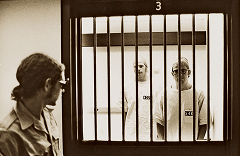
It’s been forty years since the Stanford prison experiment and the university’s alumni magazine has asked the participants and researchers for their reflections on their role in the notorious events of 1971.

It makes for a fascinating read as it not only gets Zimbardo to comment on the eventually out-of-control study but also talks to one of the abusive ‘guards’ (now a mortgage salesman) one of the ‘prisoners’ (now a teacher) and the whistleblower who eventually called for the study to end.

This is from Craig Haney, one of the researchers from the study:

I also realized how quickly we get used to things that are shocking one day and a week later become matter-of-fact. During the study, when we decided to move prisoners to different parts of the prison, we realized that they were going to see where they were and be reminded they’re not in a prison—they’re just in the psych building at Stanford. We didn’t want that to happen.

So we put paper bags over their heads. The first time I saw that, it was shocking. By the next day we’re putting bags on their heads and not thinking about it. That happens all the time in real correctional facilities. You get used to it. I do a lot of work in solitary-confinement units, on the psychological effects of supermax prisons. In places like that, when prisoners undergo the so-called therapy counseling, they are kept in actual cages. I constantly remind myself never to get used to seeing the cages.

The article sheds light both on the study and the lives of the the key players, now and then.
 

Link to article on Stanford Alumni Magazine (via @crimepsychblog)

Cross Road Blues

The July issue of the British Journal of Psychiatry has another edition of its ‘psychiatry in 100 words’ series – this time on melancholia and the blues legend Robert Johnson.

‘I got stones in my pathway/And my road seems dark at night/I have pains in my heart/They have taken my appetite’. Robert Johnson, known as the King of the Delta blues singers, distilled into these lines the essence of severe depressive illness – somatic ills, fear and suspicion, emotional and physical pain, nocturnal troubles and struggle against obstacles. The words are one with the powerful, haunting music. ICD-10 and DSM-IV have their place, but poets have often been there before us, and done a better job. We can all learn from Robert Johnson, born just 100 years ago.


Link to BJP ‘Melancholia in 100 words’.

The Ginger Jake poisonings

A mysterious epidemic of paralysis was sweeping through 1920s America that had the medical community baffled. The cause was first identified not by physicians, but by blues singers.

During the prohibition, alcohol was banned but people got buzzed the best way they could. One way was through a highly alcoholic liquid called Jamaica Ginger or ‘Jake’ that got round the ban by being sold as a medicine.

Eventually the feds caught on and even such poorly disguised medicines were blacklisted but Jamaica Ginger stayed popular, and alcoholic, due to the producers including an organophosphate additive called tricresyl phosphate that helped fool the government’s tests.

What they didn’t know was that tricresyl phosphate is a slow-acting neurotoxin that affected the neurons that control movement.

The toxin starts by causing lower leg muscular pain and tingling, followed by muscle weakness in the arms and legs. The effect on the legs caused a distinctive form of muscle paralysis that required affected people to lift the leg high during walking to allow the foot to clear the ground.

This epidemic of paralysis first made the pages of the New England Journal of Medicine in June 1930, but the cause remained a mystery.

What the puzzled doctors didn’t know was that the cause had been identified by two blues musicians earlier that year, in songs released on 78rpm records.

Ishman Bracey’s song Jake Liquor Blues and Tommy Johnson’s track Alcohol and Jake Blues had hit on the key epidemiological factor, the consumption of Jamaica Ginger, likely due to their being part of the poor southern communities where jake was most commonly drunk.

Slowly, the medical community caught on, noting that the additive damaged the spinal cord and peripheral nerves, and the adulterated jake was slowly tracked down and outlawed.

The story, however, has an interesting neurological twist. In 1978, two neurologists decided to track down some of the survivors of jake poisoning 47 years after the booze fuelled epidemic hit.

They found that the original neurological explanation for the ‘jake walk’ effect was wrong. The paralysis was actually due to damage to the movement control neurons in the brain (upper motor neurons) and not the peripheral nervous system.

Jake was much more dangerous than thought and the false lead was probably due to inadequate assessments when the epidemic hit, possibly because the stigma associated with the condition prevented a thorough investigation.

The study has a poignant description of the social effect of the condition:

The shame experienced by those with jake leg possibly led some with a minimal functional disorder to deny that they ever had the disease, and patient 4 stated that he knew some such people. We heard of other men with obvious impairment who claimed to have had a stroke.

If you want to read more on this curious piece of neurological there’s a great article on Providentia you can check out for free and a renowned 2003 article from The New Yorker which is locked behind a paywall due to digital prohibition.
 

Link to Providentia post on Ginger Jake.

An unusual form of the Babinski reflex

A curious anecdote about legendary neurologist Joseph Babinski accidentally hitting on the butler of famous physician Henry Head:
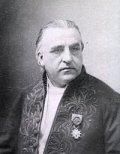
Babinski [1857–1932] stayed with Henry Head in London. He spoke no English but on retiring wanted to use a bidet and summoned the butler who spoke no French; he therefore used sign language to indicate what he wanted and the butler construed the gestures as Babinski propositioning him and resigned from the household.

I’m sure we’ve all made that mistake at some point.

As re-told in an article in this month’s neuroscience journal Brain on the late William McDonald.

A curious hysterical blindness

The New York Times has an extended book review that explores female hysteria in 19th Century Paris while demonstrating a curious hysterical blindness of its own.

The piece reviews a new and supposedly excellent book by Asti Hustvedt called ‘Medical Muses: Hysteria in Nineteenth-Century Paris’.

Hysteria is the presentation of seemingly neurological symptoms without any damage to the nervous system that could explain it. Although we can’t explain why many neurological disorders appear, neurological symptoms – almost by definition – are linked to clear and detectable damage.

Those that appear without the presence of such damage were traditionally labelled ‘hysteria’ although are now subsumed under various diagnoses such as conversion disorder or somatoform disorder.

Charcot was a highly influential 19th Century neurologist who essentially defined the shape of modern neurology and he was fascinated by hysteria. This is the subject of Asti Hustvedt’s new book.

I’ve not read the book but the review, and many pieces like it, focus on neurologist Jean-Martin Charcot’s interest in female hysteria as a demonstration of how the female body and sexuality were uniquely pathologised in 19th century medicine.

This would be interesting were it not for the fact that solely focusing on ‘female hysteria’ misrepresents what happened.

Not least because after more than two thousand years of hysteria being portrayed as being a uniquely feminine disorder, Charcot identified and campaigned for the existence of male hysteria.

This is from medical historian Mark Micale:

During the 1880s, Charcot published the case histories of more than 60 male “hysterics” and treated countless others in his daily hospital practice. Between a third and a quarter of the overall number of hysterical patients he presented in his printed works were men or children. In these writings, Charcot formulated an elaborate set of medical ideas about the disease in males, including a theory of aetiology, a model of symptomatology, and a programme of therapeutics.

Throughout this period, Charcot campaigned energetically for his theory of masculine hysteria, and by the time of his death, in 1893, the idea was widely accepted within mainstream European medical communities. Many of Charcot’s medical contemporaries judged his work on the topic to be among the most scientifically significant parts of his oeuvre, and the School of the Salpetriere, as it was called, was associated internationally with the theme of male hysteria.

It’s true to say that the female ‘hysterical patients’ gained much more attention (due to a combination of public fascination, Charcot’s love of showmanship and the recent invention of photography) but it’s interesting to note that this pattern has continued into the modern day.

This is despite the fact that’s the famous neurologist’s own interests were far more balanced. A curious historical parallel.
 

Link to review in the NYT.
Link details of ‘Medical Muses: Hysteria in Nineteenth-Century Paris’.

Biblioamnesia and the gentle fading of books

The Washington Post has a curious short article on what the author light-heartedly refers to as ‘biblio-amnesia’ where once-read books slowly fade from memory.

After I posted the story on internet service The Twitter, user @bfwriter pointed me toward a fantastic piece by poet Billy Collins, on exactly this experience.
 

Forgetfulness
by Billy Collins

The name of the author is the first to go
followed obediently by the title, the plot,
the heartbreaking conclusion, the entire novel
which suddenly becomes one you have never read,
never even heard of,

as if, one by one, the memories you used to harbor
decided to retire to the southern hemisphere of the brain,
to a little fishing village where there are no phones.

Long ago you kissed the names of the nine Muses goodbye
and watched the quadratic equation pack its bag,
and even now as you memorize the order of the planets,

something else is slipping away, a state flower perhaps,
the address of an uncle, the capital of Paraguay.

Whatever it is you are struggling to remember
it is not poised on the tip of your tongue,
not even lurking in some obscure corner of your spleen.

It has floated away down a dark mythological river
whose name begins with an L as far as you can recall,
well on your own way to oblivion where you will join those
who have even forgotten how to swim and how to ride a bicycle.

No wonder you rise in the middle of the night
to look up the date of a famous battle in a book on war.
No wonder the moon in the window seems to have drifted
out of a love poem that you used to know by heart.


Link to WashPost piece on ‘biblio-amnesia’.
Link to Billy Collins poem text and audio (via @bfwriter)

The testing of Alan Turing

The Providentia blog has a brilliant three part series on Alan Turing, focusing on how his homosexuality was treated at the time both as a mental illness and a criminal act.

As with all of the posts of Providentia it’s wonderfully written and captures the sad circumstances leading to the death of one of the world’s artificial intelligence pioneers and breaker of key German codes in the Second World War.

The piece places Turing’s ‘treatment’ in the context of how homosexuality was conceived and dealt with by the medical establishment of the time

In a 1949 paper, F.L. Golla and his colleagues presented the results obtained from a sample of thirteen convicted homosexuals and concluded that “libido could be abolished within a month” with sufficiently high dosages of female sex hormones. The authors concluded that “in view of the non-mutilating nature of this treatment and the ease with which it can be administered to a consenting patient we believe that it should be adopted whenever possible in male cases of abnormal and uncontrollable sexual urge”. Politicians and newspaper editorials alike praised the potential value of hormonal therapy. While critics warned that there was still too many unknowns involving the treatment, the potential gain was felt to be worth the risks involved. Controlling “unnatural” sexual urges with hormone treatments fit in well with the radical advances being made in other areas of psychiatry. Considering other types of experimental treatment being tried (including aversive conditioning, lobotomies, and electroconvulsive therapy), such treatment seemed relatively benign.

A highly recommended read about an exceptional man who was sadly let down by the country for whom who worked to protect.
 
Link to ‘The Turing Problem’ Part 1.
Link to ‘The Turing Problem’ Part 2.
Link to ‘The Turing Problem’ Part 3.

X-rated neuroanatomy

Slate has a curious article on how many of the anatomical names for parts of the brain are based on the nether-regions of the human body or bawdy allusions to sex.

Régis Olry, of the University of Quebec, and Duane Haines, of the University of Mississippi, brought the whole sordid tale to light in an intriguing pair of articles for the Journal of the History of the Neurosciences. These “historians of neuroanatomy” (yes, there is such a profession, and we should be grateful for it) reviewed a very old, circuitous medical literature and found that the human brain was once described as comprising its very own vulva, penis, testicles, buttocks, and even an anus. In fact, part of the cerebrum is still named in honor of long-forgotten whores.

A past professor of neuroanatomy told me that one of the old arguments for why women couldn’t be doctors is because the their delicate nature would be affected by all the rude Latin jokes in the anatomical names.

Following this line of argument, we might expect atheists to be scared away from neuroscience as well owing to the number of structures that are named after gods.

If you remain unshocked by the vulgarity of the brain, the Slate article may be for you.
 

Link to Slate article on bawdy neuroanatomy.

An anatomy of The Anatomy of Melacholy

BBC Radio 4’s In Our Time tackled one of the most important books in the history of psychology, psychiatry and literature – Robert Burton’s classic 17th Century text The Anatomy of Melancholy.

Although the book is commonly referred to by its abbreviated title it actually has the far more wonderful name of ‘The Anatomy of Melancholy, What it is: With all the Kinds, Causes, Symptomes, Prognostickes, and Several Cures of it. In Three Maine Partitions with their several Sections, Members, and Subsections. Philosophically, Medicinally, Historically, Opened and Cut Up’.

In the book, Burton explores melancholy, depression and low spirits in all of its forms as well as curating views and opinions of the state from literature, history and medicine.

It is known as a huge labyrinth of a work that is as chaotic as it is beautiful. It has barely been out of print since it was first published in 1621.

In Our Time discusses the writing of the book, the somewhat mysterious life of its author and its historical significance.

I have to say, I’ve not read it all, as even the modern paperback clocks in at an impressive 1,382 pages.

However, one of my favourite parts is the description a description of the glass delusion – a false belief that one is made of glass and might shatter. Curiously, this was widely reported at the time of Burton’s book but has now almost entirely disappeared.

As, to be honest, I will probably never read the book in its entirety, I fully intend to use the latest edition of In Our Time to get a excellent grounding in Burton’s landmark tome to sound much cleverer than I really am.

As the discussion is so fascinating, you could probably do the same.
 

Link to streamed version and info for this edition of In Our Time.
Link to podcast page.

Why the truth will out but doesn’t sink in

Bin Laden used a woman as a human shield and fired at the commando team sent to kill him – at least according to the first reports. These have just been corrected to say he was unarmed and standing alone, but the retractions follow a useful pattern – media friendly version first, accurate version later – because the updates make little impact on our beliefs.

In this particular case, I can’t speculate why the corrections came as they did. Maybe it was genuinely the ‘fog of war’ that led to mistaken early reports, but the fact that the media friendly version almost always appears first in accounts of war is likely, at least sometimes, to be a deliberate strategy.

Research shows that even when news reports have been retracted, and we are aware of the retraction, our beliefs are largely based on the initial erroneous version of the story. This is particularly true when we are motivated to approve of the initial account.

Psychologist Stephan Lewandowsky has been studying this effect for several years and not just with abstract test material. Here’s a summary of his study study on retracted reports of the Iraq war:

Media coverage of the 2003 Iraq War frequently contained corrections and retractions of earlier information. For example, claims that Iraqi forces executed coalition prisoners of war after they surrendered were retracted the day after the claims were made. Similarly, tentative initial reports about the discovery of weapons of mass destruction were all later disconfirmed.

We investigated the effects of these retractions and disconfirmations on people’s memory for and beliefs about war-related events in two coalition countries (Australia and the United States) and one country that opposed the war (Germany). Participants were queried about (a) true events, (b) events initially presented as fact but subsequently retracted, and (c) fictional events.

Participants in the United States did not show sensitivity to the correction of misinformation, whereas participants in Australia and Germany discounted corrected misinformation. Our results are consistent with previous findings in that the differences between samples reflect greater suspicion about the motives underlying the war among people in Australia and Germany than among people in the United States.

More recent studies have supported the remarkable power of first strike news. The emotional impact of the first version has little influence on its power to persuade after correction, and the misinformation still has an effect even when it is remembered more poorly than the retraction.

Even explicitly warning people that they might be misled doesn’t dispel the lingering impact of misinformation after it has been retracted.

So while the latest reports say Bin Laden was alone and unarmed, the majority of people are likely to believe he was firing from behind a human shield, even when they can remember the corrections.

And if this isn’t being used as a deliberate strategy to manage public opinion, I shall eat my kevlar hat.
 

Link to Iraq was misinformation study DOI.
pdf of full text.
Link to related 2007 WashPost piece on the persistence of myths.