A memory of shifting sands

The New York Review of Books has a reflective piece by Oliver Sacks on the swirling mists of memory and how false recall has affected authors and artists throughout history.

[Science] is startling to realize that some of our most cherished memories may never have happened—or may have happened to someone else. I suspect that many of my enthusiasms and impulses, which seem entirely my own, have arisen from others’ suggestions, which have powerfully influenced me, consciously or unconsciously, and then been forgotten.

Similarly, while I often give lectures on similar topics, I can never remember, for better or worse, exactly what I said on previous occasions; nor can I bear to look through my earlier notes. Losing conscious memory of what I have said before, and having no text, I discover my themes afresh each time, and they often seem to me brand-new. This type of forgetting may be necessary for a creative or healthy cryptomnesia, one that allows old thoughts to be reassembled, retranscribed, recategorized, given new and fresh implications.

Sacks reflects on some of his own shift sans of memory and the thin line between ‘literary borrowing’ and unrecognised remembering.
 

Link to ‘Speak, Memory’ in The NYRB (via @mocost)

Owner of Broca’s area identified

A patient who could only say the word ‘tan’ after suffering brain damage became one of the most important cases in the history of neuroscience. But the identity of the famously monosyllabic man has only just been revealed.

Broca’s area was one of the first brain areas identified with a specific function after 19th Century neurologist Paul Broca autopsied a man who had lost the ability to speak.

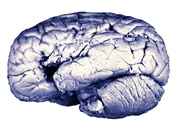
When examining the man’s brain (you can see it on the right), Broca found selective damage to the third convolution of the left frontal lobe and linked this with the fact that the person could understand speech but not produce it.

This type of speech problem after brain injury is now known as Broca’s aphasia but his innovation was not simply naming a new type of neurological problem.

Broca was one of the first people to think of the brain in terms of separate areas supporting specialised functions and studying patterns of difficulty after brain damage as a way of working this out – a science now known as cognitive neuropsychology.

The patient Broca described was nicknamed ‘Tan’ because this was the only syllable he could produce. The scientific report named his as Monsieur Leborgne but no further details existed.

Oddly, personal details were not even recorded in Broca’s unpublished medical notes for the patient.

Because of the mystery, people have speculated for years about the identity of Monsieur Leborgne with theories ranging from the idea that he was a French peasant to a philandering man struck down by syphilis.

But now, historian Cezary Domanski has tracked down the identity of Broca’s famous patient through detective work in record offices in France and published the results in the Journal of the History of the Neurosciences.

According to the Broca’s report, the health problems of Louis Victor Leborgne became apparent during his youth, when he suffered the first fits of epilepsy. Although epileptic, Louis Victor Leborgne was a working person. He lived in Paris, in the third district. His profession is given as “formier” (a common description in the nineteenth century used for craftsmen who produced forms for shoemakers).

Leborgne worked until the age of 30 when the loss of speech occurred. It is not known if the damage to the left side of Leborgne’s brain had anything to do with traumas sustained during fits of epilepsy nor, as reported in some recent publications, does it appear to have been caused by syphilis, as that was not indicated in Broca’s reports. The immediate cause for his hospitalization was his problem with communicating.

Leborgne was admitted to the Bicêtre hospital two or three months after losing his ability to speak. Perhaps at first this might have been perceived as a temporary loss, but the defect proved incurable. Because Leborgne was unmarried, he could not be released to be cared for by close relatives; he therefore spent the rest of his life (21 years total) in the hospital.

Domanski’s article finishes on a poignant note, highlighting that Leborgne became famous through his disease and death and his life history was seemingly thought irrelevant even when he was alive.

“It is time” says Domanski, “for Louis Victor Leborgne to regain his identity”.
 

Link to locked article on the identity of Broca’s patient (via @Neuro_Skeptic)

More than just bumps

Phrenology was the practice of reading someone’s personality from the bumps on their head based on the idea that the shape of the brain affected the shape of the skull.

Contemporary neuroscience lectures often have a part where the professor puts up an image of a phrenology head and says “although this was a rediculous concept, it sparked the idea that the brain could have parts that were specialised for particular functions”.

Phrenologists are usually considered to be quacks and that serious neuroscientists ‘took over’ from where they left off, but I’ve found lots of old copies of The Phrenological Magazine in the Institute of Psychiatry library and it turns out they had a keen interest in serious neuroscience.

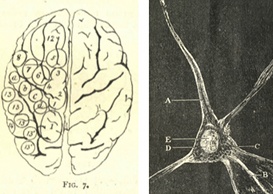
PhrenologicalMagazineNeuroanatomyThe images on the right are from the June 1890 edition (the brain) and October 1895 edition (the neuron) and both show some of the then cutting-edge neuroscience that the magazine regularly featured.
The brain is from the work of legendary neurologist David Ferrier showing his map of cortical functions transposed from his work on open-brain stimulation on animals.

The second image shows the structure of the neuron. The text describes how “molecular movements generated within any individual cell can probably be transmitted to other cells in the same striatum in the cortex” and the feature article goes on to highlight the latest discoveries in neuronal function.

It’s worth saying that this detailed discussion of neuroscience with accurate neuroanatomical images is far more common in the magazine than phrenological brain maps. It seems serious medical men wrote some of the articles and neuroscience debates are common in the pages.

The magazine is not without a bit of kookiness, however, although it’s hard to judge how much of this was considered kooky at the time.

My favourite part is where every issue has a portrait of a famous person with an interpretation of their character underneath. This is the interpretation from the portrait of Lord Wolseley, new head of the British Army, from October 1985.

The head of the new Commander-in-Chief indicates a fair balance of all the powers of his mind. He has no superabundance in any particular to give bias, no special deficiency to cause eccentricity. His head is well formed and appears to be well-developed in all parts.

Inside one issue I found an insert that just said “WANTED TO PURCHASE: a Tatoo’ed New Zealander’s Head. – Apply to Major-General H. ROBLEY, 7 St Alban’s Place, Haymarket”. It turns out that Robley was a renowned collector of such things and it seems phrenologists were one of his sources.

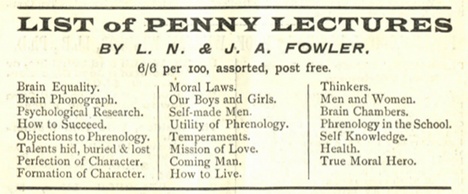
In fact, the magazines are full of wonderful adverts. This list of ‘penny lectures’ isn’t that different from pop psychology and neuroscience today.

There’s some good names for a band lurking in there.

Fragments of identity

Photo by Flickr user  аrtofdreaming. Click for source.The Atlantic has a sublime article on identity, memory and amnesia – written as a reflection on meeting a friend who has lost much of his memory due to an advancing brain tumour.

The author is neuropsychologist Daniel Levitin who is better known for his work on the cognitive science of music, but here he writes beautifully about how theories of memory can blend uncomfortably with individual experience.

Once Tom and I were sitting next to each other when Pribram told the class about a colleague of his who had just died a few days earlier. Pribram paused to look out over the classroom and told us that his colleague had been one of the greatest neuropsychologists of all time. Pribram then lowered his head and stared at the floor for such a long time I thought he might have discovered something there. Without lifting his head, he told us that his colleague had been a close friend, and had telephoned a month earlier to say he had just been diagnosed with a brain tumor growing in his temporal lobe. The doctors said that he would gradually lose his memory — not his ability to form new memories, but his ability to retrieve old ones … in short, to understand who he was.

It’s a wonderfully written piece that is subtly recursive, like memory itself.
 

Link to Atlantic piece on memory and identity (via @edyong209)

Rita Levi-Montalcini has left the building

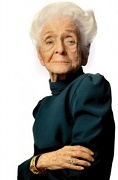
Nobel-prize winning neuroscientist Rita Levi-Montalcini has passed away at the age of 103, just a few months after publishing her last scientific study.

She won the Nobel Prize for the discovery of nerve growth factor along with her colleague Stanley Cohen and continued worked well past the time when most people would have retired.

Her most recent scientific study was published earlier this year, at the age of 102, and extended the work for which she won the Nobel.

If you want more background on a fantastic neuroscientist and her ground-breaking work, Nature published a profile in 2009, on her 100th birthday.
 

Link to obituary in the New York Times.
Link to Nature profile.

Darwin’s asylum

Shrewsbury School is one of the oldest public schools in England and it makes much of being the institution that schooled Charles Darwin and introduced him to science.

While the famous naturalist was certainly a pupil there he probably never set foot inside the building that the famous school now occupies because during Darwin’s time the building was Kingsland Lunatic Asylum.


As the historian L.D. Smith noted, the Kingsland Asylum was quite unique in its day. Rather than create a separate institution for ‘pauper lunatics’ – as was common at the time – the authorities in the county of Shropshire had decided to license the Shrewsbury ‘House of Industry’ as a private asylum at the same time.

The workhouse and asylum was opened in 1784 to accommodate paupers and cases of “lunacy”, “sickness” and “single women in a state of pregnancy”.

By 1844 the Kingsland Asylum contained nearly 90 residents who lived under a tough regime:

Payment of one-sixth part of their week’s work is made to all except in cases of misconduct, and punishments are given to all who profanely curse or swear, who appear to be in liquor, who are refractory or disobedient to the reasonable orders of the steward or matrons, who pretend sickness, make excuse to avoid working, destroy or spoil material or implements, or are guilty of lewd, immoral or disorderly behaviour.

But it’s not wholly inappropriate that Darwin has become posthumously linked to an asylum building as he had a powerful, if not fraught, relationship with psychiatry and mental illness.

Darwin reportedly showed ‘a personal interest in the plight of the mentally ill and an astute empathy for psychiatric patients’ but founded a view of madness as a form of degeneration that was enthusiastically adopted by eugenicists.

Thankfully, this strain of Darwinian influence has long since died, but both evolution and genetics remain important foundations of modern cognitive science although the role of evolutionary psychology in explaining mental illness remains controversial.

Curiously, Darwin himself also suffered from poor health for most of his life that has never been fully explained but clearly had many aspects that would be diagnosed as psychiatric disorders today.

So I quite like the fact that Darwin’s picture is proudly displayed inside an old asylum. It’s an ambiguous tribute and reminds us of his own ambivalent relationship with the unsettled mind.

A very psychological chocolate

A familiar sight amid the Christmas supermarket shelves is the box of Black Magic chocolates. It’s a classic product that’s been familiar to British shoppers since the 1930s but less well known is the fact that it was entirely designed by psychologists.
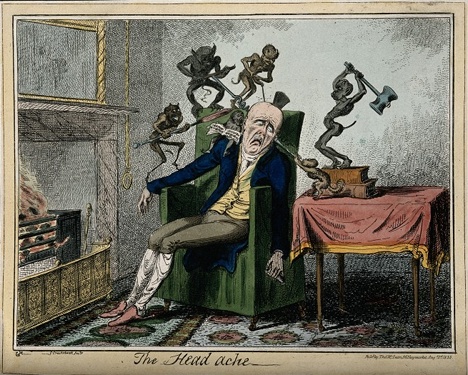

The chocolates were produced by Rowntree’s who were a pioneer in using empirical psychology to design products (rather than a Freudian approached preferred by American marketers like Edward Bernays).

The idea was to design an assortment of chocolates that would be tailored to be the ideal off-the-shelf romantic gift. This is from an article (pdf) on the history of Rowntree’s marketing:

The National Institute of Industrial Psychology interviewed 7,000 people over six months on their conception of the perfect chocolate assortment. In another survey, 3,000 preferences for hard, soft, and nut centres exactly determined the proportions of chocolate types in the assortment.

Retailers were consulted and their recommendations on margins and price maintenance were followed carefully. Shopkeepers, moreover, supplied information on buying behavior, and it was discovered that most assortments were purchased by men for women and that they were influenced entirely by value rather than fancy boxes. The now familiar, simple black-and-white box was distinctive and chosen from fifty similar designs.

The marketing was then focussed not on the qualities of the product, but on its potential use in developing relationships.

While this is common practice now, it was quite revolutionary at the time, although you can see from the archive of Black Magic adverts that the approach seems painfully clunky from a modern perspective.

The use of psychologists was part of Rowntree’s pioneering use of psychology throughout its whole business, both including product design and human resources and was also one of the most important moments in the launch of professional psychology in the UK – something covered by a 2001 article (pdf) from The Psychologist.

So while Black Magic chocolates now seem just like a common supermarket item, they’re actually an important part of psychology history.

Relax ladies, I’m a scientist

Photo by Flickr user stuartpilbrow. Click for source.A while ago I wrote a column in The Psychologist on why psychologists don’t do participant observation research – a type of data gathering where you immerse yourself in the activities of those you want to study.

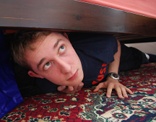
In response, psychologist James Hartley wrote in and mentioned a remarkable study from 1938 where researchers hid under the beds of students to record their conversations.

The study was published in the Journal of Social Psychology and was titled “Egocentricity in Adult Conversation” and aimed to record natural conversations untainted by researcher-induced self-consciousness.

In order not to introduce artifacts into the conversations, the investigators took special precautions to keep the subjects ignorant of the fact that their remarks were being recorded. To this end they concealed themselves under beds in students’ rooms where tea parties were being held, eavesdropped in dormitory smoking-rooms and dormitory wash-rooms, and listened to telephone conversations.

Remarks were collected in waiting-rooms and hotel lobbies, street-cars, theatres and restaurants. Unwitting subjects were pursued in the streets, in department stores, and in the home. In each case a verbatim record of the remarks was made on the spot. Since the study is concerned with conversations, other sorts of talk, such as games and sales talk, were excluded.

The point of the study was to critique earlier research that had suggested that children tend to engage in lots of ‘ego-related’ self-referencing or self-centred talk which they later grow out of.

The researchers in this study found that college students seem to do so at about an equal level, suggesting that this style of communication may not change as we get older.

The researchers mention they did most of their data collection in a women’s college.

This was presumably in the day where “relax ladies, I’m a scientist” was sufficient to keep you out of jail.
 

Link to locked 1938 study.

The relative consuming disease

The Global Mail has an amazing story about how the last treks to find cases of kuru – a cannabalism-related brain disease – have been completed.

Kuru was passed on by eating the brains of dead relatives – a long finished tradition of the Fore people in Papua New Guinea – and it infected new people through contact with prions.

Prions are misfolded proteins that cause other proteins to take on the infectious misfolding. In the case of kuru it lead to shaking, paralysis, outbursts of laughing and a host of other neurological symptoms as the brain slowly degenerated.

No-one knew prions existed or could exist before kuru. But as the article makes clear, this ‘obscure disease’ of a remote tribe revolutionised our understanding of proteins and how infections could take place.

But the story is how it was discovered is more than just lab tests and the article is a brilliant retelling of the research.

Michael Alpers has been working on the research project since the 60s and recalls some of the episodes:

After each death, he says, “I would go and talk to the family again, and say, ‘Okay?’. They had participated in cutting up bodies in the past — so that was not an unusual activity for them. We had to clear a few people — particularly the women who were wailing. But some of the women stayed. The ones involved put on masks to protect the tissue and I had gloves.

“The father, or a close relative, would hold the head, and I would take the top of the skull off with a bone handsaw. It would take maybe 20 minutes… like cutting an avocado. I would go to particular parts of the brain… take out small cubes. My assistant would hold out the bottle that was relevant, take the lid off, and I’d pop it in.

“Then I’d take the whole brain out and put it in a bucket full of formalin and cotton wool so it wouldn’t be deformed, and put the lid on. All our samples would go into an insulated box. Then I put the skull cap back on, and sewed up. Then we said goodbye… gave everyone a hug, and took off. I did this five times. It was enough.”

It’s a wonderfully written, informative piece. A long and compelling read.
 

Link to article ‘The Last Laughing Death’ (via @mslopatto)

Letter from the mental states of America

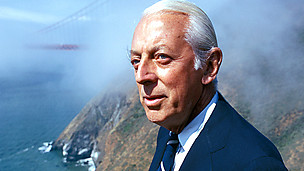
Alistair Cooke presented the longest running radio show in history. The BBC’s Letter from America was a weekly report, where Cooke reflected on life and news in the United States. It ran for just shy of 58 years.
Despite the massive ‘psychologisation’ of society during the years Cooke was broadcasting, from 1946 to 2004 no less, Cooke rarely addressed matters of the mind and brain directly.

However, he did occasionally touch on these issues and the shows are well worth listening to.

As the BBC has just put almost the complete Letter from America archives online so I’ve collected some of the highlights.

Link: George Gallup (1901-1984) – 9 November 1984
Link: TV Violence – 13 April 1986
Link: Narcotics, interdiction and Colombian drug lords – 08 September 1989
Link: American public schools – 03 January 1992
Link: Aphasia and studying the human brain – 15 October 1993
Link: Timothy Leary (1920 -1996) – 7 June 1996
Link: New York: How are you Doing? – 3 May 2002

I’ve linked to the transcripts, but listen to the linked audio if you have the chance. Cooke had a distinctive voice and a calm style that underscored his often insightful commentary.
 

Link to Letter from America archives.

Interviews with interrogators

Author Dominic Streatfeild interviewed many trained military, intelligence and police interrogators for his book Brainwash and I’ve just realised he’s put the full text of the interviews online.

They’re in equal measures fascinating, disturbing and sometimes worryingly relevant, as the ‘war on terror’ still relies on many of the same physical coercion techniques used in conflicts past.

The interviewees discuss their experiences of being interrogated to being interrogators and range from being captured in the Korean War, to counter-insurgency in Yemen, to The Troubles in Northern Ireland, to the ‘war on terror’ in Afghanistan.

[Interrogation subjects in the world of intelligence tend to construct series of cover stories, like the skins of an onion. Interrogators have to] go through these stories, peeling the onion, trying to get to the core. And eventually, people run out of stories.

The interviews are:

Interview with British Interrogator #1
Interview with British Interrogator #2
Interview with British Interrogator #3
Interview with SAS NCO Trained Interrogator
Interview with Senior Royal Ulster Constabulary (RUC) officer
Interview with US Army Interrogator #1

Let slip the coins of war

A fascinating short excerpt from a new study that estimates war and population change in Ancient Rome from finds of stashed coins.
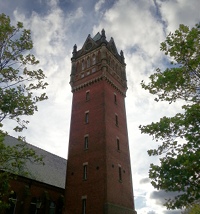
It turns out that the coin hoards are a surprisingly good guide to human behaviour:

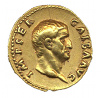
The reasons for this correlation are not hard to fathom. People tend to hide their valuables in times of violence and danger. Emergency hoards would later be recovered by the owners unless they had been killed or driven away. As a result, the greater the intensity of warfare, the more hoards are left in the ground to be discovered by archaeologists. For this reason, the time-specific deposition rate of hoards serves as an index of internal instability caused by violent conflict and dislocation.

Coins are useful because, of course, they’re dated. So in other words, finding lots of unrecovered coin stashes from a particular time period suggests there was a lot of war.

The researchers used this measure of war intensity in Ancient Rome to estimate population changes. Neat.
 

Link to full text of study.

The luxury of hindsight

“It’s no secret” says the promotional material “that several professional footballers live in Repton Park”, presumably unaware that one of London’s most luxurious housing developments used to be a psychiatric hospital.
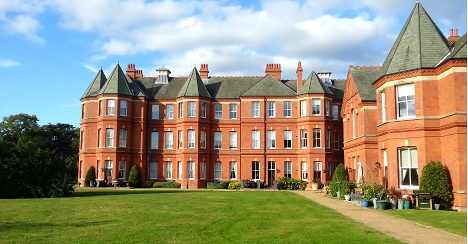
Repton Park is the new name for what was originally called the London County Lunatic Asylum and was eventually renamed Claybury Hospital before the fashion for monolithic mental hospitals finally passed.

When it finally closed it stayed derelict for a few years before it was bought by a property developer and turned into luxury flats.

As you walk round the estate you can see it’s been an easy sell. Driveways are scattered with Porches and Range Rovers and there seems not a single apartment which has not been sold.

The surroundings are admittedly stunning and the place boasts its own health club. Curiously, the estate has been divided into sections with faux stately names like Kensington and Tavistock House.

If this story sounds familiar, it is remarkably similar to the history of Colney Hatch Lunatic Asylum, later Friern Hospital, and now Princess Park Manor, which we covered previously on Mind Hacks.

Along similar lines, neither the property developers nor the residents of Repton Park are keen to mention the heritage of the building they now live in.

The residents’ association carefully avoids any mention of mental health in their history of the estate and the property dealers mention the ‘fine Victorian facades’ but not why they were built.

Next on the redevelopment list is probably the old City of London Lunatic Aslyum, later Stone House Hospital. Currently empty, it will shortly be converted into, well, luxury flats – although credit to the local council for specifying that some will have to become affordable housing.

However, if you can look past the luxury of Repton Park, the history itself is fascinating. There’s a great account of it here.

Welcome, professional footballers.
 

Link to history of Claybury Hospital.
Link to previous Mind Hacks piece on Friern Hospital.

Growing up in Broadmoor

Novelist Patrick McGrath talks about his childhood as the son of a psychiatrist growing up in the grounds of Broadmoor – one of Britain’s highest security psychiatric hospitals – in an article for Intelligent Life.

Broadmoor Hospital has a special and undeserved place in the British psyche – stereotyped as ‘the real-life equivalent of Arkham Asylum’.

The reality is vastly different. While dangerous people do genuinely go there, it is primarily a hospital and a particularly state-of-the-art one at that, although it is a very secure place.

With this is mind, McGrath’s article is all the more amazing, as it describes a forensic hospital of generations past where children could live on the grounds and play amid the hospital buildings.

…the family had settled happily into Broadmoor life. The superintendent’s kids—there were four of us eventually—were well pleased with their lot. Kentigern had sculleries, pantries, a meat safe, servants’ quarters, and various sheds and outhouses, including a conservatory where the patients grew tomatoes. The garden was a sprawling expanse of trees and lawns, a goldfish pond with a fountain, a vegetable garden and, best of all, areas of dense rhododendron bushes where you could hide out from the authorities and build a campfire. It was a good place to grow up.

I occasionally work in medium secure psychiatric wards, a ‘step below’ Broadmoor on the risk ladder, and it usually takes me at least 15 minutes to get in through the searches, doors and endless locks. The days when families lived on site are long gone.

McGrath also talks about (in)famous patients and cases that made the media and how they affected their family life.

Interestingly, McGrath has gone on to write several novels that feature psychiatry or madness as central to the plot.

A curious and unique perspective.
 

Link to ‘A Boy’s Own Broadmoor’ (via MeFi)

The inner object

The Lancet has a wonderful article on how medicine has understood how strange objects have ended up in the body and how this has influenced our understanding of the body and behaviour.

The piece notes that cases where people have swallowed or inserted foreign bodies into themselves have been important for surgery and even anatomy – hair swallowers apparently provided useful “hair casts of the stomach”.

However, it is no surprise that interest turned to understanding why some people put objects into themselves.

Thus, in surgical writings, the foreign body became something from which psychological meaning could be drawn. In 1913, William Clayton-Green puzzled: “Did hair-swallowers desire to do something which others abhorred? Or did they wish to excite wonder and interest and to puzzle their doctors? Or was hair-swallowing a form of psychical tic, occurring in mentally abnormal subjects?” He and his contemporaries struggled to answer such questions. This new interest in a psychological model of the foreign body is also apparent in the case of a young woman, Beatrice A, admitted repeatedly to the Royal London Hospital between 1898 and 1909 for the removal of hairpins inserted into her bladder. On her first admission, the young milliner was described as “[m]ad as a hatter”.

Yet, by 1909, this conclusion did not seem so obvious. Beatrice’s actions were now referred to as a “habit”, and it was noted that no other symptoms of insanity had been observed. Beatrice herself informed the surgeon “that she formerly suffered from an impulse to throw herself out [of] windows [and] once did it. Many years ago however she gave this up for the now harmless amusement of putting hairpins into her bladder.” This unusual explanation appears to have perturbed Beatrice’s surgeons, located as it was somewhere between the rational and the irrational: inserting hairpins did indeed seem less dangerous than falling from a height, but why might she need to do either? Thus articles in the next few decades debated the psychological meaning of foreign bodies, with a wide array of possible explanations suggested from hysteria to malingering, sexual perversion, and “professional swallowing”.

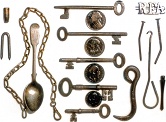
The image is of objects found in the stomach of a “26-year-old woman who was admitted to hospital in 1915, having accidentally swallowed a metal hook 2 weeks previously, since when there had been pain and the vomiting of black material”.
 

Link to Lancet article ‘Curious appetites’.