On violating the computational contraints of the mind

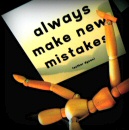
Photo by Flickr user elycefeliz. Flick for sourceOne of the Reuteurs blogs has a somewhat rambly post about being wrong in journalism which does, however, contain this absolute gem:

I try hard to believe the opposite: that many if not most of my opinions are wrong (although of course I have no idea which they are), and that many of the most interesting and useful things I write come out of my being wrong rather than being right. This is not, as Wilkinson noted to Cowen, an easy intellectual stance to hold: he calls it “a weird violation of the actual computational constraints of the human mind”.

Link to Reuters on being wrong (via The Hardest Science; thanks Peter!).

The mighty fortress of belief

Bad Science has an excellent piece on the psychology of how we deal with evidence that challenges our cherished beliefs. Needless to say, our most common reaction is to try and undermine the evidence rather than adjust our beliefs.

The classic paper on the last of those strategies is from Lord in 1979: they took two groups of people, one in favour of the death penalty, the other against it, and then presented each with a piece of scientific evidence that supported their pre-existing view, and a piece that challenged it. Murder rates went up, or down, for example, after the abolition of capital punishment in a state, or comparing neighbouring states, and the results were as you might imagine. Each group found extensive methodological holes in the evidence they disagreed with, but ignored the very same holes in the evidence that reinforced their views.

The article goes on to discuss a recent study that found that scientific information that contradicts a cherished belief not only leads people to doubt the study in question, but also science itself.

In psychology, the motivation to resolve conflicting ideas is called cognitive dissonance and it leads us to try and resolve the contradiction in whichever is the most personally satisfying way, rather than whichever it the most in tune with reality.

The theory has an interesting beginning and first originated when psychologist Leon Festinger decided to study a flyer saucer cult, an episode he documented in his amazing book When Prophecy Fails.

Festinger was curious as to what would happen when an inconsistency to a cherished belief was so absolute it would seem to be logically overwhelming. So he was intrigued when he saw a story in the paper about a religious cult who had prophesised that the world would end in a great flood on December 21, 1954, while the true believers would be rescued in a flying saucer.

The members sold all their possessions, several divorced because their spouses were non-believers, and they prepared for the big event. Festinger’s colleague Stanley Schachter infiltrated the cult and documented what happened on the night when the ‘end of the world’ came – and went.

In the hours following midnight the group were distraught, but at 4am a ‘message’ arrived from the aliens, channelled through the group’s leader. It said: “This little group, sitting all night long, has spread so much goodness and light that the God of the Universe spared the Earth from destruction.”

You would think that a failed prophecy backed up by a lame excuse would lead the members to give it up as a lost cause, but instead, they became more fervent in their beliefs and publicly announced they’d saved the world.

Although the group Festinger studied eventually disbanded, the group’s leader ‘Sister Thedra’ went on to found various alien-inspired New Age movements and is still widely revered in those circles. There’s some information about her on this UFO group page and on various similar places online, none of which mentions the failed prophecy.

Cognitive dissonance is one of the most established theories in psychology and one of our most powerful motivators that drives us to fit the world into what we already believe. Science, religion or reality are simply no match.

Link to Bad Science on discounting evidence.
That’s what they want you to believe

The Psychologist has a fascinating article on the psychology of conspiracy theories, looking at what characteristics are associated with believing in sinister far-reaching explanations and what role these beliefs play in society.

I was particularly interested in one part where they note that we are influenced by such ideas even when we’re not aware of it:

Other relevant work has examined the psychological impact of exposure to conspiracy theories, particularly in relation to mass media sources (e.g. Butler et al., 1995 [who studied the psychological impact of the film JFK]), but also in relation to the third-person effect (the tendency for people to believe that persuasive media has a larger influence on others than themselves). In one study, Douglas and Sutton (2008) had participants read material containing conspiracy theories about Princess Diana’s death before rating their own and others’ agreement with the statements, as well as their perceived retrospective attitudes. They found that participants significantly underestimated how much the conspiracy theories influenced their own attitudes.

The piece also covers why conspiracy theories can seem so attractive and discusses compatibility with prior beliefs, the fact they might fill an emotional need, and how they might reflect a general distrust of authority.

However, it doesn’t touch on the fact that truth can often be stranger than fiction, giving even the most unlikely theories a wide margin of error:

The CIA setting-up fake brothels to spike punters with LSD to test its effectiveness as a new generation of mind control drug – been done; secret international network to listen in on telephone calls, faxes and e-mails – old hat; foreign journalists in the pay of intelligence services to spin the media – yesterday’s news.

It is interesting that both conspiracy theorists and conspiracy hiders use this grey area to equal effect.

Link to Psychologist article ‘The truth is out there’.

Full disclosure: I’m an unpaid associate editor and occasional columnist for The Psychologist. This site is entirely independent of the Knights Templar.

99 problems but the rich ‘aint one

Photo by Flickr user Xavier Donat. Click for sourceI’ve just picked up on this thought-provoking 2008 article from the Boston Globe on a psychological theory of poverty that suggests that traditional economic models just don’t apply to the poor.

The article riffs on an apparently under-recognised book by philosopher Charles Karelis called The Persistence of Poverty: Why the Economics of the Well-off Can’t Help the Poor.

Compared with the middle class or the wealthy, the poor are disproportionately likely to drop out of school, to have children while in their teens, to abuse drugs, to commit crimes, to not save when extra money comes their way, to not work.

To an economist, this is irrational behavior. It might make sense for a wealthy person to quit his job, or to eschew education or develop a costly drug habit. But a poor person, having little money, would seem to have the strongest incentive to subscribe to the Puritan work ethic, since each dollar earned would be worth more to him than to someone higher on the income scale. Social conservatives have tended to argue that poor people lack the smarts or willpower to make the right choices. Social liberals have countered by blaming racial prejudice and the crippling conditions of the ghetto for denying the poor any choice in their fate. Neoconservatives have argued that antipoverty programs themselves are to blame for essentially bribing people to stay poor.

Karelis, a professor at George Washington University, has a simpler but far more radical argument to make: traditional economics just doesn’t apply to the poor. When we’re poor, Karelis argues, our economic worldview is shaped by deprivation, and we see the world around us not in terms of goods to be consumed but as problems to be alleviated. This is where the bee stings come in: A person with one bee sting is highly motivated to get it treated. But a person with multiple bee stings does not have much incentive to get one sting treated, because the others will still throb. The more of a painful or undesirable thing one has (i.e. the poorer one is) the less likely one is to do anything about any one problem. Poverty is less a matter of having few goods than having lots of problems.

I also a found a short piece on NPR where Karelis discusses the idea further and I was thinking that as an essentially psychological theory, the general idea must have been tested before.

However, I’m having trouble finding anything directly relevant, although I’m certainly not an expert in the area so maybe I’m looking in the wrong places.

Link to Boston Globe article ‘The sting of poverty’.

Against narrativity

Photo by Flickr user happysweetmama. Click for source‘We understand ourselves through stories’ is a common, even fashionable, sentiment. Not everybody agrees. Philosopher Galen Strawson‘s 2004 article “Against Narrativity” is a both-barrels attack on this idea. Strawson identifies two theories which he wishes to emphatically reject. The psychological Narrativity thesis is the idea that it is unavoidable human nature to experience their lives as a story. The ethical Narrativity thesis is the idea that conceiving of one’s life as narrative is a good thing, essential to a moral life and true personhood.

It’s just not true that there is only one good way for human beings to experience their being in time. There are deeply non-Narrative people and there are good ways to live that are deeply non-Narrative. I think the [Narrativity theses] hinder human self-understanding, close down important avenues of thought, impoverish our grasp of ethical possibilities, needlessly and wrongly distress those who do not fit their model, and are potentially destructive in psychotherapeutic contexts.

Strawson goes on to identify two personality types, which he calls the diachronic type, the kind of person disposed to conceive of themselves connected to both their past and future selves, and the episodic type, which is the kind of person who does not tend to conceive of their momentary self as part of a chain of selves stretching into the past and future. Obviously the diachronic type, in Strawson’s scheme, will be disposed to narrativity, while the episodic won’t. Strawson suspects that

those who are drawn to write on the subject of ‘narrativity’ tend to have strongly Diachronic and Narrative outlooks or personalities, and generalize from their own case with that special, fabulously misplaced confidence that people feel when, considering elements of their own experience that are existentially fundamental for them, they take it that they must also be fundamental for everyone else.

Although Strawson makes reference to a wide range of western philosophy and literature, it is notable that he doesn’t allude to eastern philosophies such as Zen Buddhism in support of his argument. There is a strong anti-representational sentiment in Zen philosophy, which ties in with the claim that Enlightenment is the experience of reality without the mediation of abstract concepts (and thus also, presumably, unmediated by narratives also).

Link to Strawson’s article, “Against Narrativity
Previously on Mindhacks.com The story of our lives

Holidays through rose tinted sunglasses

Photo by Flickr user entelepentele. Click for sourceThe Boston Globe has a counter-intuitive piece on the psychology of holidays, noting, among other things, that overall enjoyment is not what makes a break likely to feel better and that we often enjoy planning the vacation more than taking it.

The article speculatively (but reasonably) applies findings from the behavioural economics of pleasure but also discusses research that specifically addresses our experience of taking time off.

But research looking at how people actually feel about their vacations suggests that, by and large, they remember them warmly — more warmly, in fact, than they feel while taking them. The psychologists Leigh Thompson, of Northwestern University’s Kellogg School of Management, and Terence Mitchell, of the University of Washington’s Foster School of Business, in 1997 reported the results of a study in which they asked people on three different vacations — a trip to Europe, Thanksgiving break, and a three-week bicycle tour of California — to fill out a series of emotional inventories before the vacation, during it, and then after.

They found that in all three cases, the respondents were least happy about the vacation while they were taking it. Beforehand, they looked forward to it with eager anticipation, and within a few days of returning, they remembered it fondly. But while on it, they found themselves bogged down by the disappointments and logistical headaches of actually going somewhere and doing something, and the pressure they felt to be enjoying themselves.

A recent Dutch study had a more striking finding. Looking not at vacation memories, but measuring general happiness level through a simple three-question questionnaire, the researchers found that going on vacation gave a notable boost to pre-vacation mood but had hardly any effect on post-vacation feelings. Anticipation, it seems, can be a more powerful force than memory.

Link to Globe article ‘The best vacation ever’.

Smells like retail

Photo by Flickr user misteraitch. Click for sourceBusiness Week has a fascinating article on the rise of ‘ambient scenting’ – a type of smell-based marketing used in High Street stores to alter the buying behaviour of shoppers.

There is now a small but determined scientific literature on the effect of scents on consumer behaviour. These studies have found, for example, that a well-chosen perfume can increase people’s liking of products, improve memory for aspects of the product, and when combined with similarly evocative music, can boost sales.

Interestingly, many studies suggest that shop scents seem to work well when they match the theme of the display but have a lesser or absent effect when the smell clashes with the product (and there’s been one study which found no effect at all).

In spite of the relatively small number of studies, the Business Week article charts how ‘scent branding’ has become big business with companies already offering to blend scents specifically for your store or product.

No longer confined to lingerie stores, ambient scenting became standard practice in casinos in the early 2000s and invaded the hospitality sector soon thereafter. Sheraton Hotels & Resorts employs Welcoming Warmth, a mix of fig, jasmine, and freesia. Westin Hotel & Resorts disperses White Tea, which attempts to provide the indefinable “Zen-retreat” experience. (Despite its abstraction, the line was successful enough to inspire Westin’s 2009 line of White Tea candles.) Marriott offers different smells for its airport, suburban, and resort properties. The Mandarin Oriental Miami sprays Meeting Sense in conference rooms in an effort, it claims, to enhance productivity. In the mornings, the scent combines orange blossom and “tangy effervescent zest.” In the afternoon, executives work away while sniffing “an infusion of Mediterranean citrus, fruit, and herbs.”

Scent branding is becoming just as prevalent in retail. Researchers believe that ambient scenting allows consumers to make a deeper brand connection, and data has led many other non-scent-related companies to join the fray. Recently, Gaurin, 41, helped create a fragrance for Samsung’s stores, which has been cited throughout the industry as a milestone in scent as design. He claims the research, which IFF declined to provide on account of contractual agreements, showed that not only did customers under the subtle influence of his creation spend an average of 20 to 30 percent more time mingling among the electronics, but they also identified the scent‚Äîand by extension, the brand‚Äîwith characteristics such as innovation and excellence.

Although this is touted as a relatively new innovation, more obvious applications of the ‘scent sells’ approach have been used on the High Street for some years.

For example, I notice sandwich chain Subway have designed their bread ovens so they vent the smell of freshly baked bread directly to the pavement so passers-by get an olfactory advert as they walk past the front door.

Link to Business Week piece on ‘Scent Branding’.

Winners wanted: lucky bastards need not apply

A delightful experiment in the Journal of Gambling Studies demonstrates how susceptible we are to social persuasion to the point where even our established cognitive biases yield to the influence of others.

The illusion of control is the tendency to believe that we have influence over uncontrollable events. It has been well demonstrated in gamblers who may often put down wins and losses to their skills and abilities, even on games like roulette where the outcomes are entirely random.

This new study found that roulette players who learnt that someone else had recently ‘won big’ had an increased illusion of control, expected to win more and made more risky gambles while playing.

However, this effect virtually disappeared simply by adding that the ‘big winner’ had put down his bonanza to sheer luck.

Link to PubMed abstract for gambling study.

Time compression and the causal connection

Photo by Flickr user evoo73. Click for sourceWhen we think two events are causally related we perceive the time between them to be shorter. Although this is news to me, it turns out the ‘time compression’ effect has been well researched.

Several of the studies have found that when we view two events but believe the first causes the second, time between them seems have gone quicker than when we perceive exactly the same scenario but think the two events are not connected.

This is a summary of the effect from a recent study that investigated whether your beliefs about how one thing is causing another affected the amount of time compression:

How much time might have elapsed between the launch of an economic program and the emergence of an economy from recession, between joining a dating service and finding someone you want to marry, or between giving your child a tough lecture about trying harder in school and seeing an effect on his or her performance? Recent research has shown that people subjectively bind such cause‚Äìeffect events in time and ‚Äúcompress‚Äù the time elapsed between them. Hence, for instance, if a parent believes that the tough lecture was the reason for an improvement in the child’s performance, the parent would estimate the interval [between the two] to be shorter. Several behavioral studies have established that people judge the time elapsed between pairs of historical events to be shorter when they perceive the events to be causally linked than when people do not perceive them to be so (Faro, Leclerc, & Hastie, 2005).

Similar effects occur on a shorter time scale. For example, in another study, when participants intentionally made a movement that appeared to cause a sound, they thought the events were closer together than when the two events occurred with no apparent causal connection

The new study helped explain the effect and showed that our beliefs about how we think one thing caused another are crucial to our experience of time.

It found that if people believe that cause and effect happened by a mechanical or physical process that was time limited the ‘time compression’ effect increased, whereas if it was an accumulative or ‘building up to a tipping point’ process, time didn’t seem so short.

Link to PubMed entry for time compression study.

A belief in flexible intelligence

Photo by Flickr user Pink Sherbet Photography / D Sharon Pruitt. Click for sourceThe Chronicle of Higher Education has an excellent piece about psychologist Carol Dweck’s work which has highlighted how what you believe about intelligence has an effect on how you perform.

Dwecks’ work has garnered a great deal of attention and her main findings have suggested that children praised for their ‘hard work’ do significantly better when challenged with difficult problem that those who are told that they are ‘intelligent’.

The Chronicle article is a fantastic update to some of the more congratulatory pieces that have appeared in the press as it covers some of the work from other research groups that didn’t find the effect or has only found it under limited circumstances.

The studies wondered whether students’ beliefs about intelligence (“entity” [fixed] versus “incremental,” [flexible] in Dweck’s terms) would affect how long they practiced before taking the test, whether they chose to listen to distracting music while practicing, and how they would explain their low scores after taking the test.

The answer turned out to be: It depends. The Michigan studies divided the incremental theorists (that is, the students who implicitly believed that intelligence is malleable) into two groups: Those whose sense of self-worth was tied to academic performance and those who didn’t care so much about school. The latter group‚Äîthose whose egos were not deeply invested in schoolwork‚Äîbehaved as Dweck would have predicted. But among students whose self-worth was tied to academic performance, incremental theorists behaved similarly to students with “fixed” beliefs about intelligence. They avoided practicing, and they “self-handicapped.”

Link to Chronicle piece on Dwecks’ work.

Eight minutes of incompetence

ABC Radio National’s Science Show has a fantastic short segment on the ‘unskilled and unaware of it’ effect, also known as the Dunning-Kruger effect, where people with low levels of ability in a certain field vastly over-rate their talents because they lack the skills to judge their own competence.

It is my second favourite cognitive bias in psychology (after Emily Pronin’s discovery of the ‘bias blind spot‘) and the study also demonstrated the paradoxical effect whereby improving people’s skills reduced their self-assessment as they also learned to judge their ability level more accurately.

The segment in the science show is a wonderfully concise guide to the effect and start with the same wonderful story of the lemon juice covered bank-robber as the scientific paper.

Link to Science Show on the Dunning-Kruger effect.

The moral intuitions of babies

Photo by Flickr user gabi_menashe. Click for sourceThe New York Times has a fascinating article by psychologist Paul Bloom on how babies may have a far more developed sense of justice and moral behaviour than we assume.

The piece starts by discussing the difficulties of doing psychology experiments on babies and goes on to explain how these problems have been overcome in the lab.

It then focuses on some of the work arising from Bloom’s own lab where they’ve sought to understand whether very young children, even those who are only a few months old, can make moral distinctions based on behaviour. Surprisingly, it seems they can.

To increase our confidence that the babies we studied were really responding to niceness and naughtiness, Karen Wynn and Kiley Hamlin, in a separate series of studies, created different sets of one-act morality plays to show the babies. In one, an individual struggled to open a box; the lid would be partly opened but then fall back down. Then, on alternating trials, one puppet would grab the lid and open it all the way, and another puppet would jump on the box and slam it shut. In another study (the one I mentioned at the beginning of this article), a puppet would play with a ball. The puppet would roll the ball to another puppet, who would roll it back, and the first puppet would roll the ball to a different puppet who would run away with it. In both studies, 5-month-olds preferred the good guy — the one who helped to open the box; the one who rolled the ball back — to the bad guy. This all suggests that the babies we studied have a general appreciation of good and bad behavior, one that spans a range of actions.

Link to NYT piece ‘The Moral Life of Babies’.

Every underdog has its day

Slate has an excellent article on why we have a tendency to root for the underdog. It’s a fascinating area because it involves the combination of our perception of fairness, our positive emotional reaction to winners and our biases about what sort of characteristics we think underdogs might have – all of which could be pulling us in different directions.

The article is packed full of relevant studies, but the idea that we consistently over-estimate the success of underdogs particularly caught my eye:

Researchers have found evidence for exactly this phenomenon‚Äîcalled the “favorite-long-shot bias”‚Äîat the horse track. One recent study [pdf] that compiled stats from some 6 million American horse races showed a steep drop-off in the return on winning bets, as the odds against those bets increased. In other words, bettors were throwing money at the underdogs and underbidding on the favorites. That’s not because we get some special pleasure from playing the ponies at 100-to-1, the authors argue. It’s because we tend to overestimate the long shots’ chances.

Link to Slate on ‘The Underdog Effect’ (via The Frontal Cortex).

Full disclosure: I’m an occasional writer for Slate and I consistently over-rate the chances of long-shots.

Visual acuity improves by autopilot

Photo by Flickr user MATEUS_27:24&25. Click for sourceWe tend to assume that visual acuity, the ability to distinguish fine detail with our eyes, is a physical limit of the body but a new study just published online by Psychological Science shows that prompting people with ideas about people who have excellent eyesight actually improves clearness of vision.

The research was led by psychologist Ellen Langer who has become well-known for her inventive and counter-intuitive research that has shown how changing beliefs and mental attitude can affect our performance.

Here’s the abstract of the study which describes the results of the main experiments:

These experiments show that vision can be improved by manipulating mind-sets. In Study 1, participants were primed with the mind-set that pilots have excellent vision. Vision improved for participants who experientially became pilots (by flying a realistic flight simulator) compared with control participants (who performed the same task in an ostensibly broken flight simulator). Participants in an eye-exercise condition (primed with the mind-set that improvement occurs with practice) and a motivation condition (primed with the mind-set “try and you will succeed”) demonstrated visual improvement relative to the control group. In Study 2, participants were primed with the mind-set that athletes have better vision than nonathletes. Controlling for arousal, doing jumping jacks resulted in greater visual acuity than skipping (perceived to be a less athletic activity than jumping jacks). Study 3 took advantage of the mind-set primed by the traditional eye chart: Because letters get progressively smaller on successive lines, people expect that they will be able to read the first few lines only. When participants viewed a reversed chart and a shifted chart, they were able to see letters they could not see before. Thus, mind-set manipulation can counteract physiological limits imposed on vision.

It’s worth saying that Langer and her team interpret the results in terms of ‘mindfulness’ but use a somewhat idiosyncratic definition of the term where most people would just describe it as priming or expectancy – that is, being exposed to a concept or having a certain approach encouraged by the circumstances.

The psychological concept of mindfulness is more commonly used to refer to an attentive awareness of experience that acknowledges each thought or perception but doesn’t get caught up or involved in it.

It is drawn from the Buddhist meditation practice of the same name and has become of interest to psychologists for treating intrusive thoughts and sensations and there is now increasing evidence for its effectiveness.

Despite this, Langer’s study is in line with previous experiments that have shown that exposing people to a stereotype subtly shifts their behaviour to more closely match the stereotype.

For example, studies have found that people’s performance on a quiz could be improved by asking them to think about the lifestyle of a professor and made worse by asking them to think about supermodels or football hooligans.

Another found that participants who were exposed to ideas about old people walked more slowly afterwards.

Interestingly, this effects seems only to hold true for general stereotypes as when people are primed with specific extreme examples (such as Albert Einstein instead of ‘professor’, or Kate Moss instead of ‘supermodel’) exactly the opposite happens, likely because instead of triggering a general association it leads us to make a direct personal comparison with the individual which may affect our motivation, whether we realise it or not.

Link to full text of Langer study.

Decisions, decisions

The New York Times has a review of a new book called ‘The Art of Choosing’, by psychologist Sheena Iyengar, that tackles the psychology of choice and decision-making. I’ve not read the book myself but the review is very positive and like all good book reviews, it is full of interesting snippets and is worth reading in itself.

I didn’t recognise the author at first but she has done some fantastic work and is responsible for the classic experiment where a stall selling many varieties of jam had more people stop to look but sold little, where a stall with only a few varieties had fewer browsers but when they did stop they were much more likely to buy something.

This is among the many curiosities of decision-making (e.g. we say we want more options but we are consistently happier with our choice when we have only a limited selection) but the book seems to go further and discusses cultural differences in how we make and even define choices:

Take a mundane question: Do you choose to brush your teeth in the morning? Or do you just do it? Can a habit or custom be a choice? When Iyengar asked Japanese and American college students in Kyoto to record all the choices they made in a day, the Americans included things like brushing their teeth and hitting the snooze button. The Japanese didn’t consider those actions to be choices. The two groups lived similar lives. But they defined them differently.

It seems the book has picked up lots of good reviews so I might have to add this one to the list.

Link to NYT book review.
Link to more info about the book.

Opening the mind to moral persuasion

This week’s Nature has an article arguing that the recently popular field of moral psychology has neglected the role of public debate and personal reflection in the development of our morality.

The piece is by psychologist Paul Bloom, well known for his work on how we solve ethical problems – something which has become a hot topic in recent years as traditionally philosophical issues have been taken into the lab.

Indeed, many psychologists think that the reasoned arguments we make about why we have certain beliefs are mostly post-hoc justifications for gut reactions. As the social psychologist Jonathan Haidt puts it, although we like to think of ourselves as judges, reasoning through cases according to deeply held principles, in reality we are more like lawyers, making arguments for positions that have already been established. This implies we have little conscious control over our sense of right and wrong.

I predict that this theory of morality will be proved wrong in its wholesale rejection of reason. Emotional responses alone cannot explain one of the most interesting aspects of human nature: that morals evolve. The extent of the average person’s sympathies has grown substantially and continues to do so. Contemporary readers of Nature, for example, have different beliefs about the rights of women, racial minorities and homosexuals compared with readers in the late 1800s, and different intuitions about the morality of practices such as slavery, child labour and the abuse of animals for public entertainment. Rational deliberation and debate have played a large part in this development.

If you’re wondering what all the fuss is about, I recommend a 2008 article from Prospect magazine that gives a great introduction to the field.

Link to Nature article ‘How do morals change?’
Link to Prospect article ‘The emerging moral psychology’.