Don’t get high on your own supply – enflurane edition

Another in our occasional series of articles on the importance of the motto “don’t get high on your own supply”. This edition concerns the case of an anaesthetist who was testing some of his own anaesthetics while driving.

From a case report from Forensic Science International:

A 42-year-old anaesthetist firstly was observed sitting in a parked automobile under a bridge, secondly 100 m further. Both times he was holding a handkerchief under his nose. Then he drove on and crashed into a lorry at a red traffic light.

After that an odd behaviour was noticed. The markedly affected physician put something trickle out of a small brown bottle in the handkerchief and inhaled the fumes. During the time interval until the arrival of the police he went asleep and could not be waked up without difficulties.

At first he did not take any notice of the police. Later he was extremly unsure, trembled from head to foot, staggered and swayed from site to site and clutched his car not to fall down. The handkerchief in his car smelled of the content of the brown bottle with the label Ethrane®

Enflurane is a type of ether, of which diethyl ether was an early inhaled anaesthetic.

It was one of the great discoveries of surgery although could be lethal in overdose, or if it caught fire – as it is highly flammable.

Needless to say, it has been replaced by rather safer alternatives, when used correctly, of course.

Link to PubMed entry for case study.

Gladwell on Outliers

New York Magazine profiles prolific mind-focused science writer Malcom Gladwell and previews his upcoming book on the unpredictable factors that propel the super-successful to the top.

Gladwell writes incredibly compelling books about psychology and culture that have been wildly popular. The article mentions a multi-million dollar advance for his forthcoming book Outliers.

I have to say, I read his last book, Blink and enjoyed every page but didn’t quite get the punchline. It seemed to be saying sometimes instant judgements can be better than considered judgements, and other times not, but I wanted to know when they are better.

However, Gladwell’s books are as enjoyable as much for their eclecticism as his gripping narrative, and even as a collection of stories about interesting studies I found them eye-opening.

The New York Magazine discusses Gladwell and his work, and it’s probably true to say that he’s one of the most influential people in the public understanding of psychology, so he is always worth keeping tabs on.

Link to New York Magazine article ‘Geek Pop Star’.

A passive aptitude of soul

I’ve just got round to listening to a September edition of ABC Radio National’s The Philosopher’s Zone on Frankenstein, science and philosophy in the Romantic period. Tragically, the mp3 is no longer available, but one of the people on the programme read out a fantastic Benjamin Franklin quote on Mesmerism.

Franklin was charged by the King of France to investigate the scientific basis of Mesmerism. We now think of mesmerism as hypnosis but at the time Franz Anton Mesmer believed that the effects were because he had discovered a way of manipulating a powerful invisible fluid that permeated the universe.

One of the interviewees on the programme read out Franklin’s conclusion to the his 1784 report to Louis XIV on the scientific basis of Mesmerism, and it’s both profound and beautiful:

It is perhaps the history of the errors of mankind, all things considered, that is more valuable and interesting than that of their discoveries. Truth is uniform and narrow; it constantly exists and does not seem to require so much an active energy as a passive aptitude of soul, in order to encounter it.

But error is endlessly diversified. It has no reality but is the pure and simple creation of the mind that invents it. In this field, the soul has room enough to expand herself to display all her boundless faculties and all of her beautiful and interesting extravagances and absurdities.

Obviously this was before the days when it was traditional to finish a scientific report by sitting on the fence and suggesting further research.

Link to Philosopher’s Zone edition, sans mp3, avec transcript.

Dreaming of demons

The Boston Globe has a brief interview with dream researcher Kelly Bulkeley who has just written a book on the history of dreaming in the world’s religions.

Bulkeley notes in the interview that his book attempts to look at common themes from various dreams described in the religious literature, and draws out how they might reflect common aspects of human experience.

It sounds like an historical anthropology of dreaming with a view to understanding the significance of dreams for some of the most influential movements in our culture.

You argue that modern science can learn about dreaming from religion. Do you have a favorite example that you use when talking to scientists?

BULKELEY: Well, consider this particular kind of nightmare dream that recurs again and again in religious texts. In the Christian tradition they talk about the incubus, or the demons of the night. In Newfoundland, it’s the old hag and so on. But what all these various religions agree on is that there’s a type of nightmare that’s very intense and involves the constriction of breathing or paralysis. Now we know, thanks to modern science, that this is a real class of dream called night terrors and they’re very different from ordinary nightmares. So all these texts that talk about night terrors, they’re actually describing a real element of human experience.

One of my favourite books on dream themes is somewhat less serious. I Dream of Madonna is a beautifully illustrated book that collects women’s dream about the Material Girl.

Link to Kelly Bulkeley interview (via Frontal Cortex).
Link to more info about the book.

Escaping down an electrode

Esquire magazine (of all places) has an excellent neuroscience article that discusses the case of Erik Ramsey, a young man with locked-in syndrome whose only hope for communicating with the outside world is a prototype brain computer interface that needs to be implanted directly into his cortex.

Locked-in syndrome is a condition that can occur after certain forms of brain stem stroke. The brain stem acts as the relay station to the peripheral nerves of the body, and hence the control of muscles.

The syndrome is where the person is mentally fine but are physically unable to move any muscle in the body, usually except muscles associated with eyes.

Current methods of communicating typically involve having someone hold up a board with the letters of the alphabet on it. The assistant starts reading off the letters and the locked-in person moves their eye when they arrive at the right letter, and through this method, they slowly spell out sentences.

Famously, Jean-Dominique Bauby created one of the most incredible books ever written, The Diving Bell and the Butterfly, using this method after becoming locked-in.

There is currently a great hope for ‘brain computer interfaces’ that, with a bit of training, might allow locked-in people to communicate through a computer system that translates specific types of neural activity into letters or words.

This is usually described as translating ‘thoughts into words’ but most systems simply link specific patterns of brain activation to specific computer outputs, so as long as they can reliably distinguish between different types of brain activity and reliably produce specific responses the job is done.

In other words, if thinking of sea lions reliably produces an ‘A’ and thinking of a scratch-my-nose action reliably produces a ‘B’ (and so on) this is enough, but the leap between the content of thoughts and the output is not at the level of meaning (where thinking of sea lions would produce ‘sea lions’ as an output).

Interestingly, the training method most of these systems use largely relies on operant conditioning (a type of trial and error learning). We know that we can be conditioned to have certain responses unconsciously, so it may be the case that people using the system don’t ‘feel’ like their thinking about something specific for any particular response. Eventually it just ‘happens’, like driving a car.

The researcher behind the system described in the Esquire article is neuroscientist Phillip Kennedy who was recently featured in an excellent article from the Dana Foundation on his work.

Link to Esquire ‘The Unspeakable Odyssey of the Motionless Boy’ (via FC).
Link to Dana ‘Neural Implant Aims to Restore Speech to the Paralyzed’.

The museum of criminal brains

Today’s Nature has a fascinating one page article on the Turin anatomy museums that have the archives of the controversial founder of criminal psychology, Cesare Lombroso, who thought that deviant behaviour was imprinted in the face and brain from birth.

Lombroso had the theory that criminals were biologically defective, and that these defects – and hence criminality – could be found by measuring the body. This practice of interpreting someone’s character from their physical features is known as physiognomy and was in full swing before Lombroso started his studies but he was the first to apply it to criminology.

Unfortunately for the physiognomists, it’s impossible to reliably judge a person’s character from their physical appearance (although subtle statistical differences can be found when comparing the average of many people – such as with an iris patterning and personality study we reported on last year).

During his studies, however, Lombroso made a huge collection of brains, skulls, death masks, life masks, photos, measurements and even tattoos to try and prove his theory.

His other unshakeable theory held, ironically, that genius and madness were two sides of the same degenerate coin. In 1897, at the height of his fame, Lombroso travelled to Leo Tolstoy‘s village in Russia to gather living proof of the theory ‚Äî but the undisputed genius disappointed him by lacking the physical characteristics that Lombroso associated with madness. In turn, Tolstoy dismissed his visitor as “ingenuous and limited”, and later described Lombroso’s theories as a “misery of thought, of concept and of sensibility” (see Nature 409, 983; 2001). The great French novelist √âmile Zola levelled that Lombroso gathered proof selectively: “like all men with preconceived theses.”

The irrepressible Lombroso also had plenty of opponents back home in Turin ‚Äî most notably the neuroanatomist Carlo Giacomini, head of the University of Turin’s anatomy museum. In the 1880s, Giacomini had developed a ‘dry’ method for preserving brains based on mummification, which he put to lavish use. At least 950 of the resulting specimens are displayed in the Museum of Human Anatomy of the University of Turin, which reopened last year after renovation, having been closed for more than a century. Giacomini was a thorough, systematic scientist interested in individual variability in the gross anatomy of the brain. His analysis of the crevices, or sulci, of human brains suggested that there is sufficient variability among normal people to negate Lombroso’s theory that the size and shape of a brain dictate character. Typically, Lombroso ignored the data.

And, if I’m not mistaken, this page has a picture of Lombroso’s face, preserved in a jar. Can’t be sure though, as it’s in Italian, however, it does have loads of fascinating photos of the archive.

The article also notes that the another nearby museum has the collection of Luigi Rolando, a proto-neuropsychologist who attempted to related nervous system structure both to its biological function and partly to mind and behaviour.

One of the major landmarks in the brain is the central sulcus, which has the alternate name of ‘the Rolandic fissure’ or the ‘fissure of Rolando’ in his honour. Rather peculiarly, the Nature article uses a jarring mix of old and new and names it the ‘Rolando sulcus’ which seems to be virtually non-existent in the literature.

The only reference to this term in PubMed is from an obviously awkwardly translated French study which appeared earlier this year.

Anyway, a fascinating article and they look like some wonderful museums to visit if ever you’re in the beautiful Italian town of Turin.

Link to article.
Link to DOI entry.
Link to page in Italian with loads of photos.
Link to website for Cesare Lombroso Criminal Anthropology Museum.
Link to website of Luigi Rolando Human Anatomy Museum.

Electric blue

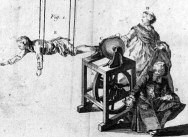
I’ve just found this fascinating article about how electricity became featured in entertainment shows shortly after it was harnessed and took on an erotic undercurrent, leading to theories of sexuality that attempted to explain the differences between male and female ‘electric fire’.

The abstract alone is wonderful to read:

Sparks in the dark: the attraction of electricity in the eighteenth century.

Bertucci P.

Electricity was the craze of the eighteenth century. Thrilling experiments became forms of polite entertainment for ladies and gentlemen who enjoyed feeling sparks, shocks and attractions on their bodies. Popular lecturers designed demonstrations that were performed in darkened salons to increase the spectacle of the so-called electric fire. Not only did the action, the machinery and the ambience of such displays match the culture of the libertine century, it also provided new material for erotic literature.

This is one of the many curious paragraphs from the actual article:

Women became essential protagonists of electrical soirées. Electrical performances staged in courts and salons counted on their active participation and played with sexual difference. Although both men and women could experience the electric fire with their bodies, they would tackle it in different ways. The most common electrical experiments provide a glimpse into the different roles salon culture codified for ladies and gentlemen. One of the most popular demonstrations of the time was the electrifying Venus, or electric kiss. Invented by the German professor Georg Matthias Bose, it was soon replicated throughout Europe. The experiment was simple to organize. The selected lady would stand on an insulated stool while an operator charged her body with an electrical machine. Gentlemen in the audience would then be invited to kiss her, but alas, as they tried to approach her lips a strong spark would discourage any attempt, while exhilarating the lady and the rest of the audience.

Link to article ‘Sparks in the dark’.
Link to PubMed entry.

Wilder Penfield – charting the brain’s unknown territory

Neurophilosophy has a stimulating article on Wilder Penfield, the legendary Canadian neurosurgeon who pionered neuropsychological studies on the awake patient during brain surgery.

Penfield is most famous for his experiments where he electrically stimulated the brain of patients who had part of their skull removed during surgery to record what thoughts, behaviours and sensations arose from the excitation of specific parts of the cortex.

This research is still being done in modern times. My favourite is a 1991 study on electrical stimulation of the supplementary motor area SMA) by (no laughing now) Fried and colleagues.

What is most fascinating is that they found electrical stimulation could trigger the urge to movement or the expactation that a movement might occur, without triggering any movement itself. This stretched from quite vague feelings such as the “need to do something with right
hand” to very specific movement intentions such as the “urge to move right thumb and index finger”.

The gripping and typically well-researched Neurophilosophy article takes us right into the middle of one of these experiments performed by Penfield, and goes on to explain how his work became so influential in science and medicine.

Penfield was a pupil of Harvey Cushing, considered the founder of scientific neurosurgery, who was featured only last week on the same excellent blog.

Unlike Cushing though, who was reknowned for being a bit spiky, Penfield was widely considered to be a warm and friendly individual.

It’s probably the best article on Penfield you’re likely to find on the net, so well worth taking the opportunity of learning more about this key figure in our understanding of the brain.

Link to article ‘Wilder Penfield, Neural Cartographer’.
Link to previous Mind Hacks post on Wilder’s operation on his sister.

The alpha and omega of Crick and consciousness

I just found a touching tribute to Francis Crick published in PLoS Biology in 2004 that also describes some little know aspects of his life during his study of consciousness.

One fascinating part of the article discusses his meeting with David Marr, a brilliant young neuroscientist who was fated both to revolutionise our understanding of the brain and die of leukaemia at the age of 35.

The two scientists worked together for only a month, but their meeting obviously last a lasting impression on them both, as they feature in each other’s work and particularly influenced Crick’s thinking on the conscious mind.

David Marr was a young mathematician and physiologist whose doctoral thesis on a theory of mammalian brain function at Cambridge had brought him into some contact with Brenner and Francis. A professor at the Massachusetts Institute of Technology, he began working with Tomasio Poggio of the Max Plank Institute in Tübingen on a computational theory of neuroscience. Following an invitation from Francis, Poggio and Marr spent the month of April, 1979 extending their intense examination of the core problems of visual perception.

They spent hours sitting at the most western end of the Salk Institute, at the cafeteria or in Francis’s office, gazing into the Pacific Ocean with all its daily changes, discussing not only architecture of visual cortex and visual perception, but the ramifications of a good theory of brain function. We know of these conversations, as the probing of Marr by Francis is captured in the final chapter of Marr’s now classic book ‚ÄúVision‚Äù (Marr 1982). (Although Marr speaks of a three-way conversation, judging from our own experiences as Francis’s younger colleagues, the interlocutor simply seems to be Francis.)

Marr had been diagnosed with acute leukemia in the winter of 1978 (Marr and Vaina 1991). The one-month visit to the Salk Institute was an intellectual gift, for eighteen months later, Marr died. Francis had simultaneously lost a young friend and colleague who had brought an “incisive mind and creative energy” (Crick 1994, p. 77) and his best new ideas of a theoretical neurology to the brain (Marr 1969, 1970). And he saw the tragedy of Marr being cut off from solving the big problems for which he was so clearly destined.

During those early years, Francis must have thought that consciousness was tractable‚Äîif only the right way of thinking was brought to bear on it. Francis’s brain was capable of collecting and filing away many disparate data, which he could then combine uniquely and imaginatively, leading to that ‚Äúdramatic moment of sudden enlightenment that floods the minds when the right idea clicks into place‚Äù (Crick 1990, p. 141). Whatever his initial thoughts about the nature of the problem, Francis soon came to realize that the problem of consciousness was even tougher than he imagined, that the ‚Äúclick‚Äù was not happening with consciousness. In 1988, he wrote, ‚ÄúI have yet to produce any theory that is both novel and also explains many disconnected facts in a convincing way‚Äù (Crick 1990, p. 162).

Ironically, for a man who wrote a book called Vision, there seems to be no pictures of David Marr on the internet.

Of course, there are many of Crick, and the PLoS Biology article is an excellent tribute to the multi-talented researcher.

Link to article ‘Francis Crick’s Legacy for Neuroscience’.

The genius of Harvey Cushing

Neurophilosophy has a beautifully illustrated and carefully researched article on Harvey Cushing one of the greatest neurosurgeons of the 20th century and a pioneer in treating previously inoperable brain tumours.

The article has loads of fantastic photos of Cushing at work, and also includes the one of his remarkably detailed drawings, illustrated in the image on the right.

Cushing is particularly famous for his work on the surgical removal of tumours, and for identifying what is now called Cushing’s syndrome, a disorder caused by high levels of cortisol in the blood, sometimes caused by a tumour in the pituitary gland. The tumour can be removed, curing this debilitating hormone disorder.

Neurophilosophy notes that Cushing removed more than 2,000 tumours during his lifetime. As we noted in an earlier article, one of these operations was to remove a brain tumour from the sister of Wilder Penfield, who was one of Cushing’s most famous pupils.

The Neurophilosophy article also has links to loads more photos and even a video of one of Cushing’s last operations.

Link to excellent Neurophilosophy piece on ‘Harvey Cushing photo journal’.

Tweaking with Sherlock Holmes

I just found this fascinating aside on Sherlock Holmes in a 1973 paper on amphetamine psychosis, suggesting that the cocaine-using Holmes displayed the classic repetitive behaviour often seen in frequent users of dopamine-acting stimulants.

The paper discusses what was known about the pharmacology of amphetamine in the early 1970s and how it relates to psychosis, but starts with an excellent description of the effects of chronic speed use.

One of these constellations involves an intense feeling of curiosity, often manifested by repetitious, stereotyped examining, searching, and sorting behaviors. This repetitious activity has been variously called “punding”, “hung-up activity”, “obsessive-compulsive tendencies”, and “knick-knacking” (by inhabitants of the Haight-Ashbury scene).

Its characteristic feature is engagement in tasks that primarily involve small bits or minutiae and a marked enhancement of perceptual acuity directed toward these minute objects. At times there are perceptuo-motor compulsions, manifested as repetitious stringing of beads or as acts of arranging, sorting, and lining up pebbles, rocks, or other small objects. Most of the so-called “speed art” is replete with complicated syntheses of a multitude of minute details, often depicting universal themes or mandalas. Speed users are frequently observed taking apart such objects as television sets, watches, radios, and phonographs.

Subsequently, the parts may be analyzed, arranged, sorted, filed, and cataloged and, rarely, put back together. Many patients report a sense of satisfaction associated with this compulsive-like conduct. Perhaps the best-known example of searching and examining behavior is that of Sherlock Holmes, whose cocaine habit was described by Dr. Watson:

Finally he thrust the sharp point home, pressed down the tiny piston, and sank back into the velvet-lined arm-chair with a long sigh of satisfaction. Three times a day for many months I had witnessed this performance…

‚ÄúIt is cocaine,‚Äù he [Holmes] said, ‚Äúa seven-per-cent solution… I suppose that its influence is physically a bad one. I find it, however, so transcendently stimulating and clarifying to the mind that its secondary action is a matter of small moment…

‚ÄúMy mind,‚Äù he said, ‚Äúrebels at stagnation. Give me problems, give me work, give me the most abstruse cryptogram, or the most intricate analysis, and I am in my own proper atmosphere. I can dispense then with artificial stimulants. But I abhor the dull routine of existence. I crave for mental exaltation. That is why I have chosen my own particular profession, or rather created it, for I am the only one in the world…

“To the trained eye there is as much difference between the black ash of a Trichinopoly and the white fluff of a bird’s-eye as there is between a cabbage and a potato.” “You have an extraordinary genius for minutiae,” I [Watson] remarked (The Sign of the Four, pp. 610-612).

Holmes’s description of his “grooving on” puzzles and cryptograms and his penchant for magnificent synthesis of details to solve a given case are quite analogous to the amphetamine addict’s intense curiosity and preoccupation with minutiae. Even at a low point in the drug-use cycle, these persons will seek out stimulating mechanical or intellectual puzzles. This compulsion for analysis is widely recognized in the “speed scene.”

Of course, cocaine wasn’t the only drug Holmes dabbled in, as he was also a user of opium and tabacco, but it’s interesting that the author of the paper makes a link between Holmes’ cocaine use, and both his investigative style and ‘knick-knacking’ between cases.

Link to full text of paper.
Link to PubMed entry.

Knitting delusions from thoughts

An insightful excerpt from psychologist Peter Chadwick’s chapter from an excellent new academic book on the science of persecutory delusions. Chadwick is a clinical psychologist and leading psychosis researcher who has experienced madness first hand.

When looking at Hopper’s forlorn paintings one has the feeling that no moment in life need be wasted. Hopper captures a barman putting a glass or cup on a shelf; a women looking at her nails, another woman lost in thought in a cafe. Little things, things one wouldn’t normally notice or think about, let alone render on canvas, are there to be appreciated.

Some of the experiential moments which built the network of emotionally charged ideas that mediated my own psychosis were trivial in themselves. A remark from my mother; an insult from a bully at school; a strange expression on a shop assistant’s face. But all were eventually collected up, knitted together and turned into a delusional web of thoughts and feelings that in the end drove me to multiple suicide attempts that very nearly succeeded in killing me.

In madness, no moment of one’s existence seems to be wasted; it is if one’s whole life, and the depths of one’s very being in selective perspective, have been made magically clear in their awful and portentous significance. One’s past comes hauntingly back, in a kind of near-death experience while one is physically fully alive. ‘This is what’s it’s all been leading up to!’ I remember often thinking in the blazing hot, mad hot summer of 1979.

Chadwick also wrote a powerful 2006 article that recounted his experience of madness – weaving his insights as a scientifically inclined psychologist and his considerable literary powers into a piece that stands out as unusually powerful amid the typically arid academic literature.

Link to more details on the book.
Link to article ‘Schizophrenia From the Inside’.

FBI’s Most Wanted neuroscientist on imitation

Aafia Siddiqui was the FBI’s Most Wanted Woman for several years and is currently in US custody in New York, awaiting trial on charges that she is a terrorist and member of Al-Qaeda.

She is also a neuroscientist and co-authored a scientific paper in 2005 on the cognitive science of imitation learning.

Before her recent capture, which some sources claim may have actually happened five years ago in Pakistan, Siddiqui completed a PhD entitled ‘Separating the components of imitation’ at Brandeis University in the US.

Before that, she completed a Masters degree in neuroscience, also on imitation learning, and her 2005 paper is based on her work for this degree.

The paper describes three experiments that attempt to understand how our learning of seen actions is affected by delays, memory interference and visual interference.

Each experiment involved a pale red disc that followed an ‘invisible track’ on a computer monitor. The sort of track is illustrated in the diagram of the left, although in the actual experiment the participants just saw the disc.

In Siddiqui’s experiment, one group of participants used a trackpad to ensure that the cursor was within the disc at all times (a classic pursuit-tracking task), while another group had to wait until the disc had followed the route before trying to reproduce it from memory.

To look at the effect of complexity on imitation learning, some routes had only three straight lines, while others had up to seven.

Furthermore, some routes were repeated, while others appeared only once. This allowed the researchers to compare learning for identical routes (specific learning) with learning for the general task (skill learning).

The results showed that, unsurprisingly, participants were better at reproducing the simpler routes. What was more surprisingly though, was that practice-related improvement was only seen when participants watched the whole movement before starting, and then only on routes that were repeated.

Intriguingly, when interviewed after the experiment, the participants had no idea some routes were presented more than once, suggesting that this learning occurred without any conscious involvement.

A further experiment showed that delays of up to 6 seconds barely affected performance and that interfering with short-term memory by getting participants to do maths problems only made them a little worse.

Finally, the researchers ran an experiment where the disc appeared only at the beginning and end of each straight line, or when it was turning a corner. This had virtually no impact on performance. Participants were almost equally as good with much less information.

The research helps us understand the limits of learning when we need to copy a certain action sequence, be this tying shoelaces, swinging a golf club or learning tai chi.

The study suggests that for short action sequences we may be better off waiting until we watch the whole thing before attempting it ourselves.

Link to PubMed entry for paper.
Link to library record for Siddiqui’s PhD thesis.

Attending van Gogh and his asylum art

This month’s British Journal of Psychiatry includes a letter that gives an interesting insight into the relationship between the legendary Dutch painter Vincent van Gogh, the three doctors that variously treated him for his epilepsy and insanity, and some of his most famous paintings.

Three medical doctors were involved with the treatment of van Gough: Dr Felix Rey (1867–1932), who diagnosed van Gogh’s epilepsy; Dr Théophile Zacharie Auguste Peyron (1827–95) of Saint-Remy asylum who also diagnosed ‘a type of epilepsy’ – he was a very understanding physician who arranged facilities within the asylum for van Gogh’s paintings and artwork; and Dr Paul Gachet (1828–1909) who treated van Gogh during his last 10 weeks of life.

van Gogh painted two portraits and an etching of Dr Gachet, one of which (Portrait of Doctor Gachet, June 1890) was auctioned in 1990 for an astounding sum of US$ 82.5 million. Young intern Dr Rey probably maintained distance because he saw van Gogh during his psychotic state, shortly after the ear mutilation episode. He failed to value the artist’s creativity and thus was not possessive of the gift presented to him, which he described afterwards:

“Vincent was above all a miserable, wretched man,… he would talk to me about complementary colours. But I really could not understand why red should not be red, and green not green!… When I saw that he outlined my head entirely in green (he had only two main colours, red and green), that he painted my hair and my mustache ‚Äì I really did not have red hair ‚Äì in a blazing red on a biting green background, I was simply horrified. What should I do with this present?”

Dr Gachet was very supportive of van Gogh and valued his creative instinct. Vincent had found a ‘true friend’ in him. It is a matter of pride for the medical fraternity that Dr Gachet was highly admired by van Gogh and that he tried his best to keep van Gogh’s tormented soul at peace and allow his creativity to flourish in the village atmosphere of Auvers. van Gogh created a series of paintings, at least 14, illustrating the Saint-Remy asylum. Any of them may be appropriate for the Journal to focus on with regard to his creativity of the use of colour and space to astonishing effect. Those paintings are carrying the historical value of mental health perspectives so far as the asylum culture of his time is concerned.

The picture on the left is The Starry Night, one of his most famous, which he draw looking out of his window while a resident in the Saint-Remy asylum.

Link to letter in BJP (closed access for some unknown reason).

Interview with self-trepanner, Heather Perry

Neurophilosophy has a fantastic interview with Heather Perry, a 37-year old British woman who organised a modern-day trepanation to insert a hole in her skull in an attempt to alter her state of consciousness.

Perry gives a lucid insight into her motivations and describes the rather ad-hoc operation in rather gory detail:

How exactly did you perform the trepanation?

I used a hand trepan initially, but that wasn’t proving to be terribly successful. Then there was a problem with the people who owned the property we were staying in, so we decided we’d have to just leave it. I wrapped my head up in a towel and we got out of there. A couple of days later, we had another go. We abandoned the hand trepan and got an electric drill instead. I injected myself with a local anaesthetic and then slashed a big T-shaped incision in my scalp, right down to the bone. I was sat there in the bathroom feeling quite relaxed and they started with the drill. It didn’t take that long at all, probably about 20 minutes. Eventually I could feel a lot of fluid moving around. Apparently, there was a bit too much fluid shifting around, because they’d gone a little bit too far and I was leaking some through the hole, but this wasn’t especially dangerous as there are three layer of meninges before you get to the brain.

It’s an interesting read not least because Perry is rather circumspect when discussing the procedure.

You might expect that someone who had arranged for a hole to be drilled in her skull to be completely convinced about the rather far-out claims for trepanation.

While she does mention some claimed effects and findings, she seems quite measured in her assessment and largely seems to have tried the procedure as an exploration rather than a ‘cure’ in any specific sense.

Link to Neurophilosophy interview with Heather Perry.

On the brains of the assassins of Presidents

This is a wonderfully written summary that tells the story of how two father-and-son doctors were involved post-mortem brain examinations of the assassins of the US Presidents James Garfield and William McKinley.

The article is by neuroanatomist Duane Haines although unfortunately, I haven’t read or even got access to the full paper. Luckily, the abstract is just a joy to read in itself. A curious slice of neurological history in 300 words.

Spitzka and Spitzka on the brains of the assassins of presidents.

J Hist Neurosci. 1995 Sep-Dec;4(3-4):236-66.

Haines DE.

Although four American Presidents have been assassinated (Lincoln, Garfield, McKinley, Kennedy), only the assassins of Garfield (Charles Julius Guiteau) and McKinley (Leon Franz Czolgosz) were tried, convicted, and executed for their crime. In 1882 Edward Charles Spitzka, a young New York neurologist with a growing reputation as an alienist, testified at the trial of Guiteau.

He was the only expert witness who was asked, based on his personal examination of the prisoner, a direct question concerning the mental state of Guiteau. Spitzka maintained the unpopular view that Guiteau was insane. In spite of aggressive and spirited testimony on Spitzka’s part, Guiteau was convicted and hanged. However, even before the execution it was acknowledged, by some experts, that Spitzka was undoubtedly right.

About 20 years later, in 1901, Edward Anthony Spitzka, the son of Edward Charles Spitzka, was invited to conduct the autopsy on Czologsz, the assassin of McKinley. At the time Spitzka the younger, who had just published a detailed series of papers on the human brain, was in the fourth year of his medical training. It was an unusual series of fortuitous events that presumably led to Edward A. Spitzka conducting the autopsy on the assassin of the President of the United States while still a medical student. This, in light of the fact that other experts were available.

Each Spitzka went on to a career of note and each made a number of contributions in their respective fields. It is however, their participation in the ‘neurology’, as broadly defined, of the assassins of Presidents Garfield and McKinley that remains unique in neuroscience history. Not only were father and son participants in these important events, but these were the only times that assassins of US Presidents were tried and executed.

Edward Spitzka was also known as one of the main proponents of the idea that masturbation caused madness, and wrote an 1887 article outlining 12 cases of ‘masturbatic insanity’.

Link to PubMed entry.