The neuroscience of speaking in tongues

The New York Times has covered a recently published brain-scanning study of five individuals who ‘speak in tongues’ – an experience also known as glossolalia – where someone appears to be speaking in an incomprehensible language over which they seem to have no control.

This is usually linked to religious and spiritual worship, particularly for Christians in the charismatic tradition (there’s some footage on YouTube).

A team of researchers, led by Dr Andrew Newberg, used a type of brain-imaging called SPECT to compare blood flow differences in the brain between when participants were singing hymns and when they were speaking in tongues.

The main findings were that when participants were speaking in tongues compared to when they were singing, there was a decrease in activity in the prefrontal cortex, the tip of the left temporal lobe and a deep brain structure called the caudate nucleus (see image on right).

Although brain areas are known to have multiple functions, the prefrontal cortex is known to be involved in cognitive control, while the left temporal pole is associated with naming and the caudate nucleus has been associated with the ability to switch between multiple languages.

The authors suggest that these findings may indicate a loosening of control over language functions in the brain, potentially leading to the production of apparently unstructured language that the participants experience as outside their control.

Notably, there were also relative increases in activity in the left parietal lobe (linked to our sense of body and spatial awareness) and the amygdala – an area known to be heavily involved in emotion.

These findings were a lot harder to explain, however, although the parietal lobe in particular has been linked to meditation, although a previous study found the area showed decreased, not increased activity, as was the case in this instance.

However, this is not the first time that neuroscientists have studied speaking in tongues.

Dr Michael Persinger reported a case in 1984 where he used EEG recordings to look at the electrical activity in the brain of a 20 year-old female who experienced the same phenomenon.

The graph on the left shows EEG recordings taken from the temporal lobes during a period of speaking in tongues that show increased ‘spike events’.

This indicates that, like the more recent Newberg study, changes in temporal lobe function may be an important part of the experience.

Interestingly, people with temporal lobe epilepsy are known to be more likely to have religious or mystical experiences during seizures.

One of my favourite case studies is of 25 year-old female patient with temporal lobe epilepsy who had “seizures characterized by repetition of certain religious statements and a rather compulsive kissing behavior”.

Well, they do say God moves in mysterious ways.

Link to NYT article ‘A Neuroscientific Look at Speaking in Tongues’.
Link to abstract of SPECT study on speaking in tongues.

A little white fMRI

fingers_crossed.jpgThe Washington Post investigates the neuroscience of lying in a recent article on whether new brain-scanning technologies will be able to separate facts from falsehoods.

This technology is of particular interest to governments interested in whether neuroscience can get more reliable information from suspects, and to companies willing to pay to ‘interrogate’ clients about their truthfulness.

The article mentions a company called No Lie MRI Ltd which claims to use “the first and only direct measure of truth verification and lie detection in human history”, which surely must violate any number of laws regarding truthfulness in product advertising – considering that the recent research on fMRI lie detection suggests a poor reliability with current methods.

Presumably, they took their own lie detection test and convinced themselves they were telling the truth.

This is not to say that this technology will develop in the future to be more reliable, though.

This prospect has sparked concern about the potential legal (pdf) and ethical issues of this technology and spurred the American Civil Liberties Union to submit a freedom of information request to the US Government earlier this year to see if they are already using fMRI ‘lie detection’ on terrorist suspects.

Some of the hype around brain-scan lie detection harks back to similar claims that were made for the polygraph tests in the past, despite evidence of their poor reliability and high levels of false positives.

Whether fMRI based lie detection turns out to be anything other than a similarly unreliable detection method (but with prettier pictures) remains to be seen.

Nevertheless, one method which does seem to be generating a lot of interest is the Guilty Knowledge Test (pdf), which relies on the fact that the brain tends to produce reliably different automatic responses for items that are recognised compared to items that aren’t.

The idea behind this is that you could show items to suspects that were taken from the ‘crime scene’ and look for the traces of successful recognition measured from the brain.

This technique is now reliable enough that it is starting to be admissible in court. The success of this technique has given researchers hope that successful lie detection may be possible for more than simple recognition situations.

Nevertheless, as every good conman knows, the best lies have a kernel of truth and it’s not clear how well these techniques will detect economies of truth when compared to outright whoppers.

Link to article ‘Brain on Fire’ from The Washington Post.

Trepanation and syphilis

I went to the exhibition I posted about yesterday on visual cognition in painting and surgery at the Royal College of Surgeons and was a bit under-whelmed to be honest.

It was interesting, but was really just some colourful information boards about the study and research project.

However, the Hunterian Museum is always excellent, and I happened across this exhibit of a skull with three trepanation holes in it, and evidence of syphilitic caries (cavities in the skull caused by infection).

There’s no other information about it, except it is pre-1831.

It isn’t known whether the hole-drilling operation was an attempt to ‘treat’ the infection by syphilis, but it is likely, owing to the fact that syphilis often leads to neurosyphilis.

Neurosyphilis is known to cause a number of neurological and psychiatric consequences – psychosis being the most well-known.

Some say that Dracula author Bram Stoker, was suffering from neurosyphilis when he wrote his final, and frankly weird, last novel The Lair of the White Worm.

The Hunterian Museum has an online catalogue, called SurgiCat that allows you to search the museum records and indexes.

A search for ‘trephining’ (an alternative name for trepanation) brings up a number of surgical kits used for the purpose and various bits of skull and brain-covering that show evidence of hole-drilling.

Painting through Alzheimer’s

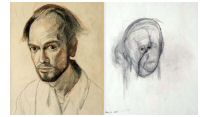
Utermohlen_Alzheimer's.jpgThere’s a short but fascinating piece in the New York Times on how the work of artist William Utermohlen was affected by the progression of Alzheimer’s disease.

Utermohlen produced some striking pieces during his career and continued to paint after being diagnosed with the degenerative brain disorder.

The impact of the disorder on his creativity can be seen in a web slide show created to accompany the article.

It’s particularly interesting that the impact of the paintings don’t always seem to diminish with his reduction in technical skill, with some of the later paintings (particularly the one from 1998) remaining both vivid and haunting.

Link to NYT article ‘Self-Portraits Chronicle a Descent Into Alzheimer‚Äôs’.
Link to William Utermohlen gallery.
Link to information on Alzheimer’s disease.

Neuropsychology of hypnosis

hypnosis_pocket_watch.jpgSeed Magazine discusses how researchers are exploring the neuropsychology of hypnosis to understand this curious state of mind.

Hypnosis fell out of favour in psychological circles as it got taken up by ‘stage hypnotists’, and researchers found out that, contrary to the movie stereotypes, hypnosis actually increases the number of false memories recalled, rather than making remembering more accurate.

Furthermore, ‘hypnotherapy’ seems not to be hugely effective on the current evidence. For example, trials of hypnosis for pain relief when giving birth and smoking cessation have shown mixed results, although it is known to be difficult to design effective trials because hypnotisable individuals are known to be psychologically different from others.

What is a reliable finding, however, is that in particularly susceptible individuals, hypnosis can be used to cause unusual experiences.

Particularly, it is being used as a model of what is alternatively called ‘conversion hysteria’ or ‘conversion disorder‘, where a person might show physical symptoms, such as paralysis, but where they arise from a psychological cause.

Recent experiments have used hypnosis as a way of causing a temporary and reversible paralysis. Participants are then put in a brain scanner to determine which parts of the brain are active, and compared to people with diagnosed conversion disorder.

It turns out that hysterical paralysis may involve similar brain areas to hypnotic paralysis, but shows different patterns of activation to people asked to ‘fake’ a paralysis.

These are interesting findings and may provide an insight into the operation of how the unconscious influences our conscious life.

Nevertheless, thorough investigations into the neuroscience of hypnotic states will still need to be conducted, and Seed Magazine tackles some of the latest research in this area.

Link to article ‘Science finally tackles hypnosis’.

‘Switching off’ economic judgement with magnets

us_quarters.jpgThe Times has a concise piece on a recent study published in Science magazine suggesting that performance on an economic bargaining task could be changed by altering the function of the brain with magnets.

Neuroscientist Dr Daria Knoch and her colleagues asked participants to pay the ultimatum game while, at certain points, the function of their right dorsolateral prefrontal cortex (DLPFC) was disrupted by magnetic pulses.

The team found that when this brain area was disrupted, participants were more likely to accept lower offers of money in the game.

The Times article is a good description of both the game (which is now a widely-used research task) and the results of the study, as well as some commentary on the growing recognition of neuroeconomics as a research field.

George Loewenstein, Professor of Economics and Psychology at Carnegie Mellon University, in Pittsburgh, and one of the pioneers of neuro-economics, said: “The new science of neuro-economics is lending support to a very ancient view of human behaviour. That is the idea that there is a conflict and interaction between passion, and reason and self-interest.

“The now standard view of people as rational maximisers of self-interest is a very recent view. Neuroscience is telling us that that was a bit of a diversion. The rational side is a process that sometimes overrides the dominant interest on human behaviour, which is the passionate side.”

Link to Times story ‘Why say no to free money? It’s neuro-economics, stupid’.
Link to abstract of original research study in Science.

Great neuroaesthetics primer

abstract_texture_1.jpgBrain Ethics has a fantastic primer on neuroaesthetics for those wanting a concise introduction to the field that attempts to use neuroscience to understand art and aesthetic behaviour.

This is currently an exciting but fragmented field and Martin Skov gives an excellent account of the current state of understanding, as well as a guide to the best books available if you want to continue investigating yourself.

Neuroaesthetics can be thought of as a part of a more general study of art and aesthetics as a biological phenomenon. I will follow other proponents of this view (such as Tecumseh Fitch) in calling this broader approach bioaesthetics. The overall goal of bioaesthetics is to answer the three basic biological questions – what?, how?, why? – in regard to aesthetic behaviour in humans: what is art and aesthetics?; how does art and aesthetics spring from the brain?; and why did this cognitive ability evolve in humans?

Link to ‘A short bibliographic guide to the emerging field of bioaesthetics’.

Breastfeeding and baby’s risk for mental illness

breast_feeding2.jpgThe previous post on the neurological and psychological benefits of breastfeeding made me wonder if being breastfed is associated with a lower risk of developing mental illness later in life.

For example, those with cognitive impairment and vulnerability to stress are more likely to end up with a diagnosis of schizophrenia.

Perhaps, those who have greater cognitive ability and stress resilience because they were breastfed are at less of a risk of being diagnosed with a serious mental illness later in life.

There seems to be evidence to support this idea.

According to one study published last year, being breastfed is associated with a significantly decreased risk of developing schizophrenia.

One other study found no difference in risk for previously breastfed and non-breastfed adults, but found evidence that early breastfeeding pushed back the time at which those with schizophrenia developed symptoms, suggesting breast milk might postpone the onset of the condition many years later.

Breastfeeding boosts neurological development

sciencenews_breastfeeding.jpgScience News reports on research that suggests that breastfed babies show measurable benefits in terms of action control and coordination.

The coordination of movement relies heavily on good general brain function. If you ever visit a neurologist for a neurological examination, you’ll notice the majority of tests are to do with balance, muscle tone, movement and reflexes.

Hence, the examination of these functions can give a clue to how well the brain is developing.

A research team led by Dr Amanda Sacker set out to use these sort of tests to compare how breastfed and non-breastfed babies were developing.

To the researchers’ surprise, [research collaborator] Kelly notes, children “were about 50 percent less likely to have a [developmental] delay if they had prolonged, exclusive breastfeeding when compared to those who were never breastfed.” They defined breastfeeding as prolonged when it had lasted at least 4 months. Even babies receiving mother’s milk for a short while‚Äî2 months or less‚Äîwere 30 percent less likely to have a developmental delay than those who received solely infant formula, beginning right after birth.

The same team also recently reported results from another study that suggested that breastfeeding is linked to resilience in the face of psychological stress.

Link to Science News story.

Is hysteria real?

charcot_feint.jpg

The New York Times has an article on the scientific investigation of ‘hysteria’, the condition now typically called conversion disorder, where physical symptoms such as paralysis, seizures or even blindness seem to be caused by mental disorder rather than any detectable physical problems.

The diagnosis is controversial for many reasons, not least because it is largely Freudian in origin.

Actually, Freud was not the first to investigate the disorder. The French neurologist Jean-Martin Charcot made it popular with his dramatic case demonstrations using hypnotism and especially theatrical patients.

That’s Charcot in the picture above, with a patient in a ‘hysterical fit’. This painting hung above Freud’s consulting couch, and can still be seen there in his London home, now the Freud Museum.

Freud’s contribution was to provide a popular theory of why this occurs.

He argued that physical disorder could result from inner psychological turmoil as a result of unresolved conflict. He described a case of ‘hysterical paralysis’ in one of his most famous case studies, that of ‘Anna O‘.

Notably, there was little hard evidence for his theories, and critics have argued that his explanation is just used a fig leaf to hide the fact that doctors don’t know what is actually wrong with such a patient.

However, similar cases turn up regularly in neuropsychiatry clinics, and in recent years a growing body of research has tackled the issue.

‘Psychogenic non-epileptic seizures’, where people seem to have epileptic seizures but without any detectable brain disturbance, have probably received the most research attention to date (see two previous articles on Mind Hacks).

More recently, brain scanning studies have attempted to make sense of what’s going on – with some success.

In a 1997 paper published in the journal Cognition, Dr. Halligan, of Cardiff, and John C. Marshall and their colleagues analyzed the brain function of a woman who was paralyzed on the left side of her body. First they spent large amounts of money on tests to ensure that she had no identifiable organic lesion.

When the woman tried to move her “paralyzed leg,” her primary motor cortex was not activated as it should have been; instead her right orbitofrontal and right anterior cingulate cortex, parts of the brain that have been associated with action and emotion, were activated. They reasoned that these emotional areas of the brain were responsible for suppressing movement in her paralyzed leg.

Other studies have looked at paralysis induced by hypnosis as a comparison, and interestingly found that similar brain areas are involved in some cases.

Conversion disorder is still poorly understood, but it seems as if these patients are not ‘faking it’ and may have problems that are not caused by permanent damage, but are outside their conscious control.

The New York Times article looks at some of the most recent research in this area, and charts the growing acceptance of a diagnosis which has been dismissed by some people as nonsense.

Link to NYT article ‘Is hysteria real? Brain Images Say Yes’.
Link to BMJ editorial ‘New approaches to conversion hysteria’.

Cannabis and psychosis – a causal link?

cjp-august-cover06.jpgThe latest edition of the Canadian Journal of Psychiatry has a comprehensive review of the evidence on whether cannabis contributes to causing psychotic mental illness – the best known being schizophrenia.

It has been known for a long time that there is a link between cannabis use and psychosis, but it was not known whether cannabis contributed to the development of psychosis, or whether people with psychosis were just more likely to smoke cannabis because it helps dispell some of the unpleasant emotions and feelings associated with the condition.

There is now good evidence that cannabis can contribute to the cause of psychosis, particularly during adolescence and early adulthood.

At a population level, this effect is detectable but small.

At the individual level, the effect seems to be quite variable. Recent research has suggested that the risk of developing psychosis when using cannabis is heavily influenced by what version of the COMT gene a person has.

The main conclusions of the Canadian Journal of Psychiatry review are summarised in an editorial, but for those wanting the in-depth lowdown, the full paper is also available online.

Link to August 2006 Canadian Journal of Psychiatry.

Inducing the shadow-self by stimulating the brain

arzy_nature_diagram.jpgYesterday’s Nature contains an intriguing short report of how stimulating part of the brain during neurosurgery induced the feeling that a shadowy version of the patient’s body had appeared and was mirroring the patient’s movements.

The patient was undergoing routine neurosurgery to examine the brain, prior to more serious neurosurgery to treat otherwise untreatable epilepsy.

It is not uncommon for patients to volunteer to take part in simple neuroscience experiments during these procedures.

Patients have to be awake for part of the neurosurgery anyway because the surgeons probe the brain to make sure they avoid removing any areas essential for language, memory and so on.

The experience of feeling or seeing a double or your own body is called autoscopy or heautoscopy.

In this case, a team of researchers led by neuroscientist Shahar Arzy managed to induce this experience by stimulating an area of the brain called the left temporoparietal junction.

This is the area on the left side of the brain where the temporal lobe and parietal lobe meet (see the pink arrow in the image on the left).

This is not the first case of this kind. The Nature report is from the lab of Olaf Blanke which has reported a number of cases of this condition, either owing to brain injury, epilepsy, or induced by brain stimulation.

In a 2004 paper published in Brain, Blanke’s team reported on a number of patients who experienced this phenomenon, including one who said “I see myself lying in bed, from above, but I only see my legs” when her brain was also stimulated in the left temperoparietal junction.

In a further recent paper published in Cortex, Peter Brugger and colleagues reviewed 14 cases of ‘polyopic heautoscopy’, where patients experience multiple doubles of their own body.

(NB: This paper is available on Cortex’s website but because their site is such as mess, you can’t link to it directly and you have to use Explorer to navigate. Isn’t progress great?)

The temporoparietal junction might be significant as it is thought to process and hold representations of the body and its relationship to external space.

One interesting aspect of the Nature paper is that the patient reported that her double was unpleasant and seemed to have somewhat malign intentions:

Further stimulations (11.0 mA; n=2) were applied while the seated patient performed a naming (language-testing) task using a card held in her right hand: she again reported the presence of the sitting “person”, this time displaced behind her to her right and attempting to interfere with the execution of her task (“He wants to take the card”; “He doesn‚Äôt want me to read”).

The authors suggest they may have found evidence for the mechanism behind ‘delusions of control’ or ‘passivity symptoms’ usually linked to schizophrenia.

These are experiences or beliefs that the body and / or mind is being controlled by external forces.

However, not all patients with autoscopy report their experiences as malign, and it may be that the effect of the anaesthetics (known to induce paranoia in some), epilepsy (also linked to risk for psychosis) or the stress of the operation, may have given an unpleasant or malign twist to the experience which might not be directly linked to the disruption of the proposed brain mechanism itself.

The paper is also discussed on Nature’s news service.

Link to abstract of Nature study.
Link to Nature News write-up.
Link to full-text of 2004 Brain paper.
Link to full-text of Journal of Neuroscience paper on tempororparietal junction, body image and self .

Brain dissection video tutorial

uwms_brain_dissection.jpgThe University of Wisconsin Medical School have an online video series that shows a dissection of a human body, including special sections on the brain and spinal cord, all expertly narrated by the professors in the department.

There is no better way of learning anatomy than seeing a dissection for yourself (I have fond memories of passing round a freshly removed circle of Willis with my fellow MSc students) and the online video series is an excellent introduction.

The first thing you notice is how some parts of the dissection process are so undelicate. The body is very strong, and it can take quite some force to remove certain parts.

In the brain dissection, the anatomist has to use some significant leverage (and a surgical chisel) to separate the skull from the dura mater – the tough plasticy sheet covering the brain.

The dissection itself is quite medical, in that it tends to focus on the gross (large scale) anatomy of veins, arteries and cavities, rather than on the sort of areas of most interest to cognitive neuroscientists – mainly the internal structure of the cortex.

Nevertheless, if you want a good ‘rough guide’ to the brain, this is as good a place to start as any.

Link to University of Wisconsin dissection videos (via Omni Brain).

What is synesthesia?

colour_popout.jpgThere’s a useful article in this month’s Scientific American that poses the question ‘what is synesthesia?’ in the ‘ask the experts’ section.

The question is answered by neuroscientists and synaesthesia researchers Thomas Palmeri, Randolph Blake and René Marois, who give a concise description of what its like to have synaesthesia as well as explaining some of the science behind this intriguing condition.

Until 5 years ago, syneasthesia was largely ignored and thought to be a rare and relatively uninteresting oddity.

It is now being investigated after surveys found it far more common than previously thought.

It is thought that researching synaesthesia will also give an insight into the structure and function of perception in the brain, in both those with and those without the condition.

Link to SciAm article ‘What is synesthesia?’.

Female frequency error

BrainOfOnesOwnImage.jpgThe Washington Post has a review and the first chapter of neuropsychiatrist Dr Louann Brizendine’s book ‘The Female Brain’ (ISBN 0767920090).

Brizendine is founder of the Women’s and Teen Girls’ Mood and Hormone Clinic in San Francisco and her book tackles how biological sex differences have a significant impact on thought and behaviour.

However, the psycholinguists over at Language Log were a bit suspicious about the book repeating a common claim that ‘a woman uses about 20,000 words per day while a man uses about 7,000’.

In a series of posts [one, two, three] Mark Liberman looked for the relevant scientific studies and found that, on average, men use slightly more words per day than women.

Link to Washington Post review of ‘The Female Brain’.
One, two, three links to Language Log analysis (thanks Mageriane!).