Classic Sacks

I’ve just found this remarkable TV interview with Oliver Sacks from 1986, only a year after the publication of his famous book A Man Who Mistook His Wife for a Hat.

It’s a fascinating discussion, not least because it’s something you don’t see much these days – an extended interview that focuses solely on a neuroscientist and his work.

There are no gimmicks or attempts to jazz it up with fancy editing and graphics. We see everything during the discussion, including Sacks’ many ‘ums’ and ‘ahs’ and even hear a telephone going off half way through!

Still, it’s a really wide ranging discussion which covers everything from the effects of brain injury to the role of doctors in exploring their patients’ lives.

From what I can make out, the interviewer is Harold Channer who did the piece for a Manhattan-based public access TV network probably before Sacks became well-known.

The video quality is a bit ropey but Sacks has a spectacular beard and is as chaotically engaging as ever. Classic stuff.

Link to Oliver Sacks interview from 1986.

Migraine as inspiration

Photo by Flickr user Auntie P. Click for sourceI’ve just found a brief but interesting study finding that migraines are much more common in neurologists than the general public which inspired an interesting reply by Oliver Sacks.

The prevalence of migraine in neurologists

Neurology. 2003 Nov 11;61(9):1271-2.

Evans RW, Lipton RB, Silberstein SD.

To assess the prevalence of migraine among neurologists and neurologist headache specialists, the authors performed a survey of neurologists who attended a headache review course. The 1-year and lifetime prevalences of migraine in the 220 respondents were as follows: male neurologists, 34.7%, 46.6%; male headache specialists, 59.3%, 71.9%; female neurologists, 58.1%, 62.8%; and female headache specialists, 74.1%, 81.5%. Migraine is much more prevalent among neurologists than in the general population.

Sacks later wrote to the journal to mention an earlier study finding much higher levels of migraine-related visual disturbances in doctors than other people. He also wonders:

Speculating on the possible reasons for the prevalence of migraine in neurologists, and particularly headache specialists, Evans et al. wonder, among other possibilities, whether “a personal history of migraines might stimulate an interest in neurology and headache as a subspecialty.” For myself, with a personal history of classical migraines (and, more often, isolated visual ones) going back to childhood, the extraordinary phenomena of the aura (which for me included transient or partial achromatopsia, akinetopsia, as well as visual agnosias, alexias, etc), excited an interest in the brain, and especially in visual processing, at an early age. These migraines were certainly one of the reasons I was attracted to neurology, why I chose migraine as the subject of my first book, and why I devoted a large part of this book to illustrating the varied presentations of visual auras in my patients

However, he gets short shrift from the researchers who curtly point out that their survey asked whether neurologists’ experience of migraine had influenced their career choice and they said no, so it can’t be true.

This is clearly not the finest psychological reasoning in the world and I remain fascinated by whether personal experience shapes the specialisation of clinicians.

It only happens in some cases of course. It’s probably rare that neurologists had their interest sparked after major brain damage or oncologists after experiencing cancer.

We do know, however, that psychiatrists are more likely to have experienced mental illness than other doctors and I wonder how many other links between clinical speciality and illness experience there might be.

Link to PubMed entry for study (via @anibalmastobiza)

A history of the brain frame

Neurosurgical Focus has an excellent article on the development of stereotactic neurosurgery where an external frame is usually screwed into the skull and fixes the head in place to allow surgeons to precisely locate brain areas in a standard 3D space.

In modern stereotactic surgery, the system is usually used with an electronic tracking system that maps the surgeon’s instruments onto a previously acquired brain scan in real-time. The frame allows the brain scan and the actual brain to be precisely aligned.

This means the surgeon can, for example, place a depth electrode into a precise spot without having to physically see that area while still being confident that they’re in the right place.

The system is also used in research labs to ensure that, for instance, the brain is stimulated in precisely the right spot with magnetic pulses, using a technology called transcranial magnetic stimulation or TMS.

For example, if researchers wanted to see the effect of stimulating the auditory cortex they could run a listening experiment in an fMRI machine, see exactly where your auditory cortex is by mapping the activity on your brain scan, and then use a stereotactic system (e.g. this one) to guide the TMS machine to exactly this spot on your actual brain.

With all of its high-tech trappings, I never realised that the first human stereotactic system was created in 1918 with the system you can see in the picture.

The Neurosurgical Focus article looks at how the technology has developed from the original brass contraptions to the modern age of neurosurgery.

Link to Neurosurgical Focus on the history of stereotactic brain surgery.

Not your first choice of painkiller

I’ve just found this alarming case study [pdf] from the Singapore Medical Journal about a patient who had a nail banged into their head by a local healer in an attempt to treat persistent headaches.

Craniocerebral penetrating wounds caused by nails are rare and reported as curious experiences. A 45-year-old female patient presented with a metal nail in situ in the middle of her head, very close to the right side of the midline. The patient had been unconscious since the time of injury. There was no history of vomiting or seizures. Neurologically, the eye opening and verbal response were nil, but she was localised to the pain and moved all four limbs equally. The pupils were bilaterally symmetrical and reactive to light. General and systemic examinations were unremarkable.

The relatives revealed that she had been suffering from a headache (more on the right side) for the last ten years, with off and on exacerbation. They took the patient to a Tantrik, who hammered the nail into her head to get rid of the bad omen. Anteroposterior and lateral radiographs of the skull showed a foreign object inside the skull, very near to the midline. As there were no facilities to perform computed tomography (CT) in the peripheral hospital, the nail was removed under local anaesthesia, based on the radiographical findings. After the removal of the nail, she was managed conservatively and made a gradual recovery in her sensorium. The patient was doing well at follow-up.

As medical historian Owsei Temkin discussed in his definitive book on the history of epilepsy The Falling Sickness (ISBN 0801848490) banging nails into the head was also a Roman ‘treatment’ for seizures.

Link to PubMed entry for case study.
pdf of full text of case study.

Laughing into unconsciousness

I just found a curious article from the Journal of the American Medical Association about a case of ‘laugh syncope’ – a condition where the patient passes out when they crack up with laughter.

Syncope is the medical term for when someone feints and it is caused by a reduction of oxygen to the brain.

At 4 PM on a March day, a 32-year-old, previously healthy barber was standing and cutting a client‚Äôs hair. The client related a funny story, upon which the barber broke out into a very strong, sustained, loud, and unrestrained laughing fit during which, according to observers, he “blacked out” and fell to the floor. Although he sustained interscapular bruising and minor trauma to the right shoulder, he exhibited no seizure activity and no bladder or bowel incontinence.

He regained consciousness within a few seconds, was completely oriented, had no apparent neurological deficit, and immediately resumed his work. He had been working on his feet throughout the day, but this was customary for him and he had never had a syncopal or near-syncopal episode before. The temperature at the time had been mild. The timing of his most recent meal was not recorded. The patient did not reveal the content of the story.

I love that last sentence. It reminds me of an earlier medical warning about the dangers of powerful jokes.

I note there’s another case of ‘laugh syncope’ that was published last year.

Apparently these cases can be caused simply by problems with getting the blood to the brain (such as heart difficulties), problems with the brain itself (for example, difficulties with its own blood supply network or the occurrence of a seizure) or due to what is known as a vasovagal episode that can be due to psychological triggers or vagus nerve dysfunction.

Link to ‘Shear hilarity leading to laugh syncope in a healthy man’.

Brain scanning unborn babies

I’ve just had pick my jaw up from the floor after reading an article on the brain scanning of unborn babies. I was idly wondering whether anyone had attempted to do an MRI scan of the fetal brain only to find that researchers are so advanced that they can do almost any sort of adult neuroimaging on the fetus – including psychological studies of brain activation.

One of the main difficulties with brain scanning unborn babies is that they move about a lot. You can asks adults and children to stay still, but fetuses are a little bit harder. One of the major advances in the field has been the development of algorithms to reconstruct high definition scans from blurred images.

Researchers have also completed diffusion scans that can create 3D maps of the white matter ‘cabling’ of the brain in the unborn baby, as with a recent study [pdf] on how brain connections develop during gestation. Recent studies have similarly been able to measure developing brain metabolism and examine how the size and shape of specific areas change during pregnancy.

But most amazingly, several studies have conducted functional MRI experiments on fetuses. In other words, they measured neural activity in specific brain areas in response to specific experiences.

The two scans on the right are from a 2008 study that looked at whether unborn babies at the 33rd week of development would show brain responses to sound in their auditory cortex, part of the temporal lobes. The researchers simply put headphones on the belly of the pregnant women and scanned while they played tones.

The top scan is from an adult, while the one from the bottom is from one of the fetuses, showing clear and selective activity the auditory cortex nearest the sound source.

I was completely blown away by that, and researchers are continuing to develop new and intriguing ways of presenting experiences to the fetus (such as shining lights through the belly to look for visual brain responses!).

Link to PubMed entry for paper on brain scanning fetuses.

Stunning brain scans of 500-year-old mummies

The Llullaillaco mummies are the spectacularly preserved bodies of three sacrificial children from a 500-year-old Inca civilisation found at more than 6,500m above sea level in the Peruvian Andes. I’ve just found a study that brain scanned the mummies and the results are nothing short of stunning.

I’ve tried to link each scan to the picture of the relevant mummy (although I have to say, the online photos of the mummies are a bit inconsistently labelled so I apologise for any mismatching) and you can see how remarkably well-preserved they are both inside and out.

The mummies are of a 15-year-old girl, a 7-year-old boy and a 6 year-old girl that are thought to have been left as part of a ritual Inca sacrifice. From the article:

The scientific excavation was carried out at an altitude of 6,739 m above sea level on the summit of Mount Llullaillaco in the northwestern Argentinean Andes at an average temperature of ‚Äì15¬∞C. These children had been sacrificed 500 years ago in times of the Inca Empire to appease the mountain deities and to ensure the emperor’s well-being. In addition, the mummies were buried with more than 100 objects, including textiles, gold and silver statues, pottery, and feathered headdresses.

The children had been buried in three pit tombs built by the Incas by enlarging natural niches in the bedrock at the summit shrine of Mount Llullaillaco, which is considered to be the highest archaeological site in the world. The mummies were individually buried 1.7 m deep with their associated offerings. The funerary sites were covered with a mixture of soil and stones, which was also used to fill in the platform that was later built to cover the burials.

According to a National Geographic news story, the older girl was found to have chewed coca leaves and drunk corn liquor, the latter possibly to put her asleep.

Link to study on brain scans of Llullaillaco mummies.
Link to NatGeo story on the mummy of the older girl.

A flight simulator for brain surgery

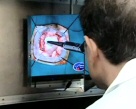
Gizmodo has picked up on an interesting new neurosurgery simulator that not only provides virtual reality skills training but also allows doctors to use data from MRI scans to practice on the brain of a specific patient.

The system also gives tactile feedback through the instruments, so you can feel the resistance in the brain tissue as you ‘cut’ through it.

According to a piece in TechReview, it’s the result of an ongoing project to create a neurosurgery simulator that started last year in Canada.

Check the Gizmodo page for a news clip where you can see the simulator in action.

Link to Gizmodo with video of NeuroTouch.
Link to TechReview write-up.

Instant reflex may reveal brain injury after knock out

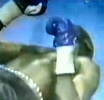
I’ve just found a fascinating video clip reporting on newly discovered reflex action that occurs after a knockout blow. The researchers scoured YouTube for videos of nasty bangs the head and found many examples of the reflex appearing in people as they hit the deck.

The news clip is a a bit American (Americans, if you’re not sure what this means, to us, all your news seems like this) but includes some video clips which illustrate the response in sportsmen who have been knocked out.

The researchers who have discovered the response have named it the ‘fencing response’ apparently because it looks like the en gard position in fencing – presumably though, only if you’ve never actually seen any fencing.

It actually looks more like the boxing stance with both hands out in front with elbows bent.

They suggest in their study that the response is a visible marker of moderate brain injury.

Link to news clip on the ‘fencing response’.
Link to abstract of study.

A kick in the guts for Parkinson’s disease

Your gut has its own neural network. Called the enteric nervous system, it controls digestion and has as many neurons as the spinal cord.

Parkinson’s disease is a brain disorder that has been long associated with stomach upsets. These were often explained away as due to poor diet or stress, but it seems increasingly likely that the disease may also be affecting the neurons in the digestive system.

It was originally thought just to destroy dopamine neurons in a deep brain structure called the nigrostriatal pathway, an effect which causes the distinctive movement problems, but it has become clear that the disorder causes damage throughout the nervous system via the formation of protein clumps called Lewy bodies.

A new article in European Journal of Neuroscience suggests that Parkinson disease affects the enteric nervous system, which might tie together some curious findings in the medical literature that have remained unexplained for many years.

Stomach upsets, swallowing and digestion problems have long been associated with Parkinson’s but it has never really been clear why.

While we commonly think of it purely in mechanical terms, digestion is remarkably complex process and the enteric nervous system is involved in the careful regulation of the muscle ripples of the gut, secretion of digestive fluids and blood flow to aid absorption.

Damage to this system would cause exactly the sorts of problems that have been reported in Parkinson’s disease patients and this fits with some previous findings that have been ignored for many years.

Until recently, only one study had investigated whether the enteric nervous system was damaged in Parkinson’s patients. It found that large numbers of the gut’s dopamine neurons seemed to be missing in patients with the disorder.

The next study appeared more than ten years later, this time looking for protein clumps in the gut of deceased patients, and found evidence that not only were these tell-tale signs present, but that the distribution suggested that neurons in the gut may be the first to be damaged.

The author of this study, neuroscientist Heiko Braak now proposes the radical idea that while we know part of the risk for Parkinson’s is genetic, maybe an environmental trigger – a virus – could get into the nervous system via the stomach, eventually triggering the brain changes that lead to the debilitating tremors and movement problems.

Link to Parkinson’s and gut nervous system article summary.

The dark matter of the brain

Discover Magazine has an excellent Carl Zimmer article on glial cells. They make up the majority of the brain’s volume but they get relatively little attention from the neuroscience community who would rather focus on the seemingly more lively neurons.

There’s a traditional format for these stories, that says that we used to think that glial cells were just ‘scaffolding’ for the brain that gave protected padding for the neurons, but now we are on the verge of a breakthrough in understanding what they do.

Here’s one from New Scientist in 1994, and a pdf of another from Scientific American in 2004.

One difficulty has been integrating the action of glial cells into the popular cognitive model of the brain that suggests that it works as an information processing device.

While there have been various discoveries about the biological function of glia, this is the first article I’ve read which gives a clear idea of how one type of glial cell, the astrocyte, might be involved in information processing.

For some brain scientists, these discoveries are puzzle pieces that are slowly fitting together into an exciting new picture of the brain. Piece one: Astrocytes can sense incoming signals. Piece two: They can respond with calcium waves. Piece three: They can produce outputs—neurotransmitters and perhaps even calcium waves that spread to other astrocytes. In other words, they have at least some of the requirements for processing information the way neurons do. Alfonso Araque, a neuroscientist at the Cajal Institute in Spain, and his colleagues make a case for a fourth piece. They find that two different stimulus signals can produce two different patterns of calcium waves (that is, two different responses) in an astrocyte. When they gave astrocytes both signals at once, the waves they produced in the cells was not just the sum of the two patterns. Instead, the astrocytes produced an entirely new pattern in response. That’s what neurons—and computers, for that matter—do.

If astrocytes really do process information, that would be a major addition to the brain’s computing power. After all, there are many more astrocytes in the brain than there are neurons. Perhaps, some scientists have speculated, astrocytes carry out their own computing. Instead of the digital code of voltage spikes that neurons use, astrocytes may act more like an analog network, encoding information in slowly rising and falling waves of calcium. In his new book, The Root of Thought, neuroscientist Andrew Koob suggests that conversations among astrocytes may be responsible for “our creative and imaginative existence as human beings.”

Obviously this is based on the idea that we need to fit new biological findings into the computational model, rather than fitting our model of the mind into the biology, but that’s a whole different battle.

Link to Discover article ‘The Dark Matter of the Human Brain’.

Footage of neurosurgery from 1933

The Wellcome Trust is putting its archive of medical films online which includes some fascinating footage of some 1933 neurosurgery to remove a tumour from the frontal lobe.

The film says the tumour is a tuberculoma. While we typically link tumours to cancer, the name also refers to other types of abnormal growths.

In this case, it’s an abnormal growth caused when tuberculosis (TB) reaches the brain and leads to an infected mass that can have a similar effect – damaging the cortex by taking up space where the brain should be.

Because TB can be treated effectively with antibiotics, tuberculomas are now very rare in the West, but they are still unfortunately quite common in parts of the developing world where access to medical care is limited.

The Wellcome archive footage is from a time where TB was much more common and shows how surgeons of the days would have removed the mass and how the patient is left after recovery.

Link to Wellcome archive footage of 1933 brain surgery.

Weaponized drugs: armed and delirous

Today’s Nature has a fantastic article about how psychoactive drugs are being developed into a new generation of chemical weapons design to have specific psychological effects on the enemy.

This has long been part of military research (see the famous and unintentionally hilarious footage of British troops being given LSD presumably from the 1950s) but the effects of the mind altering weapons have generally been thought to be too unpredictable and largely restricted to the lab.

However, the Nature article argues that as our knowledge increases and specific biochemical pathways in the body are discovered, chemical and biological weapons are likely to be deployed that target highly selective biological mechanisms to incapacitate and disable.

Some researchers are actively facilitating the development of new chemical weapons. For example, a research group from Pennsylvania State University in University Park has identified several drug classes as potential non-lethal agents or ‘calmatives’, including benzodiazepines and alpha2-adrenoreceptor agonists, as well as individual drugs such as diazepam and dexmedetomidine…

Those who support the development of incapacitating agents often argue that using them in conflict situations stops people being killed. Historical evidence suggests otherwise. At the Nord-Ost [Moscow theatre] siege, for instance, terrorists exposed to the fentanyl mixture were shot dead rather than arrested. Likewise, in Vietnam, the US military used vast quantities of CS gas ‚Äî a ‘non-lethal’ riot-control agent ‚Äî to increase the effectiveness of conventional weapons by flushing the Viet Cong out of their hiding places.

The piece notes that the current international laws on chemical and biological weapons do not address this form of armament which are typically marketed under the ‘non-lethal weaponry’ banner.

From past experience, including the fact that the fentanyl-based ‘incapacitating’ gas seemed to have killed the majority of people during the Moscow theatre siege, it is likely that they will be used in anything but a non-lethal manner.

Link to Nature ‘Biologists napping while work militarized’.

The vibratory chair for Parkinson’s disease

There’s a curious historical snippet in the latest edition of Neurology about how the famous French neurologist Jean-Martin Charcot designed a shaking chair for patients with Parkinson’s disease after they reported sleeping better after a train or carriage ride.

The most obvious symptom of Parkinson’s disease is tremor and name first given to the condition, by James Parkinson in his famous essay, was the ‘shaking palsy’.

While Charcot’s 19th century contemporaries had tried ‘vibration therapy’ here and there, he was the first to systematically apply it to patients with Parkinson’s and found it helped with stiffness, discomfort and poor sleep.

Later Gilles de la Tourette, a one-time student of Charcot, developed the treatment into a type of electrical vibrating hat to specifically apply a 600 rpm treatment ‘directly’ to the brain.

The treatment was seemingly forgotten for many years but recently it has been revived and studies have found modest benefits for vibration therapy in Parkinson’s disease.

Link to paper.
Link to PubMed entry for same.

Sulci against the head bangers

One of the mysteries of the human brain concerns why the surface is wrinkled into ‘ridges’ and ‘trenches’. We covered some of the theories a couple of weeks ago but a new study in the Journal of Biomechanics suggests a completely different take – the rippled surface protects against the effects of head injury.

The research team created a 3D computer model of the brain taken from an MRI brain scan (top) and then generated a second model (bottom) but with the sulci (the ‘trenches’) smoothed out.

They then took each model and simulated a few smacks upside the head from different directions. As well as ‘striking’ the head head on, the researchers also simulated blows causing ‘rotation’.

This is where the brain moves as if it is pivoting around a point. For example, if you look straight on and loll your head from side to side, your brain is following the path of a ‘coronal rotation’. These sorts of blows are known to be a particular cause of tears in the white matter, your brain’s ‘cabling’.

It turns out that a brain with sulci on the surface suffers significantly less strain when the head is struck. And this isn’t just for areas near the surface.

The sulci also had a protective effect almost everywhere, including deep brain structures like the brain stem and the corpus callosum.

So it seems that having a wrinkly brain may be a good protective measure for when your head has to bounce off a hard surface.

Link to paper ‘Can sulci protect the brain from traumatic injury?’
Link to PubMed entry for same.