Fake pot industry generating novel, untested drugs

There’s an excellent article on the highs and increasing lows of the synthetic marijuana ‘legal high’ industry in the Broward Palm Beach New Times.

The piece is an in-depth account of how a legal high company called Mr. Nice Guy became the biggest fake pot manufacturer in the US.

It describes in detail how the business created and sold the product – only to fall foul of the rush ban on the first wave of synthetic cannabinoids.

The company was eventually raided by the Drugs Enforcement Agency and is waiting for the case to be tried in court. However, it’s still not clear whether they actually broke the law.

They changed their formula a few months before the raid to use two cannabinoids, called UR-144 and 5-fluoro-ur-144, which are not specifically covered by the current ban, so the prosecutors have to argue that they are close enough to the prohibited molecules to be illegal.

A curious point not mentioned in the article is that cannabinoid 5-fluoro-ur-144, also known as XLR-11, had never previously been described in the scientific literature and was first detected in synthetic marijuana.

It is listed by companies that sell research chemicals (for example, here) so you can buy it straight from the commercials labs.

But the data sheet makes it clear that structurally it is “expected to be a cannabinoid” but actually, it has never been tested – nothing is known about its effects or toxicity.

Previously, grey-market labs were picking out legal chemicals confirmed to be cannabinoids from the scientific literature and synthesizing them to sell to legal high manufacturers.

But now, they are pioneering their own molecules, based on nothing but an educated guess on how they might affect the brain, for the next wave of legislation-dodging drugs.

Fake pot smokers are now first-line drug testers for these completely new compounds.
 

Link to ‘The Fake-Pot Industry Is Coming Down From a Three-Year High’.
Avoiding the shadows

The Lancet has a powerful essay on children born from rape and the social and psychological consequences for mother, child and community.

I’ll let the article speak for itself as it carefully articulates how the relationship between mother and child can be affected by these tragic events.

There is one point worth highlighting, however. The piece notes that when affected women do have contact with healthcare professionals, clinicians often avoid tackling problems with childcare because they are denied or ignored by the mothers who, understandably, find it difficult to address problems linked to such a violent and painful event.

The article notes that the wellbeing of the child is often not well addressed as “Many practitioners who care for women who have been raped maintain this silence because either their focus is on the well-being of the mother or they genuinely believe that the interests of the mother and child are not served by articulating relational difficulties”.

Mental health professionals rightly identify avoidance as one of the key factors that maintain problematic behaviours. It’s a strategy that places short-term comfort above longer-term well-being and we all use it, but when we rely it to manage serious emotional or behavioural difficulties it can mean we never recover.

But what is less admitted is that healthcare professionals also suffer from avoidance. We don’t like making people distressed, even when it is necessary to overcome serious difficulties. Consequently, we also avoid addressing painful issues, which is something that can also help maintain the problem in the person we are working with.

Ironically, it is very difficult to get healthcare professionals to recognise that they themselves are affected by this. We are much more comfortable when the problems are safely situated in the patient.
 

Link to Lancet article ‘Child in the shadowlands’ (via @EvaAlisic)

A comment on Szasz

One of the most interesting commentaries I’ve ever read on Thomas Szasz, the long-time critic of psychiatry who recently passed away, has been left as a comment in the obituary we recently published.

The comment is by ‘Aporeticist’ and he or she is clearly a fierce critic of modern psychiatry (to the point of indulging in sweeping generalisations at times) but the analysis of Szasz is remarkably insightful and cuts to the core of both his triumphs and failings.

Many of Szasz’s early critics have over the years quietly come around to some of his basic views. (Karl Menninger was one of his colleagues who acknowledged his change of heart.) The notion that the great majority of people with mental illness should never be hospitalized against their will (even when they are troublesome to those around them) has become common sense. It remains one of the great injustices of history that the psychiatric establishment continues to refuse to credit Szasz with being the first member of his profession who, in the mid 1960s, stated on record — against the unanimous opinion of his colleagues — the revolutionary contention that homosexuality was not a disease, and that it didn’t warrant “treatment” of any kind.

The classical liberal notion of “live and let live” resonates closely with the “first, do no harm” of the Hippocratic Oath that Thomas Szasz took as a young medical doctor. For better or worse, Szasz remained consistently faithful to these principles of negative freedom his whole life. Those, however, who believe that, as individuals and as a society, we have a moral obligation to (somehow) assist the mentally ill even when they don’t reach out for support, would regard Szasz’s characterization of psychiatric paternalism as “cruel compassion” as equally descriptive of his own apparent lack of concern for the welfare of those labelled mentally ill. Szasz tirelessly defended the autonomy of even the most severely disturbed mental patients (so long as they didn’t violate the law), yet seemed to care little whether they live or die if no one infringed on their sacred negative rights.

Recommended. Thanks Aporeticist.
 

Link to commentary on Szasz’s legacy by Aporeticist.

Unwritten rules of the road

The latest edition of The Psychologist has a fantastic discussion on the psychology of how drivers, cyclists and pedestrians interact.

Rather appropriately, it’s with psychologist Ian Walker, who makes lots of interesting points about how different road users are perceived and how that affects behaviour.

…the lack of understanding of the cyclist outgroup seems to produce measurable changes in other road users’ behaviour. A few years ago I did a study which showed that changing the appearance of a cyclist led to notable changes in how much space drivers left when passing the bicycle. The specific changes seen make sense given the small body of research on non-cyclists’ stereotypes of cyclists. The two extant studies – the Lynn Basford et al. one, and research by Birgitta Gatersleben and Hebba Haddad, in 2010 – both found that non-cyclists view bicycle helmets as an indicator of an experienced rider, and in my data we saw riskier behaviour from drivers when they passed a cyclist who was wearing a helmet, which fits the idea they saw the rider as more capable.

The positive lesson from this, I feel, is that drivers do adjust their behaviour to the perceived needs of the non-drivers they are interacting with. The problem is that they do not always understand how to read these other people and judge their needs.

The whole issue of The Psychologist is a special and transport psychology and all of it is open-access this month.
 

Link to interview with Ian Walker.
Link to September issue of The Psychologist.
 

Declaration of interest: I’m an unpaid associate editor and occasional columnist for The Psychologist and a low-skilled pedestrian.

Human Touch

A curious article has just appeared in the latest edition of the International Journal of Group Psychotherapy. The opening line of the summary is oddly delightful:

The group, with its intensity, interaction, roles and dynamics, is an important unit of experience in everyday life, in psychotherapy groups, and in Bruce Springsteen’s music.

The author, psychotherapist Lorraine Mangione, has written a previous paper on how “Bruce Springsteen is an eloquent spokesperson for the psychological journey through darkness, disconnection, and despair that many people experience, and for which they might look to professional psychologists for help.”

My own paper, ‘Firestarter: Deviant Behaviour and Psychopathy in the Music of The Prodigy’ is still a work in progress.
 

Link to locked article on psychotherapy and The Boss (via @Neuro_Skeptic)

Hallucinations caused by lightning

A 23-year-old mountain climber was hit by a lightning bolt and awoke in hospital to find herself experiencing bizarre hallucinations.

The case, reported in BMJ Case Reports, describes how the healthy young woman was mountaineering with her climbing partner when they heard heard cracking thunder and were thrown to the ground by a massive shockwave.

The air rescue team took her to hospital and she was put in a drug induced coma for three days as she was disoriented and extremely agitated.

When she awoke, her world was somewhat different.

In the evening, still awake and 6 h after extubation, strange phenomena occurred. These exclusively visual sensations consisted of unknown people, animals and objects acting in different scenes, as if in a movie. None of the persons or scenes was familiar to her and she was severely frightened by their occurrence. For example, an old lady was sitting on a ribbed radiator, who then became thinner and thinner, finally vanishing through the slots of the radiator. Later, on her left side a cowboy riding on a horse came from the distance. As he approached her, he tried to shoot her, making her feel defenceless because she could not move or shout for help.

In another scene, two male doctors, one fair and one dark haired, and a woman, all with strange metal glasses and unnatural brownish-red faces, were tanning in front of a sunbed, then having sexual intercourse and afterwards trying to draw blood from her. These formed hallucinations, partially with delusional character, were in the whole visual field and constantly present for approximately 20 h. At the time of appearance, the patient was not sure whether they were real or unreal, but did not report them for fear that she might be considered insane. However, as she was still frightened after cessation of the hallucinations, she insisted on being transferred to her hometown hospital. Over the next few days, she had increasingly better insight and later forgot about this episode.

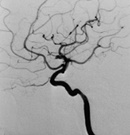
Her brain scan showed damage to the occipital lobes, the areas at the back of the brain that are largely taken up with the visual cortex that deal with the early stages of visual perception.

Luckily, the patient survived without sustaining any serious brain damage although the article mentions that because the occipital lobe has so many blood vessels “it could be particularly vulnerable to lightning damage”.
 

Link to case report on lightning-strike hallucinations.

Thomas Szasz has left the building

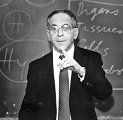
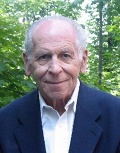
The brilliant, infuriating, persistent, renegade psychiatrist Thomas Szasz has died.

Szasz is usually associated with anti-psychiatry but he rejected the label and really had nothing in common with the likes of R.D Laing, David Cooper and the rest. You can see this in his work.

He had two main arguments. The first was that the concept of ‘mental illness’ was really just a metaphor, in the same way that saying someone’s movie preferences were ‘sick’.

Because neither can be defined objectively and are a subjective interpretation of conscious states or behaviour, he excluded them from what can acceptably be called an illness.

The second stemmed from a political position. Szasz strictly adhered to a libertarian or classical liberal view of freedom and believed the only legitimate restriction of freedom should be the result of crime.

He saw psychiatry as a structure fundamentally built around restricting the freedom of ‘patients’ – the only branch of medicine to do so – meaning he thought it lacked legitimacy in both its aims and justification.

Most critics of psychiatry suggest that it doesn’t sufficiently ‘help’ people with psychological problems. Szasz saw this as promoting the idea of privileged helpers and medically-dependent patients.

Suggestions that psychiatry should not use drugs, should reject diagnoses, or should recognise some experiences as normal were an anathema to Szasz. The problem, according to him, was not the practices but a paradigm that allowed any restriction of freedom.

He was one of the most important critics of psychiatry not because he said it was done badly, but because he said it was incompatible with human liberty. A powerful reminder to a powerful profession.

But so much of it relied on buying into Szasz’s politics – and this was his major failing.

Szasz saw individual liberty as a pure and unalienable right while most see it as as important principle that should be balanced with the good of the community.

Different people draw the line in different places while Szasz is clearly on the extreme end of the spectrum.

He became famous with his book The Myth of Mental Illness in the 1960s when the extremes of personal freedom were popular, but as time has moved on Szasz’s politics have seemed increasingly out-of-place.

His association with Scientology through the CCHR or the ‘Citizens Commission on Human Rights’ made him look increasingly suspect as the organization lost its 60s counter-culture associations and became an intimidating corporate nonsense shop.

Szasz will surely be missed, however. He was active and writing right until the end of his life – never giving up on his campaign for extreme liberty.
 

Link to death notice.

One who studies the soul

i-D magazine has an interview with instrumental dubstep fusion maestro Psychologist. As part of the interview they asked him where the name came from and he gave quite a beautiful answer

What’s behind the name?

Literally, Psychologist means ‘one who studies the soul’, we think of it as a scary word in our harsh-sounding, Germanic language, but it actually means something really beautiful. I also like that it is ambiguous as to whether it’s me studying my own soul, or yours, or you studying my soul, or me asking you to study your own. It’s like a big impossible object that goes around and around.

If you want something of the more melodic side of Psychologist ‘Comes in Waves’ is a particularly beautiful track, while you can listen to an example of his unusual fusion style on the track ‘1:1’.
 

Link to i-D interview with Psychologist.
Link to ‘Comes in Waves’ on YouTube.

Deaf police to monitor security cameras in Mexico

Deaf police officers have been recruited to monitor security cameras in the Mexican city of Oaxaca because of their ‘heightened visual abilities’.

There’s a brief and somewhat clunky English-language news article from the local paper that describes the project:

Ignacio Villalobos Carranza, Deputy Secretary for the Ministry of Public Security of Oaxaca, said most of the monitoring of the 230 cameras is done by law enforcement officials that are hearing or speech impaired. He noted these police officers have a very strong deaf and visual sense and can better detect what is happening in different places where the cameras are located; they can often remotely read the conversations of people, to the benefit of this security system that operates 24 hours a day.

The ability to lip read conversations is a fantastic advantage, but the project raises the question of whether deaf people would actually be better at security monitoring in general.

As far as I know, there are no studies comparing hearing and deaf people on specific monitoring tasks but there is evidence that deaf people have certain advantages in visual attention.

This isn’t vision in general, such as having sharper visual acuity – where there seems to be no difference, but there is good evidence that deaf people are better at noticing things in the periphery of vision and detecting movement.

This potentially makes them perfect for the job and likely better than their hearing colleagues.

So the project turns out to be a targeted way not of recruiting ‘disabled people’ into the workforce, but of recruiting the ‘super able’. In fact, turning the whole idea of disability on its head.

There’s also a Spanish-language video report from BBC Mundo if you want more información.
 

Link to brief new article on the project.
Link to Spanish-language video report from BBC Mundo.

Let there be light, finally

A documentary on the trauma of war, banned by the US government for more than 30 years, has found its way onto YouTube as a freely viewable video.

During World War Two, legendary director John Huston, then a fresh face in Hollywood, was commissioned to make three propaganda films for the US Army.

The third film, Let There Be Light, was made in 1946 – just as the war ended – and focussed on the psychiatric treatment of soldiers traumatised in combat.

This is a description from the fantastic book The Empire of Trauma:

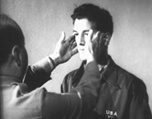
With no political agenda, and anxious to keep scrupulously to the task he had been given, Huston applied to the letter the principle of objectivity he had followed in the two previous documentaries. For more than three months, he filmed the daily life of former combatants hospitalized at Mason General, a military hospital on Long Island. The courage and sense of sacrifice of these men was clearly portrayed, as the Pentagon had clearly requested. But equally apparent was the fact that some of them were utterly destroyed: their fear, their shame, and their tears showed clearly, as did their contempt for military authorities. The film also documented the arrogance and harshness of the psychiatrists and brutality of some of their therapeutic methods. Remarkably, when the film received its world premiere at the Cannes Film Festival in 1981, the emotional response of the viewers and critics was muted, for the film did not meet the expectations of an audience seeking revelations about the military and medical practices of the time.

What made the film so controversial in 1946, made it commonplace in 1981. But this was nothing to do with film-making, and instead concerned the way it portrayed the effects of trauma.

Let There Be Light portrays the “emotionally damaged” soldier as an everyday person “forced beyond the limit of human endurance”. “Every man”, it says, “has his breaking point”.

This is the modern view of trauma, widely accepted in psychiatry and in today’s media narratives, and is itself somewhat of a simplification of what we actually know about how people react to extreme events.

But in 1946, and especially in military psychiatry, the most widely accepted view was that soldiers who became mentally ill were psychologically weak or malingering.

The fact that film showed US Soldiers, not as the glorified heroes the public wanted, but as disabled veterans, meant that the film would be a huge propaganda disaster – likely compounded by the fact that most people saw these conditions as character flaws or shameful faking.

The idea that these were ordinary men who had been through extraordinary circumstances was just too far ahead of its time to seem realistic.

And this is why it was censored, for 35 years, until it had its first public showing in 1981, when it seemed nothing more than a passé propaganda film that just reflected what we all assumed was always the case, but actually, never was.
 

Link to film on YouTube
Link to downloadable version on Internet Archive.

An in-brain stimulation grid

Implanted electrode grids are used to record brain activity in people who need neurosurgery – a technique known as electrocorticography.

But rather than just ‘reading’ from the brain, neuroscientists are starting to use them to ‘write’ to the brain, to the point of being able to temporarily simulate specific brain disorders for experimental studies.

This is the subject of my latest Observer column which looks at the history of open-brain stimulation studies and covers recent research by a joint British – Japanese team which has been using the grids to temporarily simulate a form of brain disorder called ‘semantic dementia’ in live volunteers.

The precision is such that the Lambon Ralph team and a team at Kyoto University Medical School, led by Riki Matsumoto, have used an implanted grid to temporarily simulate characteristics of a brain disease called semantic dementia. Like Alzheimer’s, semantic dementia is a degenerative disorder, but one in which brain cells that specifically support our understanding of meaning rapidly decline. Studies of patients with semantic dementia have taught us a great deal about how memory is organised in the brain but the disorder is swift and unpredictable, and a method that can mimic the effects while recording directly from the cortex is a powerful tool.

To be clear, the grids are not installed for this purpose. They’re installed because they are part of brain surgery to treat otherwise untreatable epilepsy. The grids allow neurosurgeons to locate the exact bit of the brain that triggers seizures so it can be removed.

The article is in part a coverage of the amazing neuroscience, from 1886 to the present day, and in part a tribute to the neurosurgery patients who have volunteered to help us understand the brain.
 

Link to Observer article.

The kings of Kingsley Hall

The Observer has an article on some of the residents of R.D. Laing’s chaos-as-therapy residential centre at Kingsley Hall, five decades on.

The idea was that people with psychosis and therapists would live together in a therapeutic environment and effect change without the use of medical drugs. Residents could ‘live out’ their delusions and come to terms with the early traumas which R.D. Laing saw as the root of their difficulties.

But as the documentary Asylum shows, the place was more chaos than freedom, and the residence became a stop-in for hippies, lost souls and acid dealers.

Most accounts of the place have focussed on Laing but photographer Dominic Harris decided to track down the residents for a portrait project.

The Observer article has some of their stories:

One patient had been in a mental hospital: John Woods, I think. His label in orthodox psychiatry was paranoid schizophrenic. He had some fantasy about some young woman and he couldn’t write letters to her himself so he dictated them to me. When it turned out this woman wasn’t interested, he assumed wrongly that I was preventing her from coming to visit him. He thought I was a black magician and was controlling her. Then living in there became quite scary. There was a chapel in the building, with a huge crucifix, and he burst into my room early one morning holding it. I thought he was going to attack me with it but he wanted to exorcise me. Eventually, I did something that was against the whole ideology of the place: I tried to have him sectioned.

There are many more fascinating, if not troubling, insights to the heart of the chaos.
 

Link to Observer article.
Link to project, book and exhibition on the residents by Dominic Harris

A pain to describe

RadioLab has an excellent mini-episode on the difficulties of communicating the subjective feeling of pain.

As you might expect, it is both wonderfully put together and unexpectedly beautiful in places, but for such a uncomfortable subject, it is also very funny.

Particularly wonderful is a segment on the originator of the Schmidt index that rates the intensity of insect sting pain from “Light, ephemeral, almost fruity” to “Pure, intense, brilliant pain”.
 

Link to RadioLab mini-episode on pain.

A traditional IRA welcome to the sociologist

An amazing description of how sociologists who wanted to do field studies in Belfast during the height of The Troubles were put through some seemingly routine but terrifying vetting by the IRA to check they were up to the job.
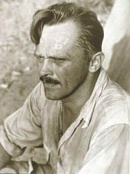
The piece is from an article by Lorraine Dowler, who starts by recounting a tale from legendary social scientist Frank Burton.

Burton worked extensively amid the violence of Belfast and woke up one morning to find someone was pointing a sub-machine gun in his face and suggesting he was a “Four Square Laundry job” an allusion to being an army spy.

Dowler continues:

Thanks to his dangerous and frightening experiences in West Belfast, Frank Burton’s ethnographic research on Northern Ireland is considered legendary. At first glance the incident Burton describes would seem mad to anyone who has not spent time living and working in the Catholic ghettos of Belfast. However, as alarming as this event may seem, it speaks more to the rapport Burton established with his respondents than to the perils of fieldwork. In actuality this was a prank brought about by one of his Irish Republican Army (IRA) informants.

The hazing of researchers is a common practice in Belfast, and anyone who conducts inquiries of this nature is bound to collect a few such “war stories”. The obvious reason for such a vetting is that the IRA feared that a British undercover operative disguised as an academic would infiltrate the organization. Having said that, I believe that researchers are not only checked out as potential spies but also tested to see whether they have the “salt” to stick it out when the political atmosphere makes day-to-day life difficult. In other words, the researcher has to prove that, when placed in a life-threatening situation, even for just a moment, she or he won’t simply pack up and go home.

How weird that amongst all of the violence and subterfuge, the IRA was actively managing its policy on collaborating with ethnography researchers.

Dowler herself also worked as a sociologist amid the The Troubles and has more than a few stories of her own to tell – not least having to flee an assassination attempt on one of her interviewees.

However, she wisely notes that the greatest risk was not to her, but to her participants, who were giving sensitive information to her in the name of impartial research.

Despite the fact that the hazing was extreme, you can understand why trust was considered important.
 

Link to locked version of article.
pdf of article, freely available.

A dark and complex past

In a story that could be the plot for a film, one of the world’s pioneering anthropologists has been found to have been a member of both the Nazi SS and the French resistance during the Second World War.

Gerardo Reichel-Dolmatoff retains legendary status in anthropology and particularly in Colombia, where he first lived with many of the country’s remote indigenous people during the 1950s and 60s and founded the first department of anthropology. He died in 1994 but his legend has only grown since his passing.

In many ways, the classic image of the anthropologist was shaped by Reichel-Dolmatoff. He lived with remote communities to learn the language and worldviews of previously unknown societies. He trekked through jungles and participated in the hallucinatory ceremonies of local religions. He pioneered the archaeology not of the giant civilization, but of the lost peoples of specific valleys and mountain ridges.

He was actually born in Austria but talked little about his past. This is not surprising in the light of new revelations.

Augusto Oyuela-Caycedo, an anthropologist at the University of Florida, has been researching the background of this legendary figure but found far more than the echo of myth.

If you speak Spanish you can watch his recent conference presentation. But even if you don’t, you can see it has a power absent from most academic talks.

Oyuela-Caycedo began his investigation as a tribute to his friend and mentor only to discover a grim past well documented in the Nazi archives. At one point in the presentation, he is brought to tears as he reads a description of how the yet-to-be Austrian anthropologist murders an old man with a pistol.

It turns out that Reichel-Dolmatoff was a member of both the Nazi Party and the SS, in the personal guard of Hitler himself and a participant in Gestapo death squads. He later trained guards in the Dachau Concentration Camp.

In light of his subsequent life in Colombia, it would be easy to chalk this up as another bitter tale of a Nazi who escaped justice to the anonymity of Latin America, but Reichel-Dolmatoff did not seem to make the typical Nazi exit from Europe. He had what is vaguely described as a ‘mental crisis’ in 1936 and was declared unfit for the SS and publicly expelled from the Nazi party.

Curiously, he turned up immediately afterwards working for the anti-Hitler resistance in France and continued to support the French resistance after he arrived in Colombia in 1939, to the point where he was eventually awarded the National Order of Merit by the French president.

Reichel-Dolmatof’s subsequent anthropological work is completely devoid of Nazi overtones – no hints of eugenics or ‘racial hygiene’ – and throughout his life he attempted to demonstrate the amazing diversity of the native peoples of Colombia, the Amazon and the Sierra Nevada mountains.

The case raises a number of difficult questions. The nature of Reichel-Dolmatof’s ‘mental crisis’ remains completely obscure. As the Spanish-language magazine Arcadia asks – how did a young Nazi end up working in Colombia for a Hitler resistance movement? Was it a crisis of conscious or something more opportunistic?

But perhaps more important is the question of whether Reichel-Dolmatof can ever redeem himself. Is his life and his work now forever tainted? Does his good work drown under the tide of his dark and vicious past?

It may have been a question he asked himself many times.
 

Link to English-language coverage of discovery.
Link to Oyuela-Caycedo’s Spanish-language presentation.
Link to Spanish-language coverage from Arcadia magazine.

The neurology of Psalm 137

I’ve just found a short but interesting study on Psalm 137 and how it likely has one of the first descriptions of brain damage after stroke.

The Psalm is still widely sung but it has some particular lines which made the researchers take notice. Here they are in modern English from the New International Version of the bible:

If I forget you, Jerusalem,
  may my right hand forget its skill.
May my tongue cling to the roof of my mouth
  if I do not remember you,
if I do not consider Jerusalem
  my highest joy.

This seems to describe some clear physical symptoms but the bible has numerous versions all of which have different translations and even in their early versions do not always agree on the exact wording.

As a result the researchers looked at Spanish, English, German, Dutch, Russian, Greek, and Hebrew versions to examine the consistency of the text and the variations in description of these curious physical effects. The combined description includes:

If I forget of you, oh Jerusalem, my right hand (my right side) shall dry, be paralyzed, loose its ability, its dexterity… That my tongue shall stick (shall be weakened, arrested) to my palate (in my throat), if I remember you, if I do not permit Jerusalem to be my greatest joy (if I do not sing of Jerusalem as my greatest joy)

Both right-sided paralysis and loss of expressive speech are clear symptoms of a stroke of the left middle cerebral artery, where the blood flow is blocked – leading to the death of the surrounding brain tissue, suggesting that the Psalm may be wishing these effects on people who forget the importance of Jerusalem.

The powerful nature of the wish is perhaps explained by the fact that the Psalm is widely believed to have been written as a lament by Jewish people exiled after the conquest of Jerusalem by the Babylonians in 586 BCE.

But why these specific symptoms are mentioned may have more to do with ancient beliefs about stroke itself.

The reason the condition is still called stroke is because people originally believed that it was a result of being ‘struck down’ by God.

The Psalm still remains popular and the opening lines “By the rivers of Babylon…” have spawned a cottage industry in bad pop songs most of which miss out the lines concerning stroke.

However, the track Jerusalem by Jewish reggae hip-hop maestro Matisyahu does focus on this part of the Psalm, which he mashes-up along with lyrics from Matthew Wilder’s Break My Stride.
 

Link to study on the neurology of Psalm 137.
Link to Jerusalem by Matisyahu.